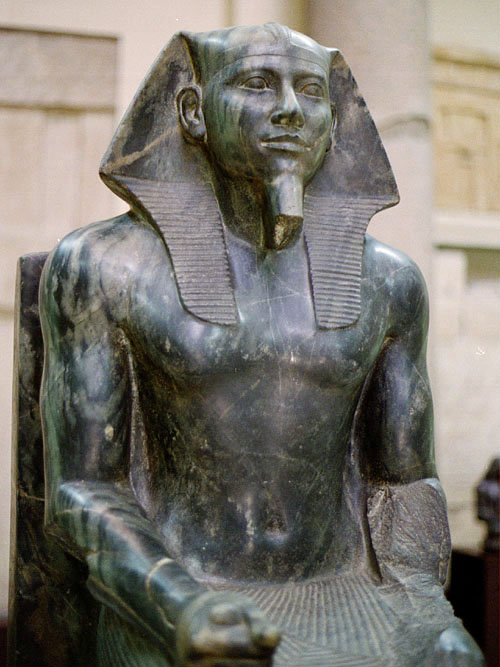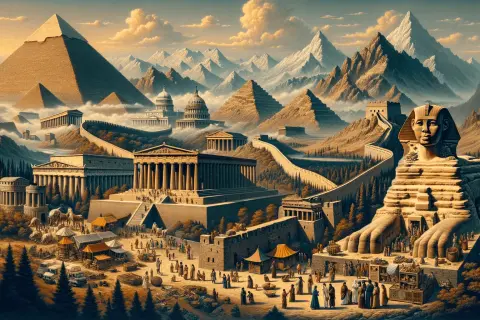

Portrait of Pharaoh Khufu (Cheops)

AI Historical Figure

Pharaoh Khufu (Cheops)

Ancient Egyptian monarch known for constructing the Great Pyramid of Giza.

Chat with Pharaoh Khufu (Cheops) via text or voice — in 42 languages, drawing on a curated biography and 83 historical sources. Available 24/7.

Start chatting with Pharaoh Khufu (Cheops)20 messages free · No credit card
Lived
c. 2609–2584 BCE
From
Egypt
Known for
Rulers & royaltyVisual arts & architecture
Pharaoh Khufu (Cheops)

Pharaoh Khufu (Cheops)

Online · responds in seconds

Hello — I'm Pharaoh Khufu (Cheops). Ancient Egyptian monarch known for constructing the Great Pyramid of Giza. What would you like to ask me?

20 messages free · No credit card · Powered by Humy.ai

Live preview · Switch between 42 languages above · Send a message to continue in the app

Multilingual

Talk to Pharaoh Khufu (Cheops) in 42 languages

Ask Pharaoh Khufu (Cheops) questions in any language below, and the rest of Humy's app speaks it too. Pick yours to open the chat in that language.

Also in German (Austria), German (Switzerland), English (UK), English (Australia), English (Canada).

The sources behind this AI

83 sources · 18 photographs · 15 artifacts · 15 sculptures · 15 documents · 11 paintings · 8 books · 1 newspaper article

Pharaoh Khufu (Cheops) doesn’t improvise from thin air. The AI is grounded in 83 curated historical sources students can inspect. Open any of them to see what informs the conversation.

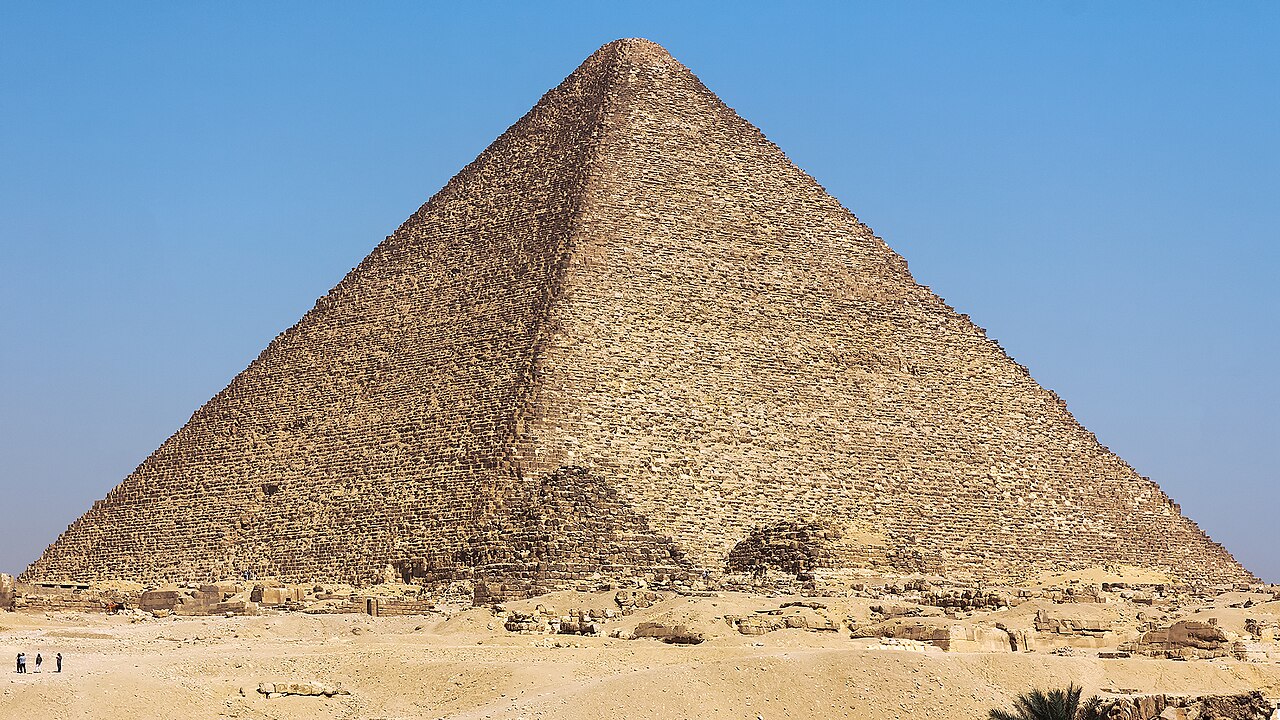
A large limestone pyramid with a smooth-edged stepped outer surface rises against a clear blue sky over pale desert sand. Small figures stand at the lower left, and rubble and low stone blocks lie at its base.Artifact

Primary source

Great Pyramid of Giza

c. 2560 BCE

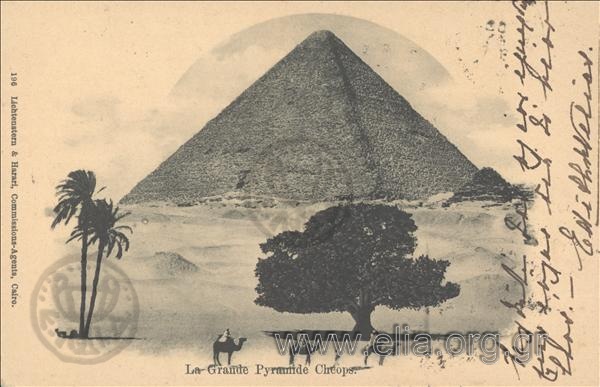
Vintage postcard showing the Great Pyramid of Giza in grey tones against a pale sky, with a large dark tree in front, two palm trees at left, a camel and rider at lower left, and the caption 'La Grande Pyramide Cheops'. Handwriting and a stamp are on the right.Photograph

Secondary source

La Grande Pyramide Cheops

1903

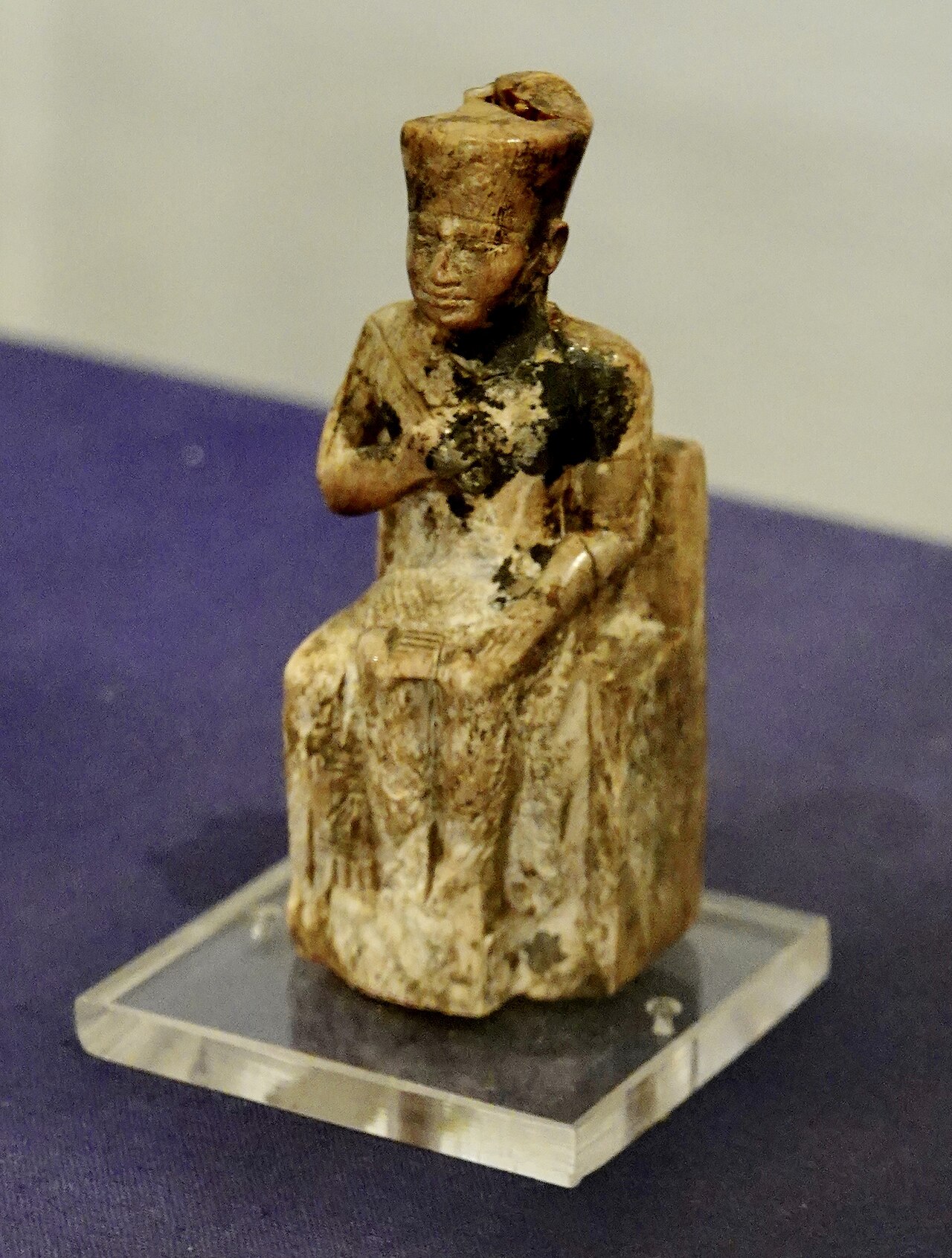
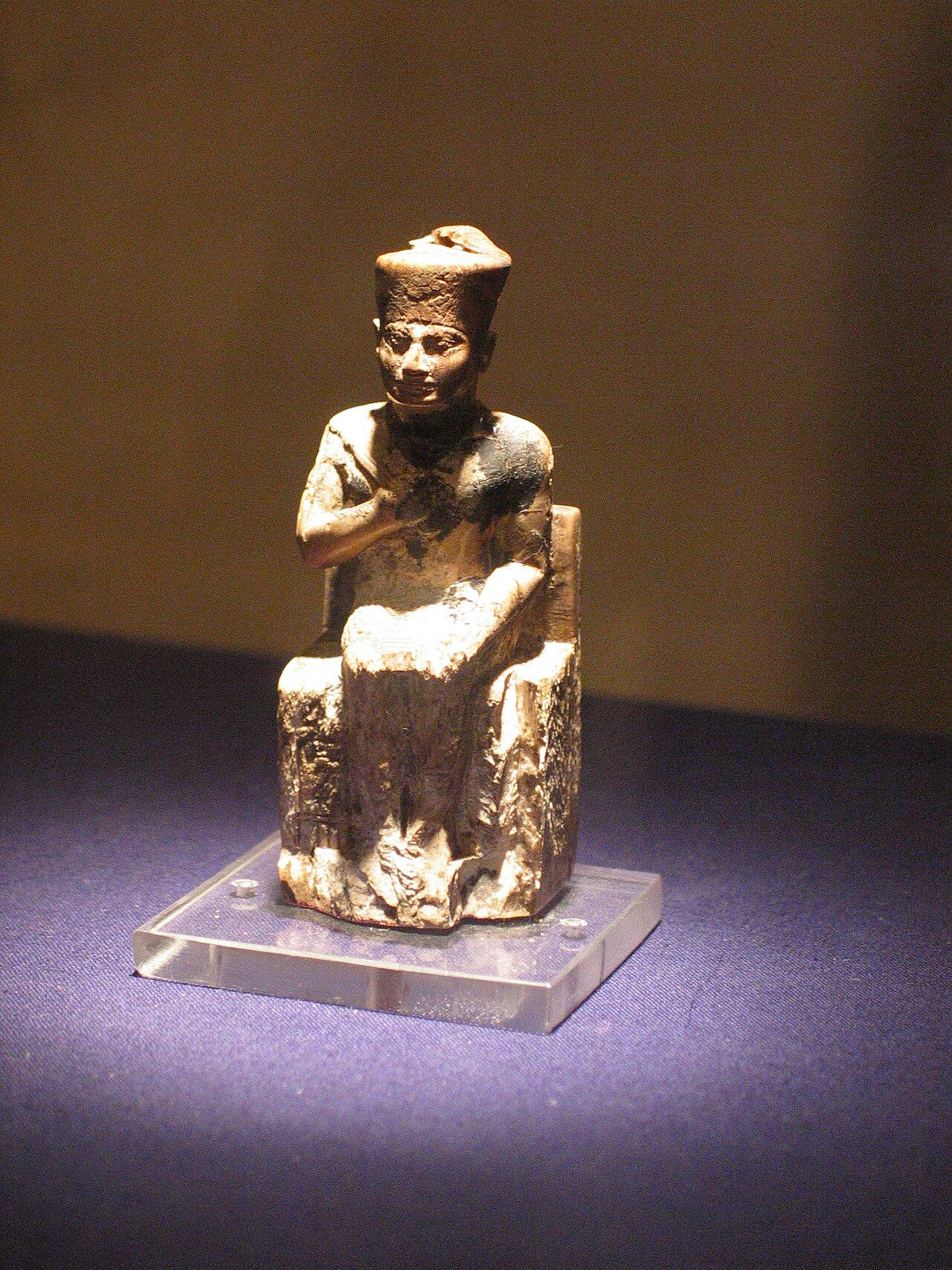
A small ivory statuette of a seated figure wearing a tall royal crown, with hands resting on the lap, on a clear acrylic base set against a blue cloth. Dark encrusted patches mark the chest and arm.Sculpture

Primary source

Khufu Statuette

c. 2600–2494 BCE (possibly later, 664–525 BCE)

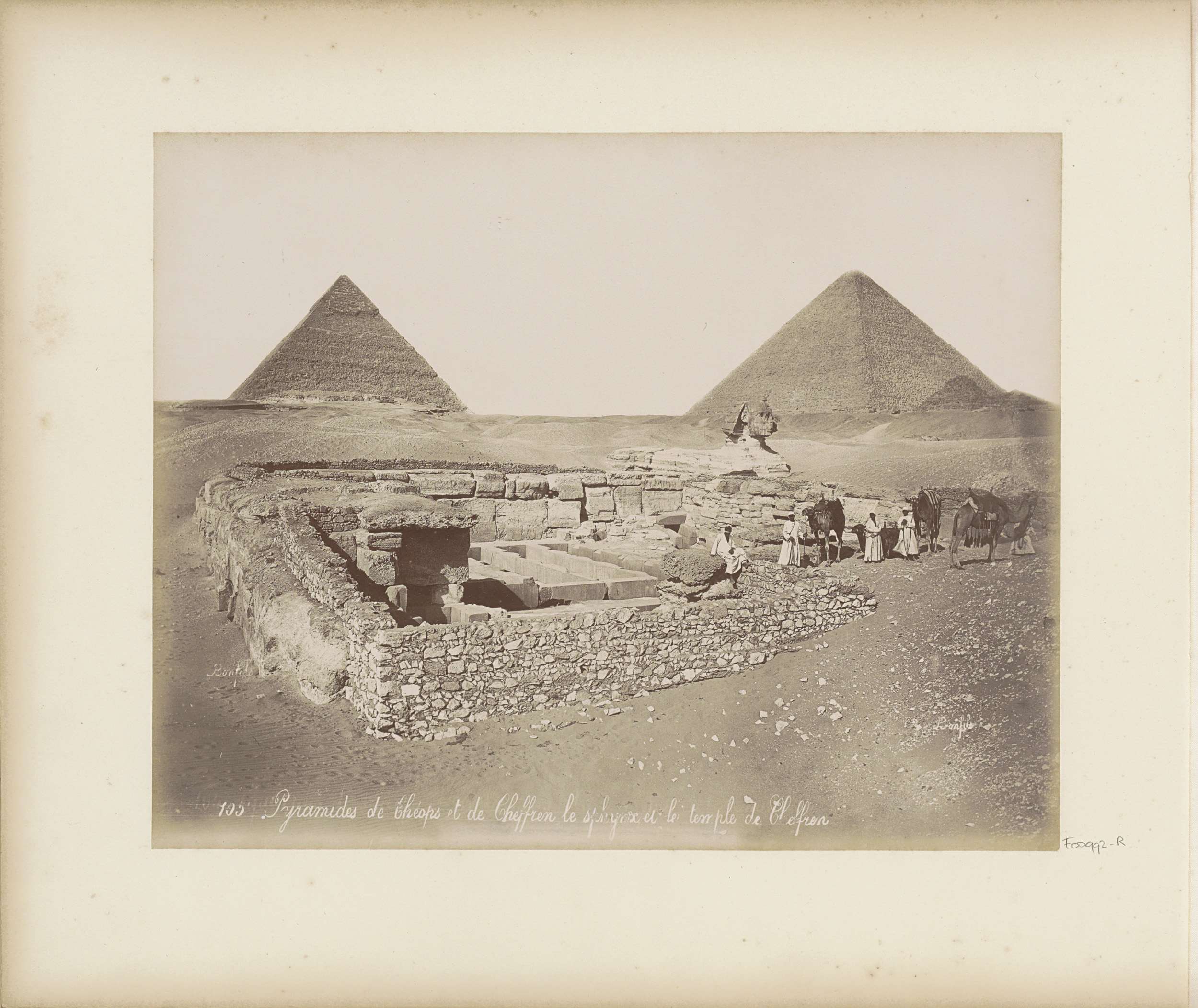
Sepia albumen photograph of the Giza pyramids of Cheops and Chephren, with the Sphinx and the Valley Temple ruins in the foreground, and robed men with camels standing to the right. Caption printed in white script along the bottom.Photograph

Secondary source

Pyramids of Cheops and Chephren and the Sphinx at Giza

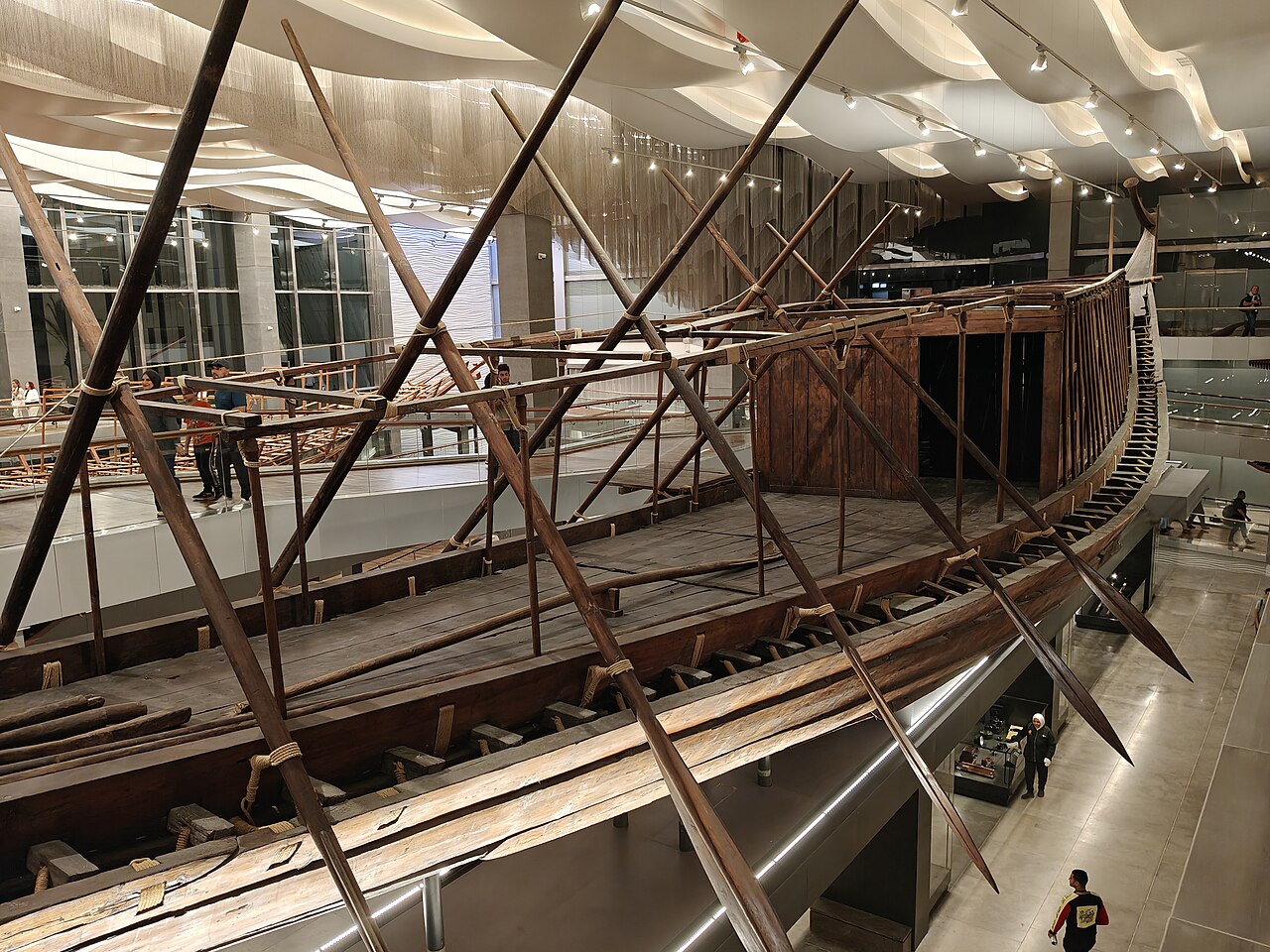
The Khufu ship, a large ancient Egyptian wooden solar barque displayed in a museum gallery. Its long hull is supported by a criss-crossed framework of metal and wooden struts, and visitors stand along the walkways and balconies around it under a curved, illuminated ceiling.Artifact

Primary source

Khufu ship

Royal shipwrights of Khufu · c. 2566 BCE

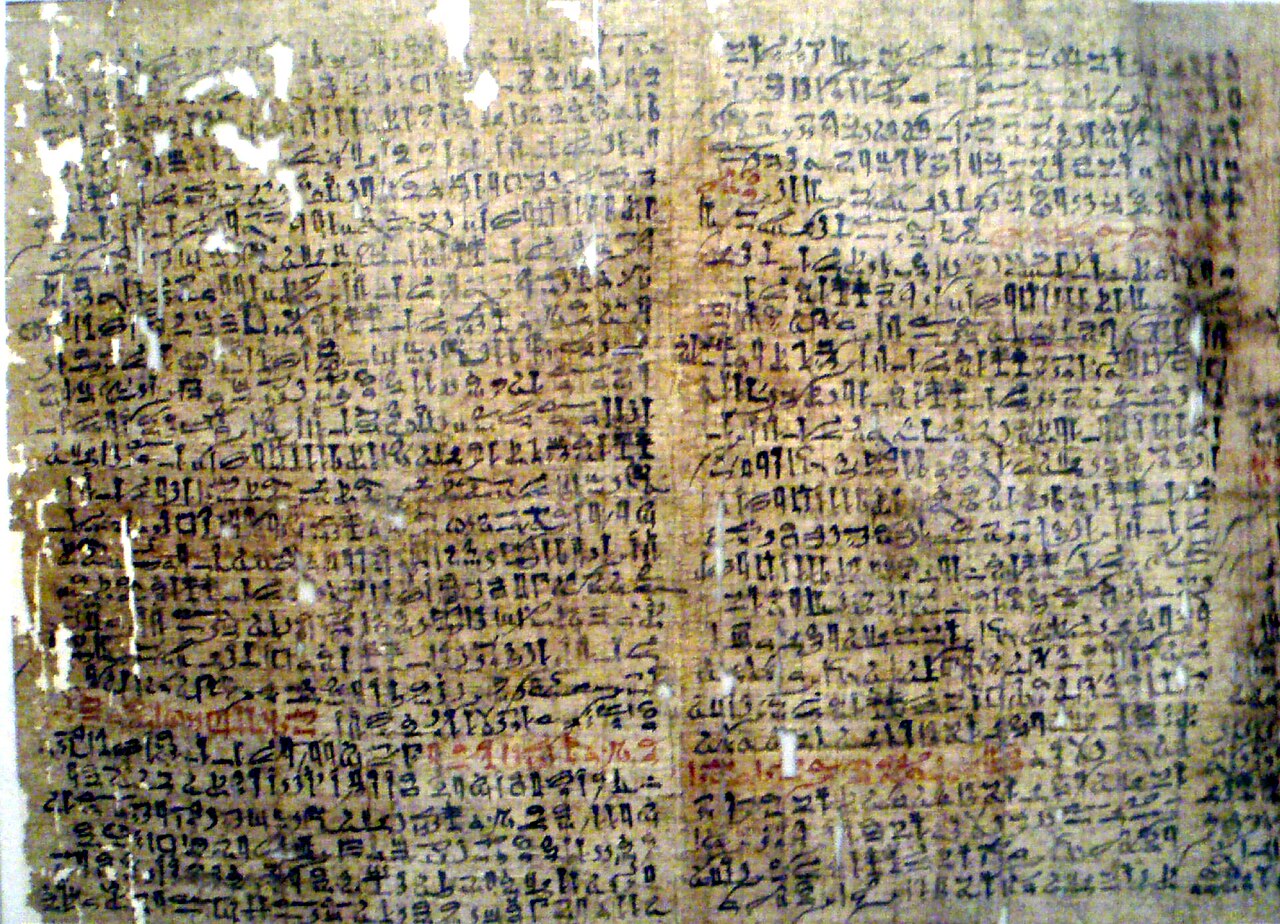
Photograph of a papyrus manuscript covered in dense rows of brown and black hieratic script, with red-ink lines and section markers. Several light patches and damaged areas are visible on the papyrus surface.Book

Secondary source

Westcar Papyrus

c. 1800 BCE

Photograph of a brown papyrus fragment with black Greek uncial-style handwriting in about twelve lines, with a measuring ruler along the right edge marked in centimetres. The fragment has ragged edges and visible fibres.Book

Secondary source

Histories

Herodotus · c. 440 BCE

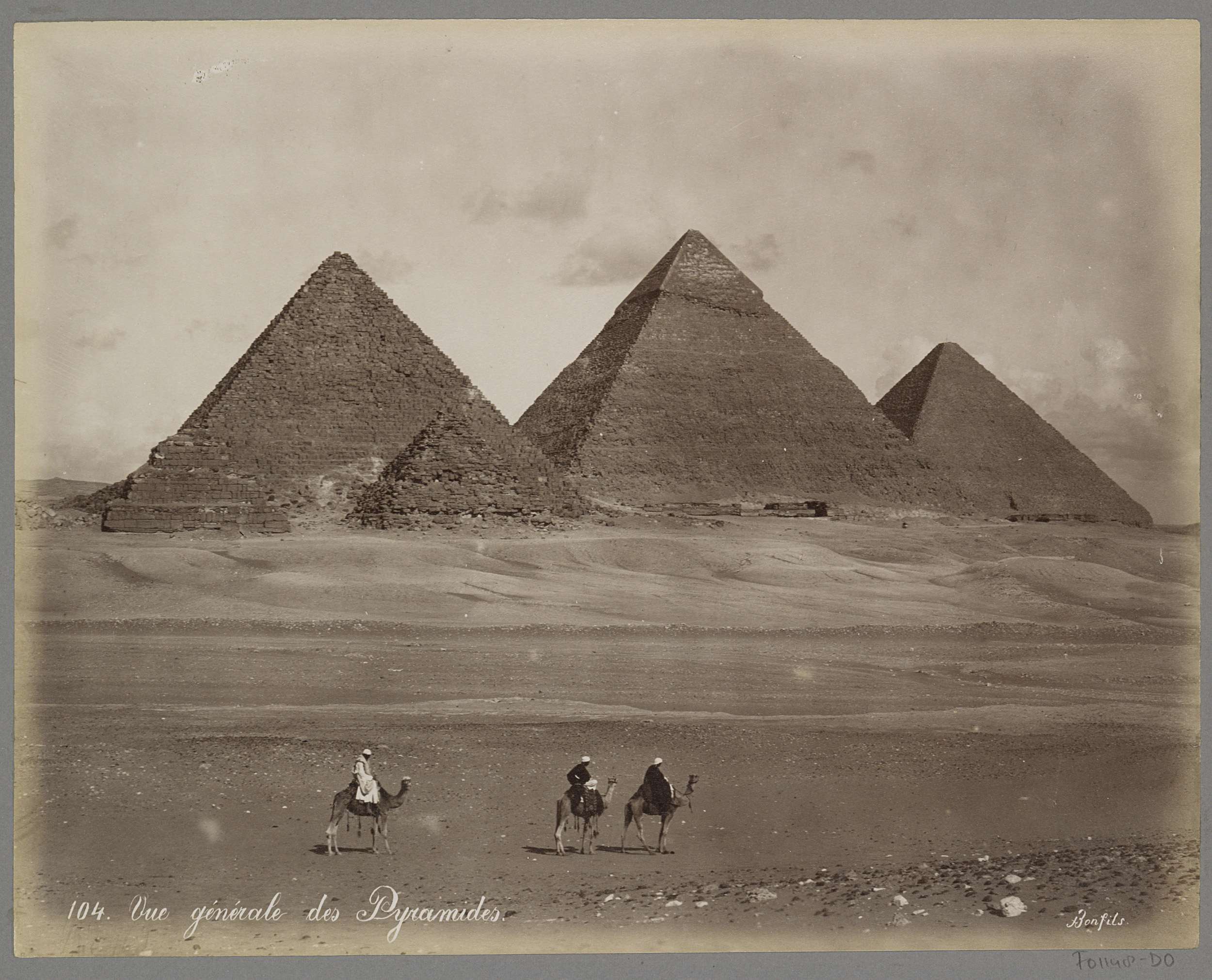
Sepia photograph of three Egyptian pyramids at Giza under a hazy sky, with three camel riders in the foreground on desert sand. Caption reads '104. Vue générale des Pyramides' and 'Bonfils'.Photograph

Secondary source

Vue générale des Pyramides

Bonfils

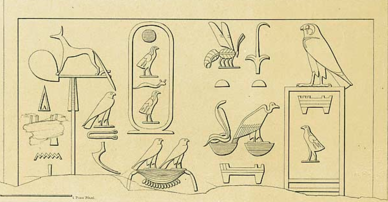
Black-and-white line drawing of Egyptian hieroglyphs on a cream background. Includes a vertical cartouche with a bird sign, a falcon on a pedestal at upper right, a seated bird on a stand, a sun disk at left, and a bowl-shaped sign at bottom.Painting

Secondary source

Khufu Wadi Maghara Relief Drawing

Karl Richard Lepsius · 19th century (copy of an ancient original)

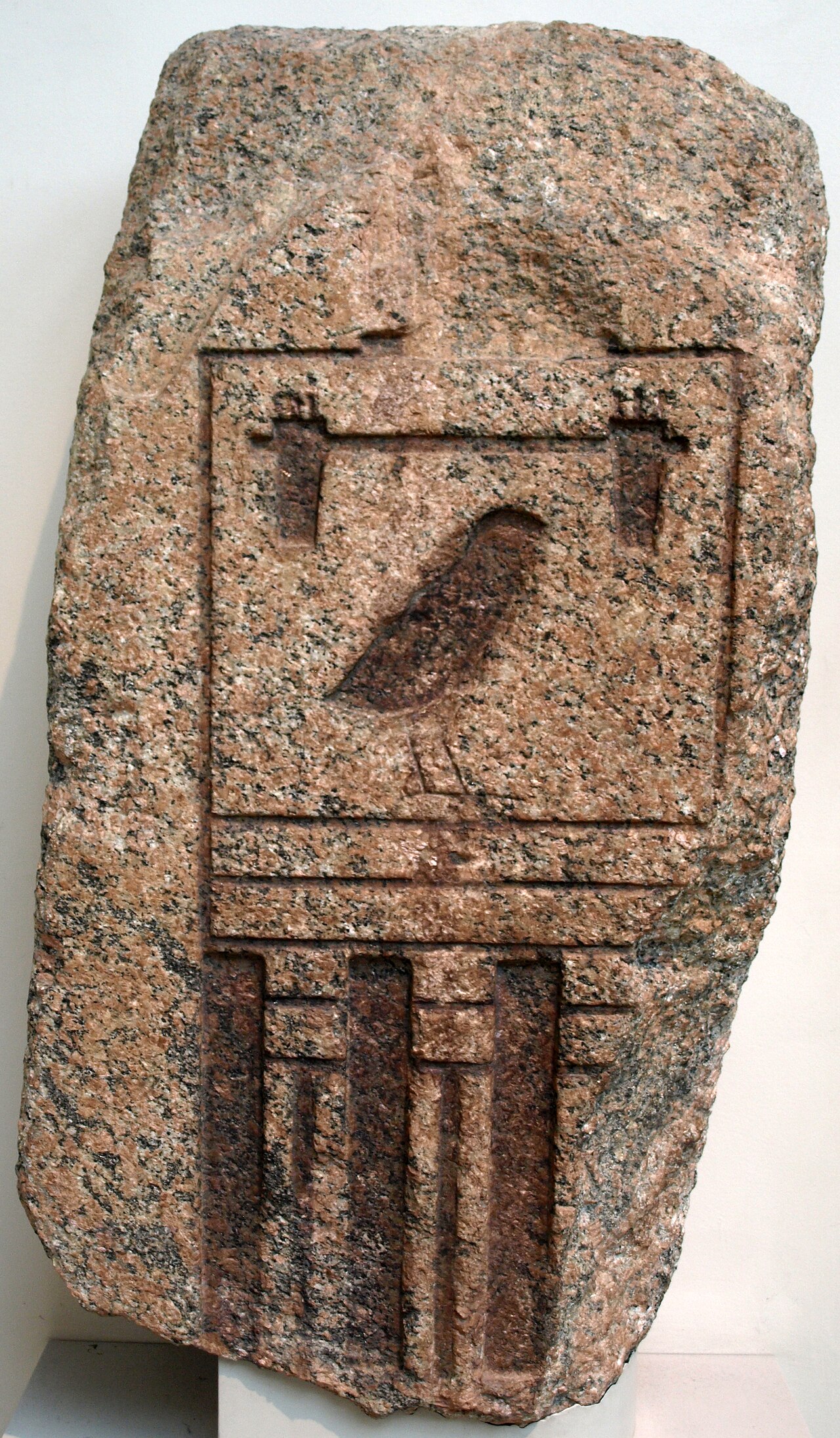
Photograph of a reddish-brown speckled granite slab carved in raised relief with a framed rectangular panel containing a falcon-like bird figure above a series of horizontal bands and a stepped, pillar-like lower design.Artifact

Primary source

Granite Slab with the Horus Name of Khufu

c. 2570 BCE

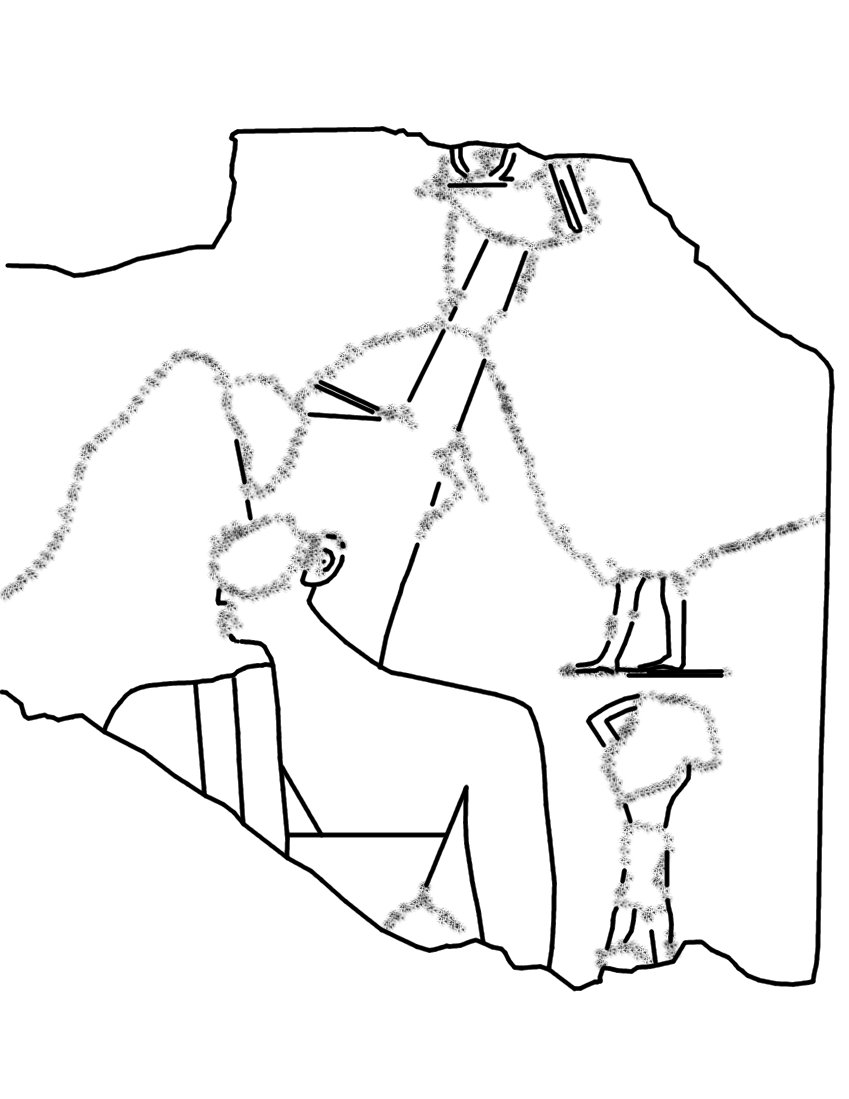
Black and white line drawing of an ancient Egyptian relief showing a seated figure with a headdress and a long braided beard, facing right, with a stylized stepped pattern beside him and standing legs and a second figure below. Gray stippled marks outline the carved shapes.Painting

Primary source

Relief of Khufu from His Funerary Temple

c. 2560 BCE

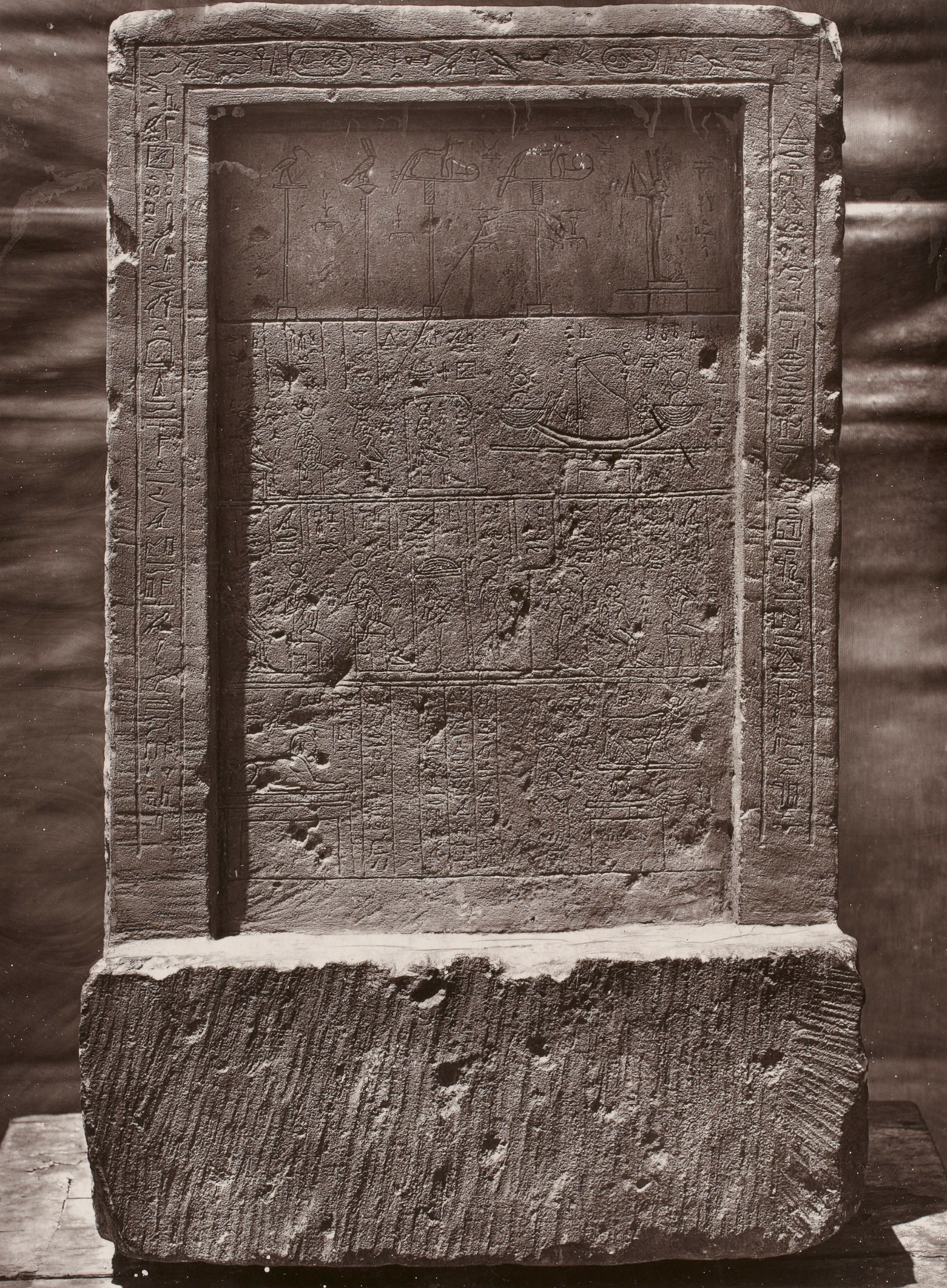
Sepia photograph of a tall carved stone stela with a recessed panel covered in rows of incised hieroglyphs and small figures, set on a rough stone base. Wall backdrop behind it.Document

Secondary source

Inventory Stela

c. 670 BCE

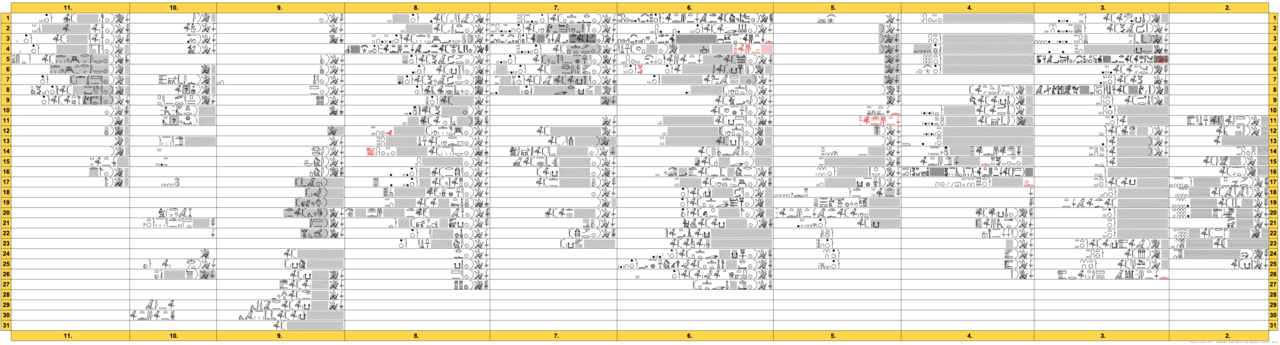
Line drawing of the Turin King List as a grid of 31 numbered rows and 11 numbered columns, with yellow header bars and small hieroglyphic signs in black ink. Gray-shaded areas mark damaged fragments, and a few red marks appear.Document

Secondary source

Turin King List

c. 1292-1191 BCE

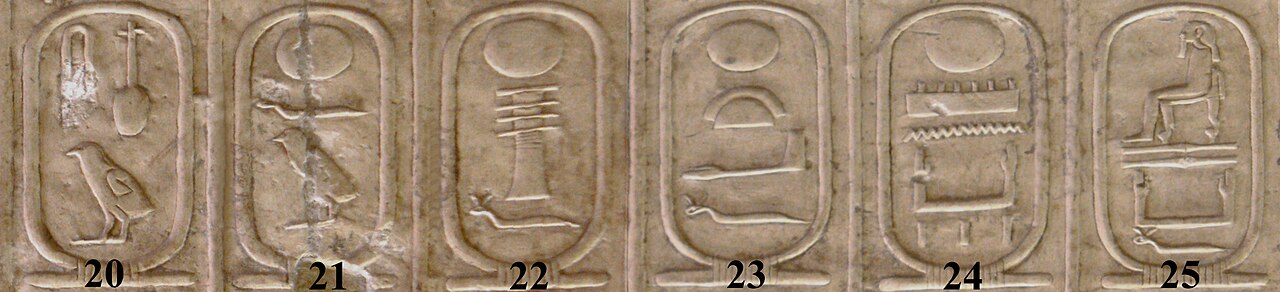
Carved relief of six numbered royal cartouches, labeled 20 through 25, showing hieroglyphic king names in oval frames on a stone wall. Part of the Abydos King List panel.Document

Secondary source

Abydos King List

Workshop of Seti I · c. 1290 BCE

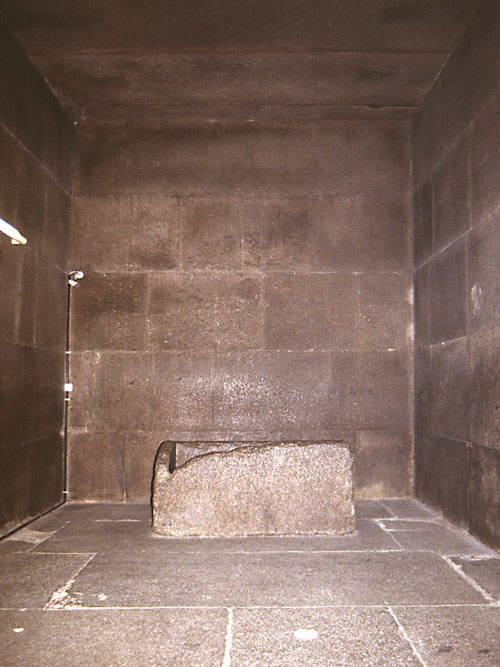
Interior of a stone-walled chamber with large dark granite blocks; in the center floor sits a rectangular stone sarcophagus with a lidless open top, and a small light fixture is mounted on the left wall.Artifact

Primary source

Sarcophagus in the King's Chamber of the Great Pyramid

Royal workshops · c. 2560 BCE

Plan map titled Giza Western Cemetery showing numbered tomb structures in rows. The large rectangular structure at the top, labeled Hemiunu, is numbered 4000. Other tombs carry red stars or blue diamonds marking the reign of Khufu, year 5 or year 15, and labels such as Prince Iunu and Mery-hetepef.Artifact

Primary source

Mastaba of Hemiunu

Workshop of Khufu's court · c. 2570 BCE

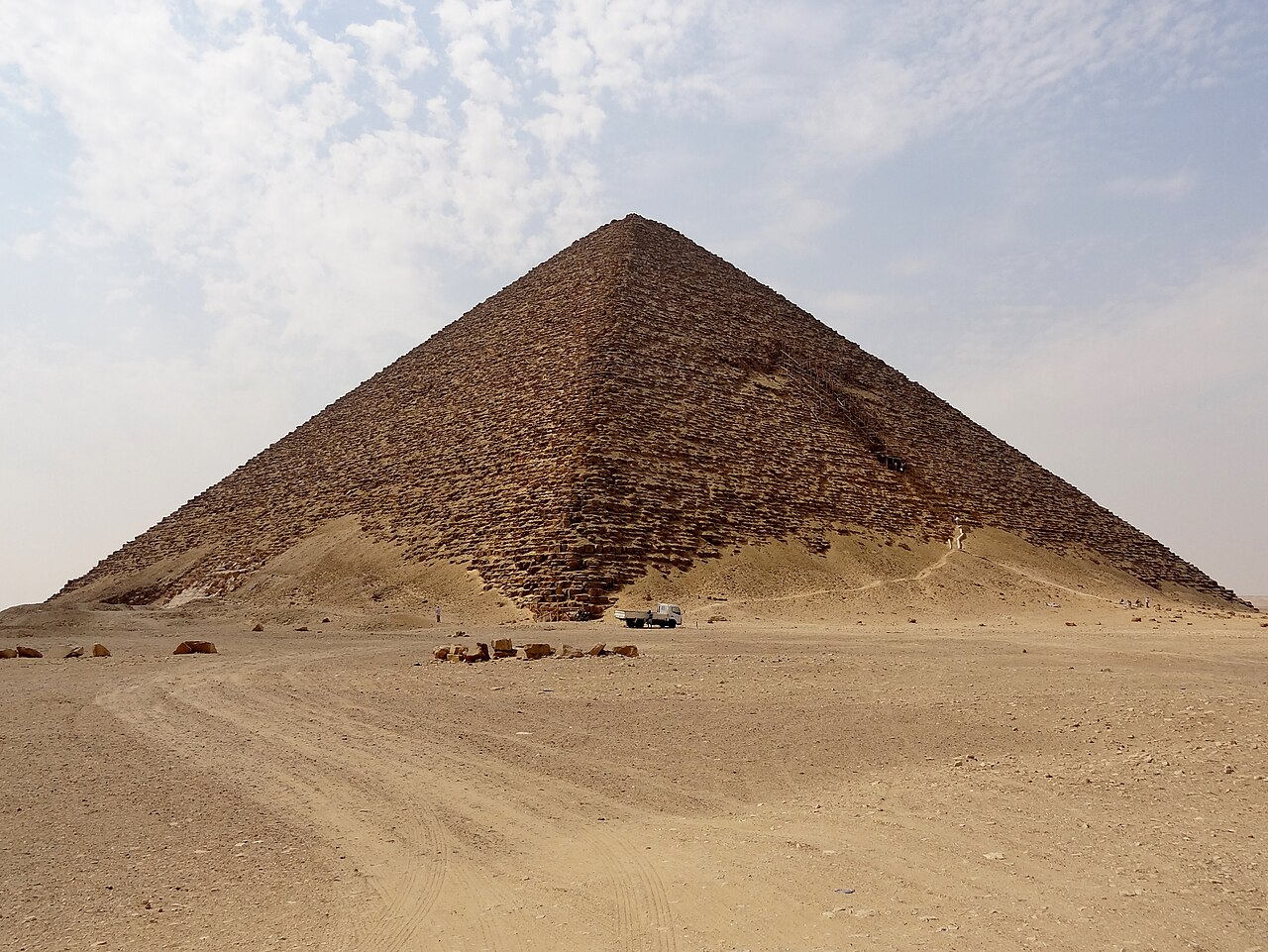
A large pyramid with a smooth, sloping stone surface rises from flat, sandy desert under a pale sky with scattered clouds. A small white vehicle is parked near its base, and a few tiny figures stand on the slope to the right. Tire tracks cross the sand in the foreground.Artifact

Primary source

Red Pyramid

c. 2575-2563 BCE

Dark greywacke statue of a seated male figure wearing a royal nemes headdress with a false beard, hands resting on the lap, set in a museum gallery with pale walls.Sculpture

Primary source

Khafre Enthroned

c. 2570 BCE

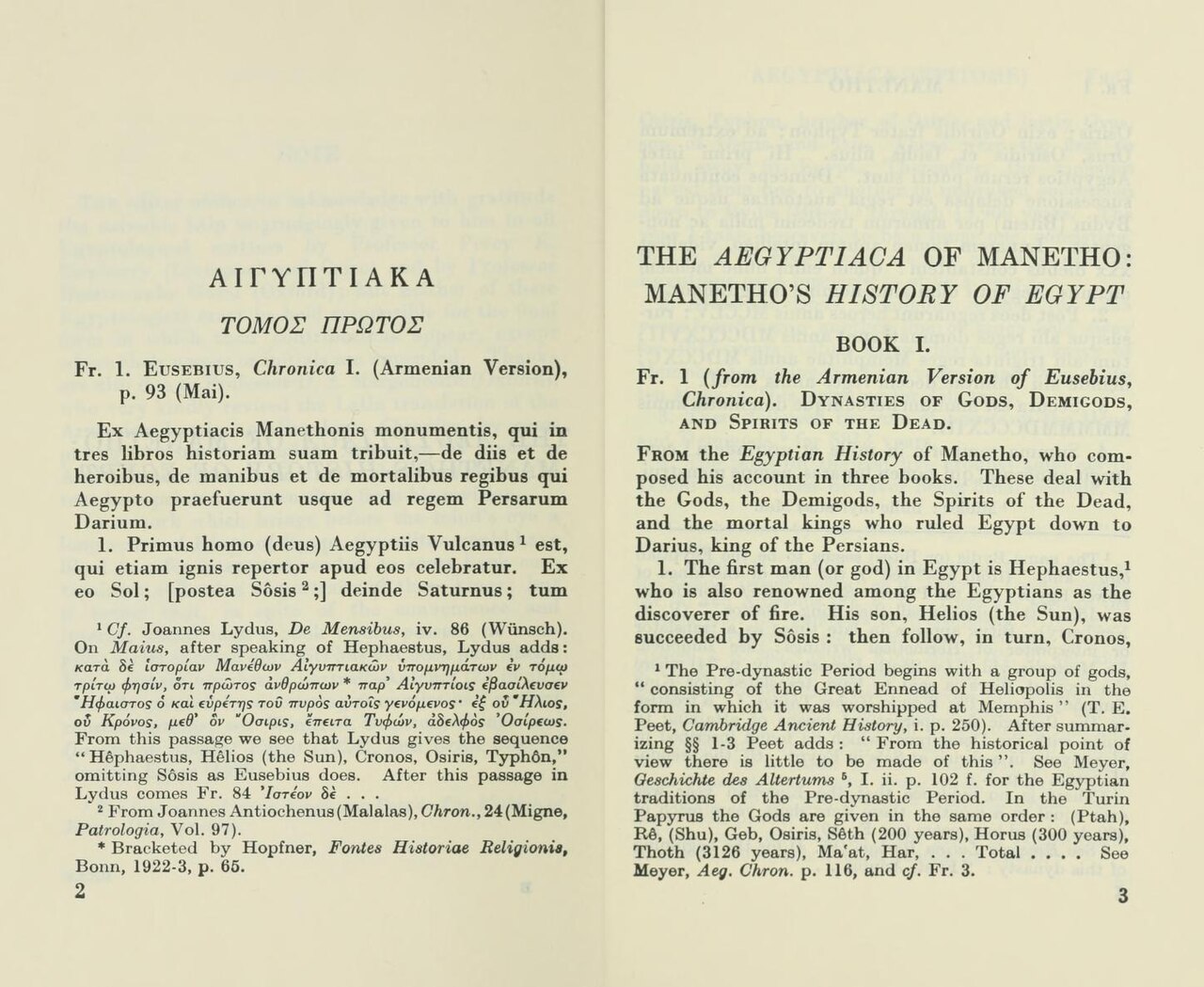
Two facing pages of a scholarly book. Left page 2 shows the Greek title AIGYPTIAKA and TOMOS PROTOS, with Fragment 1 from Eusebius and Latin text with footnotes. Right page 3 shows the English title The Aegyptiaca of Manetho and an English translation of Book I, Fragment 1, about Egyptian gods and dynasties.Book

Secondary source

Aigyptiaka

Manetho

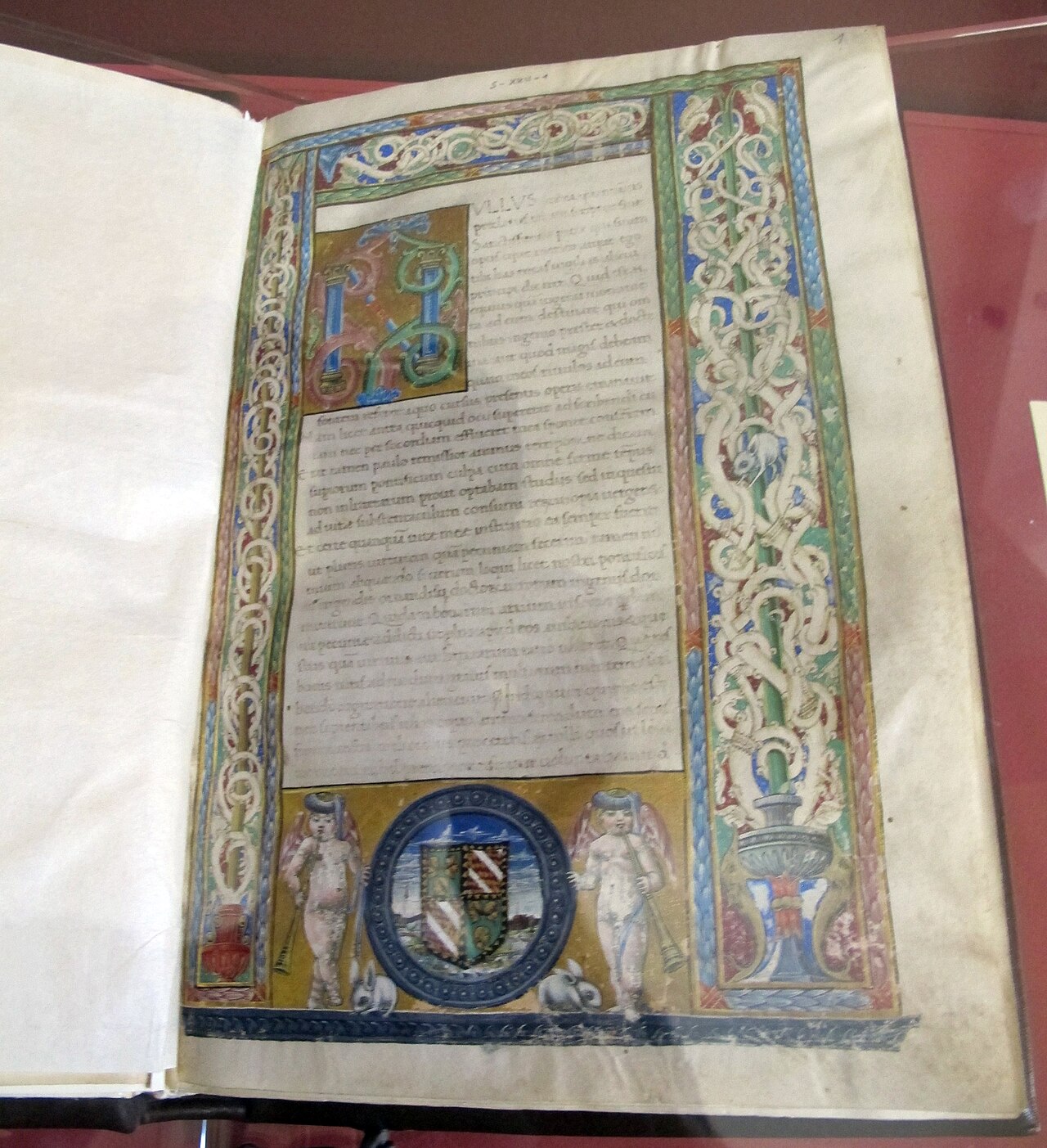
Open illuminated manuscript page on vellum in a display case, with a decorative border of foliage and interlace, a historiated initial, and a central text block in Latin script. A circular coat of arms with angels and rabbits appears at the bottom.Book

Secondary source

Bibliotheca Historica

Diodorus Siculus · 1st century BCE

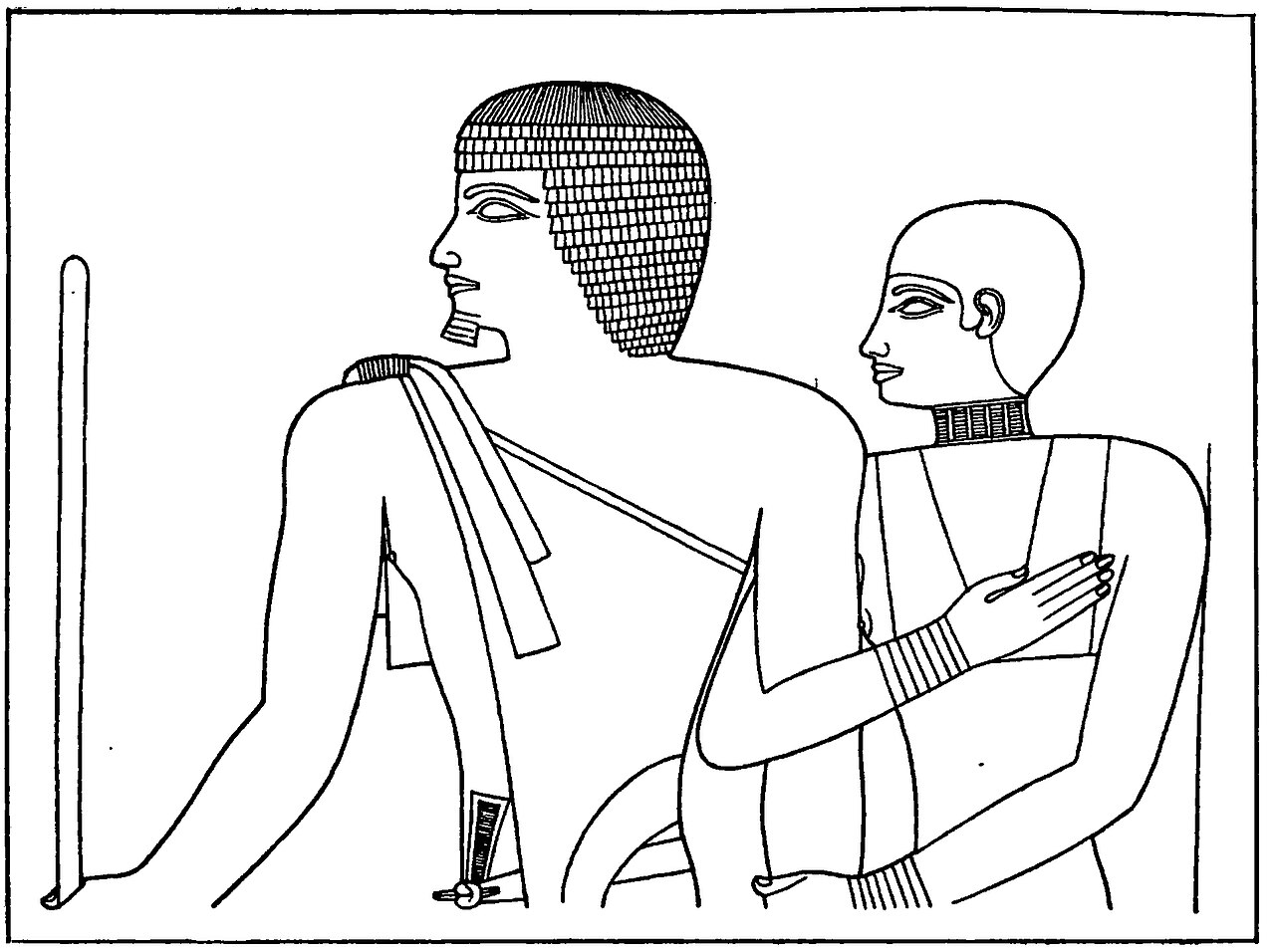
Black-and-white line drawing of an ancient Egyptian relief. Two figures face left in profile. The taller man has a short braided wig and a sash over his shoulder. The bald figure behind him wears a broad collar and rests one hand on his chest. A tall staff stands at the left edge.Artifact

Primary source

Relief of Khufukhaf I and his wife Nefertkau

Hermann Junker

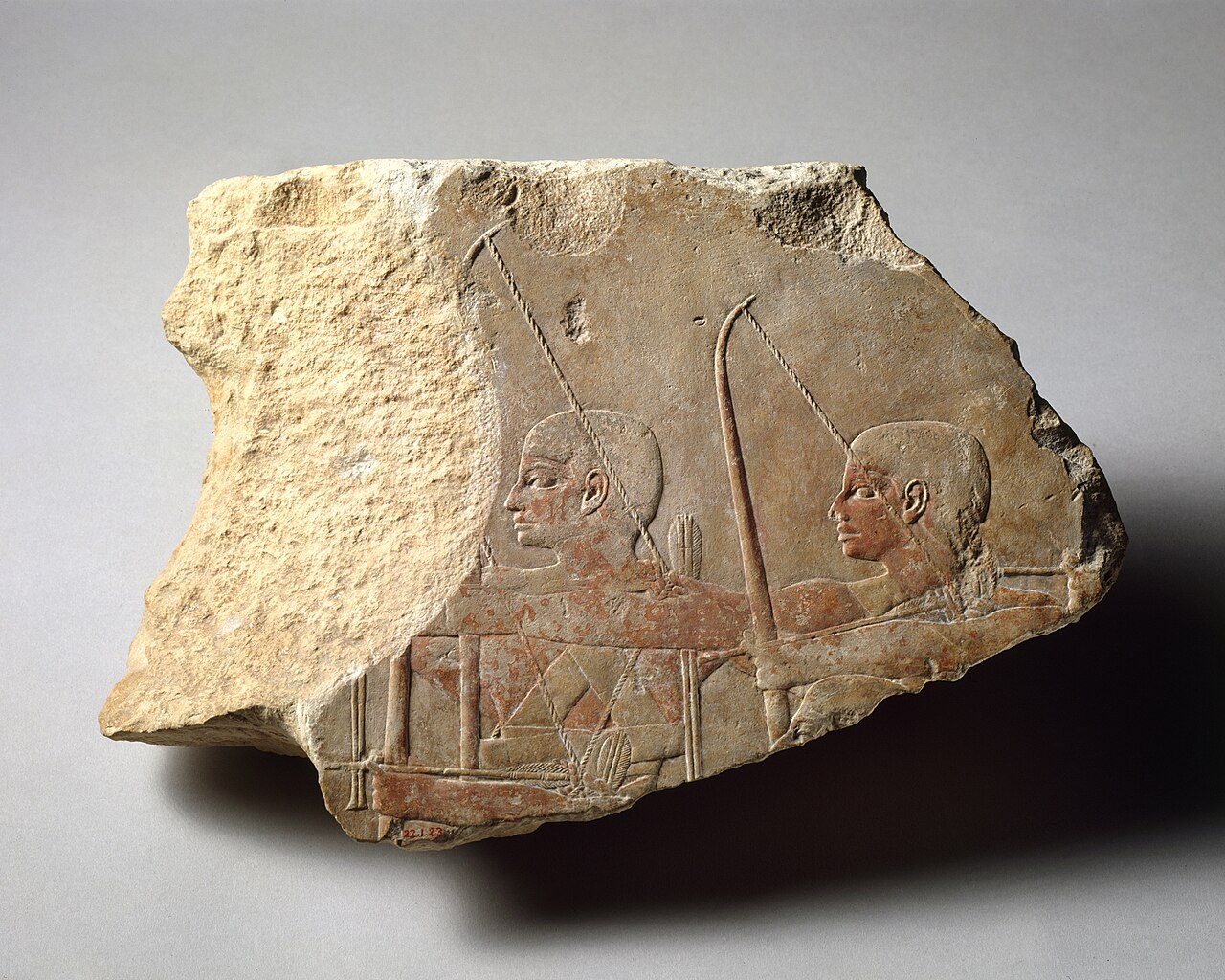
Photograph of a limestone relief fragment with red-painted details showing two archers in profile facing right, each with a bow and a visible quiver; the stone is weathered and broken at the edges.Artifact

Primary source

Relief of Archers from Lisht

Unknown Egyptian sculptor · Old Kingdom, c. 2600-2500 BCE

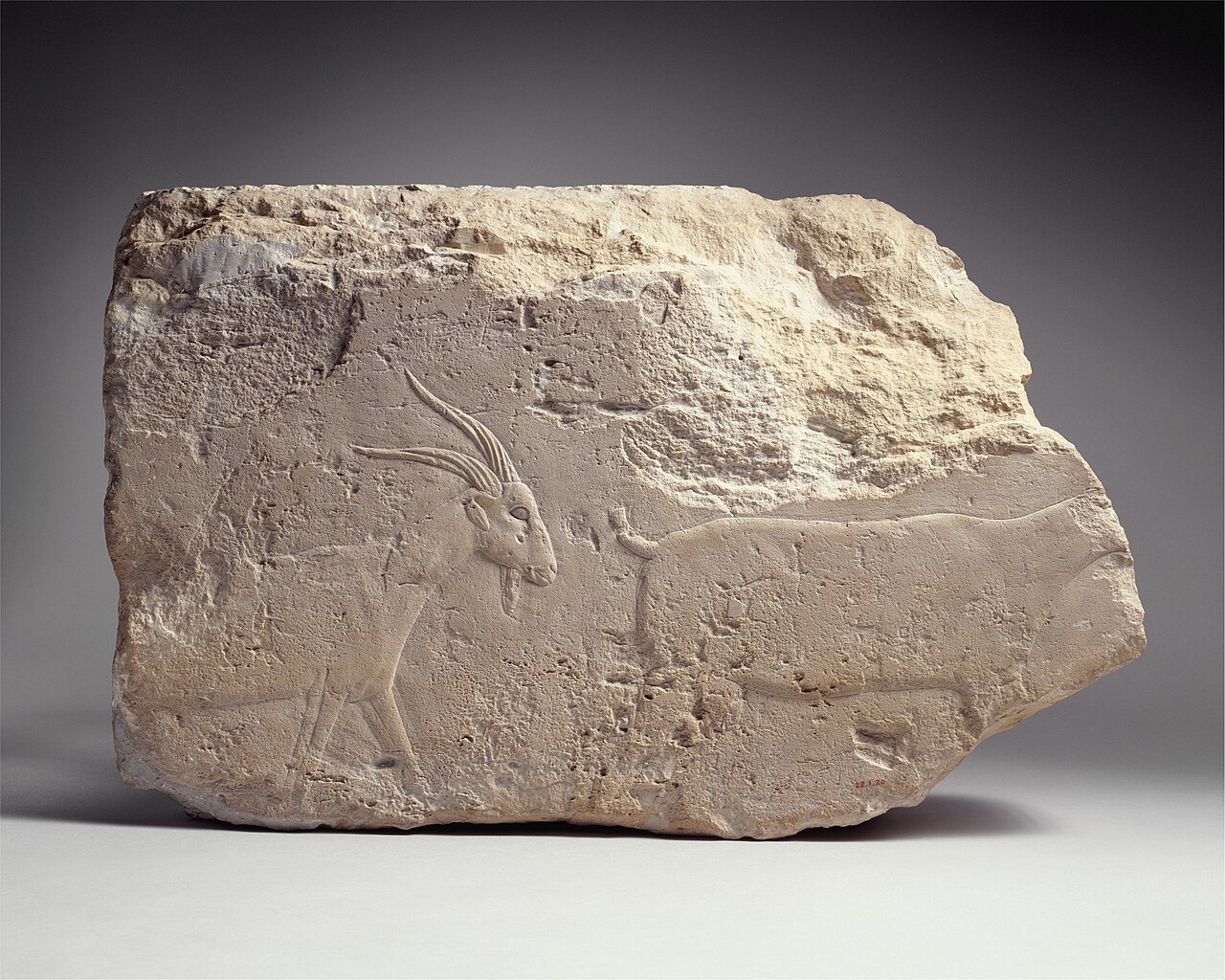
Photograph of a pale limestone relief fragment, rough-edged, showing a carved horned animal in profile on the left facing right, with a second animal's body partly visible on the right. Plain grey backdrop.Artifact

Primary source

Relief with a Billy Goat from Lisht

Unknown Egyptian sculptor · Old Kingdom, c. 2600-2500 BCE

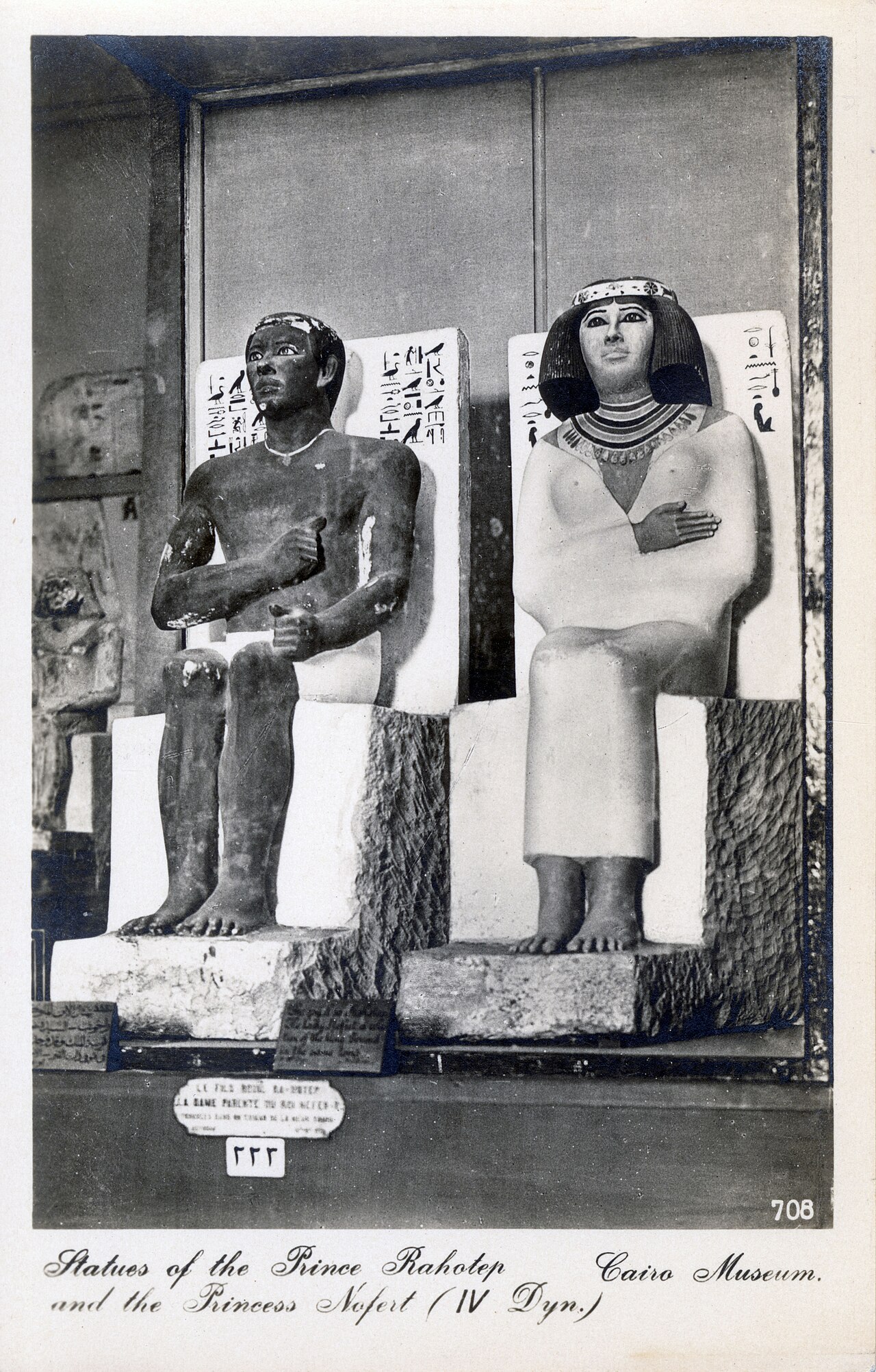
Vintage black-and-white photograph of two seated painted limestone statues in a museum display case: a dark-skinned male figure on the left with bare chest and white kilt-like garment, and a lighter-colored female figure on the right wearing a long white dress and a broad collar necklace. Hieroglyphic inscriptions appear on the stone backdrop. Caption printed below reads Statues of the Prince Rahotep and the Princess Nofert (IV Dyn.), Cairo Museum.Sculpture

Primary source

Statue of Rahotep and Nofret

Unknown Egyptian sculptor · c. 2600 BCE

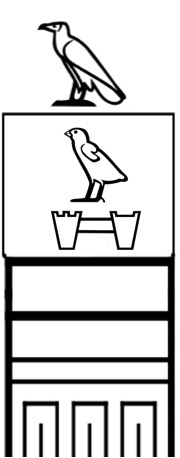
Black-and-white line drawing of an Egyptian royal serekh: a falcon perched on top of a rectangular frame, which contains a smaller falcon above a crenellated sign. Below the frame, stacked horizontal bands and three rectangular recesses at the bottom form a tall column.Painting

Secondary source

Royal Serekh of Khufu

Zemanst · 1907 (publication)

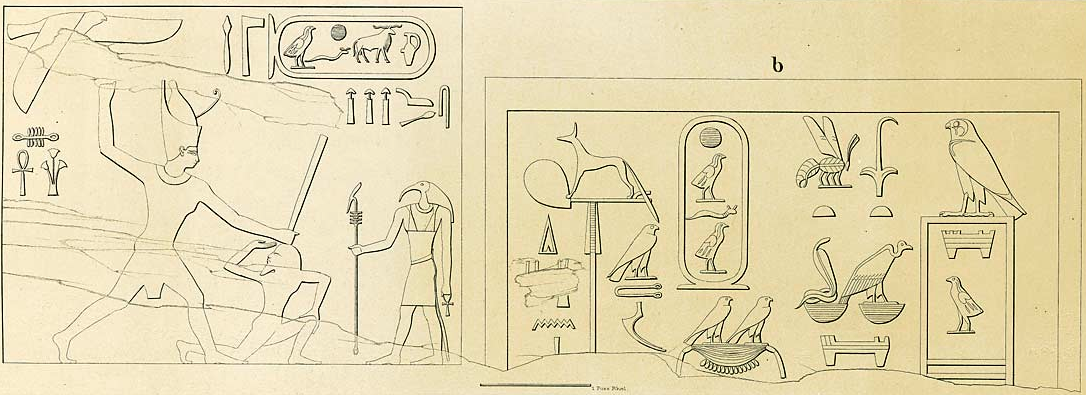
Black-and-white line drawing of a rock inscription in two panels. Left panel: a figure with a headdress raises an object over a kneeling figure, with a cartouche, hieroglyphs, and an ankh-like sign above. Right of center: a standing figure with a falcon head holds a staff. Right panel labeled 'b': a vertical cartouche with a falcon and other hieroglyphs, birds, a sun disk, and a falcon on a pedestal.Painting

Secondary source

Khufu Rock Inscription at Wadi Maghara

Karl Richard Lepsius · 19th century (copy of an Old Kingdom original)

Plain bright red-orange hardcover book cover with a vertical spine along the left edge and a subtle textured surface. No title, text, or images are visible.Book

Secondary source

The Pyramids and Temples of Gizeh

William Matthew Flinders Petrie · 1883

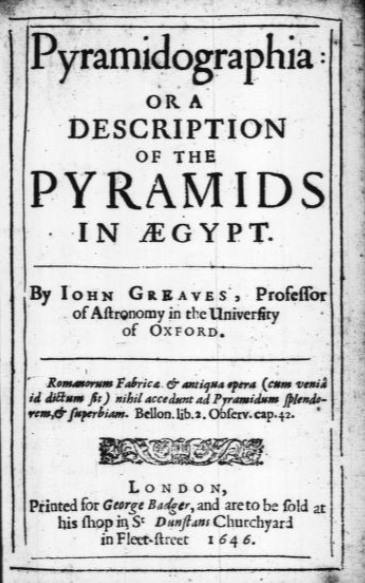
Title page of Pyramidographia, 1646. Large heading reads 'Pyramidographia: or a description of the pyramids in Aegypt.' Below: 'By John Greaves, Professor of Astronomy in the University of Oxford.' A Latin epigraph and an ornamental divider appear, with imprint 'London, Printed for George Badger, and are to be sold at his shop in St Dunstans Churchyard in Fleet-street 1646.'Book

Secondary source

Pyramidographia

John Greaves · 1646

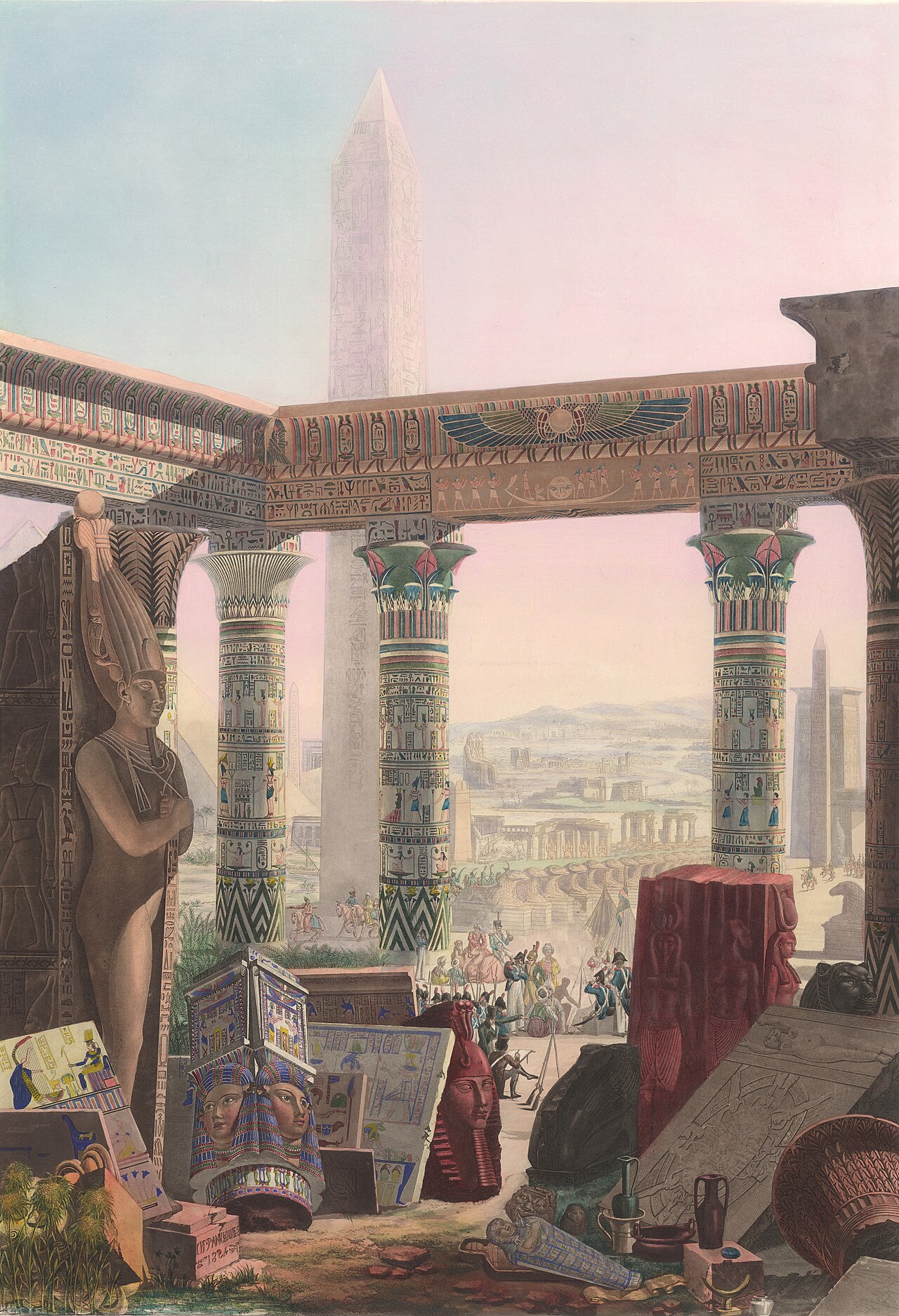
Colored engraving of an imagined Egyptian scene: tall painted columns with hieroglyphs and lotus capitals frame a view of an obelisk and ruins. In the foreground, a seated statue, sphinx heads, sarcophagus, and stone fragments lie among French soldiers and officials with a surveying instrument.Book

Primary source

Description de l'Égypte

Commission des Sciences et des Arts · 1809–1829

A small seated statuette of a figure wearing a tall crown, displayed on a clear acrylic base against a dark blue cloth in a dimly lit museum case. The figure has its right hand raised to its chest and sits on a block-like throne.Sculpture

Primary source

Ivory Statuette of Khufu

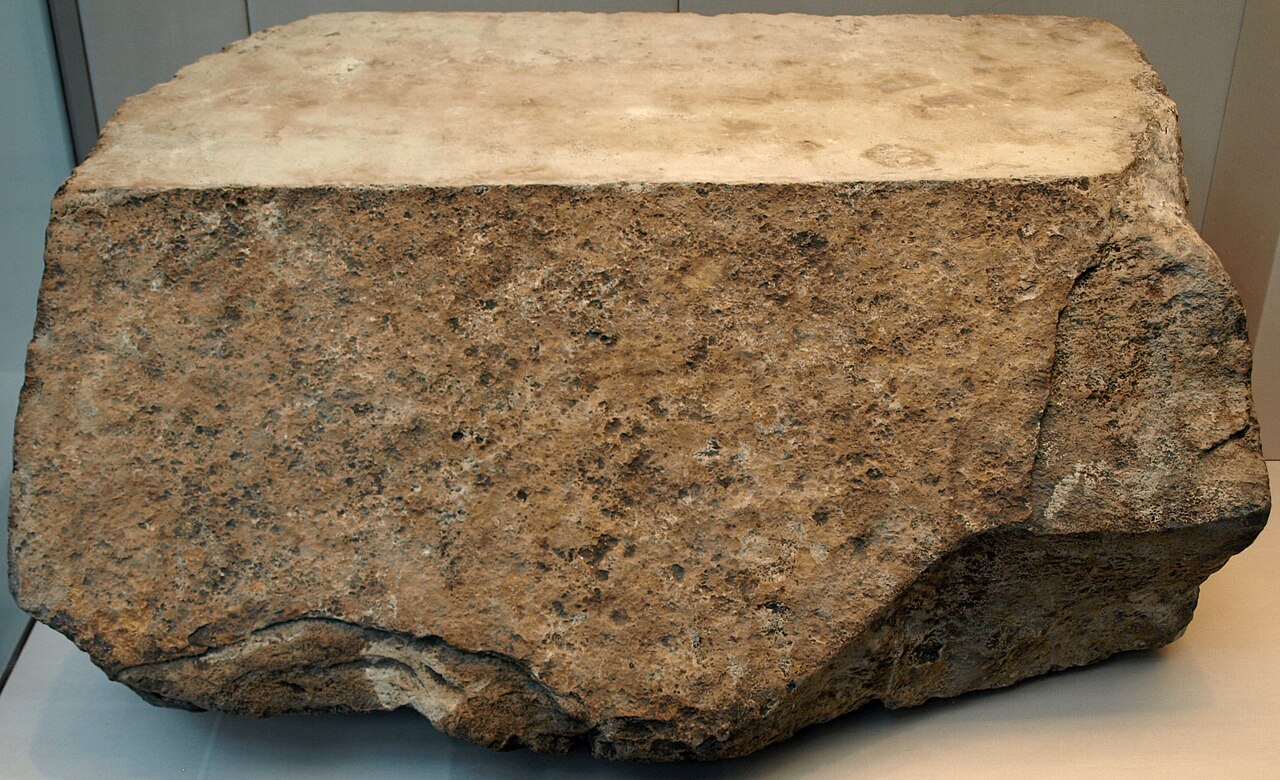
A large rough-textured limestone block with a smoother pale top surface and a weathered, pitted side face, displayed in a museum case against a grey background. Its lower edge is irregular and broken.Artifact

Primary source

Casing Stone from the Great Pyramid of Khufu

c. 2570 BC

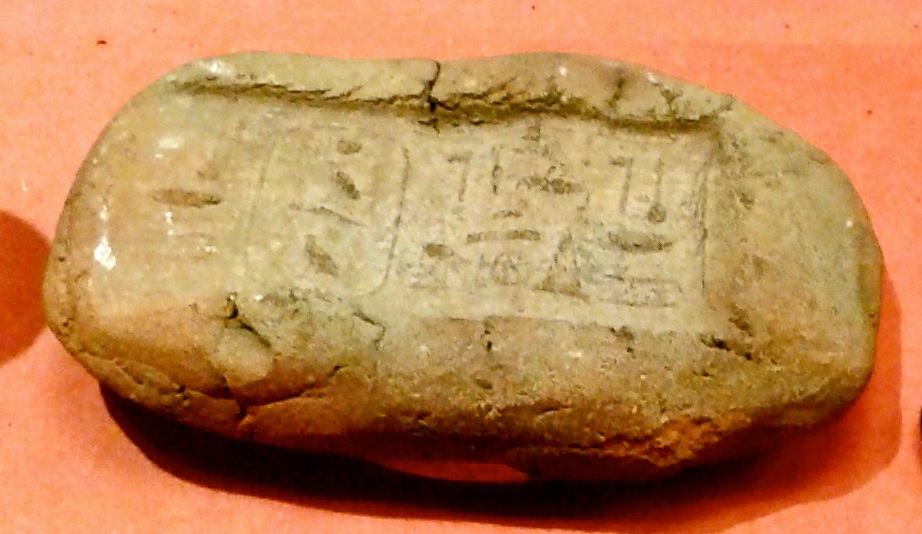
Photograph of a small, irregular, grey-brown clay object with rounded edges, lying on a reddish-orange surface. Its flat face bears incised hieroglyphic-style signs inside a rectangular frame, with some cracks and chipping visible at the edges.Artifact

Primary source

Clay Sealing Inscribed with Khufu's Name

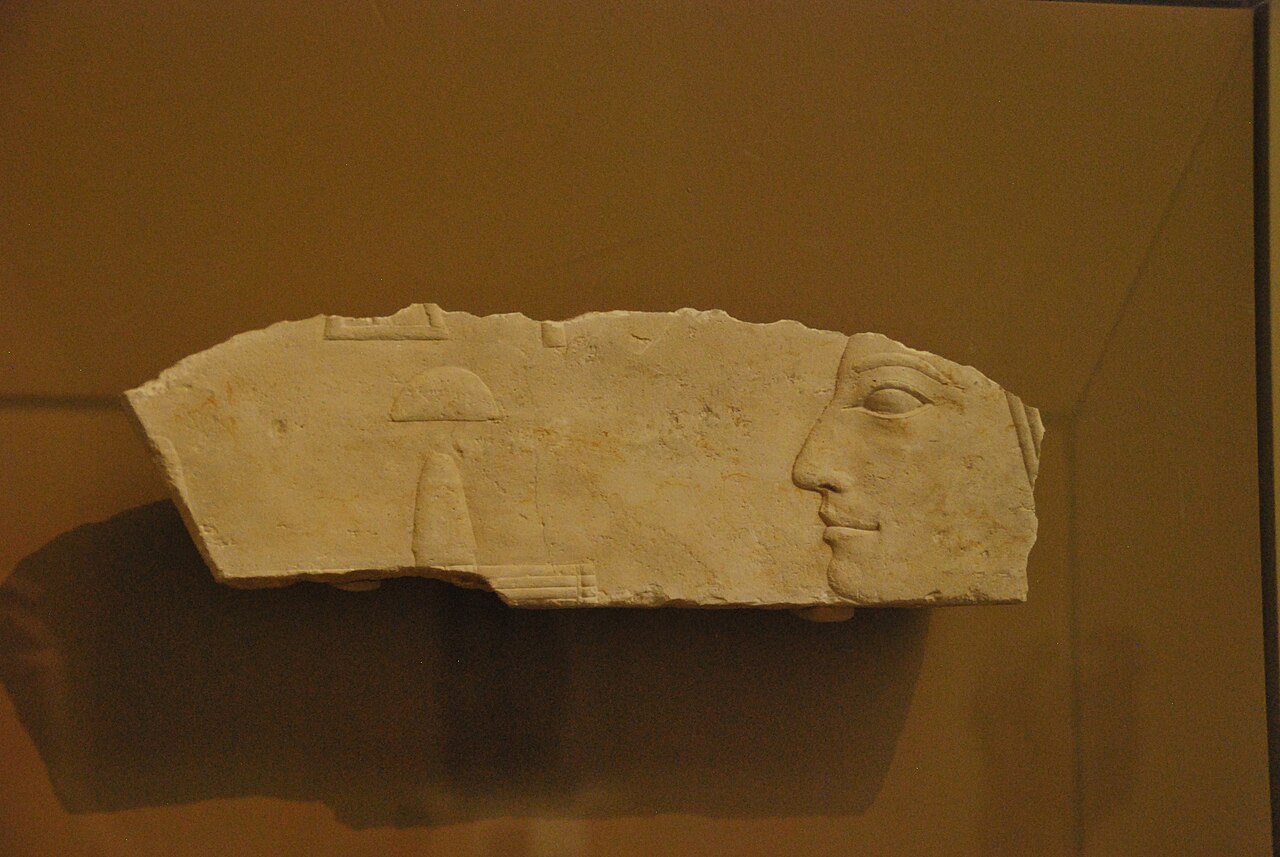
Photograph of a pale limestone relief fragment displayed against a brown wall in a museum case. The carved face in profile faces right, with a large almond-shaped eye, a straight nose, and a small mouth. Above the eye is a carved brow. A carved half-circle shape and a vertical shape appear on the left side, and a small rectangular step is at the bottom. The fragment has irregular broken edges.Sculpture

Primary source

Limestone Relief of Hemiunu from Giza

2551–2528 BCE

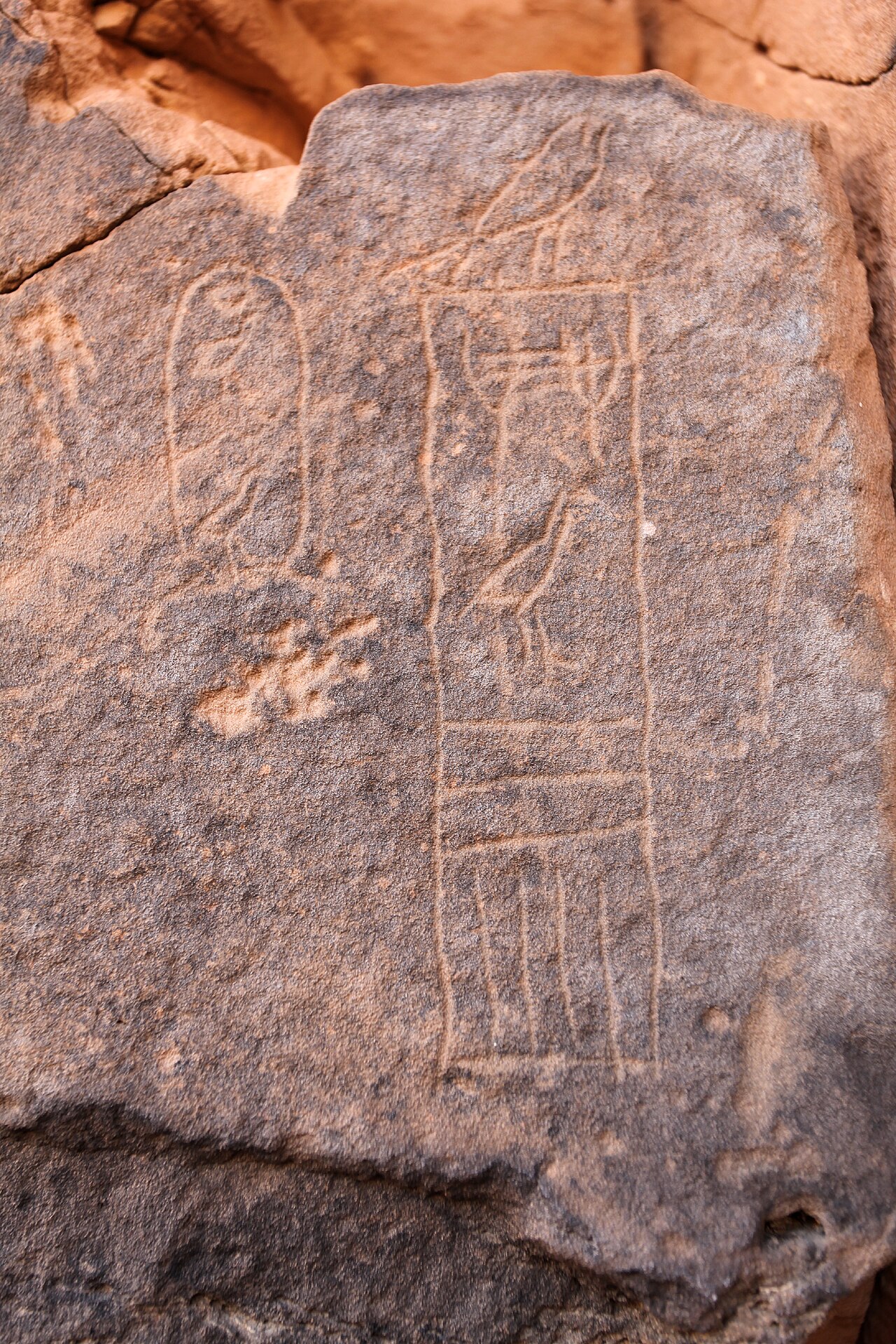
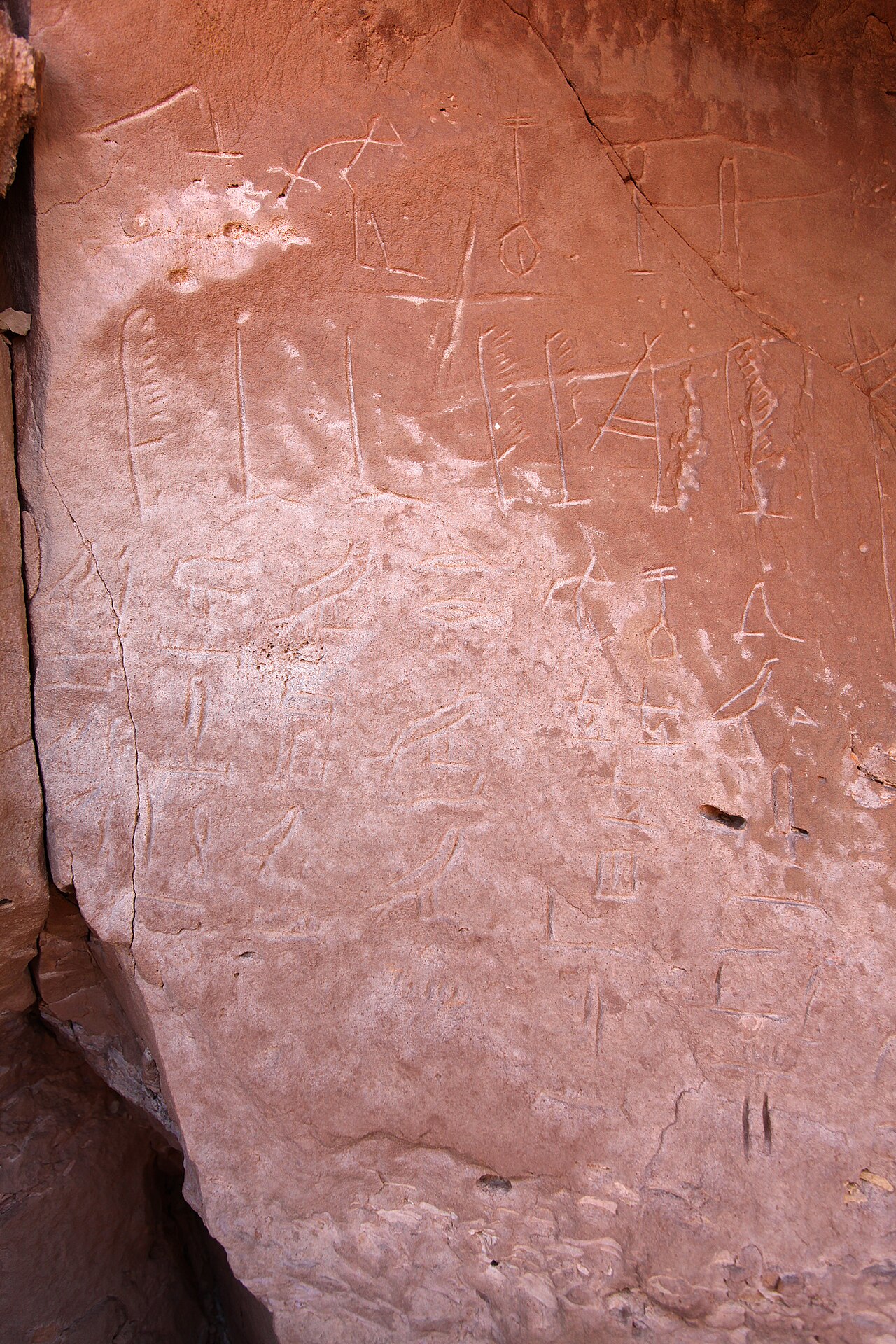
Photograph of a sandstone rock surface with incised ancient Egyptian hieroglyphs: a bird figure at top, a rectangular frame with a falcon-like sign, a cartouche-like oval at left, and horizontal lines and vertical strokes below.Document

Primary source

Rock Inscription of Cheops at the Water Mountain of Djedefre

reign of Khufu, c. 2551–2528 BCE

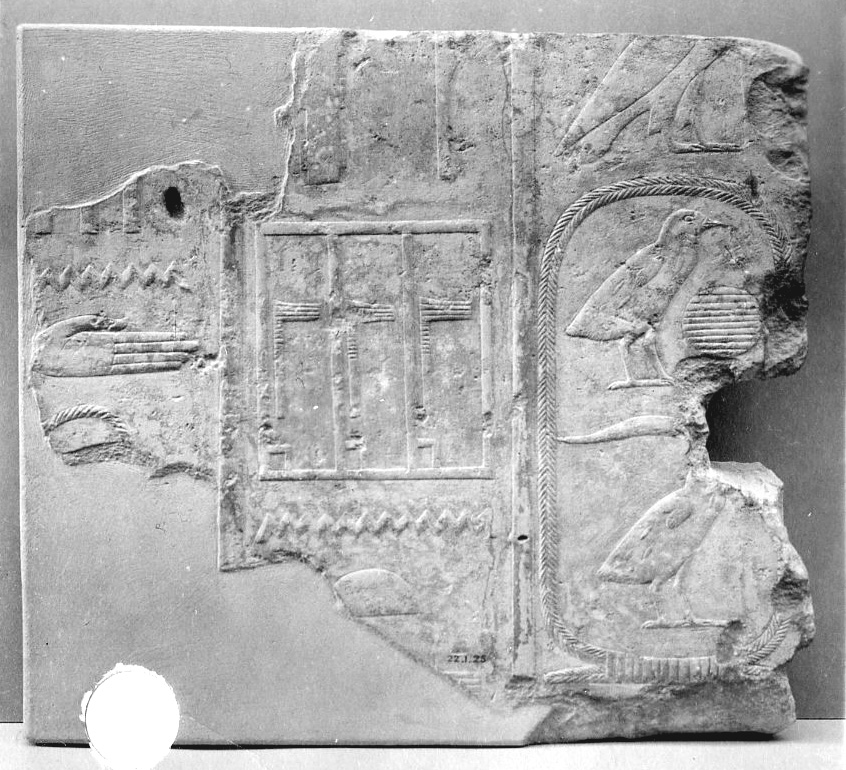
Black-and-white photograph of a limestone relief fragment with carved Egyptian hieroglyphs and figures. A bird, possibly a falcon, appears on the right within an oval frame, with another bird below. A rectangular panel with vertical lines sits in the center, and a zigzag band runs along the top and bottom. A small white circle appears at lower left.Document

Primary source

Temple Relief with Khufu's Building Inscription

c. 2551–2528 BCE

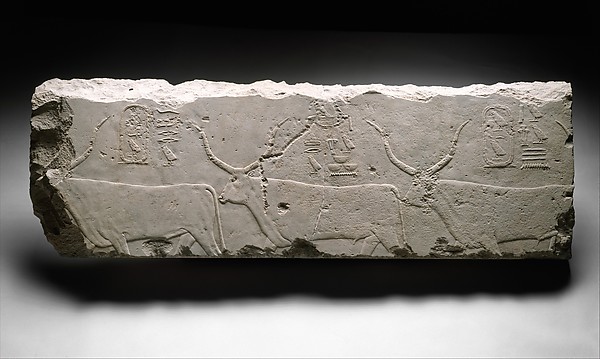
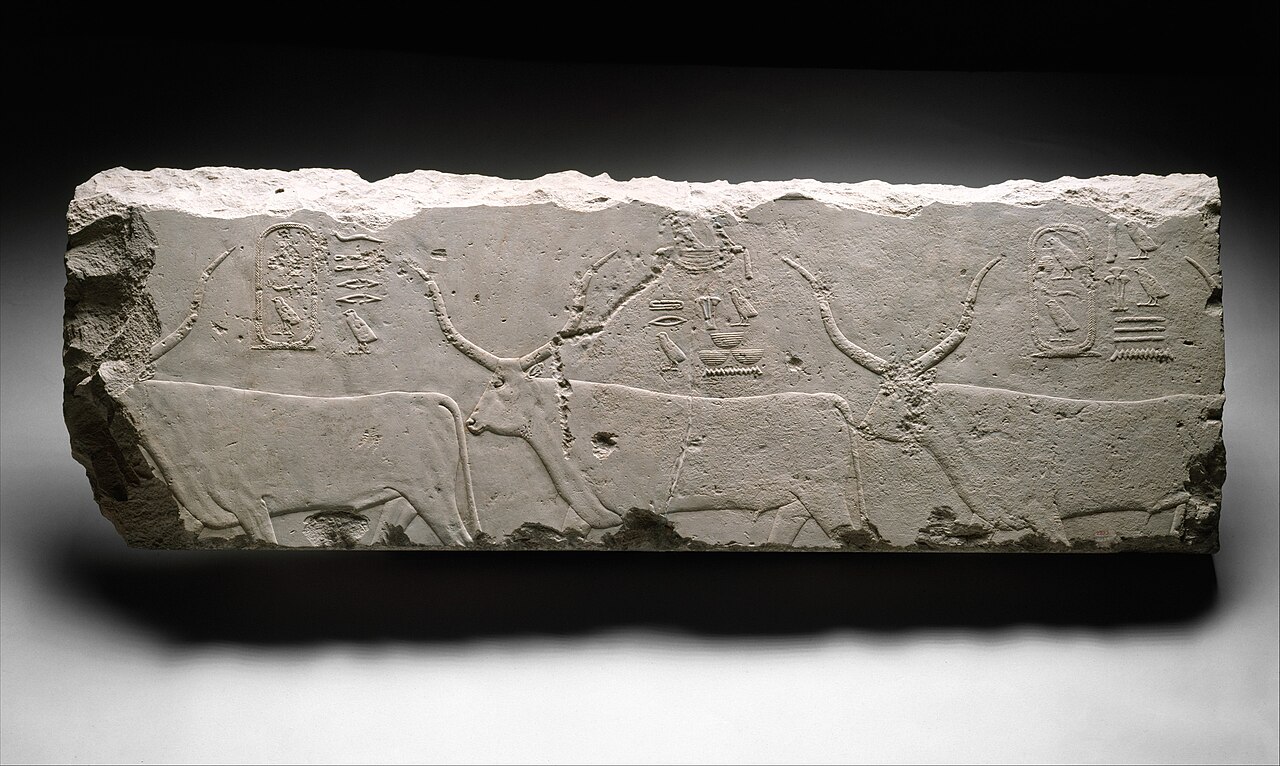
Photograph of a rectangular limestone relief fragment on a dark background. Carved figures include three cattle with long curved horns in profile, and small figures of a seated official and offering stands above them, with a cartouche-like panel at upper right. The stone edges are rough and broken.Sculpture

Primary source

Relief Fragment with King Khufu's Cattle

c. 2551–2528 BCE

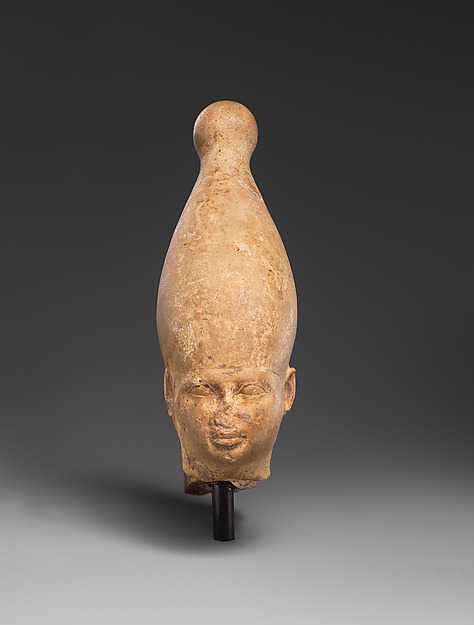
Photograph of a small pale carved stone head of a king wearing a tall white crown with a bulbous top, mounted on a dark cylindrical stand against a gray background. The face has a calm expression with a short beard visible on the chin.Sculpture

Primary source

Head of a Fourth Dynasty King in a White Crown

c. 2575–2465 BCE

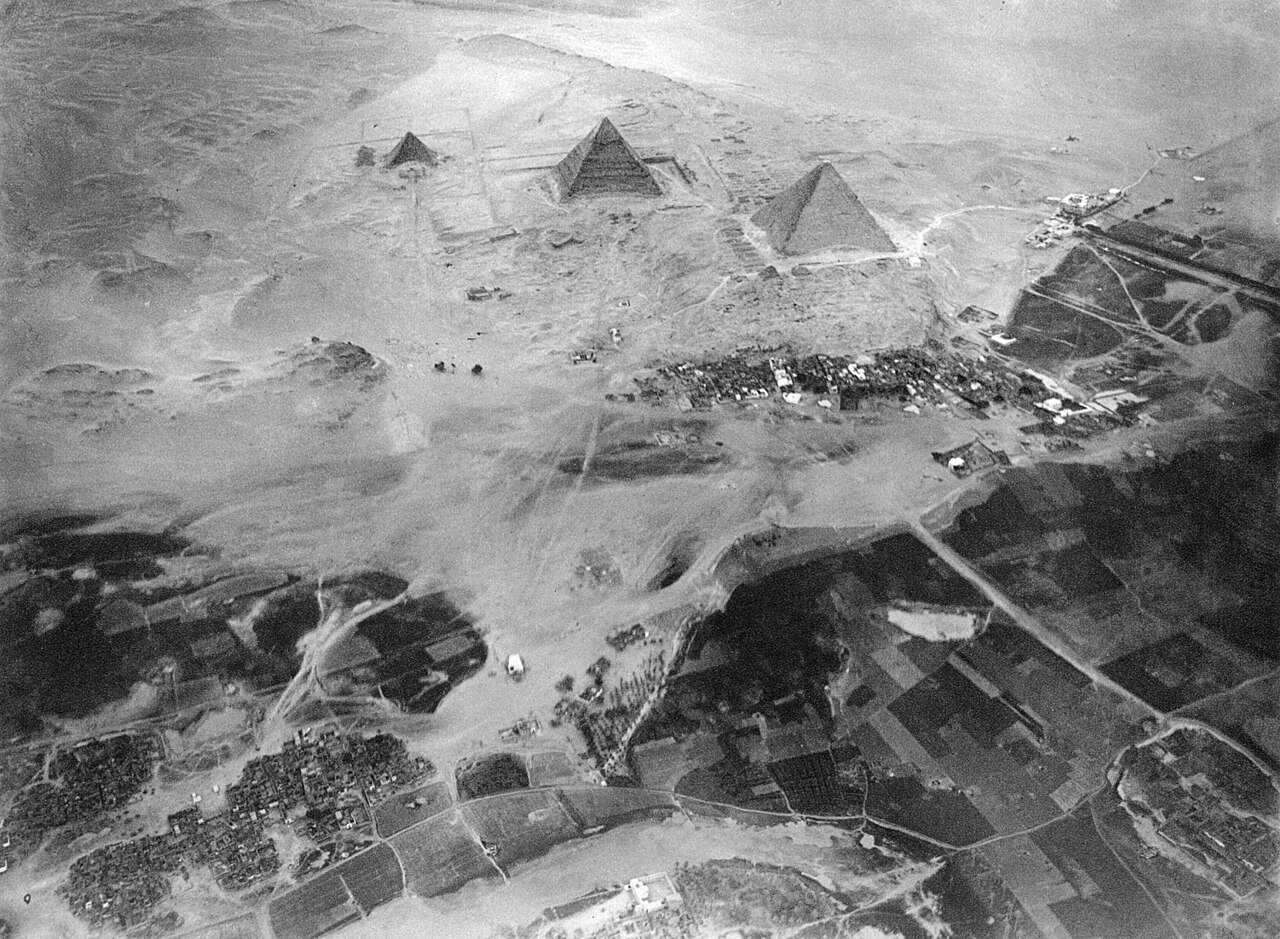
Black-and-white aerial photograph taken from a balloon of the Giza pyramid complex. Three pyramids stand across the desert, with a dense village and cultivated fields with a river visible in the foreground and lower right.Photograph

Secondary source

Pyramids of Gizah, Balloon Photograph

Eduard Spelterini · 21 November 1904

Book

Secondary source

Ancient Egypt: The Pyramid Builders

George Rawlinson · 1886

Newspaper article

Secondary source

The Pyramid of Cheops

1883

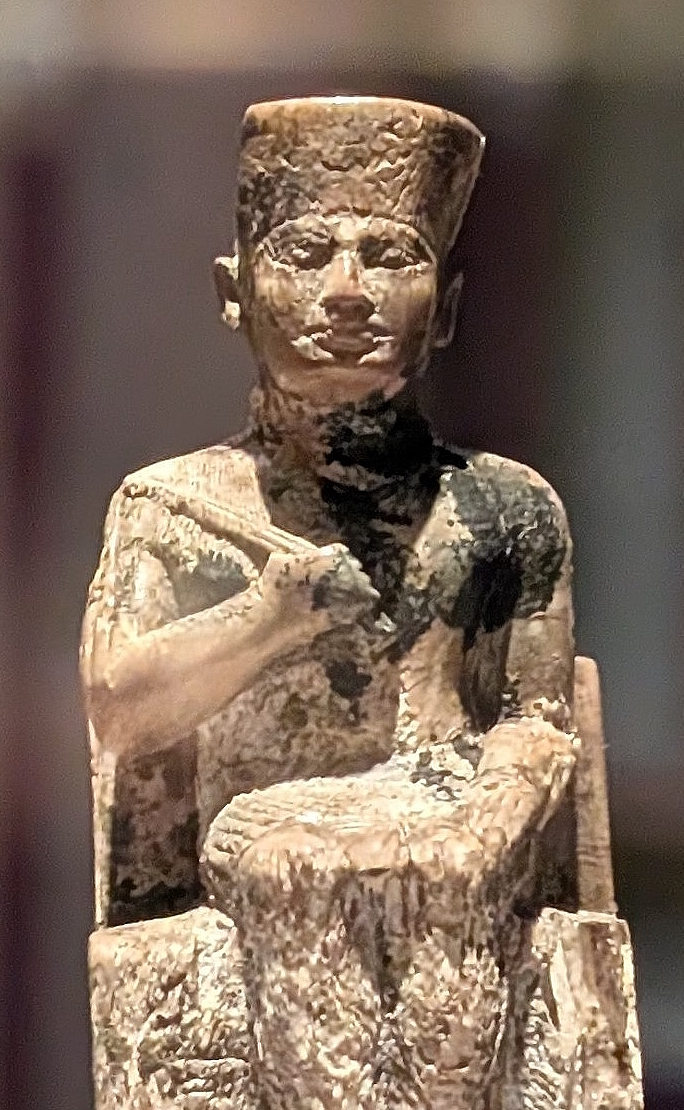
Close-up photo of a small seated ivory or stone figure with a tall cap crown, a clenched fist raised to the chest, and a hand resting on the lap. Dark mottled patches mark the surface. Blurred background.Photograph

Secondary source

Statue of Khufu

UserPpPp · 2025

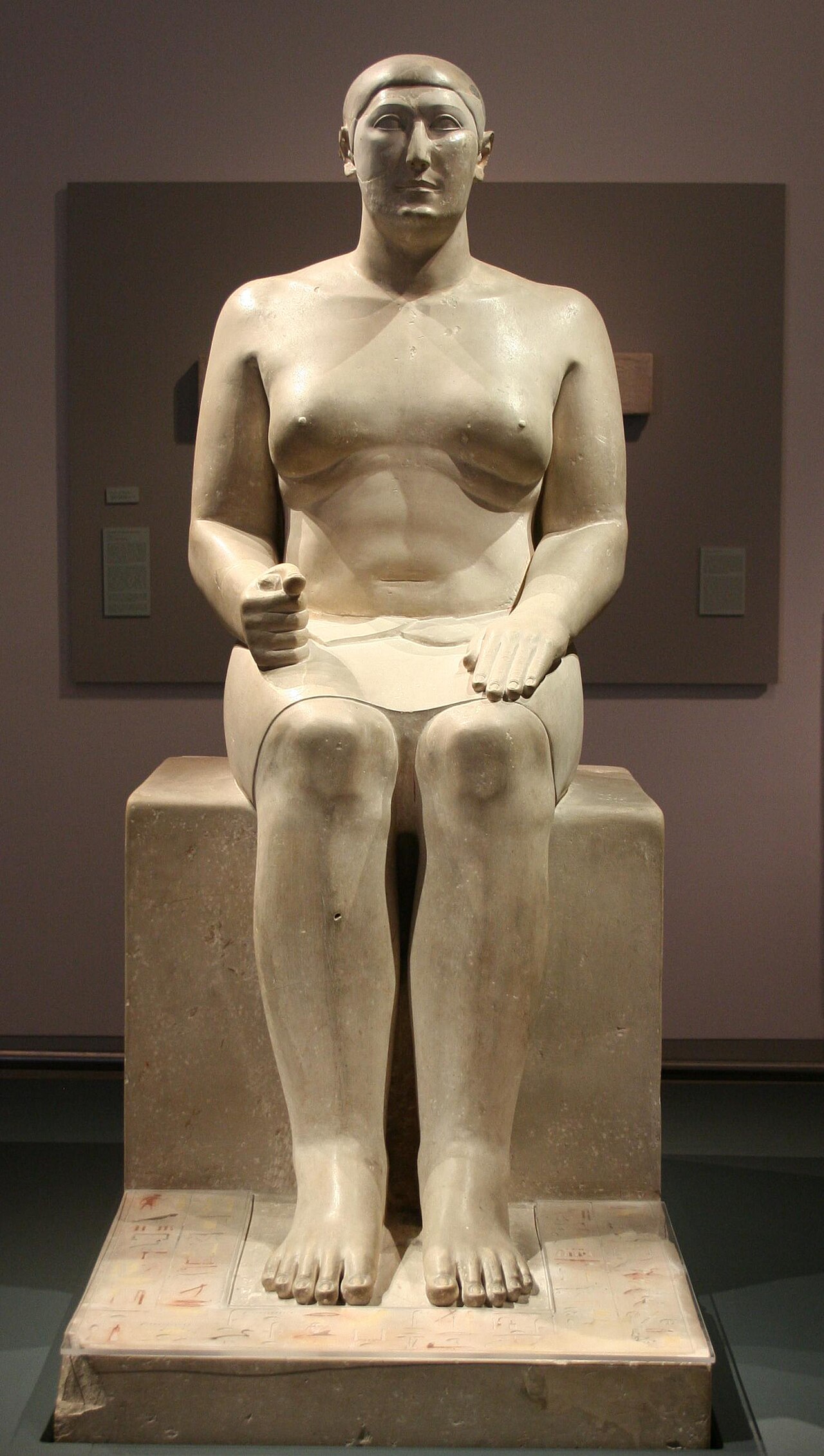
Seated limestone statue of a man with a shaved head and bare torso, hands resting on his knees, wearing a short kilt-like garment, on a block throne with painted hieroglyphs on its base, displayed in a museum.Sculpture

Primary source

Statue of Hemiunu

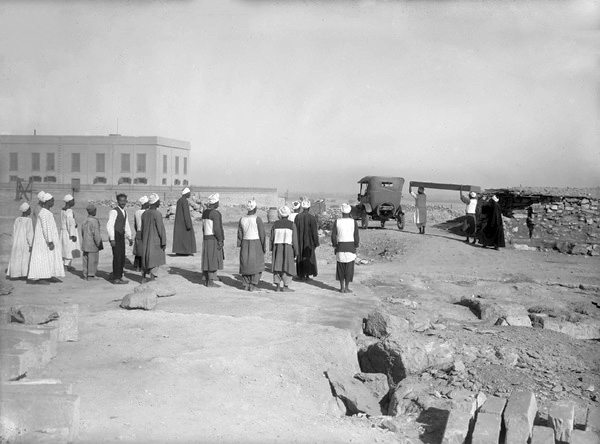
Black-and-white photograph of an excavation site in desert with rubble and stone blocks. A group of men in robes and white turbans stand watching, while a vehicle with a covered box is loaded or driven away near a stone wall. A low white building sits in the background under a pale sky.Photograph

Primary source

Excavation of Hetepheres I's Tomb: Gold Beam

Mohammedani Ibrahim · 1926

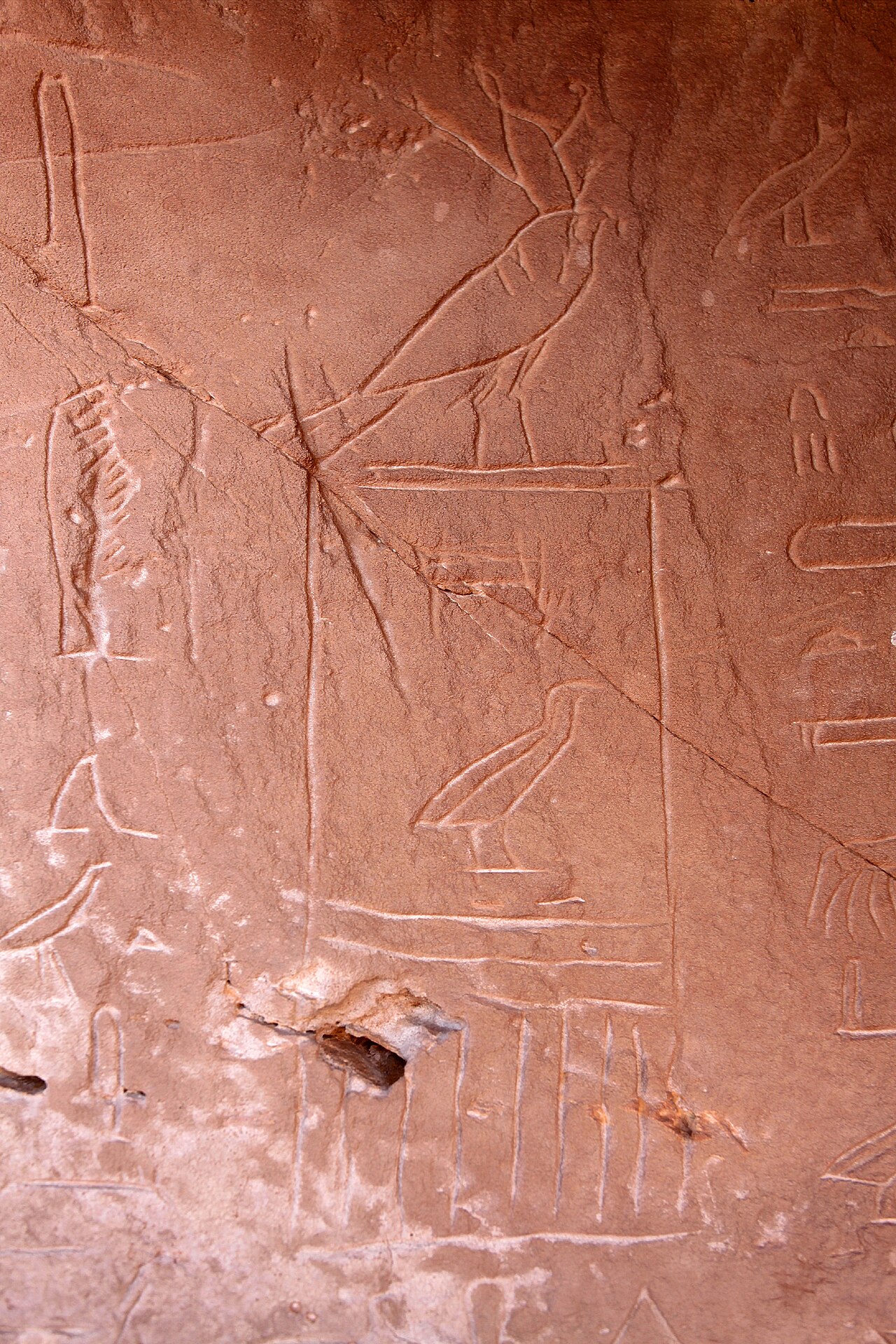
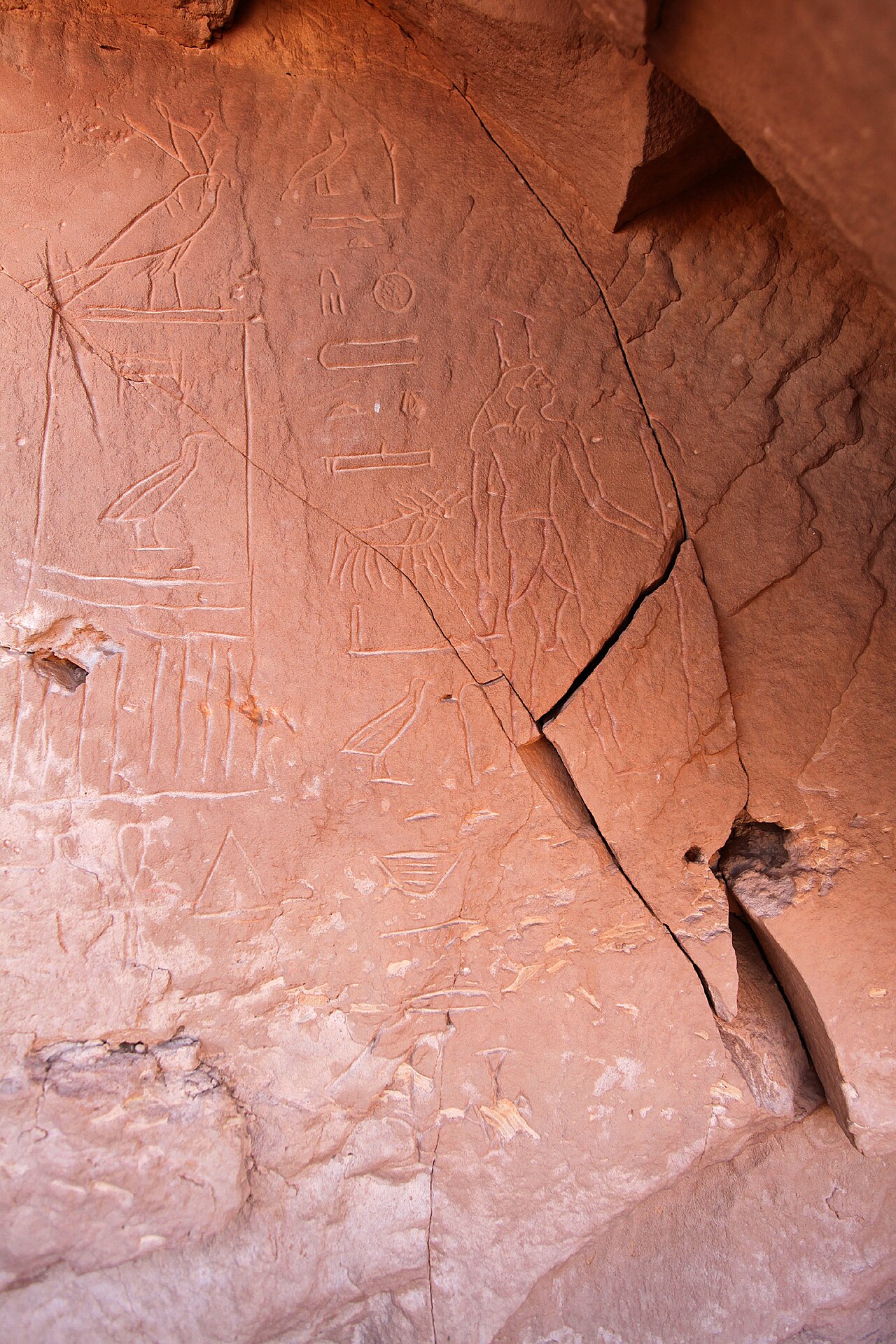
Close-up photo of carved hieroglyphs on a reddish sandstone wall. Visible signs include a seated bird, a large bird figure at upper center, vertical and horizontal strokes, and a rounded pillar sign. A diagonal crack runs across the surface.Artifact

Primary source

Expedition Inscription Bearing Khufu's Horus Name

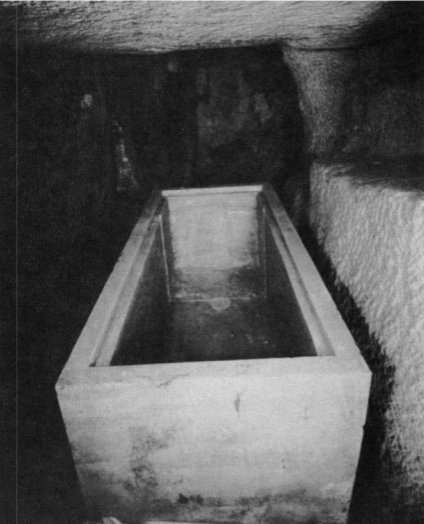
Black and white photograph of a rectangular alabaster sarcophagus with an open lid-less box shape sitting inside a dark rock-cut tomb chamber, with rough stone walls around it.Photograph

Primary source

Alabaster sarcophagus from the tomb of Hetepheres I

George Andrew Reisner · c. 1927

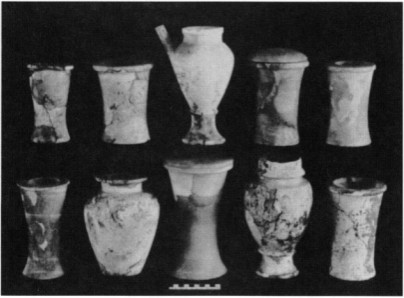
Black-and-white photograph of ten pale stone vessels arranged in two rows against a dark background, with a measurement scale bar at the bottom. Vessels vary in shape: some are cylindrical with flared rims, one is a tall pitcher with a spout, and others are squat jars.Photograph

Primary source

Stone vessels from the tomb of Hetepheres I

George Andrew Reisner · c. 1925

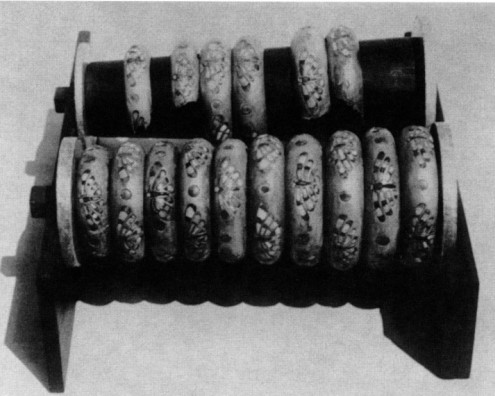
Black-and-white photograph of a set of ancient bracelets arranged on a dark wooden stand with restored supports. Two rows of ring-shaped bracelets, inlaid with small patterned decorations, are set side by side on the stand.Photograph

Primary source

Bracelets from the tomb of Hetepheres I

George Andrew Reisner · c. 1925

Photograph of a reddish sandstone rock face with incised ancient Egyptian hieroglyphic inscriptions in vertical and horizontal columns. Some signs are worn, and a crack runs diagonally across the rock.Photograph

Primary source

Expedition inscription bearing Khufu's Horus name

Roland Unger · 2012-09-17

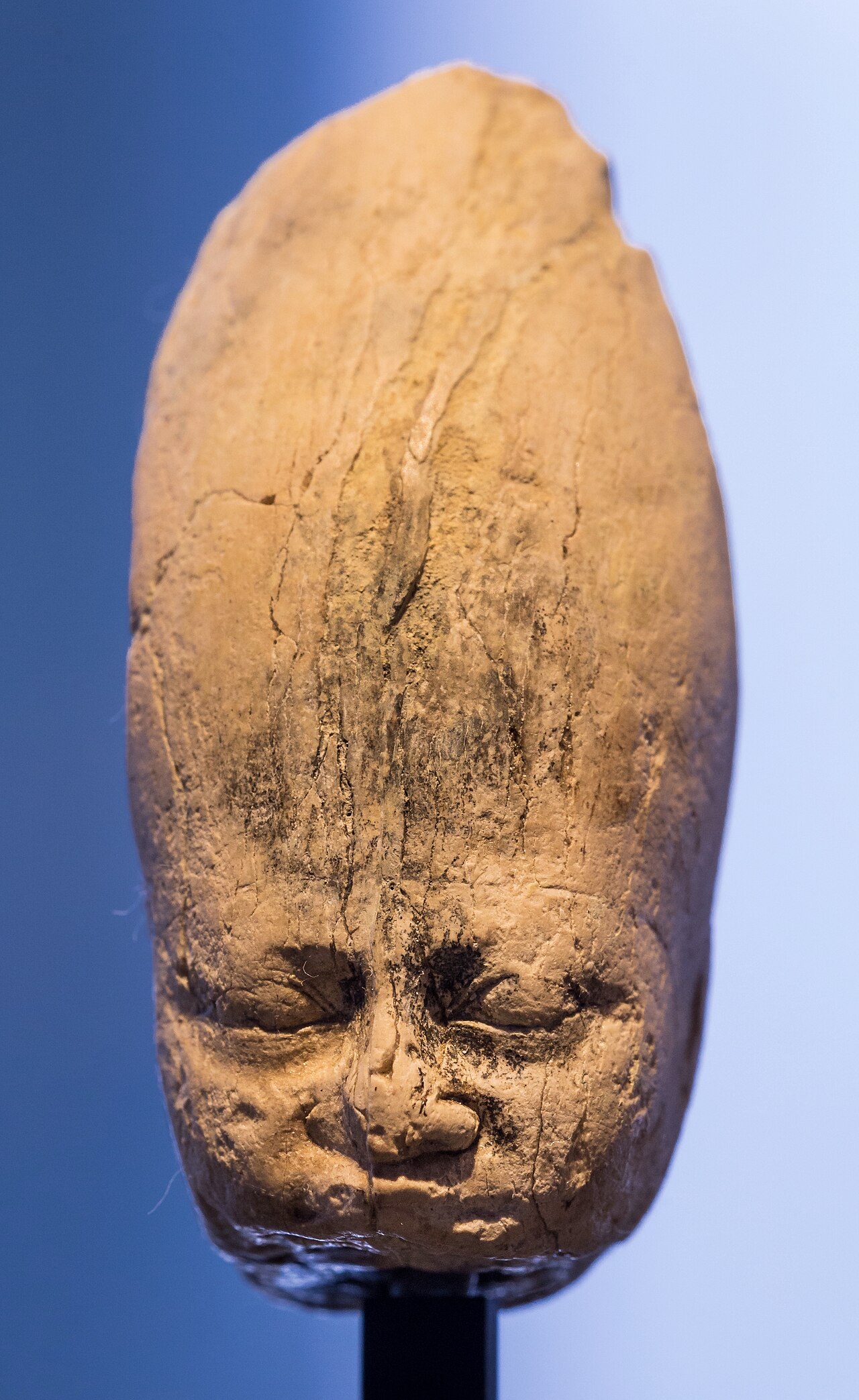
Close-up photo of a small, weathered tan limestone head against a blue background, with a carved face: heavy-lidded eyes, a broad nose, and a small mouth. The top is rough and irregular, and a dark stand is visible at the bottom.Sculpture

Primary source

Miniature limestone head of a pharaoh, probably Khufu

c. 2550 BCE

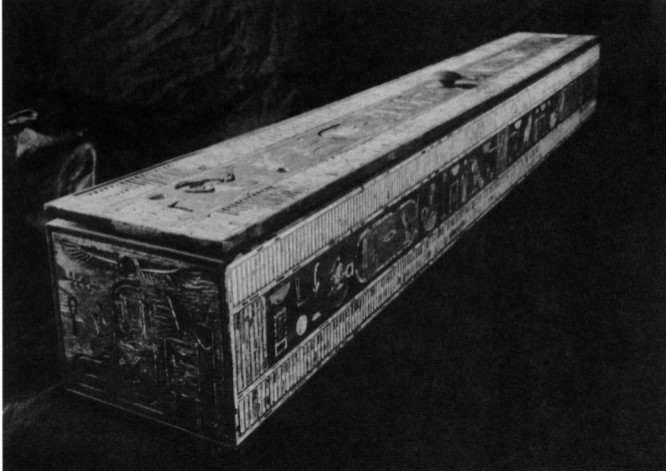
Black-and-white photograph of a long, rectangular wooden box with a flat lid, decorated with carved and inlaid panels and hieroglyphic inscriptions, set against a dark background. The box is shown at an angle.Photograph

Primary source

Curtain box from the tomb of Hetepheres I, as restored

George Andrew Reisner · c. 1925

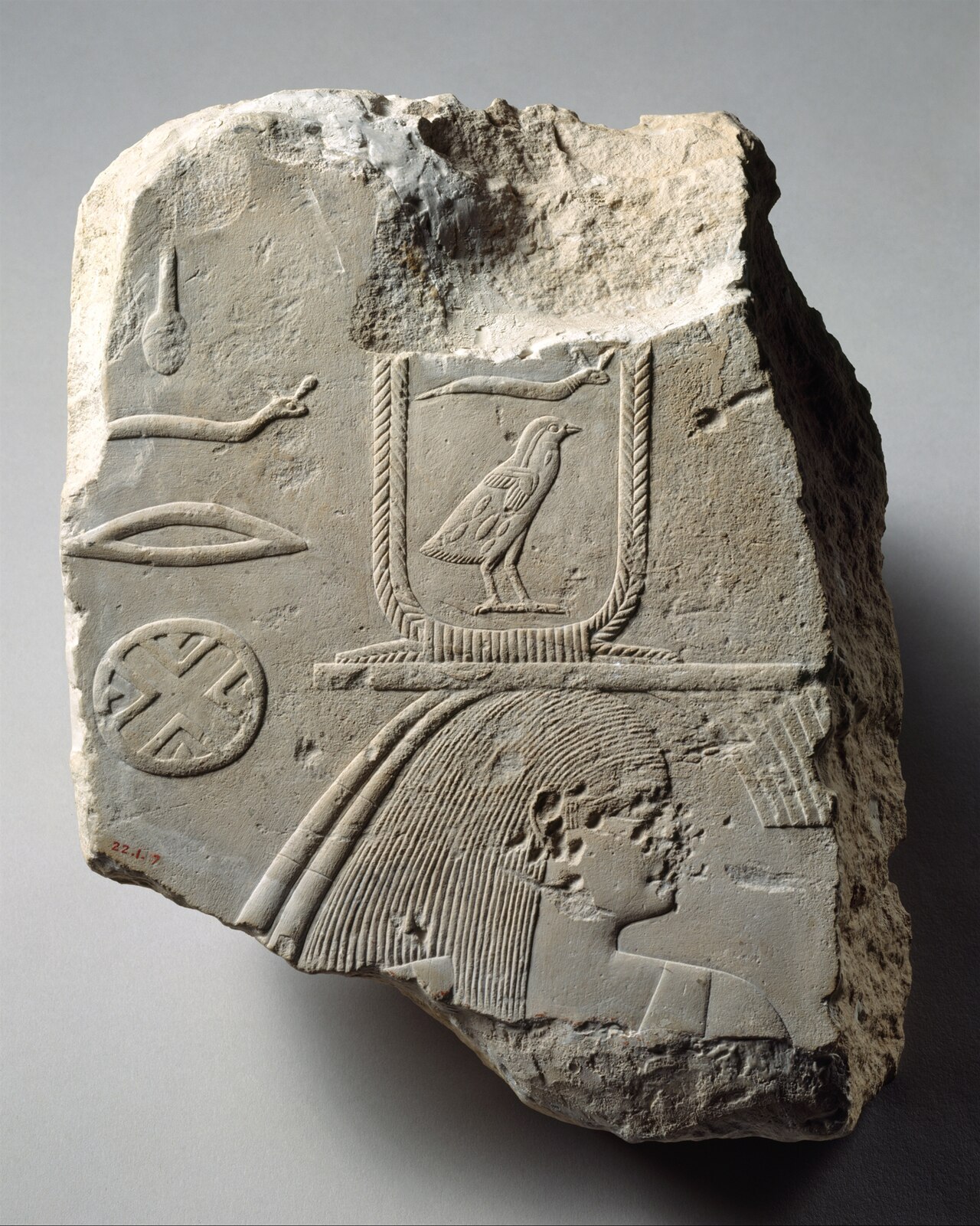
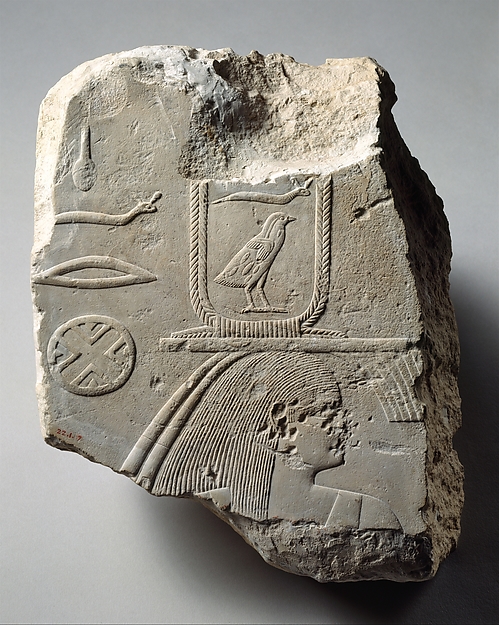
Photograph of a limestone relief fragment from ancient Egypt. A carved bird, possibly a falcon, stands in a rope-bordered panel at center, above a horizontal band. Below, a woman's head in profile with a striated wig and a hieroglyphic sign at left. Hieroglyphic signs include a snake, an eye-like sign, and a circular sign.Sculpture

Primary source

Relief with Female Personification of an Estate

c. 2551 BCE

Photograph of a limestone relief fragment, shown on a dark background. Three long-horned cattle are carved in low relief in a row, with cartouches and hieroglyphic signs above them, including a figure of a king and a seated offering scene at the top center.Sculpture

Primary source

Relief Fragment Showing King Khufu's Cattle

c. 2551 BCE

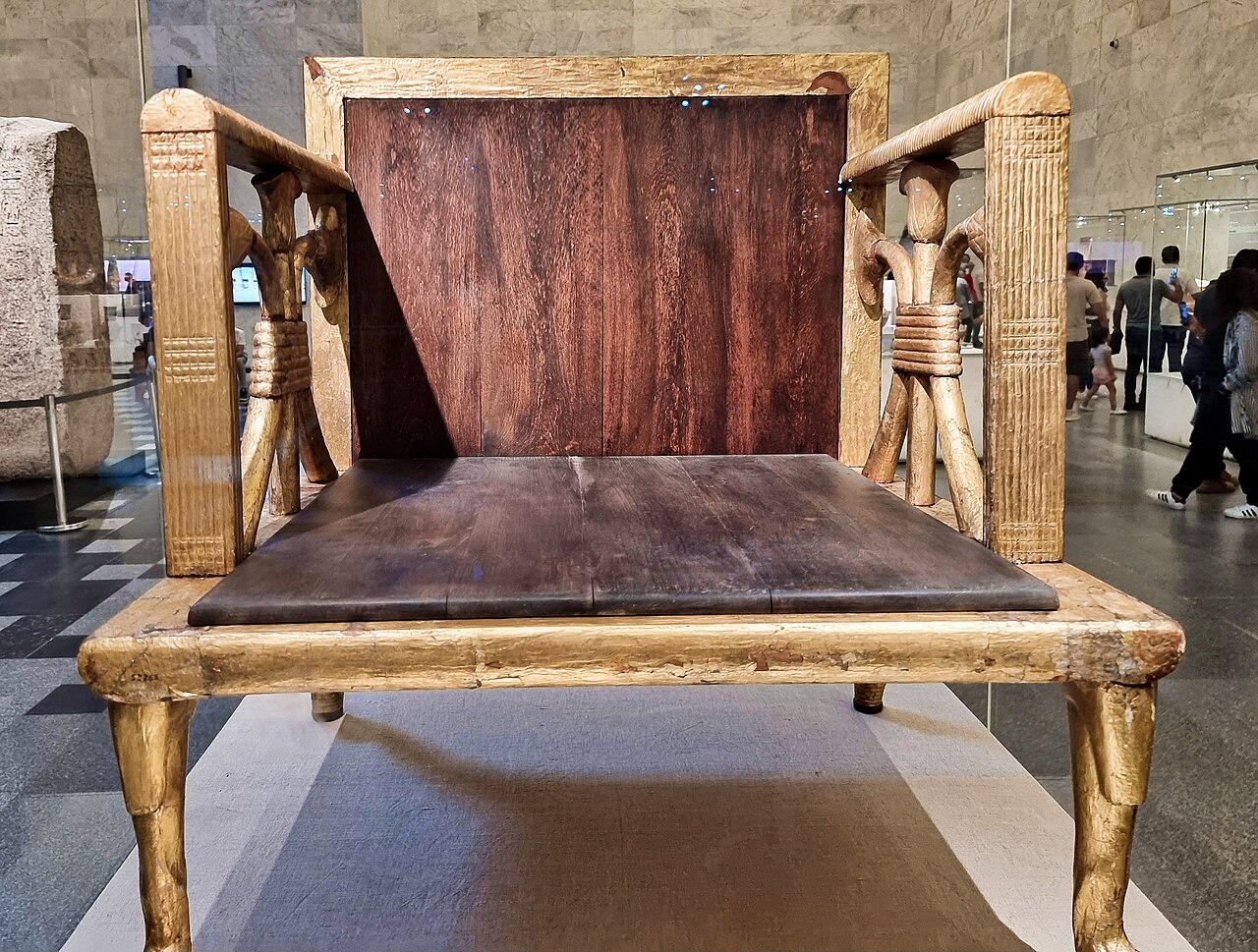
A gilded wooden armchair with a dark wooden seat and back panel, carved gold arms supported by papyrus-bundle style posts tied with bands, standing on a museum floor. Visitors are in the background.Artifact

Primary source

Chair of Queen Hetepheres

c. 2551-2528 BCE

Photograph of carved hieroglyphs and a standing human figure incised into a reddish sandstone rock face, with a diagonal crack running through the surface. Bird and vessel signs are visible on the left.Document

Primary source

Expedition Inscription of Ijj-merjj and Bebi

Ijj-merjj and Bebi

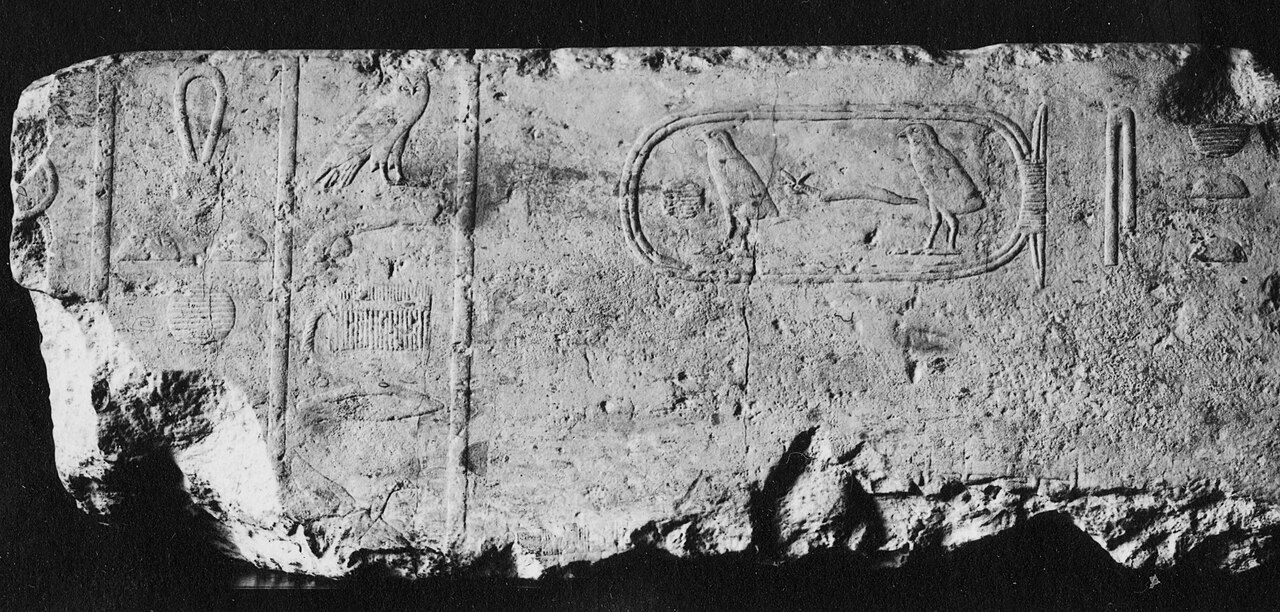
Black-and-white photograph of a carved limestone block showing Egyptian hieroglyphs in relief. A cartouche oval with inscribed signs is at center-right, with a vertical column of signs to its right and an ankh-like sign and other symbols at left. The block edges are rough and broken.Sculpture

Primary source

Relief Block with Cartouche

c. 2551 BCE

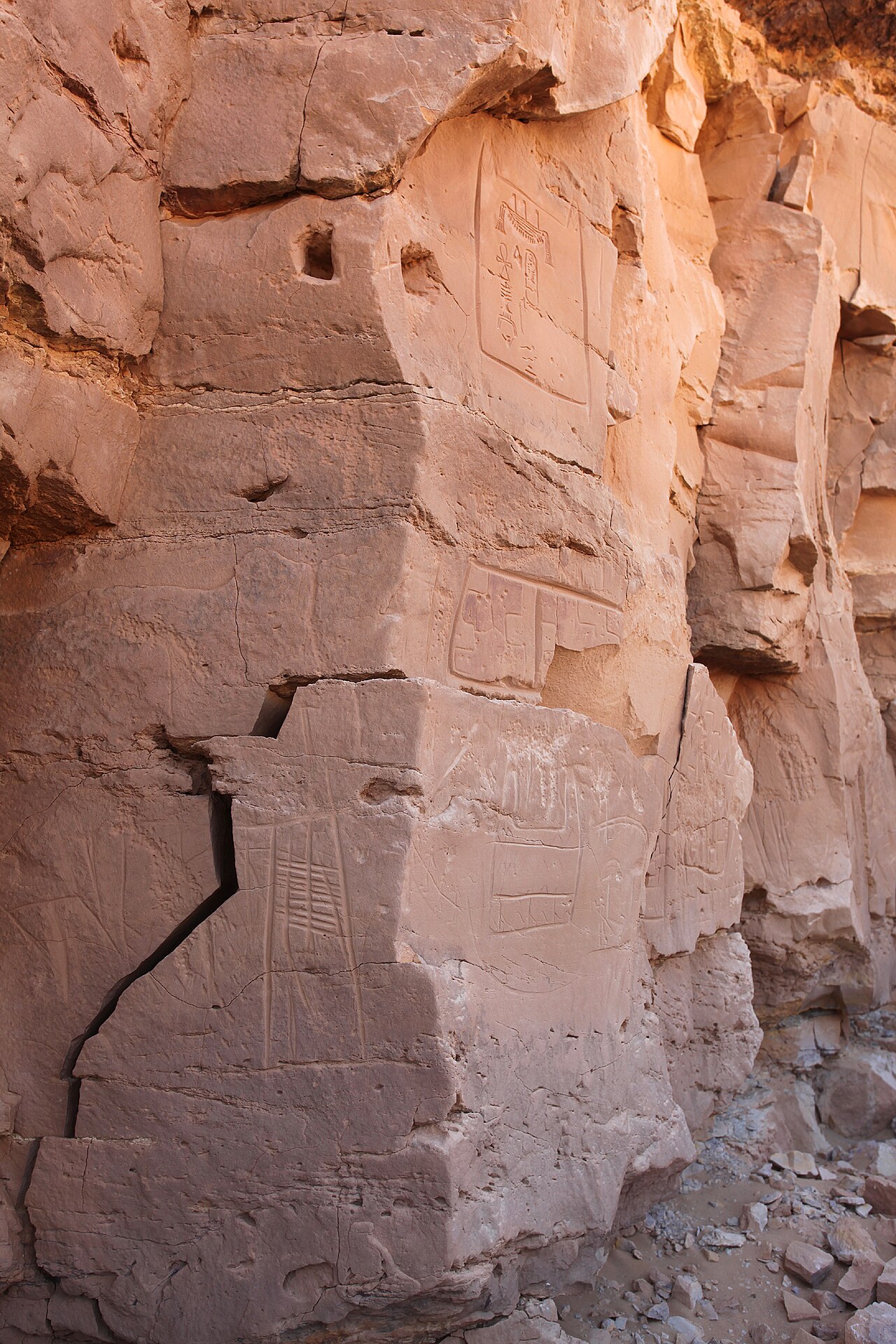
Sandstone cliff face with several carved hieroglyphic inscriptions and cartouches, including a rectangular panel near the top and a framed inscription lower down, with rubble at the base of the rock.Document

Primary source

Rock Inscriptions at the Water Mountain of Djedefre

Close view of a weathered red sandstone rock surface with carved hieroglyphic-style inscriptions, including bird and figure signs, arranged in vertical and horizontal lines across the stone.Document

Primary source

Inscription of the Expedition of Bebi

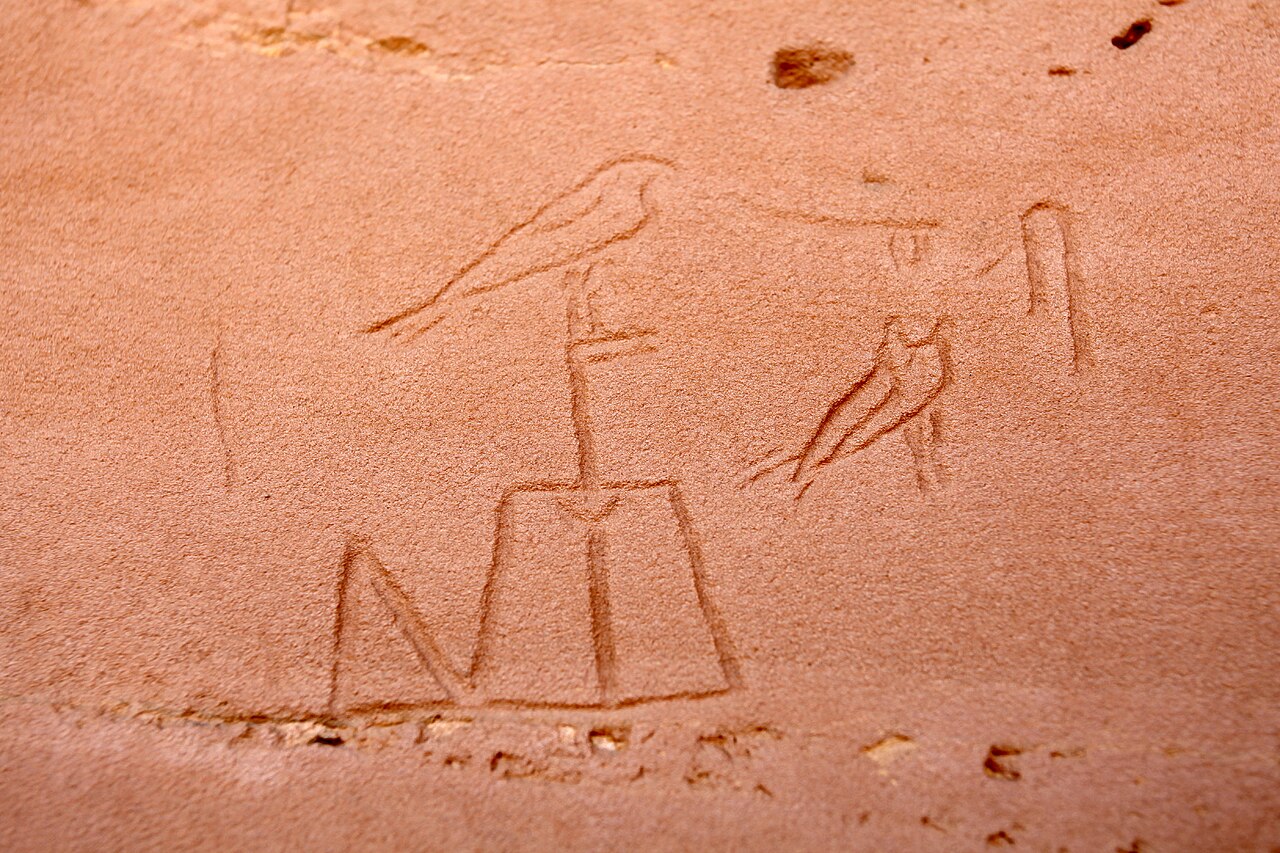
Photo of carved hieroglyphs in reddish sandstone: a bird (falcon-like) perched on a vertical element, a tall pillar-like sign, a small bird below, a vertical stroke at right, and a trapezoidal sign with a bowl-like base at the bottom.Document

Primary source

Inscription of the Overseer of Stonemasons

Photo of a weathered reddish-tan sandstone rock face carved with faint ancient Egyptian hieroglyphic-style incisions, including vertical strokes, a boat-like or triangular sign, and a small rectangular sign near the lower right. Cracks run across the stone.Document

Primary source

Inscription of Kajherj and Redj, Overseers of Date Fabricators

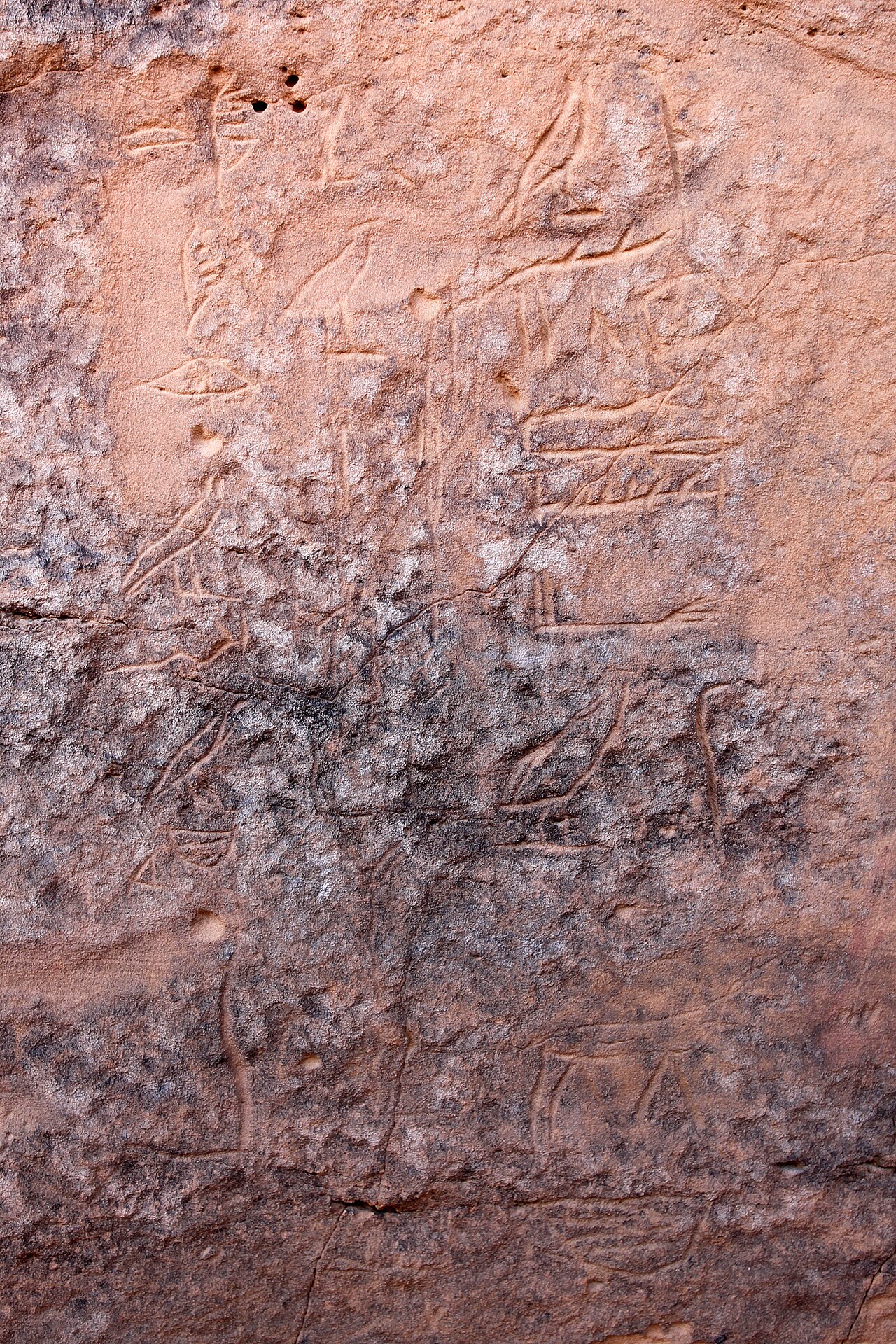
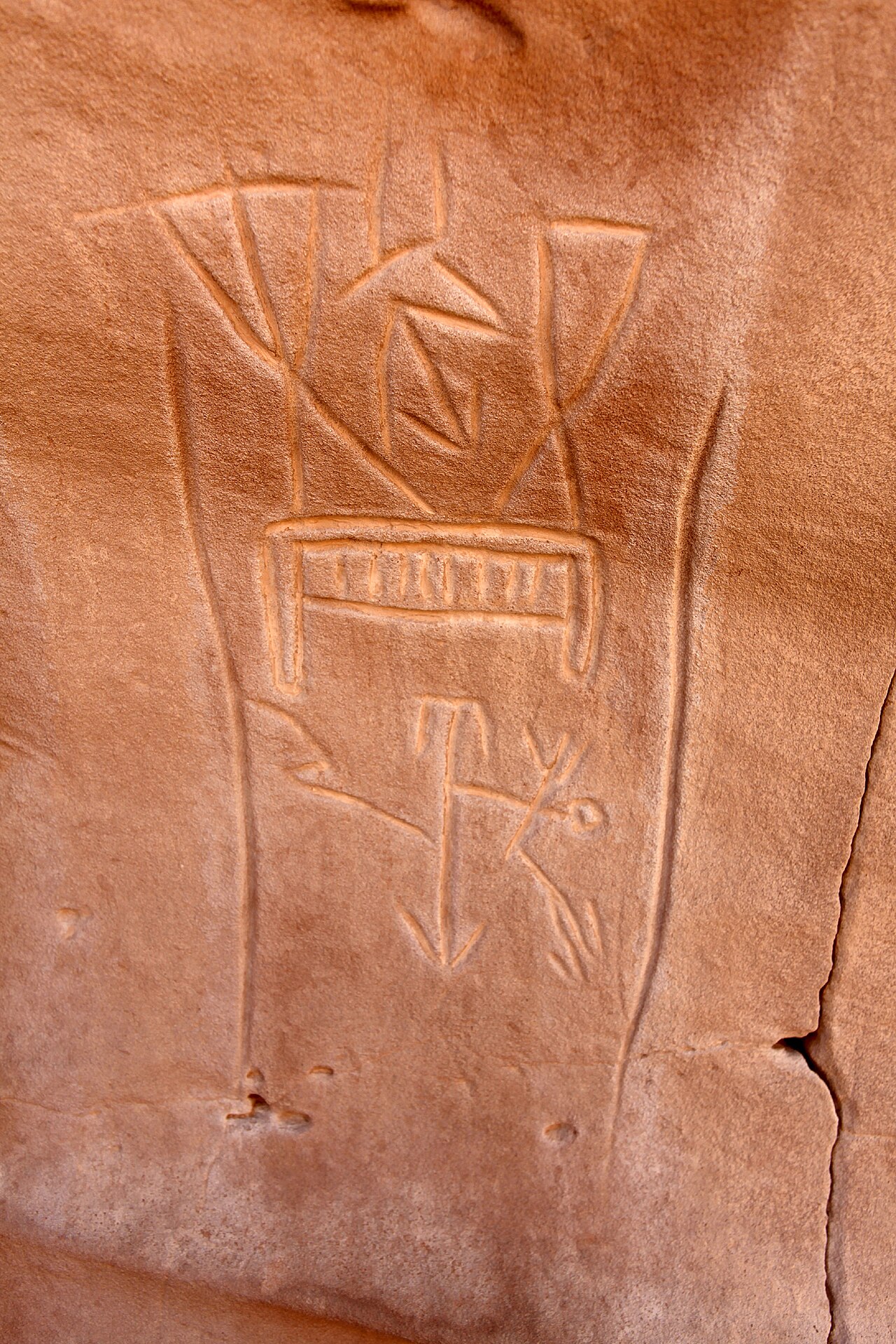
Close-up photo of a carved rock surface in reddish-brown sandstone showing incised ancient Egyptian-style hieroglyphic signs, including a rectangular element with vertical ticks, a vertical stroke with branching lines, and tall vertical lines running down the rock face.Document

Primary source

Weather Report Inscription, Water Mountain of Djedefre

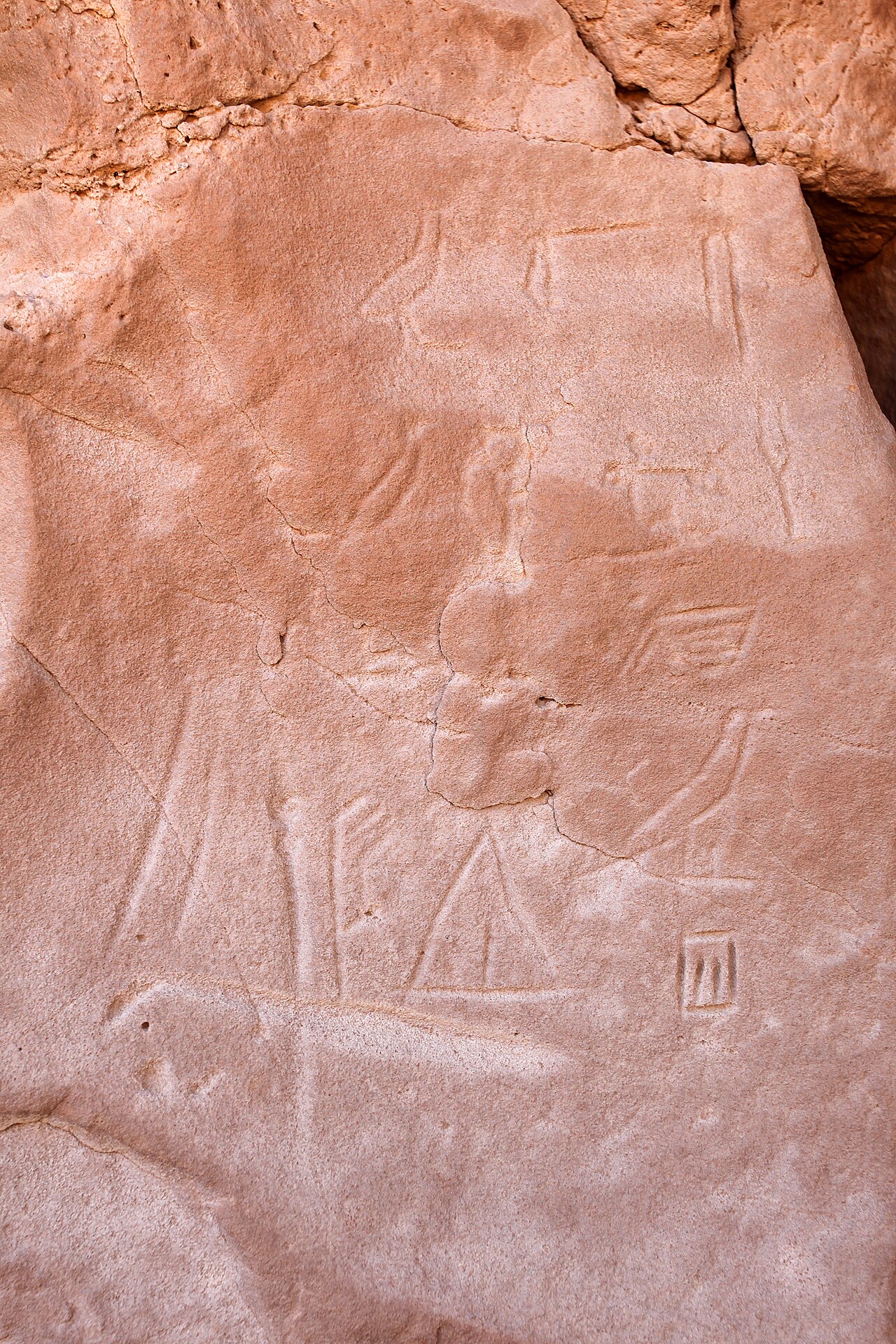
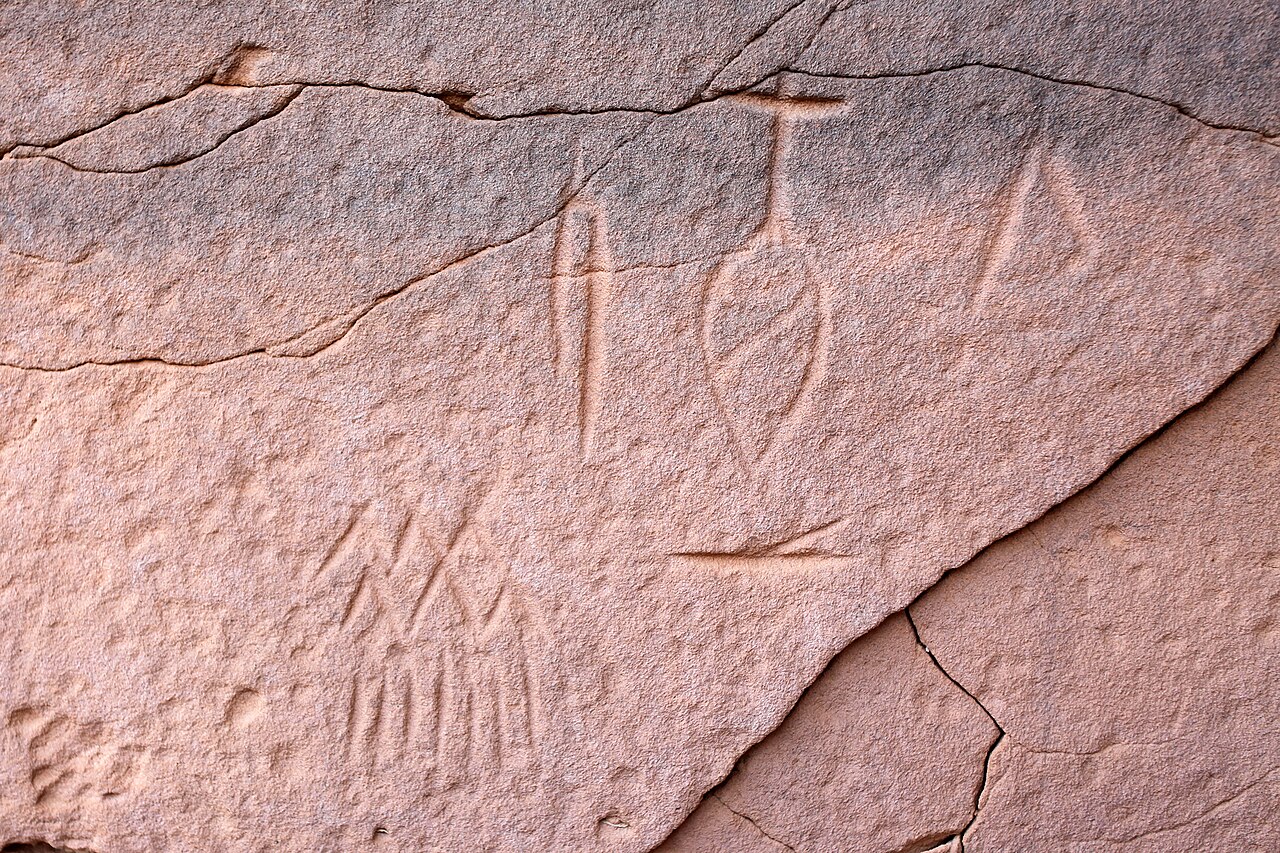
Close-up of a sandstone rock surface with carved ancient Egyptian-style figures: a tall pillar-like sign, an oval sign with a stroke on top, a triangular sign, and a group of small vertical strokes and angled marks at lower left. Cracks run across the stone.Document

Primary source

Return of Recruits Inscription, Water Mountain of Djedefre

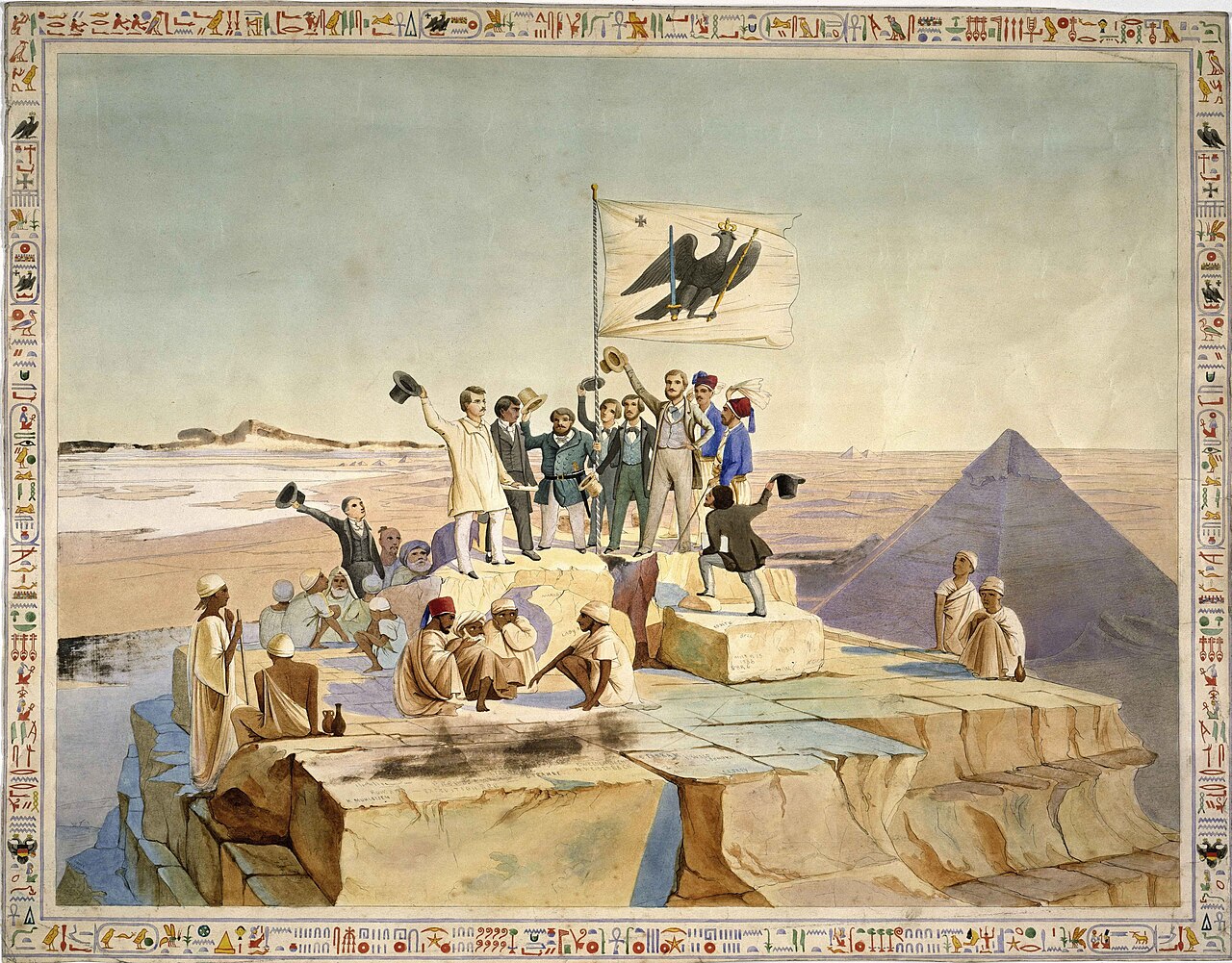
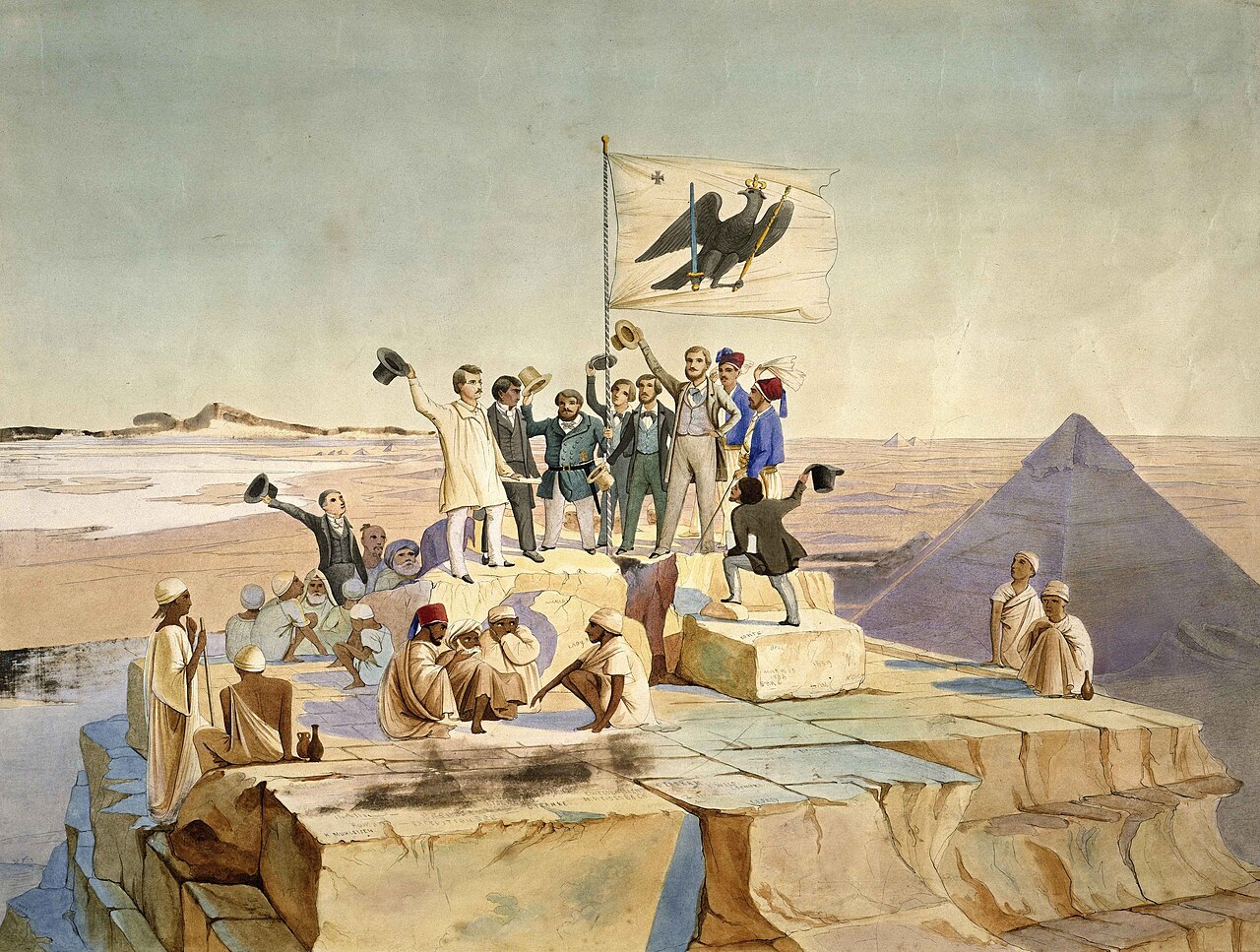
Watercolour painting of a group of European men in 19th-century dress standing on a stone summit, waving hats and holding a flag with a black eagle, surrounded by seated Egyptian men in robes and fezzes, with a pyramid to the right and desert beyond. A hieroglyph-patterned border frames the scene.Painting

Secondary source

Lepsius Expedition Party on Top of the Great Pyramid

Johann Jakob Frey · 1842

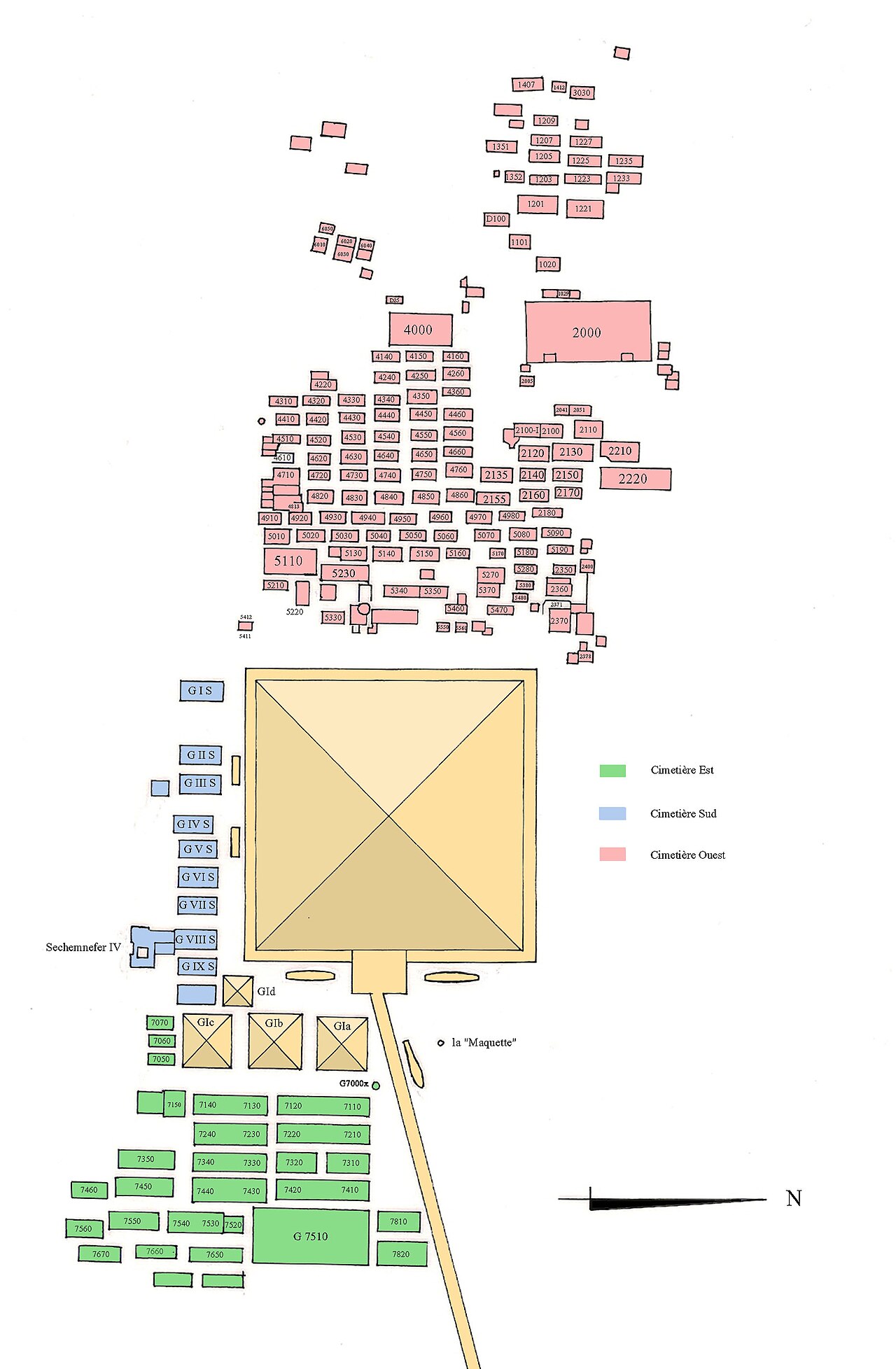
Colour-coded map of the necropolis around the Great Pyramid of Khufu at Giza. The large central square pyramid is surrounded by numbered tomb and mastaba blocks: green for the East cemetery, blue for the South cemetery, and pink for the West cemetery. A compass arrow indicating north appears at lower right, with a legend at right.Document

Secondary source

Map of the Necropolis of Khufu's Pyramid Complex at Giza

Franck Monnier · 2007-07-07

Watercolor painting of men on a stone summit of a pyramid in a desert, raising a cream flag with a black eagle. Men in European clothing wave hats and gesture; robed and turbaned people sit and stand around them. A smaller pyramid is at right.Painting

Secondary source

Raising the Prussian Flag on the Cheops Pyramid

Johann Jakob Frey · 15 October 1842

Limestone relief fragment, broken at the top and edges, showing a carved female head in profile with a long wig and a falcon in a banner-like frame above, plus hieroglyphic signs at left against a grey background.Sculpture

Primary source

Relief Head of a Female Personification of an Estate

ca. 2551–2528 BCE

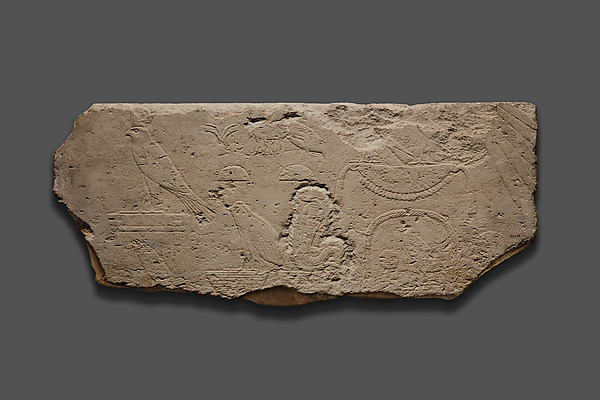
A rectangular limestone relief fragment on a dark grey background, with incised and carved low-relief figures and hieroglyphic-style carvings, including a bird-like figure at left and a seated or kneeling figure near the center. The edges are broken and irregular.Sculpture

Primary source

Temple Relief Bearing the Names of Khufu

ca. 2551–2528 BCE

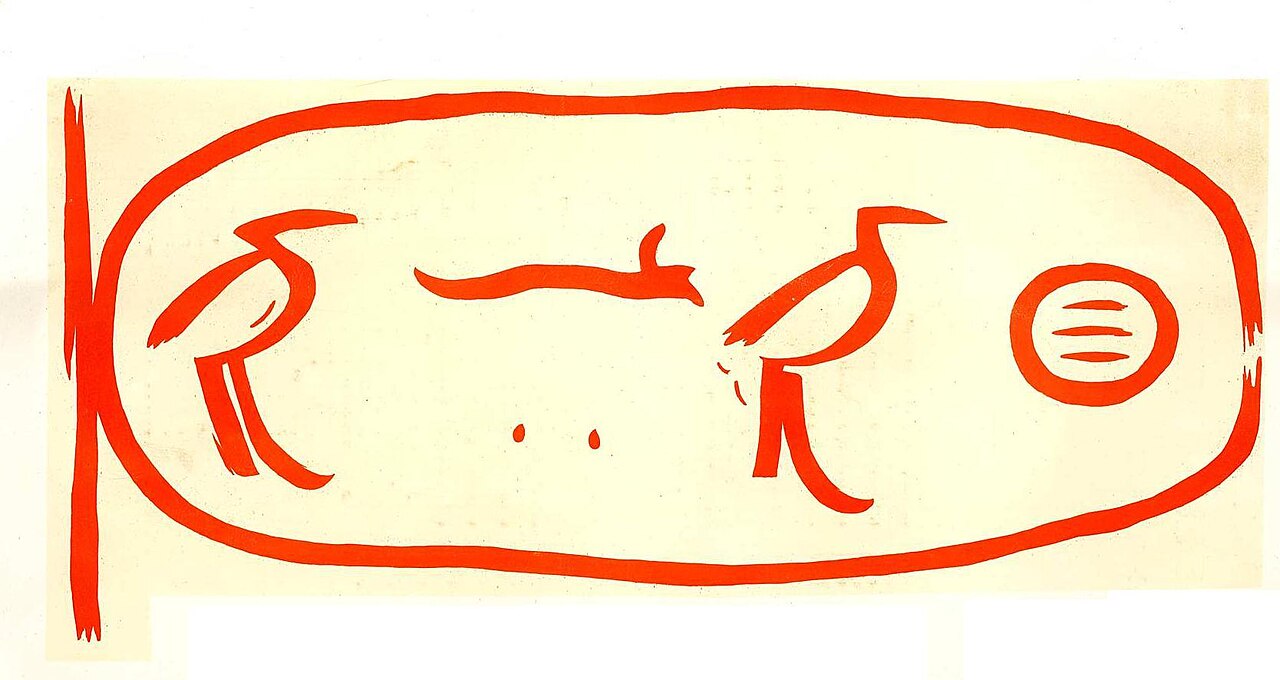
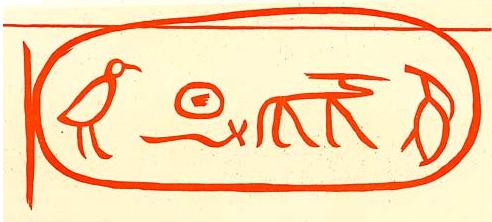
Red-ink line drawing of a cartouche oval enclosing hieroglyphic-style signs: two birds, a wavy line with a small mark, two dots, and a circle with three horizontal lines, with a vertical bar at the left edge.Painting

Secondary source

Khufu Cartouche and Workgang Graffiti in the Great Pyramid

Karl Richard Lepsius · between 1849 and 1859

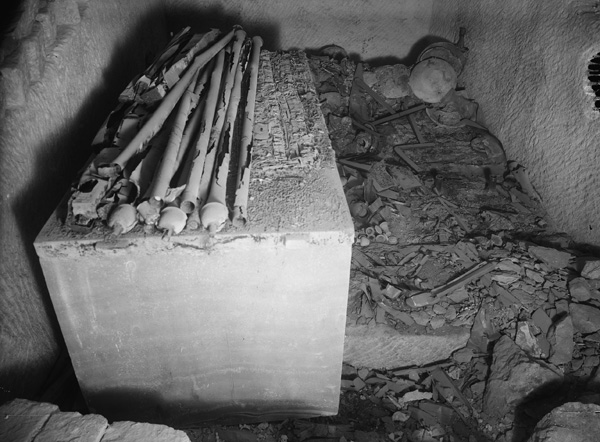
Black-and-white photograph of a stone burial chamber with a rectangular stone sarcophagus-like box in the foreground, its top covered with broken wooden poles or rods and fragments. Behind it, debris, broken stone and scattered wooden pieces fill the floor of a rough-walled chamber.Photograph

Secondary source

Burial chamber of Queen Hetepheres I

Mohammedani Ibrahim · 1926

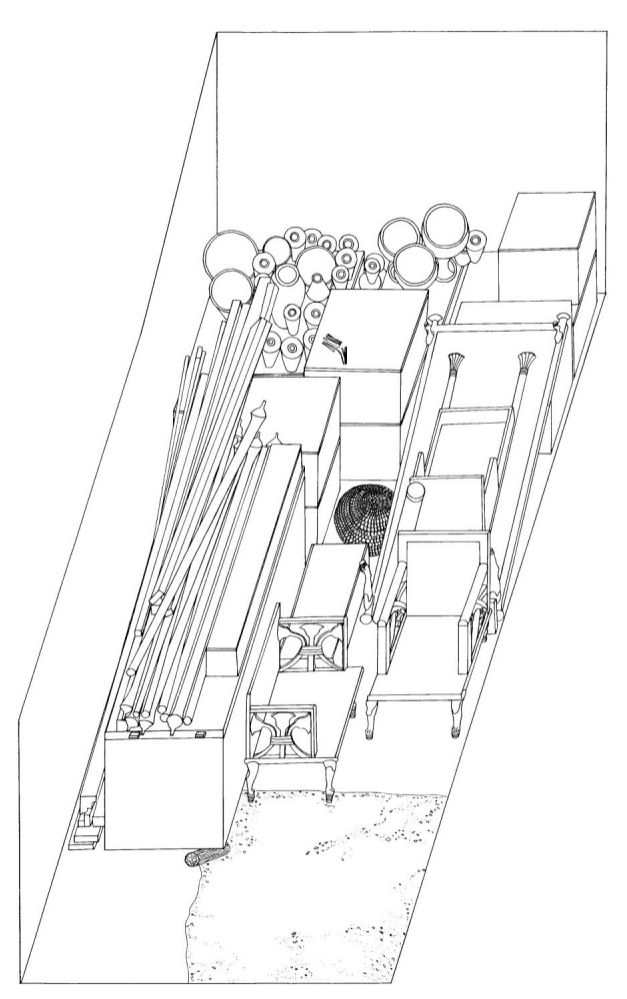
Black-and-white line drawing in isometric view of a rectangular burial chamber cut into rock, showing furniture, a canopy bed with posts, chests, boxes, rolled bundles, poles, a basket, and a bed frame arranged in their original positions. Sand covers the floor at the front.Painting

Secondary source

Isometric Drawing of Hetepheres I's Tomb

George Andrew Reisner · c. 1925

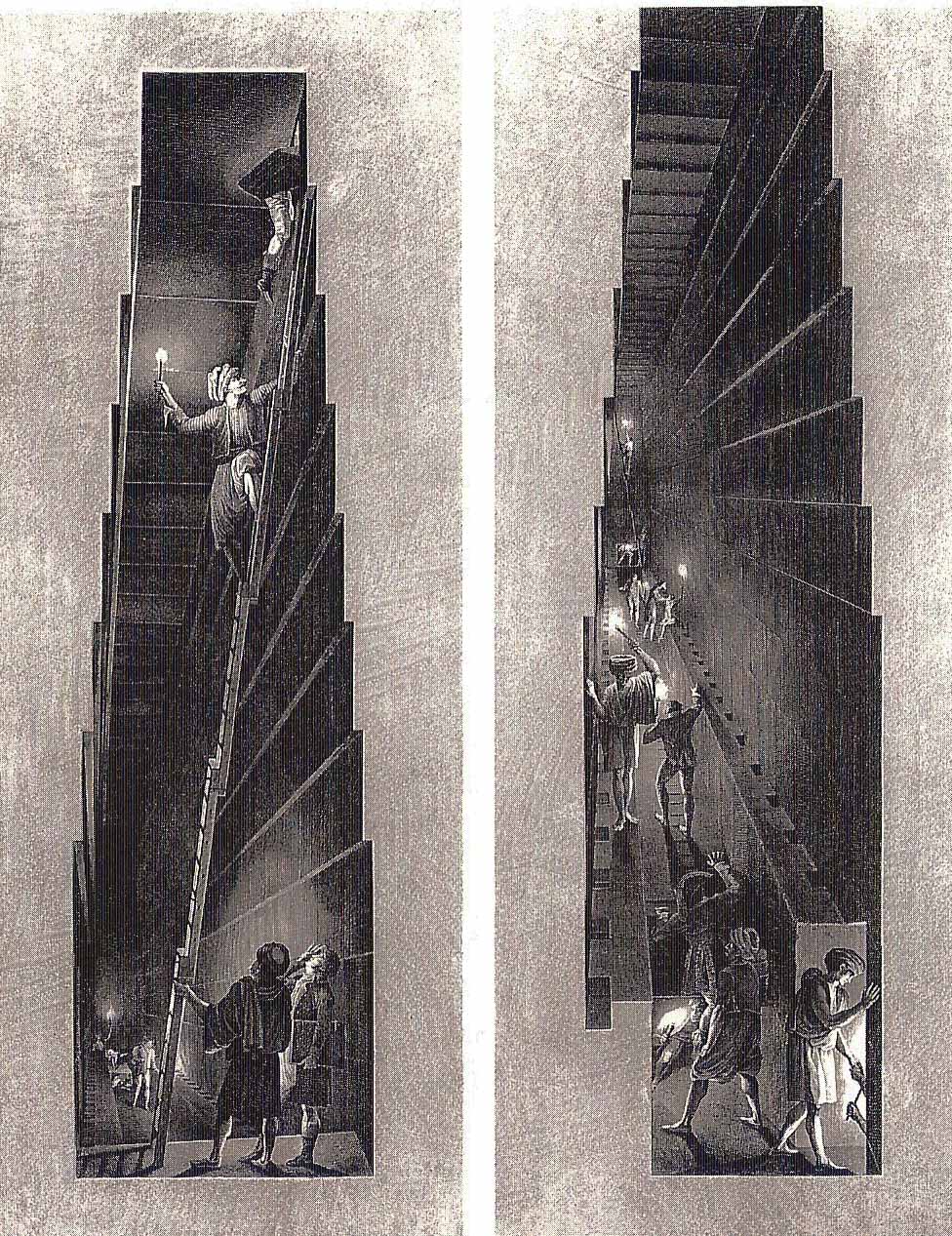
Two side-by-side engraved plates of the Grand Gallery inside a pyramid, drawn as a tall narrow corridor with sloping walls and stepped ceilings. Small robed figures holding torches walk and climb along the passage, and a ladder runs up one side. Several figures stand at the bottom right.Painting

Secondary source

Grand Gallery of the Great Pyramid

Description de l'Égypte

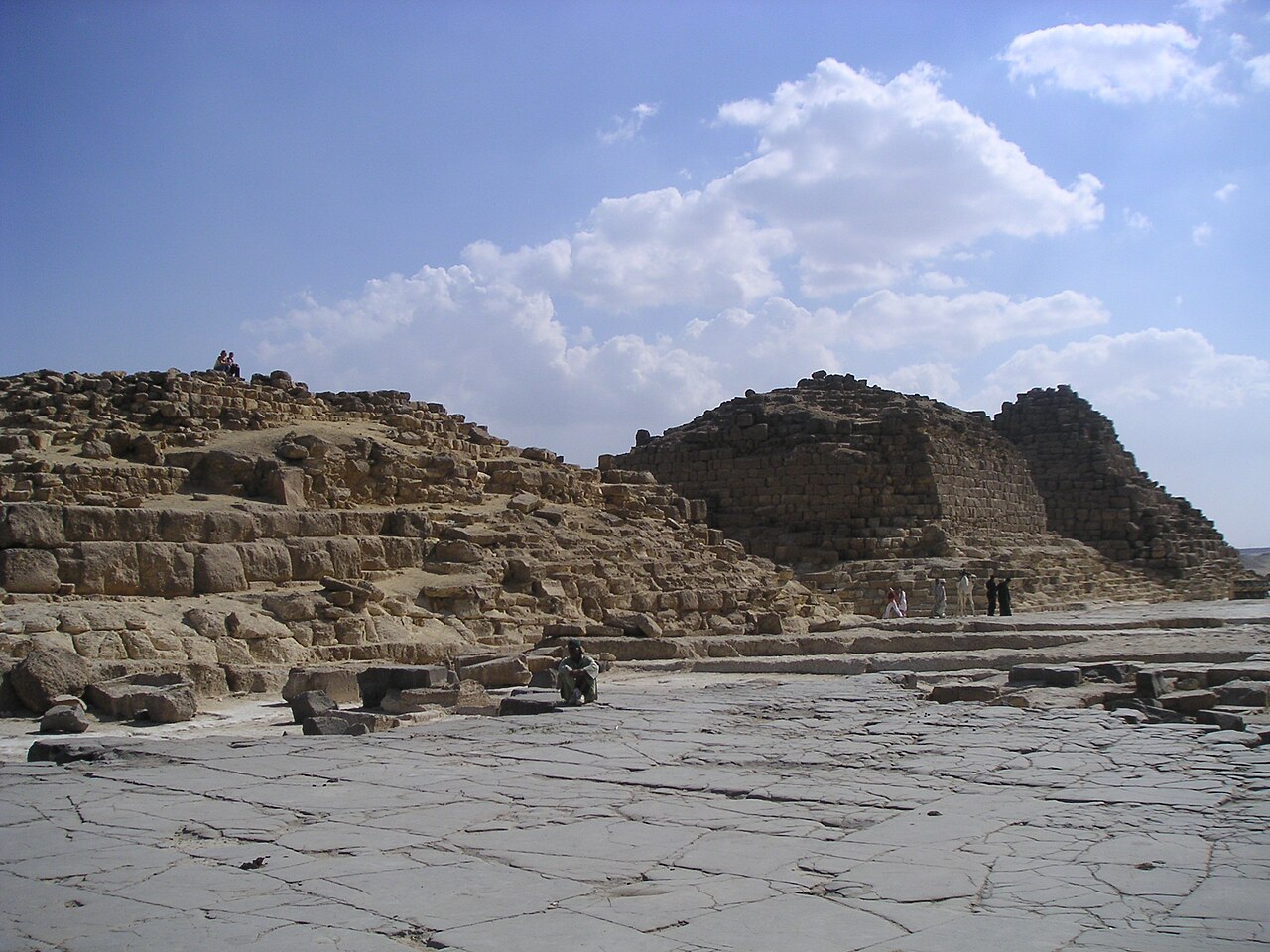
Ruins of small stepped pyramids of stone blocks under a partly cloudy blue sky, with a flat paved courtyard in the foreground. Several people stand near steps at the right, and one person sits on a block at the lower center.Photograph

Secondary source

Queens' Pyramids East of the Great Pyramid

November 2004

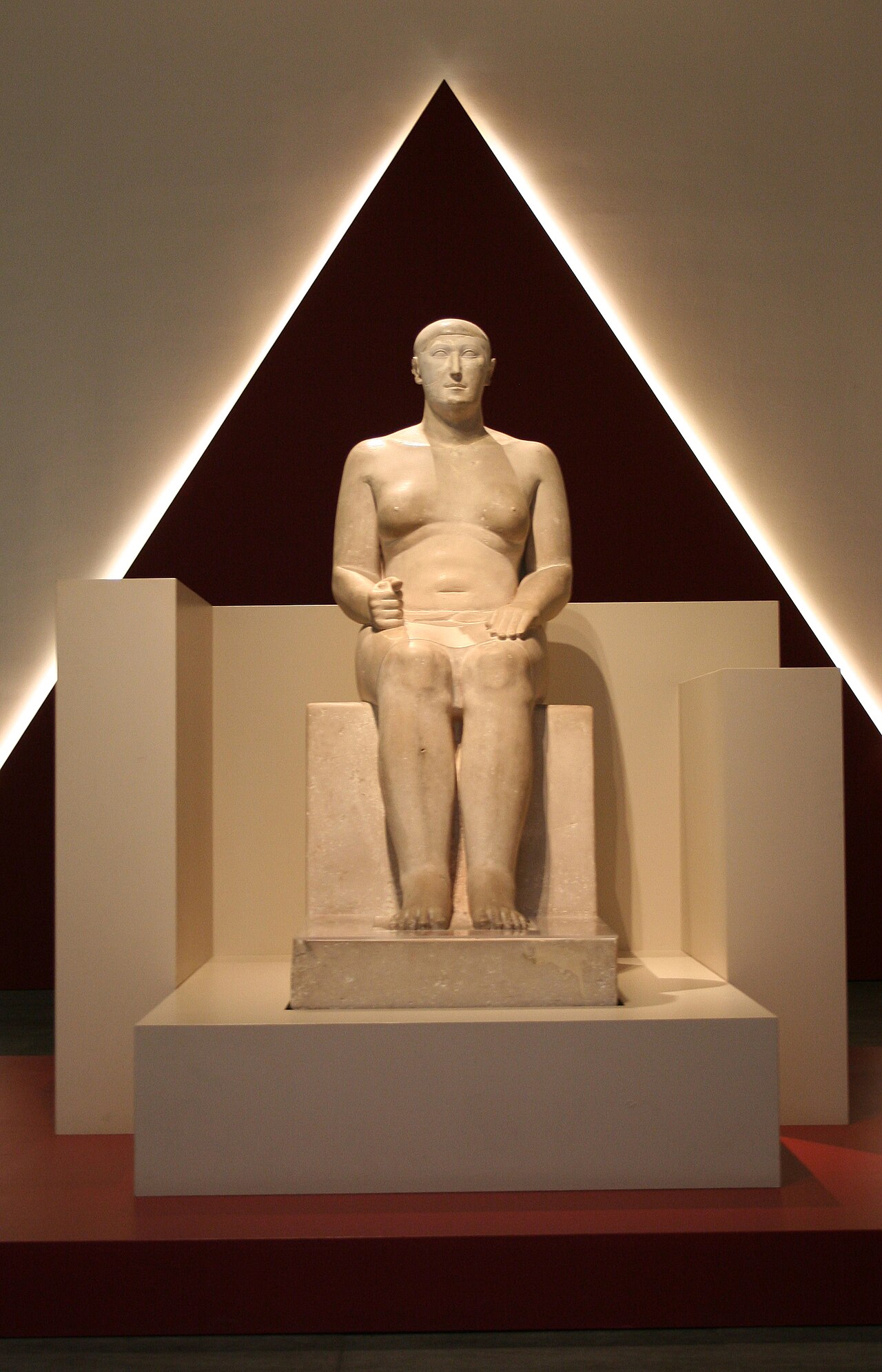
Photograph of a seated white limestone statue of a bald, nude male figure with hands resting on his knees, set on a stone base in a museum, in front of a dark triangular backdrop with lighting.Sculpture

Secondary source

Statue of Hemiunu

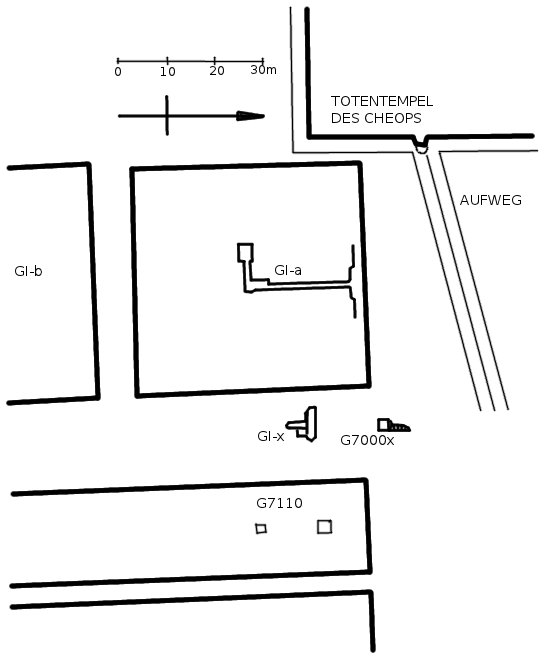
Black-and-white line plan of Giza monuments with a 0–30 m scale bar and north arrow. Labels include Totentempel des Cheops, Aufweg, GI-a, GI-b, GI-x, G7000x and G7110. Square enclosures and a small L-shaped cut are marked.Painting

Secondary source

Plan of Hetepheres I's Shaft Tomb and Unfinished Pyramid Passage

Didia · 2012

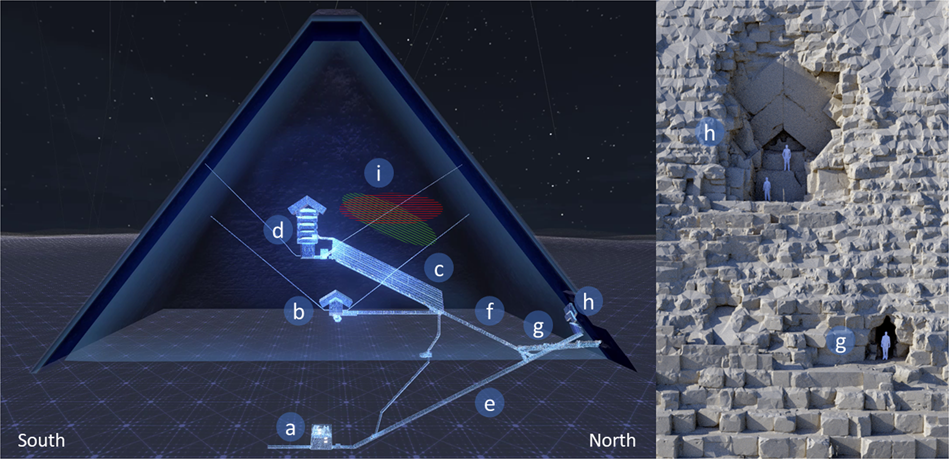
Cutaway diagram of the Great Pyramid in a dark blue, starry setting, labeled a through i showing internal passages and chambers, with a 'South' and 'North' label at the bottom. On the right, a photo of the north face shows limestone blocks with labeled openings and small figures standing at the entrances.Artifact

Secondary source

Cut View of the Great Pyramid, ScanPyramids Project

Sébastien Procureur et al. · 2 March 2023

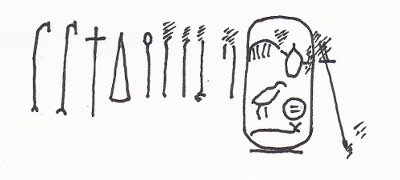
Black ink line drawing on white background of a hieroglyphic quarry inscription: a row of vertical strokes and marks, a cartouche-like rounded rectangle containing a bird figure and a circle with a bar, with diagonal hatch marks at upper right.Document

Secondary source

Drawing of Quarry Inscription Naming Khufu

Didia · 1944 (copy of ancient inscription)

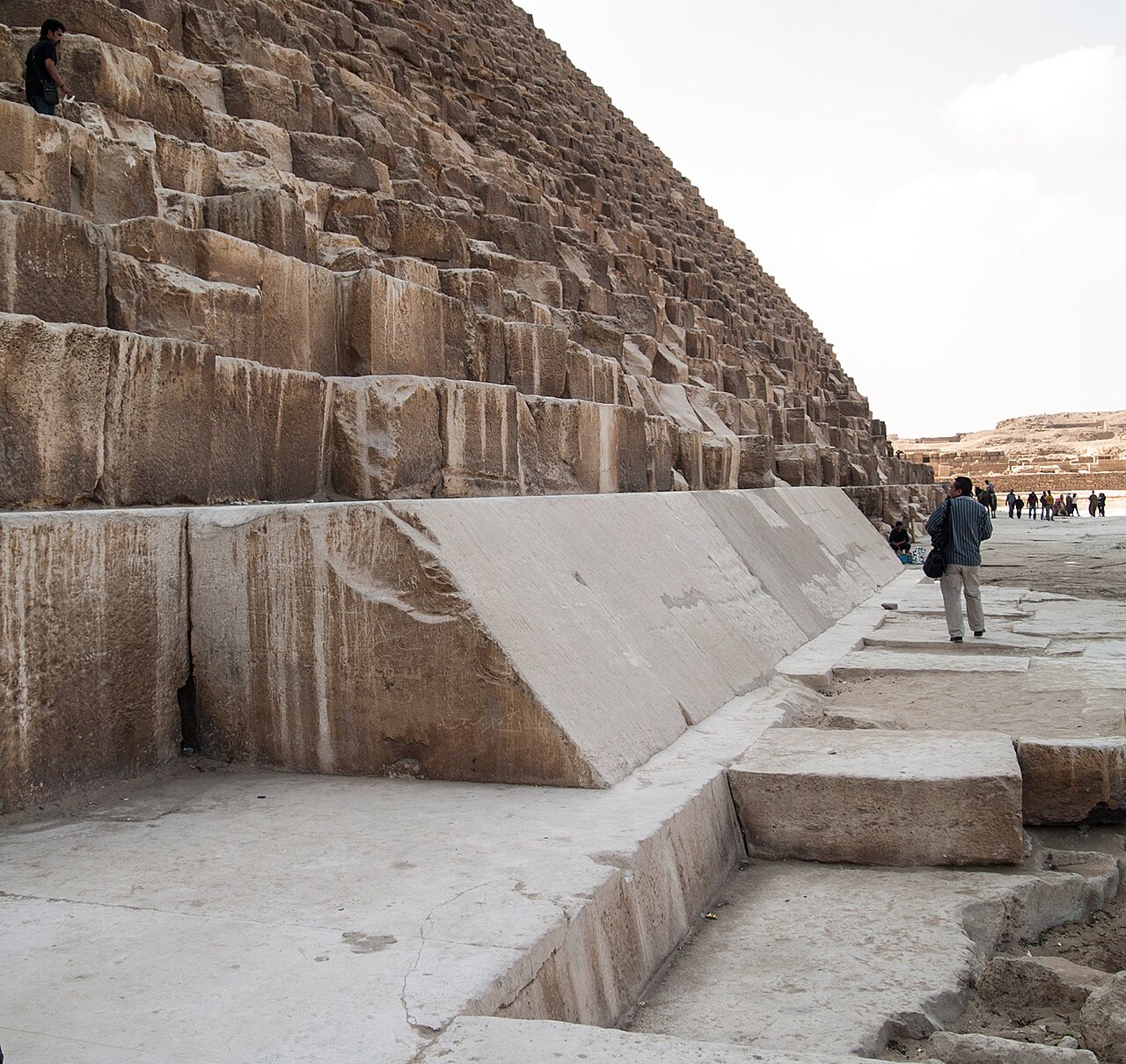
Massive stone blocks at the base of a pyramid, with a smooth, pale limestone casing segment set against rougher layered blocks. Visitors stand on the flat stone pavement and steps nearby, with desert and distant ruins in the background.Photograph

Secondary source

Surviving Casing Fragments of the Pyramid of Khufu

Rigelus · 12 December 2012

Red-ink line drawing of an oval cartouche with a double outline. Inside are hieroglyphic signs: a bird on the left, a small circle with a dot, a wavy line, a group of strokes and a sign at the right resembling a standing figure or bird.Document

Secondary source

Khufu Cartouche and Work-Gang Graffiti, Lepsius Copy

Karl Richard Lepsius · c. 1850

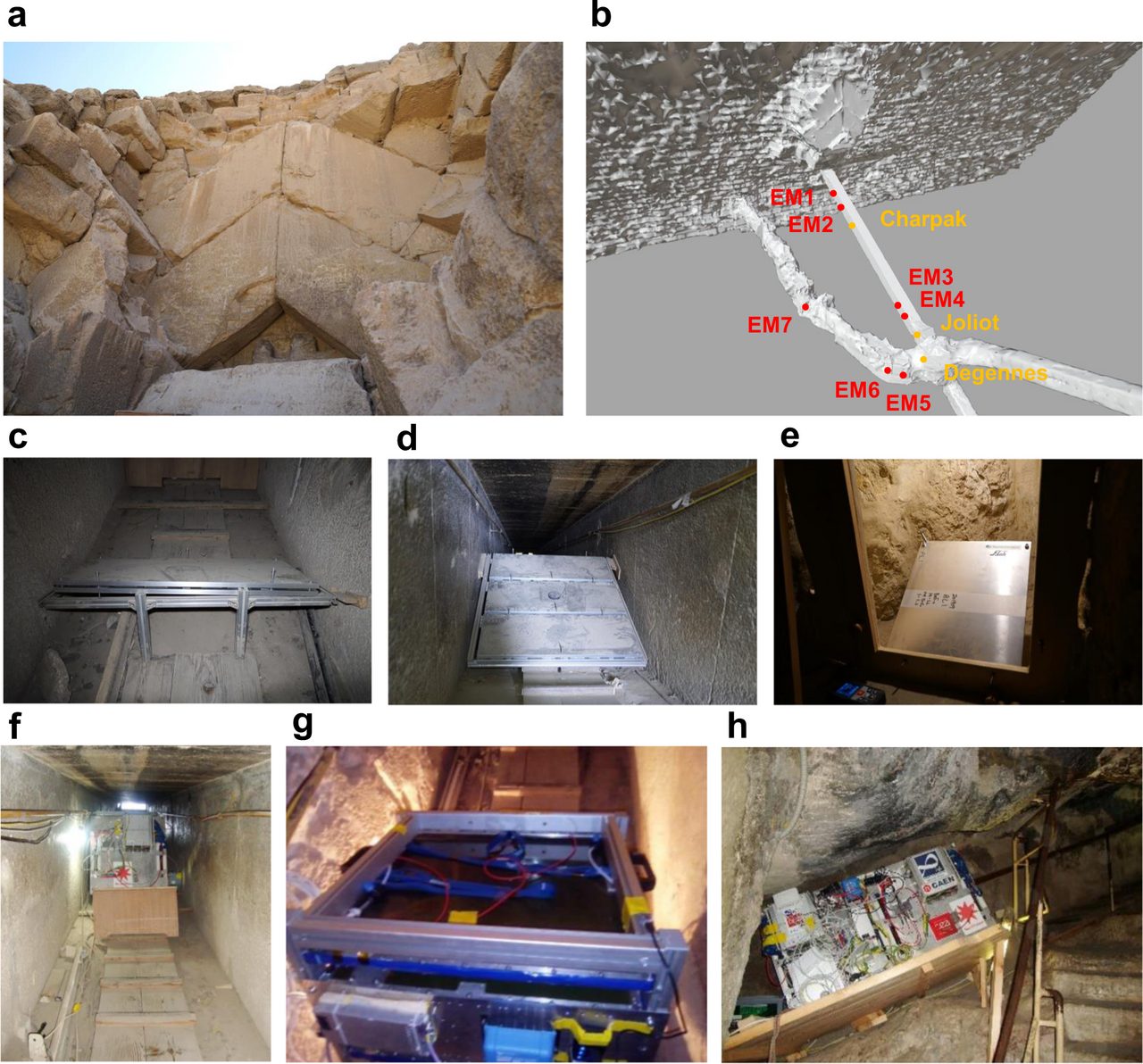
Composite figure of eight panels labeled a to h showing detectors in Khufu's Pyramid. Panel a shows the chevron limestone beams at the entrance. Panel b is a 3D model with labeled detector positions EM1 to EM7. Panels c to h show metal detector frames and boxed equipment installed in narrow stone corridors.Artifact

Secondary source

Muon Detectors in the Descending Corridor of Khufu's Pyramid

Sébastien Procureur et al. · 2 March 2023

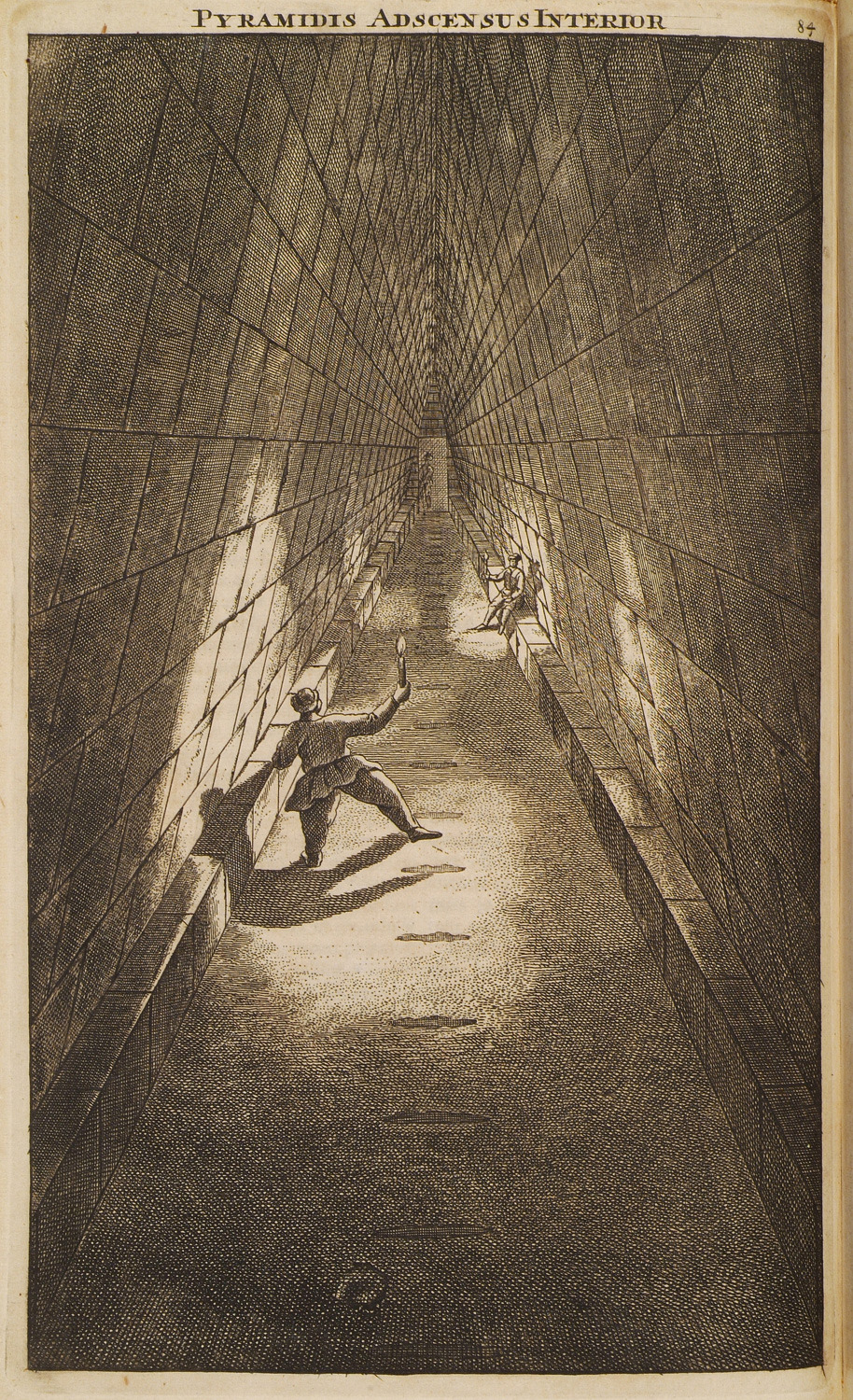
Engraving titled 'Pyramidis Adscensus Interior' showing the interior ascending passage of a pyramid, with stone-block walls converging into the distance. A man in period dress holding a torch crouches in the foreground, and two figures are visible farther down the passage. Page number 84 is at the top right.Painting

Secondary source

Ascending Passage in the Great Pyramid

Cornelis de Bruyn · 1714

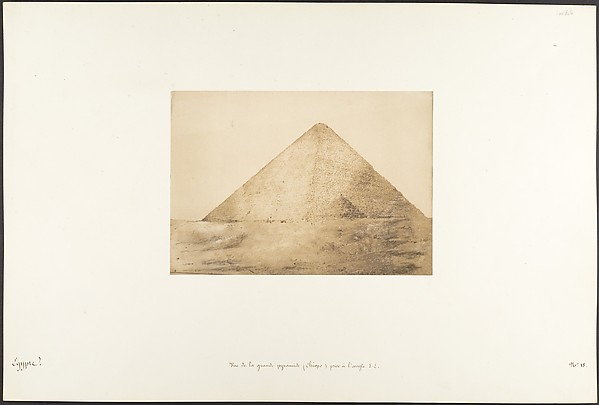
Sepia photograph of the Great Pyramid of Giza seen from a low angle against a pale sky, with sandy ground in the foreground. The print is mounted on a cream card with a handwritten French caption below and the word Egypte in pencil at lower left.Photograph

Secondary source

View of the Great Pyramid (Cheops)

Maxime Du Camp · December 1849

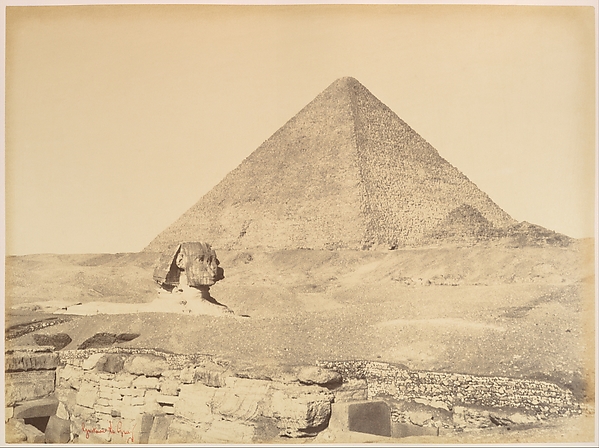
Sepia albumen photograph of the Great Pyramid of Giza rising behind the partly buried Great Sphinx in the foreground, with stone blocks at the bottom edge and a bare, pale sky above.Photograph

Secondary source

Pyramids at Giza

Gustave Le Gray · 1865-1869

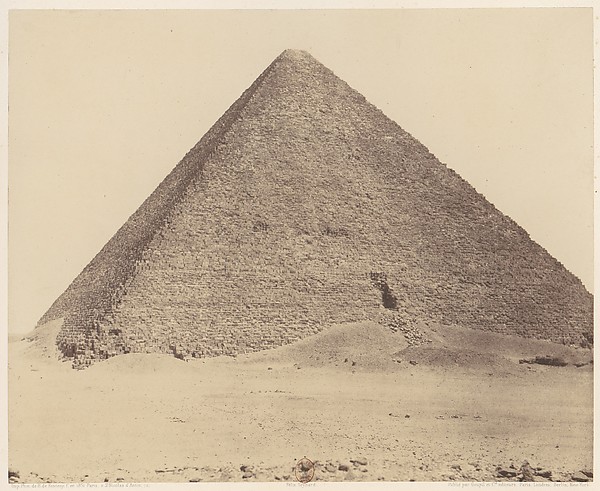
Sepia-toned photograph of the Great Pyramid of Giza rising at center against a pale sky, its stone faces stepped and weathered, with sandy ground and low dunes in the foreground.Photograph

Secondary source

Pyramid of Cheops (Great Pyramid)

Félix Teynard · 1851-1852, printed 1853-1854

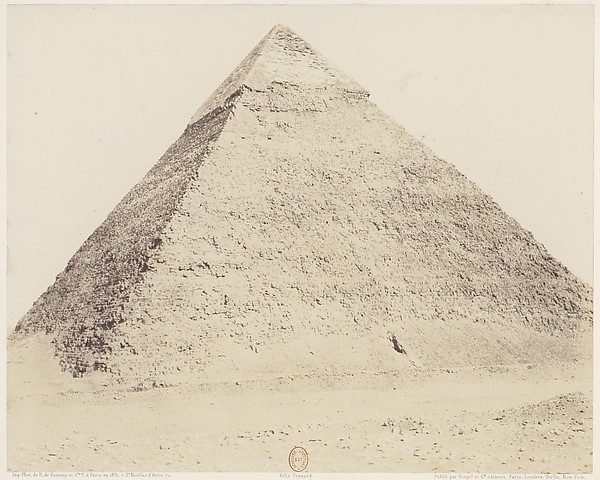
Sepia photograph of the Pyramid of Chephren at Giza, Egypt, seen from a low angle against a pale sky. Its stone surface is rough and worn, with a partly damaged top, on flat desert sand. Printed caption and an oval seal appear along the bottom margin.Photograph

Secondary source

Pyramid of Chephren

Félix Teynard · 1851-1852, printed 1853-1854

Want the full shelf? Chat with Pharaoh Khufu (Cheops) in the app and open the Sources panel — every quote links back to the original.

Use Pharaoh Khufu (Cheops) in class

1 collection

A ready-made collection from the Humy team that features Pharaoh Khufu (Cheops). Preview it, then try it free.

Trusted by educators worldwide

Conversations
375,000+
Real exchanges between students and historical figures
Messages exchanged
4,142,000+
Across every figure, classroom and language
Historical figures
100,000+
Each informed by a curated biography and selected sources
Languages supported
50+
From English and Spanish to Arabic and Korean

Paying customers

Used by 98 schools and universities

Partner school logo
Tecnológico de Monterrey logo
Hyper Island logo
Partner school logo
Chambersburg Area School District logo
Broward County Public Schools logo
Nebo School District logo
National Louis University logo
South Florida PBS logo
Punahou School logo
University of Wisconsin–River Falls logo
Partner school logo
Partner school logo
Archbishop Mitty High School logo
Kingsburg High School logo
Norwalk Public Schools logo
Partner school logo
Connections logo
Partner school logo
Moore Public Schools logo
Partner school logo
Partner school logo
Partner school logo
Partner school logo
Robbinsville Public Schools logo
Partner school logo
Partner school logo
Partner school logo
Tecnológico de Monterrey logo
Hyper Island logo
Partner school logo
Chambersburg Area School District logo
Broward County Public Schools logo
Nebo School District logo
National Louis University logo
South Florida PBS logo
Punahou School logo
University of Wisconsin–River Falls logo
Partner school logo
Partner school logo
Archbishop Mitty High School logo
Kingsburg High School logo
Norwalk Public Schools logo
Partner school logo
Connections logo
Partner school logo
Moore Public Schools logo
Partner school logo
Partner school logo
Partner school logo
Partner school logo
Robbinsville Public Schools logo
Partner school logo
Partner school logo

What educators are saying

“We enjoyed the program last year and used it frequently.”
“My students say it’s a welcome change of pace. I’m not a fan of the “sage on the stage” model, so I try to incorporate research-oriented and self-paced activities. With Humy, students have to take charge of their learning. They’ve become more adept at critical thinking, forming better questions, and improving their reading comprehension. The interview feature has been my go-to tool. I create assignments where students must ask historical figures a set number of questions, then summarize the responses to ensure they’re truly absorbing the material. This approach lets them actively explore the past rather than passively consuming information.”
“Humy has helped me bring historical figures, sometimes long past, to life. When my students interact with these figures in real-time, it eliminates some of the perceived “ancient” characteristics of my curriculum. This has shifted my students’ thinking away from viewing history as abstract or irrelevant. Real-time interactions make historical figures relatable, even allowing students to ask off-topic questions that help put historical lives in a more relevant context for 13-year-olds. The feature I use the most is the interview feature. After teaching a topic, most recently Gandhi and Joan of Arc, I have the students ask pointed, focused questions. We practice good conversation techniques beforehand, teaching them to listen (or read) carefully and formulate thoughtful follow-up questions rather than just interrogating. It helps students practice effective conversation skills.”

FAQ

Frequently asked questions

Who is Pharaoh Khufu (Cheops)?
Ancient Egyptian monarch known for constructing the Great Pyramid of Giza. On Humy.ai you can chat with an AI version of Pharaoh Khufu (Cheops) that draws on a short biography and 83 historical sources during the conversation — by text or voice, in 42 languages.
Is Pharaoh Khufu (Cheops) AI free?
Pharaoh Khufu (Cheops) is part of Humy's full library of more than 100,000 figures, which comes with a paid plan. A free account (no credit card) includes 20 messages a month with the free library's figures, so you can try how the conversations work first.
What sources does the Pharaoh Khufu (Cheops) AI use?
It draws on a short biography and 83 historical sources (photographs, artifacts and sculptures), including “Great Pyramid of Giza”, “La Grande Pyramide Cheops” and “Khufu Statuette”. Each source has its own page on Humy.ai.
How historically accurate is the AI version of Pharaoh Khufu (Cheops)?
Each figure uses a short biography and a small set of selected historical sources as context (retrieval-augmented generation), so answers stay closer to known material than the model's general knowledge alone. It isn't a citation-grade research tool — like any LLM, the AI can get details wrong or extrapolate. Treat it as a strong starting point for inquiry and cross-reference important claims.
Can I talk to Pharaoh Khufu (Cheops) by voice?
Yes. In addition to text chat, you can call Pharaoh Khufu (Cheops) and hear their voice respond in real time — useful for auditory learners, interview practice and Socratic dialogue.
Is Humy.ai safe and compliant for schools?
Yes. Humy.ai is used by more than 100 schools, universities and organisations. The platform is FERPA- and GDPR-aligned, supports SSO, and offers an IT-approval pack tailored for school procurement teams.

Cross-reference Pharaoh Khufu (Cheops)

Like any LLM, the AI version of Pharaoh Khufu (Cheops) can get details wrong. Open one of these sources in a new tab to verify what you’ve read.

Ready when you are

Start chatting with Pharaoh Khufu (Cheops) now.

20 messages free · No credit card · Available in 50+ languages.