


Secondary sourcePhotograph1851-1852, printed 1853-1854
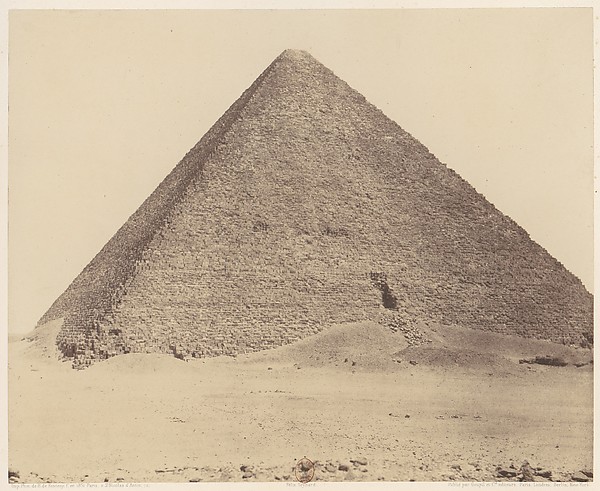
Pyramid of Cheops (Great Pyramid)
Félix Teynard · 1851-1852, printed 1853-1854
A mid-nineteenth-century photograph of the Great Pyramid, the monumental tomb built for the pharaoh Khufu.
Documents the Great Pyramid, the burial monument Khufu commissioned for himself.
About this source
What it is
This salted paper photograph was taken by the French photographer Félix Teynard in 1851–52 and printed in 1853–54. It shows the Great Pyramid of Giza, labelled in its original caption as part of the 'Nécropole de Memphis'. The print belongs to The Metropolitan Museum of Art.
Why it matters
The Great Pyramid was built for Khufu, a Fourth Dynasty pharaoh, as his burial monument. Teynard's photograph is one of many nineteenth-century images that helped introduce European audiences to ancient Egyptian monuments through the new medium of photography, long after the pyramid's construction. It shows how Khufu's legacy endured visually across thousands of years.
Look closer
- What details of the pyramid's surface can you make out in this photograph?
- Why might photographers of this period have traveled to Egypt to capture images like this?
- What does this photograph not tell us about who actually built the pyramid or how?
This photograph is part of the curated material that grounds the AI version of Pharaoh Khufu (Cheops) on Humy.ai — when students ask about related events, the AI can quote it and cite it.
More Pharaoh Khufu (Cheops) sources
Meet the AI Pharaoh Khufu (Cheops) →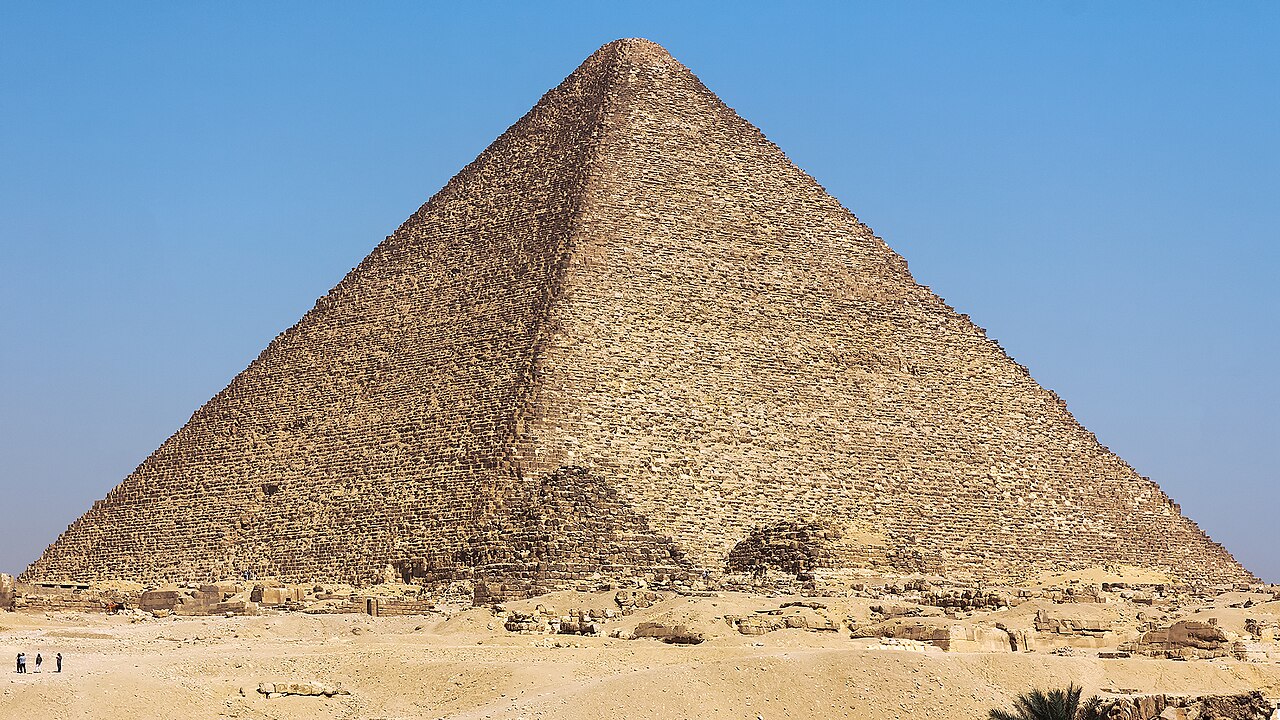 Artifact
Primary source
Great Pyramid of Giza
c. 2560 BCE
 Photograph
Secondary source
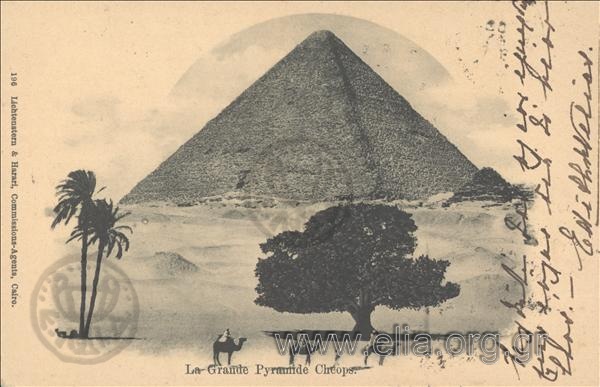
La Grande Pyramide Cheops
1903
 Sculpture
Primary source
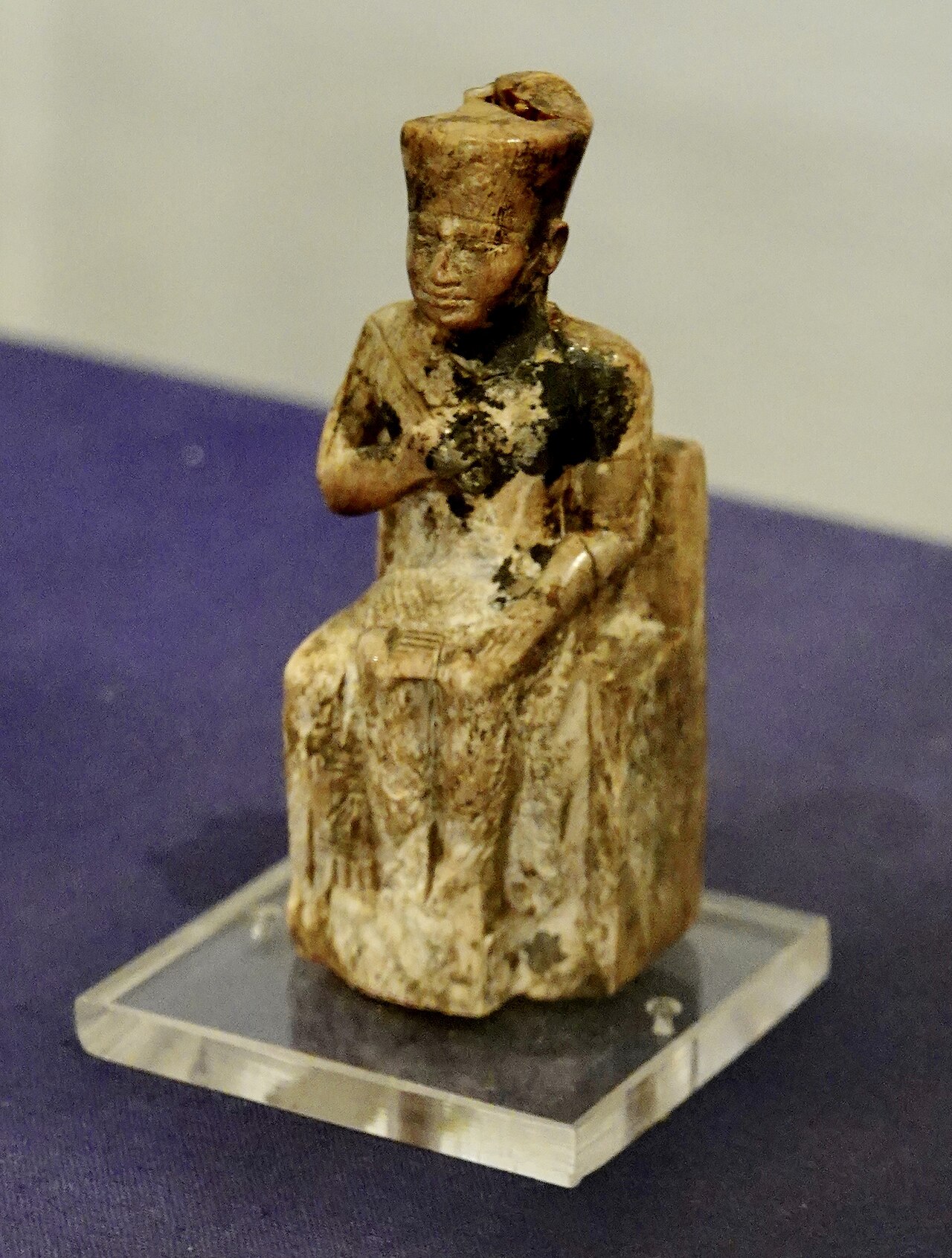
Khufu Statuette
c. 2600–2494 BCE (possibly later, 664–525 BCE)
 Photograph
Secondary source
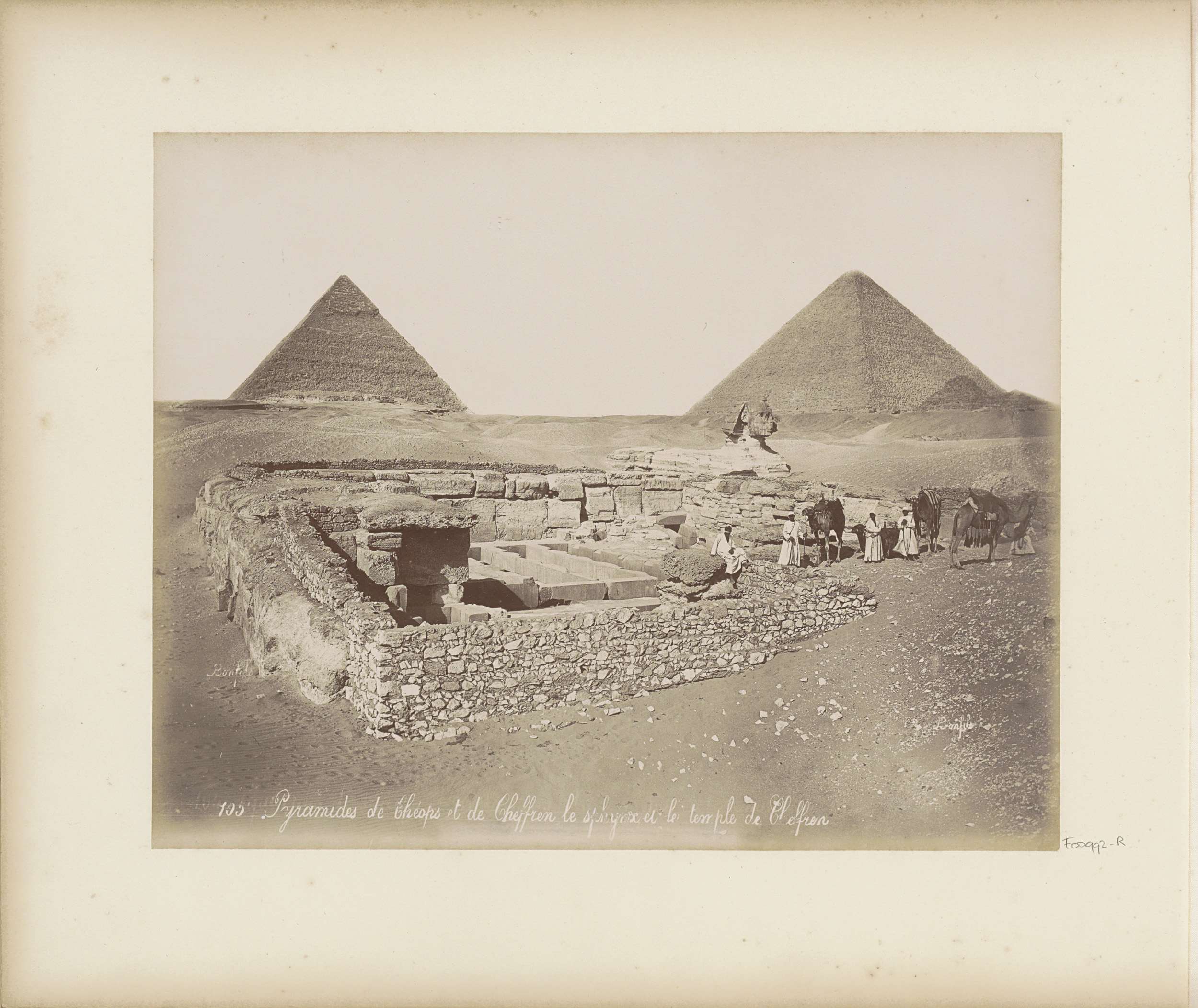
Pyramids of Cheops and Chephren and the Sphinx at Giza
 Artifact
Primary source
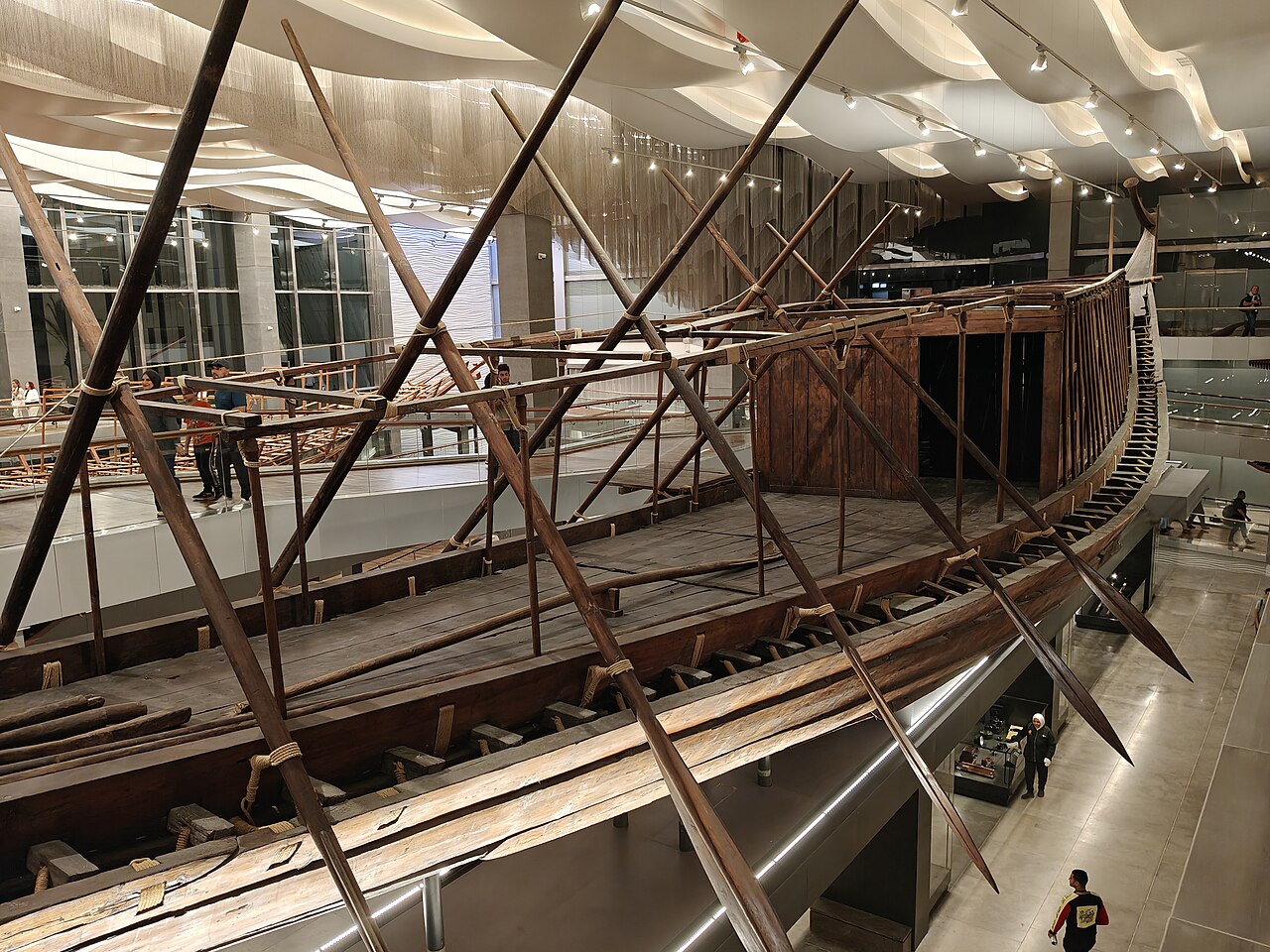
Khufu ship
Royal shipwrights of Khufu · c. 2566 BCE
Ready when you are
Start chatting with Pharaoh Khufu (Cheops) now.
20 messages free · No credit card · Available in 50+ languages.