


Secondary sourceArtifactdocumented 1891
Al-Shaykh Saad Stele
Gottlieb Schumacher · documented 1891
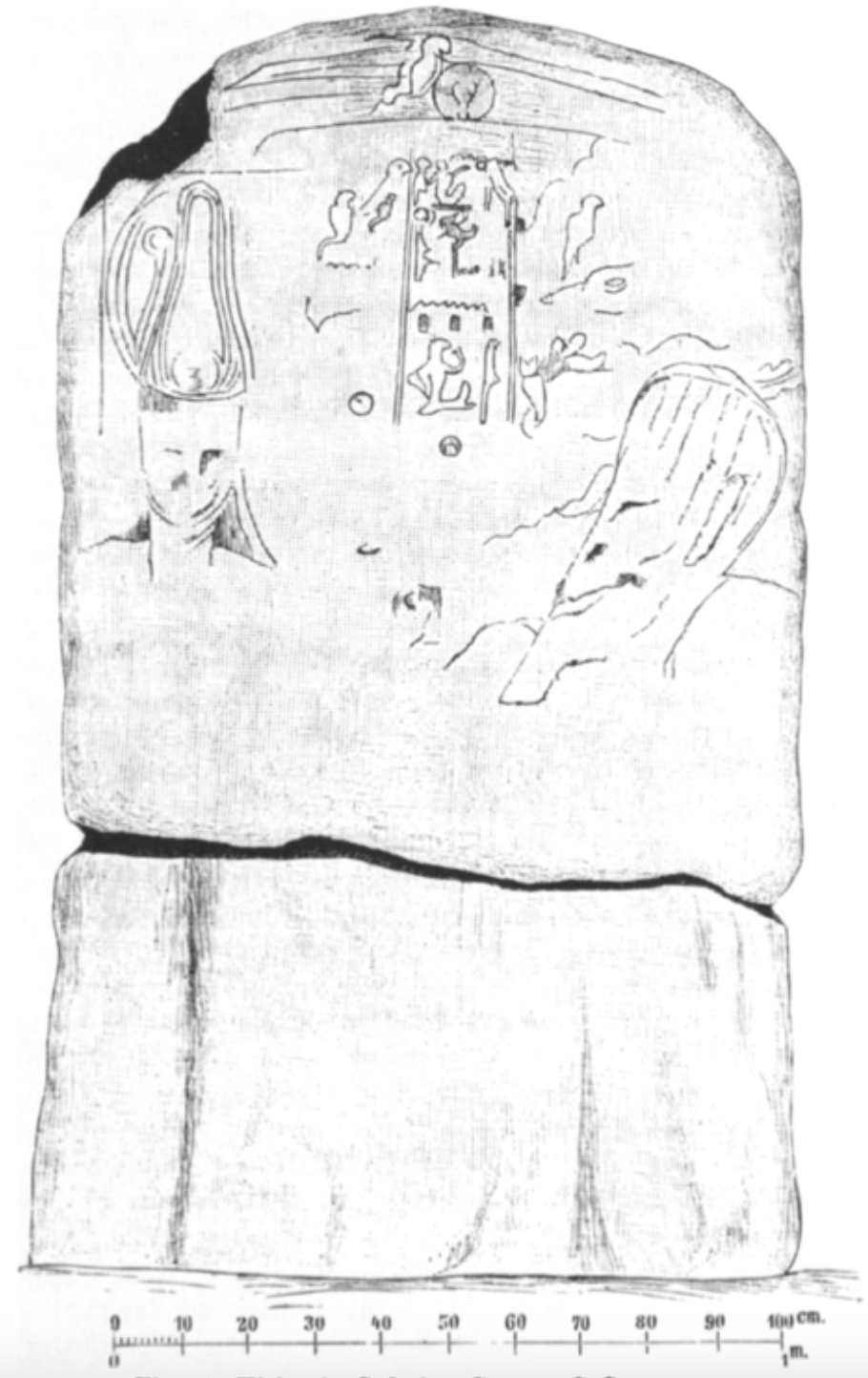
A record of the 'Job Stone' stela of Ramesses II found in southern Syria, evidence of his military campaigns and monuments in the northern Levant.
Records a stela of Ramesses II found in southern Syria, evidence of his military presence in the northern Levant.
About this source
What it is
This is a line drawing of the Al-Shaykh Saad stele, discovered in 1891 and documented by Gottlieb Schumacher. The stone has a rounded top carved with a winged disk, a seated figure, a cartouche, and a face, along with a scale bar showing its size.
Why it matters
Known locally as the 'Job Stone,' this stela is evidence that Ramesses II's power and monument-building reached into the northern Levant, far from Egypt's borders. Records like this drawing, made by later researchers, help historians map out how far Egyptian military influence extended during his reign.
Look closer
- Why would an Egyptian pharaoh leave a monument so far outside Egypt?
- What is the purpose of the scale bar included in the drawing?
- Since this is a drawing rather than a photograph, what might it capture or miss compared to the real stone?
This artifact is part of the curated material that grounds the AI version of Ramses II (Ramses the Great) on Humy.ai — when students ask about related events, the AI can quote it and cite it.
More Ramses II (Ramses the Great) sources
Meet the AI Ramses II (Ramses the Great) → Document
Primary source
Egyptian–Hittite Peace Treaty
c. 1258 BCE
 Photograph
Secondary source
Abu Simbel Temple Colossi
Pascal Sébah · 1875
 Artifact
Primary source
Abu Simbel
Ramesses II · c. 1273 BCE
 Photograph
Secondary source
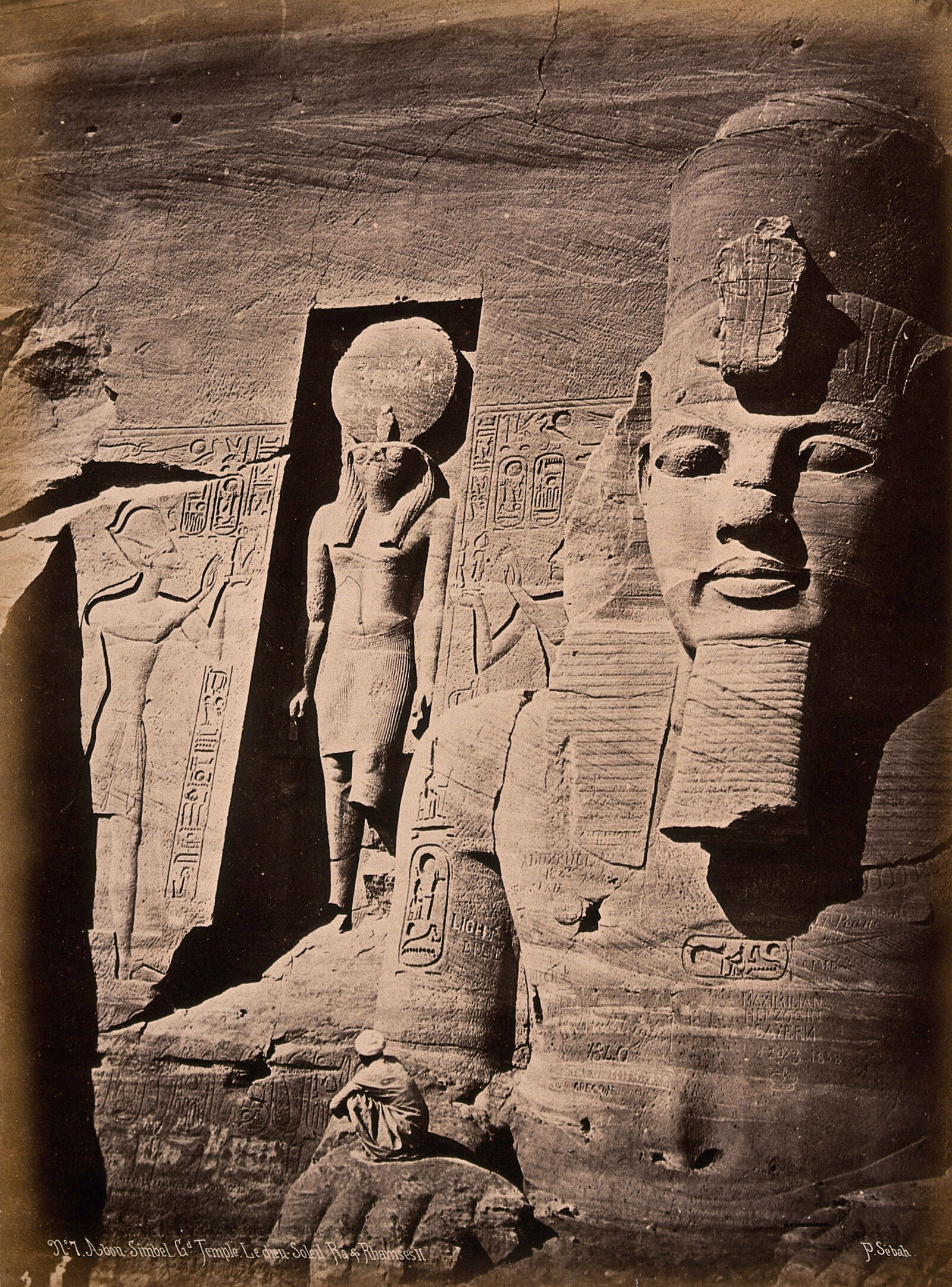
Facade Detail of Abu Simbel Showing Ramesses II and Ra
Pascal Sébah · 1875
 Photograph
Secondary source
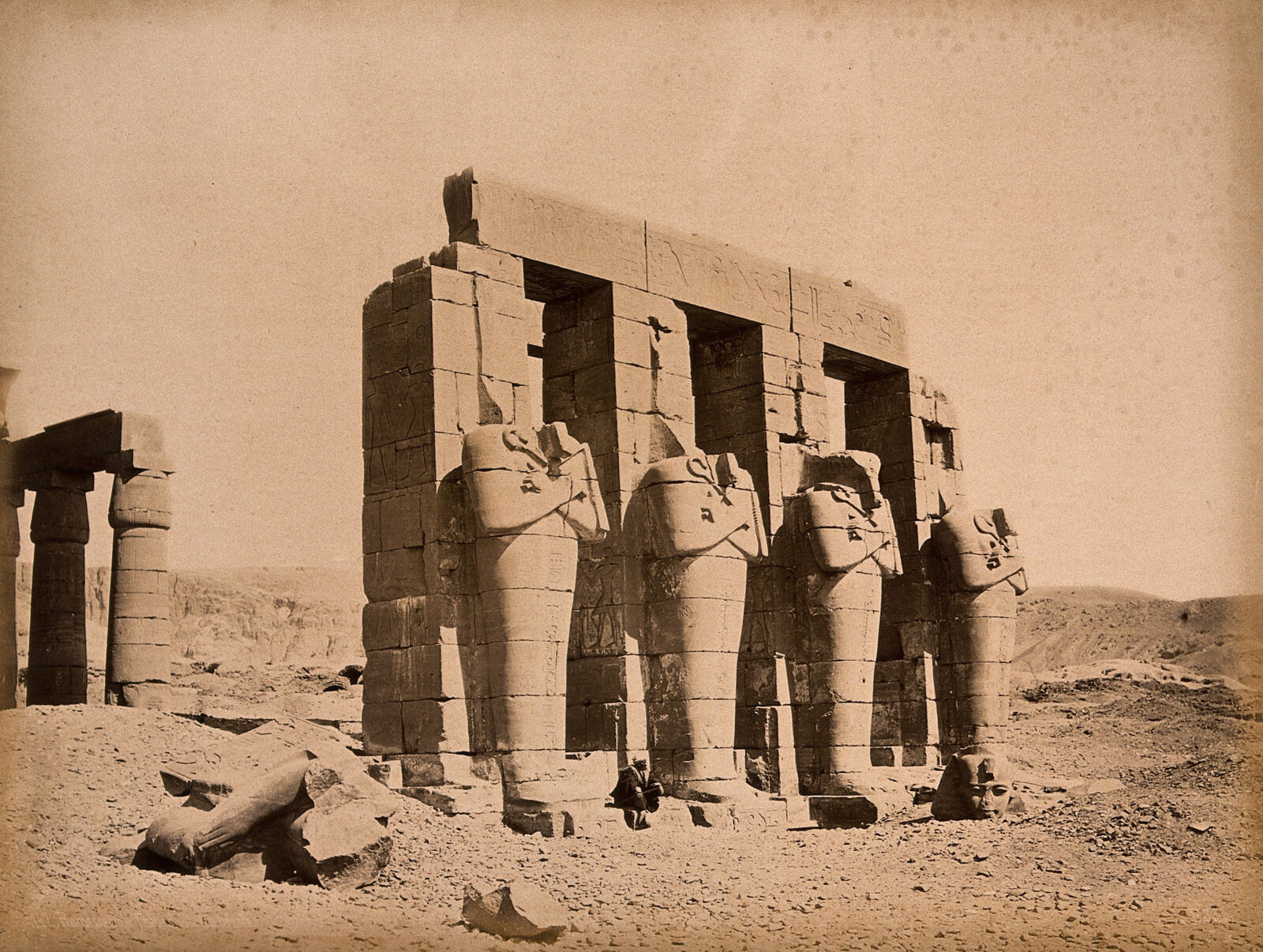
Ramesseum Colossi in Ruins
Pascal Sébah · c. 1875
Ready when you are
Start chatting with Ramses II (Ramses the Great) now.
20 messages free · No credit card · Available in 50+ languages.