


Secondary sourcePaintingc. 1725
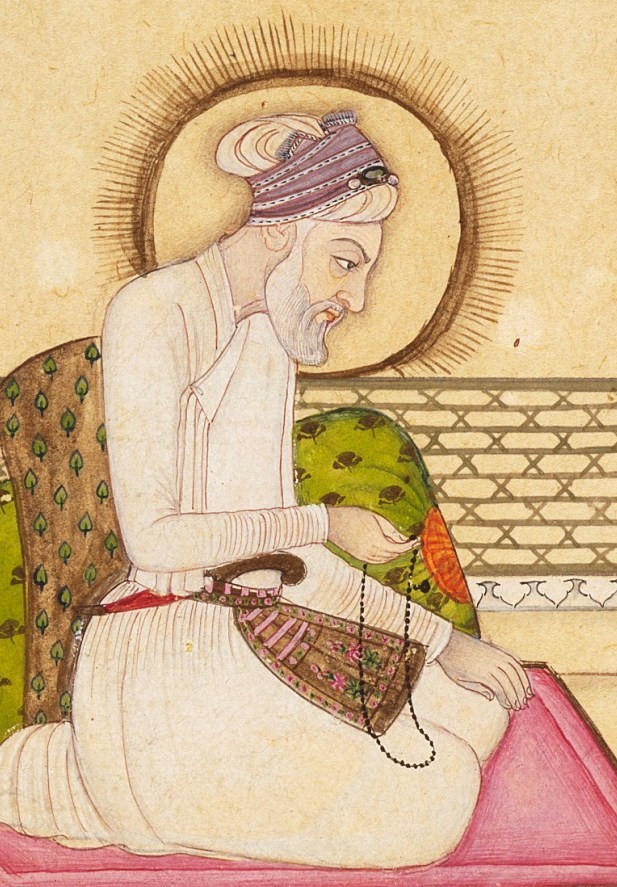
Alamgir I of India, c. 1725
c. 1725
A later miniature painting of Aurangzeb, who is named by his imperial title Alamgir I, with a golden halo. It was made about 18 years after his death.
Presents Aurangzeb, under his title Alamgir I, in a later image that shows how his memory was shaped after his death.
About this source
What it is
This is a painted miniature titled Alamgir I of India, the imperial name of Aurangzeb. It shows a bearded man in a white robe and a striped purple and white turban, seated in profile on a pink cushion. He holds a dark prayer beads string and a fringed pouch. A pale golden halo surrounds his head, and a lattice screen and green patterned cushion stand behind him. The painting is dated to about 1725, and its artist is unknown.
Why it matters
The painting was made about 18 years after Aurangzeb died in 1707, so it is not a record of his life. It shows how later painters remembered and honoured him. The halo and the prayer beads present him in a religious light, which suggests how his image was shaped after his reign.
Look closer
- Why might a later painter add a halo to a ruler's portrait?
- What does the prayer beads string suggest about how the emperor wanted to be seen?
- What questions would you ask to find out whether this image is based on a real sitting?
This painting is part of the curated material that grounds the AI version of Aurangzeb on Humy.ai — when students ask about related events, the AI can quote it and cite it.
More Aurangzeb sources
Meet the AI Aurangzeb →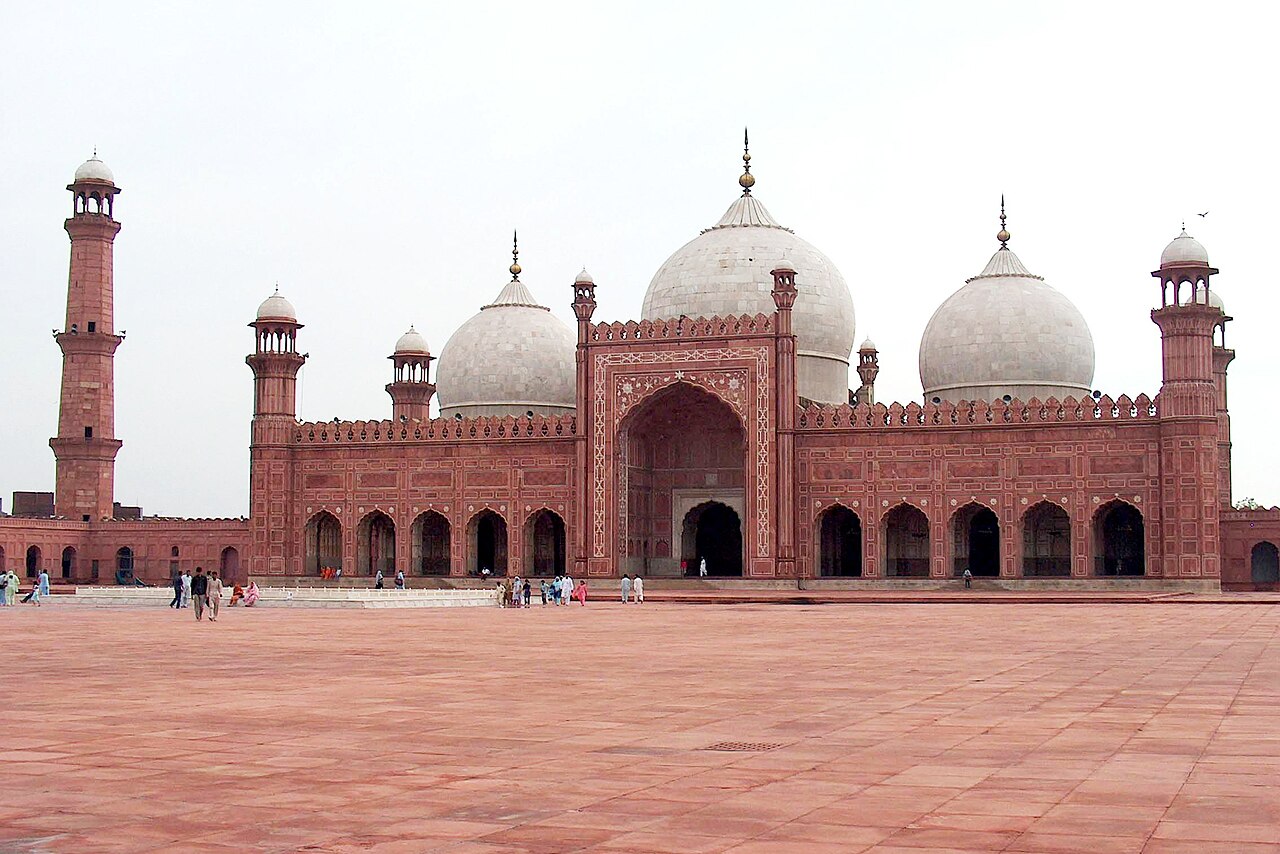 Artifact
Primary source
Badshahi Mosque
1671–1673
 Document
Primary source
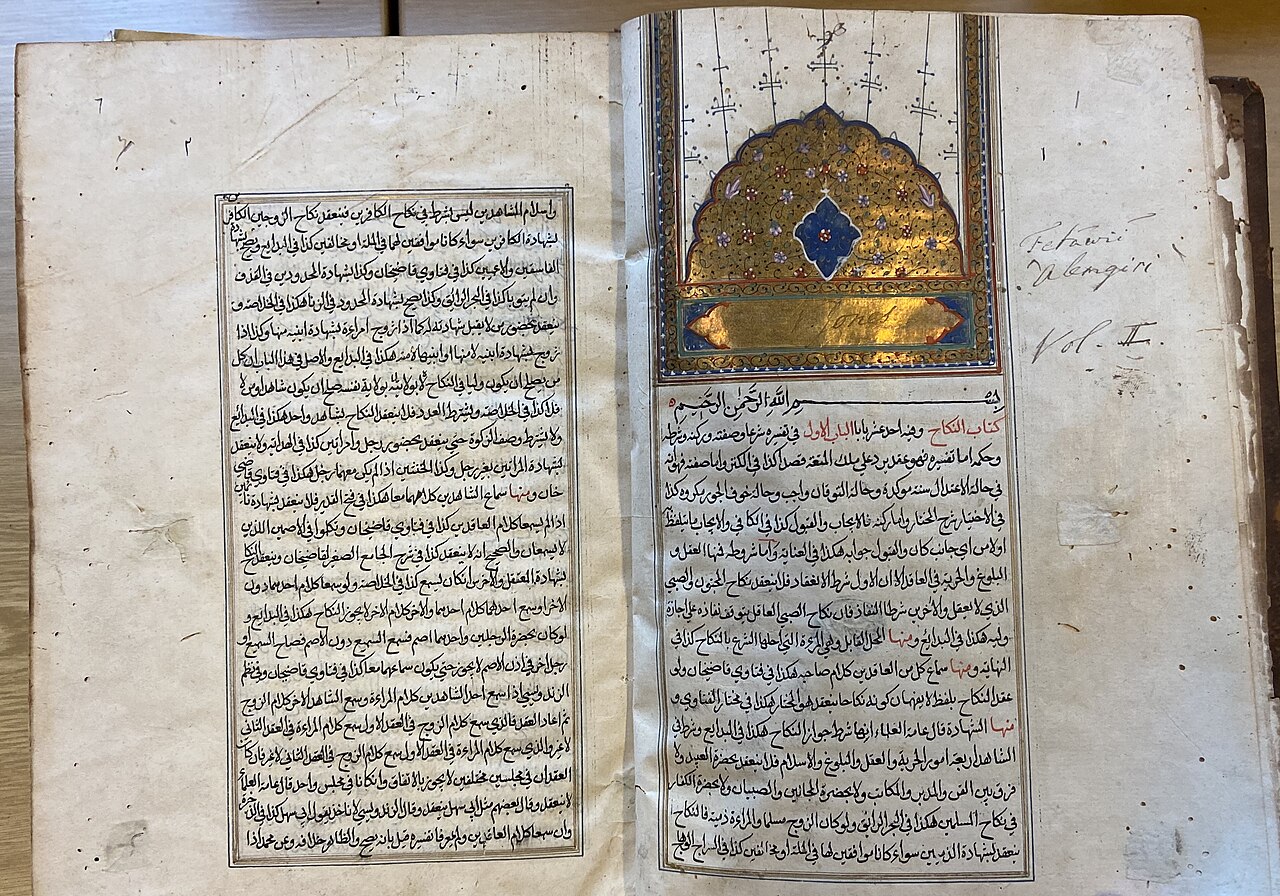
Fatawa-i Alamgiri Manuscript
17th century (this copy later recopied)
 Book
Secondary source
Maasir-i-Alamgiri
Saqi Musta'id Khan · c. 1710 (this copy 1763-1764)
Primary source
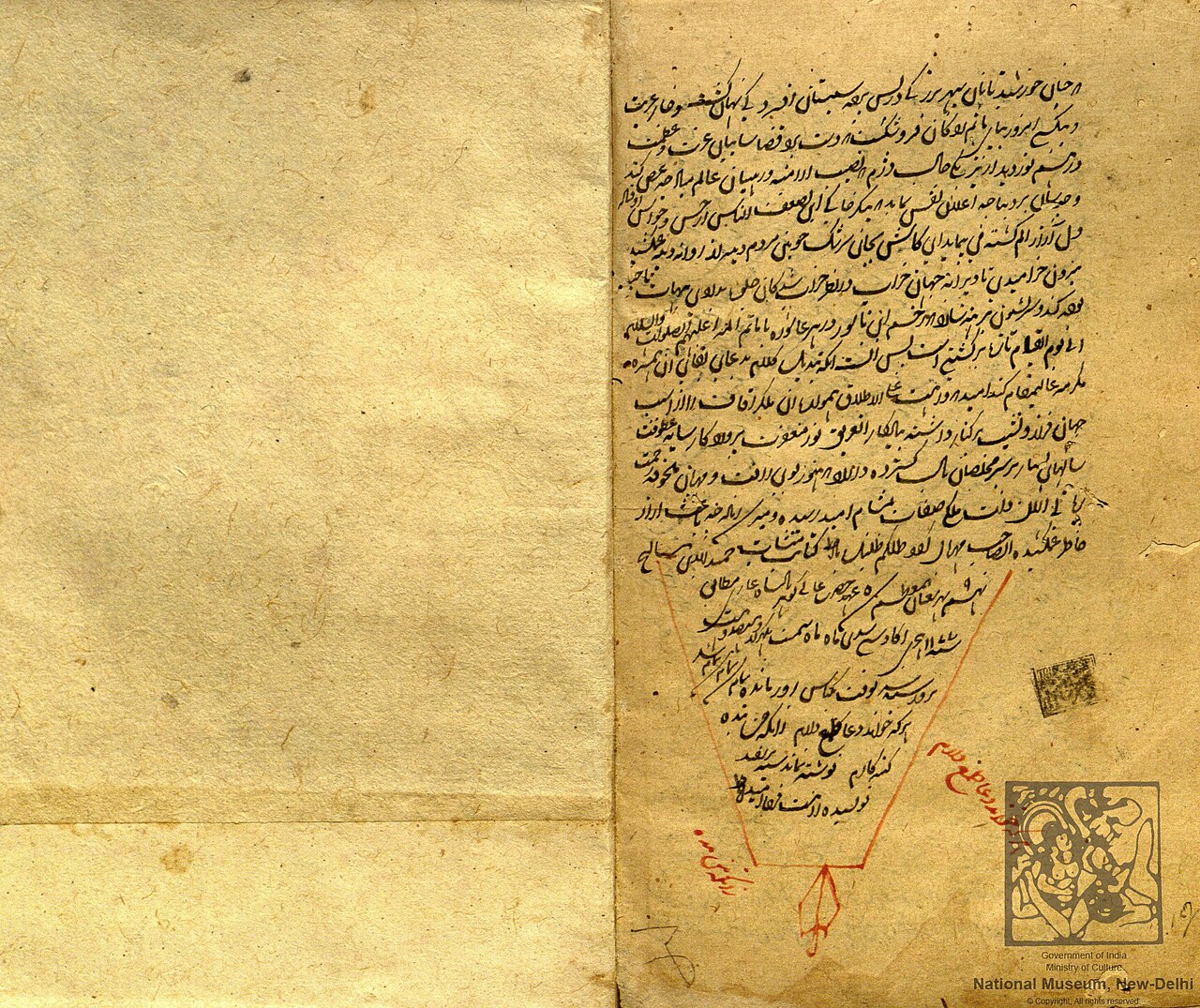
Ruka'at-i-Alamgiri
Aurangzeb · 17th century
 Letter
Primary source
Zafarnamah
Guru Gobind Singh · 1705
Ready when you are
Start chatting with Aurangzeb now.
20 messages free · No credit card · Available in 50+ languages.