


Secondary sourcePainting1493
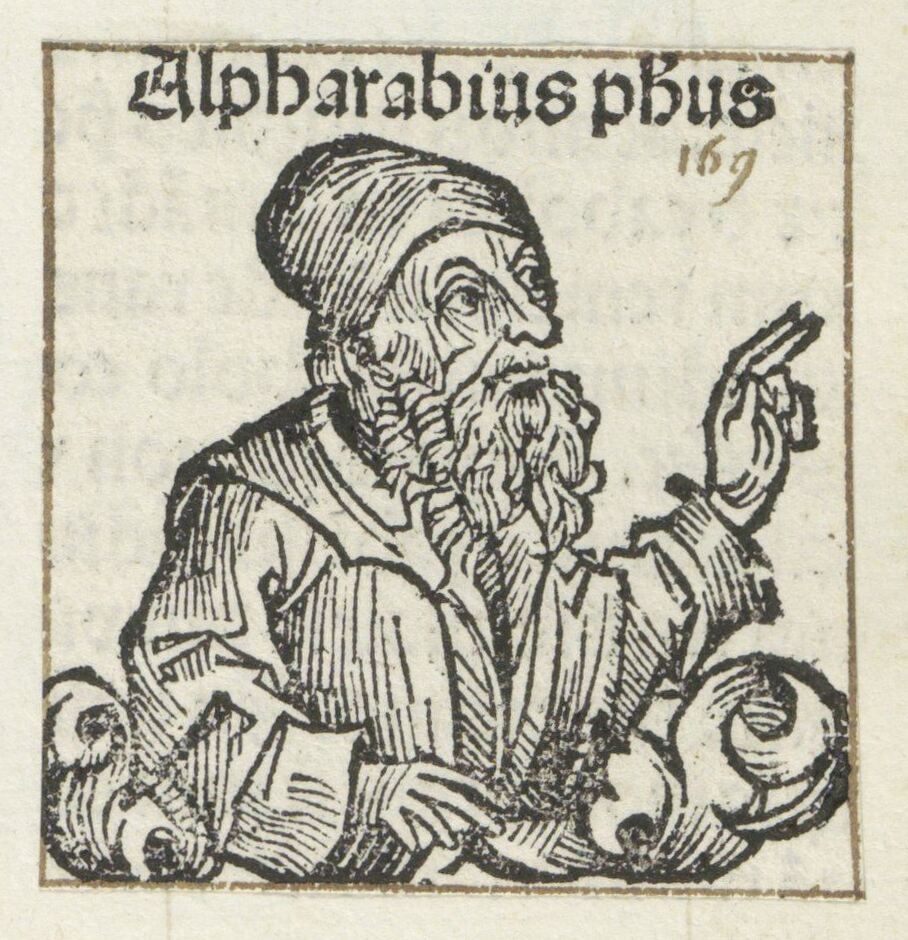
Alpharabius philosophus, Nuremberg Chronicle
Michel Wolgemut and Wilhelm Pleydenwurff (workshop) · 1493
A 1493 woodcut portrait of Al-Farabi, printed in the Nuremberg Chronicle, showing how he was remembered in Renaissance Europe.
This 1493 woodcut is the earliest printed image of Farabi, showing his lasting fame in European scholarship.
About this source
What it is
This small woodcut print shows a bearded man in a tall cap pointing upward, labelled 'Alpharabius philosophus'. It was made in 1493 in Nuremberg by the workshop of Michel Wolgemut and Wilhelm Pleydenwurff for Hartmann Schedel's Liber Chronicarum (the Nuremberg Chronicle). The print is now held by the Rijksmuseum.
Why it matters
This is the earliest printed image of Al-Farabi. It shows that, centuries after his death, European scholars still placed him among the great philosophers worth illustrating in a major printed history of the world. The image is imagined rather than a real likeness, since no portrait of Farabi from his own lifetime survives.
Look closer
- Why might the printer have chosen a pointing gesture and a scholar's cap for this figure?
- What does it mean that this woodcut was reused for other 'philosophers' in the same book?
- What does this image tell us about how medieval Islamic scholars were viewed in Renaissance Europe?
This painting is part of the curated material that grounds the AI version of Al-Farabi on Humy.ai — when students ask about related events, the AI can quote it and cite it.
More Al-Farabi sources
Meet the AI Al-Farabi →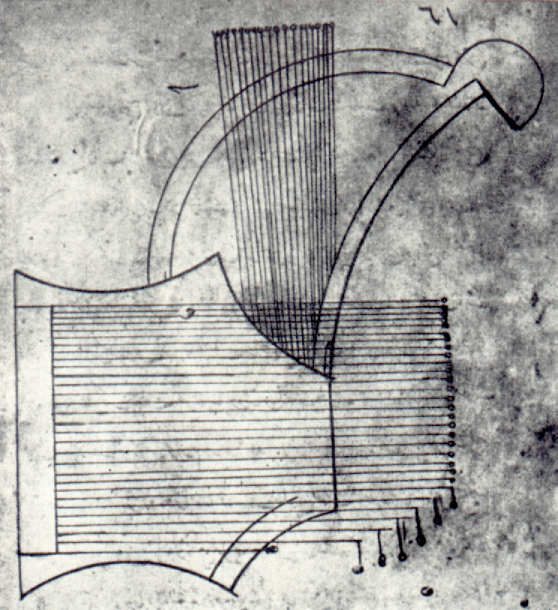 Book
Primary source
Kitab al-Musiqa al-Kabir
Farabi · 10th century
 Artifact
Primary source
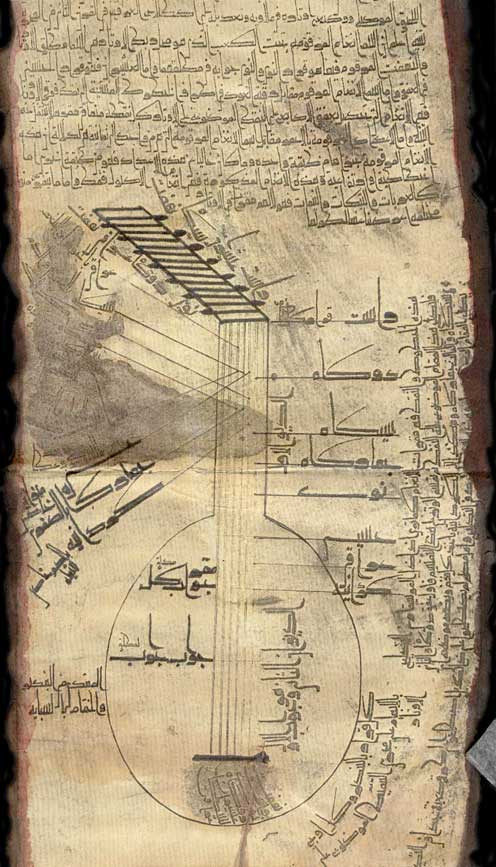
Lute Diagram with Seven Courses
Farabi · 10th century
 Book
Primary source
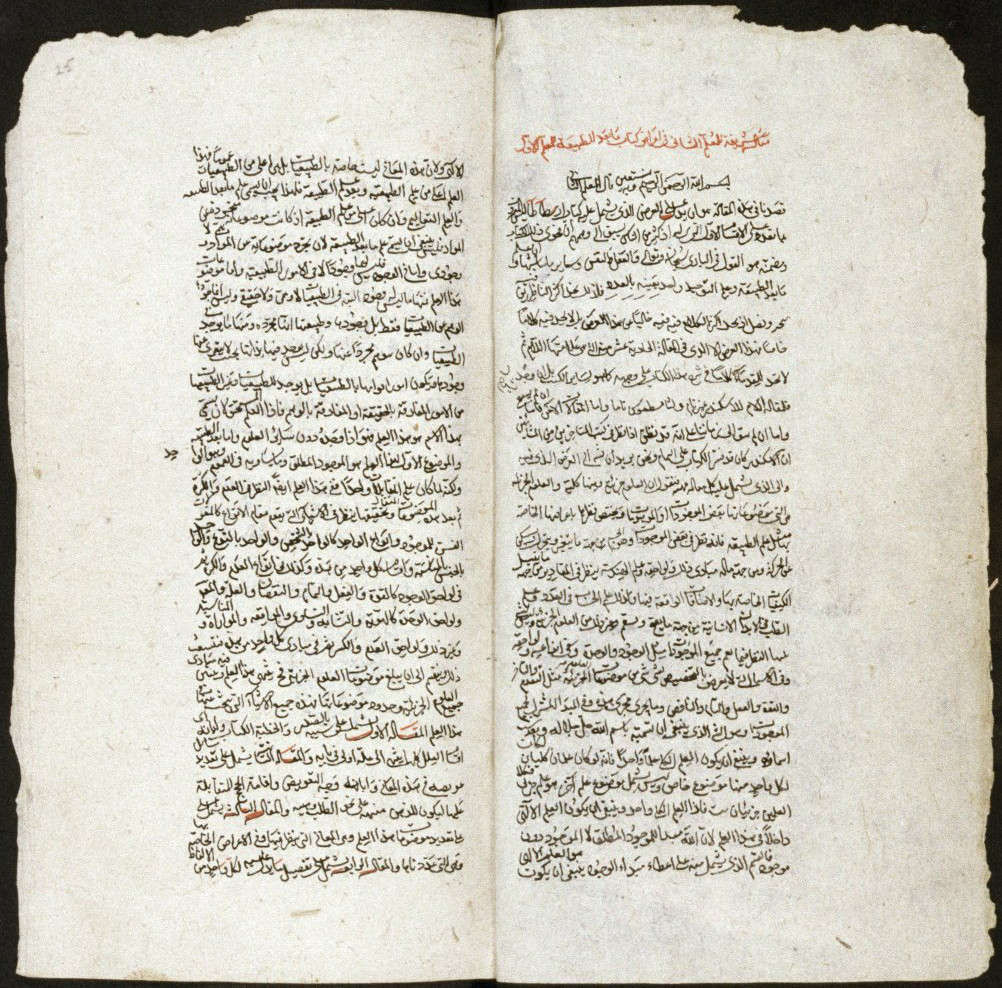
On the Scope of Aristotle's Metaphysics
Farabi · 10th century
 Book
Primary source
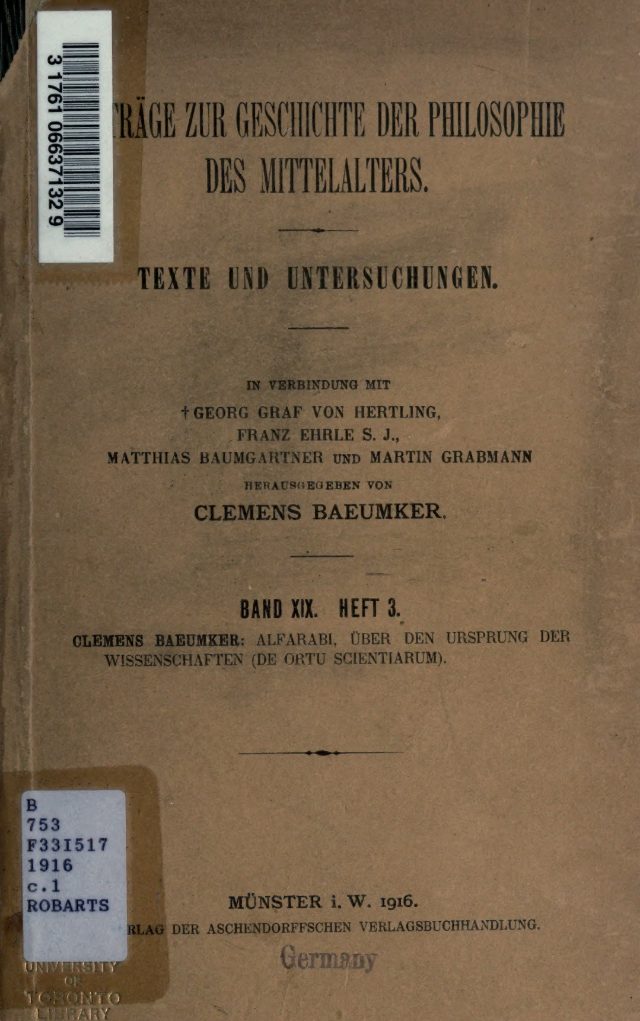
Über den Ursprung der Wissenschaften
Farabi · 1916 (edition of the original treatise)
PaintingPrimary source
Drawing of the Shahrud from the Great Book of Music
Farabi · 10th century
Ready when you are
Start chatting with Al-Farabi now.
20 messages free · No credit card · Available in 50+ languages.