


Secondary sourcePainting
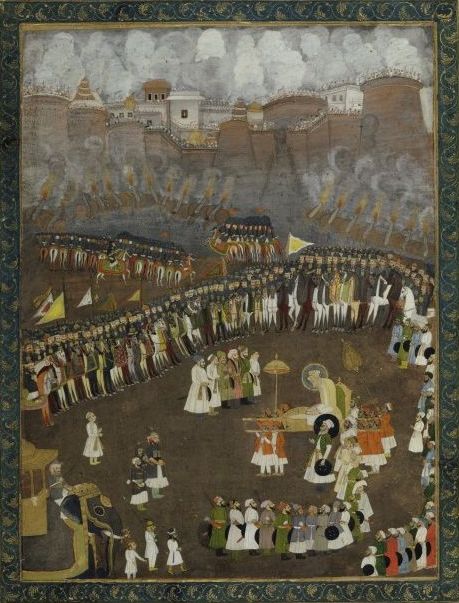
Aurangzeb au siège de Satara
A Mughal-style miniature from a French national library collection showing Aurangzeb at the siege of Satara. It was painted for an album of battle scenes and was not made by the emperor.
Shows Aurangzeb as the central figure at a siege, in a later album picture of his military campaigns.
About this source
What it is
This is a miniature painting from a French collection, titled in French Aurangzeb au siège de Satara, meaning Aurangzeb at the siege of Satara. The catalogue records it as folio 41 of a manuscript album of battle and historical subjects from India and Persia, held by the Bibliotheque nationale de France in Paris. It was shown in a 2010 exhibition of Indian miniatures. The image shows a walled fortress with domed buildings behind a hillside crowded with soldiers, banners and cannon smoke. In the foreground, armed horsemen face a central seated figure under a parasol, attended by servants, musicians and footmen. The date is not recorded.
Why it matters
Albums like this one collected scenes of war and court life, and they show how Mughal painting presented power and conquest. The painting is a later record rather than an eyewitness account, so it tells us how the siege was imagined and displayed, not exactly how it happened.
Look closer
- Who is shown at the centre of the scene, and how do the other figures show his importance?
- What does the painter choose to show and what might be missing from a battle picture like this?
- Why might a collector keep a battle scene in a book of historical subjects?
This painting is part of the curated material that grounds the AI version of Aurangzeb on Humy.ai — when students ask about related events, the AI can quote it and cite it.
More Aurangzeb sources
Meet the AI Aurangzeb →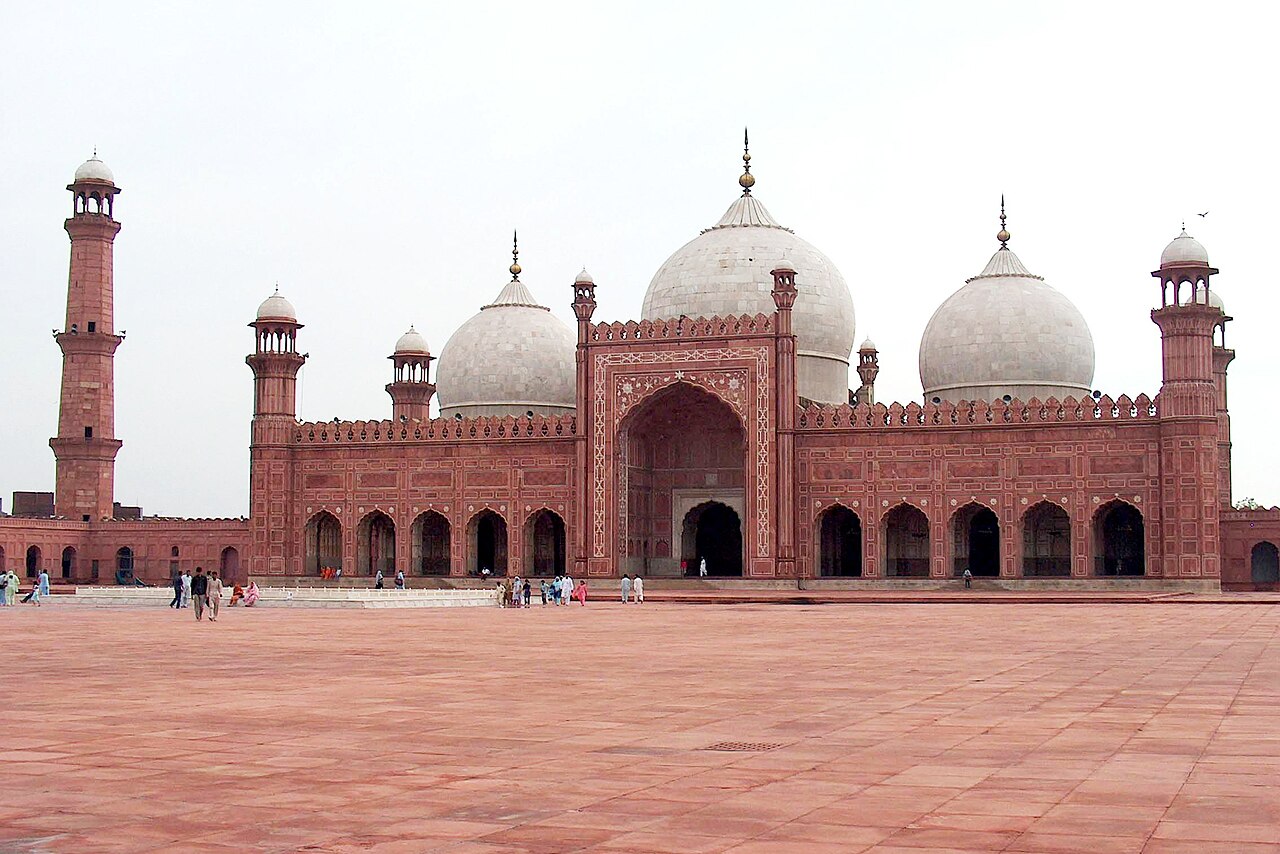 Artifact
Primary source
Badshahi Mosque
1671–1673
 Document
Primary source
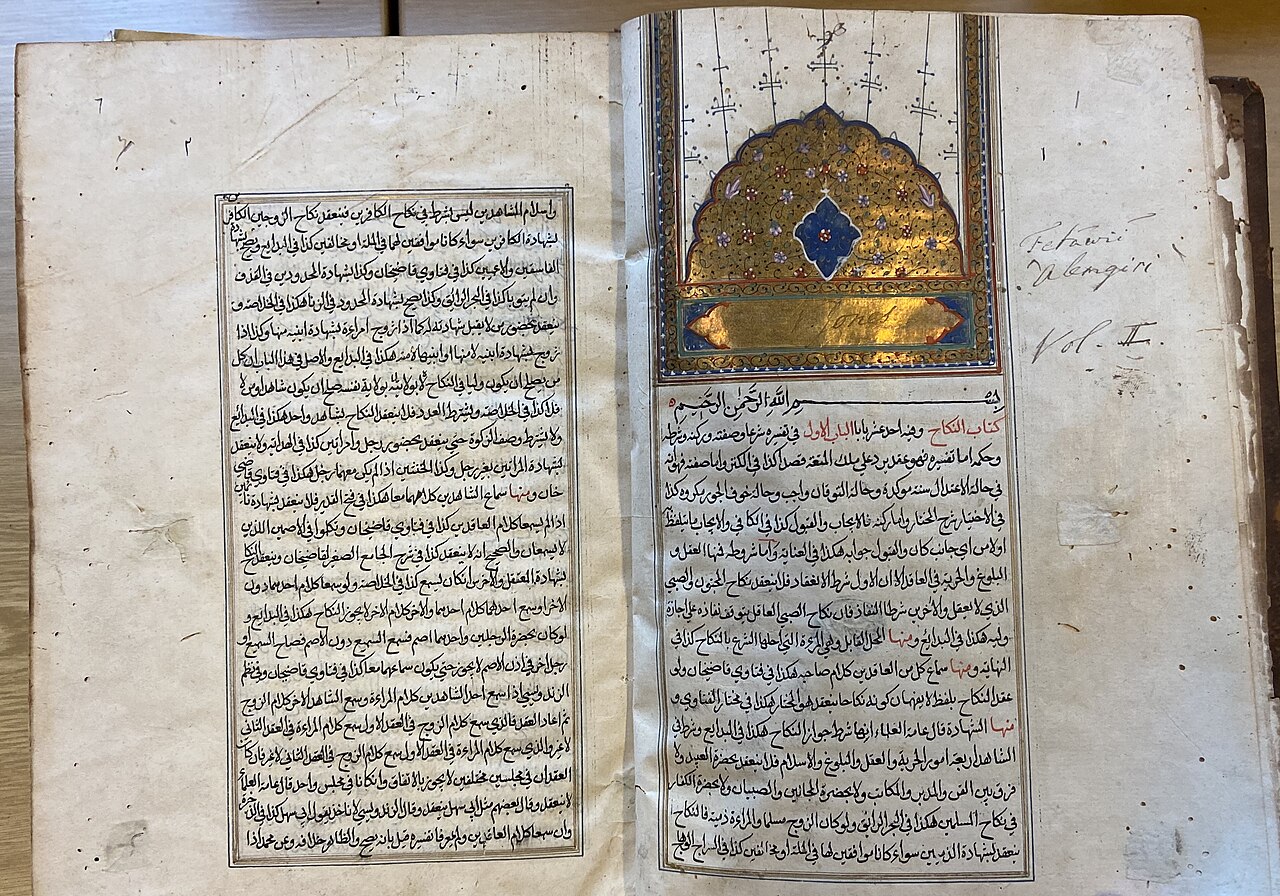
Fatawa-i Alamgiri Manuscript
17th century (this copy later recopied)
 Book
Secondary source
Maasir-i-Alamgiri
Saqi Musta'id Khan · c. 1710 (this copy 1763-1764)
Primary source
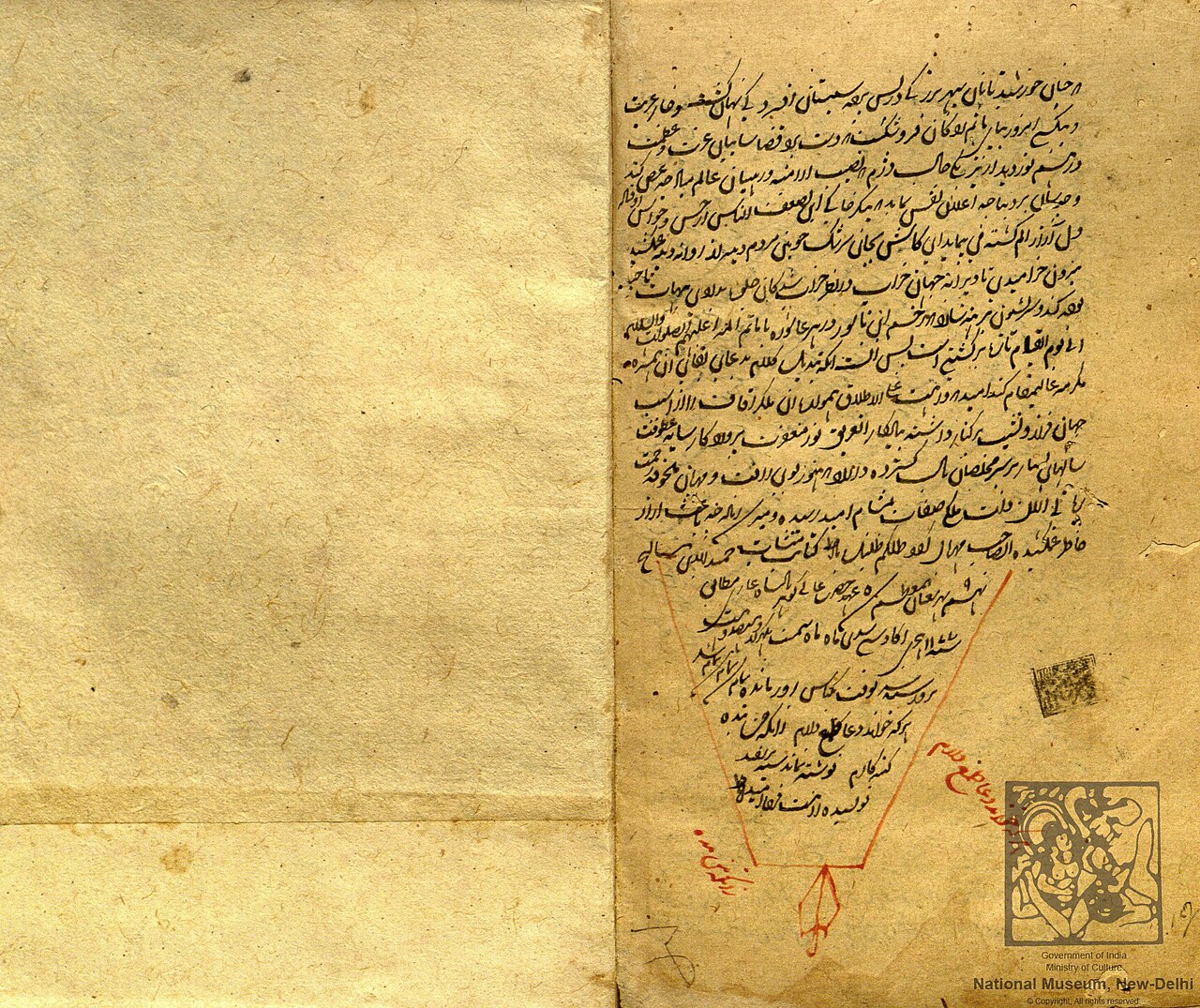
Ruka'at-i-Alamgiri
Aurangzeb · 17th century
 Letter
Primary source
Zafarnamah
Guru Gobind Singh · 1705
Ready when you are
Start chatting with Aurangzeb now.
20 messages free · No credit card · Available in 50+ languages.