


Primary sourceDocument1791
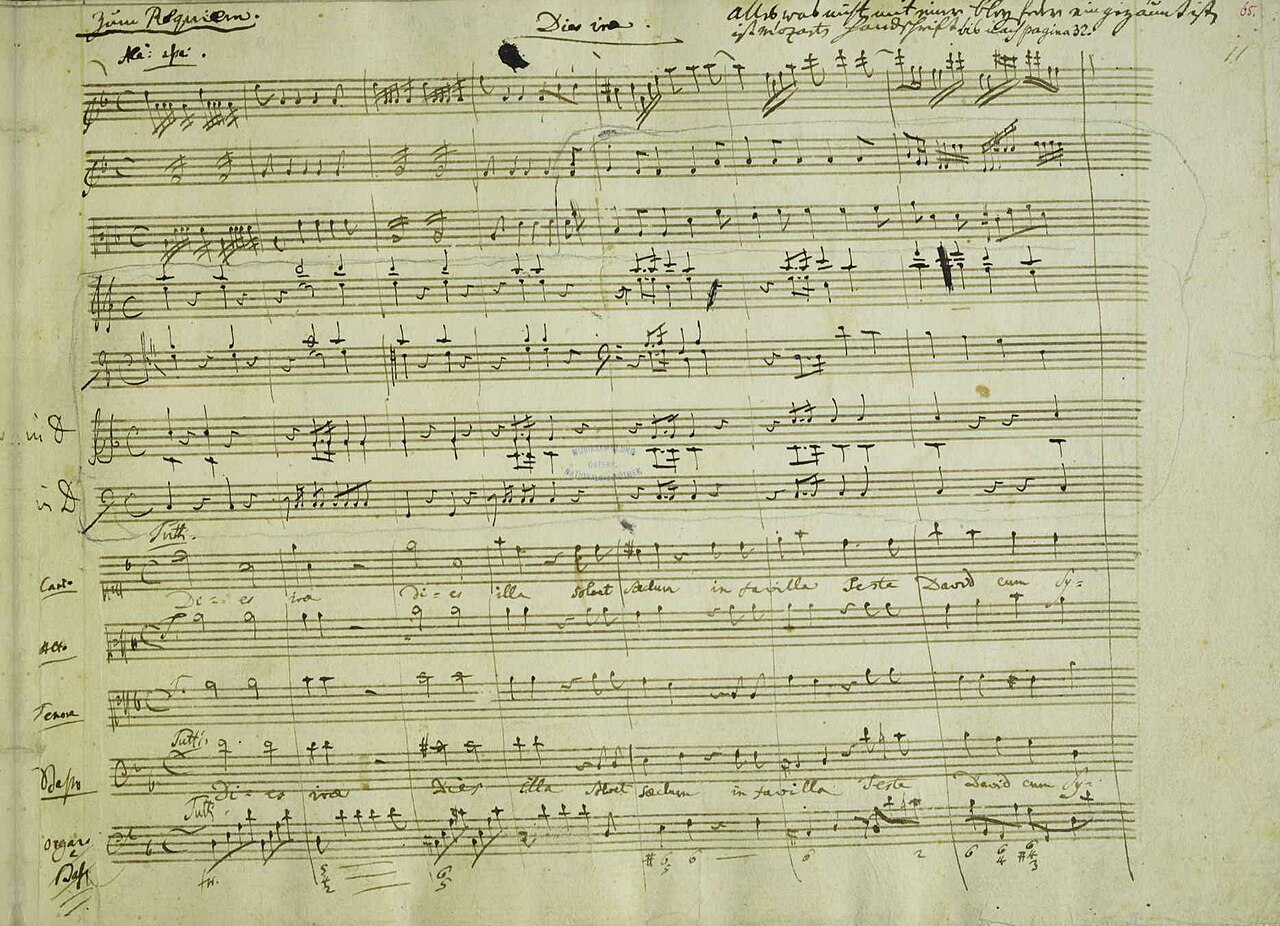
Autograph Manuscript of the Requiem, Dies Irae
Wolfgang Amadeus Mozart · 1791
Mozart's handwritten page of the Dies Irae movement from his unfinished Requiem.
This is Mozart's own handwritten page from his final, unfinished composition, the Requiem.
About this source
What it is
This is a handwritten manuscript page by Wolfgang Amadeus Mozart, showing part of the Dies Irae movement of his Requiem (K. 626). The page shows vocal lines marked for alto and tenor along with instrumental staves, written in Mozart's own hand.
Why it matters
The Requiem was left unfinished when Mozart died in 1791, and this page lets us see directly how he composed music on paper, sketching voices and instruments together. It is one of the most famous unfinished works in music history, closely tied to the mystery and myths around Mozart's death.
Look closer
- What do the markings for 'Alto' and 'Tenor' tell you about how Mozart organized his composing process?
- Why might a composer write vocal and instrumental parts on the same page?
- What questions does an unfinished manuscript raise about how the rest of the piece was completed?
This document is part of the curated material that grounds the AI version of Wolfgang Amadeus Mozart on Humy.ai — when students ask about related events, the AI can quote it and cite it.
More Wolfgang Amadeus Mozart sources
Meet the AI Wolfgang Amadeus Mozart →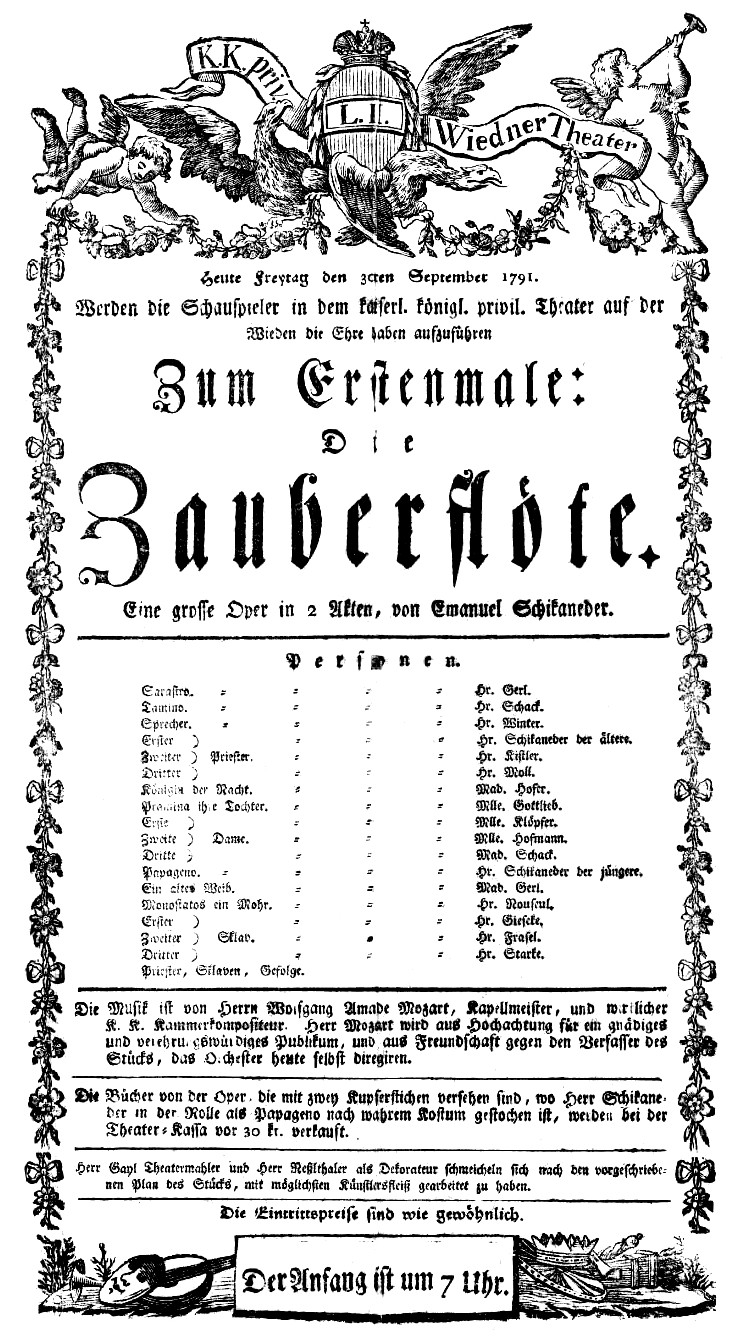 Document
Primary source
The Magic Flute
Wolfgang Amadeus Mozart · 1791
 Photograph
Secondary source
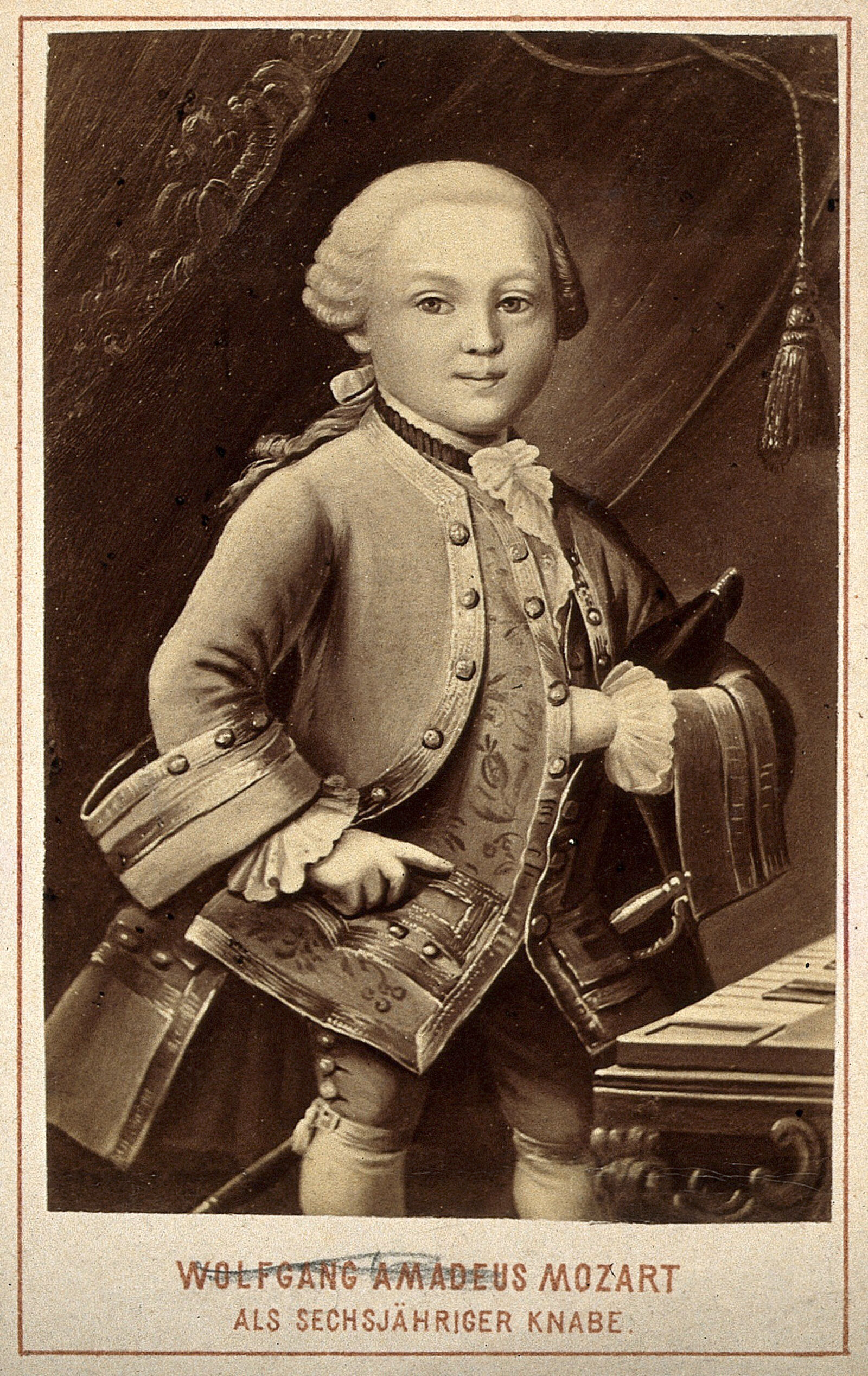
Wolfgang Amadeus Mozart at the age of six
A. Lenisch
 Document
Primary source
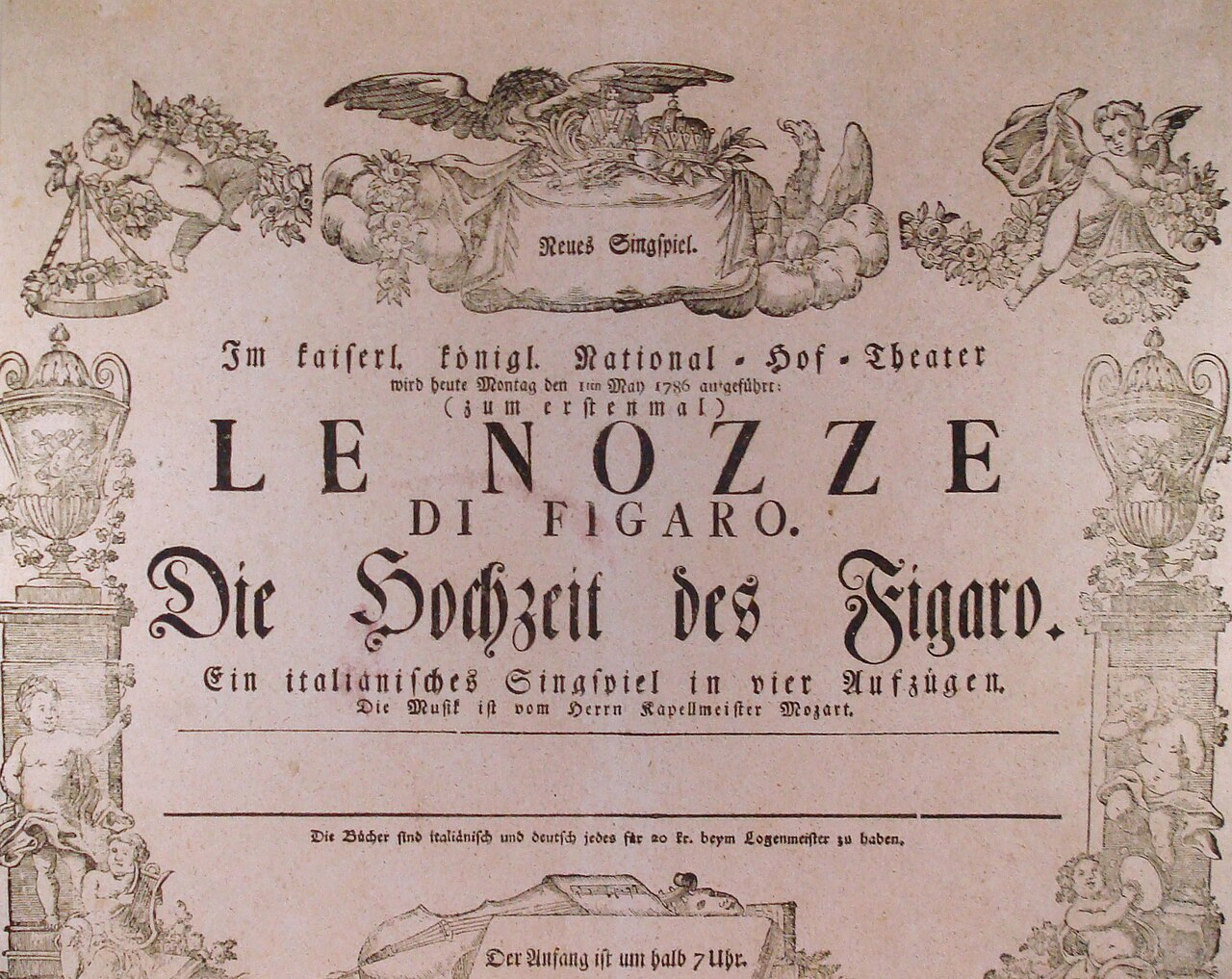
The Marriage of Figaro
Wolfgang Amadeus Mozart · 1786
 Document
Primary source
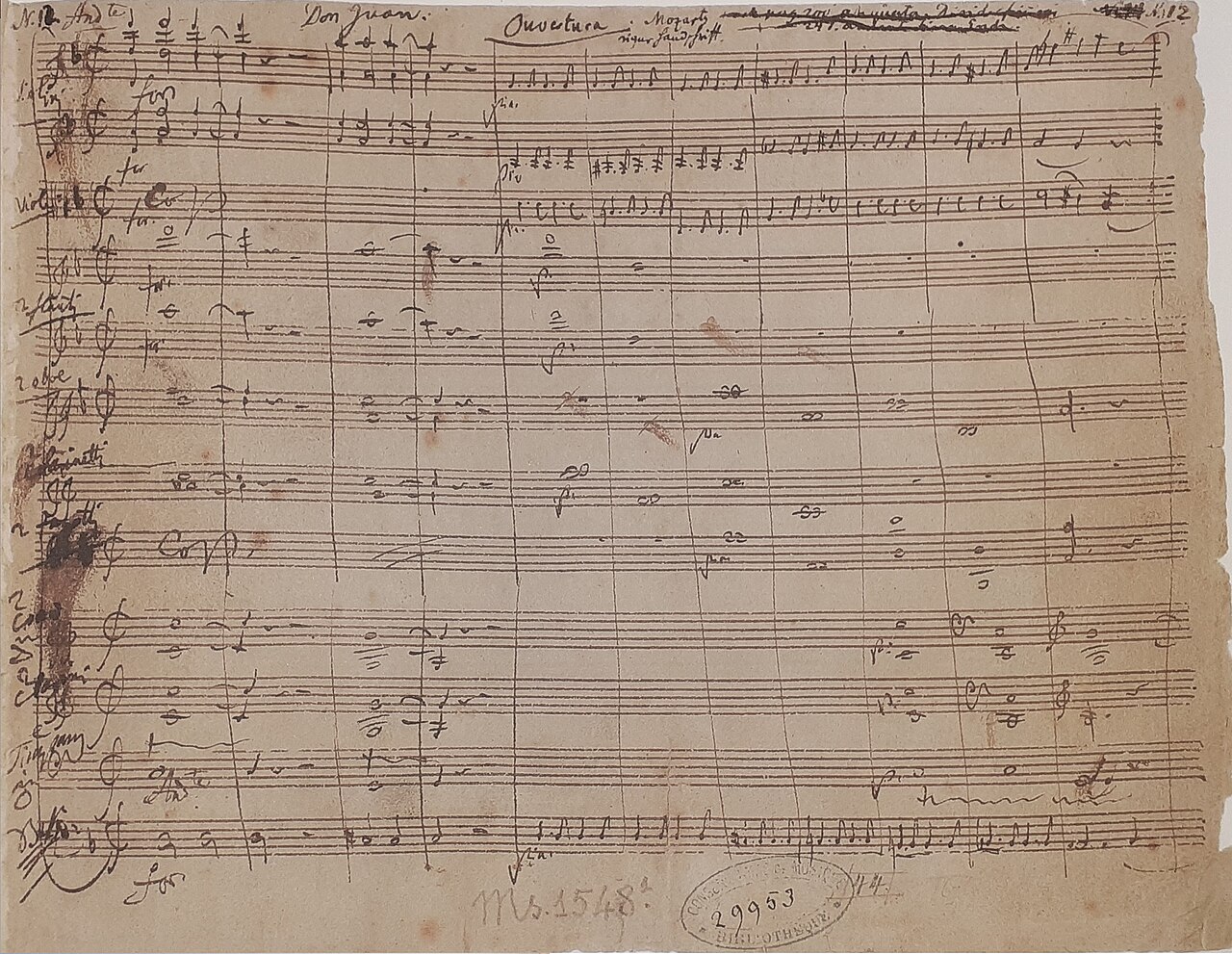
Don Giovanni
Wolfgang Amadeus Mozart · 1787
 Document
Primary source
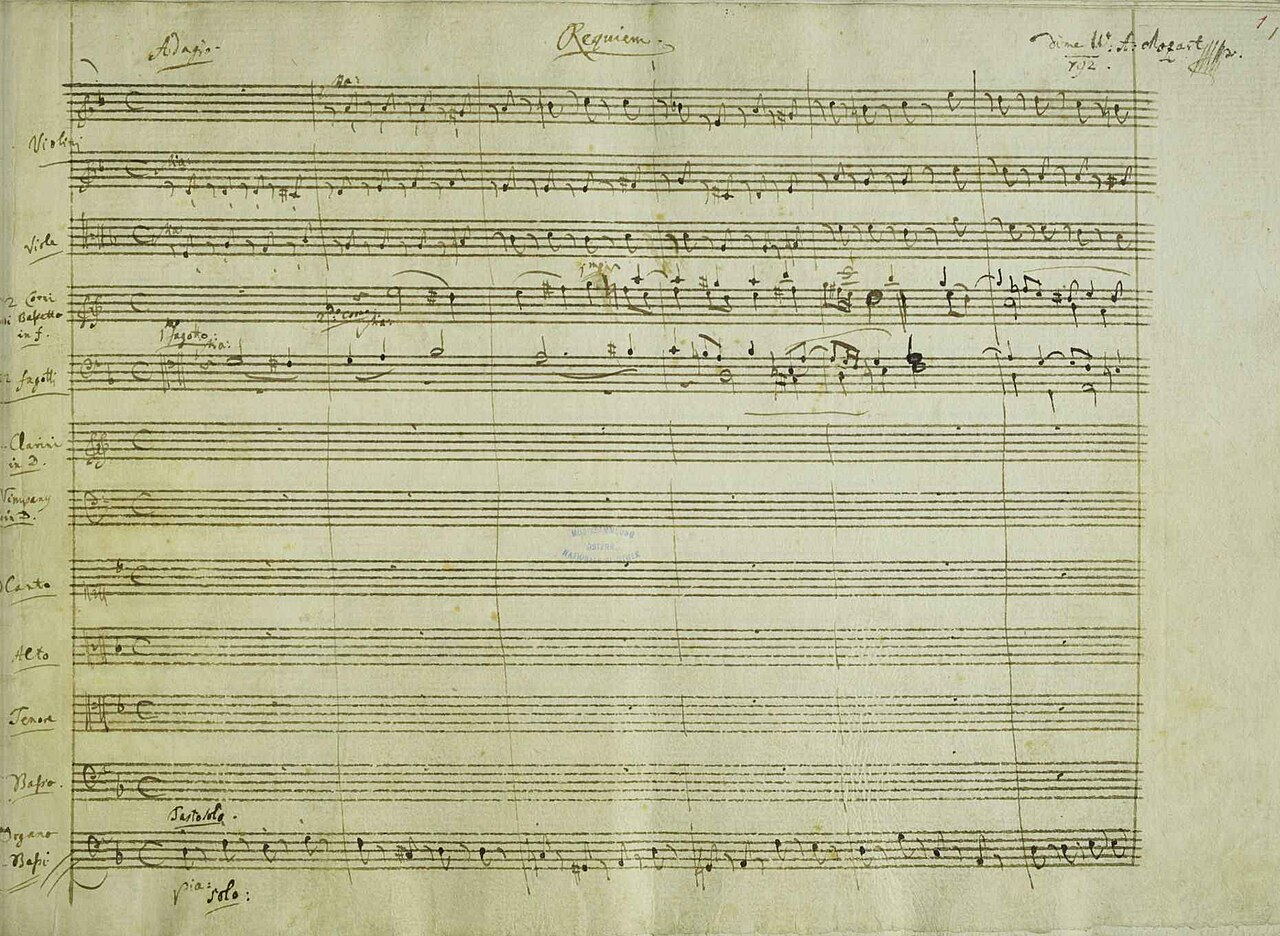
Requiem
Wolfgang Amadeus Mozart · 1791
Ready when you are
Start chatting with Wolfgang Amadeus Mozart now.
20 messages free · No credit card · Available in 50+ languages.