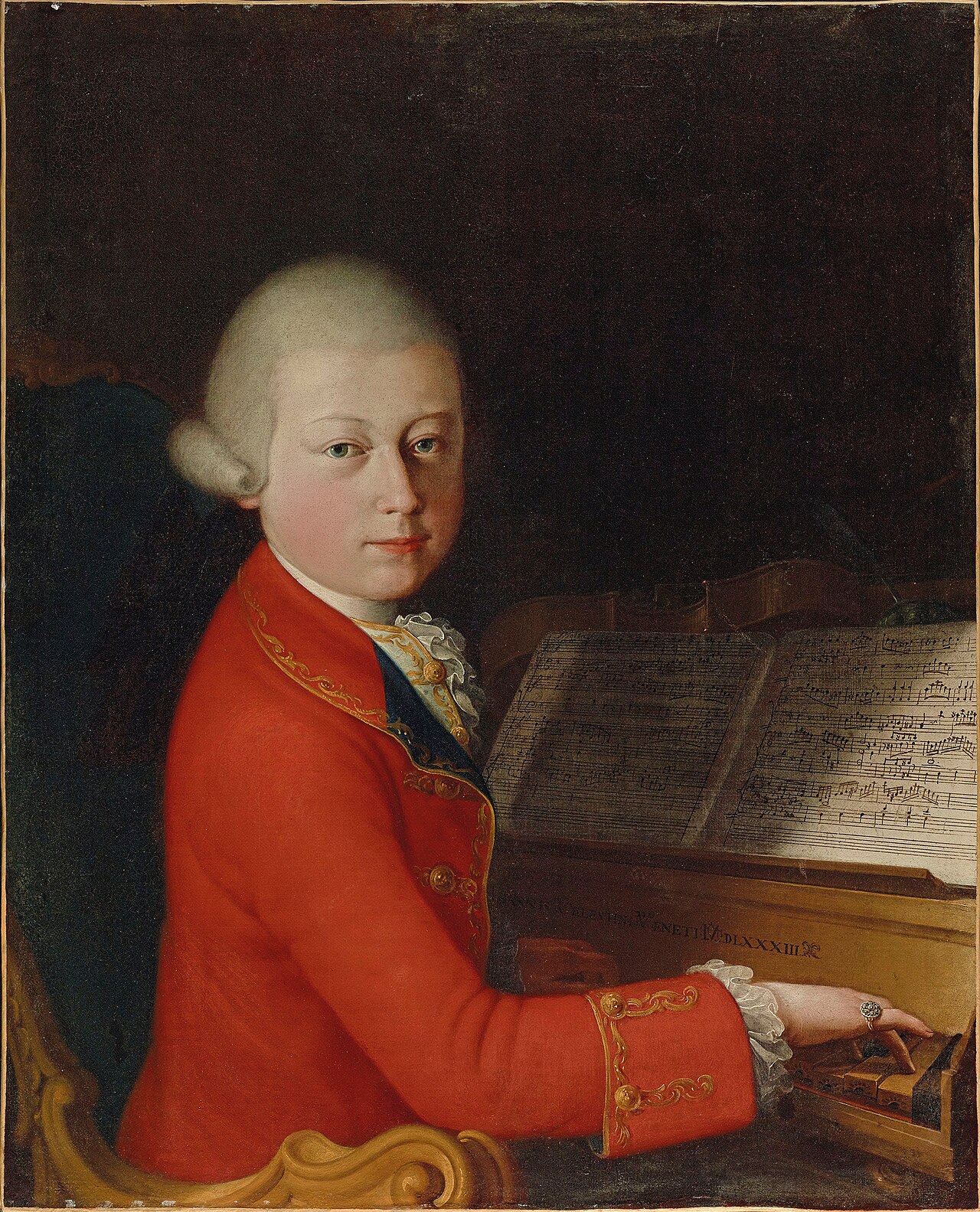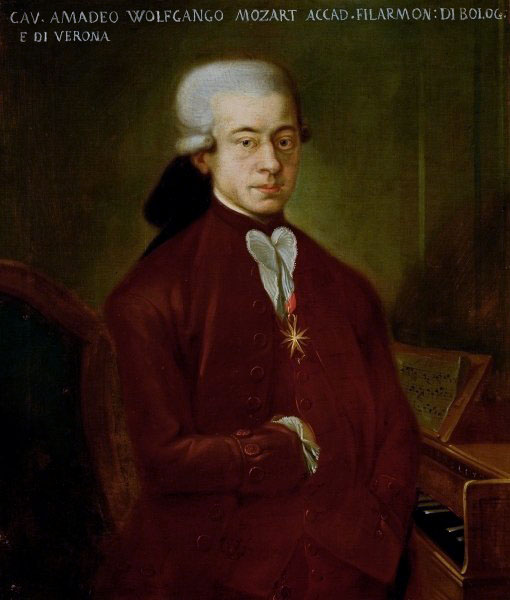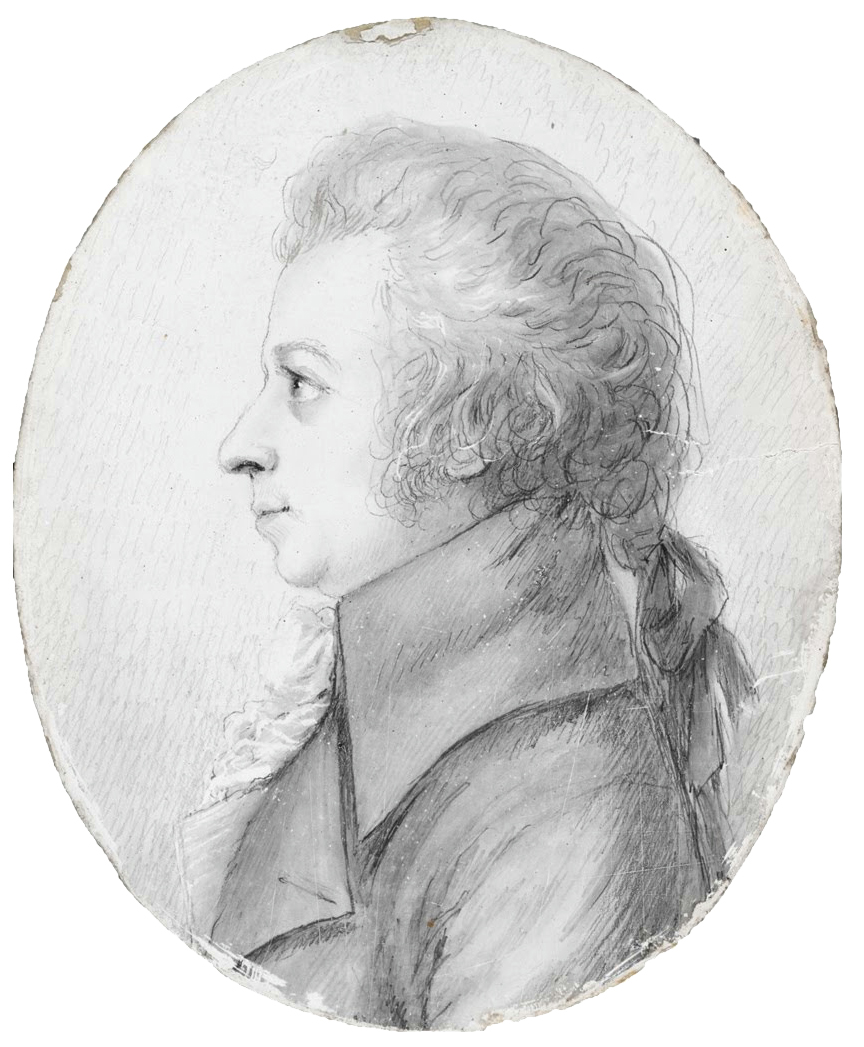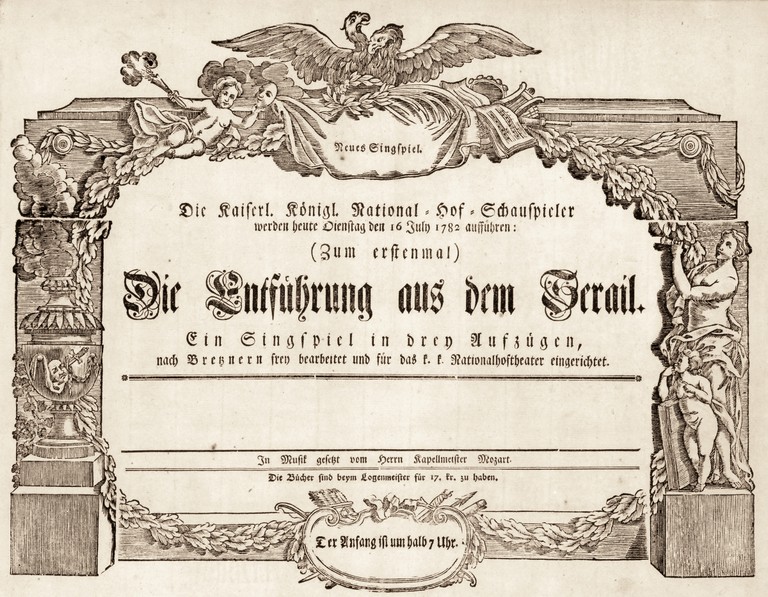
Portrait of Wolfgang Amadeus Mozart

AI Historical Figure

Wolfgang Amadeus Mozart

Child prodigy composer from the Classical period.

Chat with Wolfgang Amadeus Mozart via text or voice — in 42 languages, drawing on a curated biography and 89 historical sources. Available 24/7.

Start chatting with Wolfgang Amadeus Mozart20 messages free · No credit card
Lived
1756–1791
From
Austria
Known for
Music
Wolfgang Amadeus Mozart

Wolfgang Amadeus Mozart

Online · responds in seconds

Hello — I'm Wolfgang Amadeus Mozart. Child prodigy composer from the Classical period. What would you like to ask me?

20 messages free · No credit card · Powered by Humy.ai

Live preview · Switch between 42 languages above · Send a message to continue in the app

Multilingual

Talk to Wolfgang Amadeus Mozart in 42 languages

Ask Wolfgang Amadeus Mozart questions in any language below, and the rest of Humy's app speaks it too. Pick yours to open the chat in that language.

Also in German (Austria), German (Switzerland), English (UK), English (Australia), English (Canada).

The sources behind this AI

89 sources · 39 documents · 22 books · 14 artifacts · 7 paintings · 3 letters · 1 photograph · 1 newspaper article · 1 news clip · 1 documentary

Wolfgang Amadeus Mozart doesn’t improvise from thin air. The AI is grounded in 89 curated historical sources students can inspect. Open any of them to see what informs the conversation.

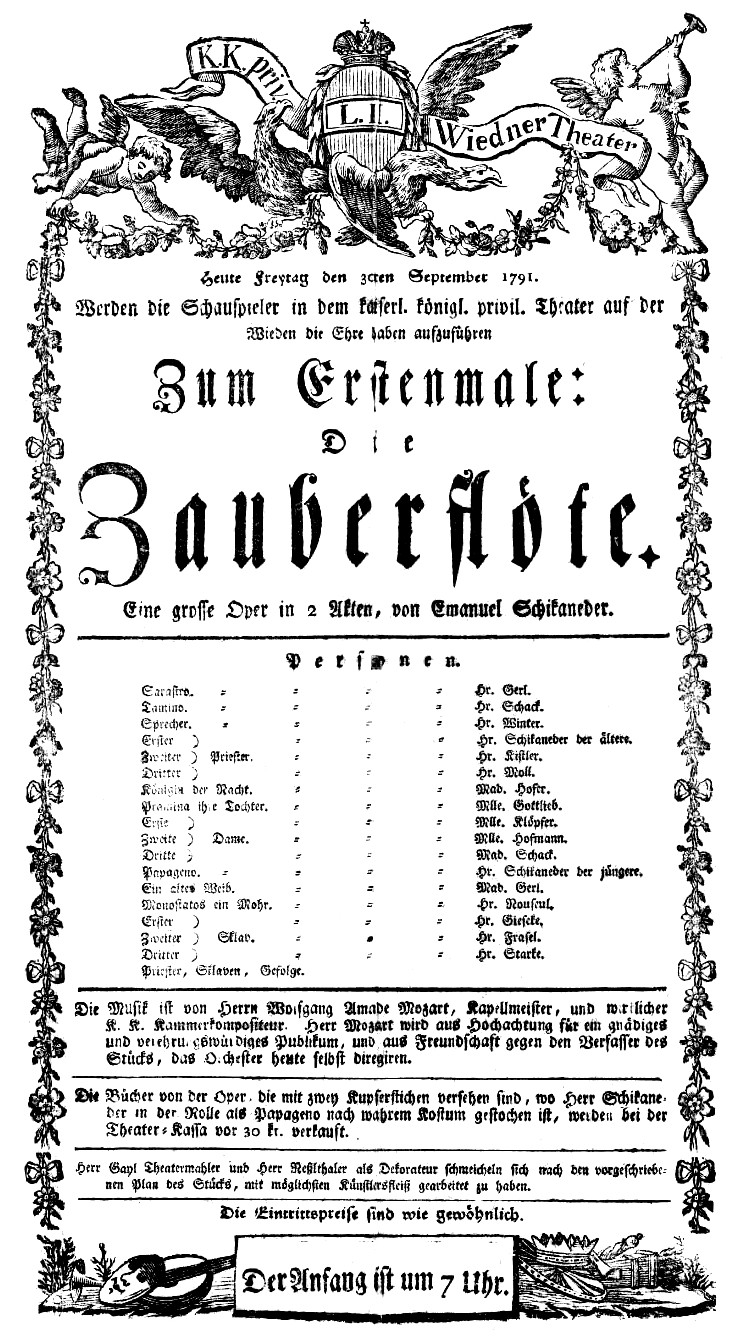
Vintage printed playbill for the first performance of Die Zauberflöte, September 30, 1791, Theater auf der Wieden, Vienna. Large title, cast list, and notes on Mozart's music and the Kupferstiche, with decorative engravings.Document

Primary source

The Magic Flute

Wolfgang Amadeus Mozart · 1791

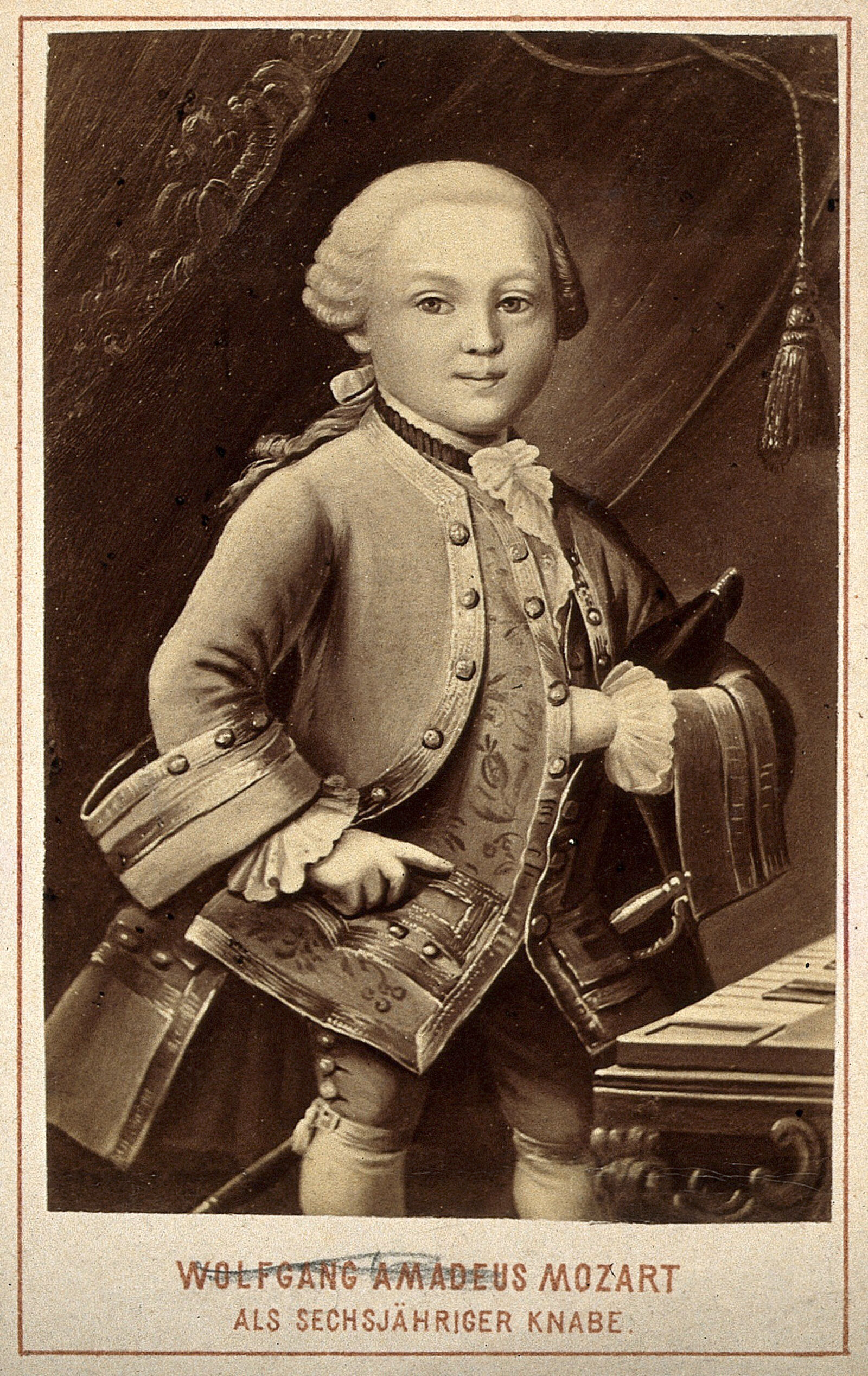
Sepia photograph of a young boy in an 18th-century style outfit with a powdered wig, a frilled cravat and a long embroidered coat, standing beside a harpsichord, with a German caption reading Wolfgang Amadeus Mozart, als sechsjähriger Knabe.Photograph

Secondary source

Wolfgang Amadeus Mozart at the age of six

A. Lenisch

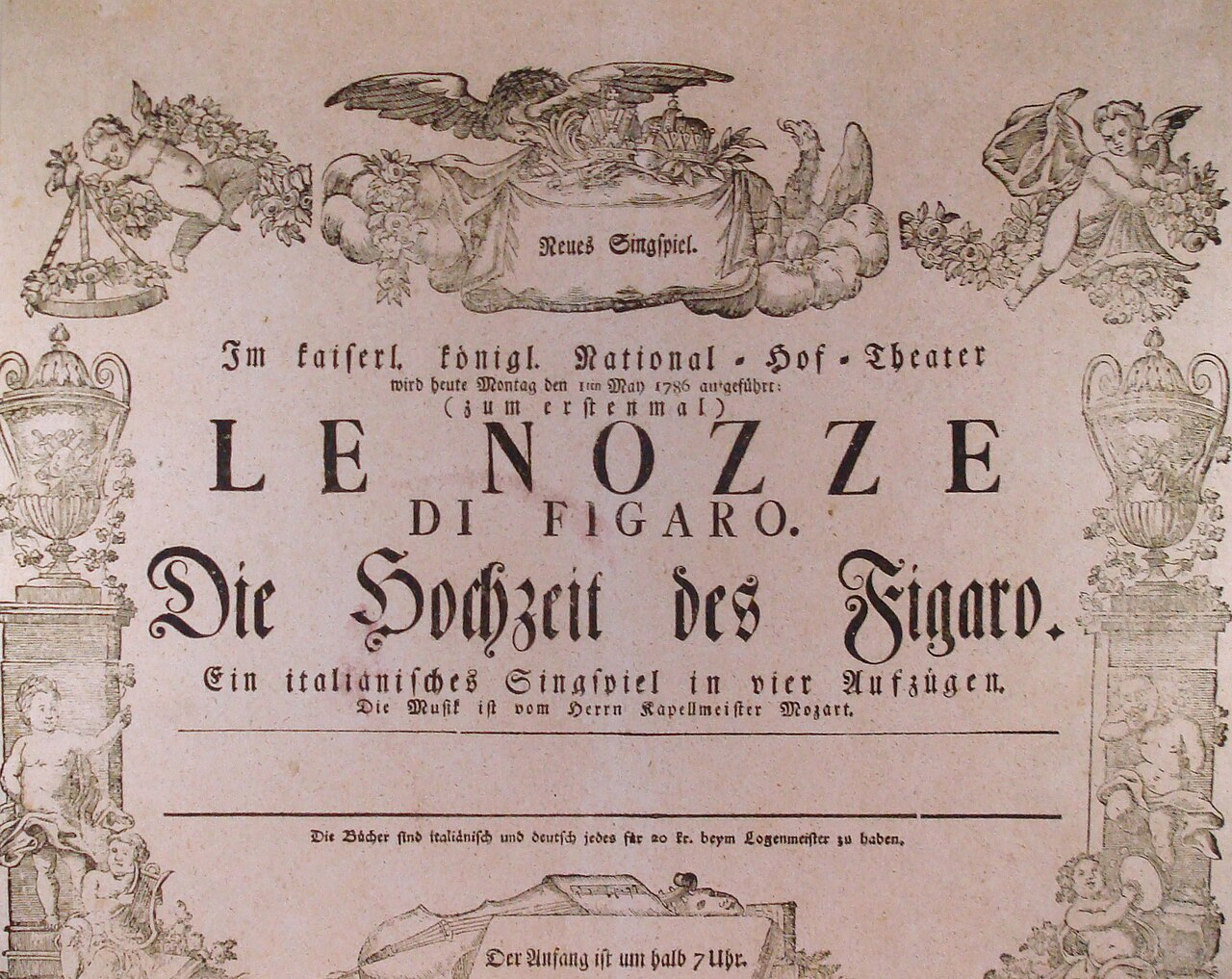
Ornate 1786 playbill for the Vienna Imperial National Court Theater announcing Le Nozze di Figaro / Die Hochzeit des Figaro, a Singspiel in four acts with music by Kapellmeister Mozart. Decorated with cherubs, urns, and an eagle crest.Document

Primary source

The Marriage of Figaro

Wolfgang Amadeus Mozart · 1786

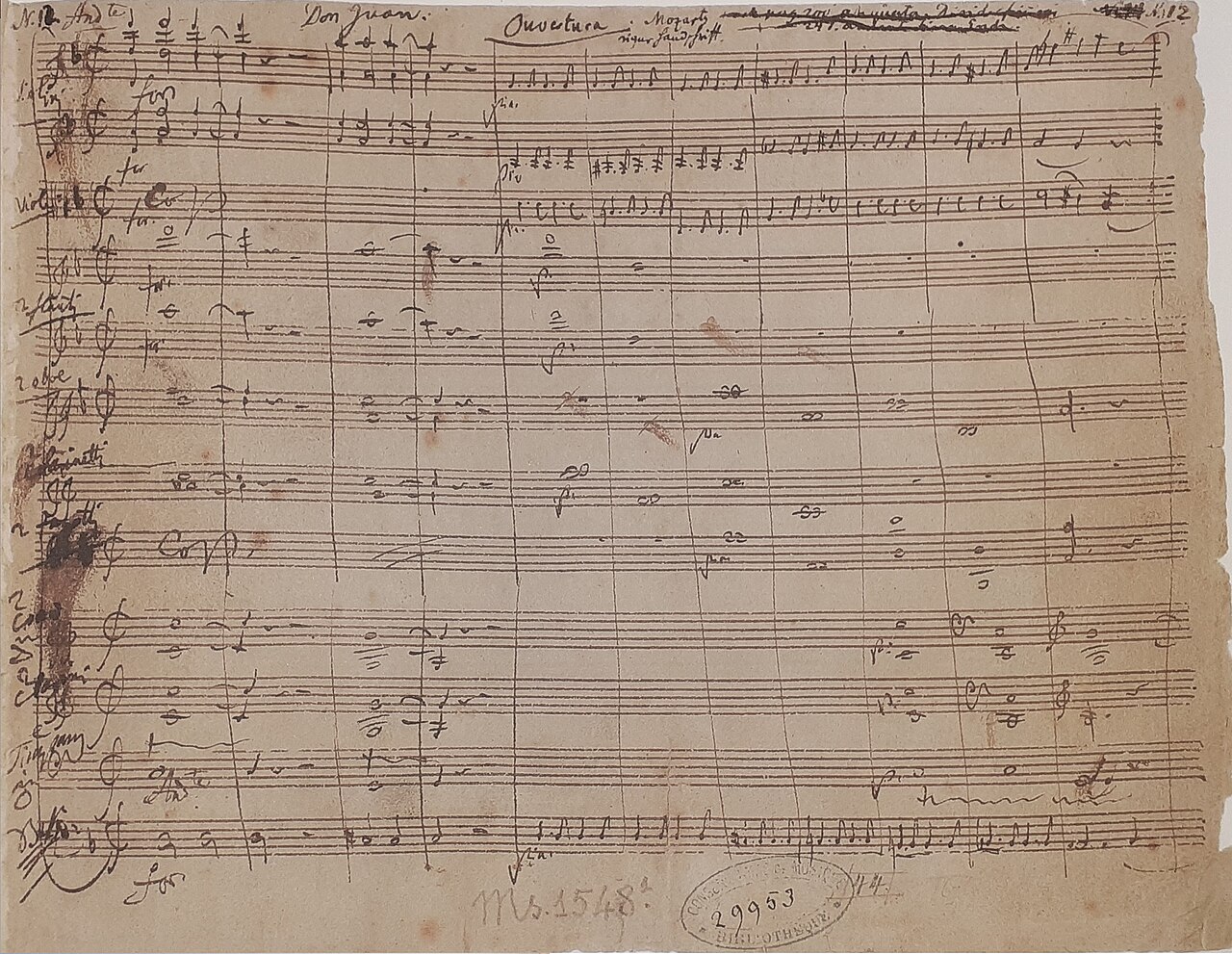
Handwritten manuscript score on aged paper, first page of the overture titled 'Ouverture' with 'Don Juan' written above. Multiple staves of notated music in ink, with a library stamp and shelfmark near the bottom.Document

Primary source

Don Giovanni

Wolfgang Amadeus Mozart · 1787

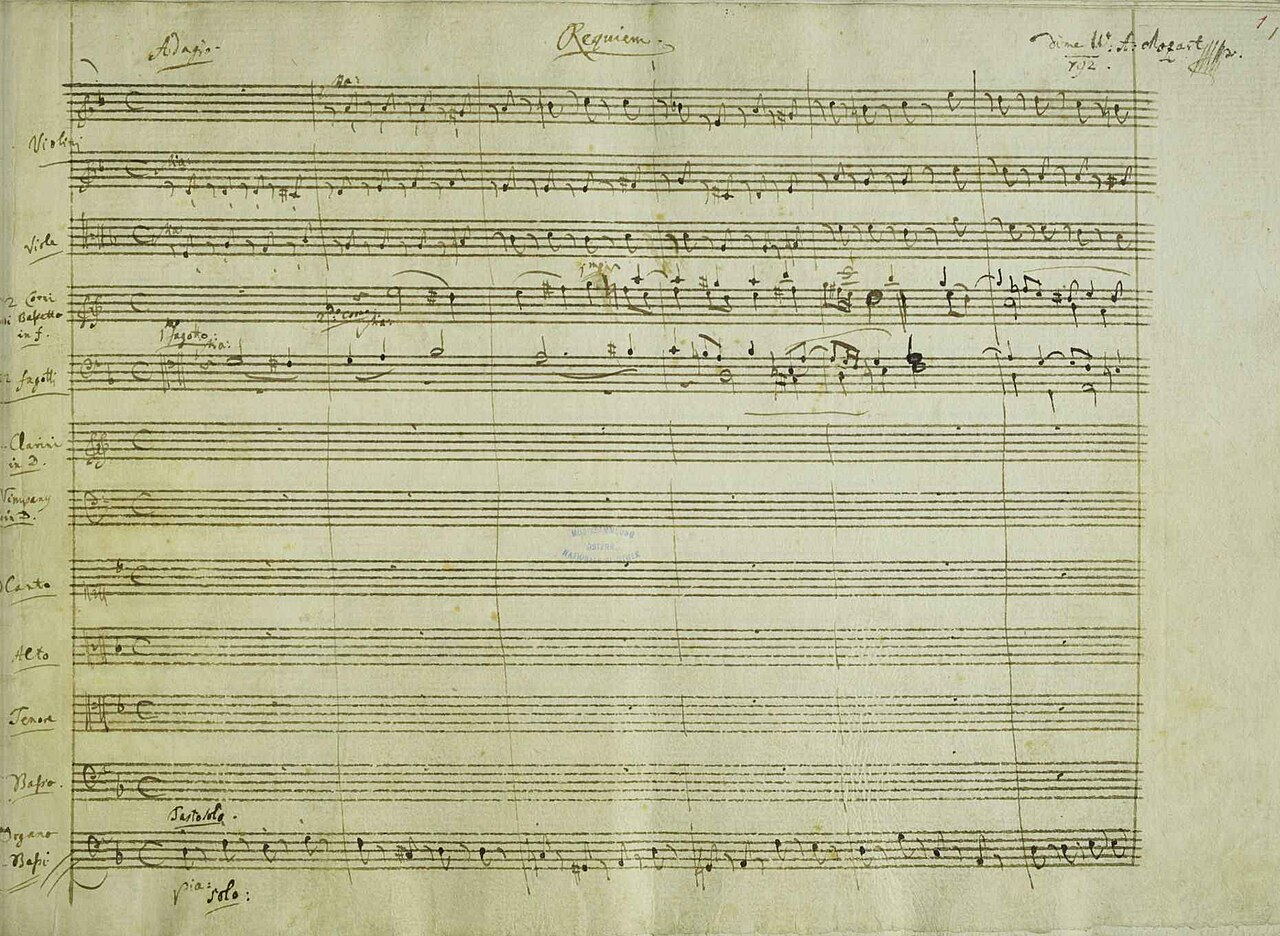
Manuscript page of Mozart's Requiem, handwritten orchestral score with staves for violins, viola, horns, bassoons, clarinets, trumpets, choir parts and bass, headed 'Requiem' and 'Adagio' with Mozart's signature and date 1791.Document

Primary source

Requiem

Wolfgang Amadeus Mozart · 1791

Musical score excerpt for violin marked Allegro, in G major with a treble clef and key signature of one sharp. It shows the opening melodic bars of Eine kleine Nachtmusik, with quarter and eighth notes and rests across four measures.Document

Primary source

Eine kleine Nachtmusik

Wolfgang Amadeus Mozart · 10 August 1787

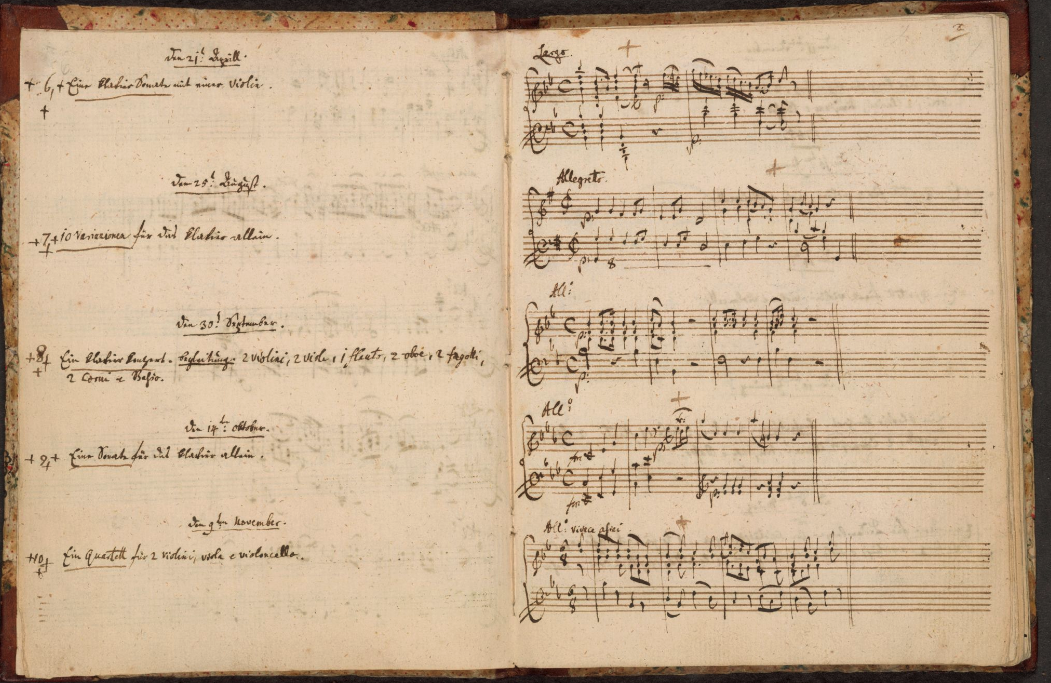
Open manuscript book: left page has handwritten dated entries with notes and numbers in ink; right page shows five handwritten staves of music with tempo markings such as Largo, Allegretto, Allo, and Allo vivace assai.Document

Primary source

Mozart's Personal Catalogue of Works

Wolfgang Amadeus Mozart · 1784-1791

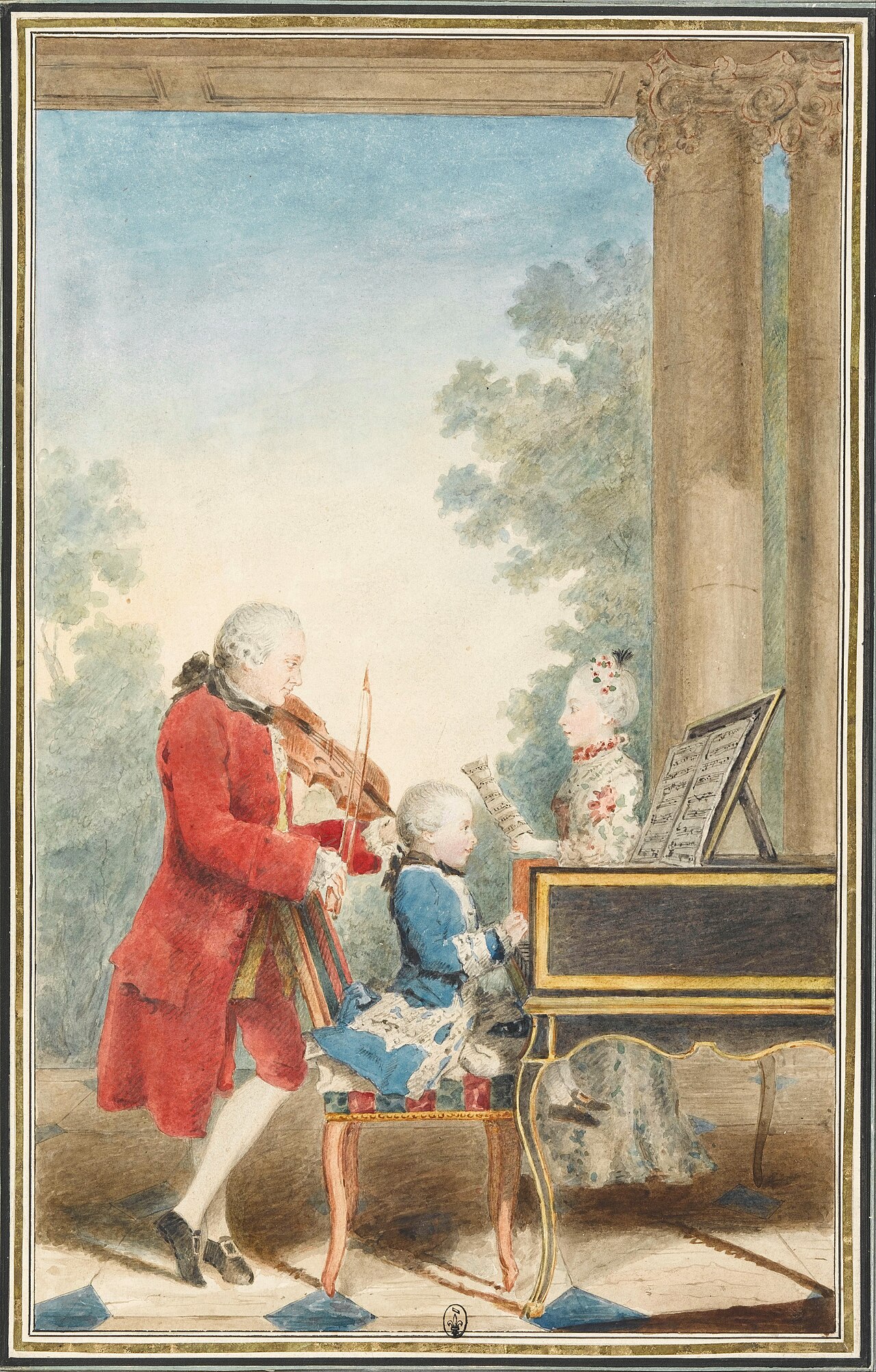
Watercolor drawing in a gilt frame of a man in a red coat and white wig playing violin, standing beside a small boy in a blue suit at a keyboard instrument, while a girl in a floral dress reads from sheet music on the stand. A classical column and garden trees are behind them.Painting

Primary source

Leopold Mozart and his two children, Wolfgang Amadeus and Marie Anne

Louis Carrogis Carmontelle · 1763

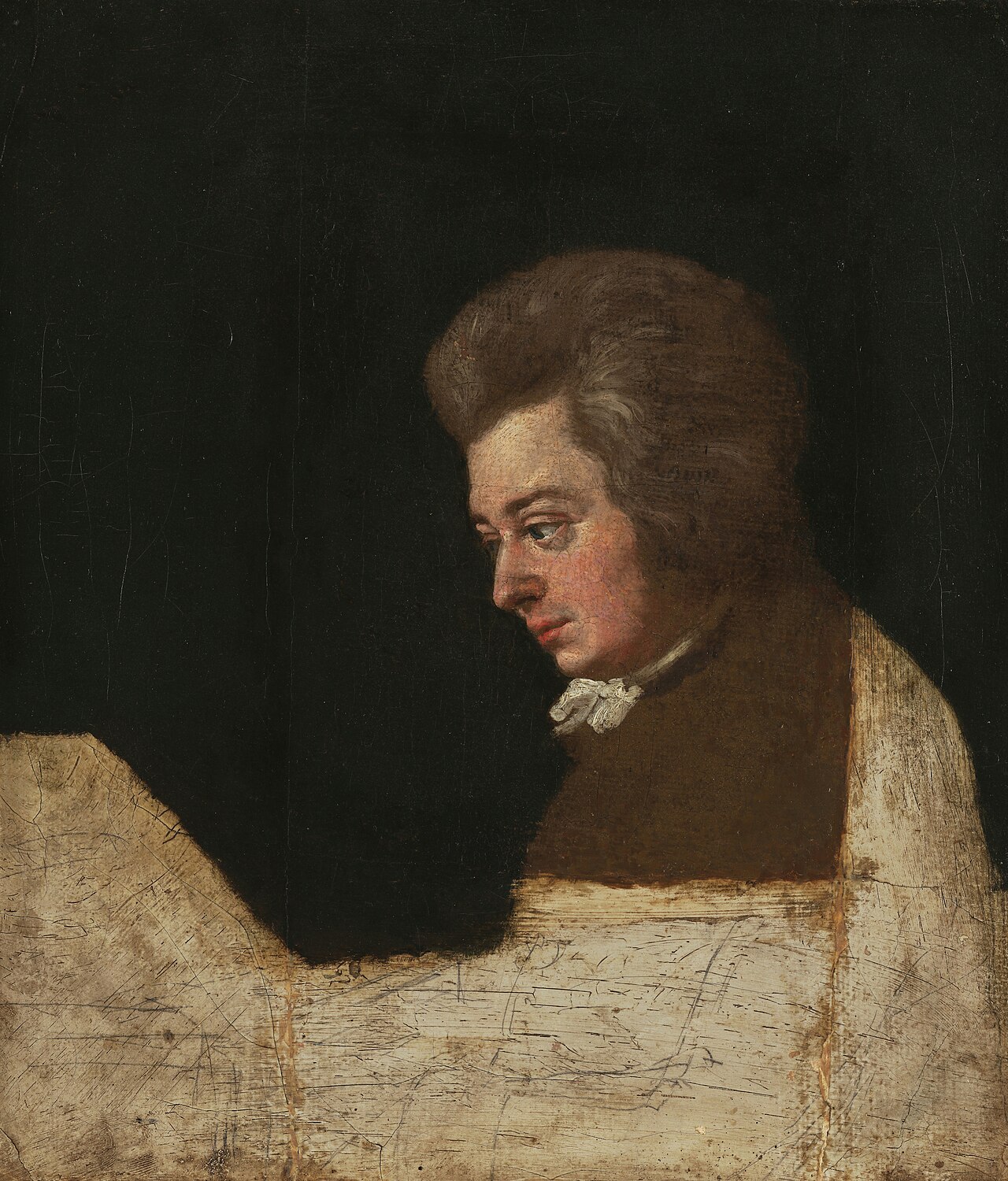
Unfinished oil painting of a man seen in profile facing left against a dark background. He has powdered brown hair swept up at the top, a brown coat, and a white cravat, and he gazes downward. In the lower part of the image is a pale sheet with faint pencil marks and sketched lines.Painting

Primary source

Mozart at the Piano

Joseph Lange · 1789

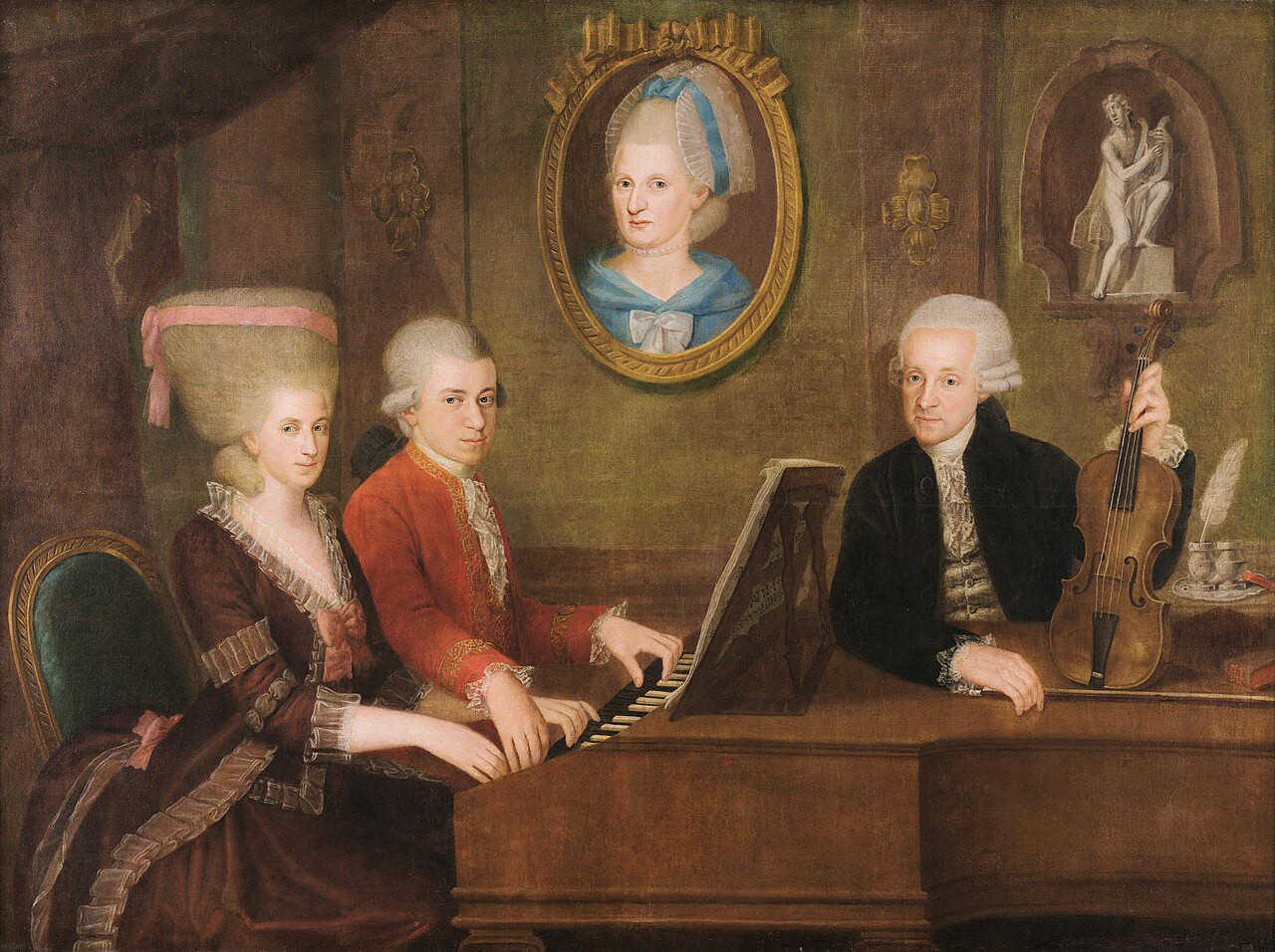
Oil painting of a family group: a young woman with a tall powdered hairstyle and pink ribbon plays a harpsichord beside a young man in a red coat. An older man in black stands at right holding a violin. An oval portrait of an older woman in a blue headscarf hangs above, and a classical statue sits in a niche at right.Painting

Primary source

Portrait of the Mozart Family

Johann Nepomuk della Croce · c. 1780-1781

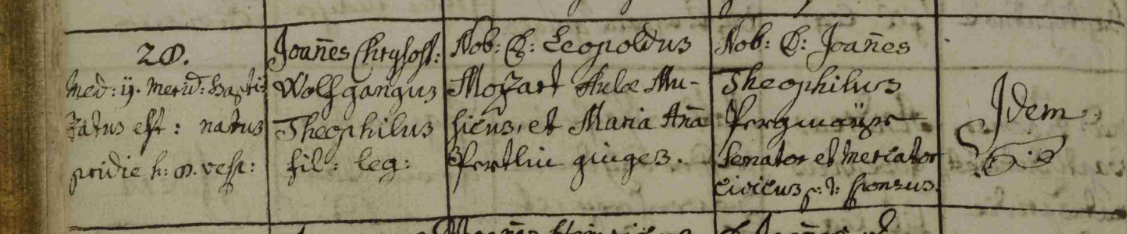
Handwritten 18th-century baptism register entry in Latin, showing the name Joannes Chrysostomus Wolfgangus Theophilus and parental details of Nob. Dn. Leopoldus Mozart and Maria Anna, with the 'Idem' notation in the right margin.Document

Primary source

Wolfgang Amadeus Mozart baptism record

Leopold Lamprecht · 28 January 1756

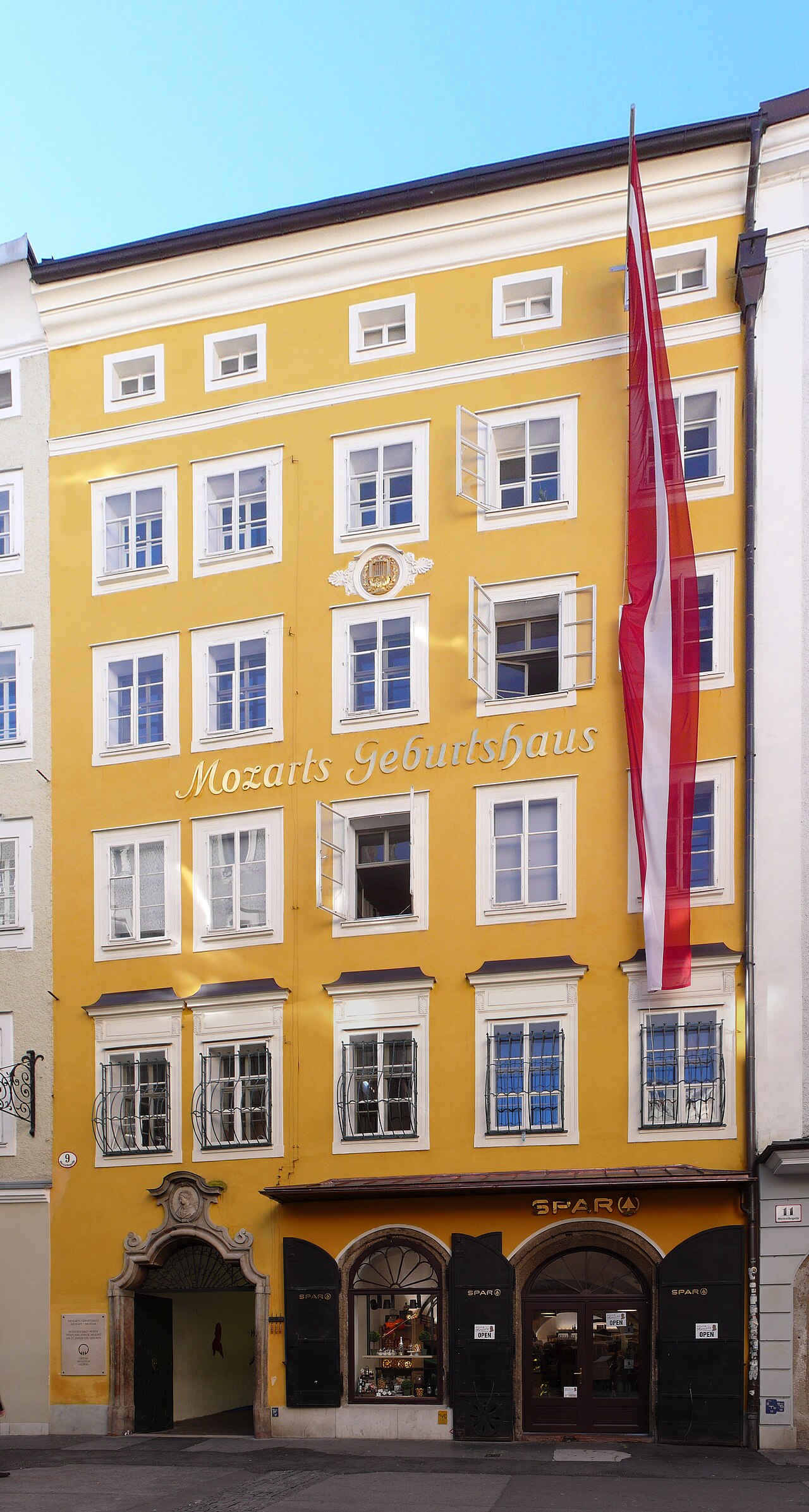
Yellow five-storey townhouse facade with white window frames, the gilded lettering 'Mozarts Geburtshaus' above the windows, a red-white-red Austrian flag, and a ground-floor SPAR shop with dark doors.Artifact

Primary source

Mozart's birthplace

Johann Baptist Hagenauer

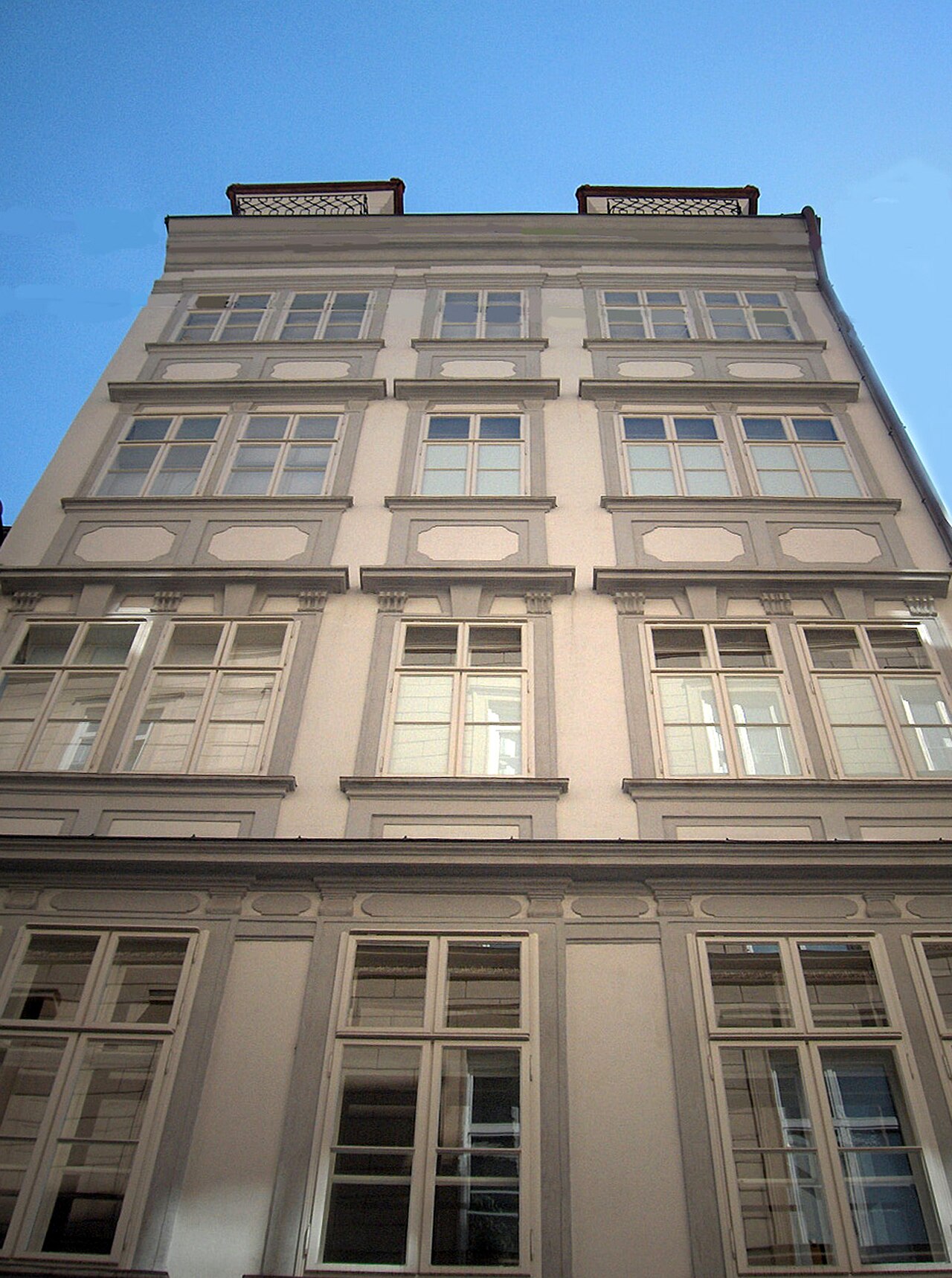
Looking up at the facade of a cream-colored, multi-story building against a bright blue sky. It has rows of tall windows with light-colored frames and grey decorative trim, and two small dormers with ornate railings on the roofline.Artifact

Secondary source

Mozarthaus Vienna

2006 (building from 17th century; renovated as museum)

Painting of a young boy with powdered white hair in a red coat with gold embroidery and blue lapels, seated at a harpsichord with open sheet music on the stand, looking toward the viewer against a dark background.Painting

Primary source

Portrait of Wolfgang Amadeus Mozart at the age of 13 in Verona

Giambettino Cignaroli (attributed) · January 1770

Oil portrait of a man with powdered white hair in a tied queue, wearing a dark red coat with white lace jabot and a red-and-gold star order medal, hands folded, seated beside a harpsichord with sheet music. Inscription at top reads Cav. Amadeo Wolfgango Mozart Accad. Filarmon: di Bolog. e di Verona.Painting

Primary source

Bologna Mozart

Unknown painter (copy of lost original) · 1777

Oval grey-toned pencil or silverpoint portrait in profile facing left of a man with curly hair tied back at the nape, wearing a high-collared coat with a white cravat at the neck. Hatched shading on the background.Painting

Primary source

Silverpoint Drawing of Mozart by Doris Stock

Doris (Dora) Stock · April 1789

Printed theatre playbill for the 1782 premiere of 'Die Entführung aus dem Serail', with an eagle and cherub ornament at top, a central title in large black blackletter type, and a line crediting Kapellmeister Mozart at the bottom.Document

Primary source

Die Entführung aus dem Serail

Wolfgang Amadeus Mozart · 1782

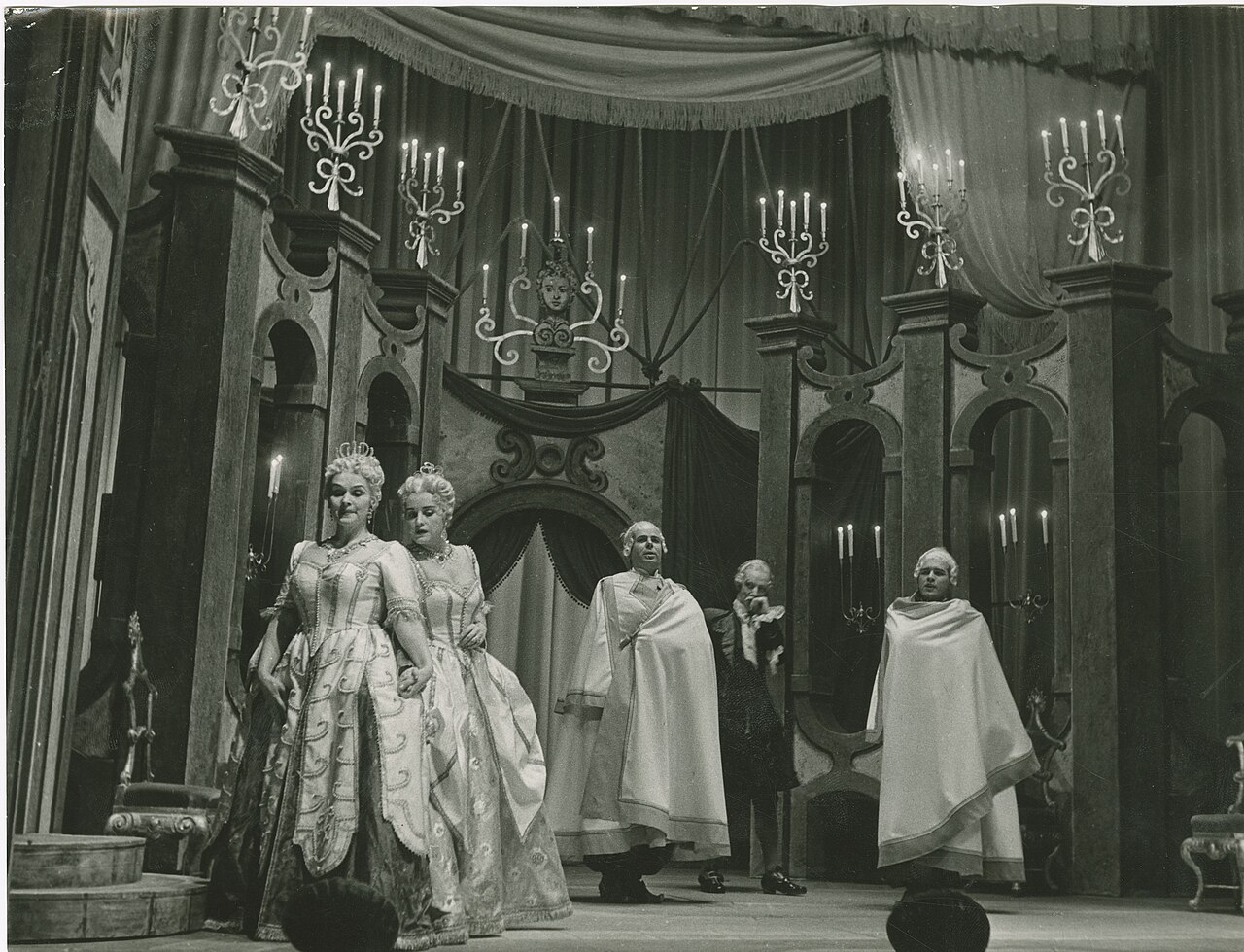
Black-and-white stage photograph of a theatrical production with two women in elaborate period gowns walking forward, and three men in white cloaks and dark costume standing behind them, before ornate candelabra, pillars and draped curtains.Document

Secondary source

Così fan tutte

Wolfgang Amadeus Mozart · 1790

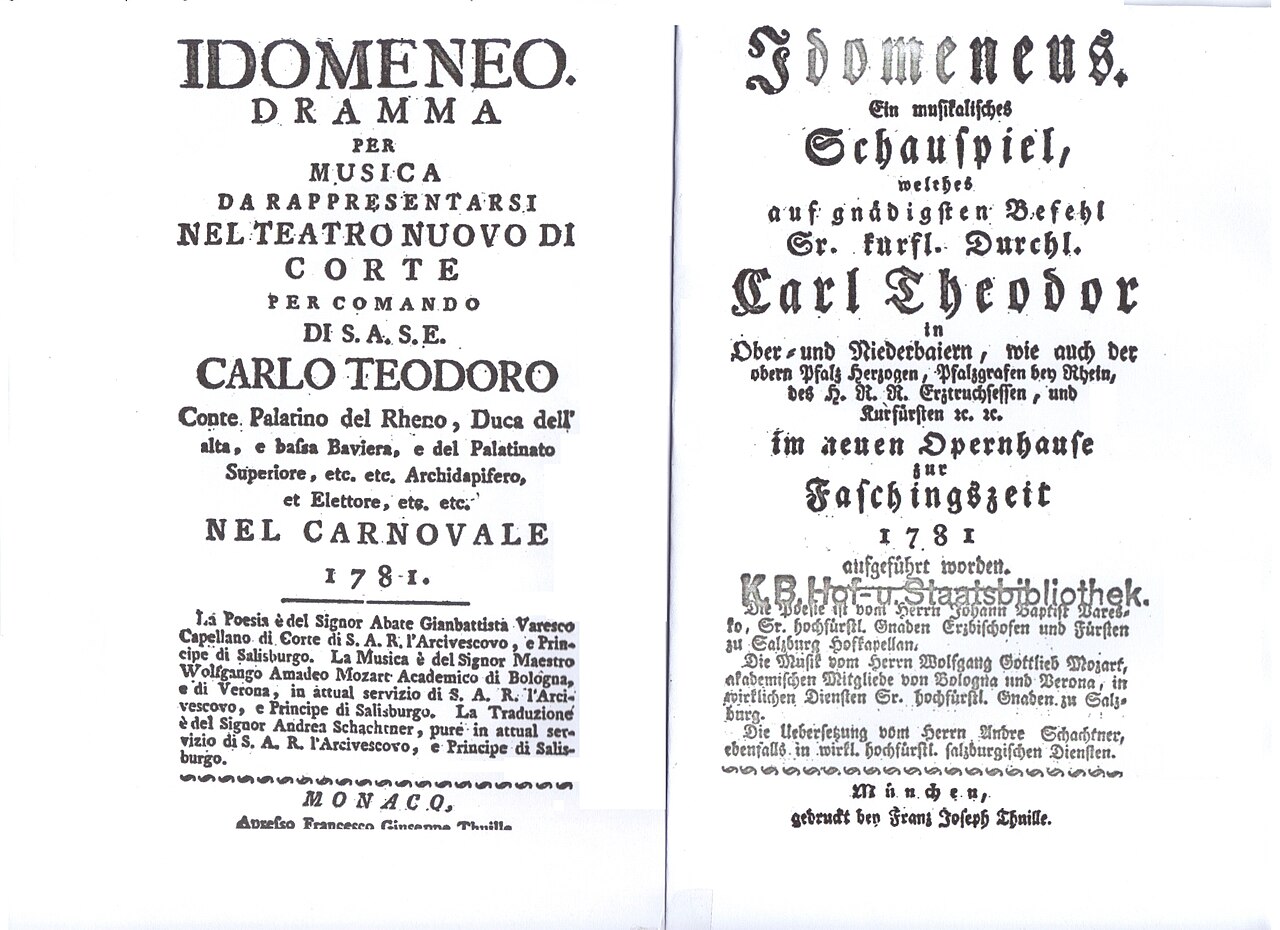
Two side-by-side title pages of the libretto for Mozart's opera Idomeneo. The left page is in Italian, in black roman capitals, reading 'IDOMENEO. DRAMMA PER MUSICA' with the name Carlo Teodoro and the date 1781 at the bottom. The right page is in German blackletter script, reading 'Idomeneus, Ein musikalisches Schauspiel', with the name Carl Theodor and the date 1781. A library stamp reading K.B. Hof- u. Staatsbibliothek is across the German page.Document

Primary source

Idomeneo

Wolfgang Amadeus Mozart · 1780-1781

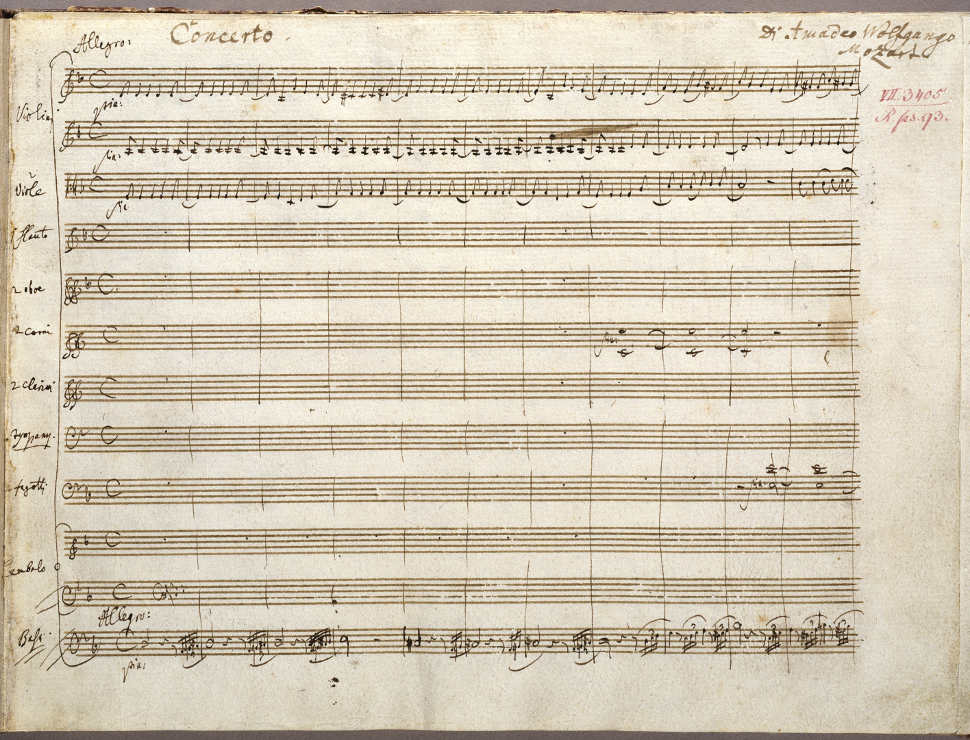
Handwritten manuscript score on aged paper, first page of a concerto. Heading reads 'Concerto' and 'Allegro', with 'W. Amadeus Mozart' at top right. Staves list instruments including violins, viola, flute, oboes, horns, bassoons, timpani and bass, in ink.Document

Primary source

Piano Concerto No. 20 in D minor, K. 466

Wolfgang Amadeus Mozart · 1785

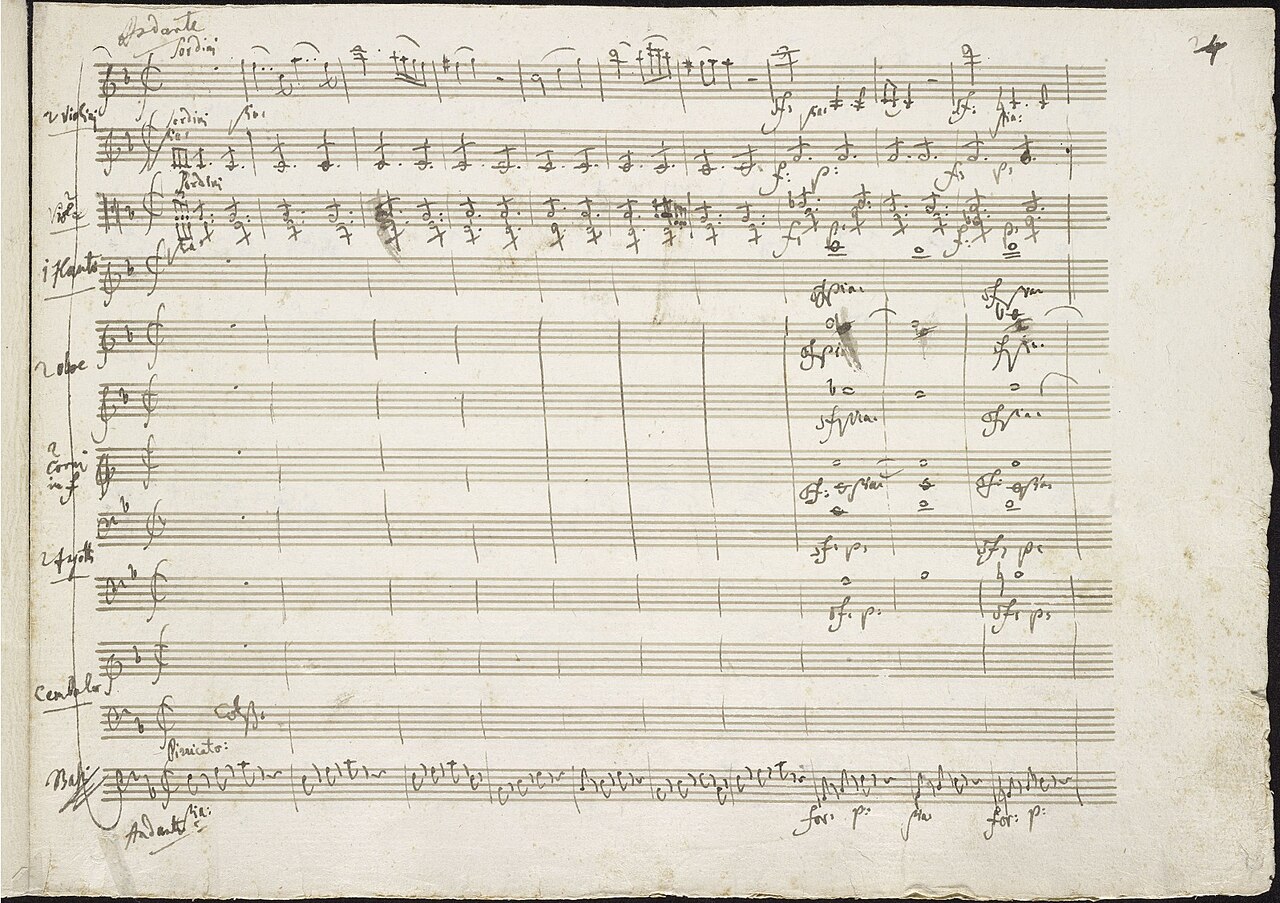
Handwritten orchestral score manuscript on aged paper, in Mozart's hand, with the Andante tempo marking at top left. Multiple staves for violins, viola, flute, oboe, bassoon, horns, and continuo bass are visible, with handwritten notes and performance markings.Document

Primary source

Piano Concerto No. 21 in C major, K. 467

Wolfgang Amadeus Mozart · 1785

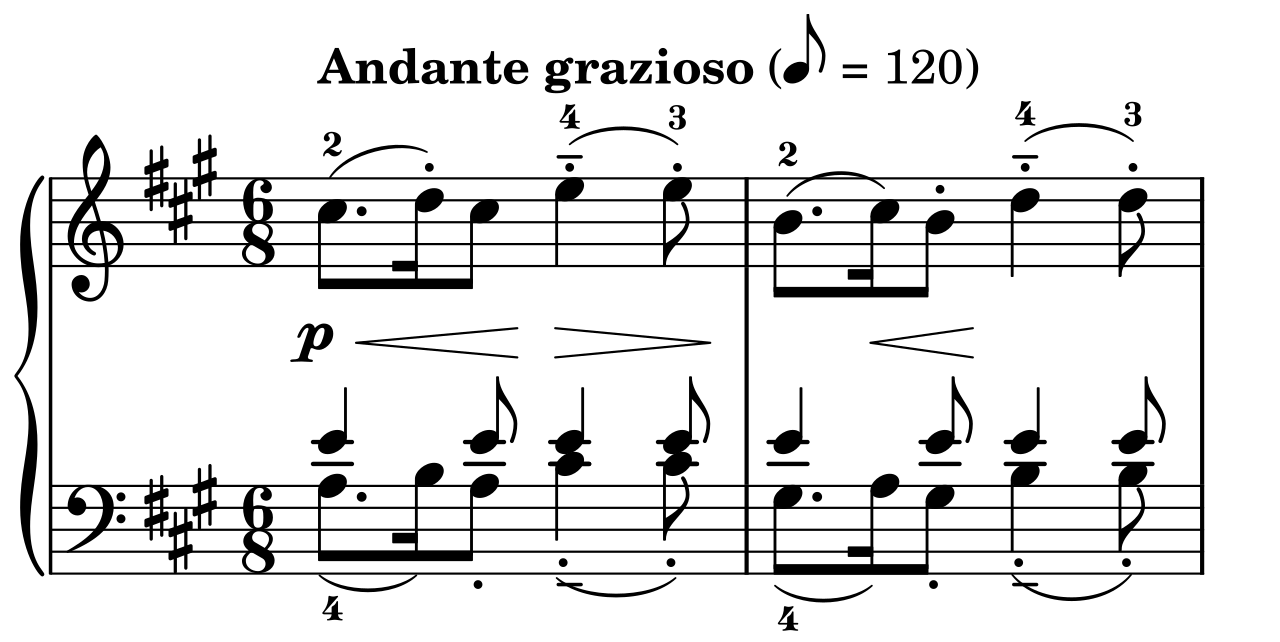
Musical score excerpt of the first two bars of the Andante grazioso movement, marked quarter note equals 120, in A major (three sharps) and 6/8 time, for piano with treble and bass staves. Dynamics p and crescendo/decrescendo hairpins appear below the treble staff.Document

Primary source

Piano Sonata No. 11 in A major, K. 331

Wolfgang Amadeus Mozart · 1784 (published); likely composed earlier

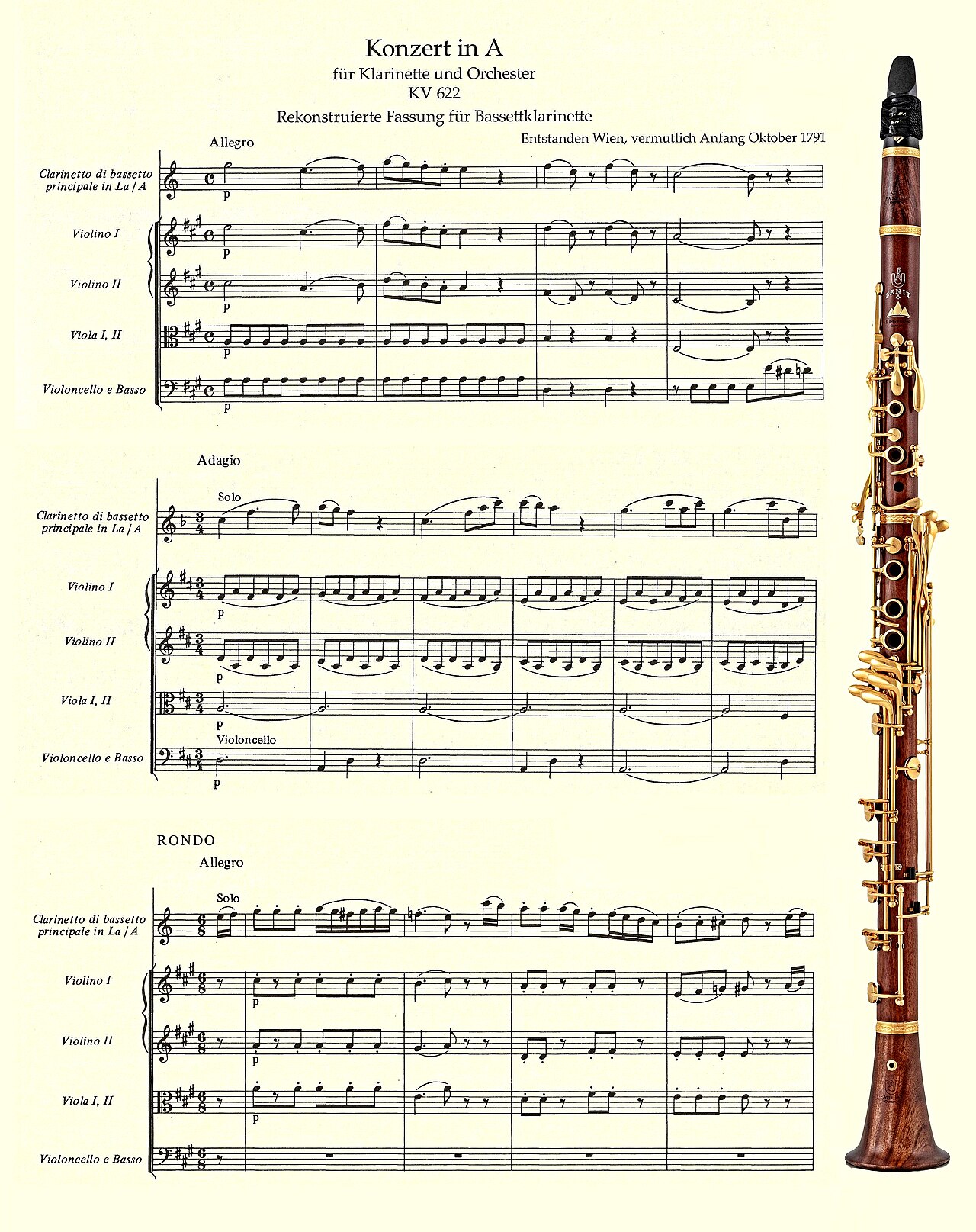
Printed score excerpt of Mozart's Clarinet Concerto in A, K. 622, showing the opening bars of all three movements (Allegro, Adagio, Rondo) for solo basset clarinet and strings, with a bassoon-style clarinet photo on the right.Document

Primary source

Clarinet Concerto in A major, K. 622

Wolfgang Amadeus Mozart · October 1791

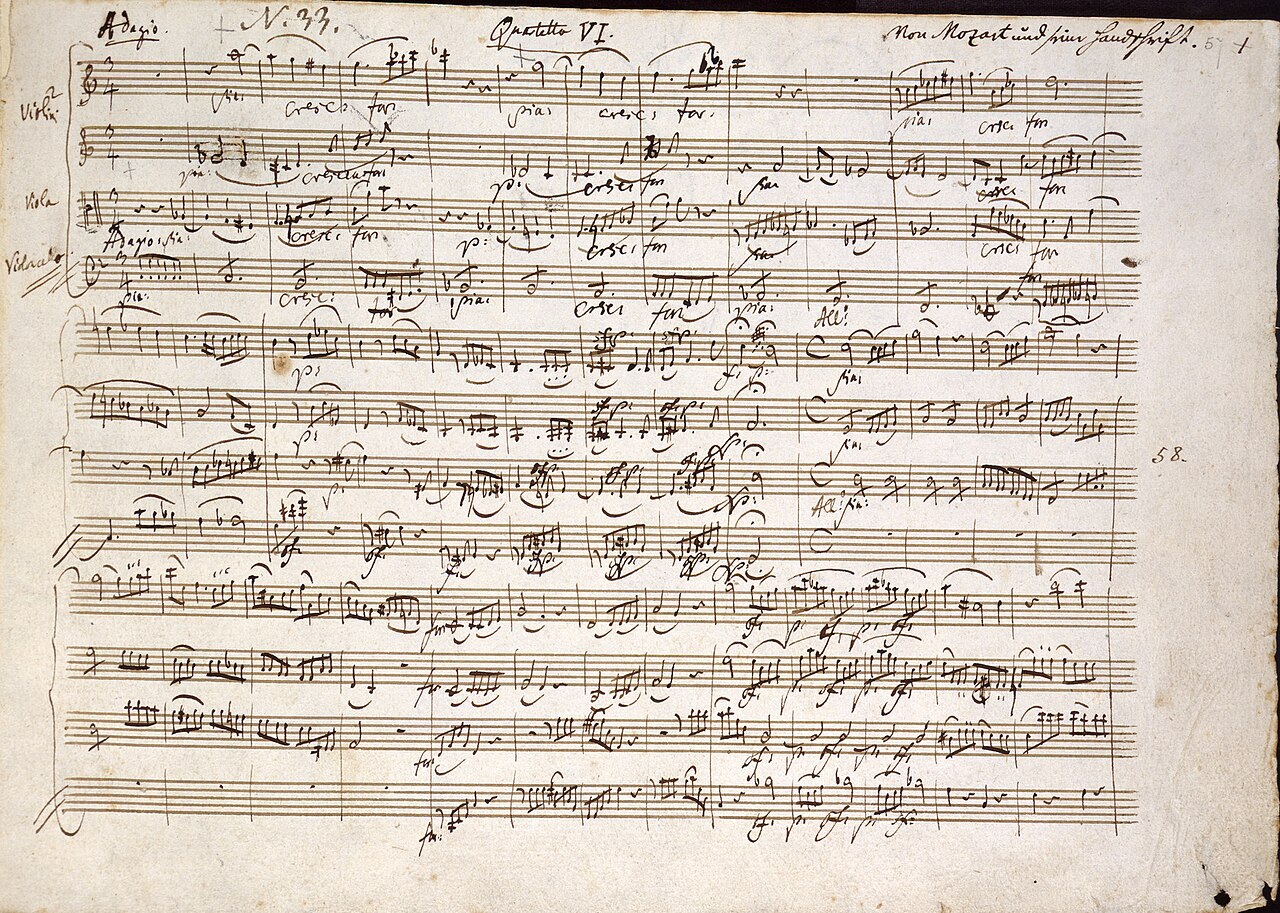
Handwritten manuscript page of music on aged paper, with four staves of brown ink notation for strings labeled Violino, Viola, and Violoncello, headed Adagio and Quartetto VI, with Mozart's inscription at top right. Dense sketched notes and dynamic markings like cresc. and p fill the page.Document

Primary source

String Quartet No. 19 in C major, K. 465 ('Dissonance')

Wolfgang Amadeus Mozart · 1785

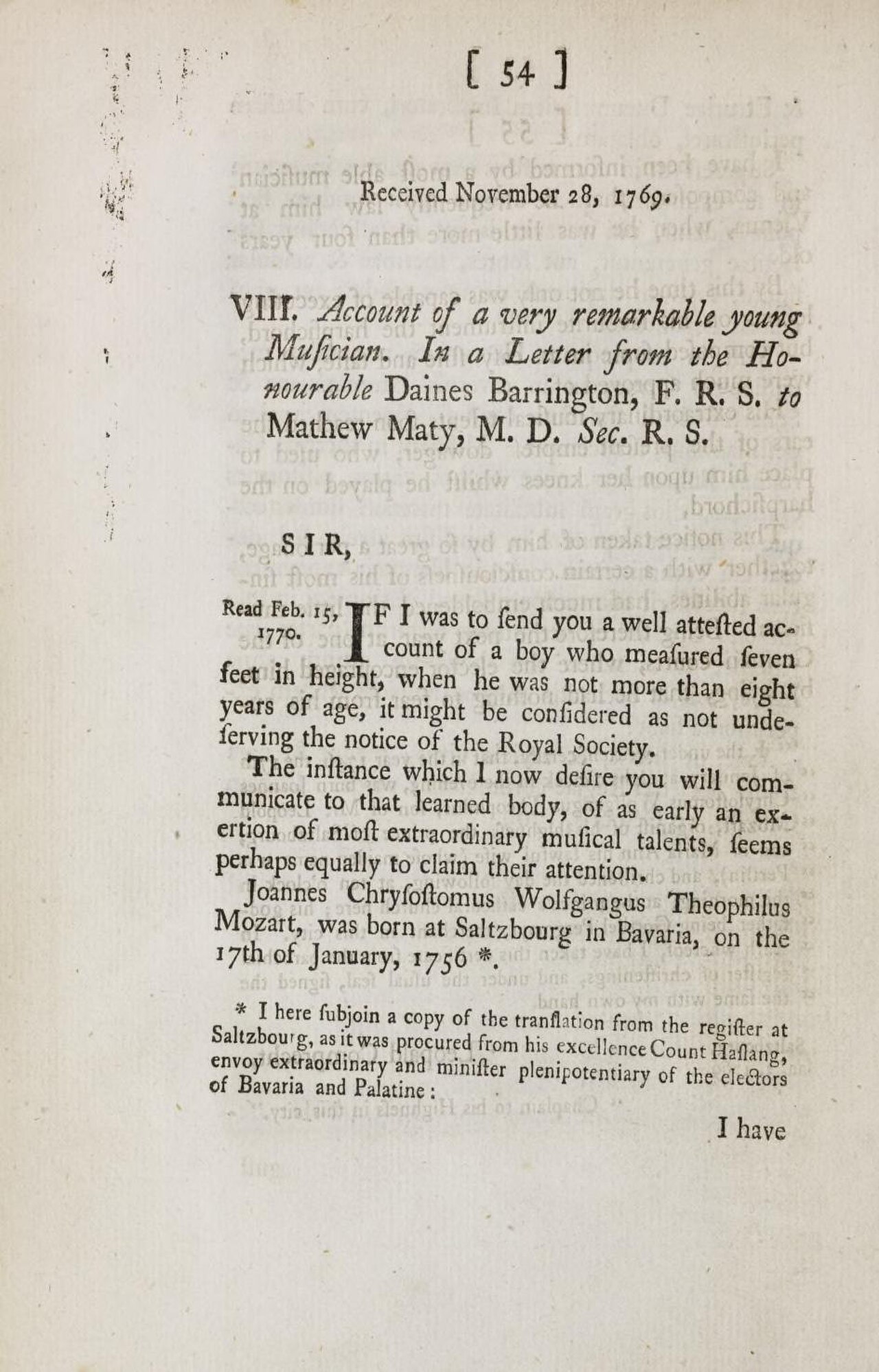
Scanned page 54 of the Philosophical Transactions showing the start of article VIII, 'Account of a very remarkable young Musician' by Daines Barrington, with a letter to Mathew Maty, and a footnote about Mozart's birth at Salzburg.Document

Primary source

Account of a Very Remarkable Young Musician

Daines Barrington · 1770

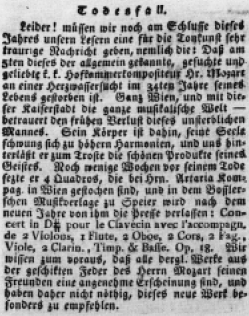
Scan of a German-language newspaper notice under the heading 'Todesfall' (Death), in old Fraktur-style print, announcing the death of Wolfgang Amadeus Mozart on December 5, 1791, with dense columns of text below.Newspaper article

Primary source

Mozart-Death Notice in the Musikalische Korrespondenz

Heinrich Philipp Bossler · December 1791

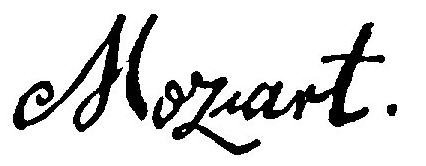
Handwritten cursive signature reading 'Mozart' followed by a period, in black ink on a white background. The letters are large, flowing and slanted.Document

Primary source

Signature of Mozart on the Burial Record of His Mother

3 July 1778

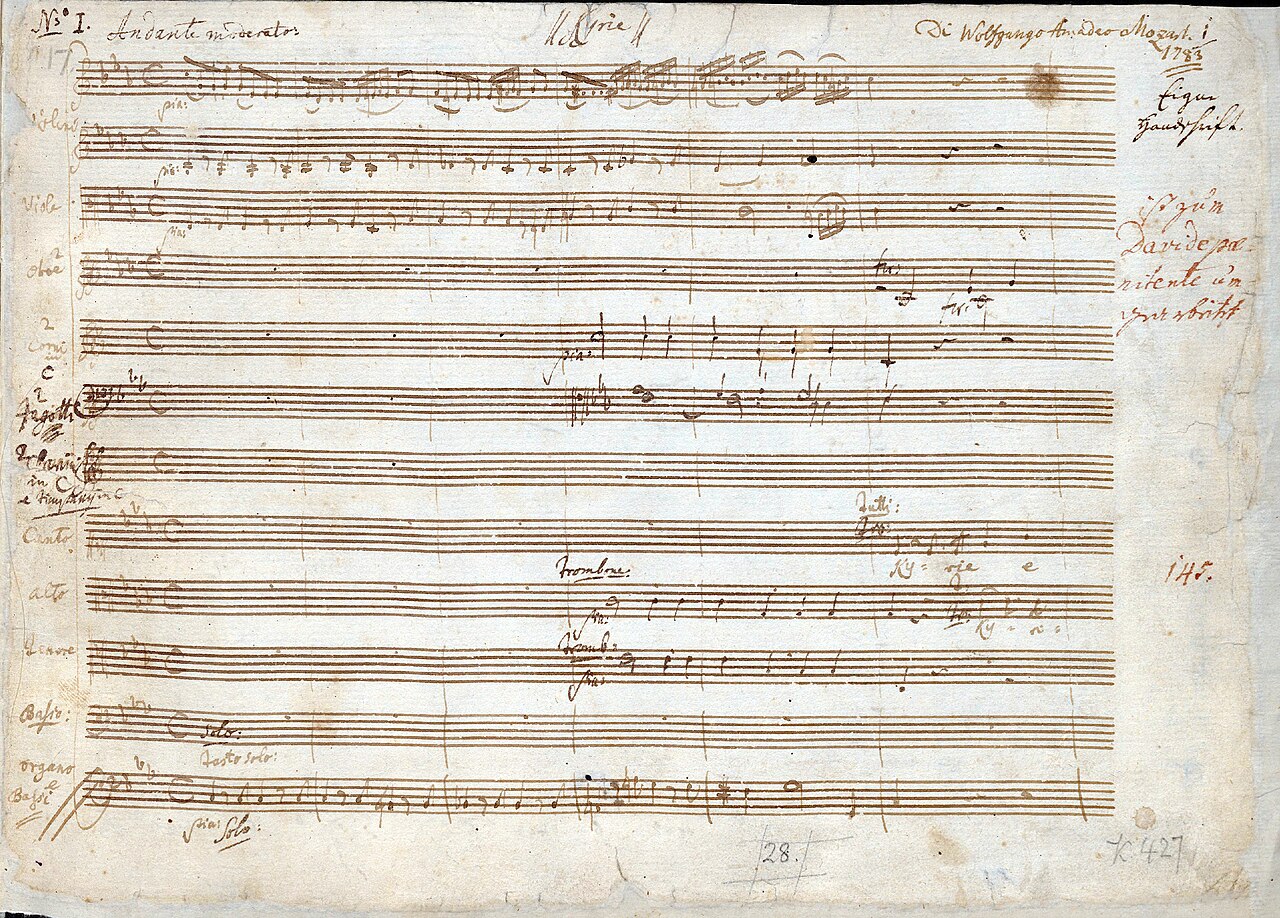
Page 1 of Mozart's handwritten manuscript score of the Great Mass in C minor, in brown ink on aged paper. Multiple staves for instruments and voices, with the title 'Di Wolfgang Amadeo Mozart 1783' and 'Kyrie' written at the top, and 'K. 427' at lower right.Document

Primary source

Great Mass in C minor

Wolfgang Amadeus Mozart · 1782-1783

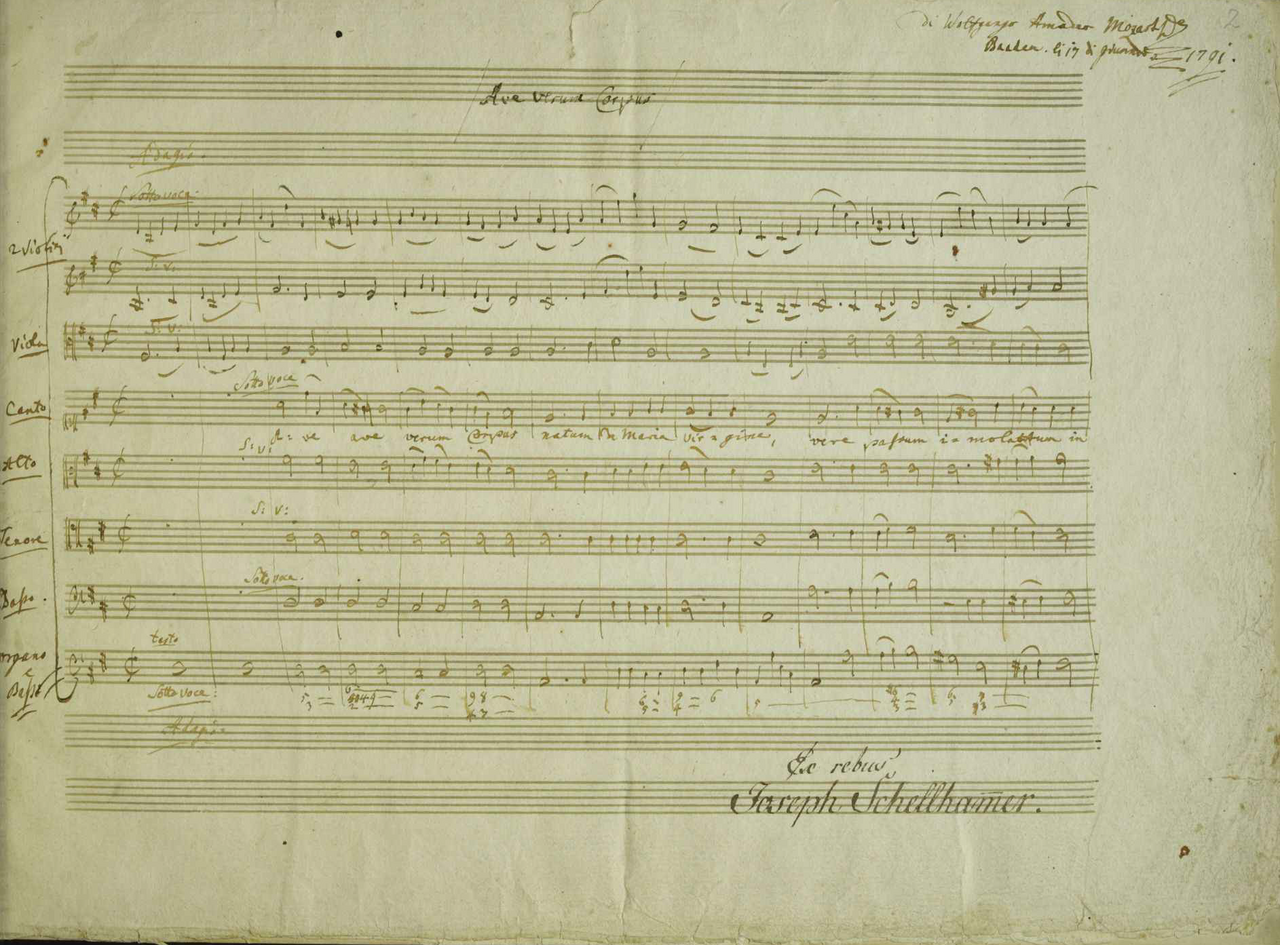
Handwritten manuscript score of Ave verum corpus on aged paper, with multiple staves for voices and strings, Latin text, and the inscription Wolfgang Amadeus Mozart, Baden, 17 June 1791 at top right.Document

Primary source

Ave verum corpus

Wolfgang Amadeus Mozart · 17 June 1791

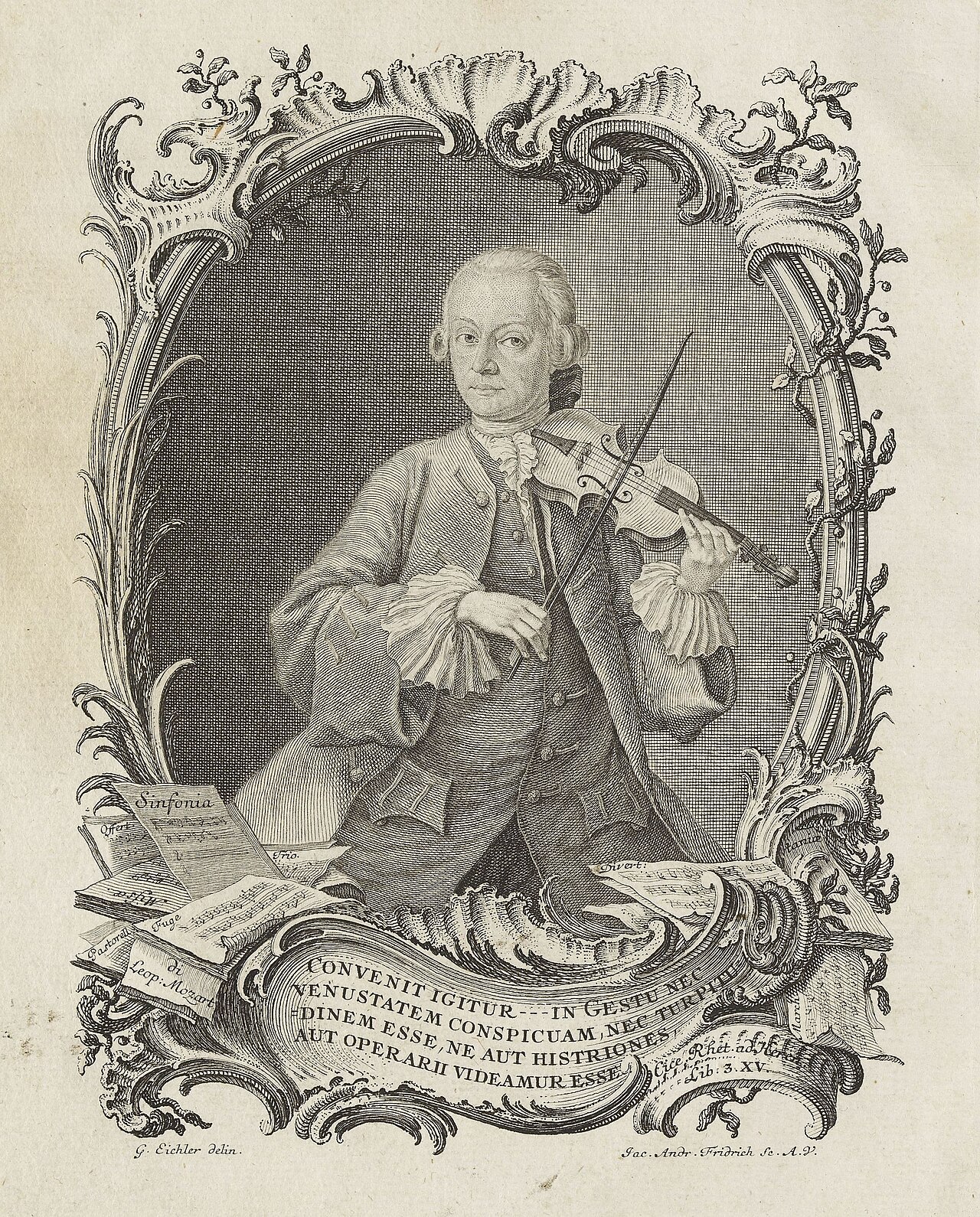
Engraved portrait of a man with powdered hair playing a violin, set within an ornate rococo frame. Sheet music and a book inscribed with Leopold Mozart's name lie at the bottom left, with a Latin quotation below.Book

Primary source

Versuch einer gründlichen Violinschule

Leopold Mozart · 1756

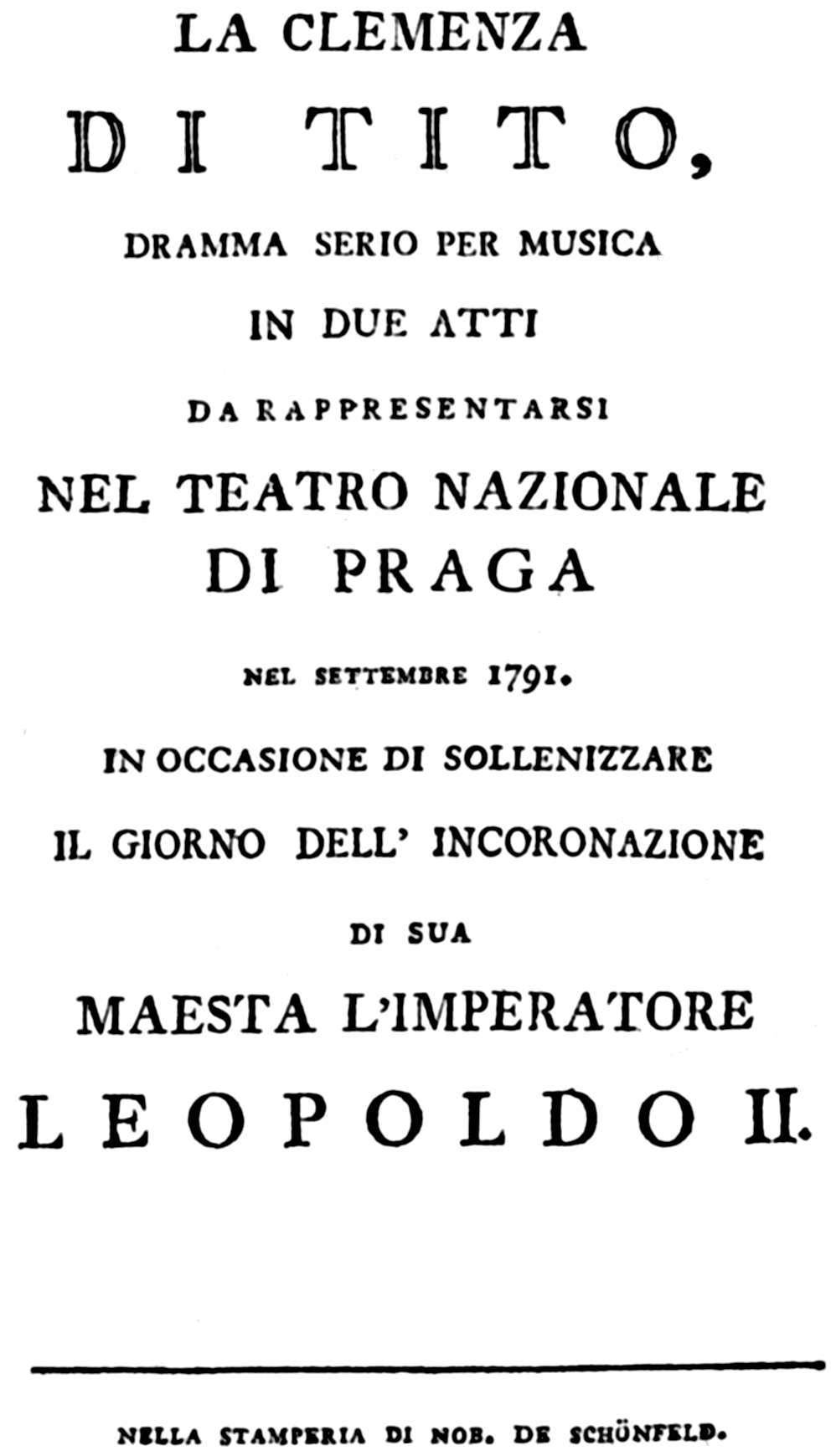
Title page of the libretto for La clemenza di Tito, printed text in Italian: 'La Clemenza di Tito, Dramma serio per musica in due atti, da rappresentarsi nel Teatro Nazionale di Praga nel settembre 1791' and further lines about the coronation of Emperor Leopoldo II, printed by Nob. de Schönfeld.Document

Primary source

La clemenza di Tito

Wolfgang Amadeus Mozart · 1791

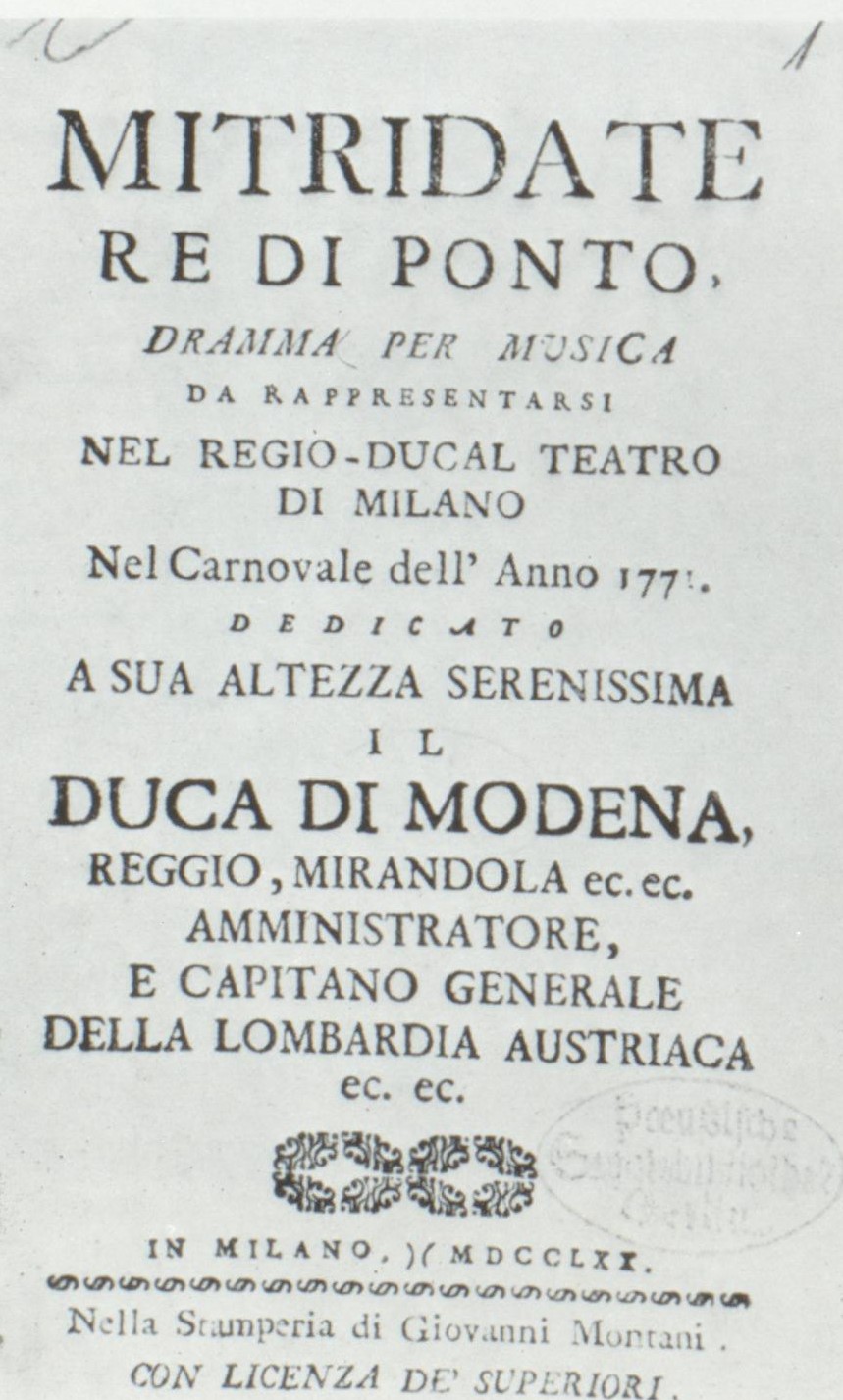
Title page of the libretto 'Mitridate, re di Ponto', printed in black and white. Large capitals read MITRIDATE RE DI PONTO, followed by 'Dramma per musica' and details of performance in Milan, dedication to the Duke of Modena, and the imprint 'In Milano, MDCCLXX, Nella Stamperia di Giovanni Montani, Con licenza de' superiori'. A library stamp is visible at lower right.Document

Primary source

Mitridate, re di Ponto

Wolfgang Amadeus Mozart · 1770

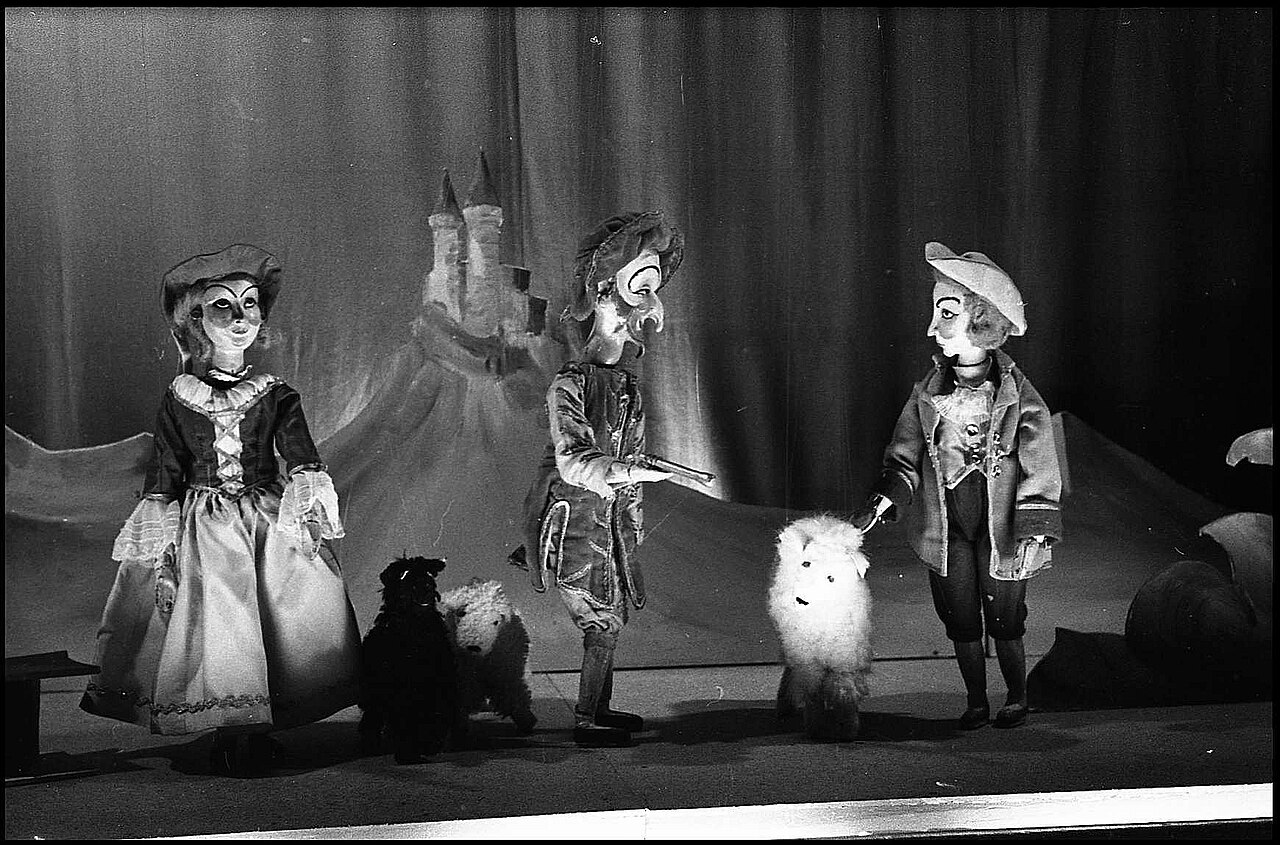
Black-and-white photo of a marionette stage scene with three puppets: a woman in a long dress on the left, a costumed figure with a feathered hat holding a cane in the center, and a man in a short jacket on the right holding a leash attached to a white poodle. A black dog stands near the left figure, and a castle backdrop is painted behind them.Document

Secondary source

Bastien und Bastienne

Wolfgang Amadeus Mozart · 1768

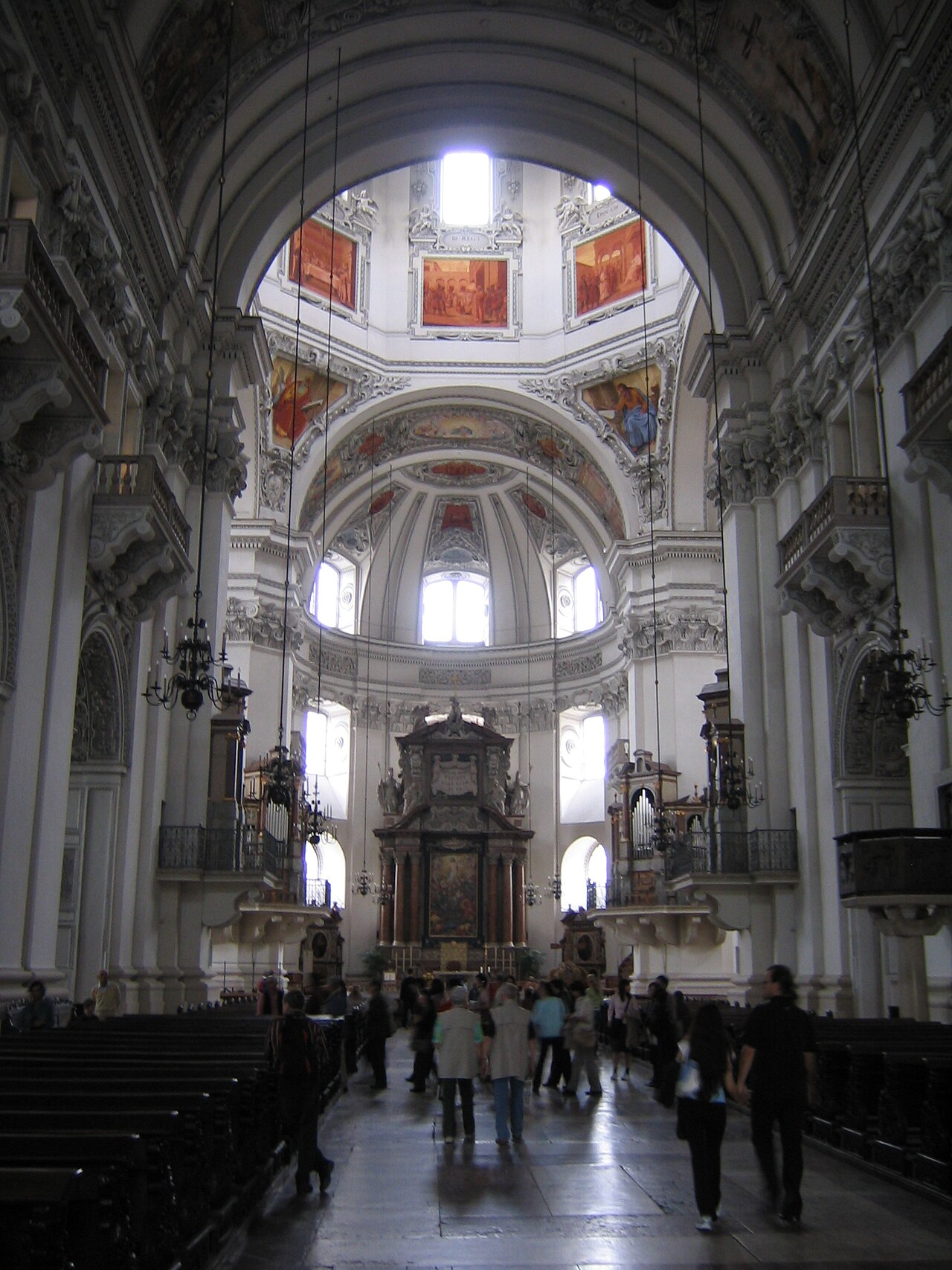
Interior of a large baroque cathedral with white stone pillars, a central dome with painted panels and windows, a decorated altar, and visitors walking on a stone floor between wooden pews.Document

Primary source

Coronation Mass

Wolfgang Amadeus Mozart · 1779

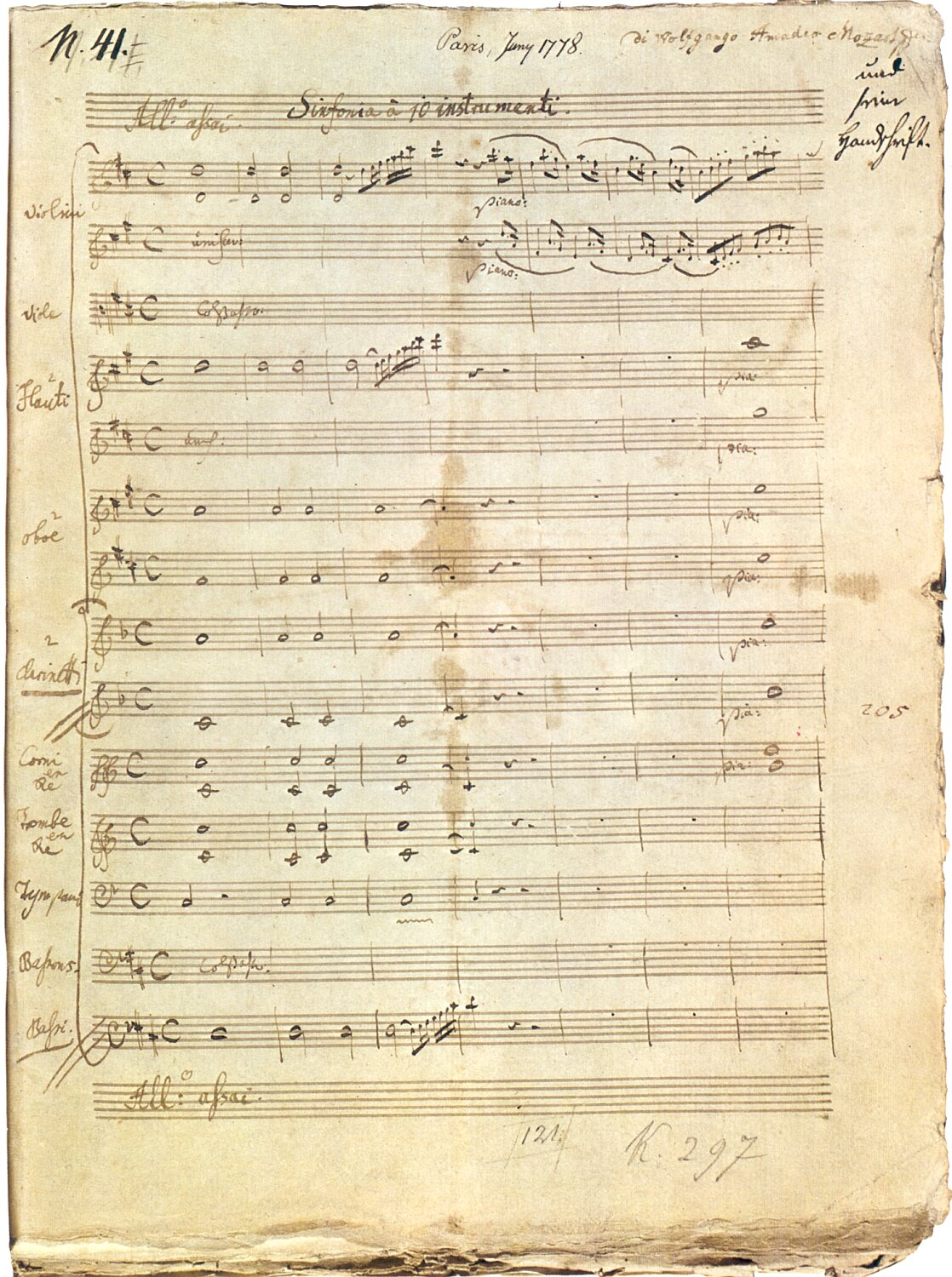
Handwritten autograph manuscript score of Mozart's Symphony No. 31 'Paris', titled 'Sinfonia a 10 instrumenti', dated Paris, July 1778, with staves for violins, viola, flutes, oboes, horns, trumpets, timpani, bassoons and bass, in ink on aged paper.Document

Primary source

Symphony No. 31 'Paris'

placeholder · placeholder

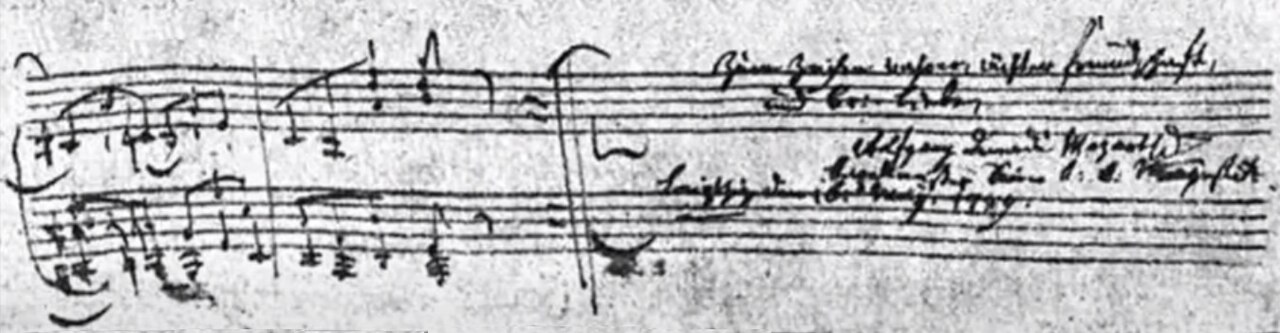
Handwritten manuscript fragment on aged paper: a few staves of music notation on the left with notes and beams, and on the right a handwritten dedication inscription in cursive script with the name Mozart and a date line below.Document

Primary source

Dedication of Eine kleine Gigue, KV 574

Wolfgang Amadeus Mozart · 1789

Close-up of a handwritten manuscript line in dark ink on aged paper, reading in part 'Ein Klavier Konzert. Begleitung: 2 Violini, 2 Viole, 1 Flauto, 2 Oboe, 2 Fagotti,' with a second line below reading 'Corni e Basso.'Document

Primary source

Page from Mozart's Thematic Catalogue

Wolfgang Amadeus Mozart

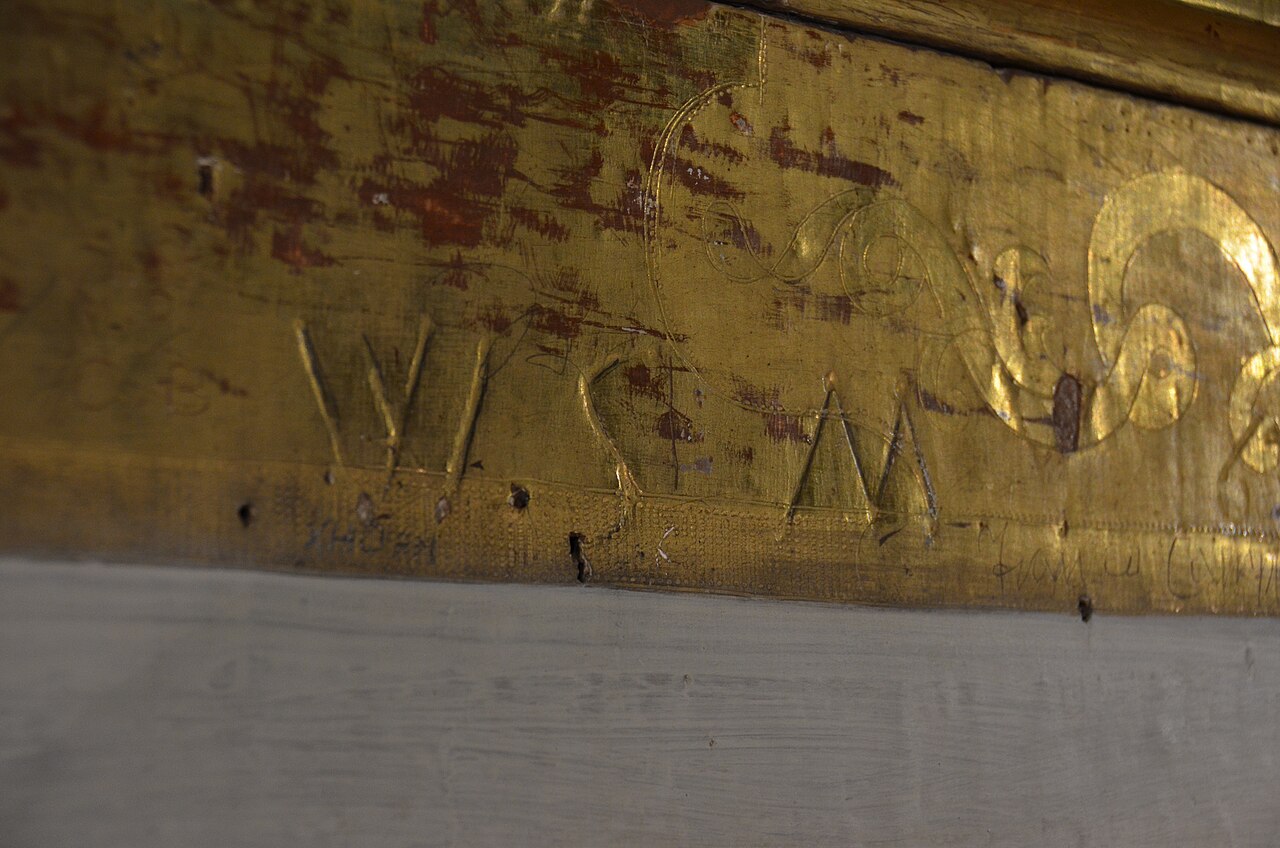
Close-up of a gilded wooden surface with carved or incised letters: a W, an S, and an M in capitals, plus scrolled decorative carving and faint brownish paint traces. Dark small holes are visible along the lower edge.Artifact

Primary source

Initials W.S.M. Carved on the San Tomaso Organ

Franchini Ugolino · 1770

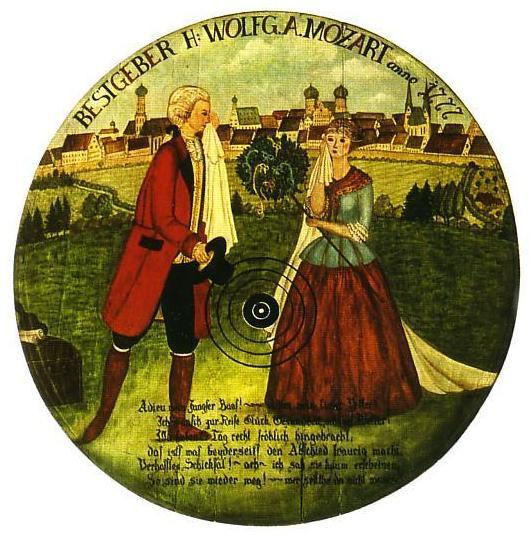
A painted wooden shooting target, round, with a rural town skyline and church towers behind green fields. A man in a red coat and white cravat stands left, holding a hat, and a woman in a green bodice and red skirt with a white veil stands right. Inscription reads 'Besitgeber H. Wolfg. A. Mozart anno 1777' along the top arc, with verse text below and a bullseye at center.Artifact

Primary source

Bölzlschießen Target with Mozart and his Cousin

Unknown · 1777

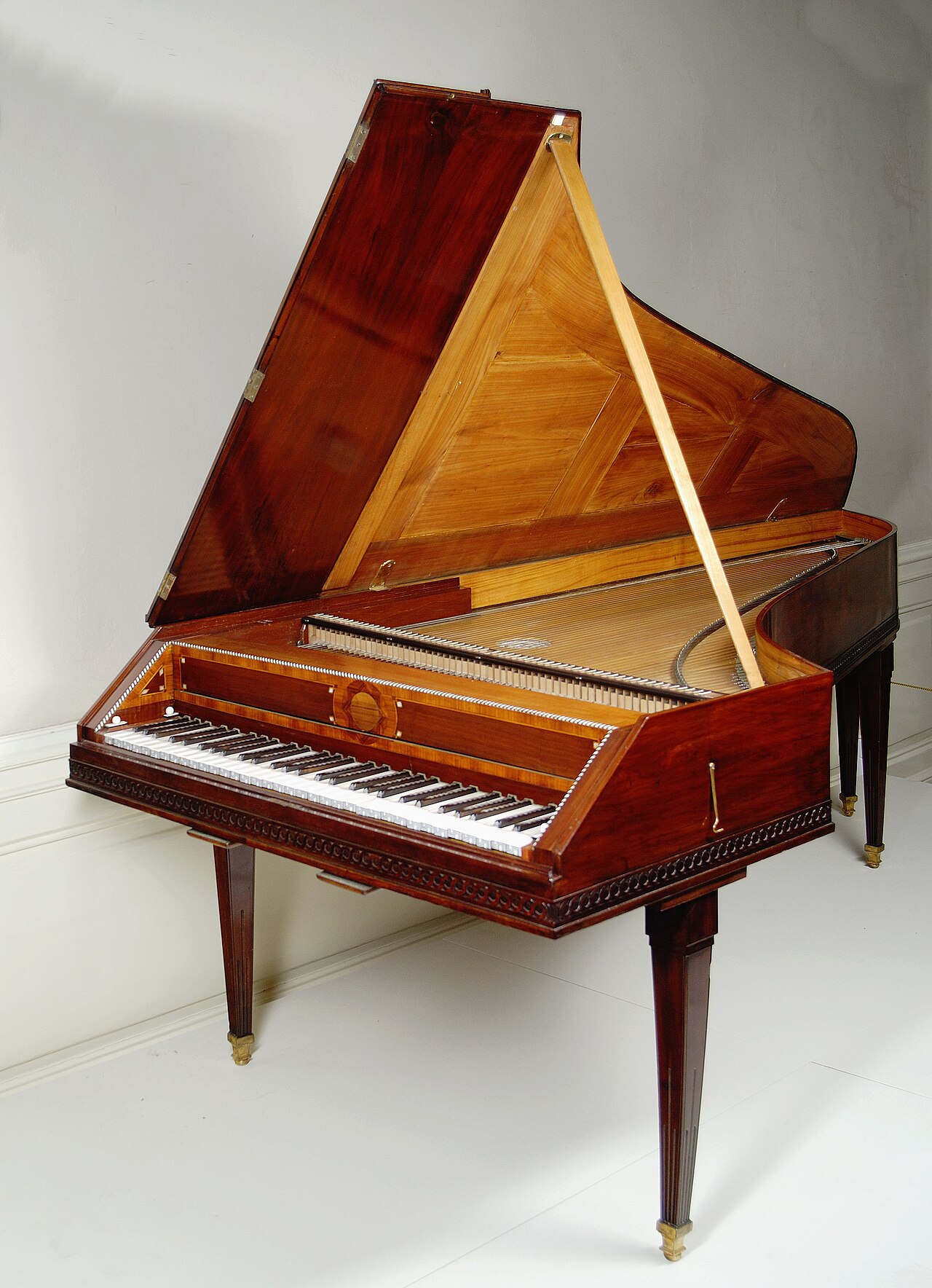
A wooden grand piano with a reddish-brown mahogany case, tapered fluted legs with brass caps, and an open lid propped on a stick. The white keyboard is at the front-left, and the strings and hammers are visible inside. The background is a plain white wall and floor.Artifact

Secondary source

Mozart's Piano

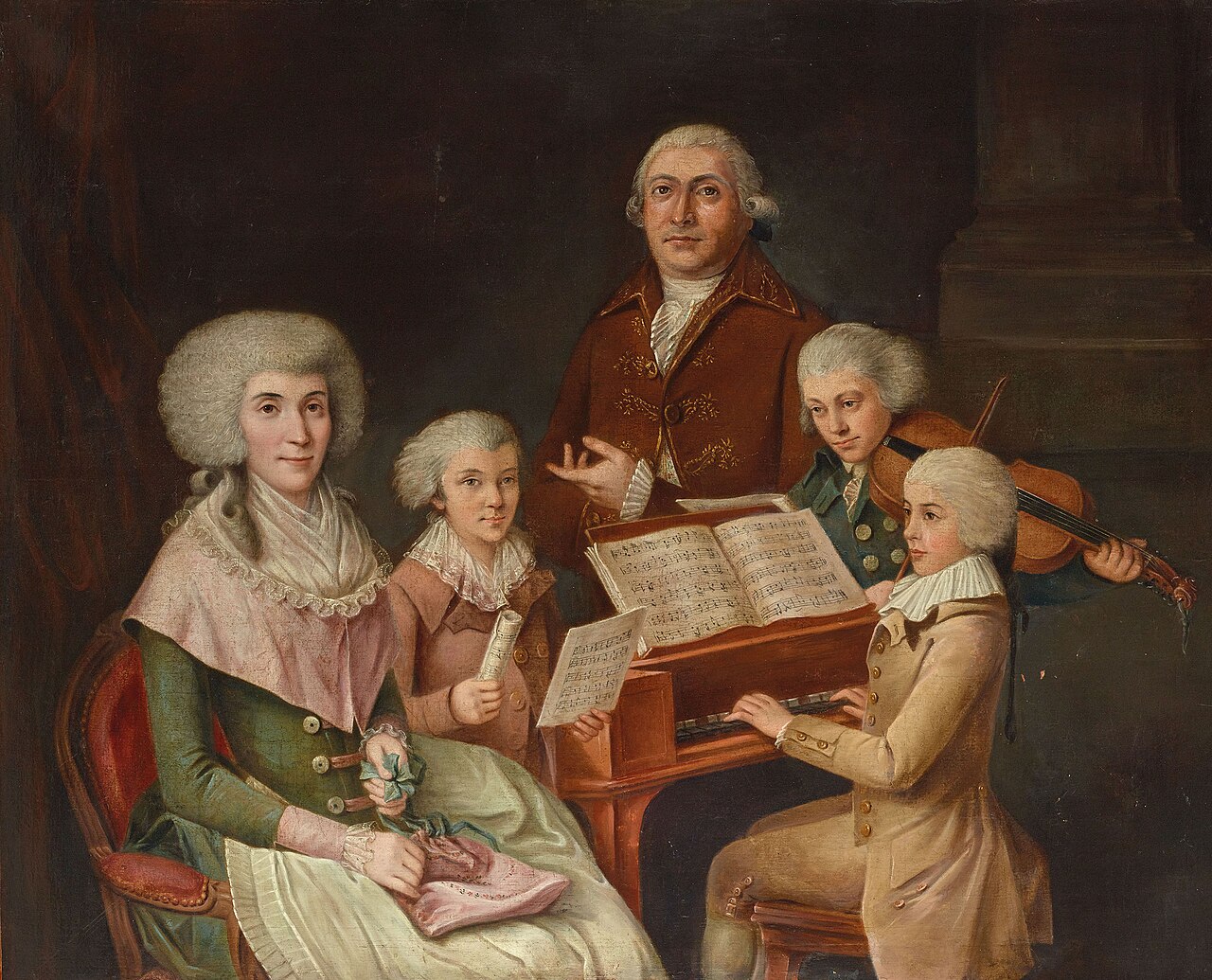
Oil painting of a family group in an interior: a seated woman in a green dress and pink shawl holds a bouquet, a girl holds a rolled paper, a standing man in a red coat gestures, and two boys play a harpsichord with open music and a violin.Painting

Primary source

Mozart and Thomas Linley at the Gavard des Pivets Family

1770

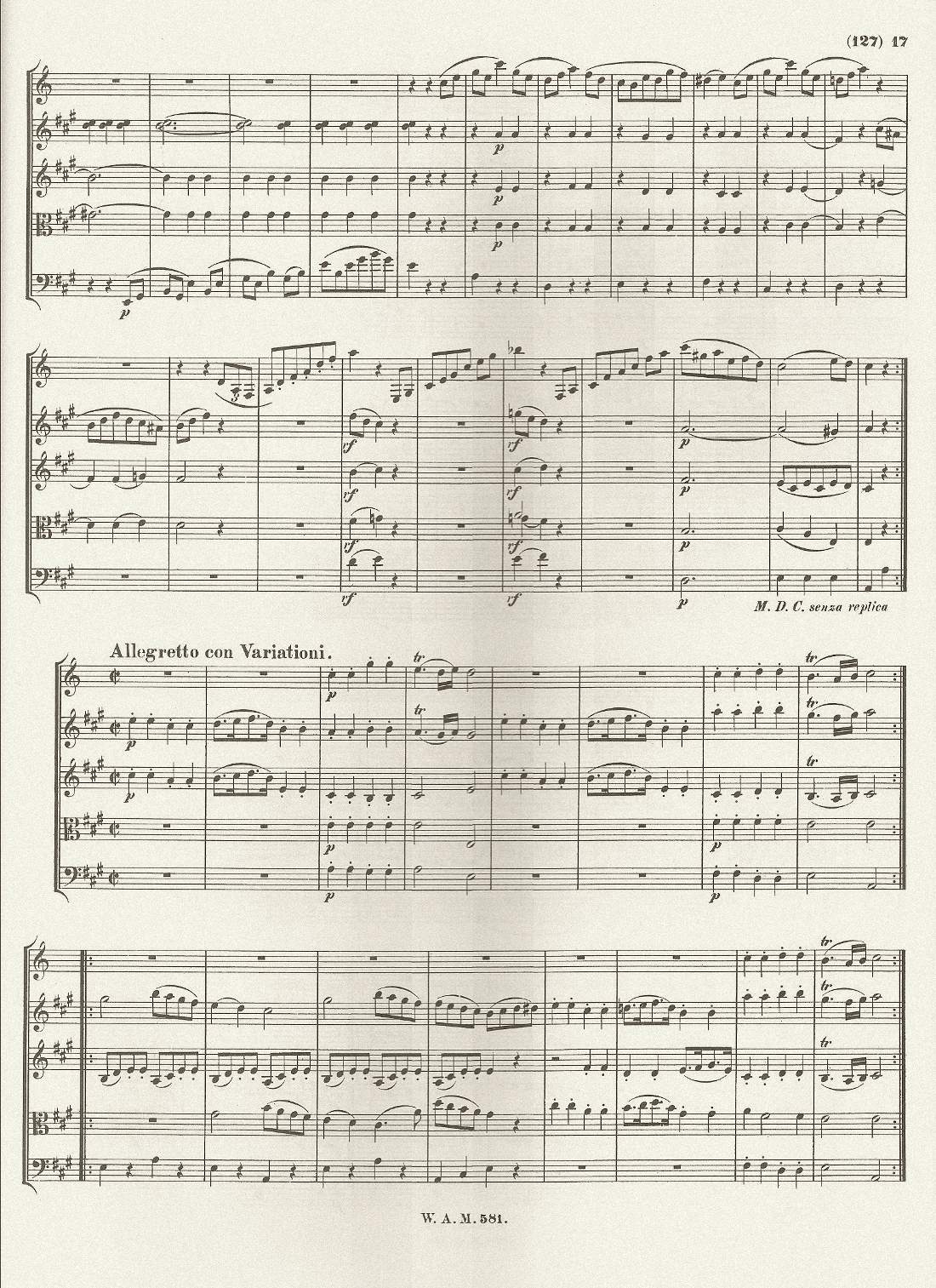
Printed page of sheet music for a five-part chamber work, with staves for violin, violin, viola, cello and bass, labeled Allegretto con Variationi, marked W. A. M. 581 at the bottom and page number 127 at top right.Book

Secondary source

Alte Mozart-Ausgabe

Breitkopf & Härtel · 1877-1883

Letter

Primary source

The Letters of Wolfgang Amadeus Mozart, Vol. 1

Wolfgang Amadeus Mozart · 1769-1781 (letters); recording modern

Reminiscences of Michael KellyBook

Primary source

Reminiscences of Michael Kelly

Michael Kelly · 1826

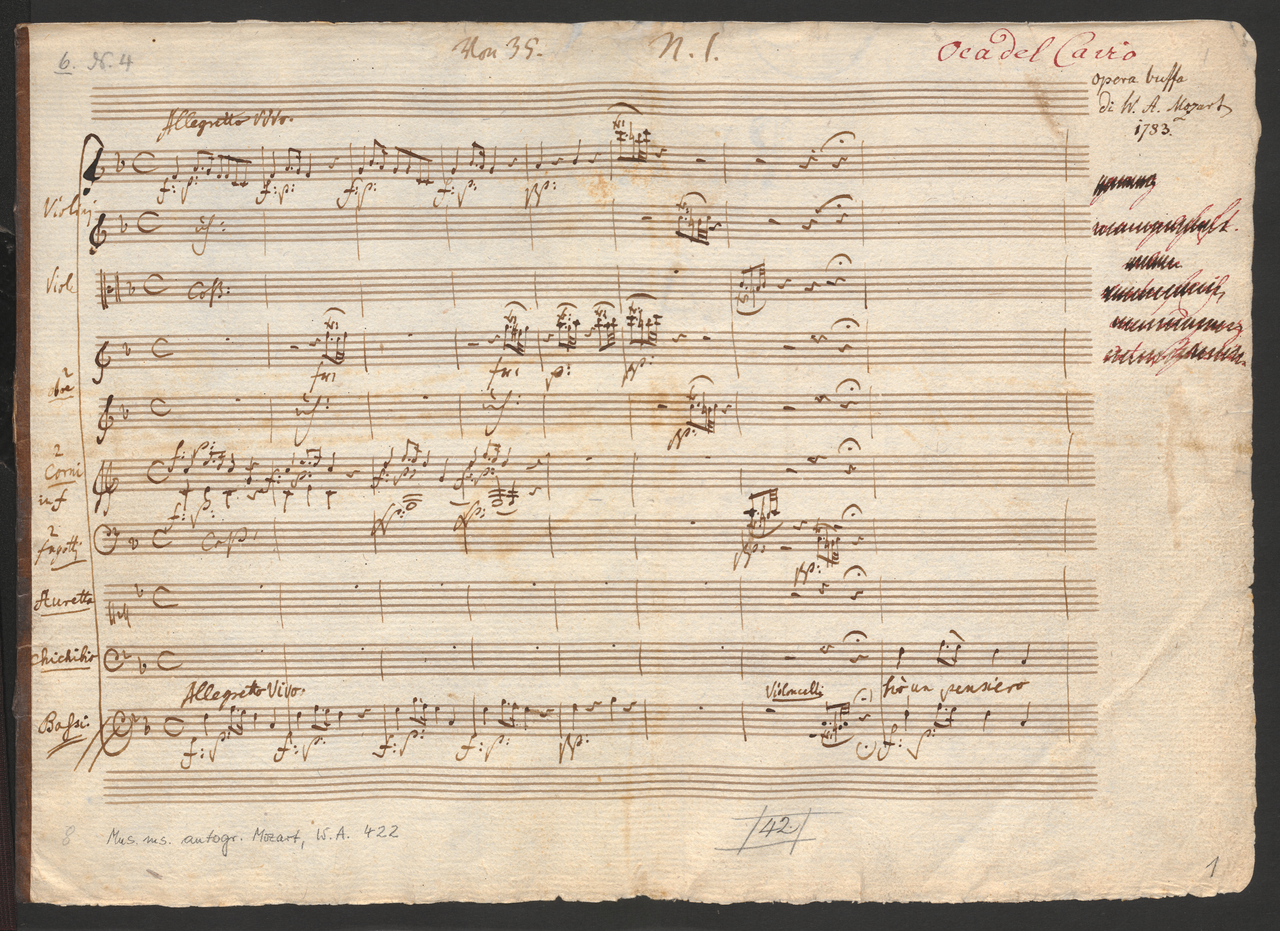
Handwritten musical manuscript page on aged paper with staves for strings, winds, and basso, marked Allegretto vivo. Red ink title 'Oca del Cairo' at top right, with handwritten notes in black and red ink beside the staves.Document

Primary source

Autograph First Page of L'oca del Cairo, K. 422

Wolfgang Amadeus Mozart · 1783

Artifact

Secondary source

Das Veilchen, K. 476

Wolfgang Amadeus Mozart · Composed 8 June 1785; recorded 19-20 June 1952

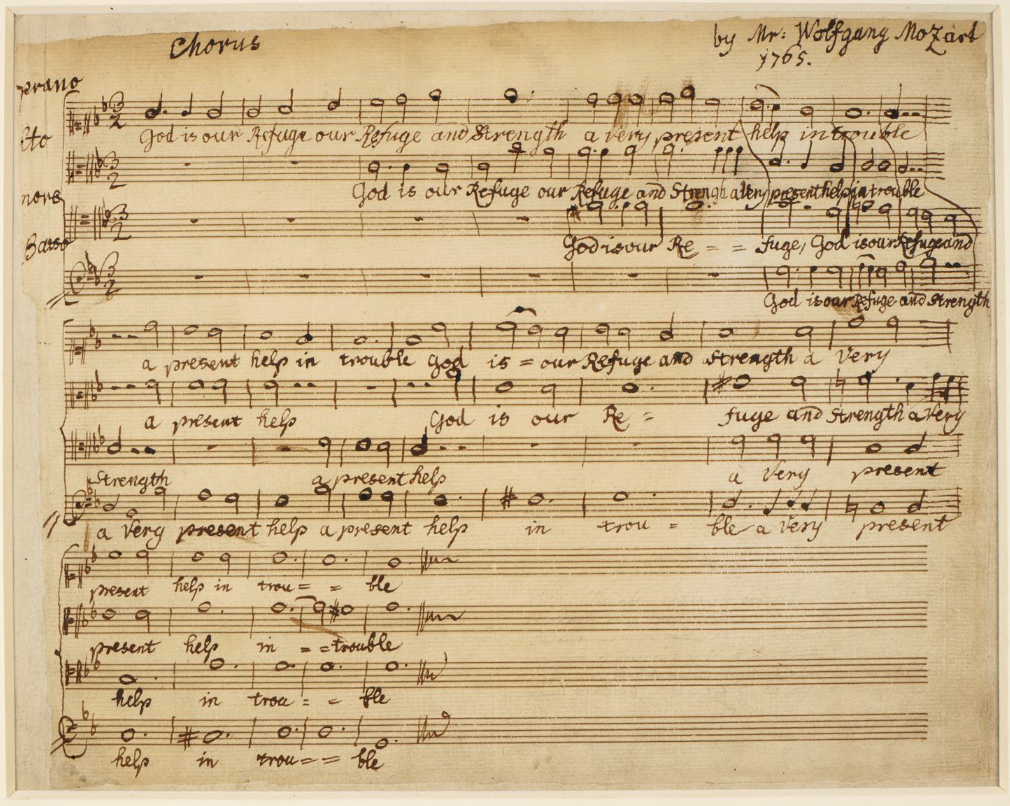
Handwritten manuscript score in brown ink on aged paper, titled 'Chorus' with 'by Mr. Wolfgang Mozart 1765' at top right. Multiple staves of sung lyrics 'God is our Refuge, our Refuge and Strength, a very present help in trouble' appear across the page.Document

Primary source

God is our Refuge, K. 20

Wolfgang Amadeus Mozart · 1 July 1765

Book

Secondary source

Wolfgang Amadeus Mozart: A LibriVox Audio Biography

Herbert Francis Peyser

News clip

Secondary source

Queen of the Night Aria from The Magic Flute, Sung in Ukrainian

18 June 2017

Documentary

Secondary source

Clarinettist Plays Mozart on a Period Basset Horn

Calum Robertson · 12 October 2021

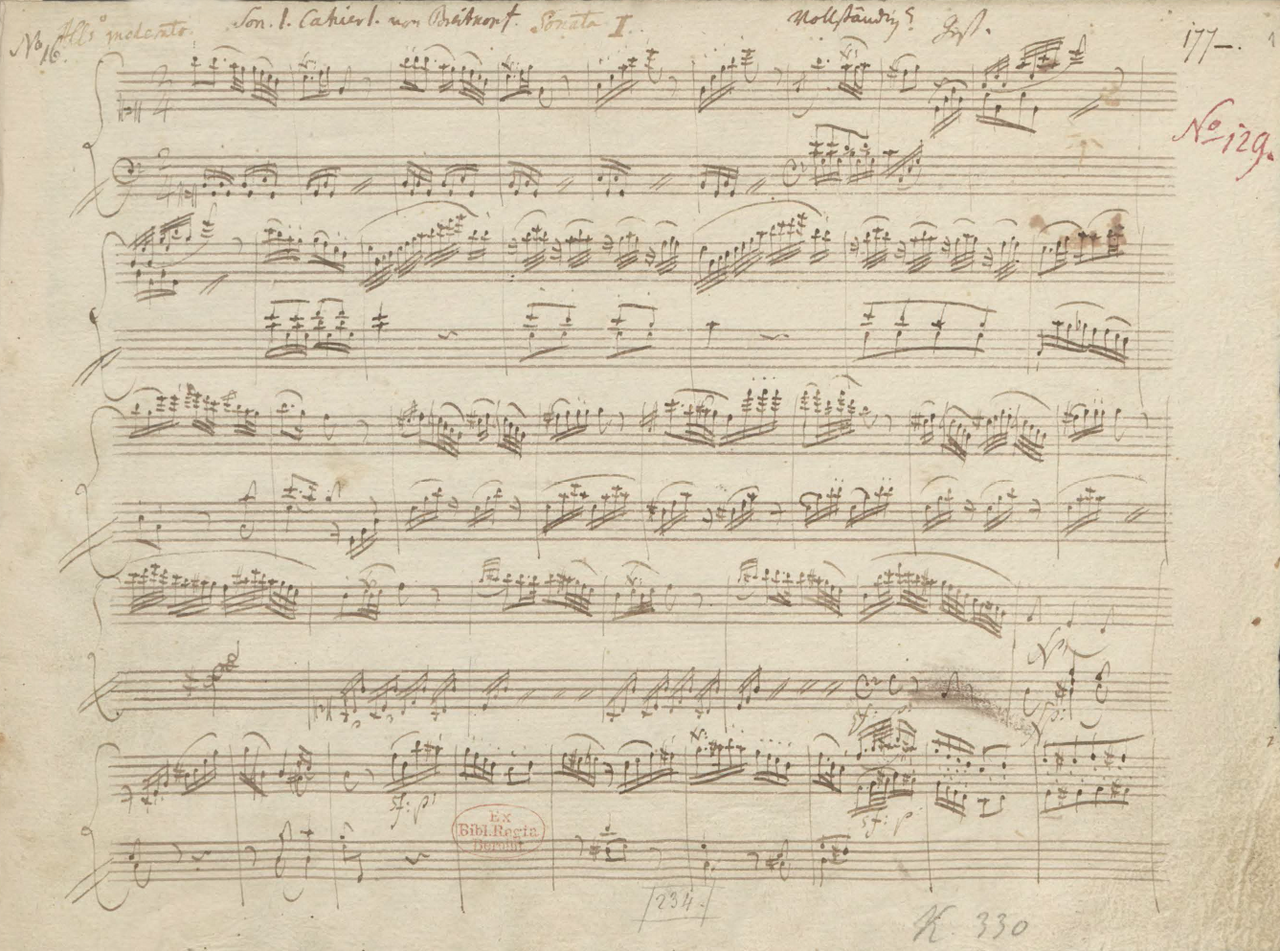
Handwritten manuscript page of piano music on aged paper, with ten staves of dense notation, slurs and ornaments. Inscriptions at top read 'Allegro moderato', 'Sonata', and 'Mollstaendig', with a library stamp at bottom centre and the catalogue number 'K 330' written bottom right.Document

Primary source

Autograph Manuscript of Piano Sonata K. 330

Wolfgang Amadeus Mozart · 1783

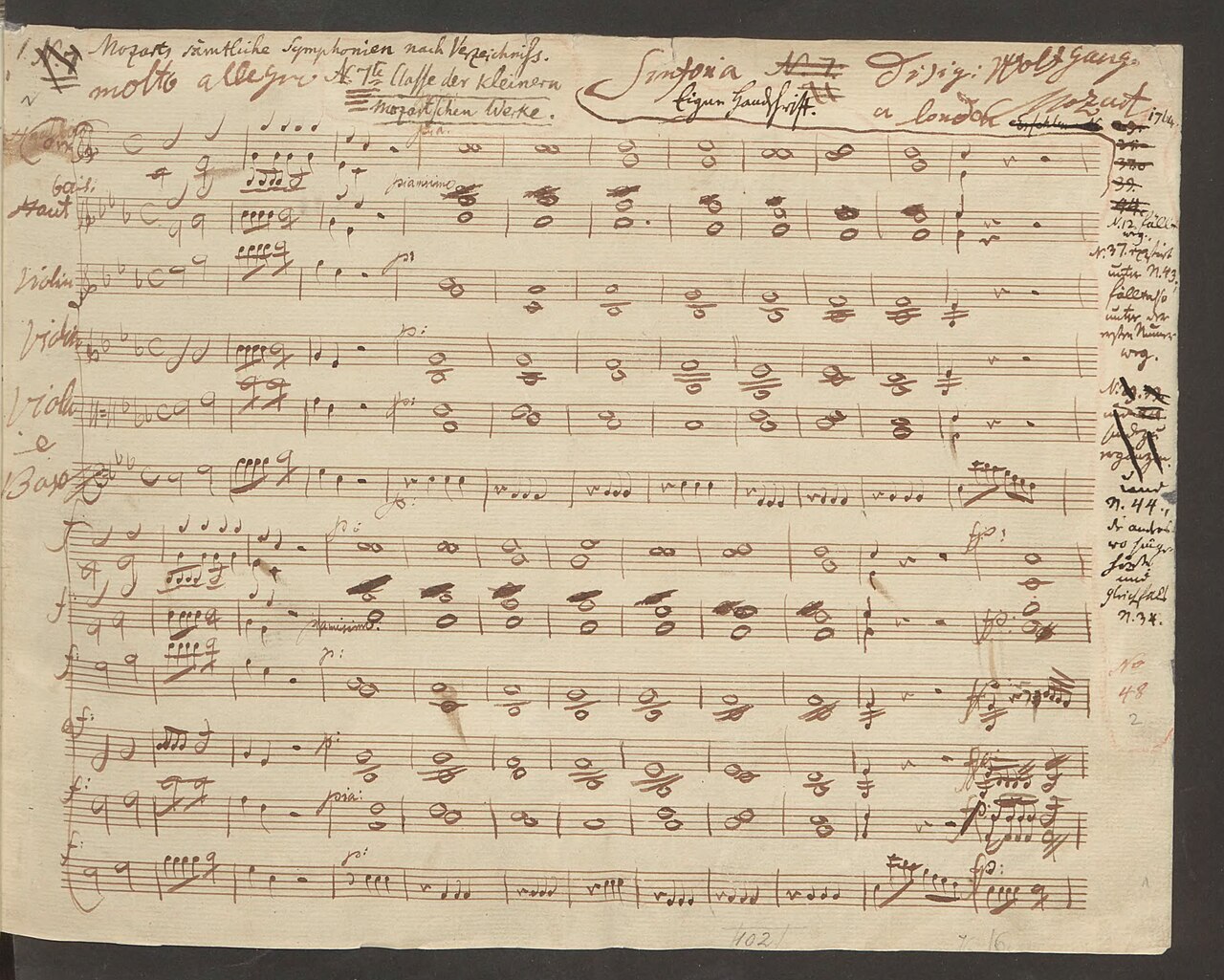
Handwritten manuscript page of music on aged paper with multiple staves of notation for orchestral parts. A heading in ink reads 'Sinfonia' and 'Di Wolfgang Mozart' with 'a London' and the year 1764 in the upper right, with annotations in the right margin.Document

Primary source

Autograph Opening of Symphony No. 1 in E-flat, K. 16

Wolfgang Amadeus Mozart · 1 September 1764

Mozart: the Story of His Life as Man and ArtistBook

Secondary source

Mozart: the Story of His Life as Man and Artist

Victor Wilder · 1908

Book

Secondary source

W.-A. Mozart: Sa Vie Musicale et Son Œuvre, Volume 1

Teodor de Wyzewa · 1912

Book

Secondary source

Life of Mozart

Otto Jahn · 1882

Book

Secondary source

Life of Mozart

Otto Jahn · 1891

Book

Secondary source

Wolfgang Amadeus Mozart, His Life and Work

Arthur Schurig · 1913

Book

Secondary source

Mozart and Haydn in London

C. F. Pohl · 1867

Mozart nach den Schilderungen seiner ZeitgenossenBook

Secondary source

Mozart nach den Schilderungen seiner Zeitgenossen

Ludwig Nohl · 1880

Document

Primary source

Ja, nun laß das Schicksal wüten

Wolfgang Amadeus Mozart · c. 1926 (edited version of earlier aria text)

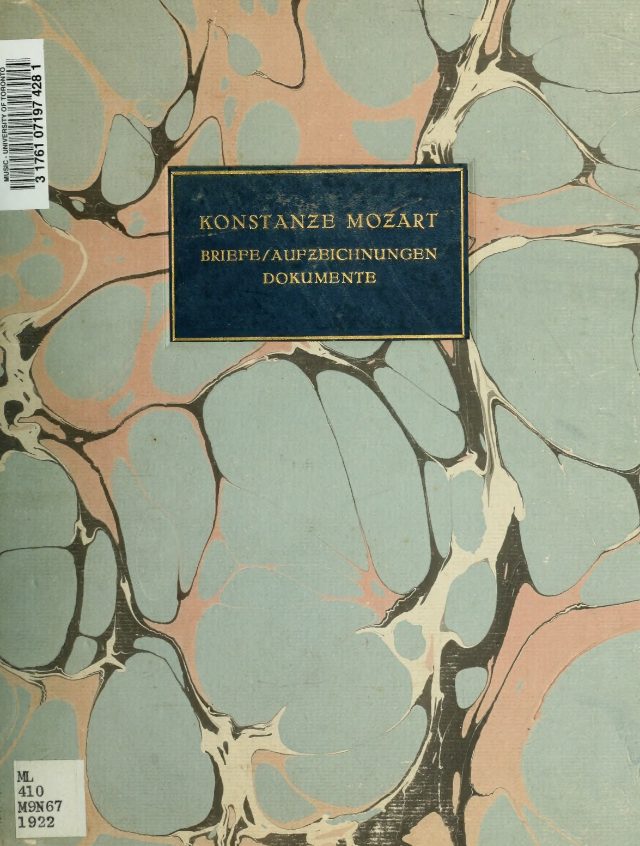
Briefe, Aufzeichnungen, Dokumente 1783–1842Letter

Secondary source

Briefe, Aufzeichnungen, Dokumente 1783–1842

Constanze Mozart · 1922

Document

Primary source

Account of a Very Remarkable Young Musician

Daines Barrington · 1771

Letter

Primary source

Die Bäsle-Briefe

Wolfgang Amadeus Mozart · 1777–1781

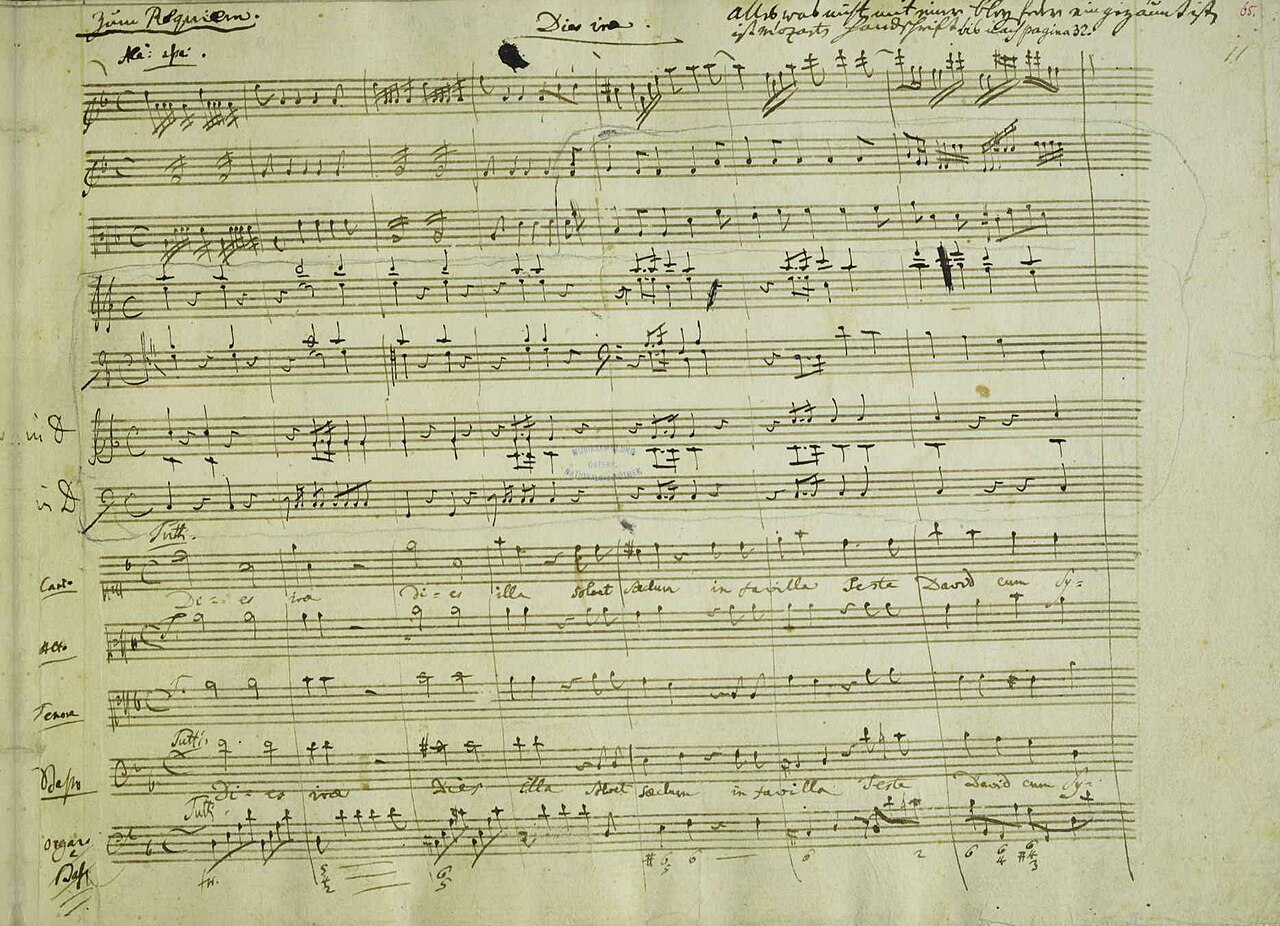
Handwritten manuscript music page on aged paper with multiple staves of notes, text 'Dies irae' written above, and a heading 'Requiem' at top left. Vocal parts with lyrics and instrumental staves are visible, with a small note reading 'Alto' and 'Tenor' on the left margin.Document

Primary source

Autograph Manuscript of the Requiem, Dies Irae

Wolfgang Amadeus Mozart · 1791

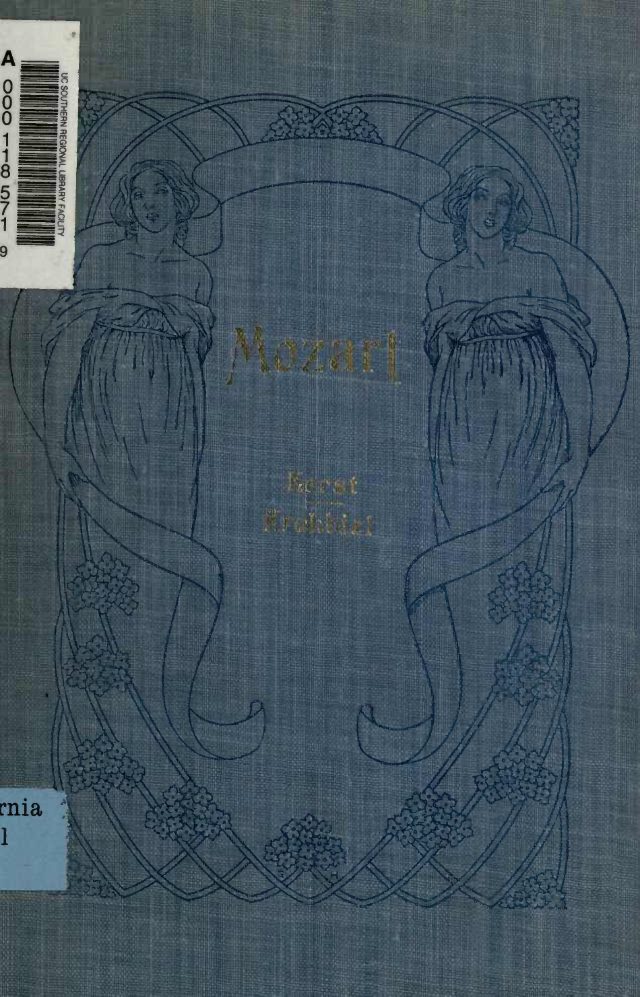
Mozart, the Man and the Artist, as Revealed in His Own WordsBook

Primary source

Mozart, the Man and the Artist, as Revealed in His Own Words

Friedrich Kerst (compiler); Wolfgang Amadeus Mozart (source letters) · 1905

Document

Primary source

Don Giovanni

Wolfgang Amadeus Mozart (composer); Lorenzo Da Ponte (libretto) · 1900 edition

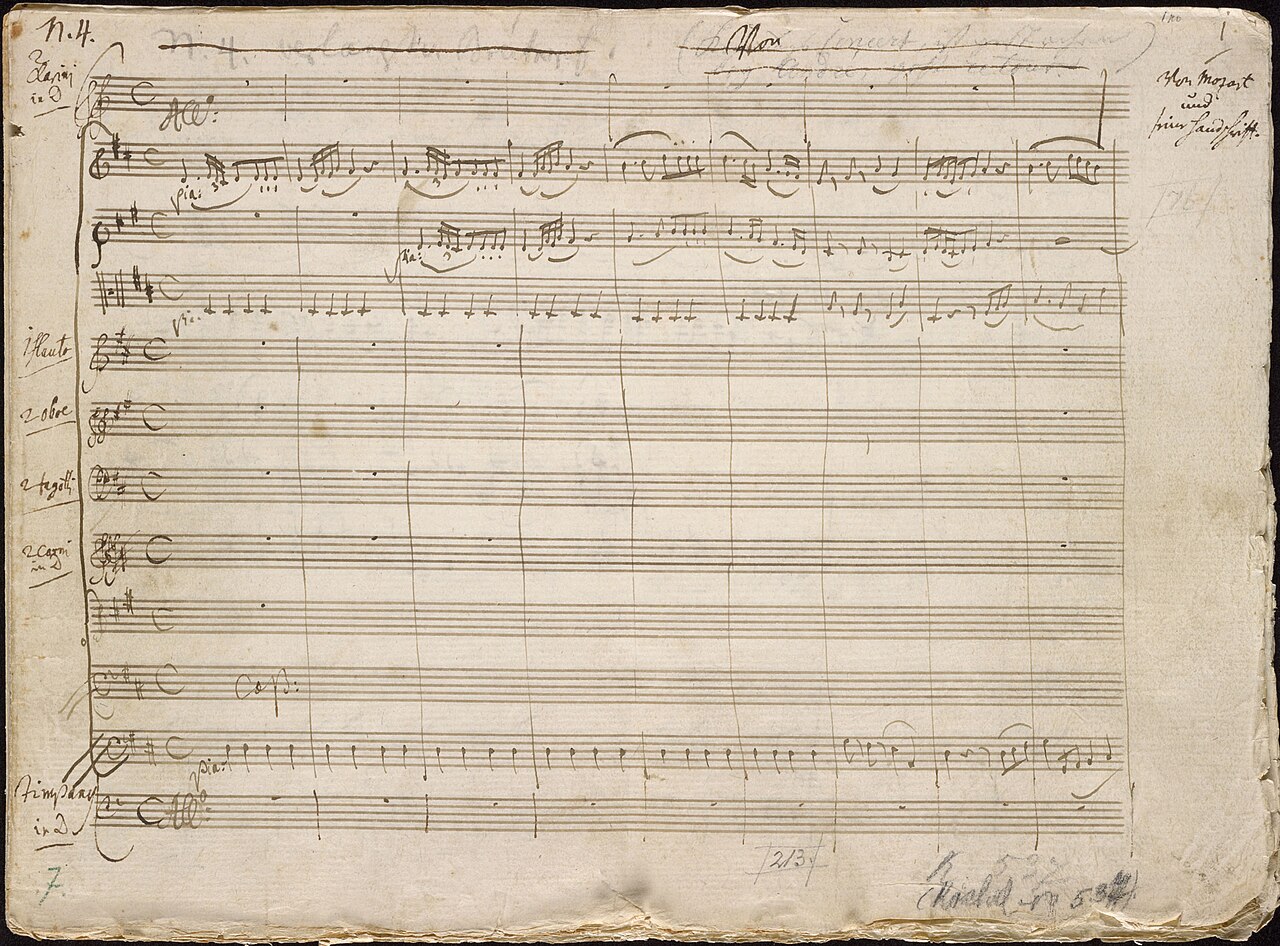
Handwritten manuscript score page on aged paper, with staves for clarinets, flute, oboes, bassoons, horns, timpani, and strings, marked with Mozart's ink annotations and the title Piano Concerto No. 26 at the top left.Document

Primary source

Autograph First Page of Piano Concerto No. 26 in D major, K. 537

Wolfgang Amadeus Mozart · 1788

The Magic FluteBook

Primary source

The Magic Flute

Wolfgang Amadeus Mozart (composer) · c. 1800 edition

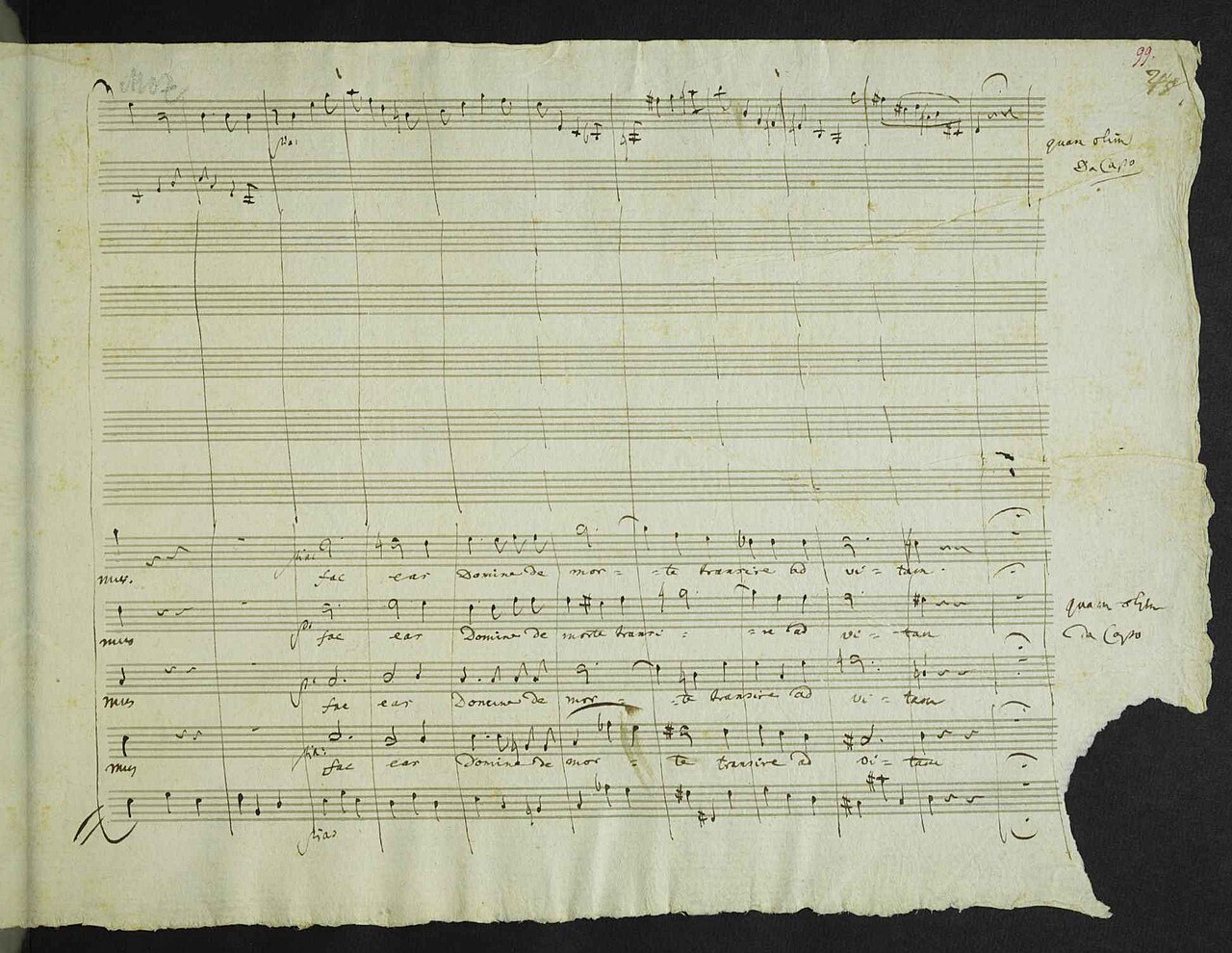
Handwritten manuscript page of choral music on aged, yellowed paper with several staves of notation and Latin text beneath, including 'fac eas Domine de morte transire ad vitam'. Marginal notes read 'quam olim da Capo' at upper and lower right. The lower right corner is torn away.Document

Primary source

Last Page of the Requiem Working Score

Wolfgang Amadeus Mozart · 1791

Book

Secondary source

The Sonata, Its Form and Meaning, as Exemplified in Mozart's Piano Sonatas

F. Helena Marks · 1921

Book

Secondary source

Life of Mozart

Ludwig Nohl · 1880

Book

Secondary source

Mozart

Eustace Breakspeare · 1902

Document

Secondary source

Mozart, Wolfgang, entry in Grove's Dictionary of Music

Carl Ferdinand Pohl · 1900

Book

Secondary source

Mozart, Weber and Wagner

Hector Berlioz · 1918

Document

Tertiary source

Mozart entry, The Nuttall Encyclopaedia

James Wood · 1900

Book

Secondary source

Mozart auf dem Theater

Ernst Lert · 1921

Book

Secondary source

Mozart: The Story of His Life as Man and Artist

Victor Wilder · c. 1900

Document

Secondary source

Mozart entry, Encyclopaedia Britannica, 11th edition

1911

Artifact

Secondary source

Quintet for Piano and Winds in E-flat, K. 452: Third Movement

Wolfgang Amadeus Mozart · composed 1784; performed 1980

Artifact

Secondary source

Grand Partita, K. 361: III. Adagio – Andante

Wolfgang Amadeus Mozart · composed c. 1781-1784; performed 20 May 2021

Artifact

Secondary source

Grand Partita, K. 361: I. Largo – Molto Allegro

Wolfgang Amadeus Mozart · composed c. 1781-1784; performed 20 May 2021

Book

Secondary source

Mozart: The Story of a Little Boy and His Sister Who Gave Concerts

Thomas Tapper

Artifact

Secondary source

Grand Partita, K. 361: II. Menuetto

Wolfgang Amadeus Mozart · composed c. 1781-1784; performed 20 May 2021

Book

Secondary source

Wolfgang Amadeus Mozart, by Herbert F. Peyser

Herbert F. Peyser · 1951

Artifact

Secondary source

Grand Partita, K. 361: V. Romance – Adagio

Wolfgang Amadeus Mozart · composed c. 1781-1784; performed 20 May 2021

Book

Secondary source

Mozart's Youth

Franz Hoffmann · 1904

Artifact

Secondary source

Grand Partita, K. 361: VII. Finale – Molto Allegro

Wolfgang Amadeus Mozart · composed c. 1781-1784; performed 20 May 2021

Artifact

Secondary source

Grand Partita K. 361, Theme and Variations Andante

US Marine Band (performers); Wolfgang Amadeus Mozart (composer) · 20 May 2021 (recording); composed by Mozart

Artifact

Secondary source

Quintet for Piano and Winds in E-flat, 2nd movement

Wolfgang Amadeus Mozart (composer); Neal O'Doan and Soni Ventorum (performers) · Composed 1784; performed 1980

Want the full shelf? Chat with Wolfgang Amadeus Mozart in the app and open the Sources panel — every quote links back to the original.

Use Wolfgang Amadeus Mozart in class

1 collection

A ready-made collection from the Humy team that features Wolfgang Amadeus Mozart. Preview it, then try it free.

Trusted by educators worldwide

Conversations
375,000+
Real exchanges between students and historical figures
Messages exchanged
4,142,000+
Across every figure, classroom and language
Historical figures
100,000+
Each informed by a curated biography and selected sources
Languages supported
50+
From English and Spanish to Arabic and Korean

Paying customers

Used by 98 schools and universities

Partner school logo
Tecnológico de Monterrey logo
Hyper Island logo
Partner school logo
Chambersburg Area School District logo
Broward County Public Schools logo
Nebo School District logo
National Louis University logo
South Florida PBS logo
Punahou School logo
University of Wisconsin–River Falls logo
Partner school logo
Partner school logo
Archbishop Mitty High School logo
Kingsburg High School logo
Norwalk Public Schools logo
Partner school logo
Connections logo
Partner school logo
Moore Public Schools logo
Partner school logo
Partner school logo
Partner school logo
Partner school logo
Robbinsville Public Schools logo
Partner school logo
Partner school logo
Partner school logo
Tecnológico de Monterrey logo
Hyper Island logo
Partner school logo
Chambersburg Area School District logo
Broward County Public Schools logo
Nebo School District logo
National Louis University logo
South Florida PBS logo
Punahou School logo
University of Wisconsin–River Falls logo
Partner school logo
Partner school logo
Archbishop Mitty High School logo
Kingsburg High School logo
Norwalk Public Schools logo
Partner school logo
Connections logo
Partner school logo
Moore Public Schools logo
Partner school logo
Partner school logo
Partner school logo
Partner school logo
Robbinsville Public Schools logo
Partner school logo
Partner school logo

What educators are saying

“We enjoyed the program last year and used it frequently.”
“My students say it’s a welcome change of pace. I’m not a fan of the “sage on the stage” model, so I try to incorporate research-oriented and self-paced activities. With Humy, students have to take charge of their learning. They’ve become more adept at critical thinking, forming better questions, and improving their reading comprehension. The interview feature has been my go-to tool. I create assignments where students must ask historical figures a set number of questions, then summarize the responses to ensure they’re truly absorbing the material. This approach lets them actively explore the past rather than passively consuming information.”
“Humy has helped me bring historical figures, sometimes long past, to life. When my students interact with these figures in real-time, it eliminates some of the perceived “ancient” characteristics of my curriculum. This has shifted my students’ thinking away from viewing history as abstract or irrelevant. Real-time interactions make historical figures relatable, even allowing students to ask off-topic questions that help put historical lives in a more relevant context for 13-year-olds. The feature I use the most is the interview feature. After teaching a topic, most recently Gandhi and Joan of Arc, I have the students ask pointed, focused questions. We practice good conversation techniques beforehand, teaching them to listen (or read) carefully and formulate thoughtful follow-up questions rather than just interrogating. It helps students practice effective conversation skills.”

FAQ

Frequently asked questions

Who is Wolfgang Amadeus Mozart?
Child prodigy composer from the Classical period. On Humy.ai you can chat with an AI version of Wolfgang Amadeus Mozart that draws on a short biography and 89 historical sources during the conversation — by text or voice, in 42 languages.
Is Wolfgang Amadeus Mozart AI free?
Yes. Wolfgang Amadeus Mozart is in Humy's free library: a free account includes 20 AI messages a month with Wolfgang Amadeus Mozart and the other free figures, by text or voice. The free plan's 20 AI messages a month are shared by you and your students: enough to try Humy yourself; a whole class needs Plus. No credit card is needed.
What sources does the Wolfgang Amadeus Mozart AI use?
It draws on a short biography and 89 historical sources (documents, books and artifacts), including “The Magic Flute”, “Wolfgang Amadeus Mozart at the age of six” and “The Marriage of Figaro”. Each source has its own page on Humy.ai.
How historically accurate is the AI version of Wolfgang Amadeus Mozart?
Each figure uses a short biography and a small set of selected historical sources as context (retrieval-augmented generation), so answers stay closer to known material than the model's general knowledge alone. It isn't a citation-grade research tool — like any LLM, the AI can get details wrong or extrapolate. Treat it as a strong starting point for inquiry and cross-reference important claims.
Can I talk to Wolfgang Amadeus Mozart by voice?
Yes. In addition to text chat, you can call Wolfgang Amadeus Mozart and hear their voice respond in real time — useful for auditory learners, interview practice and Socratic dialogue.
Is Humy.ai safe and compliant for schools?
Yes. Humy.ai is used by more than 100 schools, universities and organisations. The platform is FERPA- and GDPR-aligned, supports SSO, and offers an IT-approval pack tailored for school procurement teams.

Cross-reference Wolfgang Amadeus Mozart

Like any LLM, the AI version of Wolfgang Amadeus Mozart can get details wrong. Open one of these sources in a new tab to verify what you’ve read.

Ready when you are

Start chatting with Wolfgang Amadeus Mozart now.

20 messages free · No credit card · Available in 50+ languages.