Portrait of Johann Sebastian Bach

AI Historical Figure

Johann Sebastian Bach

Famous German composer and musician of the Baroque period.

Chat with Johann Sebastian Bach via text or voice — in 42 languages, drawing on a curated biography and 84 historical sources. Available 24/7.

Start chatting with Johann Sebastian Bach20 messages free · No credit card
Lived
1685–1750
From
Germany
Known for
Music
Johann Sebastian Bach

Johann Sebastian Bach

Online · responds in seconds

Hello — I'm Johann Sebastian Bach. Famous German composer and musician of the Baroque period. What would you like to ask me?

20 messages free · No credit card · Powered by Humy.ai

Live preview · Switch between 42 languages above · Send a message to continue in the app

Multilingual

Talk to Johann Sebastian Bach in 42 languages

Ask Johann Sebastian Bach questions in any language below, and the rest of Humy's app speaks it too. Pick yours to open the chat in that language.

Also in German (Austria), German (Switzerland), English (UK), English (Australia), English (Canada).

The sources behind this AI

84 sources · 42 books · 20 documents · 7 artifacts · 4 paintings · 3 photographs · 2 newspaper articles · 2 interviews · 1 sculpture · 1 letter · 1 news clip · 1 documentary

Johann Sebastian Bach doesn’t improvise from thin air. The AI is grounded in 84 curated historical sources students can inspect. Open any of them to see what informs the conversation.

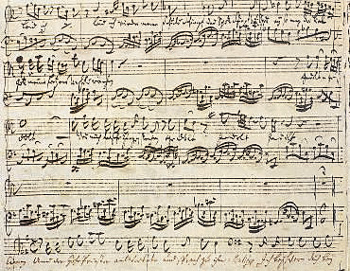
Handwritten manuscript page of musical notation on aged, yellowed paper, with multiple staves of notes, slurs, and ornaments in ink, and handwritten inscription text along the bottom edge.Book

Primary source

St Matthew Passion

Johann Sebastian Bach · 1727

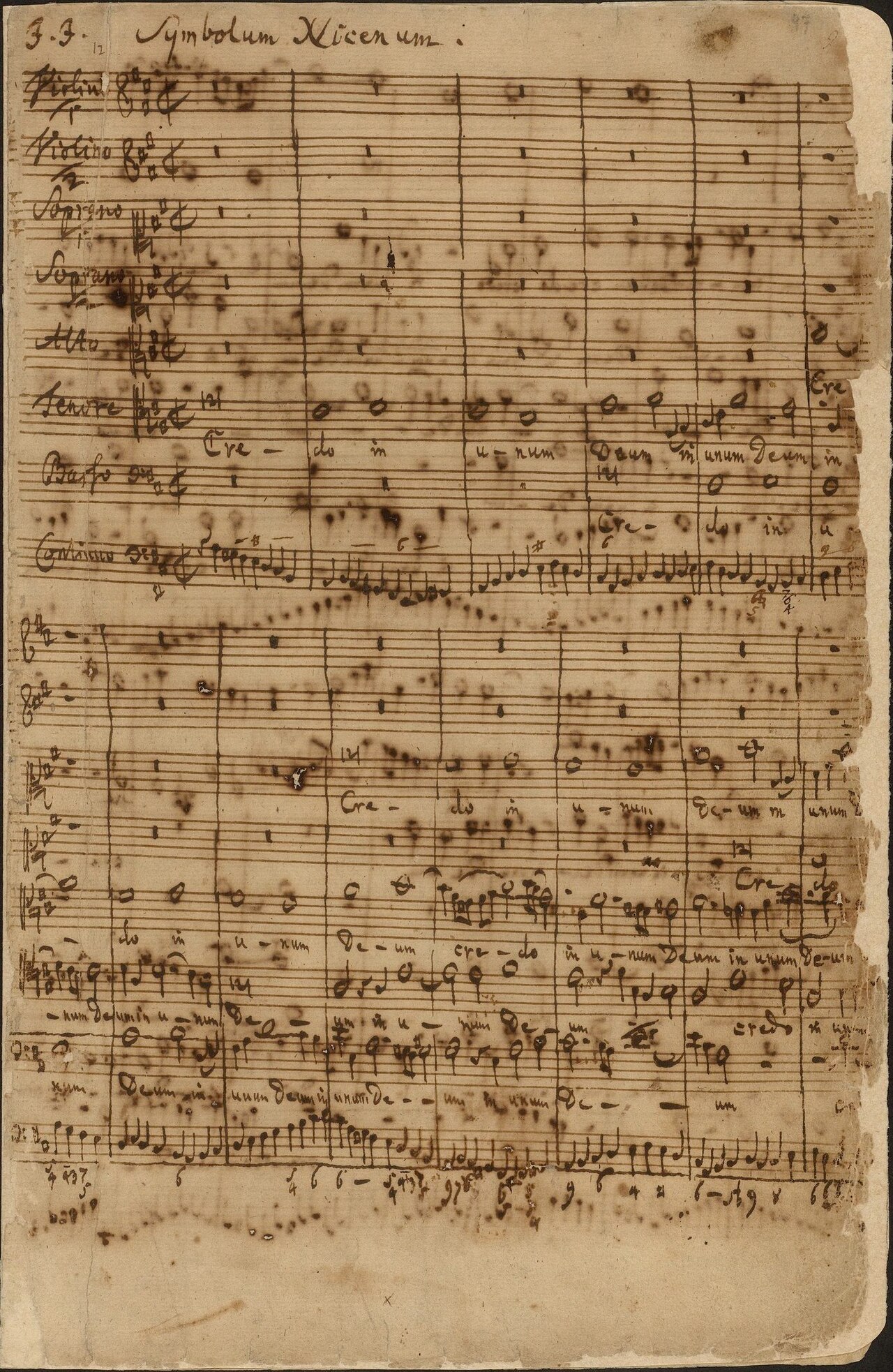
Handwritten manuscript page of orchestral and choral score in brown ink on aged paper, with the heading 'Symbolum Nicenum' at top. Multiple staves for voices and instruments, with Latin text 'Credo in unum Deum' written under the notes.Book

Primary source

Mass in B minor

Johann Sebastian Bach · completed 1749

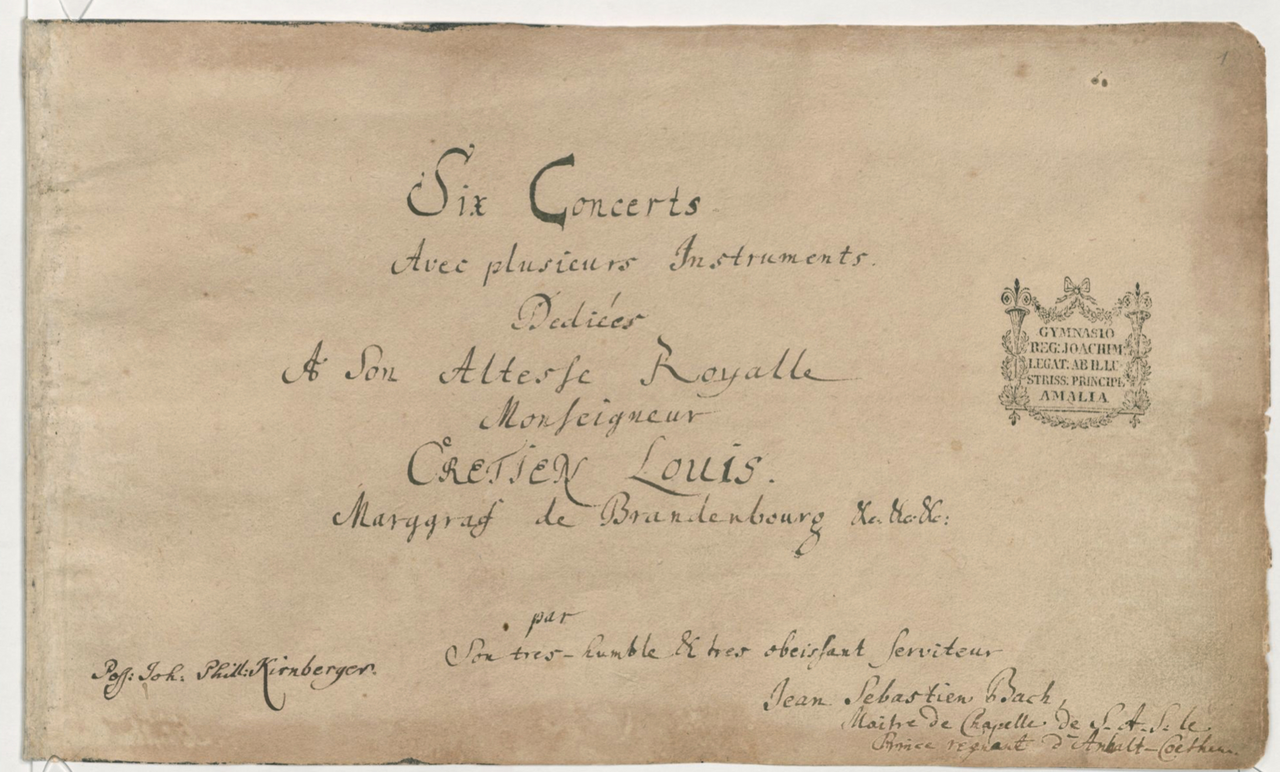
Handwritten title page in French reading 'Six Concerts Avec plusieurs Instruments, Dediés à Son Altesse Royalle Monseigneur Christian Louis, Marggraf de Brandenbourg', with a dedication signed by Jean Sebastien Bach, Maître de Chapelle, and a library stamp.Book

Primary source

Brandenburg Concertos

Johann Sebastian Bach · 1721

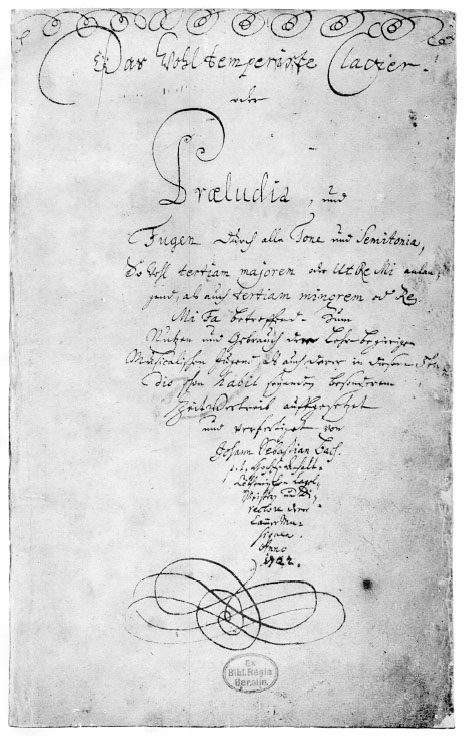
Black and white scan of the handwritten title page of Bach's Das Wohltemperirte Clavier, with ornate flourishes at top, a large decorative initial, lines of German script, Bach's name, the date 1722 and a library stamp at bottom.Book

Primary source

The Well-Tempered Clavier

Johann Sebastian Bach · 1722 (Book 1); 1742 (Book 2)

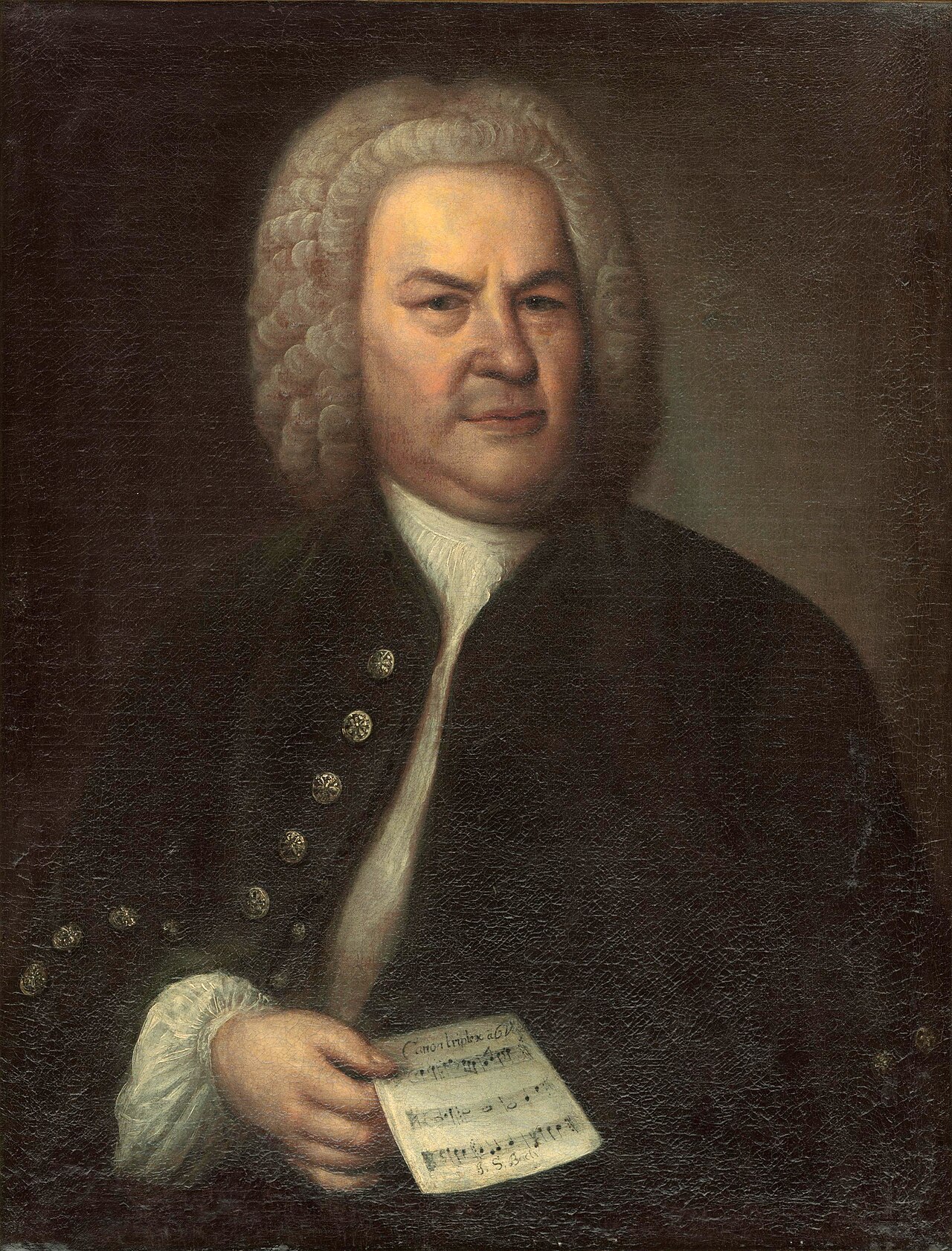
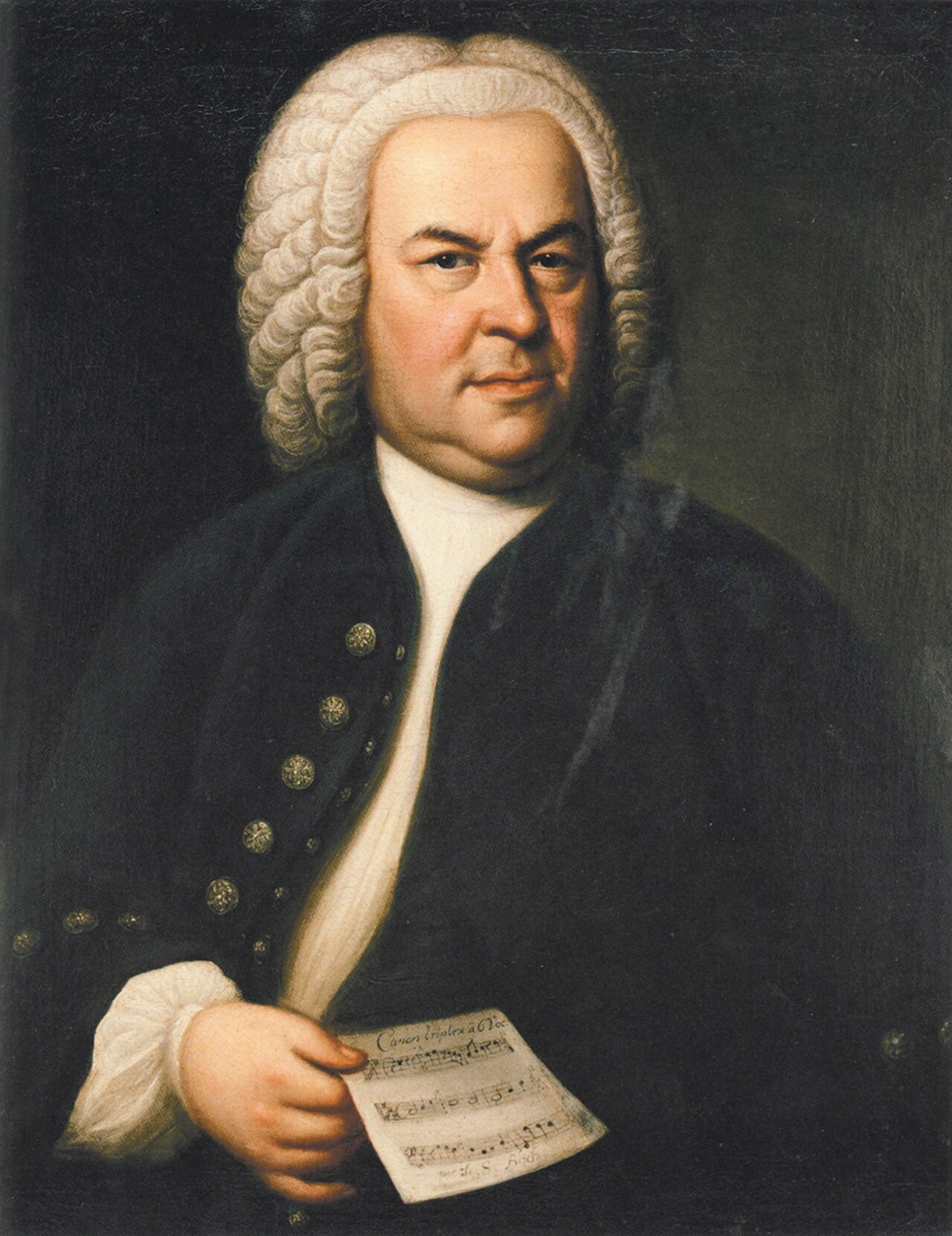
Oil portrait of a man in a white powdered wig and dark coat with gold buttons, white cravat and cuffs. He holds a sheet of handwritten music with the inscription 'Canon triplex a 6 voci' and the signature 'J. S. Bach'.Painting

Primary source

Portrait of Bach

Elias Gottlob Haussmann · 1746

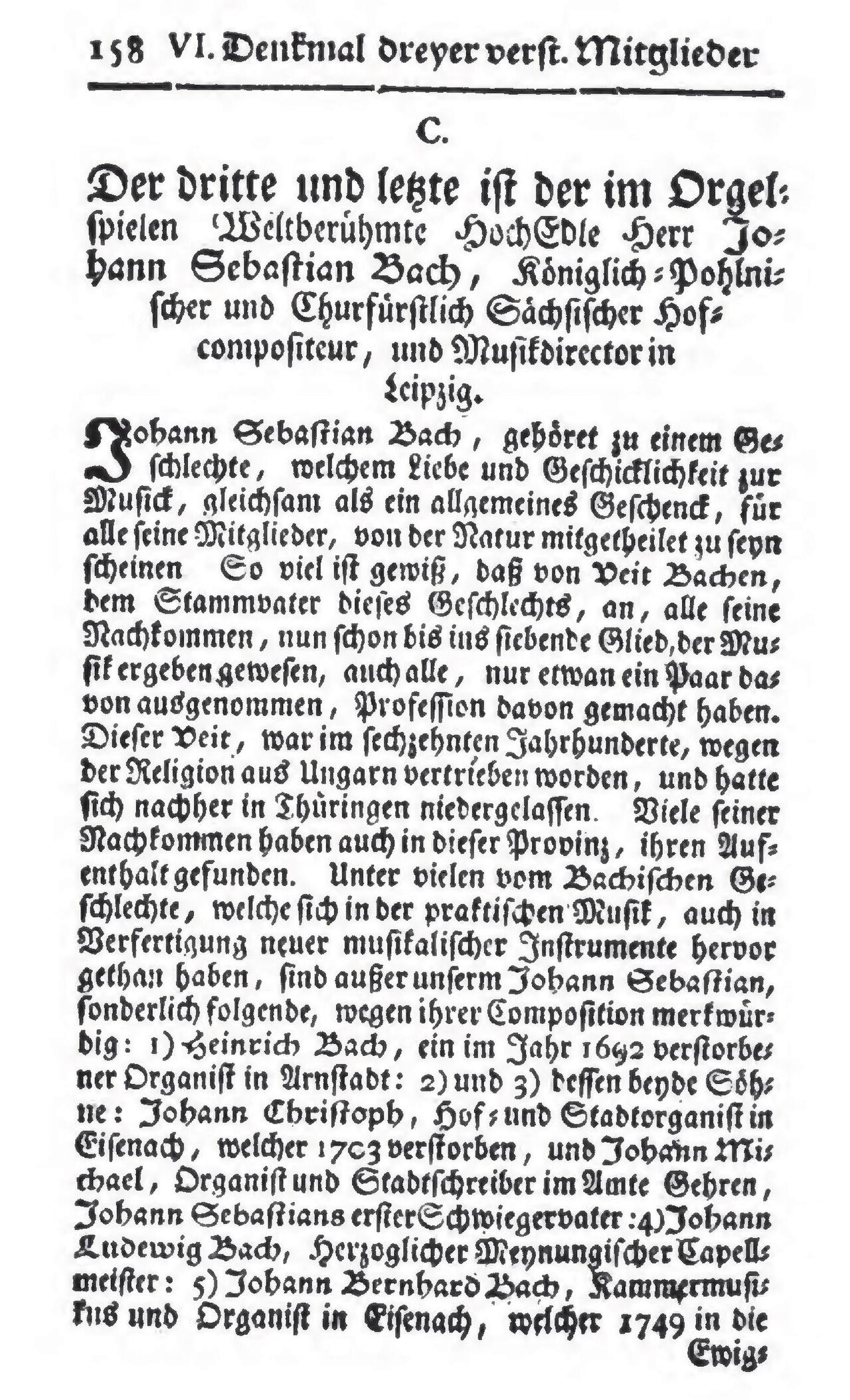
Page 158 of Mizler's Musikalische Bibliothek, 1754, in Fraktur black-letter type. Header reads 'VI. Denkmal dreyer verst. Mitglieder'. Section 'C.' begins with a heading about Johann Sebastian Bach, followed by a body of German text.Newspaper article

Secondary source

Bach's Nekrolog

Carl Philipp Emanuel Bach and Johann Friedrich Agricola · 1754

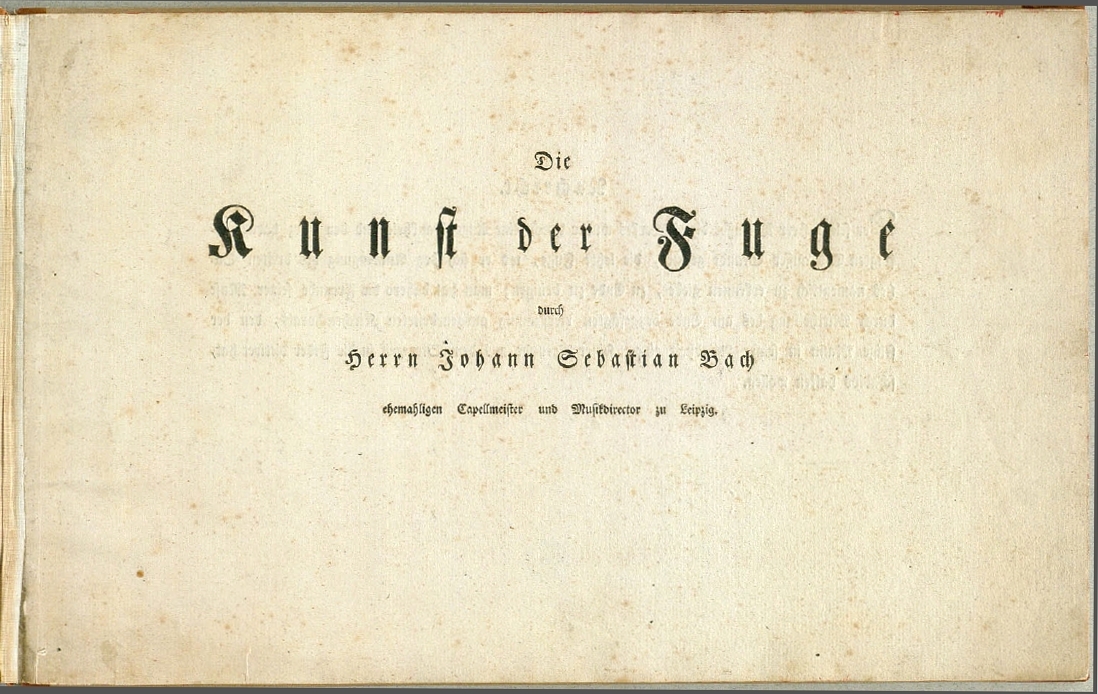
Title page of the printed edition of Die Kunst der Fuge in black blackletter type on aged cream paper. Centered text reads 'Die Kunst der Fuge, durch Herrn Johann Sebastian Bach, ehemaligen Capellmeister und Musikdirector zu Leipzig.' Stains and foxing mar the page; a gray binding edge is visible at left.Book

Primary source

The Art of Fugue

Johann Sebastian Bach · 1750, published 1751

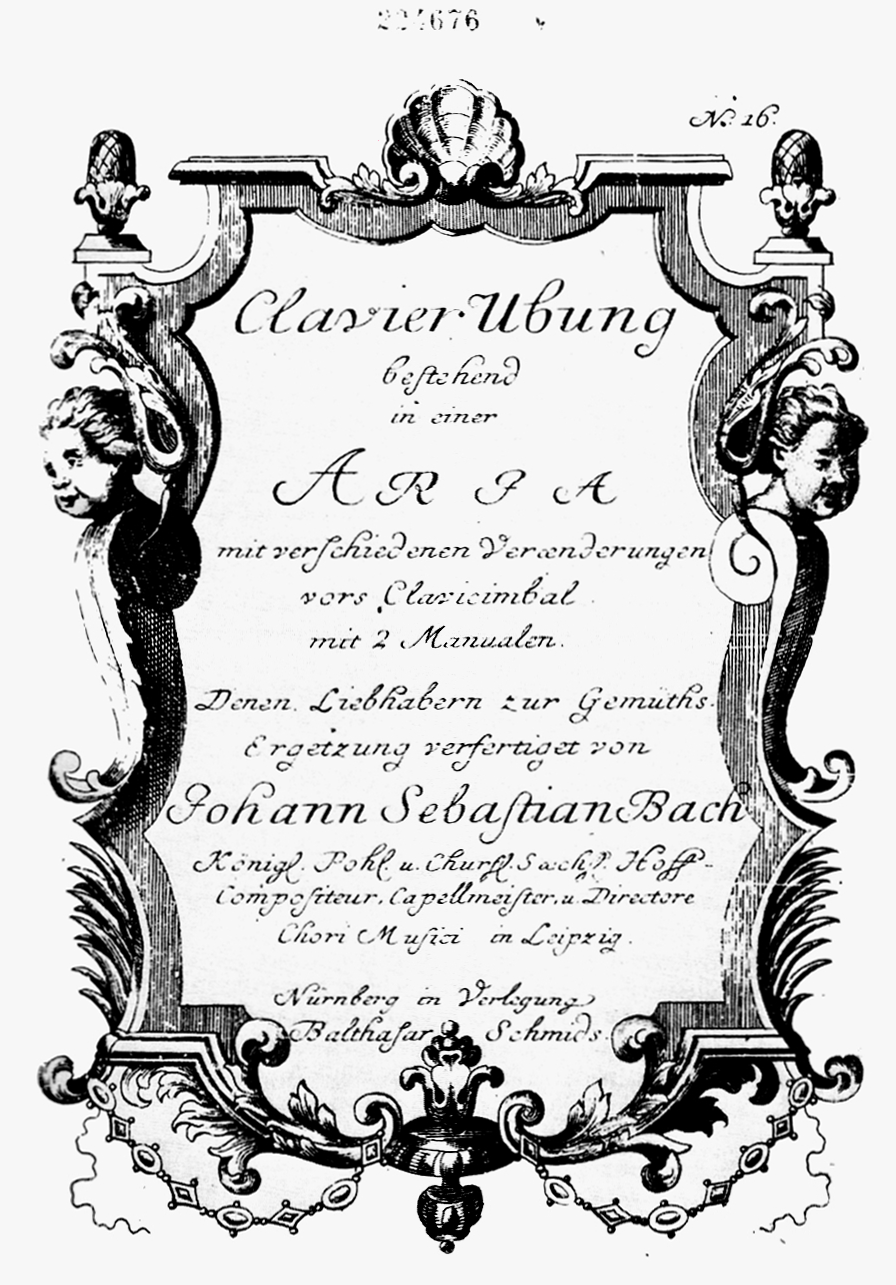
Ornate engraved title page with a decorative border of scrollwork, cherub-like heads, and a shell at the top. Central script reads: Clavier-Übung, bestehend in einer ARIA mit verschiedenen Veränderungen, vors Clavicimbal mit 2 Manualen. Below: Johann Sebastian Bach, and Nürnberg in Verlegung Balthasar Schmid.Book

Primary source

Goldberg Variations

Johann Sebastian Bach · 1741

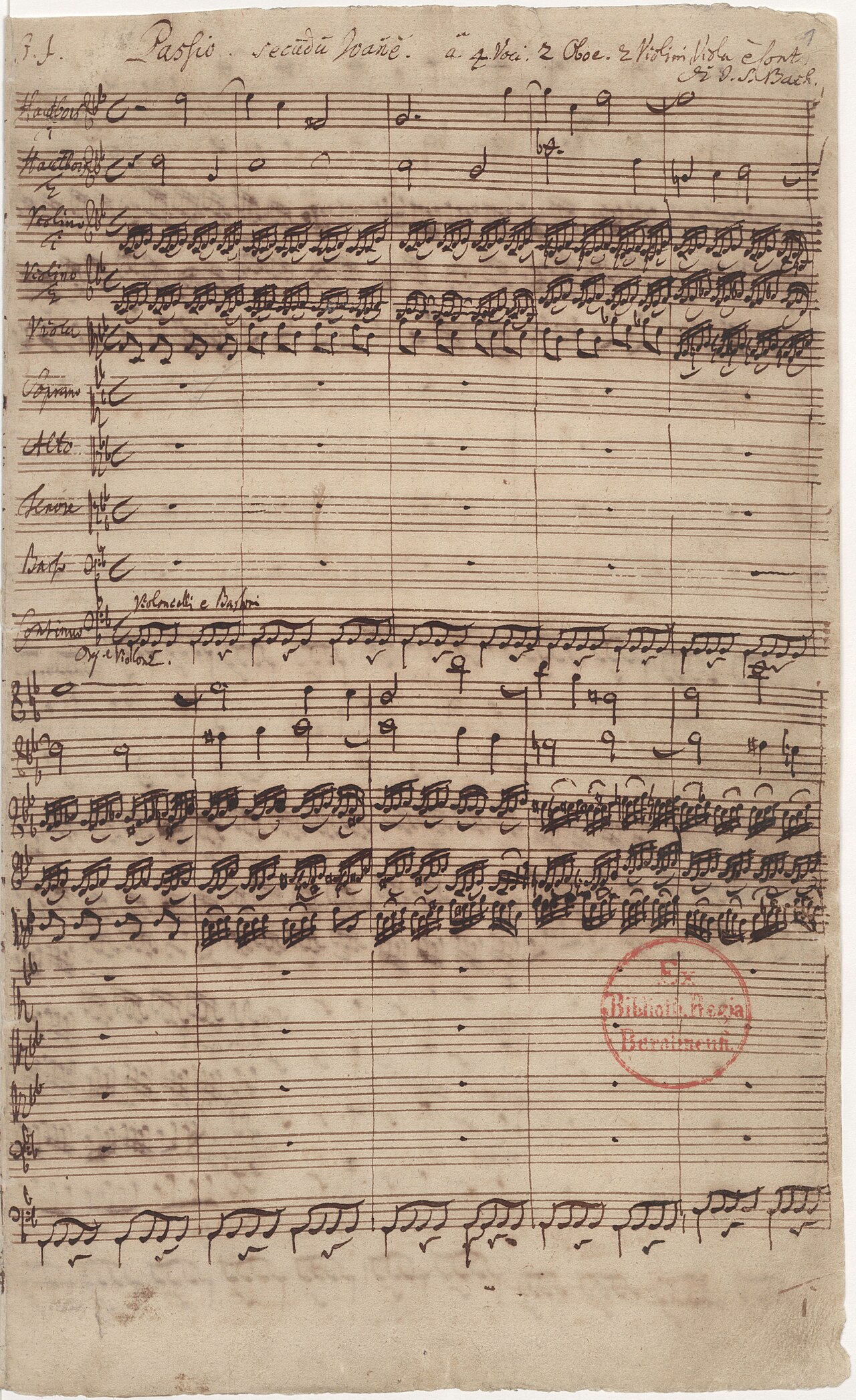
Handwritten manuscript score page of Bach's St John Passion in brown ink on aged paper, with a title at top reading Passio secundum Joannem, multiple staves of music, and a red circular library stamp reading Biblioteca Regia Berolinensis.Book

Primary source

St John Passion

Johann Sebastian Bach · 1724, revised 1725-1749

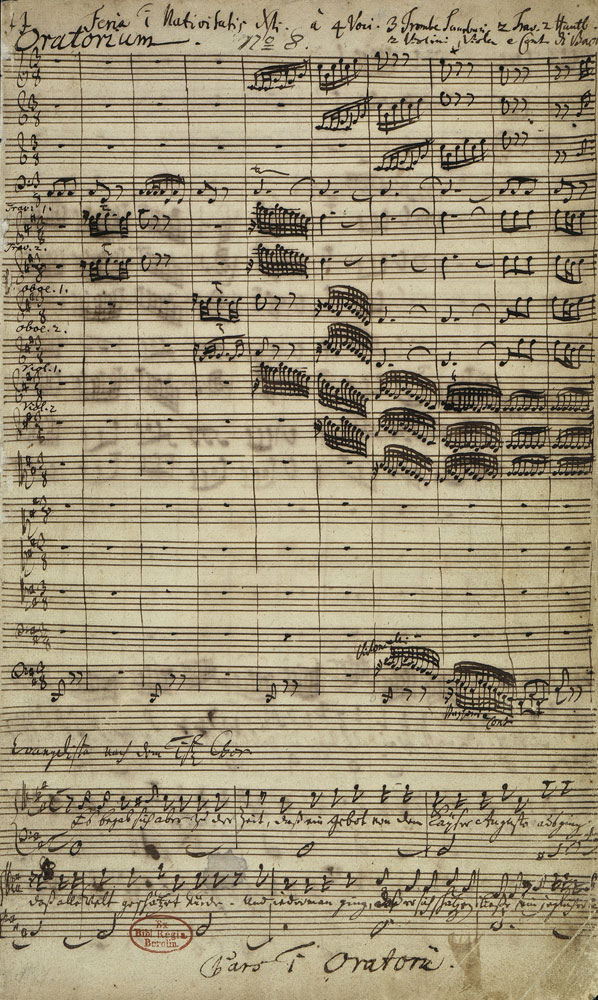
Handwritten manuscript score page in brown ink on aged paper, titled 'Oratorium' at top, with multiple staves for voices and instruments, the heading 'Festo Nativitatis' and '4 Voci' visible, and 'Coro' and 'Parte I' written at the bottom, with a Berlin library stamp.Book

Primary source

Christmas Oratorio

Johann Sebastian Bach · 1734-35

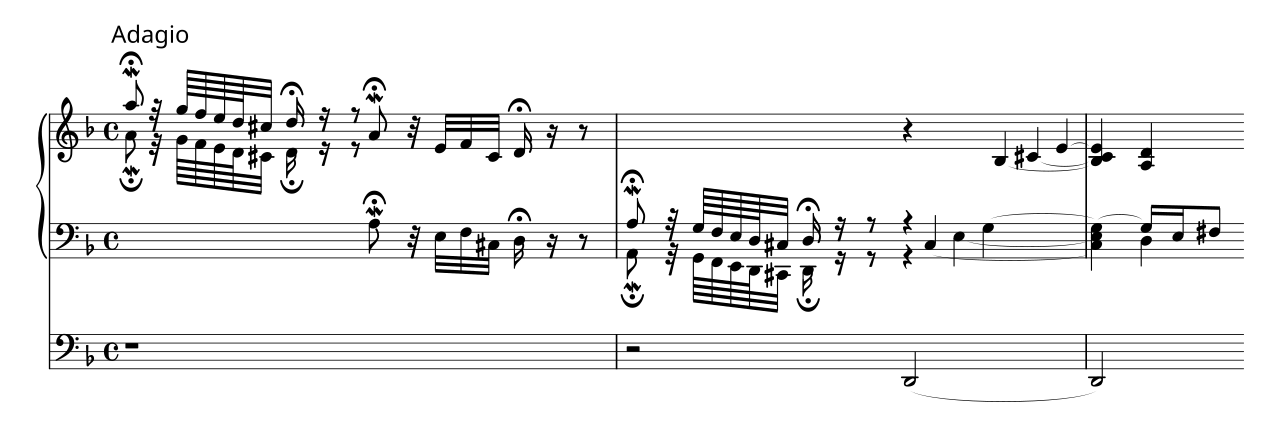
Musical score excerpt marked Adagio, showing the opening of the Toccata in D minor for organ: two upper staves with ornamented melodic runs and trills, a lower staff for the left hand, and a bottom bass staff for the pedal with sustained notes.Book

Secondary source

Toccata and Fugue in D minor, BWV 565

Johann Sebastian Bach (attributed) · c. 1704-1750s

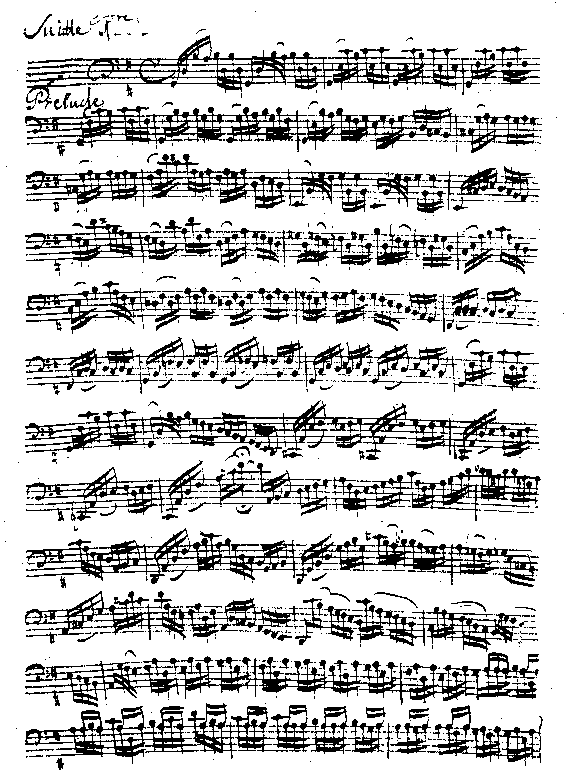
Scan of a handwritten or engraved page of music for cello, with the heading 'Prelude' and the word 'Suite' at top left. It has about twelve staves of dense sixteenth-note passages in bass clef, with slurs and grace marks.Book

Primary source

Cello Suites

Johann Sebastian Bach · c. 1717-1723

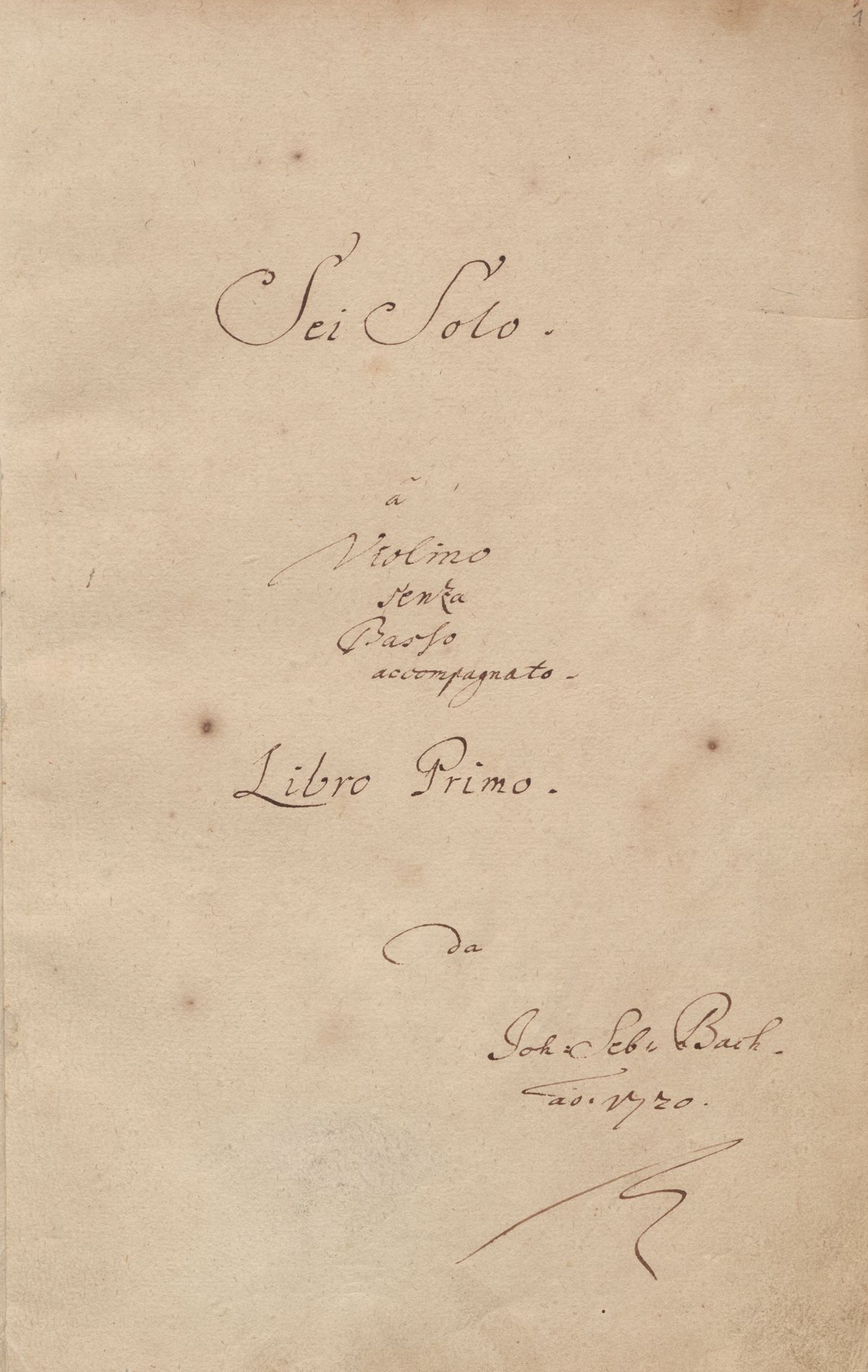
Handwritten title page in brown ink on aged paper reading 'Sei Solo a Violino senza Basso accompagnato Libro Primo. Da Joh. Seb. Bach, A. 1720', with a flourish signature at lower right.Book

Primary source

Sonatas and Partitas for Solo Violin

Johann Sebastian Bach · 1720

Oil painting of a man in a powdered white wig and dark coat with gold buttons, white cravat and cuffs, holding a sheet of handwritten music in his right hand against a dark background.Painting

Primary source

Portrait of Johann Sebastian Bach

Elias Gottlob Haussmann · 1748

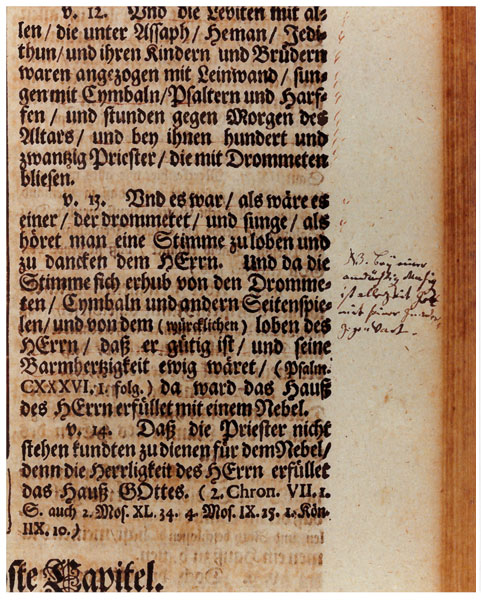
Scan of a page from the Calov Bible annotated by Johann Sebastian Bach, showing German text of 2 Chronicles 5 in Gothic type with handwritten marginal notes in brown ink at the right edge.Artifact

Primary source

Bach's Calov Bible

Martin Luther; Abraham Calov; Johann Sebastian Bach

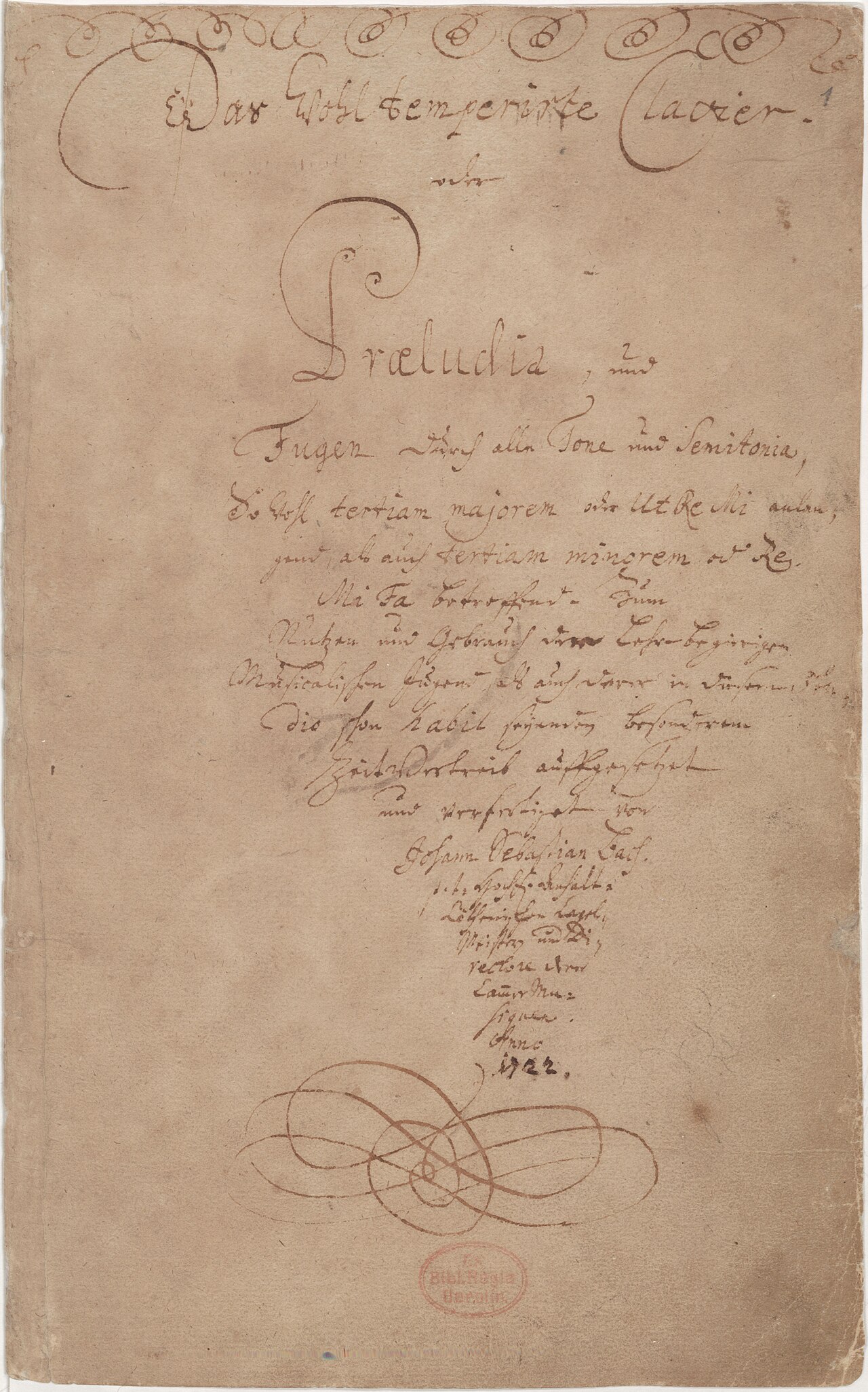
Handwritten title page in brown ink on aged paper: 'Das Wohl temperirte Clavier oder Præludia, und Fugen durch alle Tone und Semitonia' with a decorative flourish, a list of text lines, the signature Johann Sebastian Bach, and the date 1722, plus a red library stamp at bottom.Book

Primary source

Title Page of the Well-Tempered Clavier, Book I

Johann Sebastian Bach · 1722

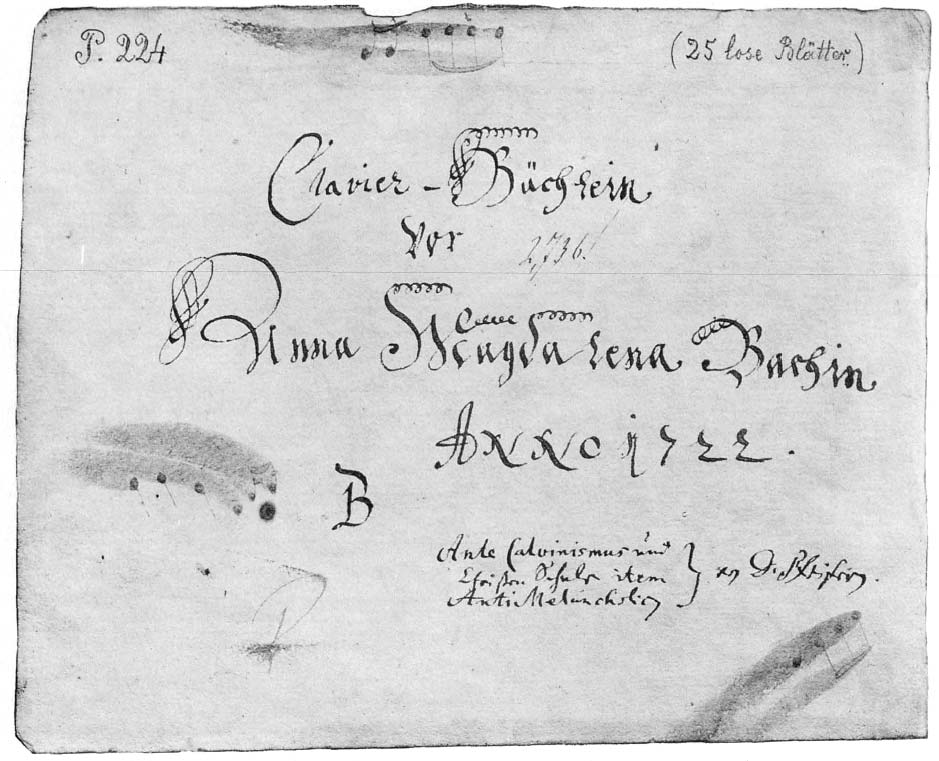
Scan of the cover page of a handwritten notebook. Ornate German script reads 'Clavier-Büchlein vor Anna Magdalena Bachin' with the date 1725 and a Roman numeral. Smaller notes at lower right and a faint library marking 'P. 224 (25 lose Blätter)' at top.Book

Primary source

Notebook for Anna Magdalena Bach

Johann Sebastian Bach · 1722 and 1725

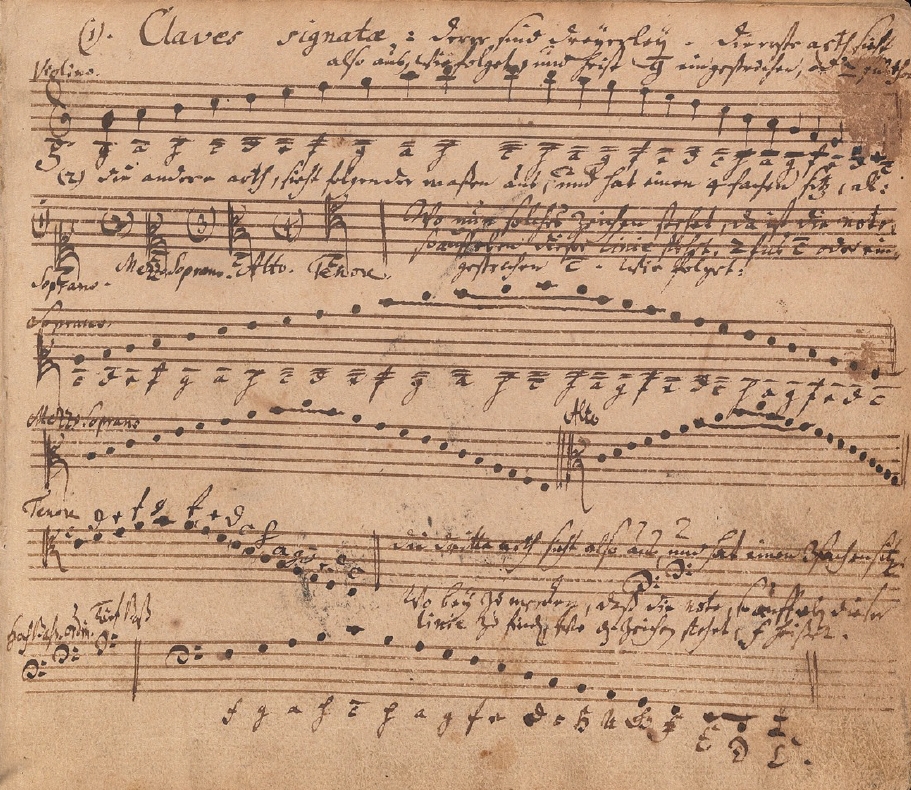
Handwritten manuscript page in brown ink on aged paper, headed 'Claves signatae' with music staves for voices labeled Violino, Soprano, Alto, Tenore, Basso, and handwritten German text explaining clefs and their placement.Book

Primary source

Klavierbüchlein für Wilhelm Friedemann Bach

Johann Sebastian Bach · begun 1720

Black-and-white scan of a handwritten 18th-century German document in ornate script, a funeral announcement dated 31 July 1750 naming Johann Sebastian Bach, Royal Polish and Electoral Saxon Kapellmeister and Cantor of St. Thomas School in Leipzig.Document

Primary source

Bach Abkündigung 1750

31 July 1750

Black and white ornamental emblem with a crown on top, a central interlaced monogram flanked by two symmetrical scrolling flourish designs with curls and leaf-like tails.Artifact

Primary source

Seal of Johann Sebastian Bach

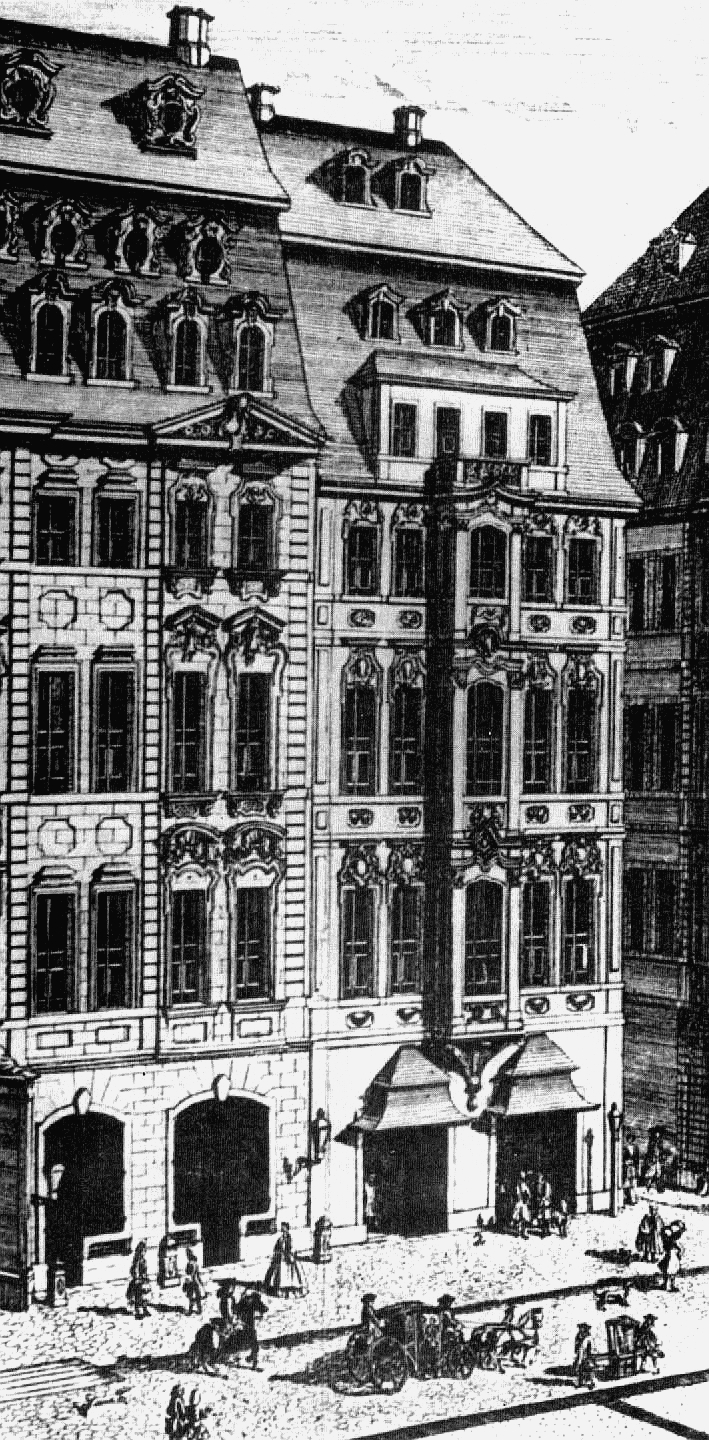
Black and white engraving of a multi-story Baroque-style building facade with ornate dormers, arched ground-floor entrances, a hanging sign with an eagle, and street scene with pedestrians, a horse-drawn carriage, and a sedan chair.Artifact

Secondary source

Zimmermannsches Caffeehaus

Johann Georg Schreiber

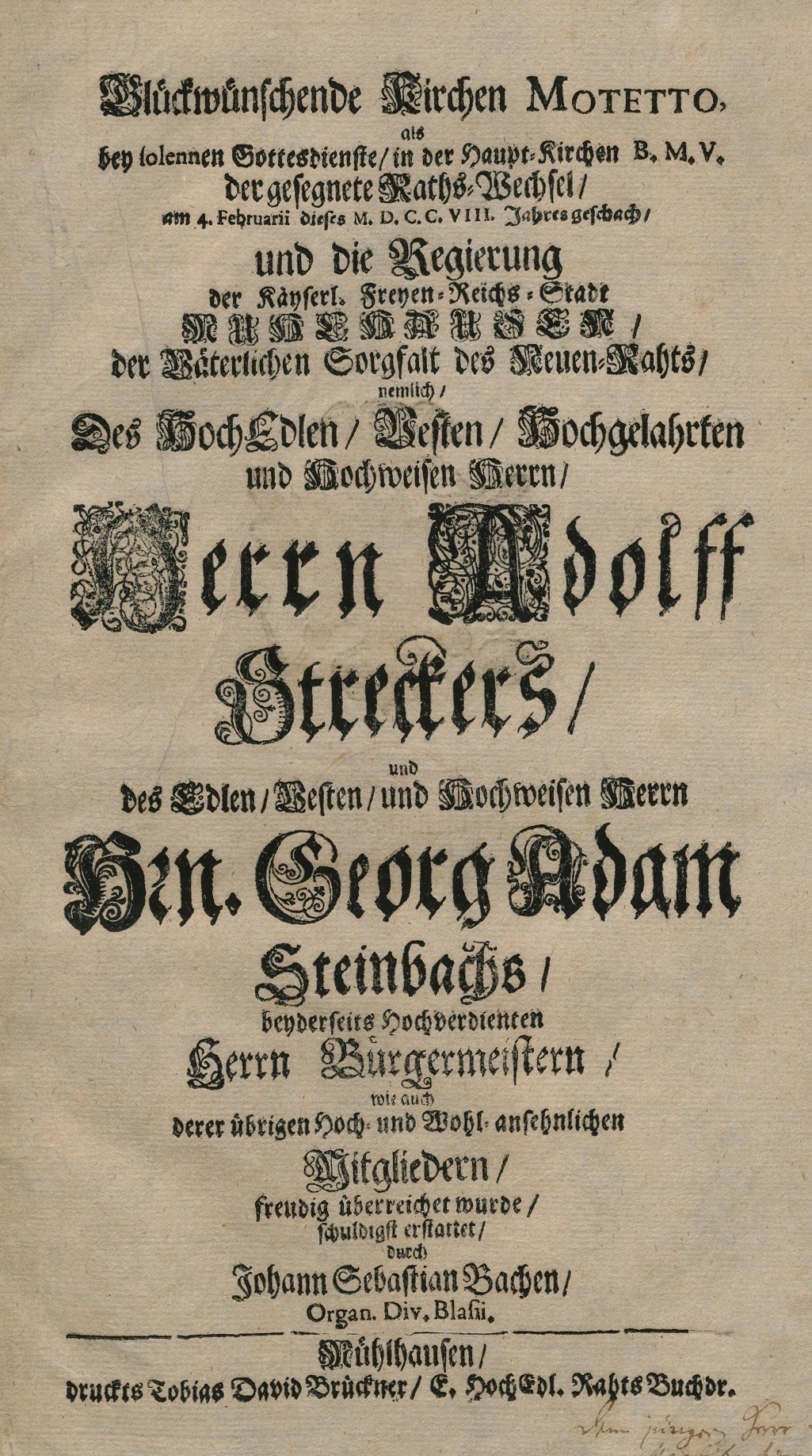
Title page of the 1708 original printed edition of the motet Gott ist mein König, BWV 71, in black Fraktur type on aged paper. The long dedicatory heading praises a council change in Mühlhausen on 4 February 1708 and names council members Adolff Strecker and Georg Adam Steinbach, with the composer Johann Sebastian Bachen named. Printed in Mühlhausen by Tobias David Brückner. Handwritten note in the bottom right corner.Document

Primary source

Gott ist mein König, BWV 71

Johann Sebastian Bach · 1708

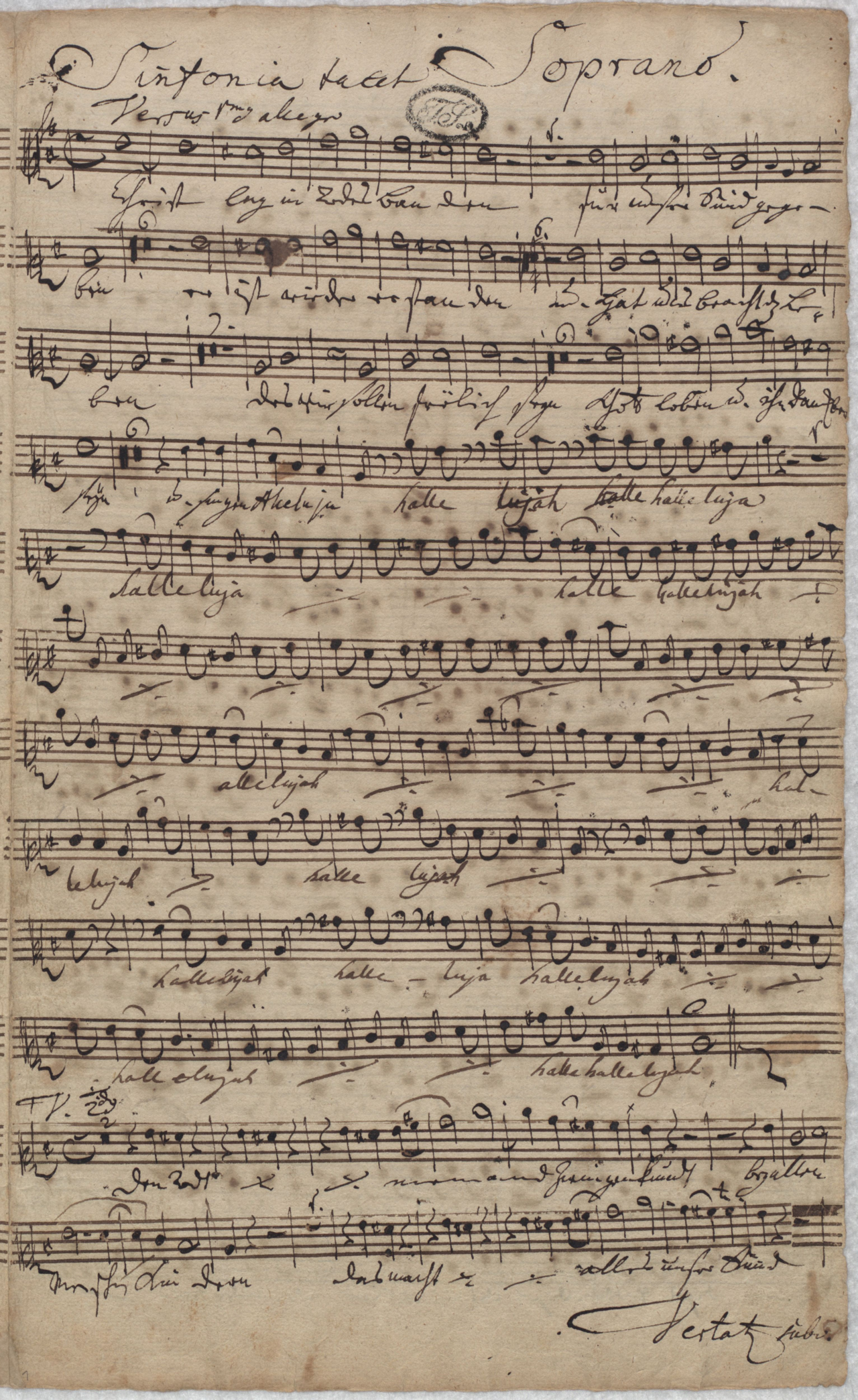
Handwritten manuscript page of sheet music in brown ink on aged paper, titled 'Sinfonia' with 'Soprano' at top right. Several staves of notes with German text written underneath, and a signature at the bottom right.Document

Primary source

Christ lag in Todes Banden, BWV 4

Johann Sebastian Bach · 1708

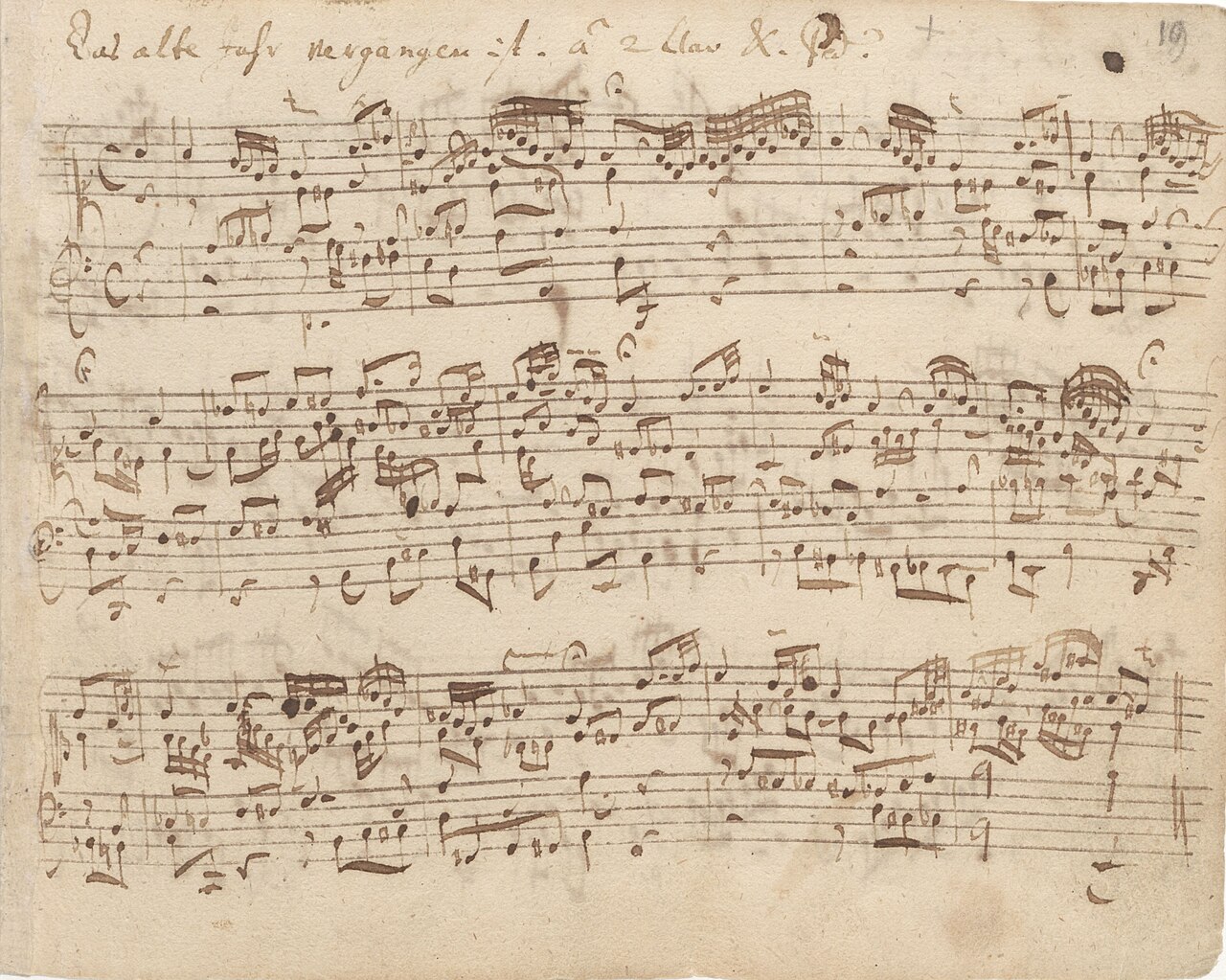
Handwritten manuscript page of brown-ink music notation on aged paper, with three staves of an organ chorale. Title at top reads 'Das alte Jahr vergangen ist' with the page number 10 at upper right.Document

Primary source

Orgelbüchlein

Johann Sebastian Bach · 1708-1717, with later additions

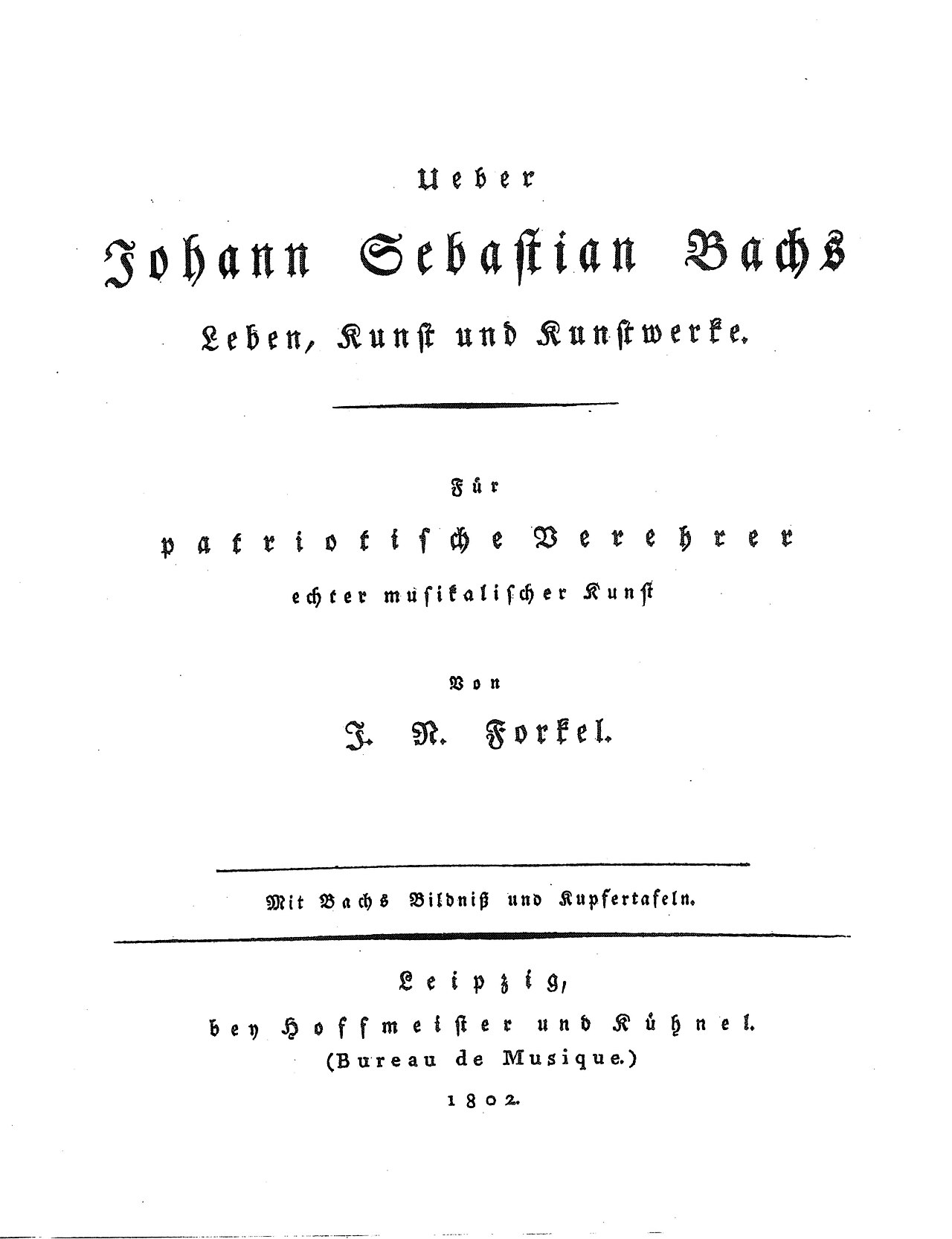
Title page of Forkel's 1802 book in black Fraktur type: 'Ueber Johann Sebastian Bachs Leben, Kunst und Kunstwerke. Für patriotische Verehrer echter musikalischer Kunst. Von J. N. Forkel. Mit Bachs Bildniß und Kupfertafeln. Leipzig, bey Hoffmeister und Kühnel (Bureau de Musique) 1802.'Book

Secondary source

Johann Sebastian Bach: His Life, Art, and Work

Johann Nikolaus Forkel · 1802

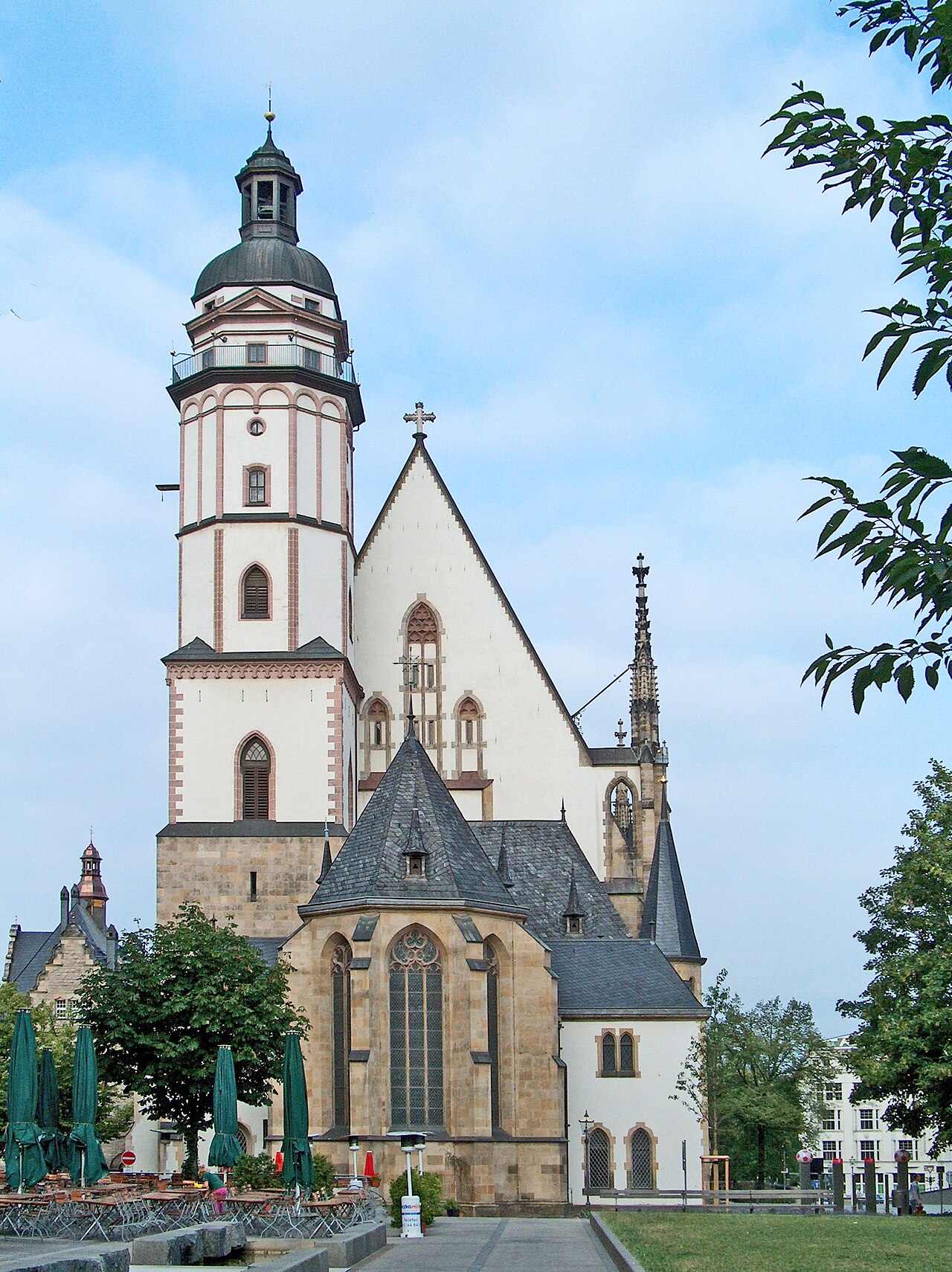
Exterior of St. Thomas Church in Leipzig: a tall white tower with a dome and cross-topped spire, a steep gabled nave with Gothic windows, a slate-roofed apse, and green umbrellas over outdoor café tables in front, under a blue sky.Artifact

Secondary source

St. Thomas Church

1401

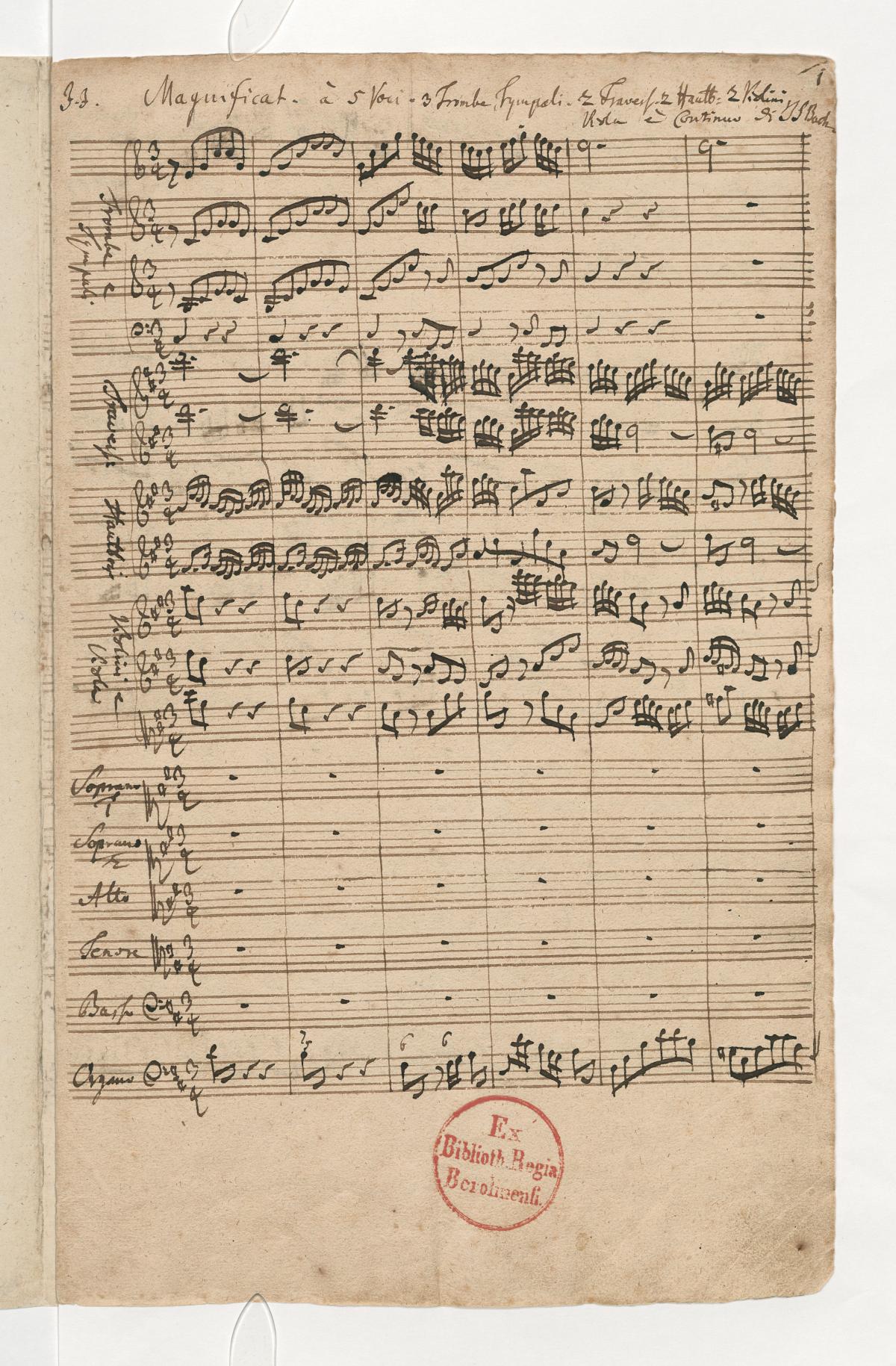
Handwritten manuscript page of orchestral and vocal score in brown ink on aged paper, titled Magnificat for five voices with trumpets, timpani, flutes, oboes, strings and continuo. Multiple staves of notes, with a red circular library stamp at the bottom reading Bibliotheca Regia Berolinensis.Document

Primary source

Magnificat in D major, BWV 243

Johann Sebastian Bach · 1733

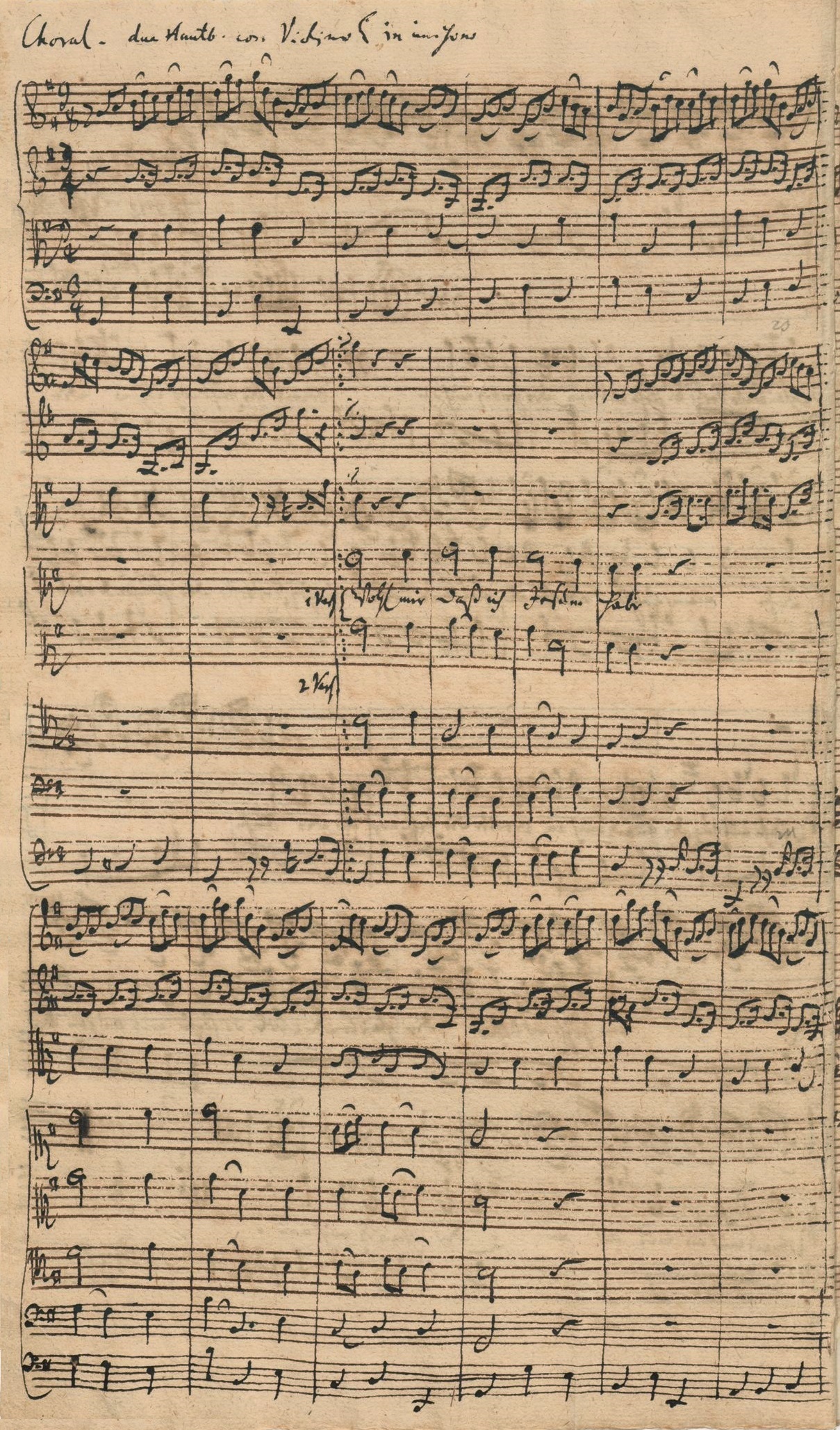
Handwritten manuscript score in ink on aged paper, with a heading at top left reading 'Choral' and a title in German. Multiple staves of music for orchestra and voices across several systems, with notes, rests, and bar lines in brown-black ink.Artifact

Primary source

Herz und Mund und Tat und Leben, BWV 147

Johann Sebastian Bach · 1723

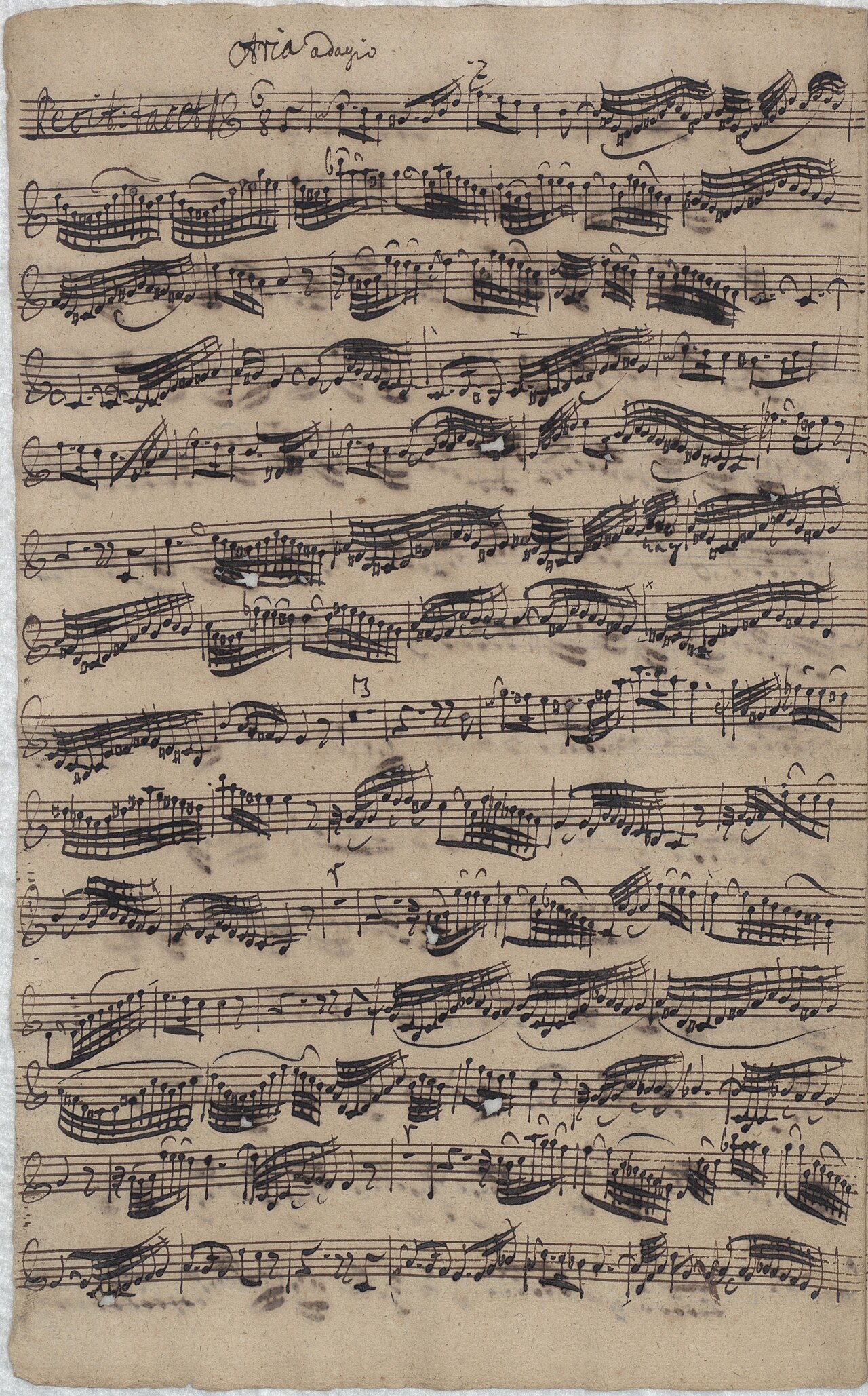
Handwritten manuscript page of music on aged, brownish paper, with ink staves and notes in dense rapid passages, and the heading 'Aria Adagio' written at the top left. Ink smudges and stains are visible across the page.Document

Primary source

Wachet auf, ruft uns die Stimme, BWV 140

Johann Sebastian Bach · 1731

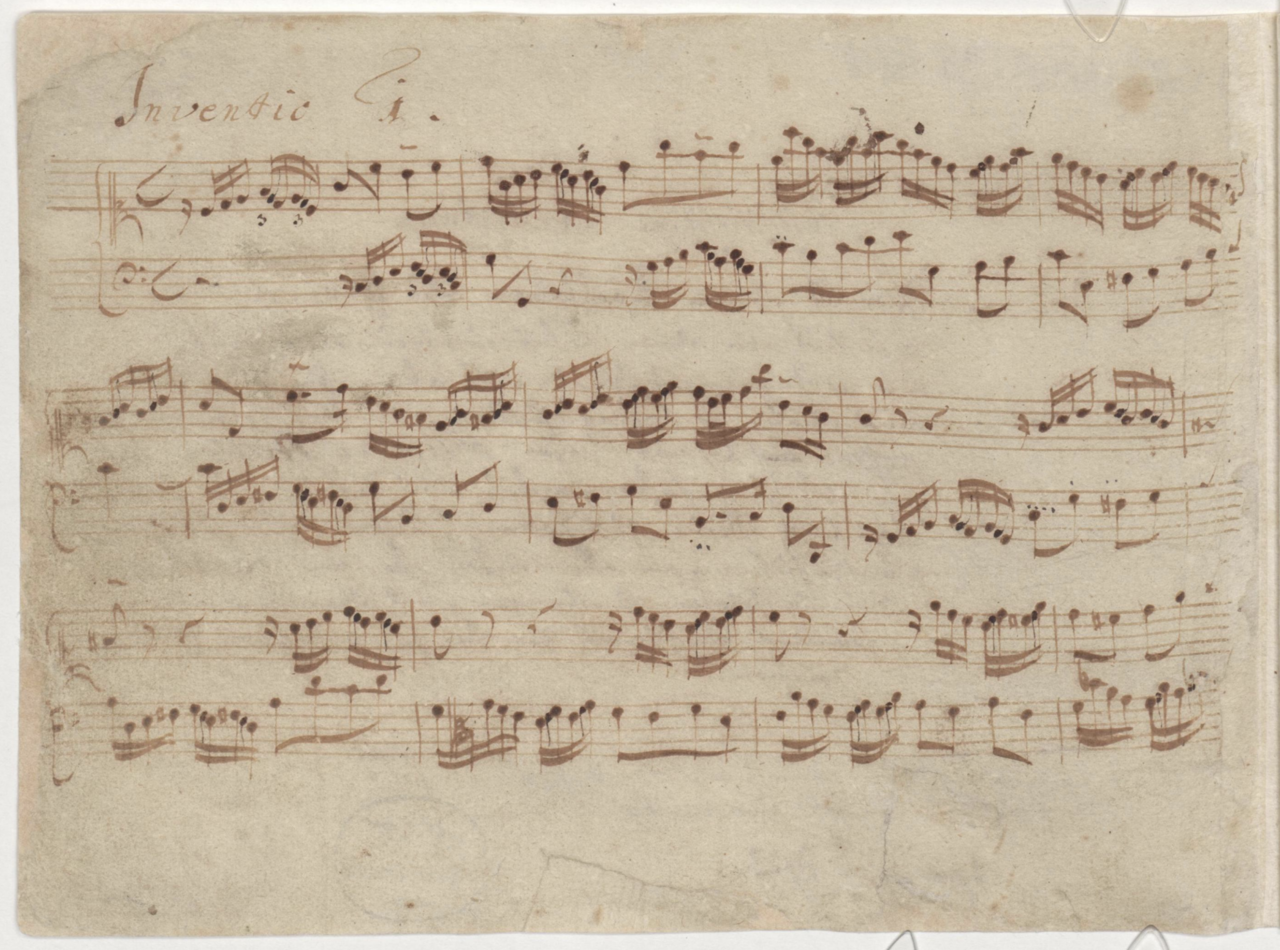
Handwritten manuscript music on aged paper in brown ink, with the heading 'Inventio 1' at top left. Five-line staves in two systems of several staves show notes, beams, and clef signs, the first page of a Bach invention.Book

Primary source

Inventions and Sinfonias

Johann Sebastian Bach · 1723

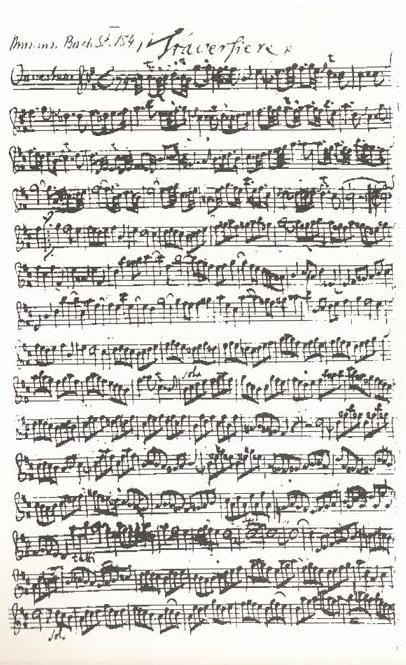
Handwritten manuscript page of flute music on many staves in dark ink. The top left has the inscription 'Joh. Seb. Bach' and the top right has the title 'Traversiere'.Document

Primary source

Orchestral Suites

Johann Sebastian Bach · 1724-1731

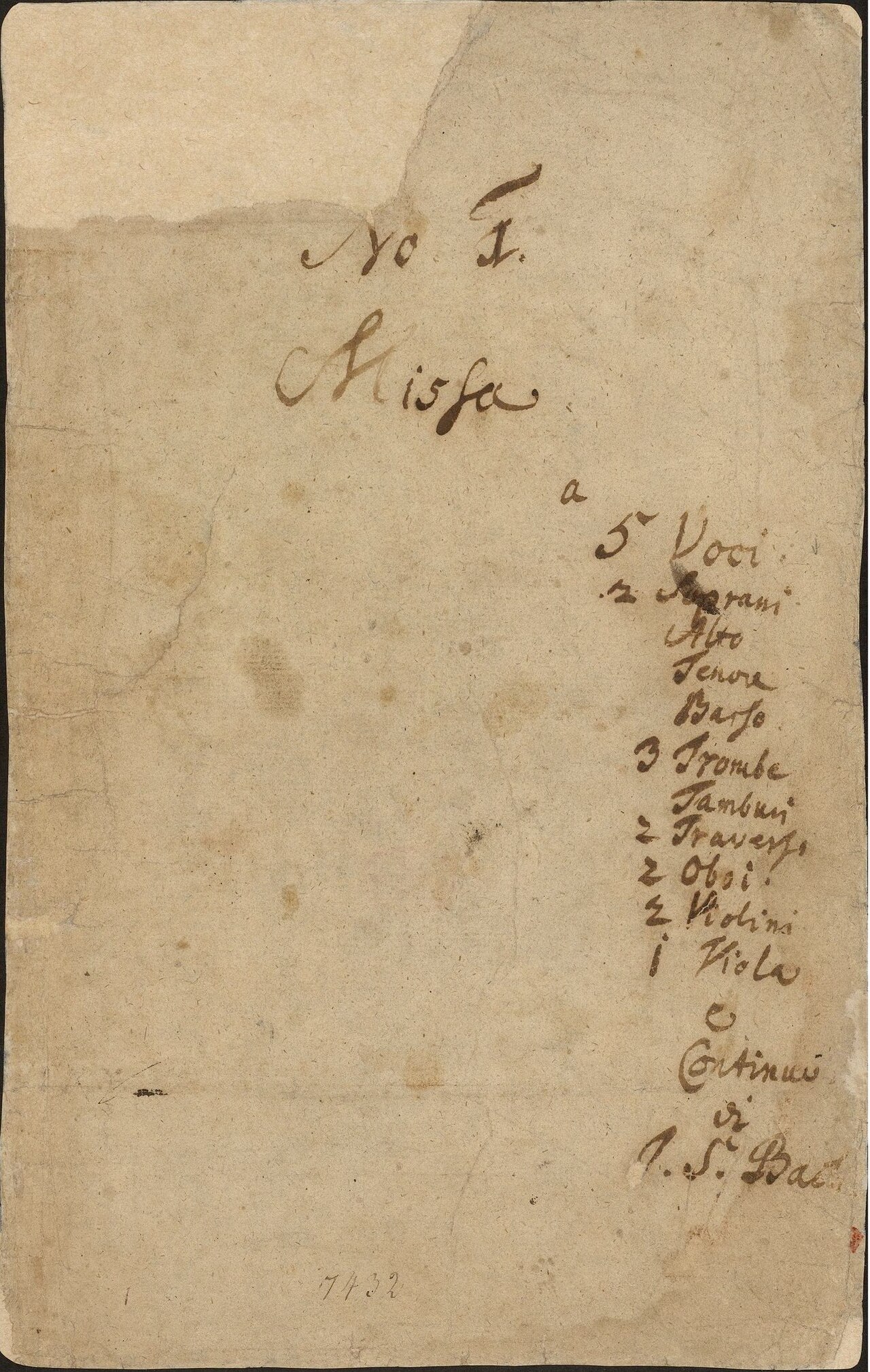
Aged, yellowed sheet of manuscript paper with handwritten brown ink: at top 'No. 1' and 'Missa', and a list of voices and instruments in the right half, including Voci, Soprano, Alto, Tenore, Basso, Trombe, Tamburi, Traverso, Oboi, Violini, Viola, and Continuo di J. S. Bach, with the number 7432 written at bottom.Document

Primary source

Title Page of the Missa, BWV 232

Johann Sebastian Bach · 1733

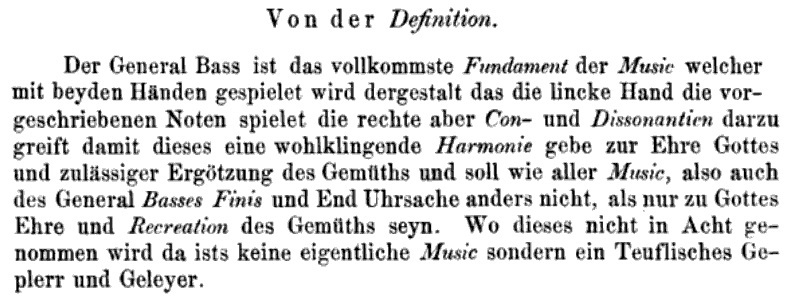
Printed page titled 'Von der Definition' in German black-letter-style serif type, setting out Bach's definition of thorough bass (General Bass) as music played with both hands for the glory of God and the recreation of the spirit.Document

Primary source

Bach's Definition of Thorough-Bass

Johann Sebastian Bach · 1738

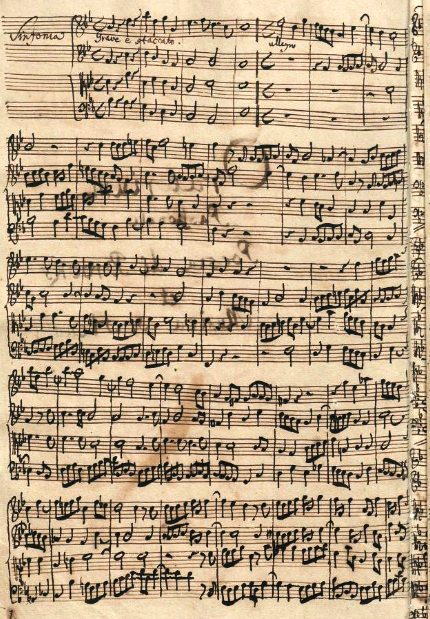
Scan of a handwritten manuscript page of hand-ruled music staves in ink on aged, yellowed paper. Multiple staves of notes and rests with a tempo marking near the top left reading 'Grave e staccato'. Brown stains are visible.Document

Primary source

Bach's Copy of Handel's Brockes Passion

Johann Sebastian Bach · 1746

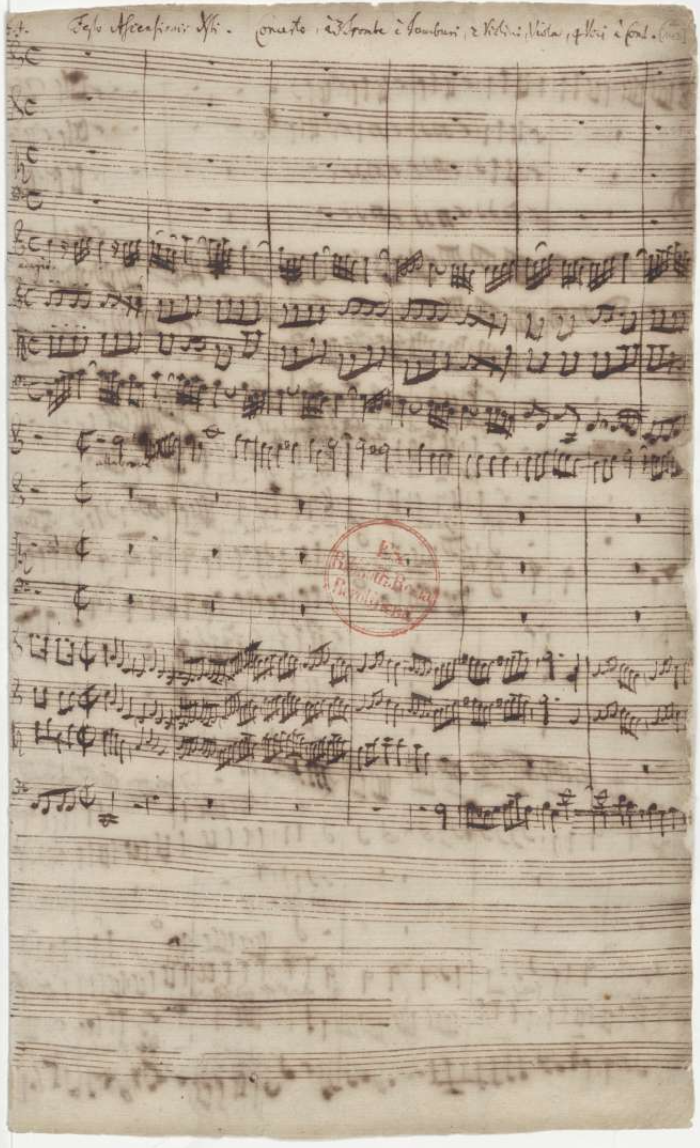
Handwritten manuscript music score on aged, yellowed paper with brown ink. Multiple staves of notes and ruled lines fill the page, with a faded title and inscription across the top and a red circular stamp near the center.Document

Primary source

Cantata 'Gott fähret auf mit Jauchzen', BWV 43

Johann Sebastian Bach

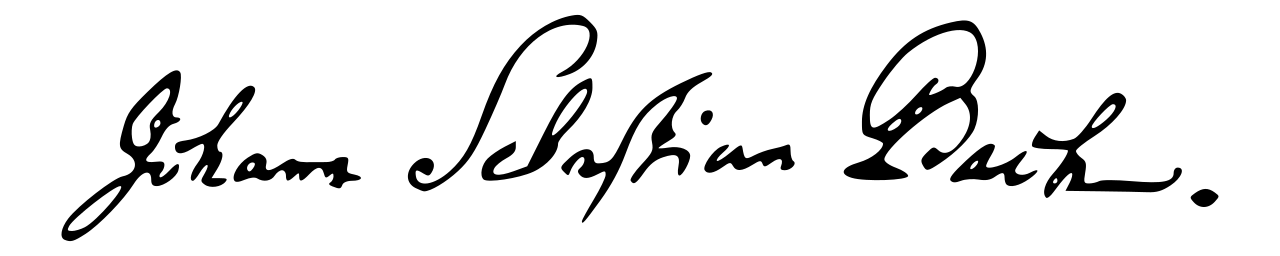
Black cursive handwritten signature reading 'Johann Sebastian Bach' with a period at the end, on a white background.Document

Primary source

Signature of Johann Sebastian Bach

Johann Sebastian Bach

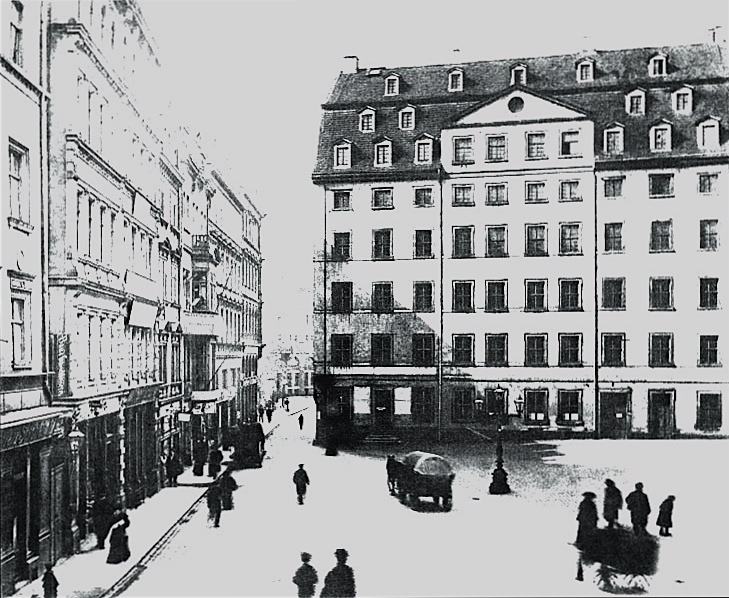
Black-and-white historical photograph of a city square with a row of multi-story buildings with many windows and dormers, horse-drawn carriage, and several pedestrians in long coats and hats on the cobbled street.Photograph

Secondary source

Bach's Apartment in the Thomasschule

Unknown author · before 1902

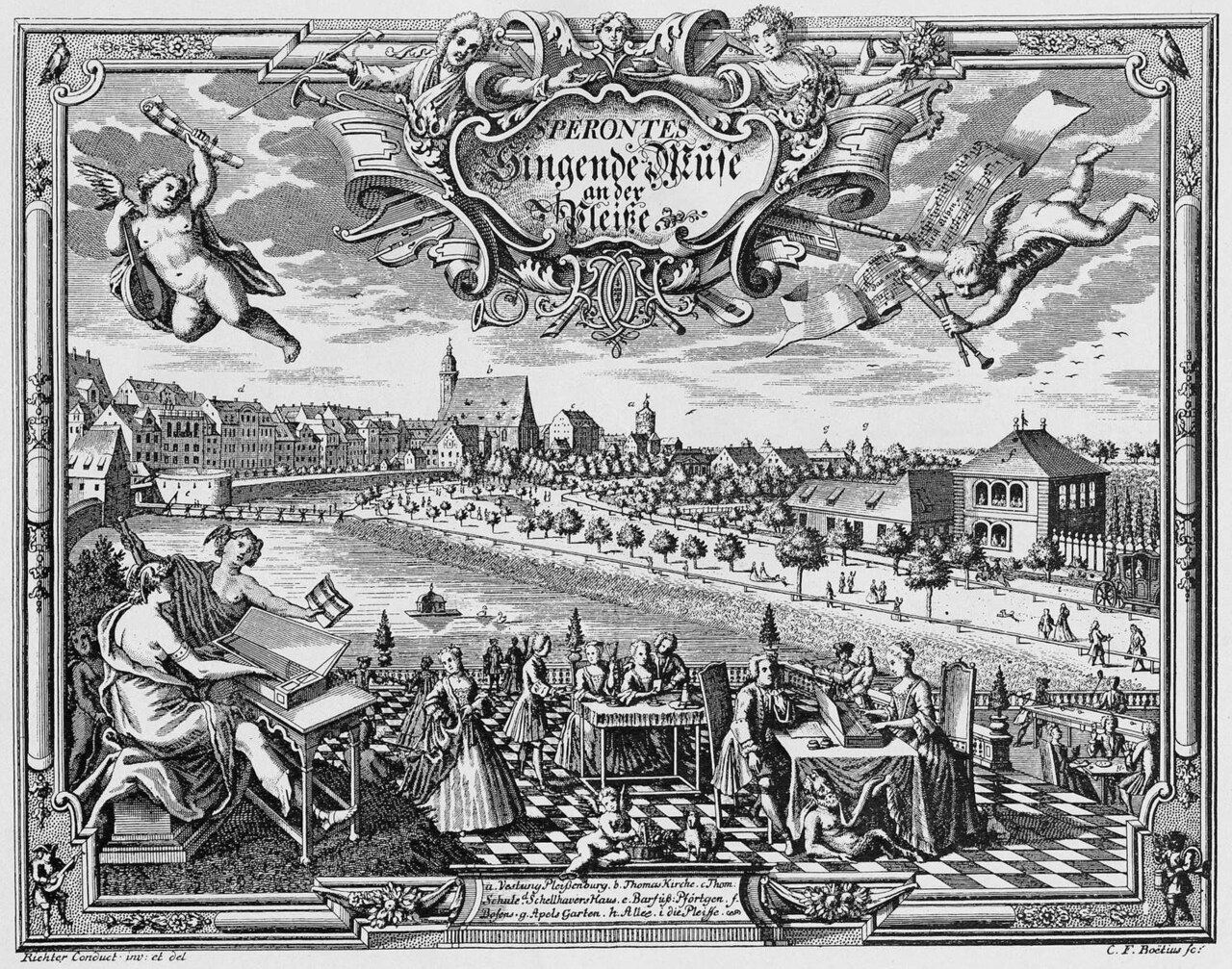
Black-and-white engraved title page with an ornate cartouche reading 'Singende Muse an der Pleiße' and 'Sperontes'. Winged putti hold scrolls and music. Below is a view of a river city with a church spire and rows of houses. In the foreground, people in period dress play music and talk on a checkered floor, and a seated woman writes at a table. Signed lower right 'C. F. Boetius fec.'Painting

Primary source

Singende Muse an der Pleiße Title Page

Christian Friedrich Boetius · 1736

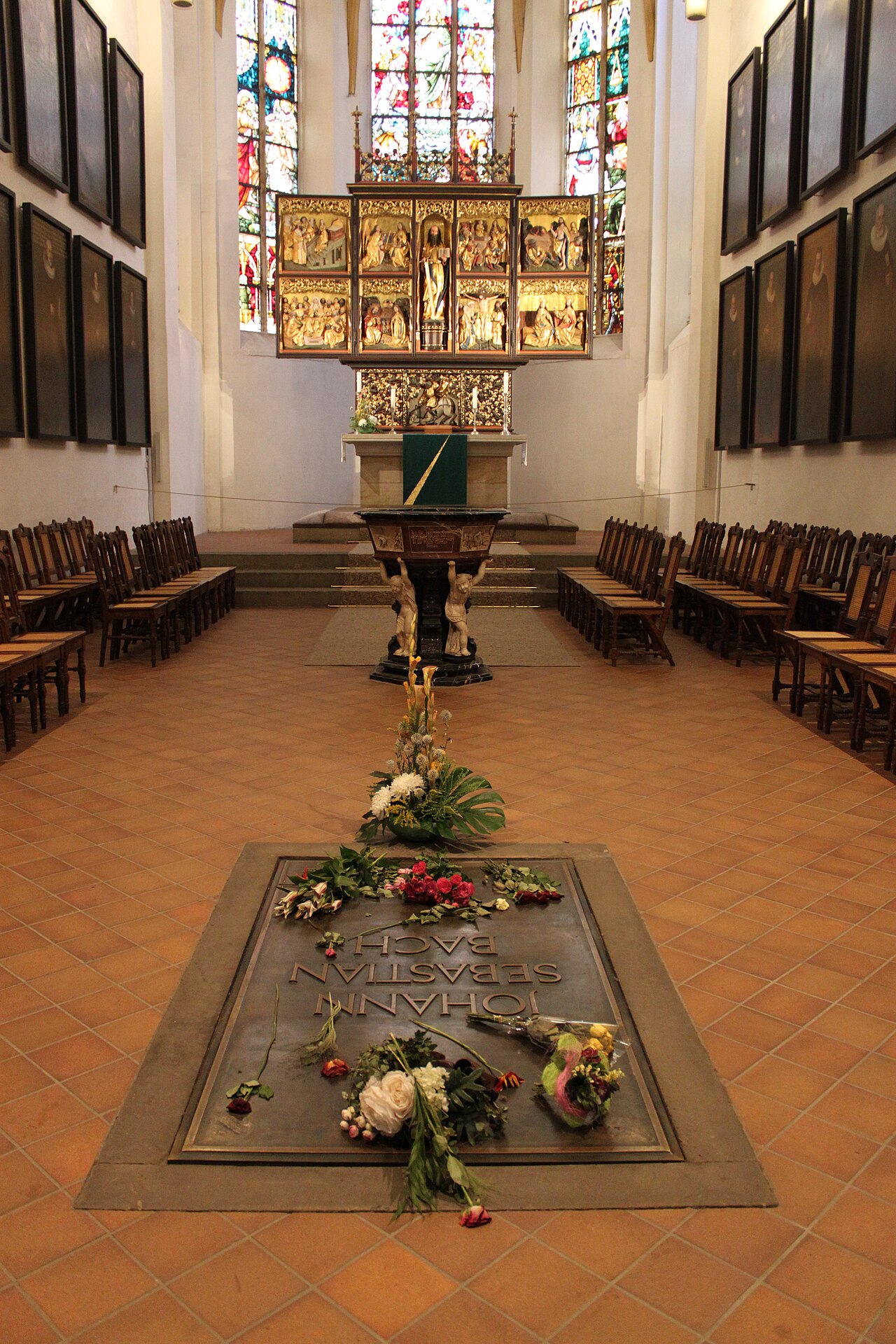
Interior of a church looking toward the altar. In the foreground a flat bronze grave slab inscribed JOHANN SEBASTIAN BACH lies on the tiled floor, covered with flowers and wreaths. Rows of wooden chairs line the nave, and tall stained glass windows and a carved wooden altarpiece stand at the far end.Photograph

Secondary source

Grave of Johann Sebastian Bach

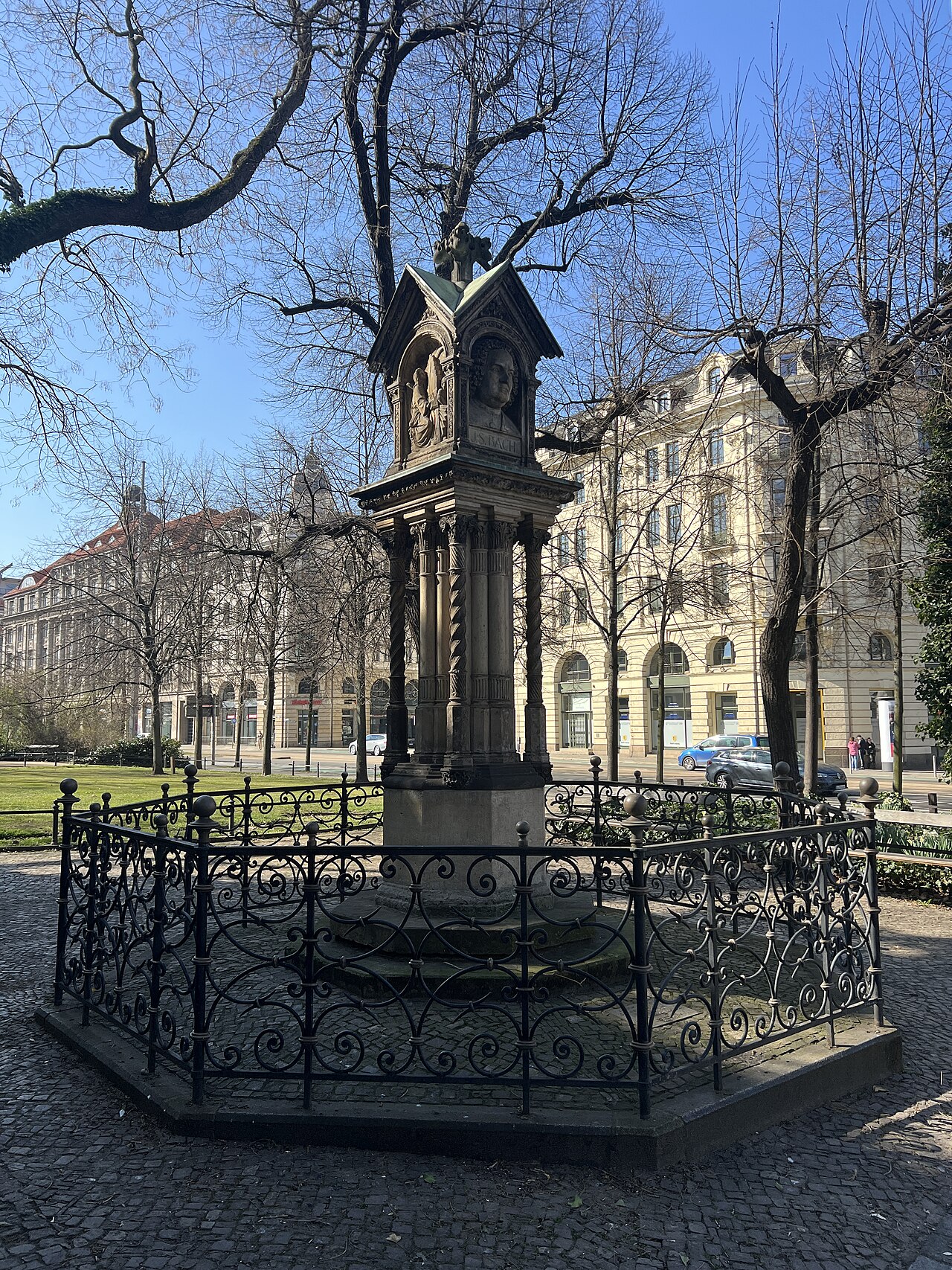
A tall, ornate dark stone monument with a pointed canopy and a carved bust in a medallion, set on a columned pedestal inside a black wrought-iron fence in a paved city square. Bare trees and historic buildings stand behind it under a blue sky.Sculpture

Secondary source

Old Bach Monument

Eduard Bendemann · 1843

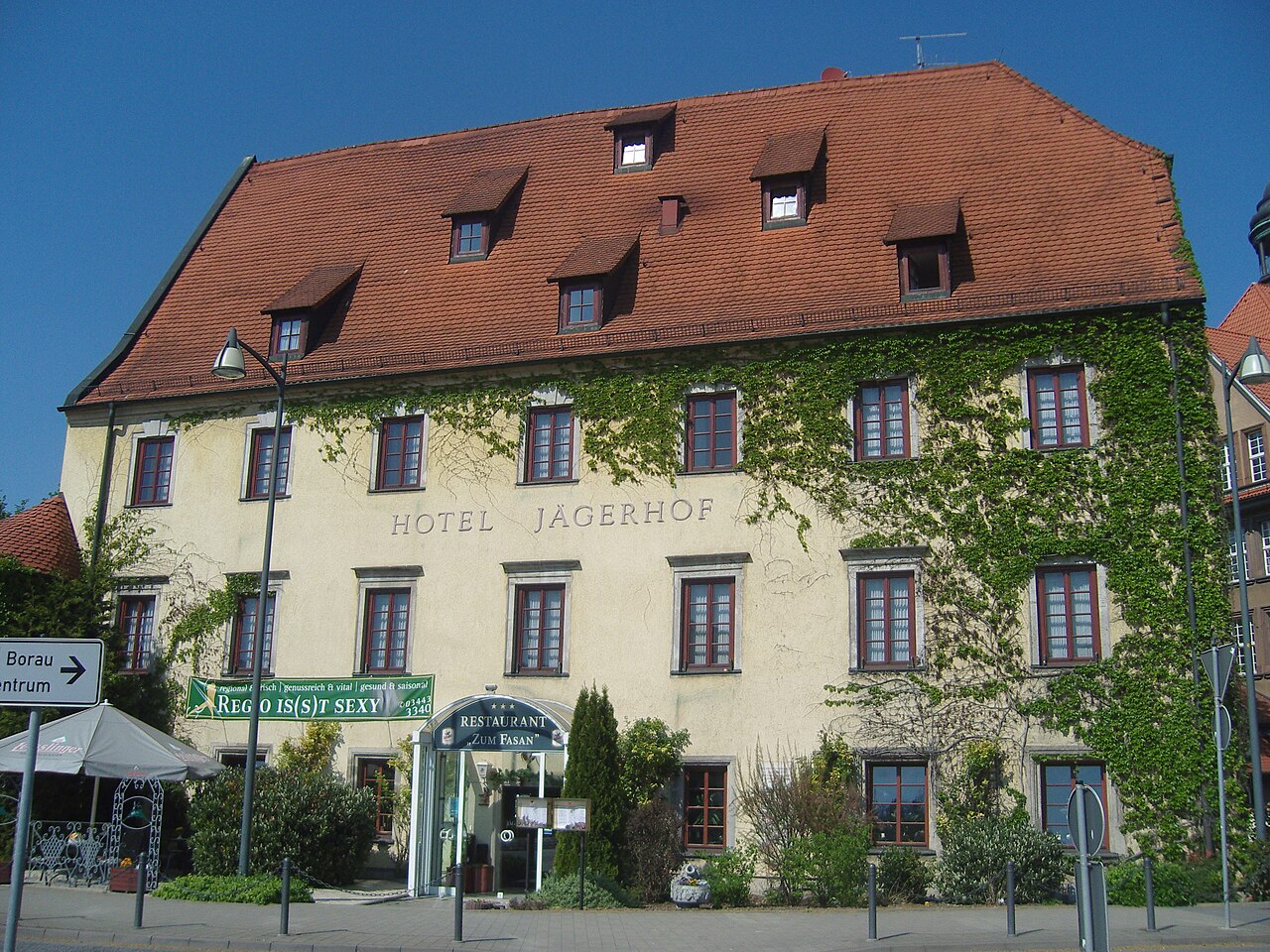
Three-story cream-colored building with a steep red tiled roof and dormer windows, covered in ivy, with the words HOTEL JÄGERHOF on its facade. A restaurant entrance labeled Zum Fasan and a green banner are at street level, with a white umbrella and a road sign on the left.Document

Primary source

Was mir behagt, ist nur die muntre Jagd (Hunting Cantata), BWV 208

Johann Sebastian Bach · 1713

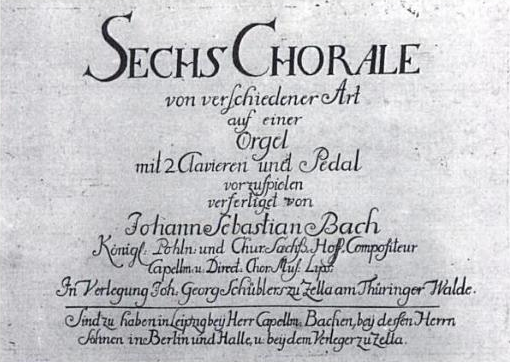
Title page of the Schübler Chorales in old German script, reading 'Sechs Choräle von verschiedener Art auf einer Orgel mit 2 Clavieren und Pedal vorzuspielen verfertiget von Johann Sebastian Bach', with publisher details below.Document

Primary source

Schübler Chorales

Johann Sebastian Bach · 1747-1748

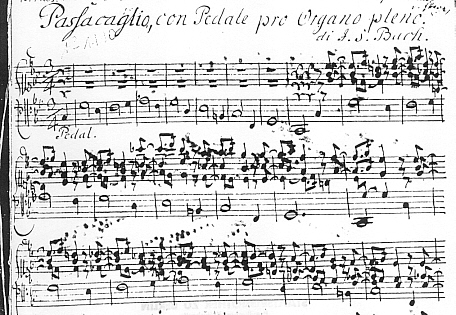
Handwritten manuscript music score on aged paper with the title 'Passacaglia con Pedale pro Organo pleno' and 'di J. S. Bach' written at top. Multiple staves of notes for organ, with a 'Pedal' label marking the pedal part.Document

Secondary source

Passacaglia and Fugue in C minor, BWV 582

Johann Sebastian Bach · c. 1706-1713

Book

Secondary source

Johann Sebastian Bach: His Work and Influence, Volume 1

Philipp Spitta · 1899

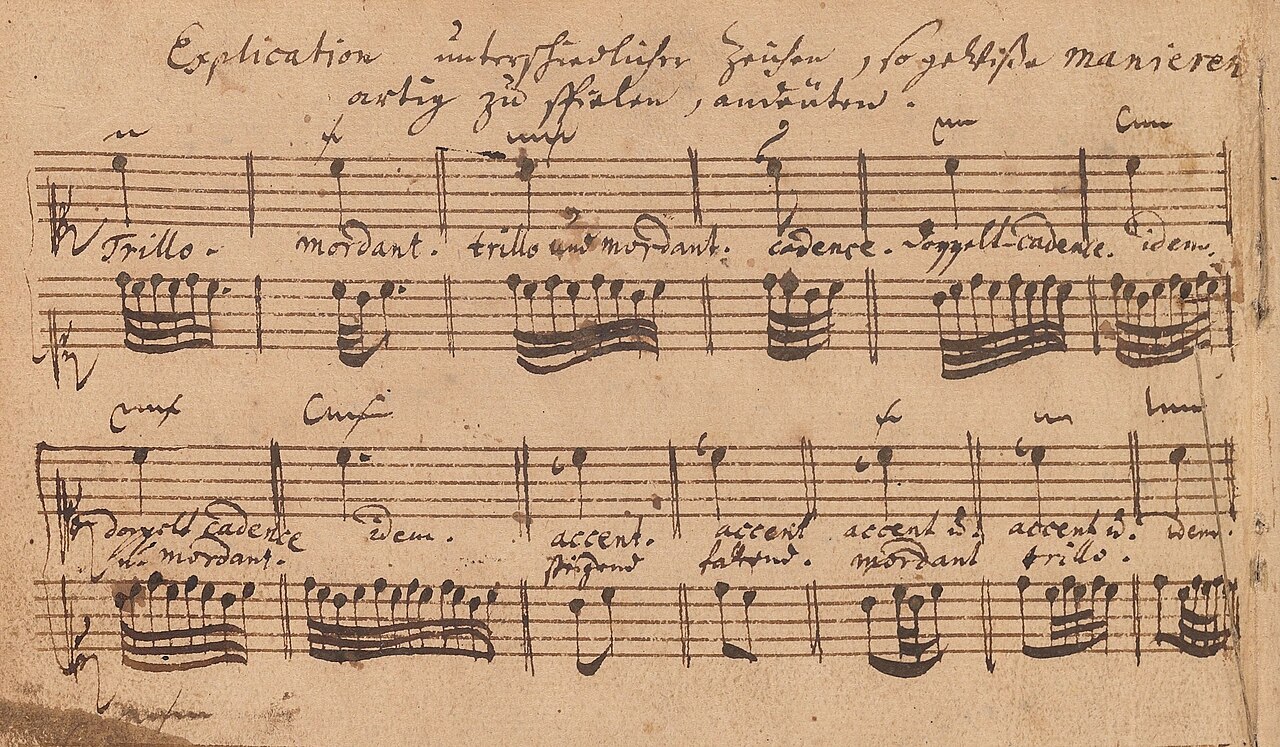
Handwritten manuscript page on aged paper with a heading in cursive script reading 'Explication' followed by text explaining ornaments. Below are two systems of music staves with handwritten ornament signs above notes, with labels in script such as 'Trillo', 'mordant', 'cadence', 'accent', and 'idem' written between the staves. The notation shows small ornament symbols and grouped notes in dark ink.Document

Primary source

Explanation of Ornaments from the Clavier-Büchlein for Wilhelm Friedemann Bach

Johann Sebastian Bach · 1720

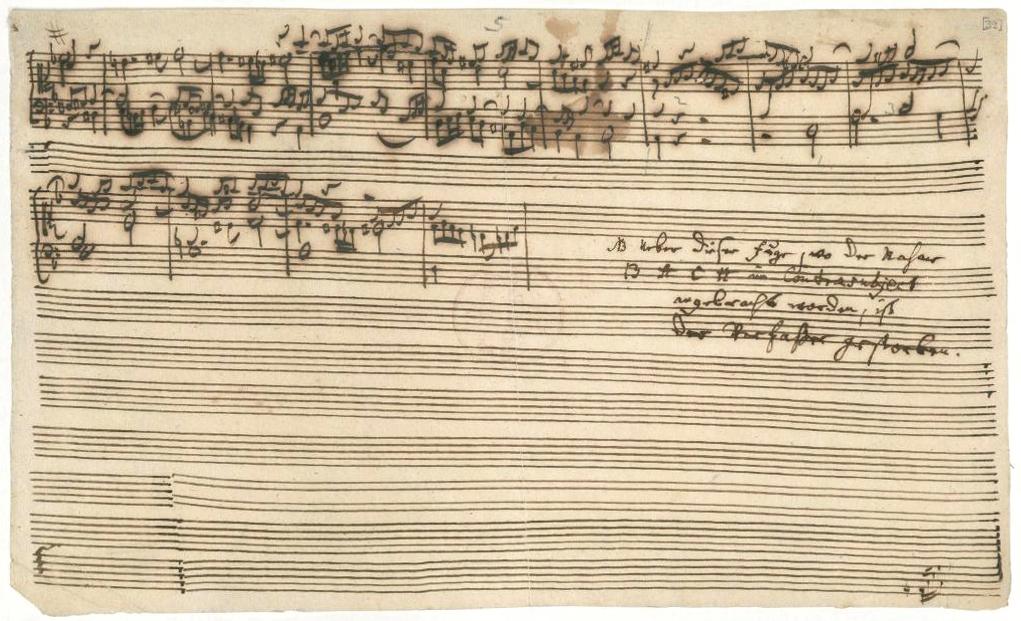
Handwritten manuscript page of music notation in ink on aged paper, with staves of notes at top and middle, and a handwritten German note in cursive at right, the last page of Bach's unfinished fugue.Document

Primary source

Last Page of the Unfinished Fuga a 3 Soggetti from The Art of Fugue

Johann Sebastian Bach · 1749

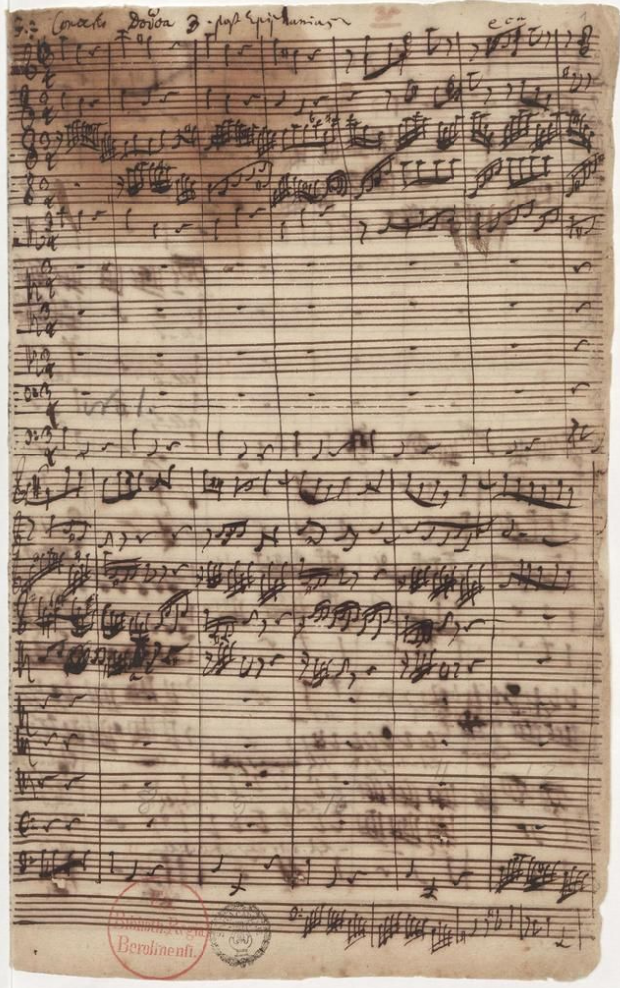
Handwritten manuscript music page on aged, stained paper with many staves of brown ink notation, a heading at top reading Coro Dorso/Festo... and a red and grey library stamp at bottom left.Document

Primary source

First Page of the Autograph Score of Alles nur nach Gottes Willen, BWV 72

Johann Sebastian Bach · 1726

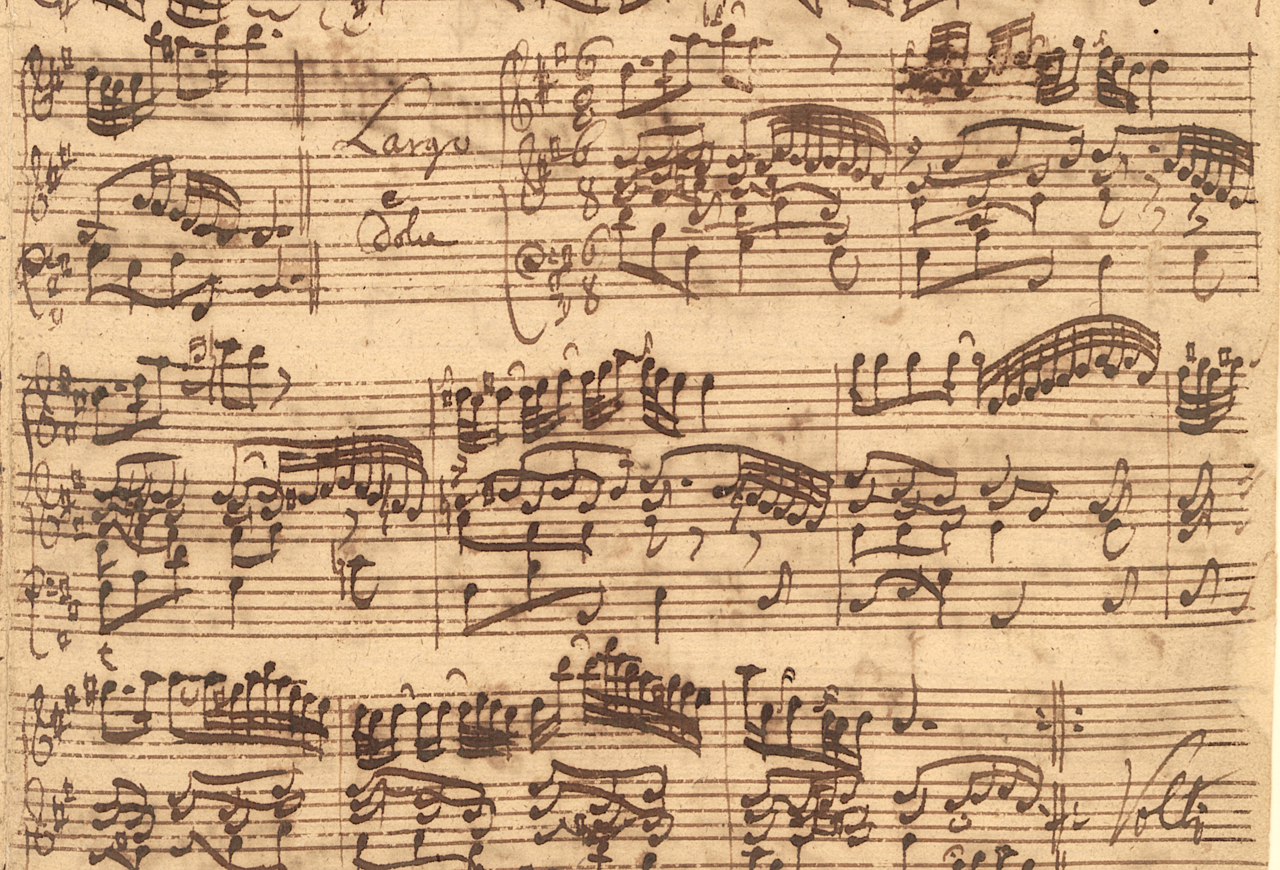
Handwritten manuscript music on aged yellowed paper in brown ink, showing multiple staves of a keyboard score with dense ornamented notation, slurs and beams, the word Largo and the word Dolce written between staves, and a Volti marking at lower right.Document

Primary source

Manuscript of the Adagio from the Flute Sonata BWV 1030

Johann Sebastian Bach · c. 1736

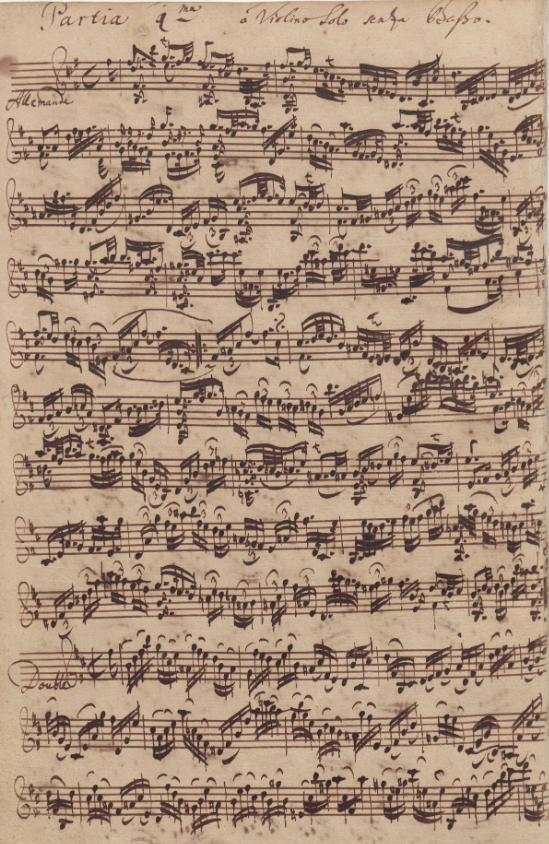
Handwritten manuscript music page on aged, brownish paper. Title at top reads 'Partita 1ma a Violino solo senza Basso' with 'Allemande' label below the first system. Dense brown-ink staves of violin music with notes, slurs and ornaments fill the page; 'Double' label appears lower down.Document

Primary source

Autograph Manuscript of Violin Partita No. 1, BWV 1002

Johann Sebastian Bach · 1720

J. S. Bach, le musicien-poèteBook

Secondary source

J. S. Bach, le musicien-poète

Albert Schweitzer · 1905

Letter

Secondary source

Letter on the Organ Music of Handel and J. S. Bach

Carl Philipp Emanuel Bach · 27 February 1788

Book

Secondary source

Bach

C. F. Abdy Williams

Book

Secondary source

Sebastian Bach

Reginald Lane Poole

Book

Secondary source

Johann Sebastian Bach: The Organist and His Works

André Pirro · 1902

Interview

Secondary source

J.S. Bach, Volume 2 (Schweitzer)

Albert Schweitzer

Interview

Secondary source

Johann Sebastian Bach by Herbert Peyser

Herbert Francis Peyser

Book

Secondary source

Johann Sebastian Bach: the Story of a Great Personality

C. H. H. Parry · 1909

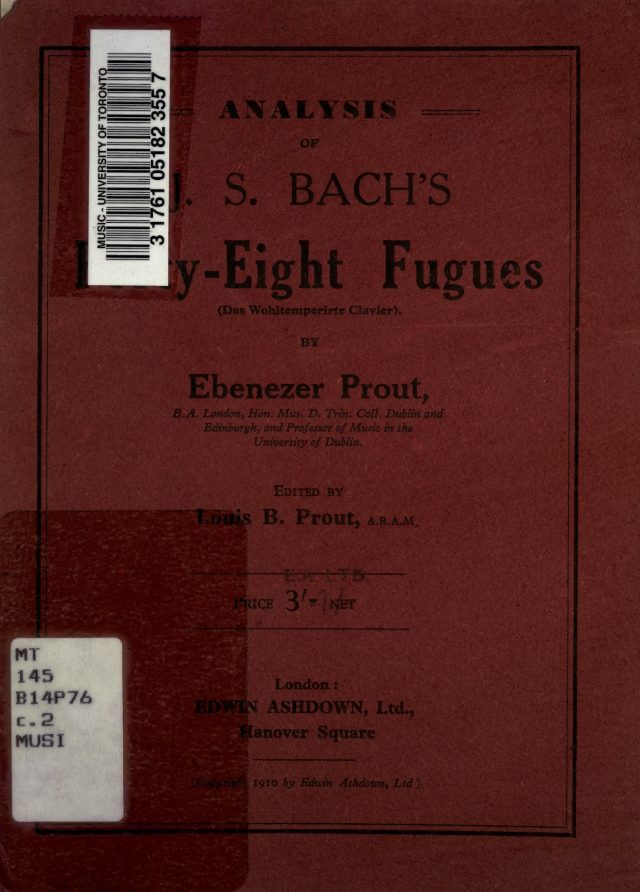
Analysis of J.S. Bach's Forty-Eight FuguesBook

Secondary source

Analysis of J.S. Bach's Forty-Eight Fugues

Ebenezer Prout · 1910

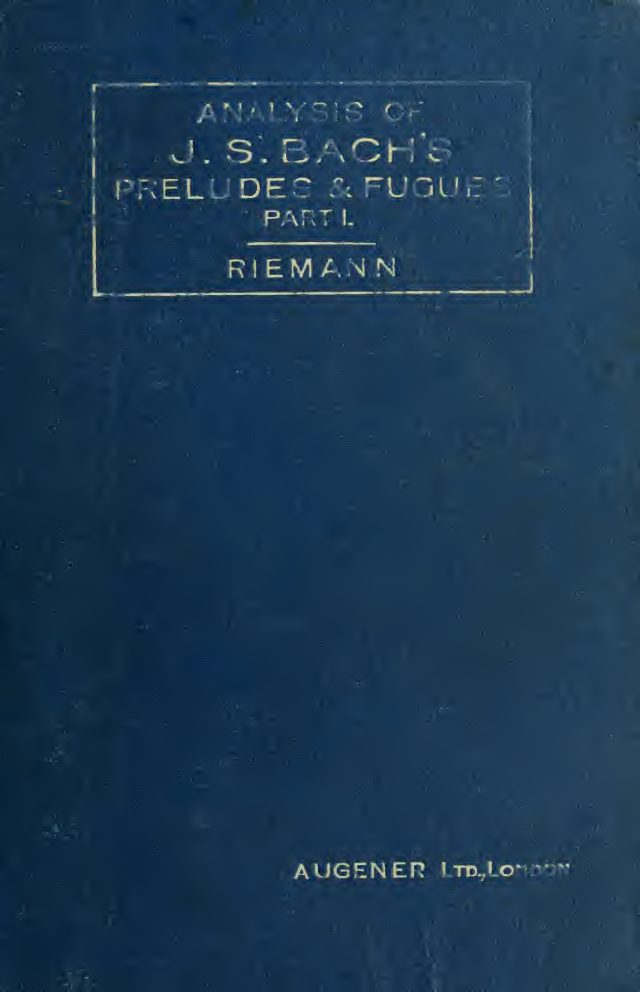
Analysis of J.S. Bach's Wohltemperirtes ClavierBook

Secondary source

Analysis of J.S. Bach's Wohltemperirtes Clavier

Hugo Riemann · 1893

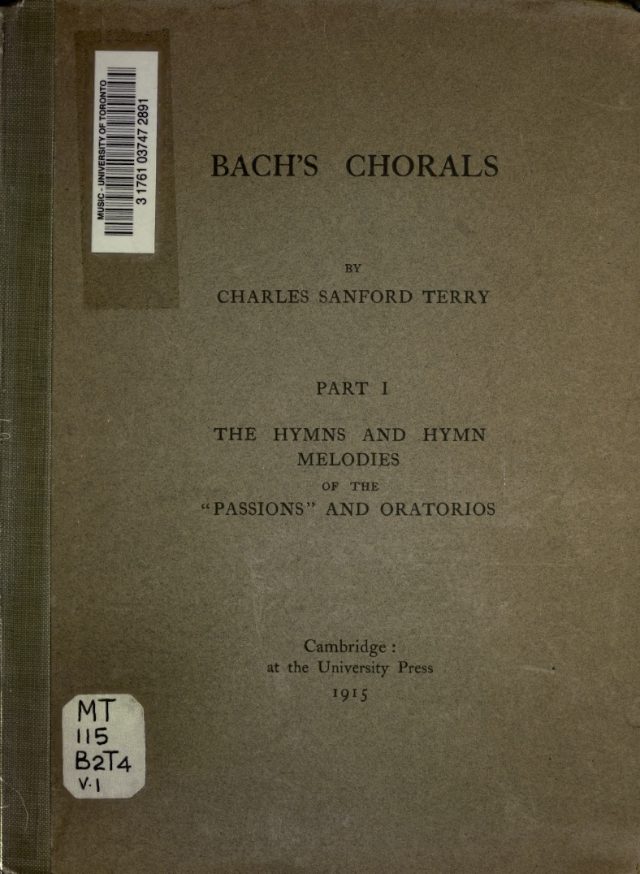
Bach's Chorals, Part 1Book

Secondary source

Bach's Chorals, Part 1

Charles Sanford Terry · 1915

Johann Sebastian Bach by Gunnar NorlénBook

Secondary source

Johann Sebastian Bach by Gunnar Norlén

Gunnar Norlén · 1922

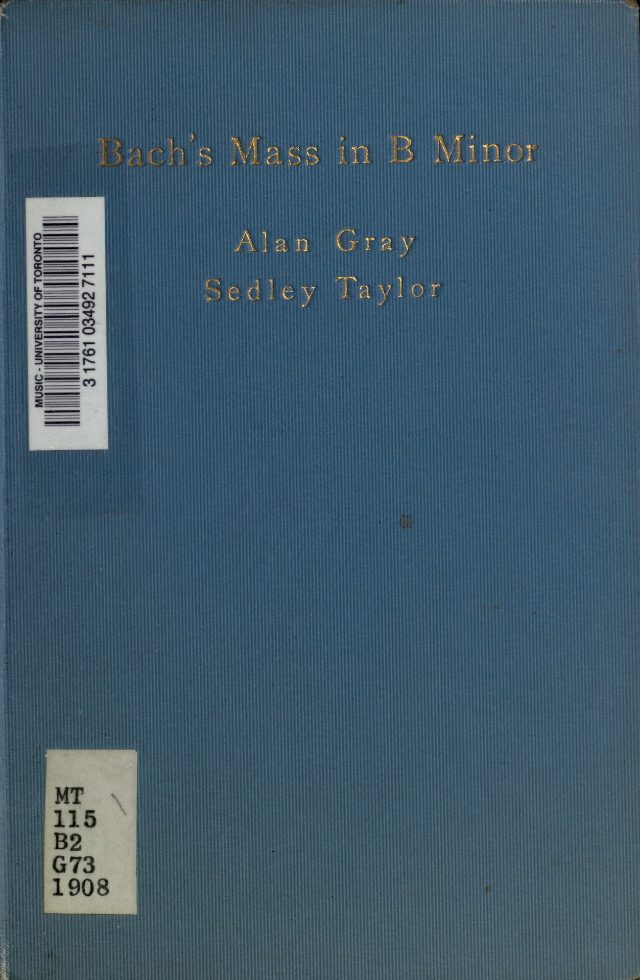
John Sebastian Bach's Mass in B Minor in Cambridge, 1908: Three PapersBook

Secondary source

John Sebastian Bach's Mass in B Minor in Cambridge, 1908: Three Papers

Alan Gray and Sedley Taylor · 1908

Book

Secondary source

Grundlagen des linearen Kontrapunkts

Ernst Kurth · 1917

Newspaper article

Secondary source

Report on the Unveiling of the Bach Monument

1843

Book

Tertiary source

Johann Sebastian Bach, Encyclopaedia Britannica 9th ed.

Francis Hueffer · 1878

Book

Secondary source

Bach, Johann Sebastian, Grove's Dictionary of Music and Musicians

Alfred Maczewski · 1900

Book

Secondary source

Bach, Johann Sebastian, Encyclopaedia Britannica 11th ed.

Donald Francis Tovey · 1911

Book

Secondary source

Johann Sebastian Bach, University Musical Encyclopedia: Great Composers

1912

Book

Secondary source

Johann Sebastian Bach: The Story of the Boy Who Sang in the Streets

Thomas Tapper · 1915

Book

Secondary source

Johann Sebastian Bach by Herbert F. Peyser

Herbert F. Peyser · 1945/1950

Artifact

Primary source

Bach Canon 2 from The Musical Offering

Johann Sebastian Bach · 7 May 1747

Artifact

Primary source

Bach Gavotte from Partita No. 3 for Violin

Johann Sebastian Bach · c. 1729

News clip

Secondary source

Awadagin Pratt Plays Bach's Passacaglia and Fugue at the White House

Awadagin Pratt · 4 November 2009

Documentary

Secondary source

Lord, Have Mercy, from St Matthew Passion (1948 Film)

Concert Films Corporation/Paul Gordon · 1948

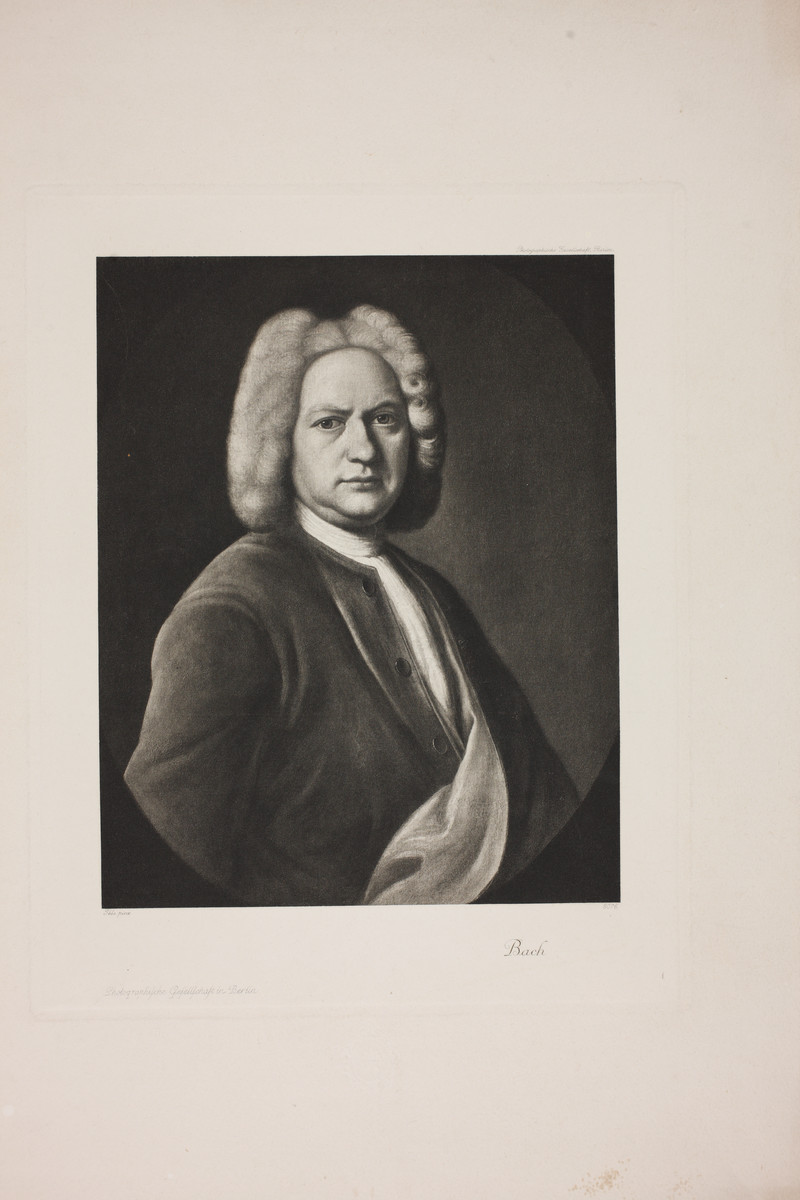
Monochrome photomechanical reproduction of a painted portrait of a man in a full-bodied white wig, dark coat with buttons, and white cravat, set against a dark oval background. The name Bach is inscribed in script at the lower right, with a publisher's line at the bottom left.Photograph

Secondary source

Portrait of Johann Sebastian Bach

Photographische Gesellschaft Berlin

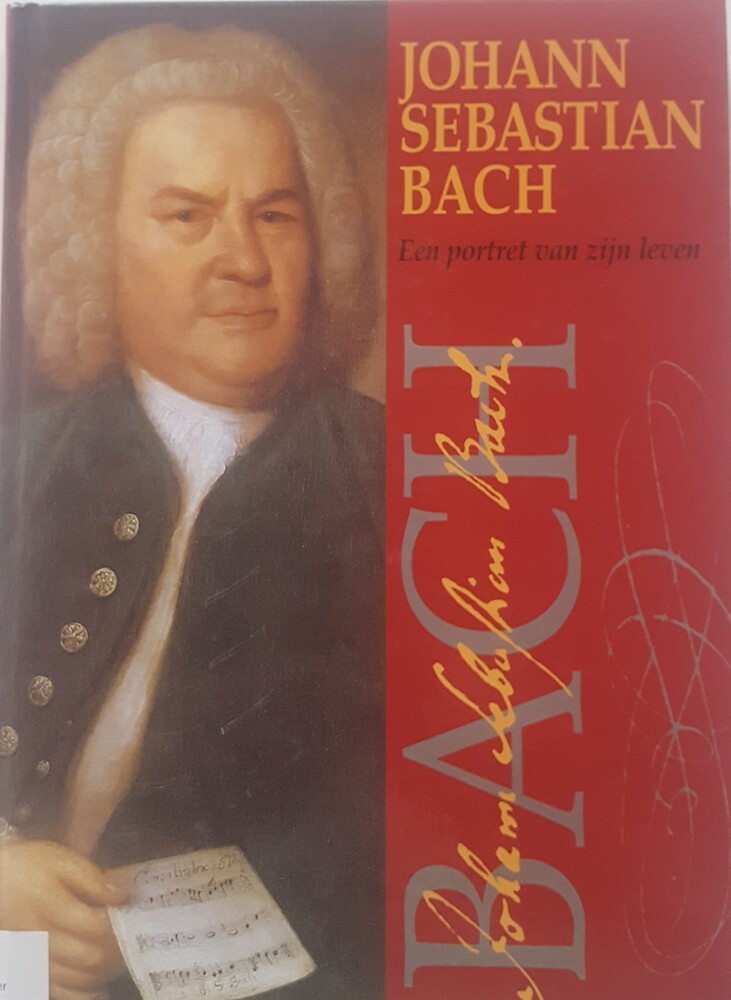
Front cover of a hardcover book titled 'Johann Sebastian Bach, Een portret van zijn leven'. A painted portrait of Bach in a white wig, dark coat and white collar holds a sheet of handwritten music. The background is red, with a large grey 'BACH' and a gold signature.Book

Secondary source

J. S. Bach: A Portrait of His Life

Hans Conrad

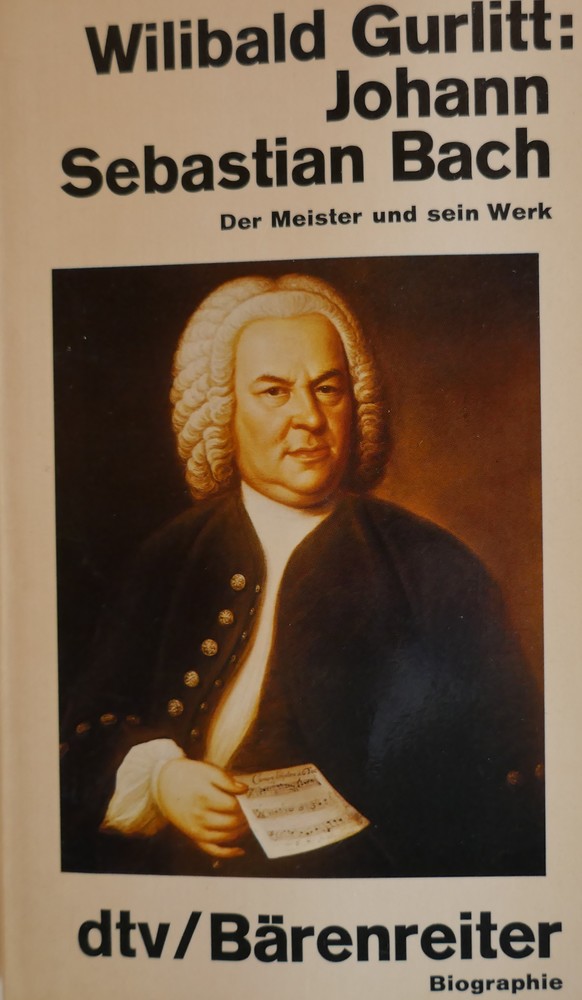
Book cover of Wilibald Gurlitt's 'Johann Sebastian Bach: Der Meister und sein Werk', published by dtv/Bärenreiter (Biographie). It shows a painted portrait of Bach in a white wig and dark coat, holding a sheet of music.Book

Secondary source

J.S. Bach: Der Meister und sein Werk

Wilibald Gurlitt

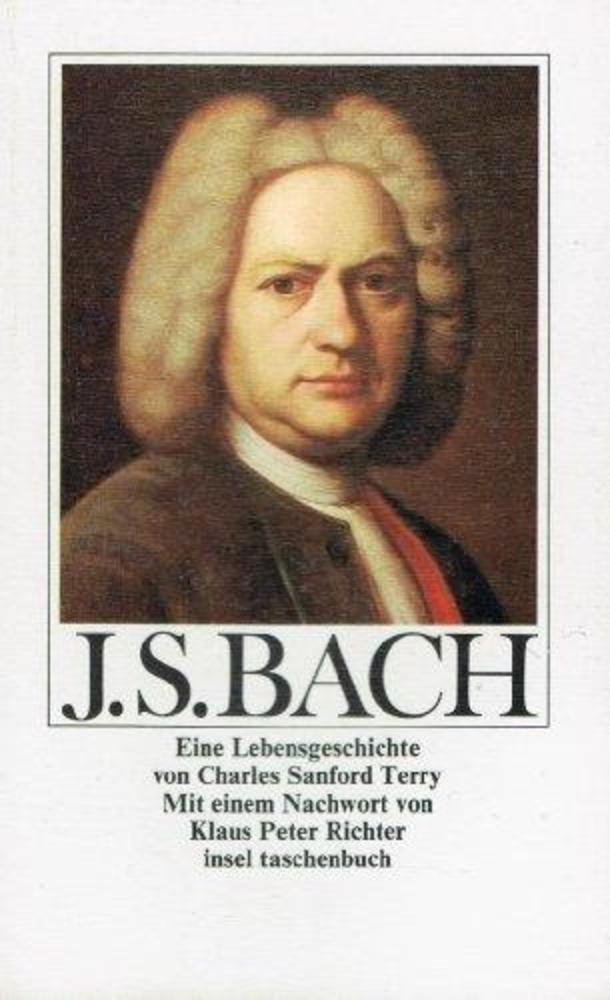
Cover of a German paperback book titled J.S. Bach, Eine Lebensgeschichte, von Charles Sanford Terry, Mit einem Nachwort von Klaus Peter Richter, insel taschenbuch. The cover shows a painted portrait of a man in an 18th-century style powdered wig, dark coat, white cravat and red sash.Book

Secondary source

J.S. Bach: Eine Lebensgeschichte

Charles Sanford Terry

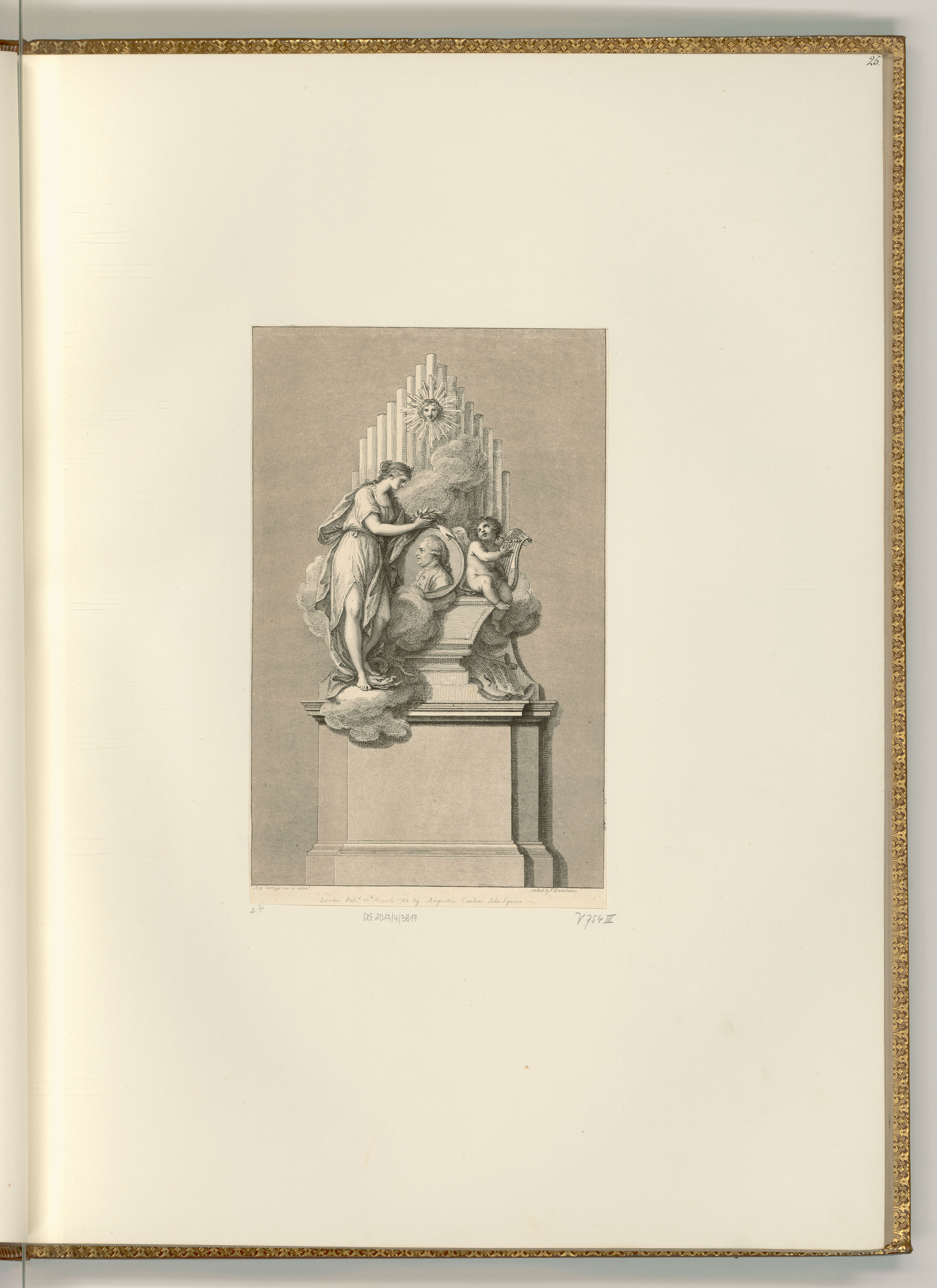
Engraved print on a book page showing a classical allegorical scene: a draped female figure leans on a pedestal topped by a medallion containing a bust portrait of a man, with a cherub playing a lyre beside it, and a radiant sun with rays above a stepped arrangement of columns. Caption text below reads London, published 10 March 1782 by Augustin Carlini, Soho Square.Painting

Secondary source

Portrait of Johann Sebastian Bach by Aug. Carlini

Aug. Carlini · 1782

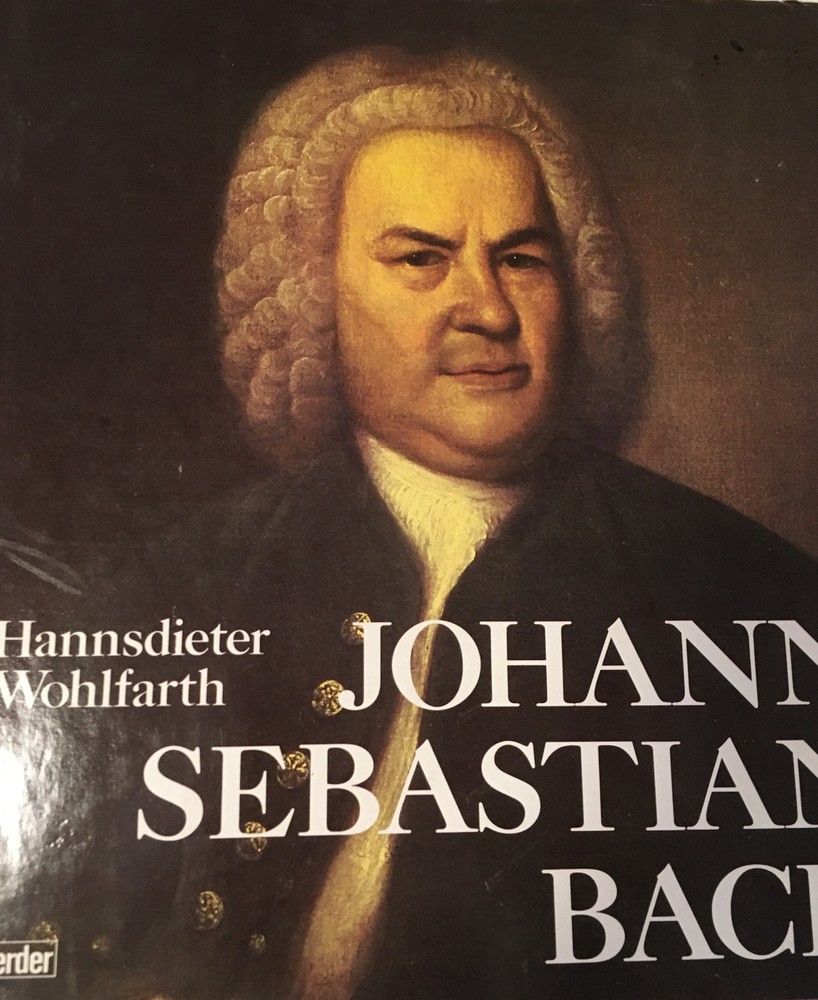
Book cover with a painted portrait of a man in a powdered wig, white cravat, and dark coat with brass buttons. Text reads 'Hannsdieter Wohlfarth' and 'Johann Sebastian Bach', with a 'Verlag' logo at bottom left.Book

Secondary source

J.S. Bach: Eine Bildbiographie über Leben und Wirken

Hannsdieter Wohlfarth

Front cover of a dark blue cloth-bound book. A gold vertical rule with an extension along the top edge frames the title text, which reads: Ornamentation in J. S. Bach's Organ Works.Book

Secondary source

Ornamentation in J.S. Bach's Organ Works

Front cover of a book with wood-grain textured beige background. Top reads 'HERMANN KELLER' in black capitals. A yellow horizontal band crosses the middle. Below it reads 'DAS WOHLTEMPERIERTE KLAVIER VON JOHANN SEBASTIAN BACH' in black capitals. A small white label sits at the bottom left corner.Book

Secondary source

Das Wohltemperierte Klavier von J.S. Bach

Hermann Keller

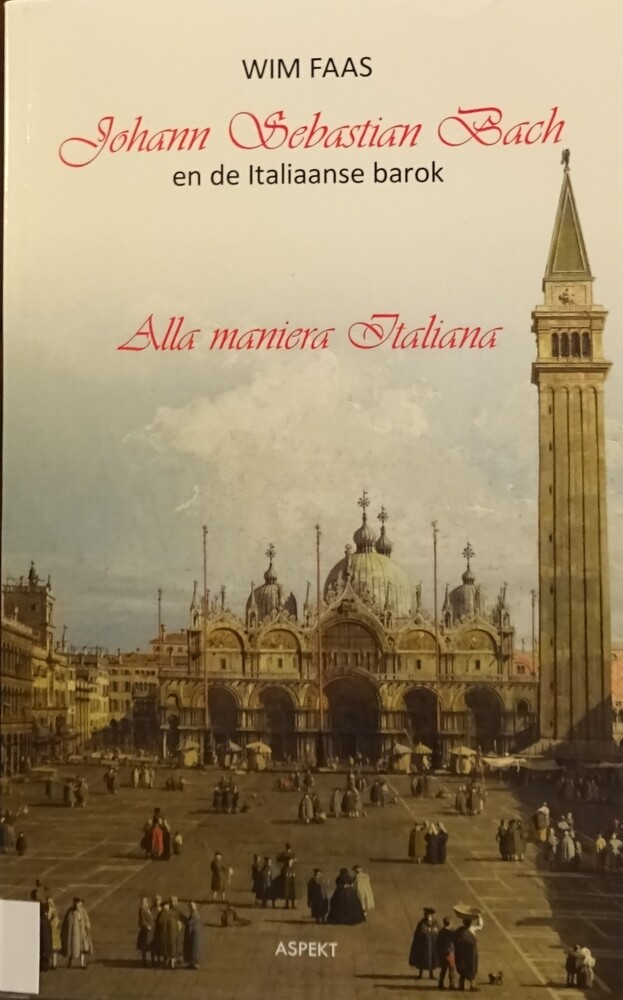
Book cover reading 'Wim Faas, Johann Sebastian Bach en de Italiaanse barok, Alla maniera Italiana' in red script over a painted view of a piazza with a basilica with domes and a tall campanile, with small figures in the square. Publisher logo 'Aspekt' at bottom right.Book

Secondary source

J.S. Bach en de Italiaanse barok

Wim Faas

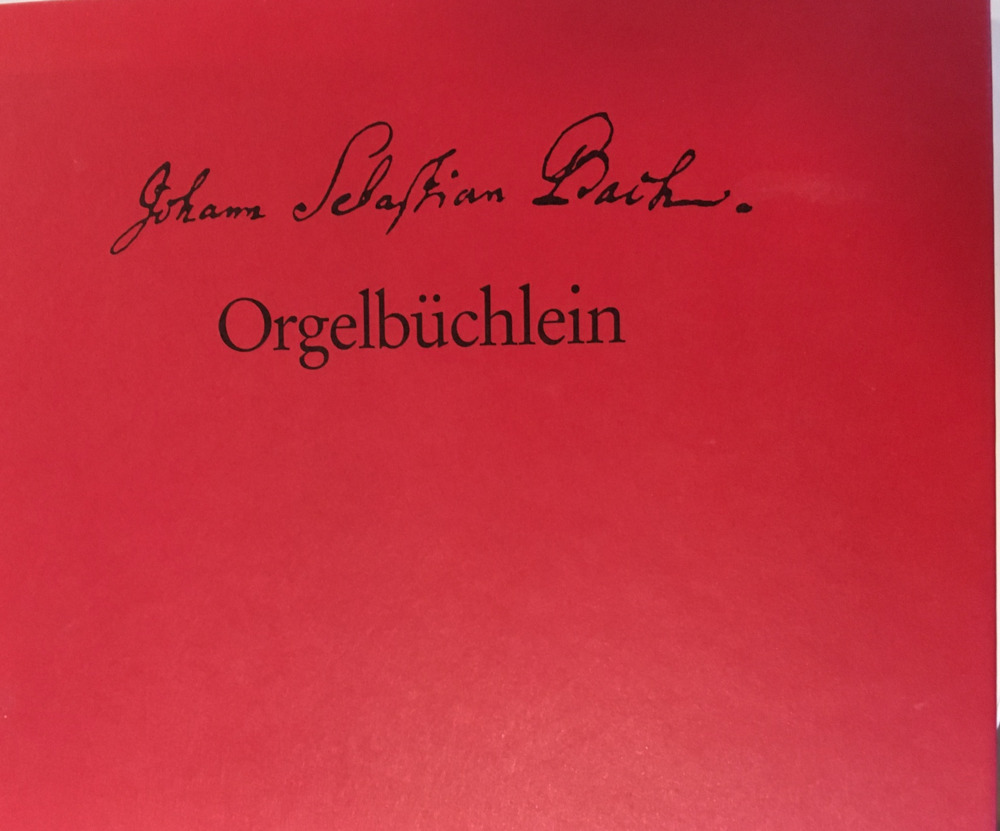
Red cover of a book with handwritten-style script reading 'Johann Sebastian Bach.' above the printed title 'Orgelbüchlein' in black serif letters.Book

Secondary source

J.S. Bach Orgelbüchlein BWV 599-644

Want the full shelf? Chat with Johann Sebastian Bach in the app and open the Sources panel — every quote links back to the original.

Use Johann Sebastian Bach in class

1 collection

A ready-made collection from the Humy team that features Johann Sebastian Bach. Preview it, then try it free.

Trusted by educators worldwide

Conversations
375,000+
Real exchanges between students and historical figures
Messages exchanged
4,142,000+
Across every figure, classroom and language
Historical figures
100,000+
Each informed by a curated biography and selected sources
Languages supported
50+
From English and Spanish to Arabic and Korean

Paying customers

Used by 98 schools and universities

Partner school logo
Tecnológico de Monterrey logo
Hyper Island logo
Partner school logo
Chambersburg Area School District logo
Broward County Public Schools logo
Nebo School District logo
National Louis University logo
South Florida PBS logo
Punahou School logo
University of Wisconsin–River Falls logo
Partner school logo
Partner school logo
Archbishop Mitty High School logo
Kingsburg High School logo
Norwalk Public Schools logo
Partner school logo
Connections logo
Partner school logo
Moore Public Schools logo
Partner school logo
Partner school logo
Partner school logo
Partner school logo
Robbinsville Public Schools logo
Partner school logo
Partner school logo
Partner school logo
Tecnológico de Monterrey logo
Hyper Island logo
Partner school logo
Chambersburg Area School District logo
Broward County Public Schools logo
Nebo School District logo
National Louis University logo
South Florida PBS logo
Punahou School logo
University of Wisconsin–River Falls logo
Partner school logo
Partner school logo
Archbishop Mitty High School logo
Kingsburg High School logo
Norwalk Public Schools logo
Partner school logo
Connections logo
Partner school logo
Moore Public Schools logo
Partner school logo
Partner school logo
Partner school logo
Partner school logo
Robbinsville Public Schools logo
Partner school logo
Partner school logo

What educators are saying

“We enjoyed the program last year and used it frequently.”
“My students say it’s a welcome change of pace. I’m not a fan of the “sage on the stage” model, so I try to incorporate research-oriented and self-paced activities. With Humy, students have to take charge of their learning. They’ve become more adept at critical thinking, forming better questions, and improving their reading comprehension. The interview feature has been my go-to tool. I create assignments where students must ask historical figures a set number of questions, then summarize the responses to ensure they’re truly absorbing the material. This approach lets them actively explore the past rather than passively consuming information.”
“Humy has helped me bring historical figures, sometimes long past, to life. When my students interact with these figures in real-time, it eliminates some of the perceived “ancient” characteristics of my curriculum. This has shifted my students’ thinking away from viewing history as abstract or irrelevant. Real-time interactions make historical figures relatable, even allowing students to ask off-topic questions that help put historical lives in a more relevant context for 13-year-olds. The feature I use the most is the interview feature. After teaching a topic, most recently Gandhi and Joan of Arc, I have the students ask pointed, focused questions. We practice good conversation techniques beforehand, teaching them to listen (or read) carefully and formulate thoughtful follow-up questions rather than just interrogating. It helps students practice effective conversation skills.”

FAQ

Frequently asked questions

Who is Johann Sebastian Bach?
Famous German composer and musician of the Baroque period. On Humy.ai you can chat with an AI version of Johann Sebastian Bach that draws on a short biography and 84 historical sources during the conversation — by text or voice, in 42 languages.
Is Johann Sebastian Bach AI free?
Johann Sebastian Bach is part of Humy's full library of more than 100,000 figures, which comes with a paid plan. A free account (no credit card) includes 20 messages a month with the free library's figures, so you can try how the conversations work first.
What sources does the Johann Sebastian Bach AI use?
It draws on a short biography and 84 historical sources (books, documents and artifacts), including “St Matthew Passion”, “Mass in B minor” and “Brandenburg Concertos”. Each source has its own page on Humy.ai.
How historically accurate is the AI version of Johann Sebastian Bach?
Each figure uses a short biography and a small set of selected historical sources as context (retrieval-augmented generation), so answers stay closer to known material than the model's general knowledge alone. It isn't a citation-grade research tool — like any LLM, the AI can get details wrong or extrapolate. Treat it as a strong starting point for inquiry and cross-reference important claims.
Can I talk to Johann Sebastian Bach by voice?
Yes. In addition to text chat, you can call Johann Sebastian Bach and hear their voice respond in real time — useful for auditory learners, interview practice and Socratic dialogue.
Is Humy.ai safe and compliant for schools?
Yes. Humy.ai is used by more than 100 schools, universities and organisations. The platform is FERPA- and GDPR-aligned, supports SSO, and offers an IT-approval pack tailored for school procurement teams.

Cross-reference Johann Sebastian Bach

Like any LLM, the AI version of Johann Sebastian Bach can get details wrong. Open one of these sources in a new tab to verify what you’ve read.

Ready when you are

Start chatting with Johann Sebastian Bach now.

20 messages free · No credit card · Available in 50+ languages.