


Primary sourceBook1307
Birth of Augustus
Al-Biruni · 1307
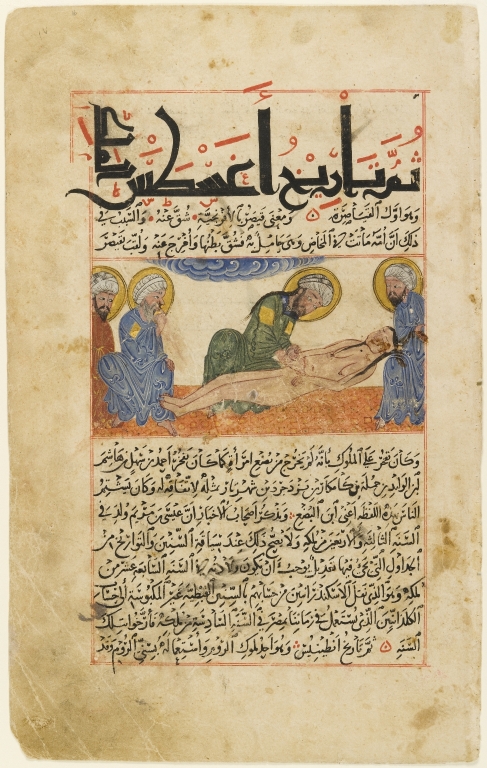
A page from al-Biruni's Chronology of Ancient Nations depicting the birth of the Roman emperor Augustus by a primitive form of Caesarean section.
This page from al-Biruni's own chronology records a legend about the birth of Augustus as part of his survey of ancient peoples.
About this source
What it is
This page comes from the Chronology of Ancient Nations, written by Abu Rayhan al-Biruni and copied in 1307, now held at the University of Edinburgh. The miniature shows the birth of Augustus, the first Roman emperor, said by al-Biruni to have been delivered after his mother died in labour.
Why it matters
Al-Biruni's book gathered histories, calendars and legends from many cultures, including Rome. This illustration shows how later artists visualised a story al-Biruni recorded, and how such manuscripts combined scholarship with striking imagery for readers.
Look closer
- What does the image tell us about how the artist imagined ancient medical practice?
- Why might al-Biruni have included this story about Augustus's birth in a chronology of nations?
- What is missing from the picture that we might expect to see in a birth scene?
This book is part of the curated material that grounds the AI version of Al-Biruni on Humy.ai — when students ask about related events, the AI can quote it and cite it.
More Al-Biruni sources
Meet the AI Al-Biruni →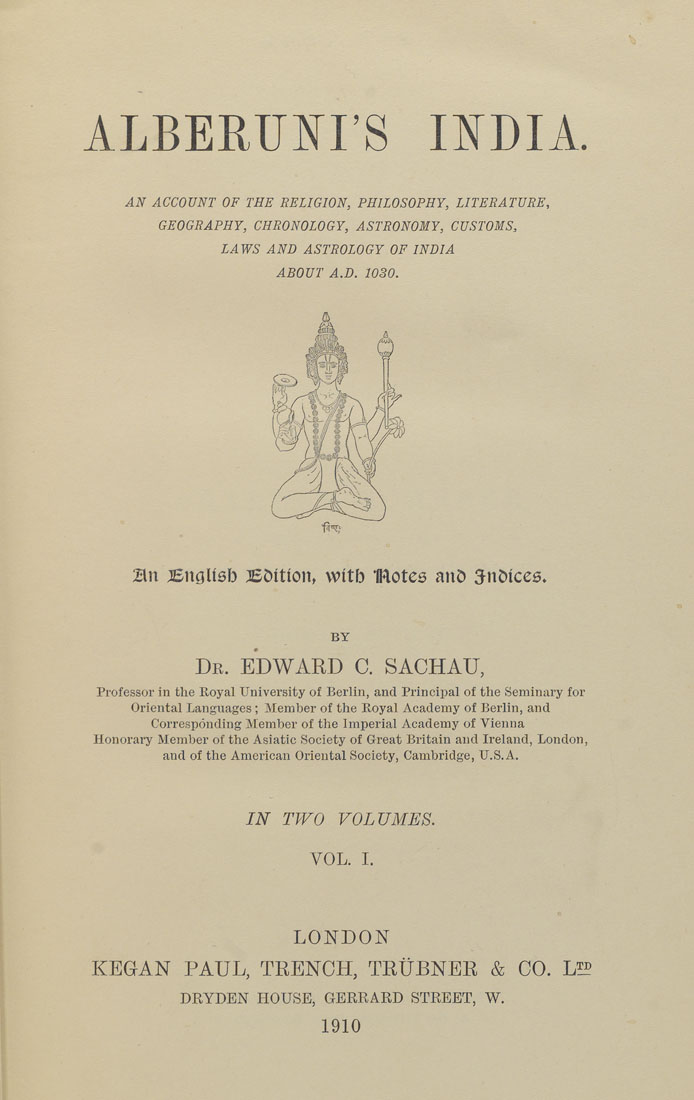 Book
Primary source
Al-Biruni's India
Al-Biruni · c. 1030
 Book
Primary source
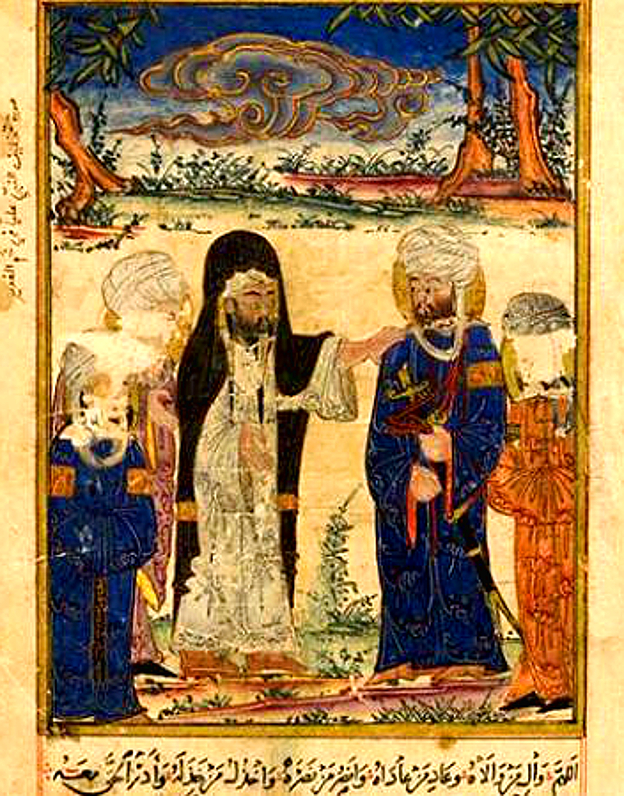
The Remaining Signs of Past Centuries
Al-Biruni · c. 1000, illustrated copy 1307-1308
 Artifact
Primary source
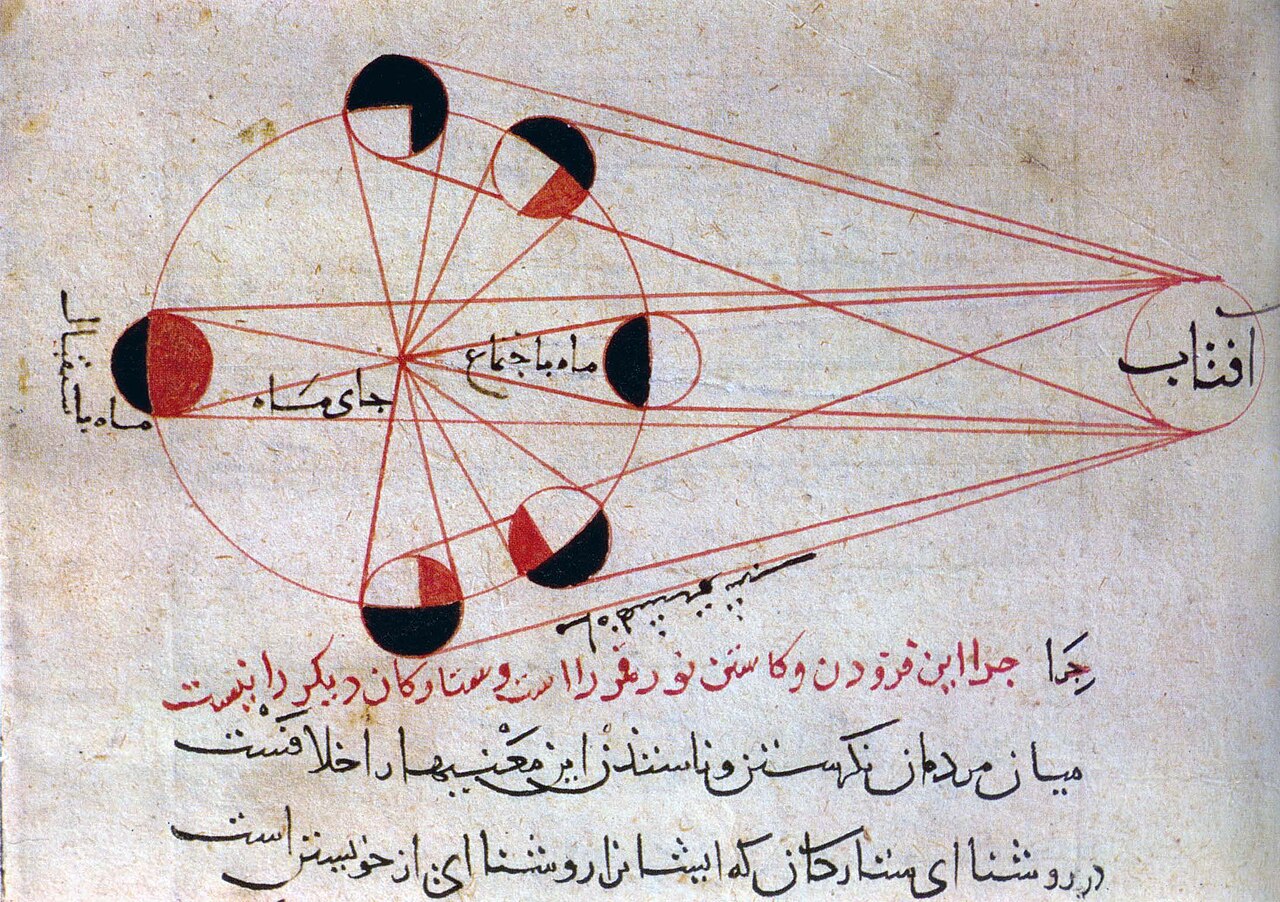
Diagram of the Phases of the Moon
Al-Biruni
 Artifact
Primary source
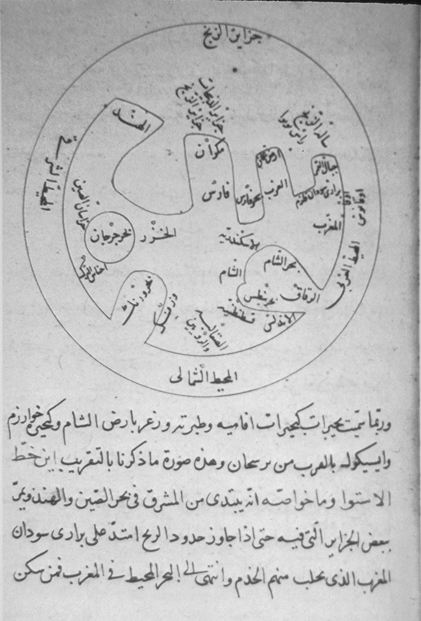
Al-Biruni's World Map of the Distribution of Land and Sea
Al-Biruni · 1029
 Book
Primary source
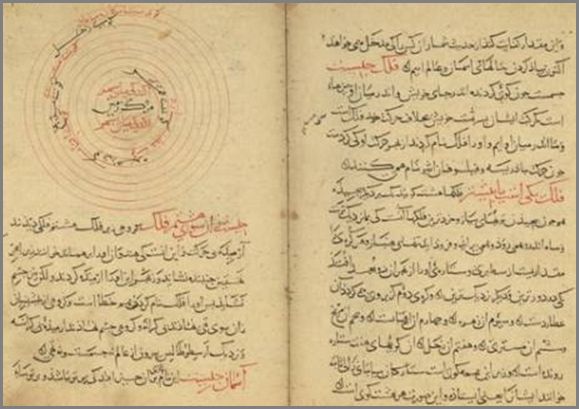
Page from the Oldest Manuscript of the Tafhim
Al-Biruni
Ready when you are
Start chatting with Al-Biruni now.
20 messages free · No credit card · Available in 50+ languages.