


Secondary sourcePainting1906
Black Death
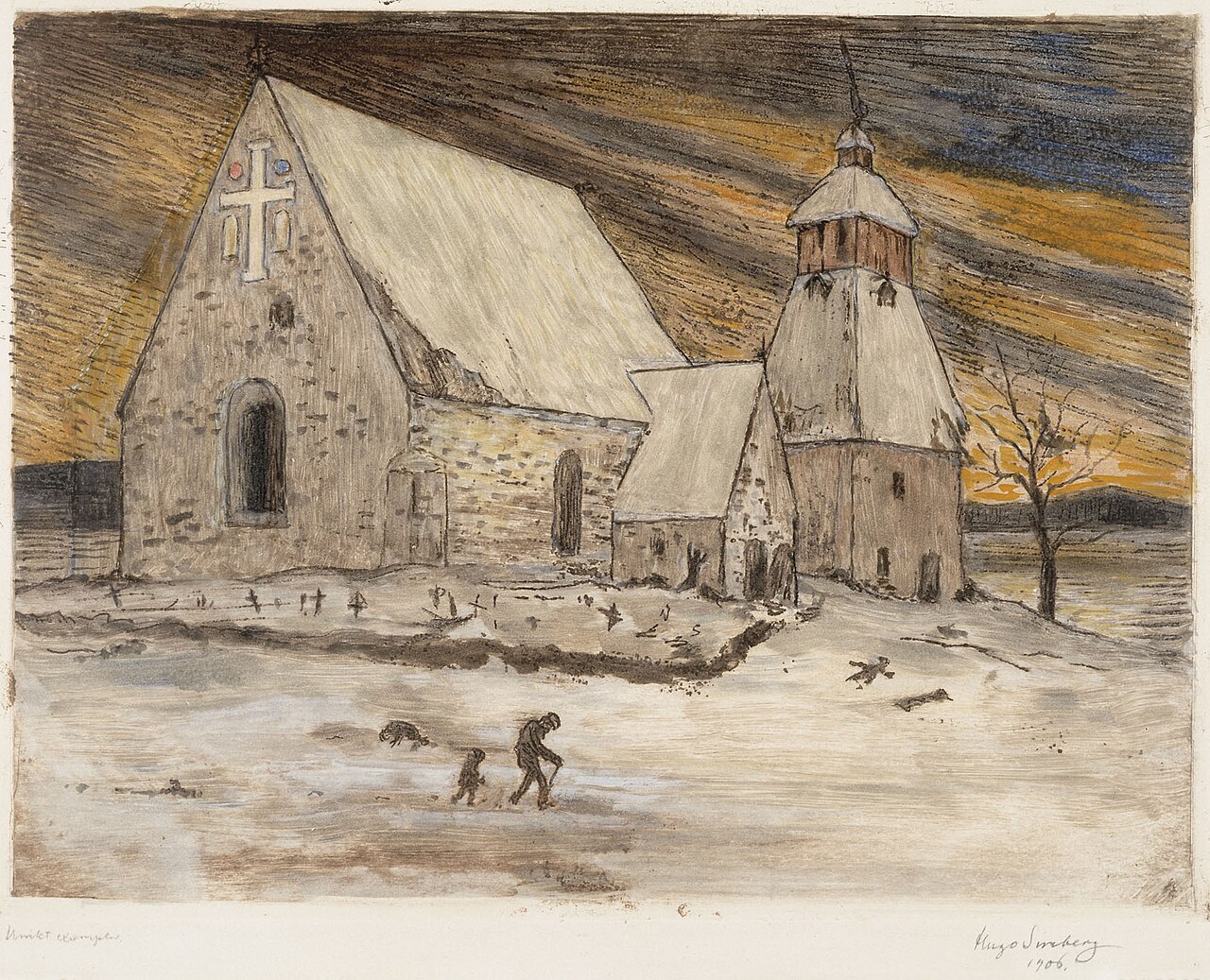
Hugo Simberg · 1906
A watercolour and ink drawing by Hugo Simberg, dated 1906, showing a snowy church and two small figures under a dusky sky. It is a later, symbolist treatment of the pandemic.
Shows how a 1906 artist revisited the Black Death through a quiet, symbolic landscape rather than through scenes of the sick.
About this source
What it is
This is a watercolour and ink drawing titled Black Death, made by Hugo Simberg in 1906 and signed and dated at lower right. It shows a stone church with a cross on its gable, a separate wooden bell tower, and a bare tree in a snowy, dusky landscape under a streaked orange and grey sky. Two small dark figures walk in the snow.
Why it matters
The Black Death was the pandemic of 1346 to 1353 that killed huge numbers of people across Eurasia and North Africa. Simberg painted this image more than 500 years later, in a Symbolist style that uses mood rather than direct scenes of illness. The work shows how artists in the early 1900s still looked back at the plague and tried to express a mood about it.
Look closer
- Why might the artist choose an empty, snowy landscape instead of showing sick people?
- What feelings do the colours of the sky and the dark figures create?
- What does the picture not tell us about who lived in this village or how they suffered?
This painting is part of the curated material that grounds the AI version of The Black Death on Humy.ai — when students ask about related events, the AI can quote it and cite it.
More The Black Death sources
Meet the AI The Black Death →Secondary source
The Decameron
Giovanni Boccaccio · 1351
Primary source
Statute of Labourers 1351
1351
 Painting
Primary source
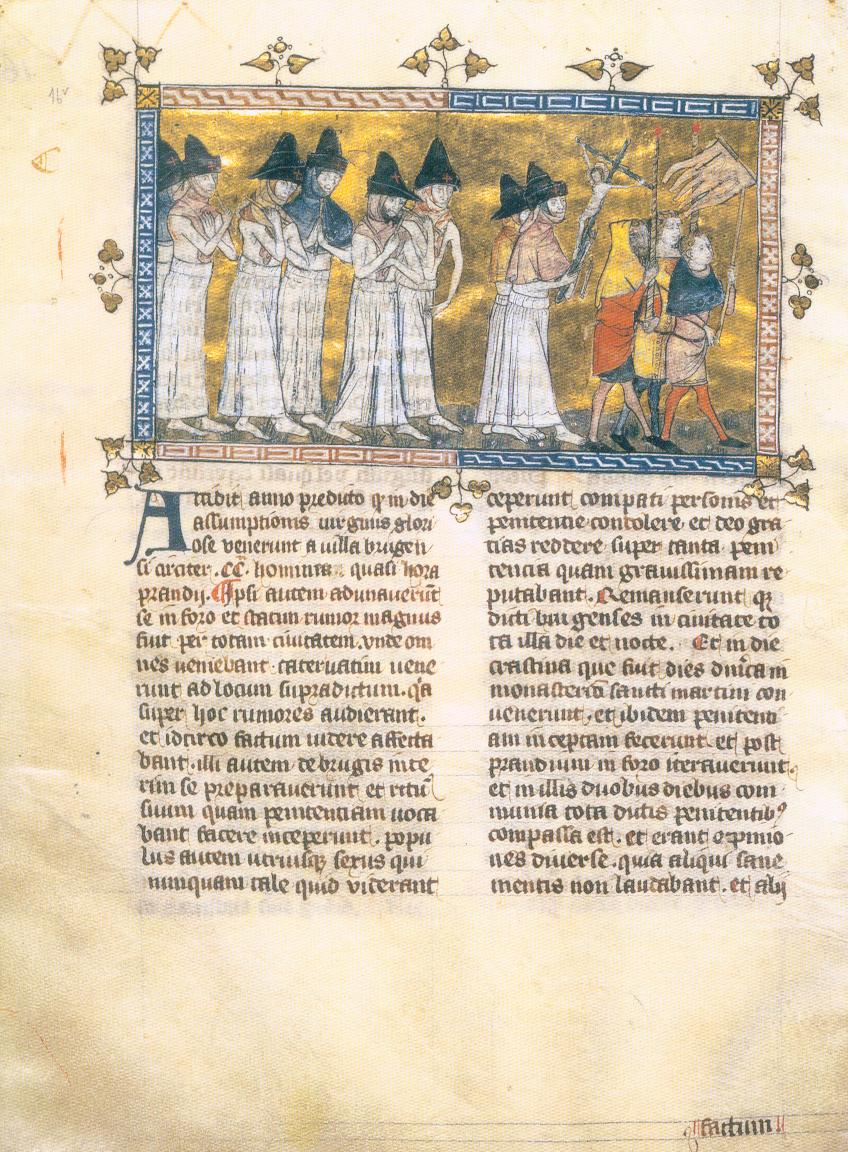
Depiction of the Flagellant Processions
Pierart dou Tielt · c. 1350
 Painting
Primary source
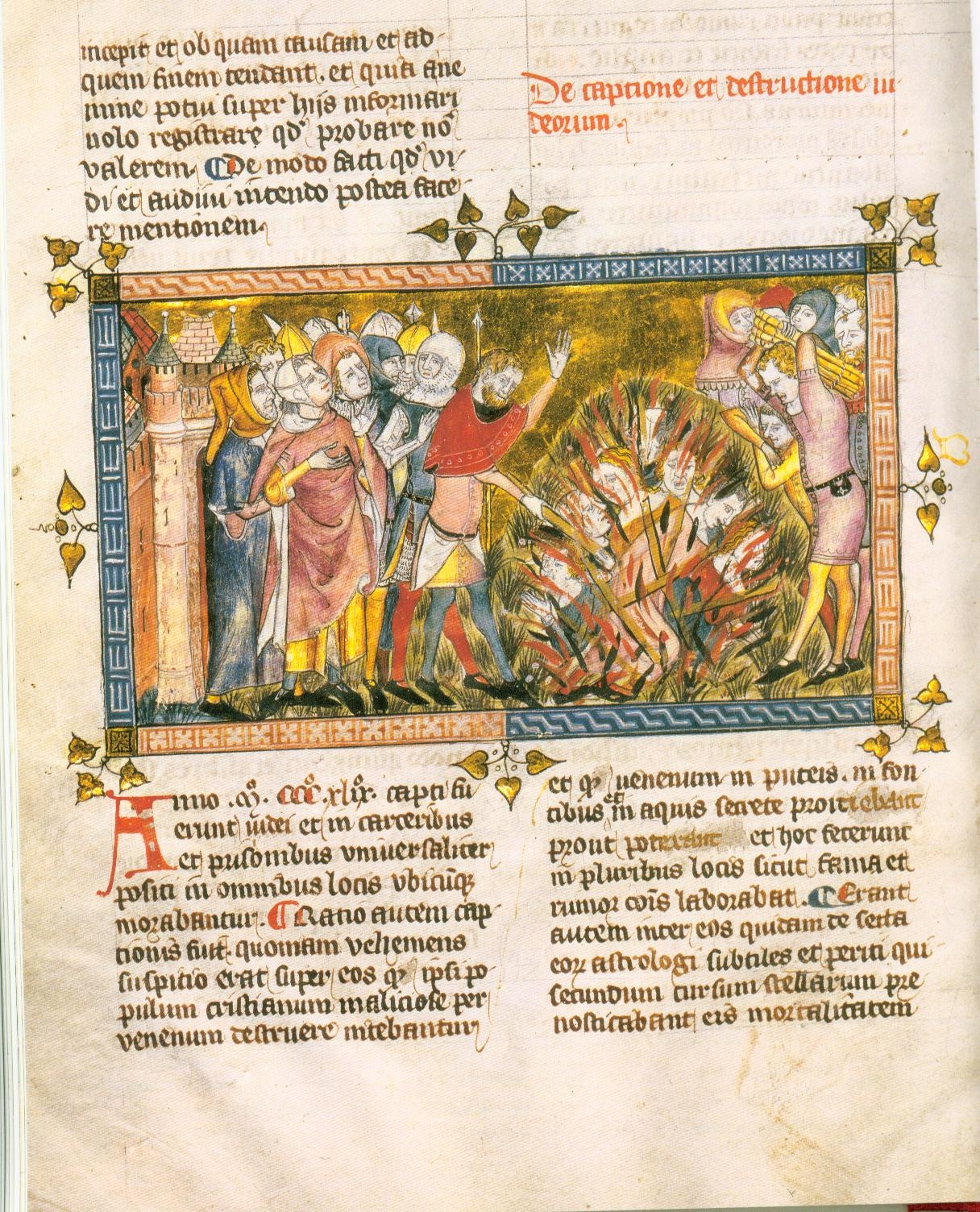
Execution of Jews
c. 1350
 Book
Primary source
The Annals of Ireland by Friar John Clyn
John Clyn · 1348-1349
Ready when you are
Start chatting with The Black Death now.
20 messages free · No credit card · Available in 50+ languages.