


Primary sourcePaintingc. 1350
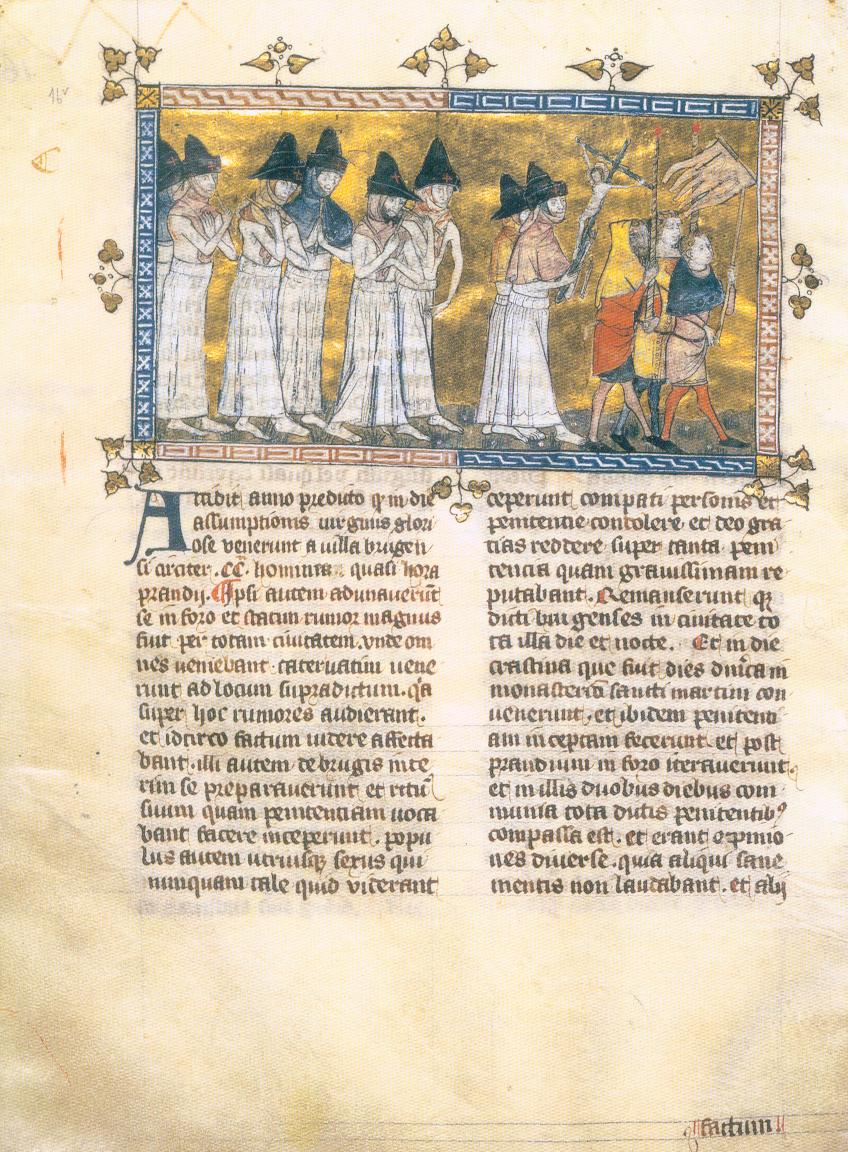
Depiction of the Flagellant Processions
Pierart dou Tielt · c. 1350
A manuscript miniature of flagellants processing in penance, a religious response to the Black Death as divine punishment.
This image documents the flagellant movement, a religious reaction to the fear and suffering caused by the Black Death.
About this source
What it is
This miniature, made around 1350 by Pierart dou Tielt, illustrates the chronicle of Gilles li Muisit. It shows barefoot penitents in white robes processing behind a figure carrying a crucifix and banner.
Why it matters
Flagellant movements spread across Europe during the Black Death, as people whipped themselves in public penance, believing the plague was God's punishment for humanity's sins. This image shows how fear and religious belief shaped people's responses to a catastrophe they could not otherwise explain or control.
Look closer
- What does the penitents' clothing and behavior suggest about their beliefs?
- Why might people have turned to extreme religious practices during the plague?
- What does this image suggest about how communities tried to make sense of mass death?
This painting is part of the curated material that grounds the AI version of The Black Death on Humy.ai — when students ask about related events, the AI can quote it and cite it.
More The Black Death sources
Meet the AI The Black Death →

Ready when you are
Start chatting with The Black Death now.
20 messages free · No credit card · Available in 50+ languages.