


Secondary sourcePainting1531
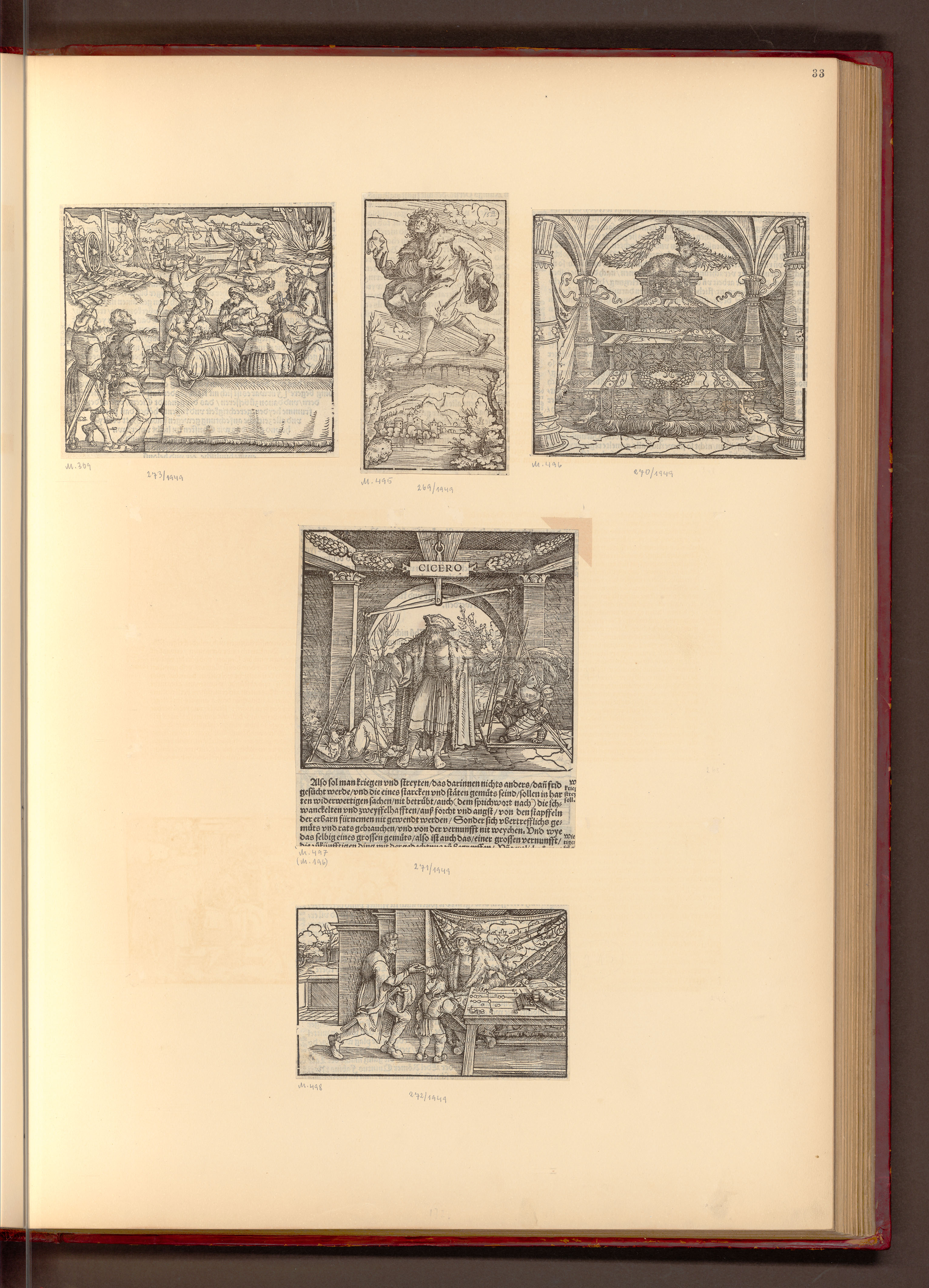
Book illustration from Cicero's Officia
1531
A woodcut illustration from a 1531 printed edition of Cicero's treatise De Officiis, made long after his death.
This woodcut illustrates Cicero's treatise De Officiis in a 1531 printed edition, made centuries after his lifetime.
About this source
What it is
This is a woodcut print from a 1531 printed edition of Cicero's work De Officiis (Officia). The album page shows five woodcut prints, with a large central image labelled CICERO, surrounded by four smaller prints and German text. It is held by The Albertina Museum in Austria.
Why it matters
Cicero wrote De Officiis as a treatise on moral duty, and this illustration was created for a printed edition nearly 1,500 years after his death. It shows how Cicero's writings continued to be copied, printed, and illustrated for readers long after the Roman Republic ended, and reveals how later artists imagined him — as a bearded man in a robe and hat standing between columns, with other figures beside him.
Look closer
- Why might the artist have chosen to show Cicero standing between columns, with a seated and a kneeling figure nearby?
- What does this image tell us about how later generations imagined Cicero, rather than what he actually looked like?
- Why do you think publishers in the 1500s were still printing and illustrating Cicero's writings?
This painting is part of the curated material that grounds the AI version of Cicero on Humy.ai — when students ask about related events, the AI can quote it and cite it.
More Cicero sources
Meet the AI Cicero →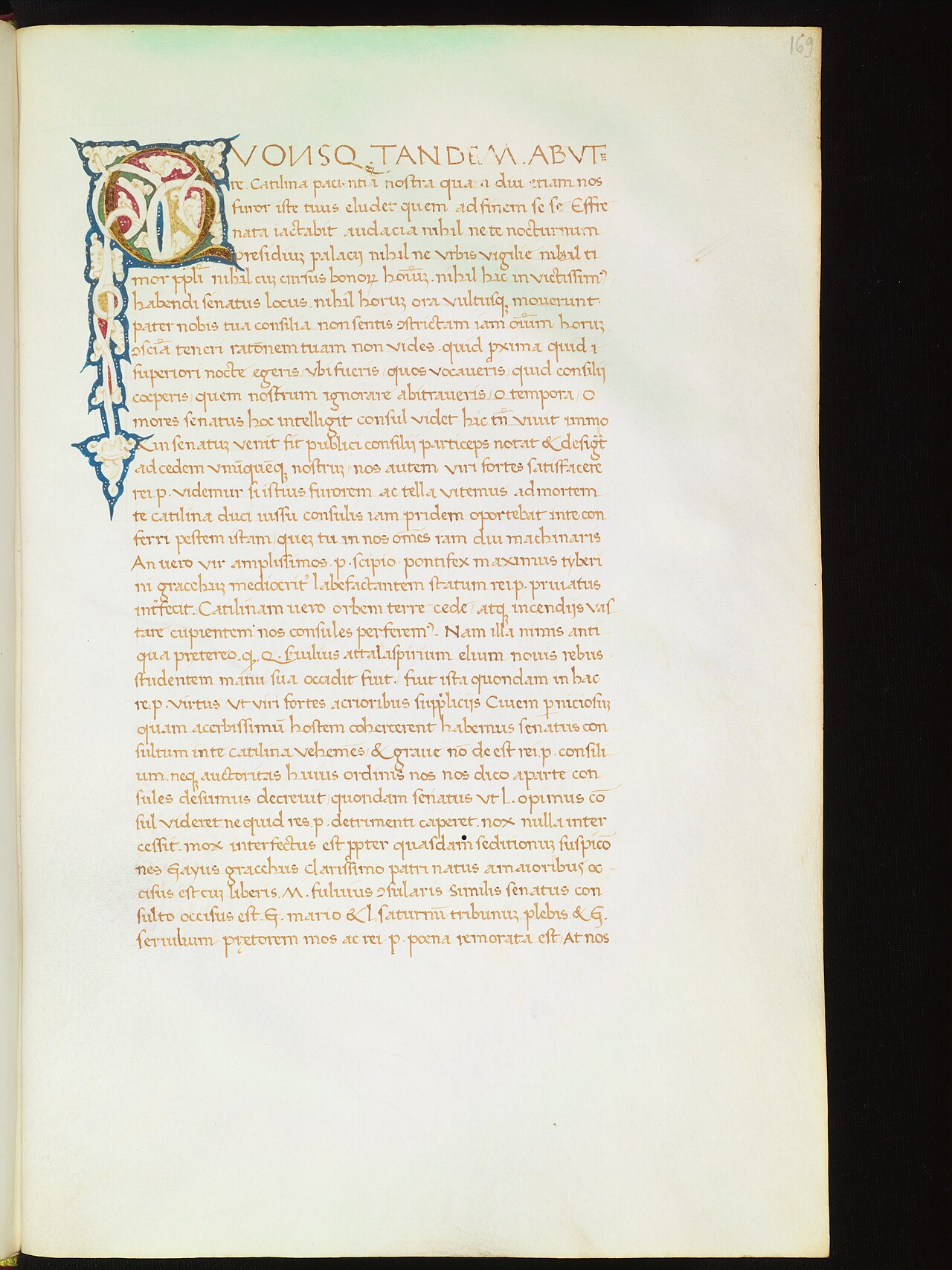 Speech
Primary source
Catiline Orations
Cicero · 63 BCE
 Painting
Secondary source
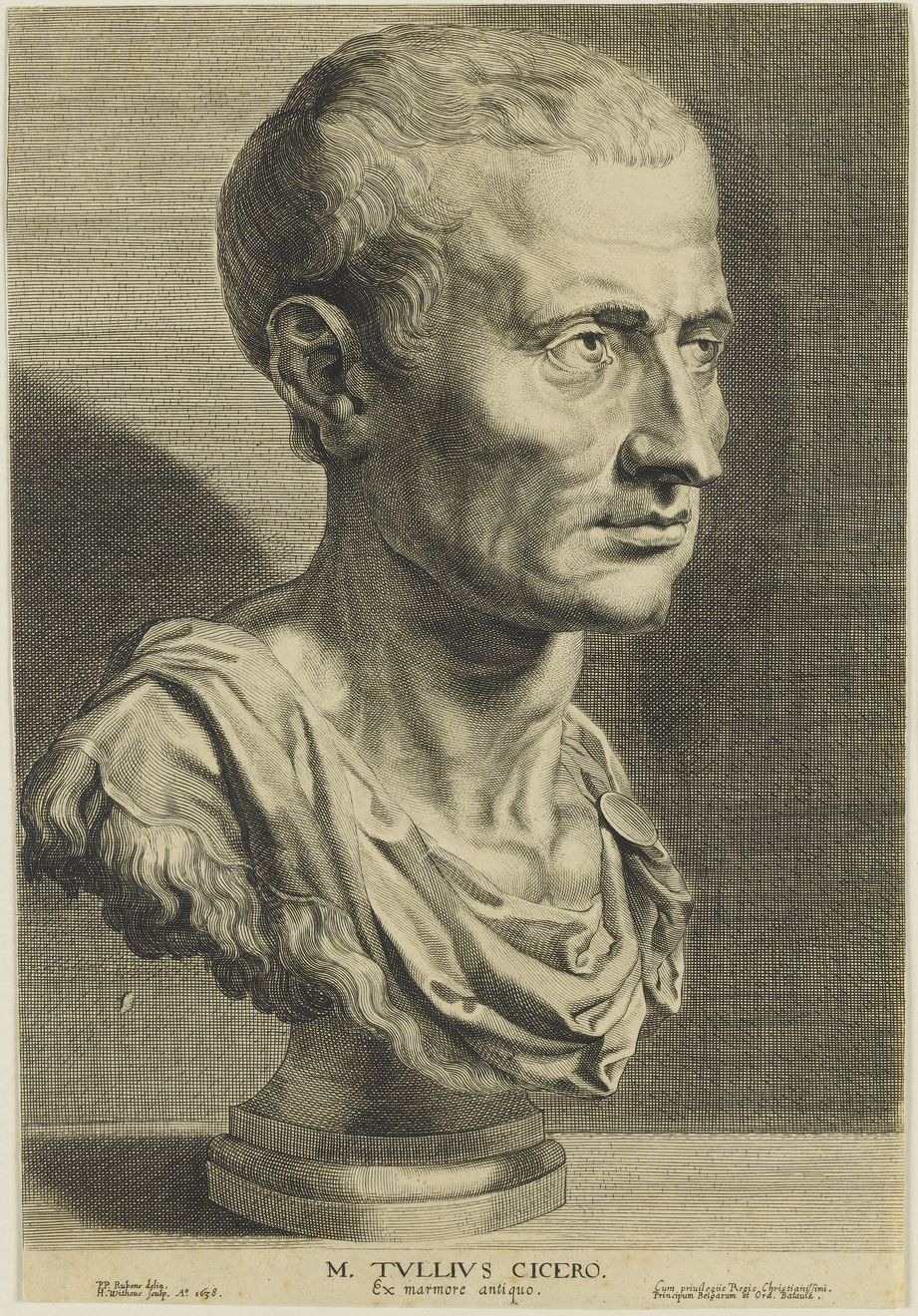
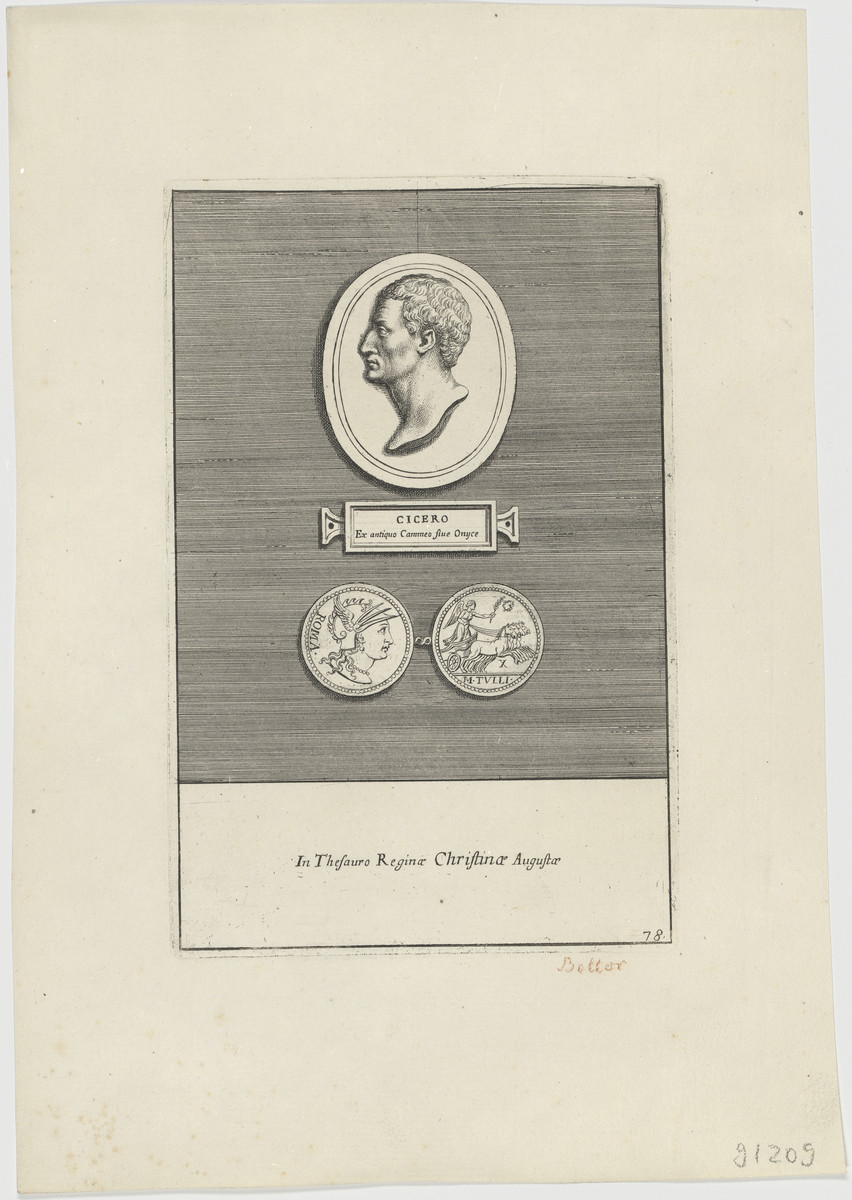
Marcus Tullius Cicero, engraved after antique marble busts
Jan Witdoeck
 Book
Primary source
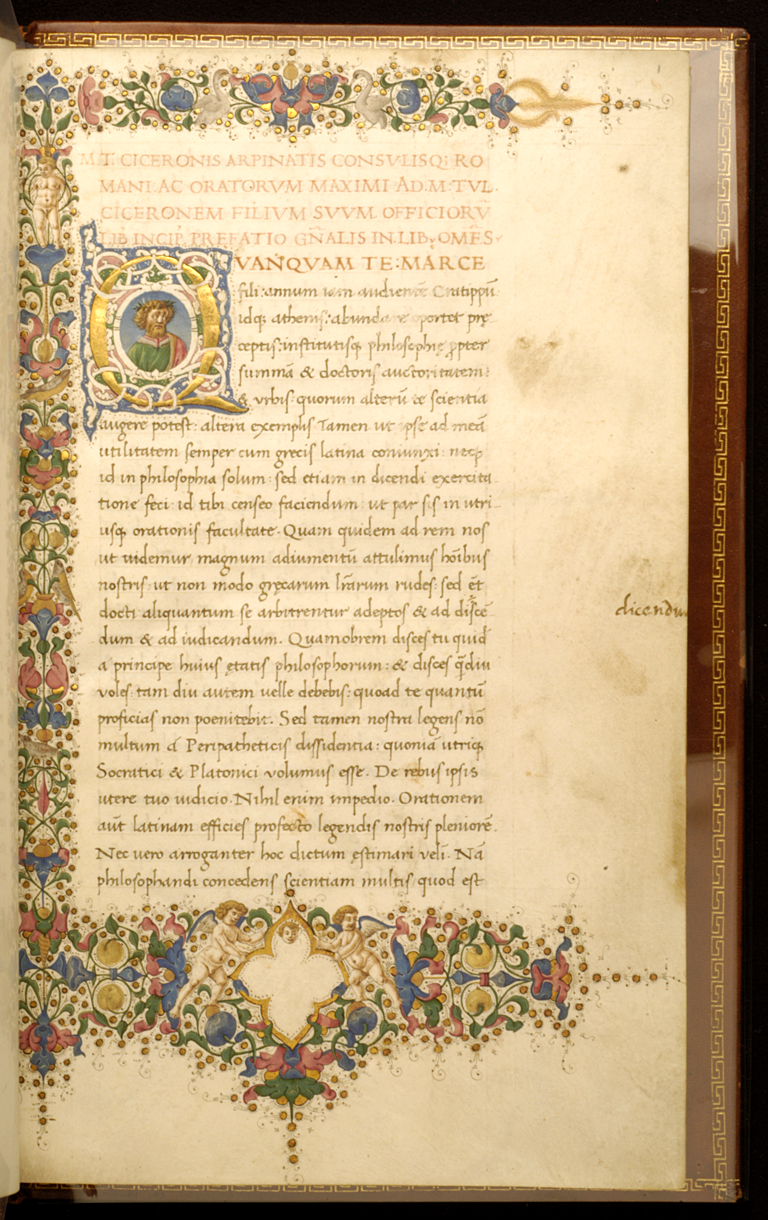
De Officiis
Cicero · 44 BC
 Painting
Secondary source
Portrait of Cicero (Bildnis des Cicero)
 Book
Primary source
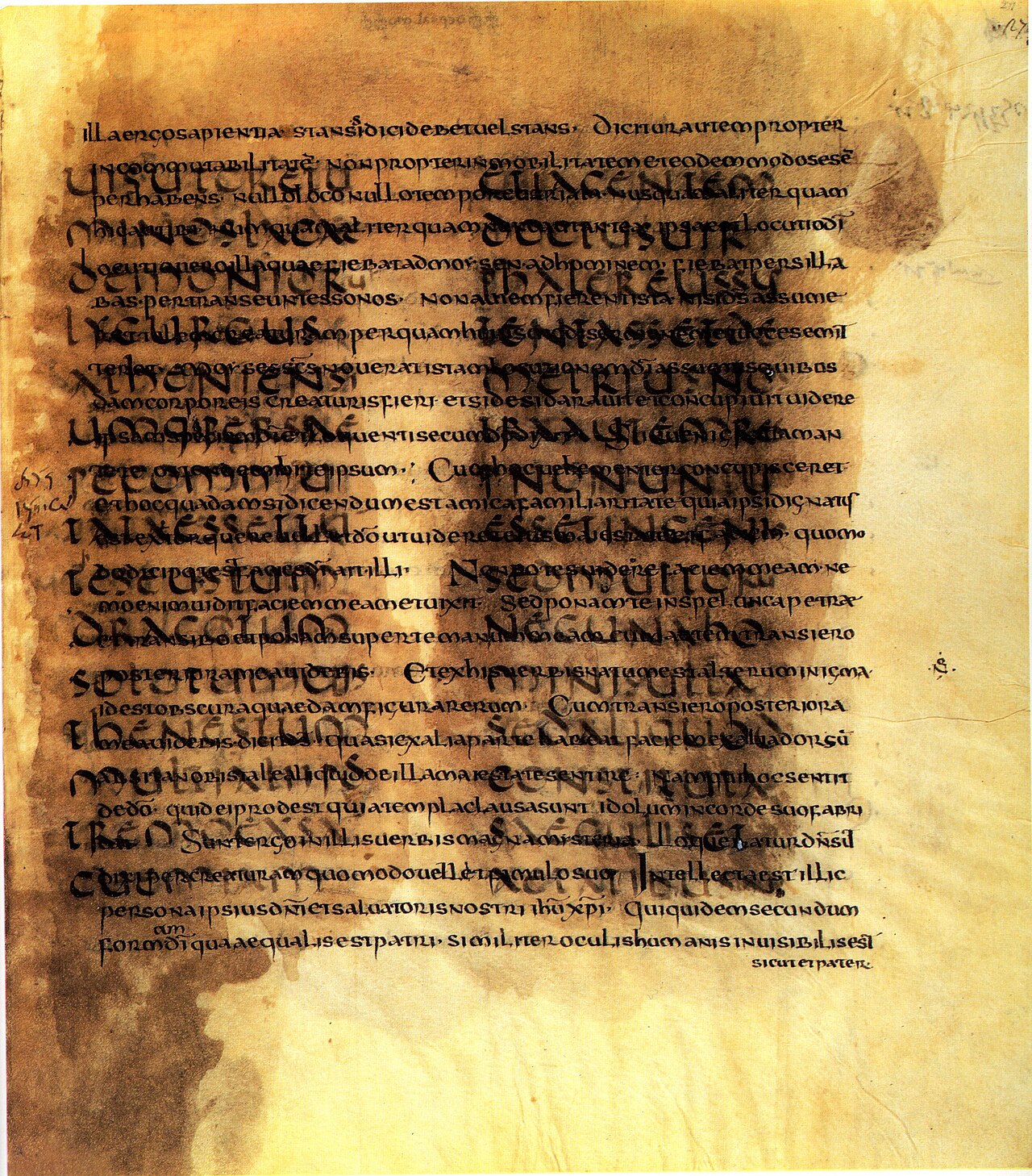
De re publica
Cicero · c. 54–51 BC
Ready when you are
Start chatting with Cicero now.
20 messages free · No credit card · Available in 50+ languages.