


Primary sourcePainting6 April 1785
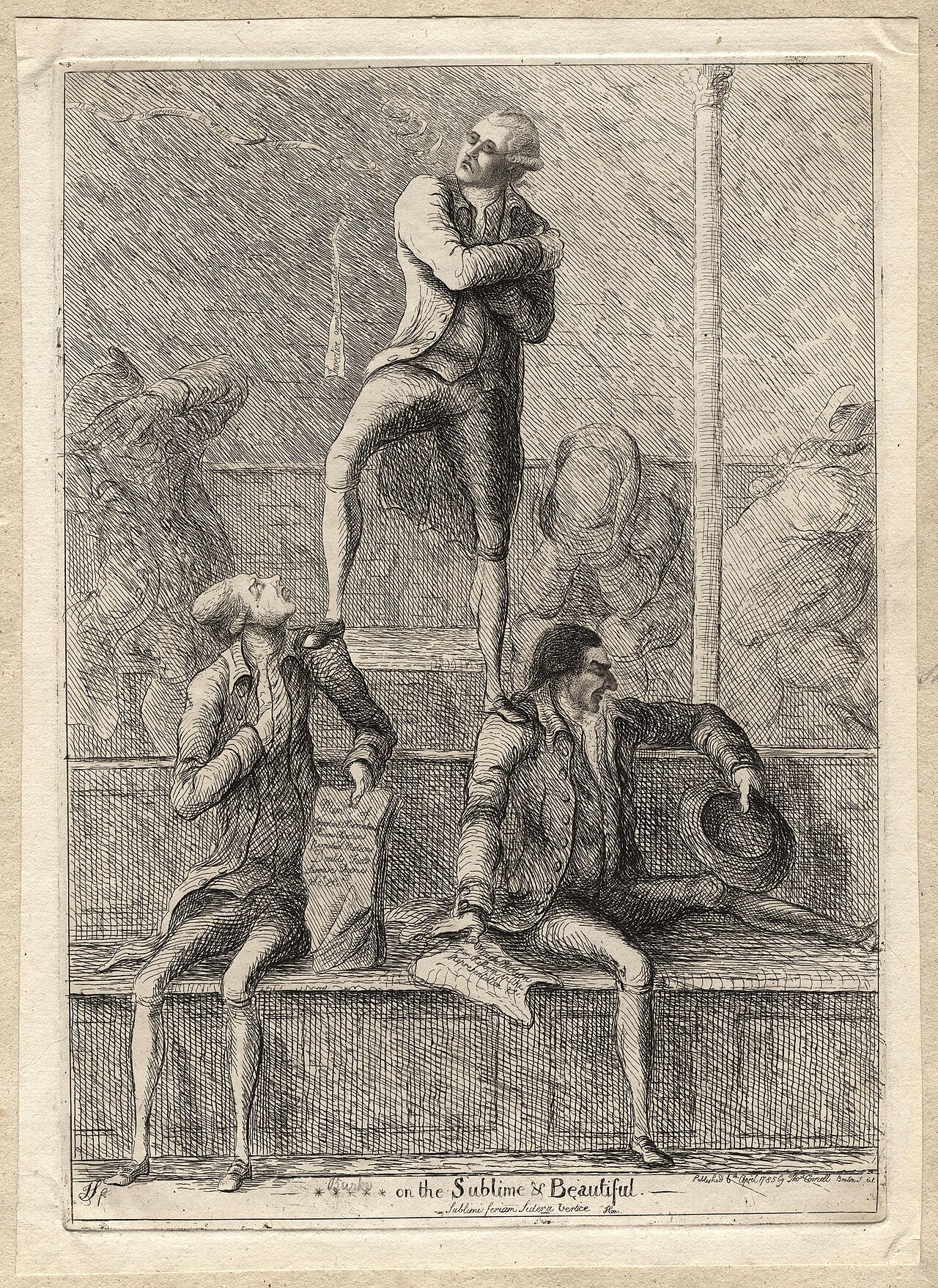
[Burke] on the sublime and beautiful
James Sayers · 6 April 1785
An 1785 etching by James Sayers, published by Thomas Cornell, that turns the title of Burke's treatise on aesthetics into a joke during the Hastings trial.
Shows how Burke's title as an aesthetic philosopher was turned into satire during his most public political battle.
About this source
What it is
This is an etching titled [Burke] on the sublime and beautiful, by James Sayers and published by Thomas Cornell on 6 April 1785. It shows a standing man in a waistcoat, breeches and a wig, balanced on a ledge with one leg raised and his eyes closed. Two seated men below look up from a stone bench beside a column. One holds a paper, and the other rests a hand on the bench with a hat nearby. The print is held by the National Portrait Gallery, London, and was taken from its website.
Why it matters
Burke's A Philosophical Enquiry into the Origin of our Ideas of the Sublime and Beautiful was a well-known work on aesthetics that he wrote before entering politics in full. Sayers used its title to lampoon Burke during the Hastings trial, which was then taking place. The joke shows how Burke's earlier intellectual reputation was used in political satire, and how his prominent role in the impeachment drew public attention.
Look closer
- How does the title change the way we read the scene, and what joke is the artist making with the balancing figure?
- Why might the two seated men be looking up, and what does their position suggest about the relationship between them and the standing man?
- What does the print leave out about Burke's arguments in the trial and the aesthetic theory the title refers to?
This painting is part of the curated material that grounds the AI version of Edmund Burke on Humy.ai — when students ask about related events, the AI can quote it and cite it.
More Edmund Burke sources
Meet the AI Edmund Burke → Book
Primary source
Reflections on the Revolution in France
Edmund Burke · November 1790
 Speech
Primary source
Speech to the Electors of Bristol
Edmund Burke · 3 November 1774
 Book
Primary source
A Philosophical Enquiry into the Origin of Our Ideas of the Sublime and Beautiful
Edmund Burke · 1757
Primary source
Thoughts on the Cause of the Present Discontents
Edmund Burke · 23 April 1770
 Painting
Primary source
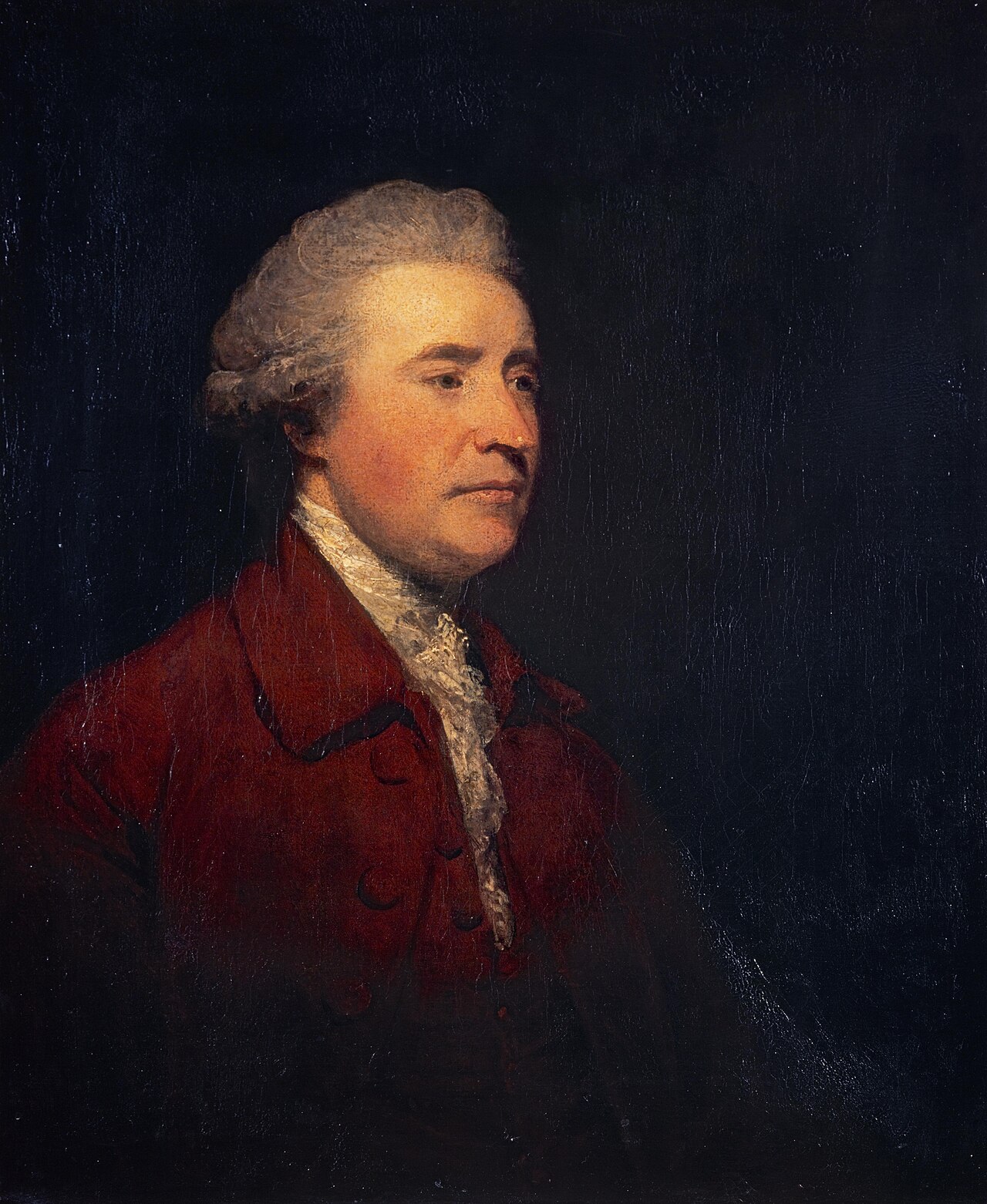
Edmund Burke, 1729-1797. Statesman, orator and author
Joshua Reynolds · 1774
Ready when you are
Start chatting with Edmund Burke now.
20 messages free · No credit card · Available in 50+ languages.