


Secondary sourceSculpturec. 1350
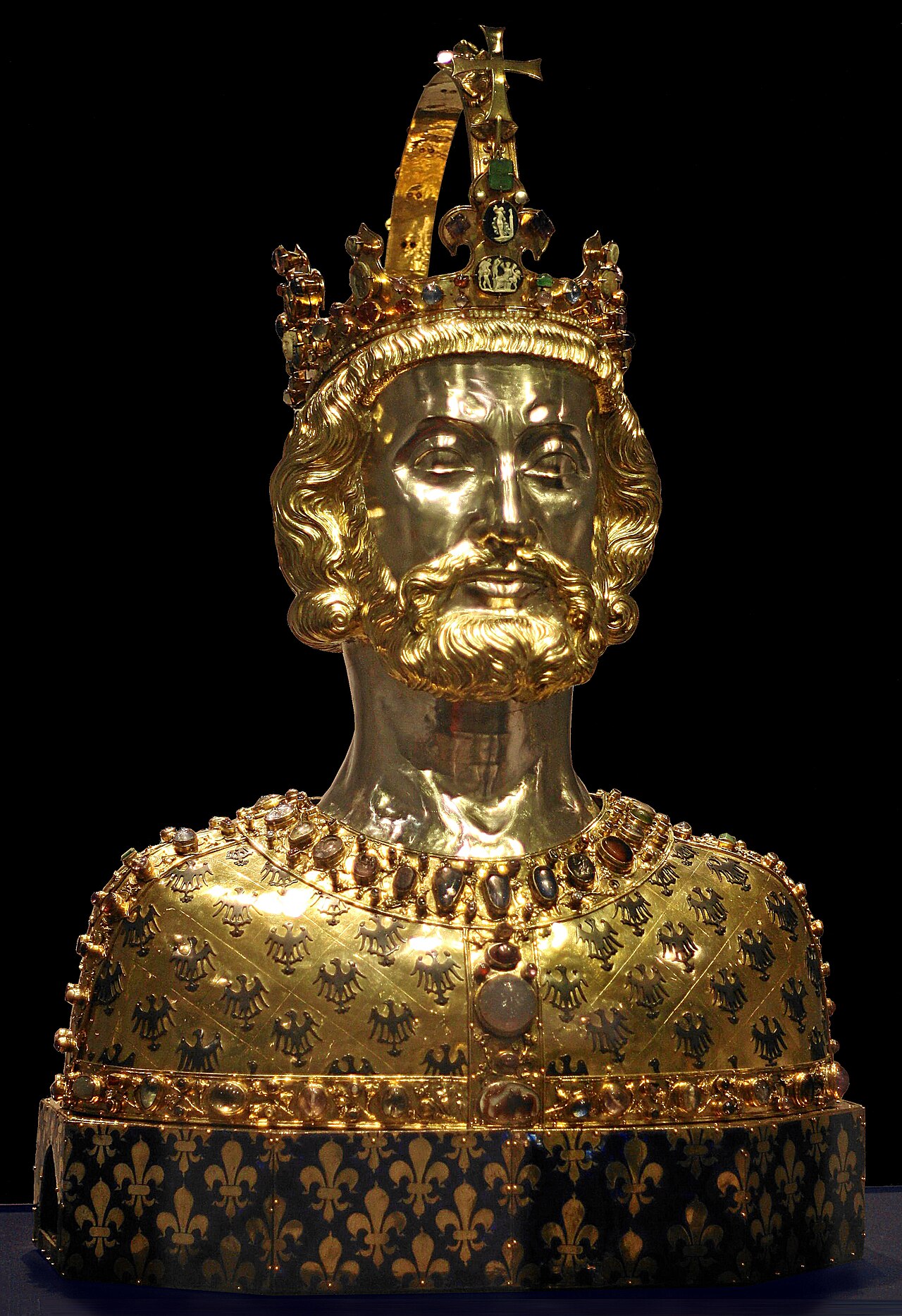
Bust of Charlemagne
c. 1350
A 14th-century gold reliquary bust holding part of Charlemagne's skull, which fixed the popular image of him as a bearded, crowned emperor.
This reliquary bust, holding part of Charlemagne's own skull, shaped the lasting image of him as crowned emperor.
About this source
What it is
This reliquary bust from around 1350 contains the top part of Charlemagne's skull. It is kept in the Aachen Cathedral Treasury and was made in the Mosan region, a centre of fine metalwork. According to tradition, it was donated by Emperor Charles IV, crowned at Aachen Cathedral in 1349.
Why it matters
Made five hundred years after Charlemagne's death, the bust is an idealised portrait reflecting 14th-century fashion rather than how he actually looked. It decorates Charlemagne's image with imperial eagles and ancient gems, linking him to the Holy Roman Empire and to Ancient Rome. It was carried in coronation processions so that new emperors, including Charles IV, could be seen as his legitimate successors.
Look closer
- Why would a 14th-century ruler want to be linked visually to Charlemagne?
- What clues in the crown, clothing and hairstyle tell you this is not a true likeness of the real man?
- Why might ancient Roman gems have been added to the reliquary?
This sculpture is part of the curated material that grounds the AI version of Charlemagne on Humy.ai — when students ask about related events, the AI can quote it and cite it.
More Charlemagne sources
Meet the AI Charlemagne →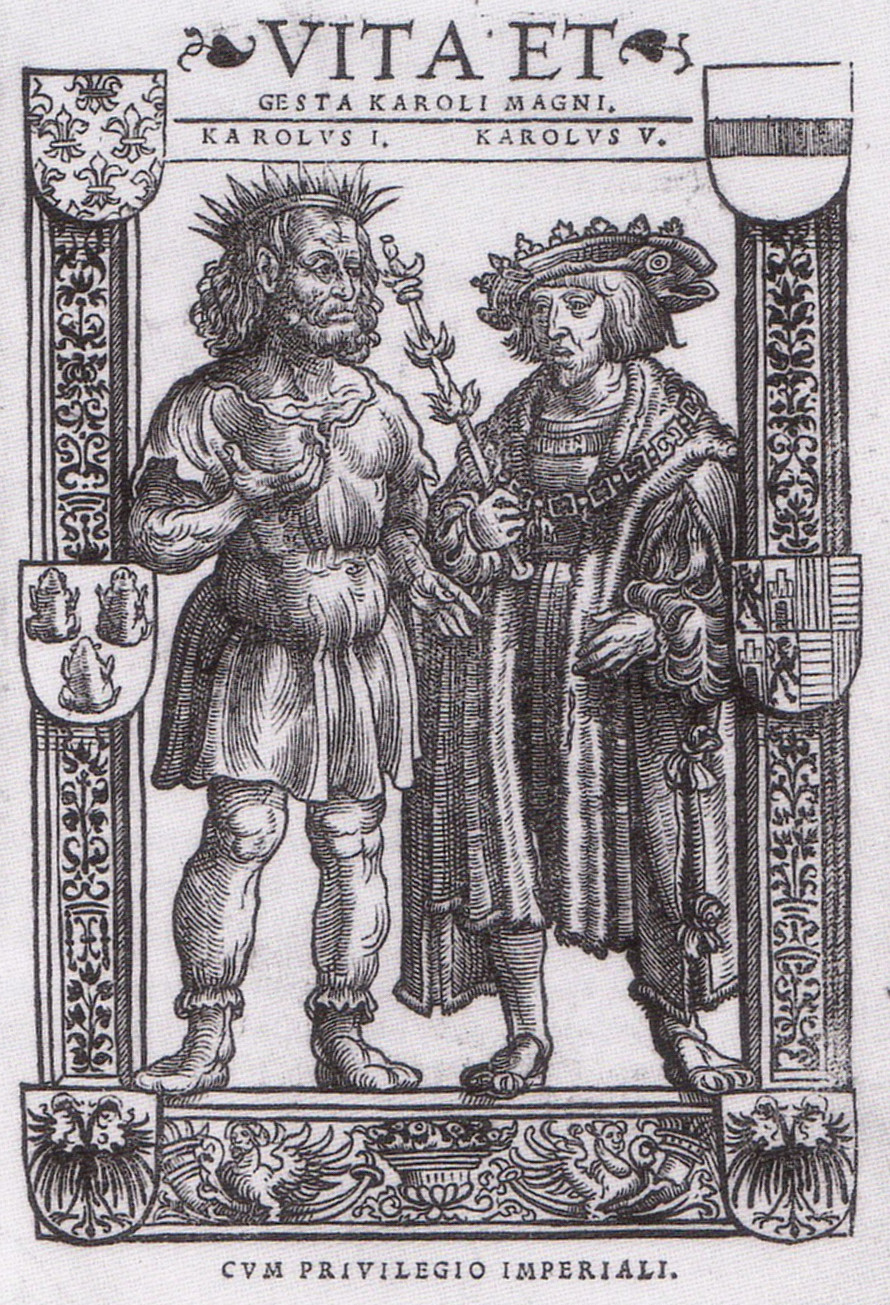 Book
Secondary source
Vita Karoli Magni
Einhard · c. 817-833
 Document
Primary source
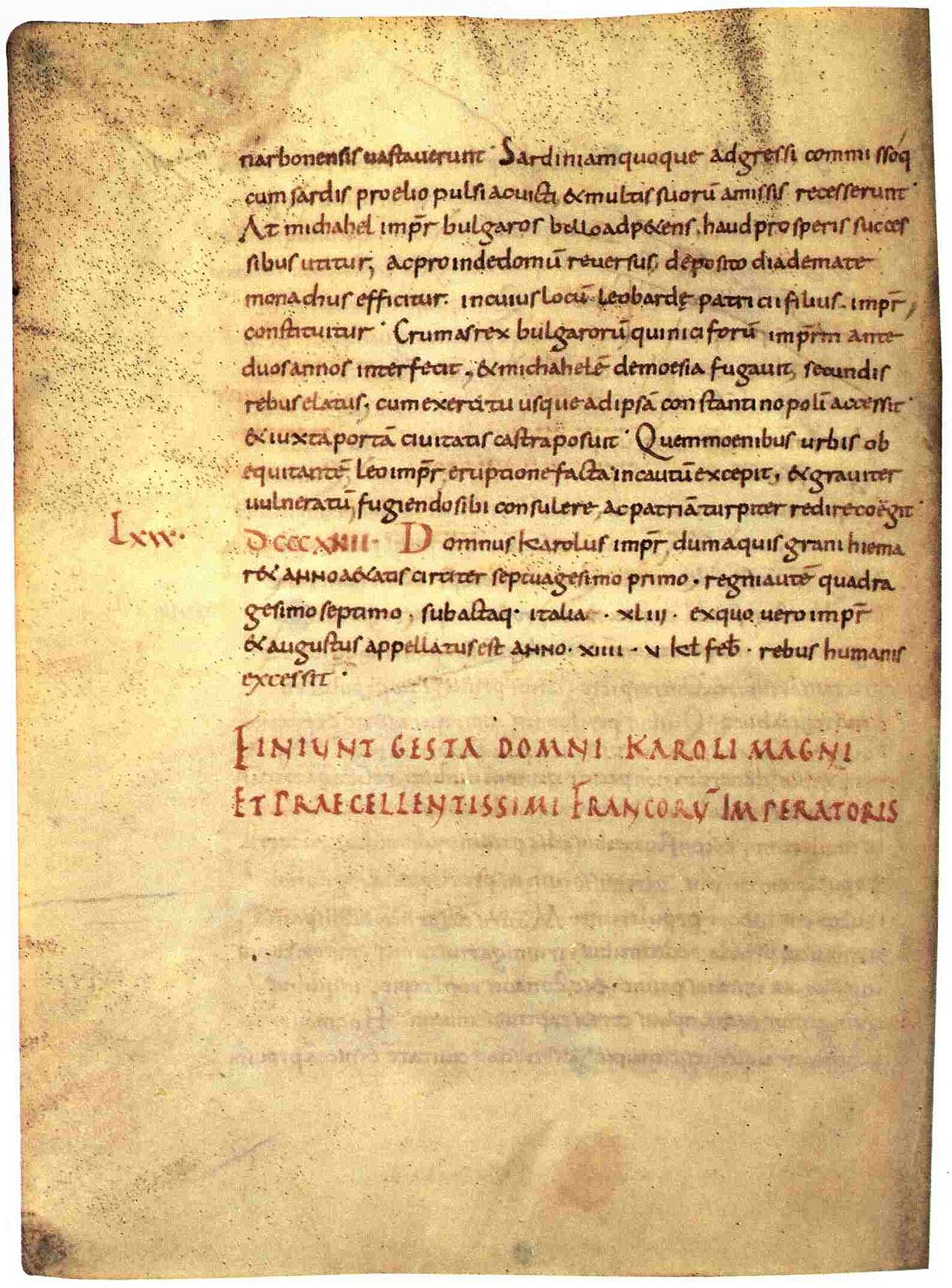
Royal Frankish Annals
741-829, this manuscript c. 900
Primary source
De litteris colendis
Charlemagne · late 780s-800s
 Document
Primary source
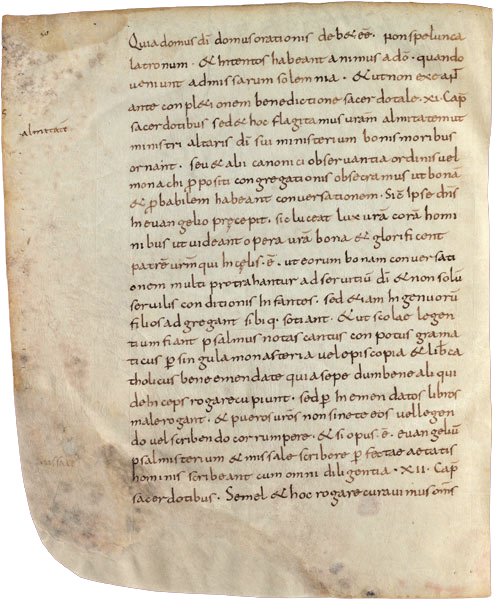
Admonitio generalis
Charlemagne · 23 March 789
 Document
Primary source
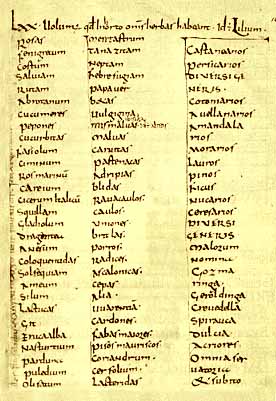
Capitulare de villis
c. 771-800
Ready when you are
Start chatting with Charlemagne now.
20 messages free · No credit card · Available in 50+ languages.