


Primary sourceArtifactc. 1800
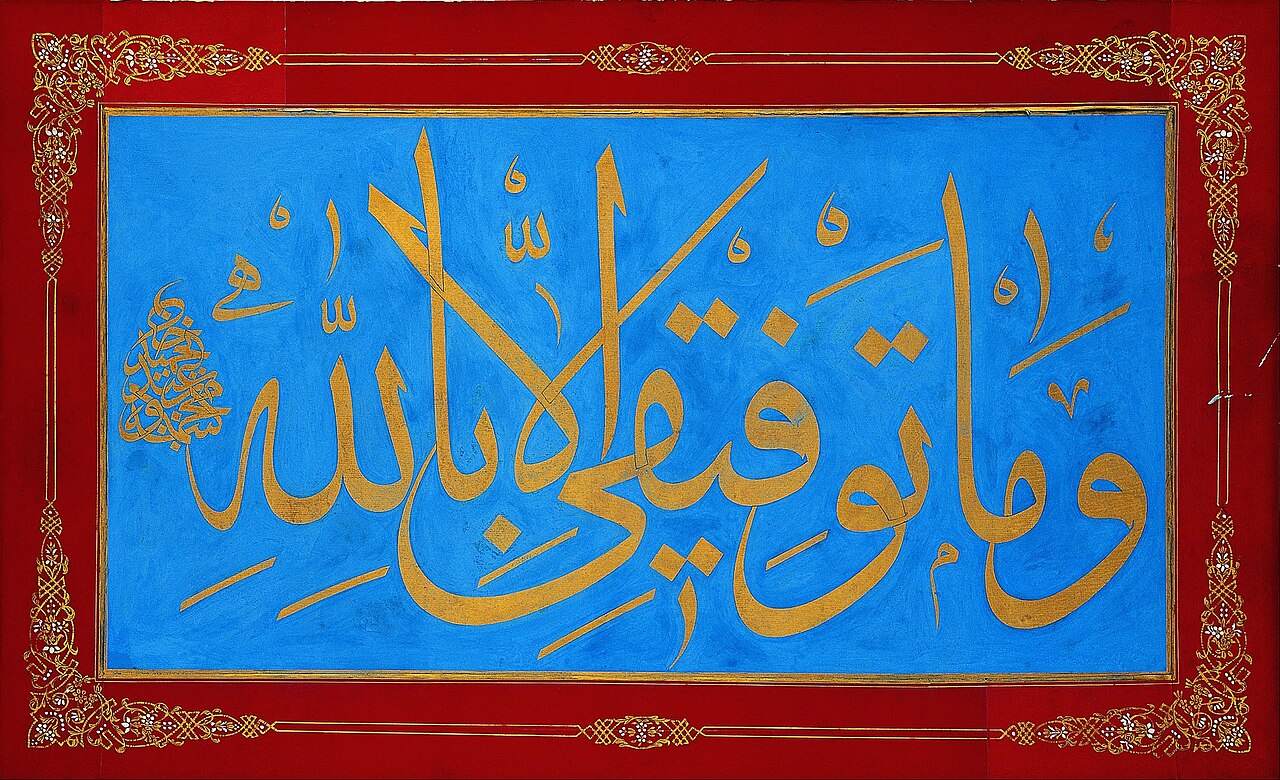
Calligraphic Panel (Levha) by Sultan Mahmud II
Mahmud II · c. 1800
A calligraphic panel created by Mahmud II himself, showing his skill as a trained calligrapher in the Ottoman tradition.
This calligraphic panel was personally made by Mahmud II, showing his artistic training before he became sultan.
About this source
What it is
This levha, or calligraphic panel, was created by Sultan Mahmud II around 1800, before he became sultan. It shows gold Arabic script on a bright blue field, framed by a red border decorated with gold floral and geometric ornament. The piece is held today in the Sakıp Sabancı Museum.
Why it matters
Mahmud II was trained in the tradition of the calligrapher Mustafa Rakım and became an accomplished calligrapher in his own right. This panel is a rare surviving example of his personal artistic work, separate from his role as a political and military reformer. It reminds students that Ottoman sultans were often expected to master artistic or scholarly skills alongside governing, and that Mahmud's interest in careful, disciplined craft may connect to his later reform efforts.
Look closer
- What skills would be needed to produce calligraphy like this?
- Why might a future sultan have been trained in an art form like calligraphy?
- What does this object reveal about Mahmud II beyond his political reputation?
This artifact is part of the curated material that grounds the AI version of Mahmud II on Humy.ai — when students ask about related events, the AI can quote it and cite it.
More Mahmud II sources
Browse all 88 →
Ready when you are
Start chatting with Mahmud II now.
20 messages free · No credit card · Available in 50+ languages.