


Primary sourcePainting1897
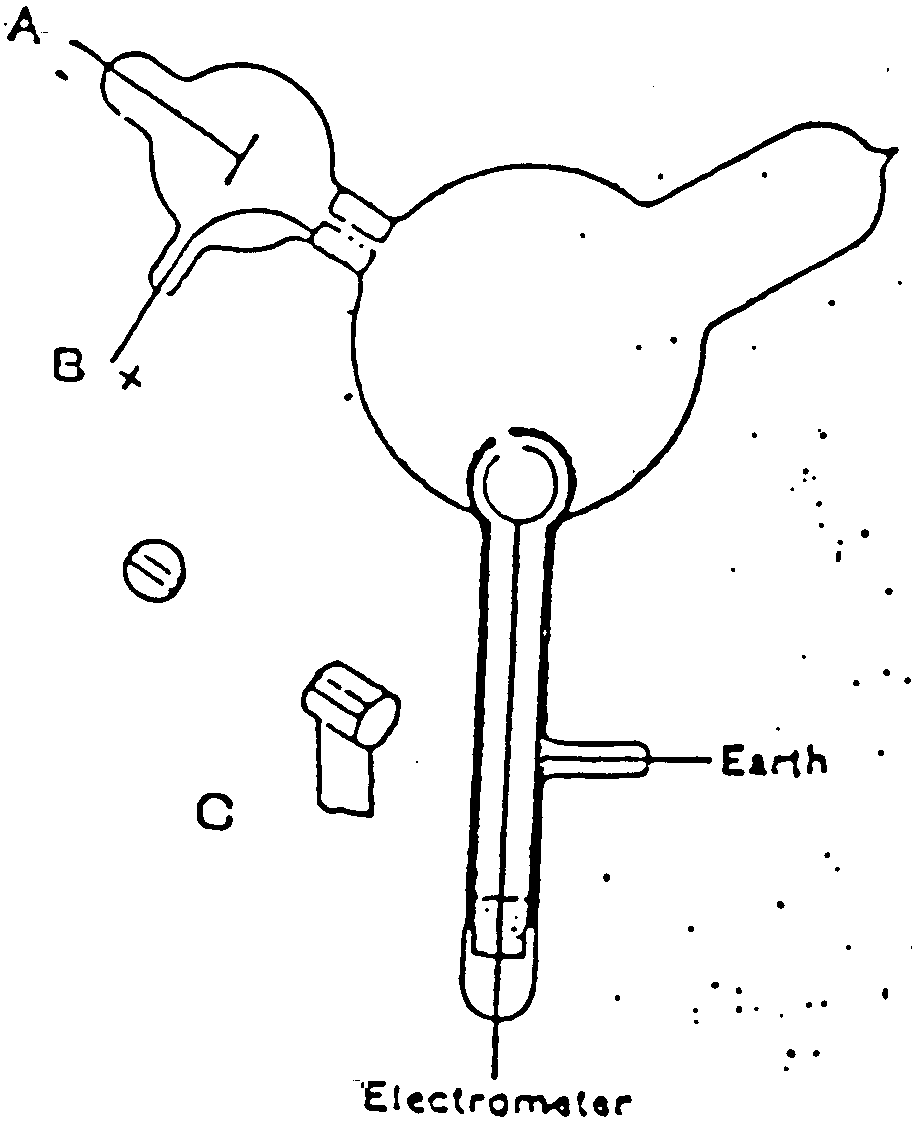
Cathode Ray Tube Diagram
J. J. Thomson · 1897
Thomson's own published diagram of the tube and deflecting plates used to show that cathode rays are charged particles.
Thomson's own diagram of the apparatus he used to prove the existence of the electron.
About this source
What it is
This is a line drawing published by J. J. Thomson showing the cathode ray tube he used to demonstrate that cathode rays are deflected by a magnetic field and carry negative charge. It shows the electrodes, bulb, side tube and the electrometer used to detect the charge.
Why it matters
This diagram illustrates the experimental set-up behind Thomson's famous 1897 conclusion that cathode rays are not a separate electromagnetic effect but charged particles, and that the deflection and the negative charge travel together. It is the kind of diagram students still use to understand how the electron was discovered.
Look closer
- Why would Thomson label each part of the apparatus so carefully in his published diagram?
- What does the electrometer in the drawing suggest about how the charge was measured?
- How might a diagram like this help convince other scientists of his conclusions?
This painting is part of the curated material that grounds the AI version of J. J. Thomson on Humy.ai — when students ask about related events, the AI can quote it and cite it.
More J. J. Thomson sources
Browse all 54 →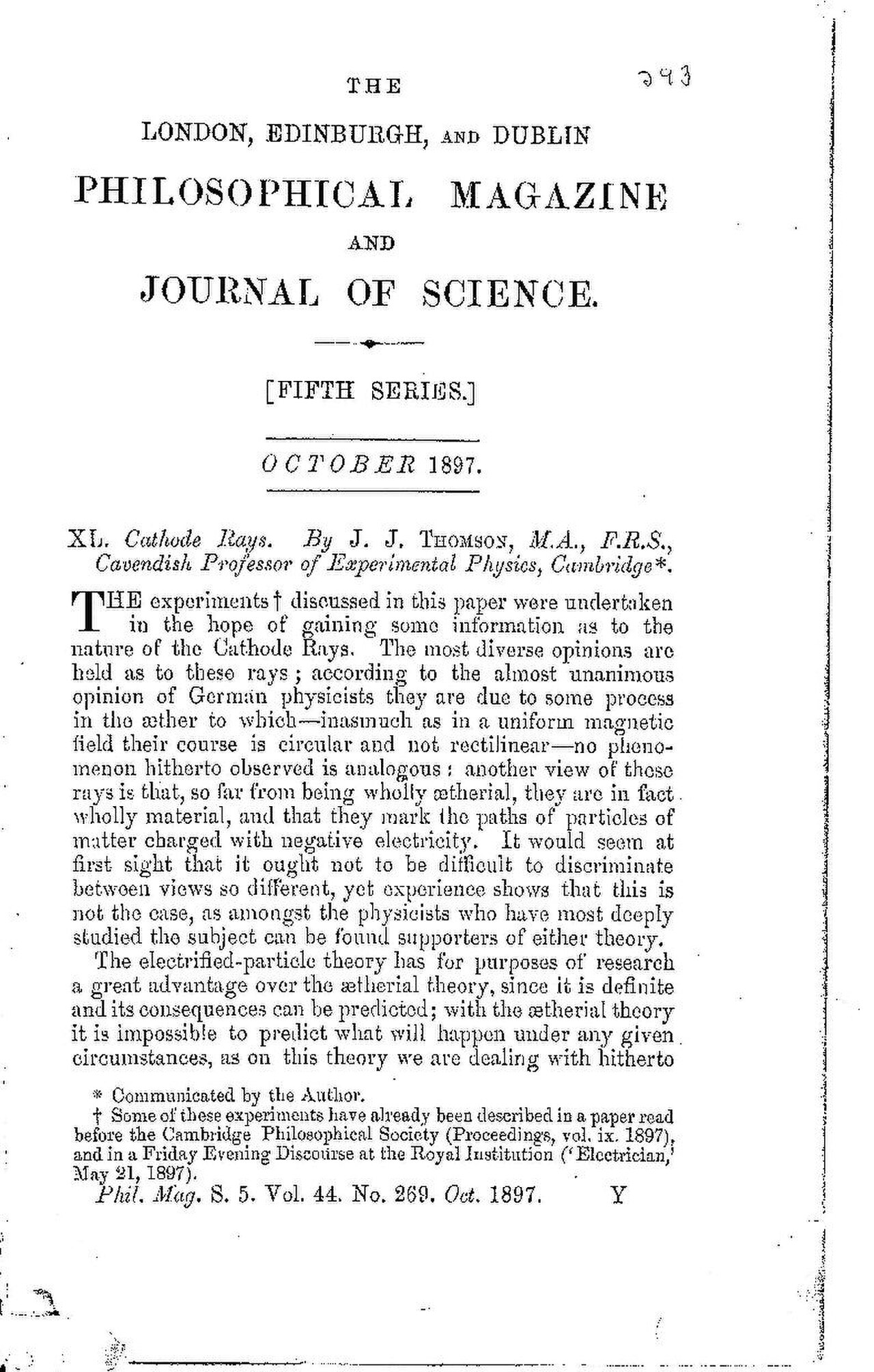 Document
Primary source
Cathode Rays
J. J. Thomson · October 1897
 Artifact
Primary source
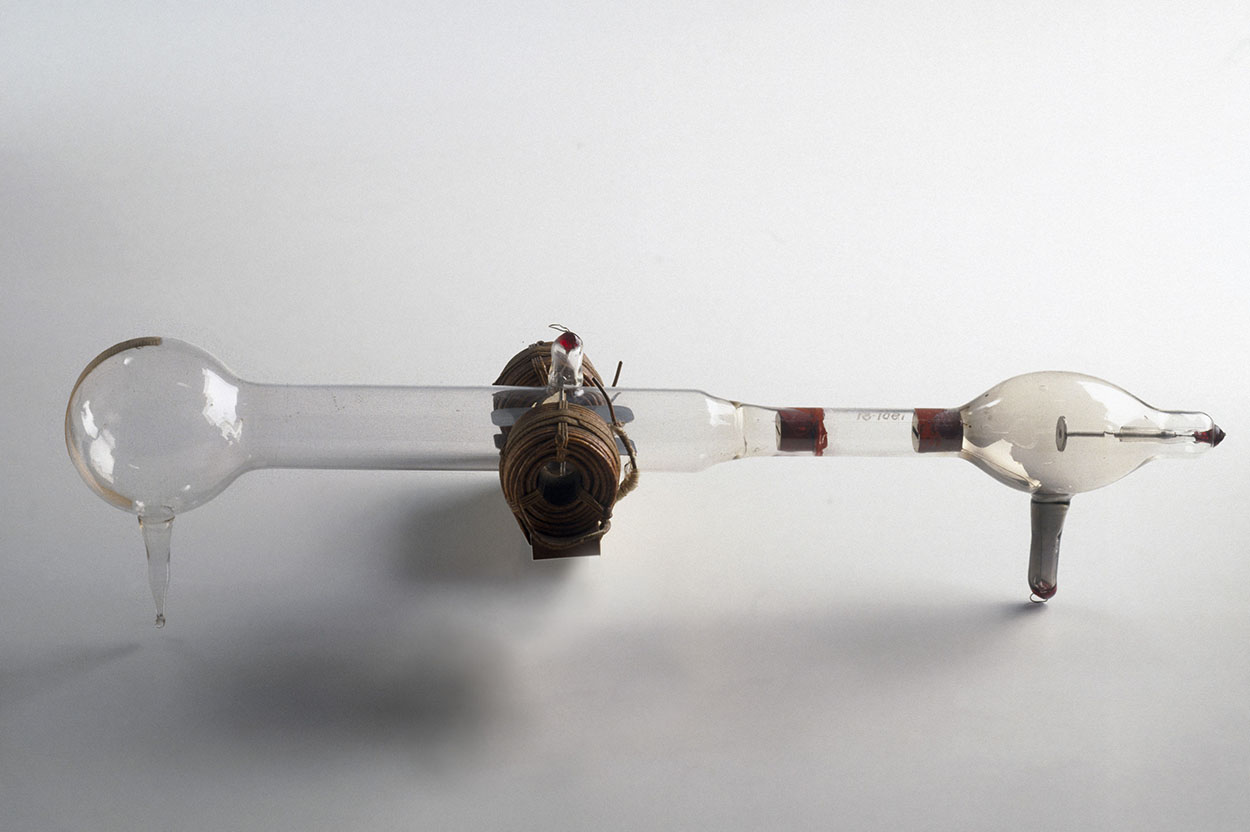
Cathode Ray Tube with Magnet Coils
1897
 Photograph
Primary source
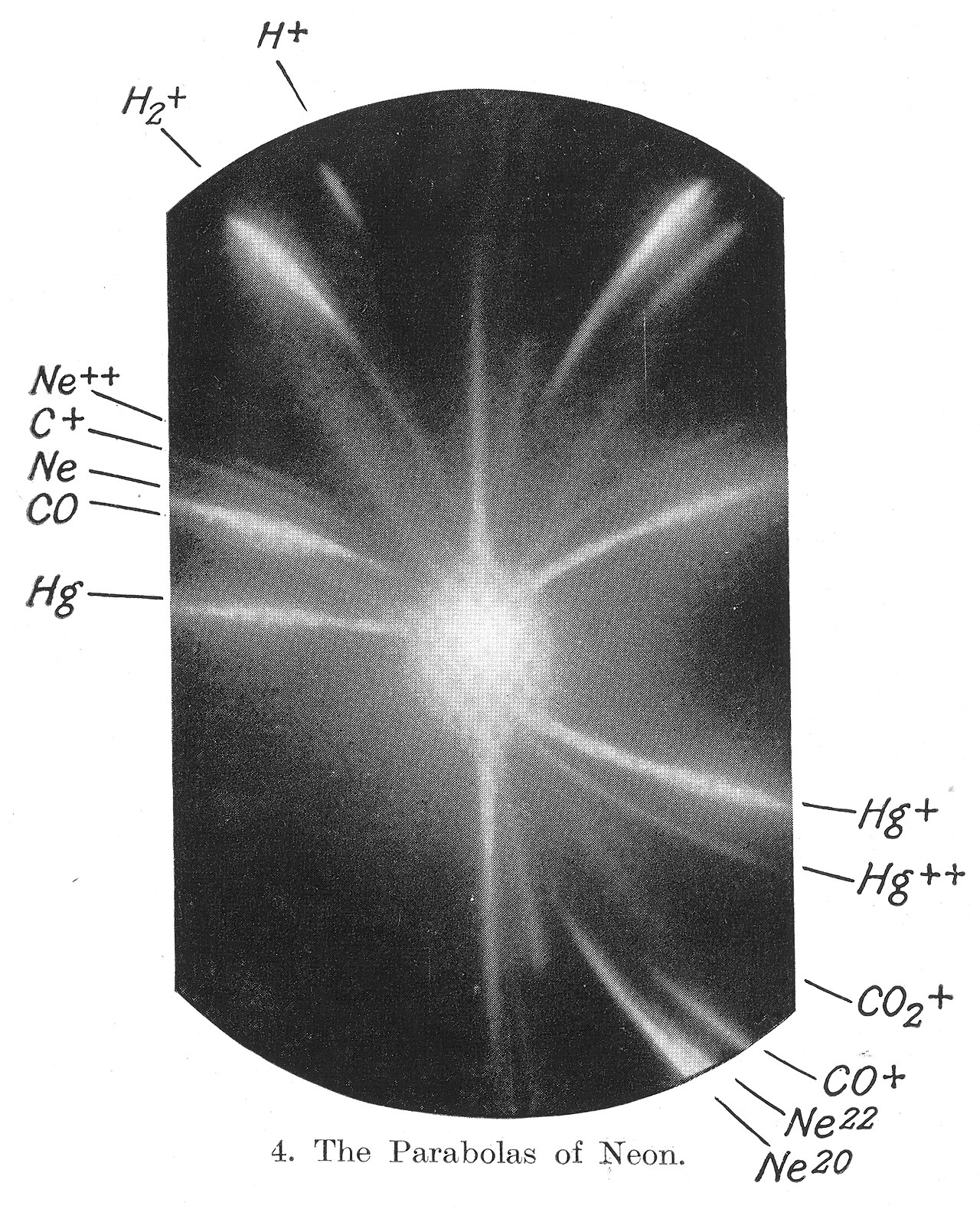
Discovery of Neon Isotopes
Francis William Aston · 1912-1913
 Photograph
Primary source
Portrait of J. J. Thomson
Nobel foundation · c. 1906
Free account
Browse every J. J. Thomson source
Sign up free →
Ready when you are
Start chatting with J. J. Thomson now.
20 messages free · No credit card · Available in 50+ languages.