


Primary sourcePhotograph1912-1913
Discovery of Neon Isotopes
Francis William Aston · 1912-1913
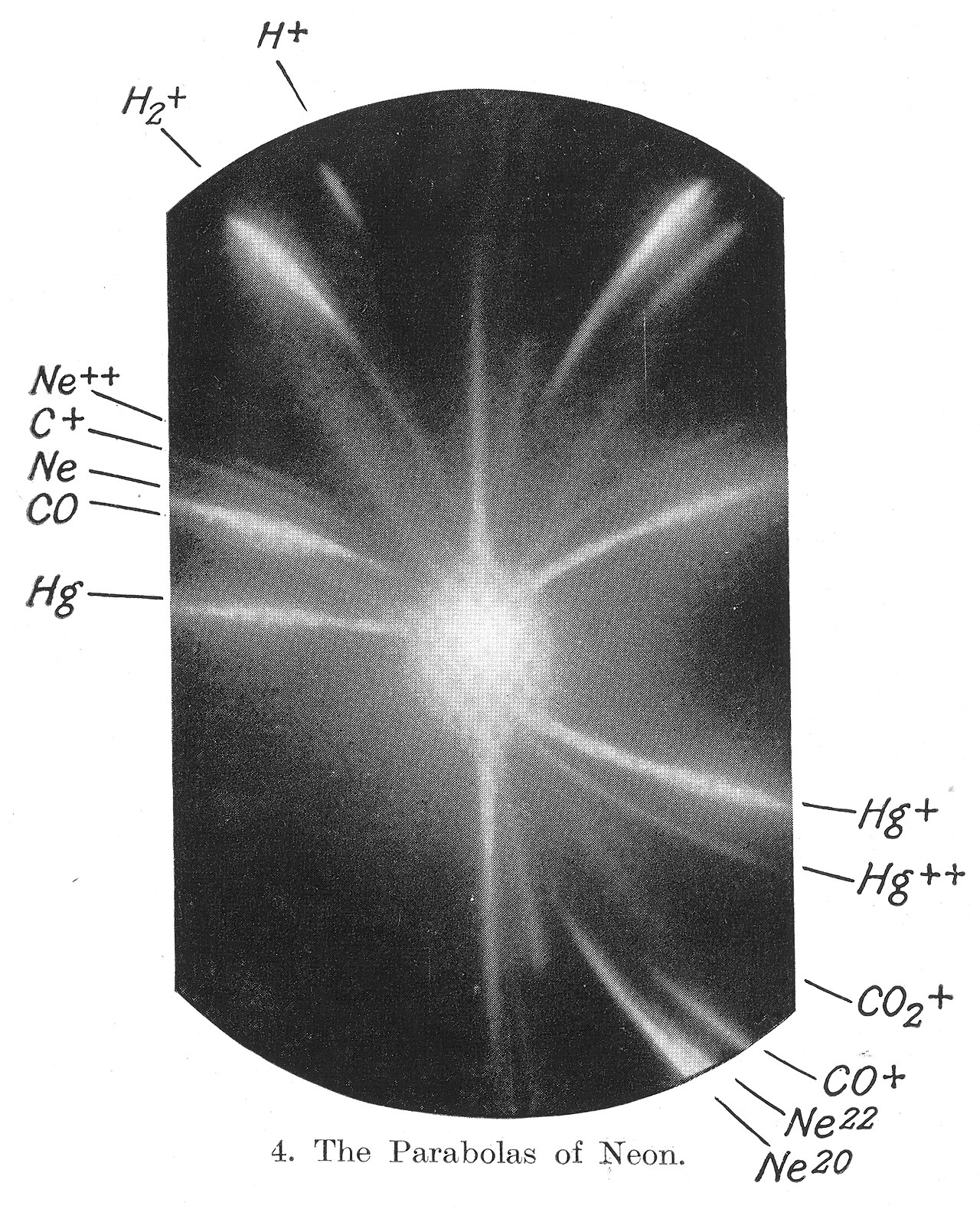
A 1912–13 photographic plate from Thomson and Aston's positive-ray experiments, showing the first evidence of isotopes in a stable element.
This plate came from positive-ray research Thomson led, extending his work on charged particles into the discovery of isotopes.
About this source
What it is
This is a photographic plate made by Francis William Aston during positive-ray research carried out with J. J. Thomson around 1912–13. The plate records curved tracks left by different charged particles, including two tracks in the lower right identified as neon-20 and neon-22.
Why it matters
Thomson had been studying positive rays (also called canal rays) to analyse the composition of gases. This plate, produced with Aston, gave the first evidence that a stable element like neon could exist as atoms of different mass, what we now call isotopes. The work later helped Aston develop mass spectrometry.
Look closer
- What do the different curved streaks on the plate represent, and why do they differ in shape?
- Why might two tracks from the same element, neon, appear in slightly different places?
- What does this image not explain about how the apparatus produced these tracks?
This photograph is part of the curated material that grounds the AI version of J. J. Thomson on Humy.ai — when students ask about related events, the AI can quote it and cite it.
More J. J. Thomson sources
Browse all 54 →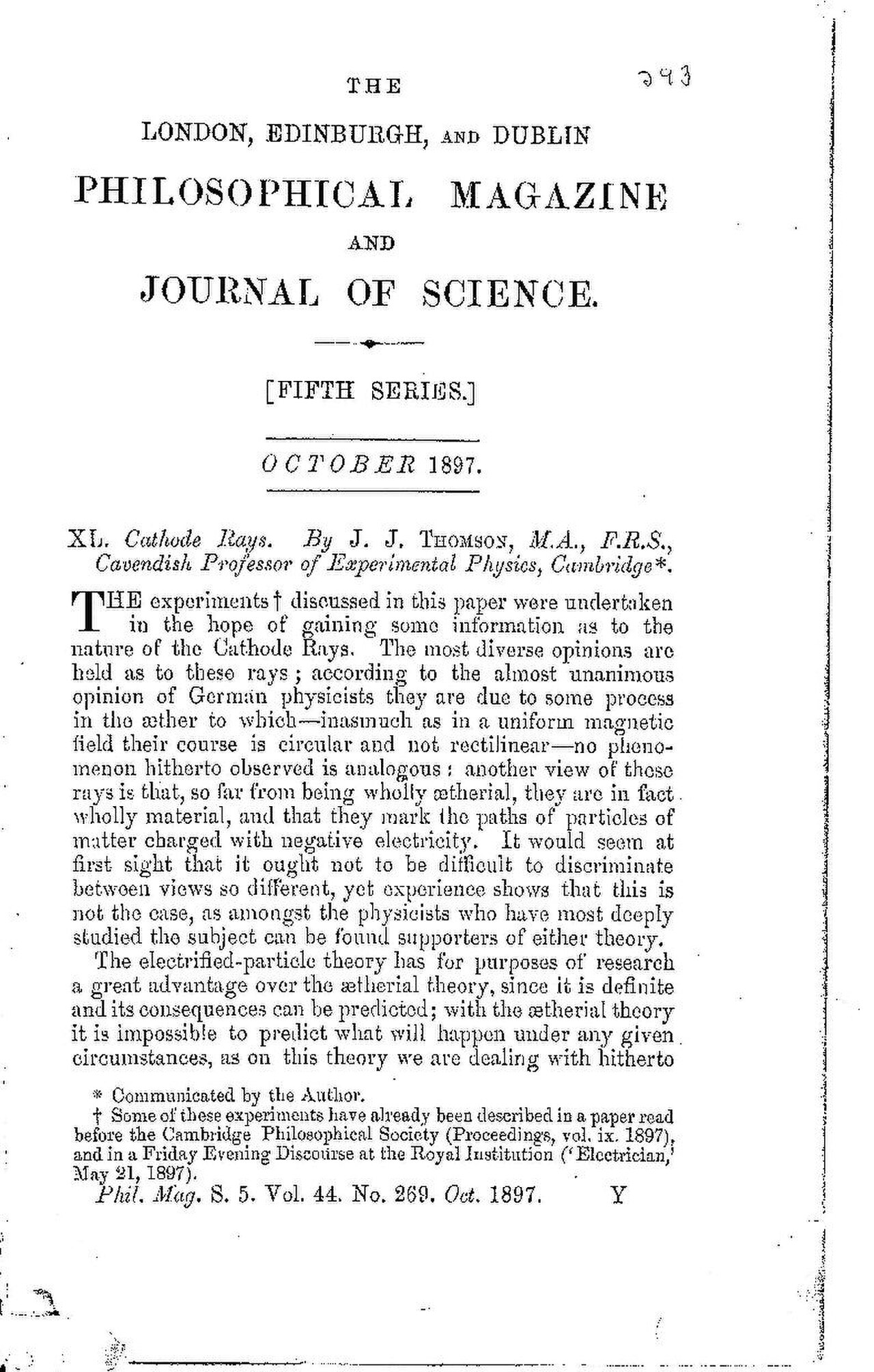 Document
Primary source
Cathode Rays
J. J. Thomson · October 1897
 Artifact
Primary source
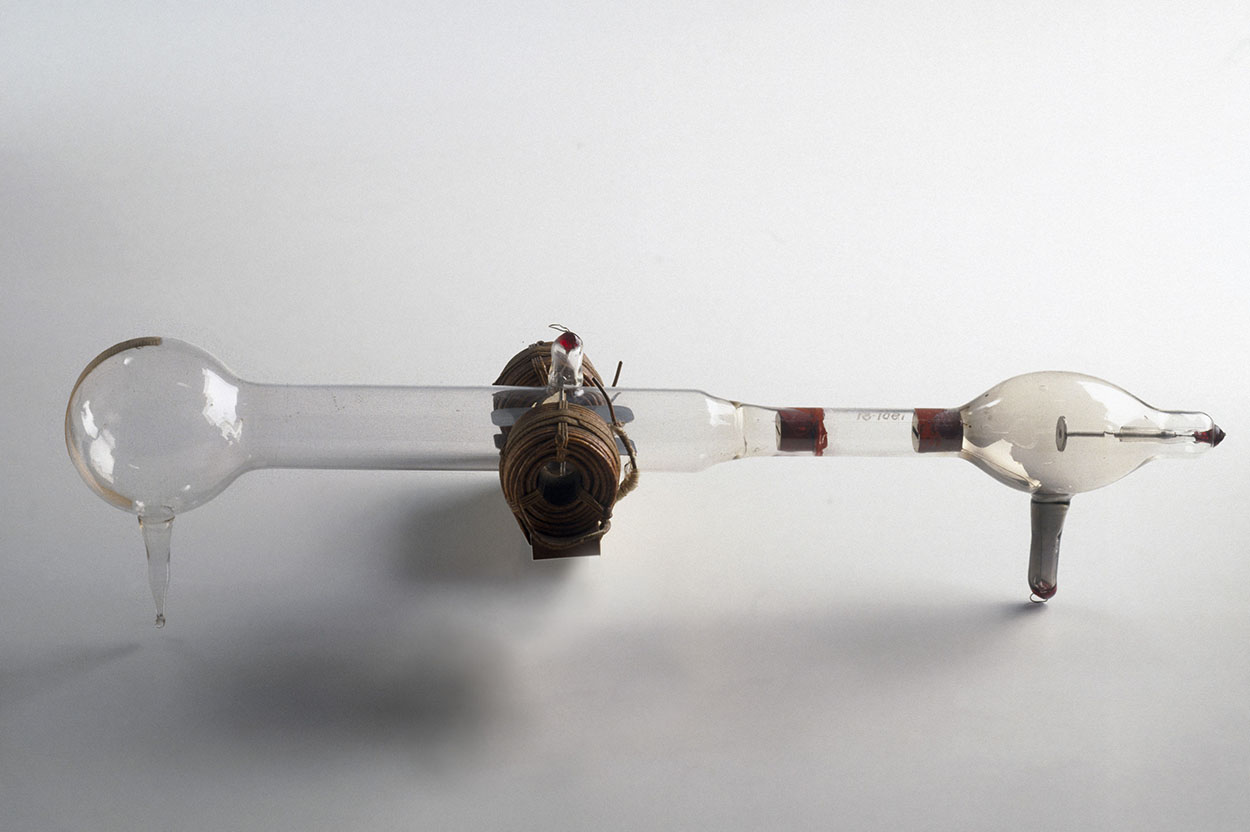
Cathode Ray Tube with Magnet Coils
1897
 Painting
Primary source
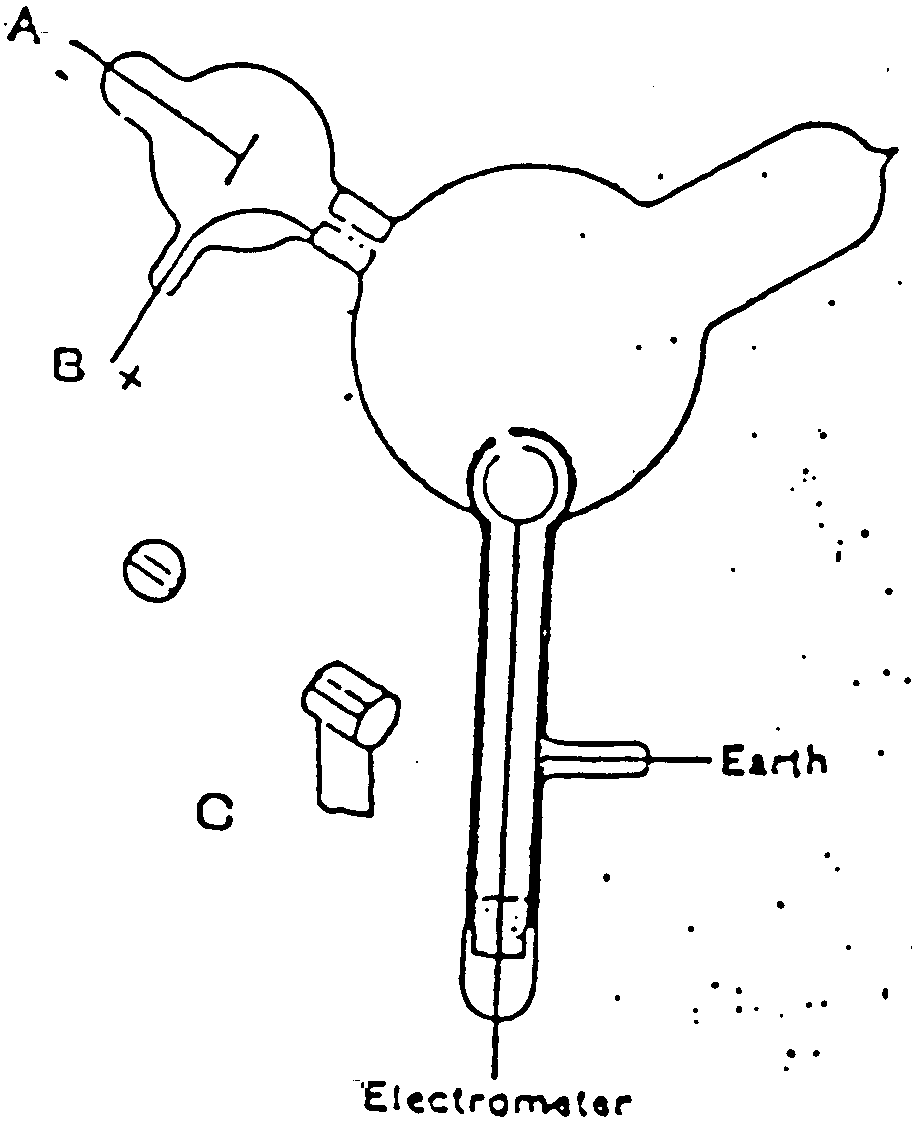
Cathode Ray Tube Diagram
J. J. Thomson · 1897
 Photograph
Primary source
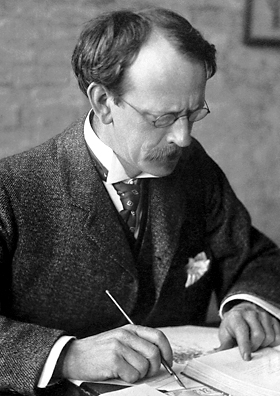
Portrait of J. J. Thomson
Nobel foundation · c. 1906
Free account
Browse every J. J. Thomson source
Sign up free →
Ready when you are
Start chatting with J. J. Thomson now.
20 messages free · No credit card · Available in 50+ languages.