


Primary sourceArtifact1897
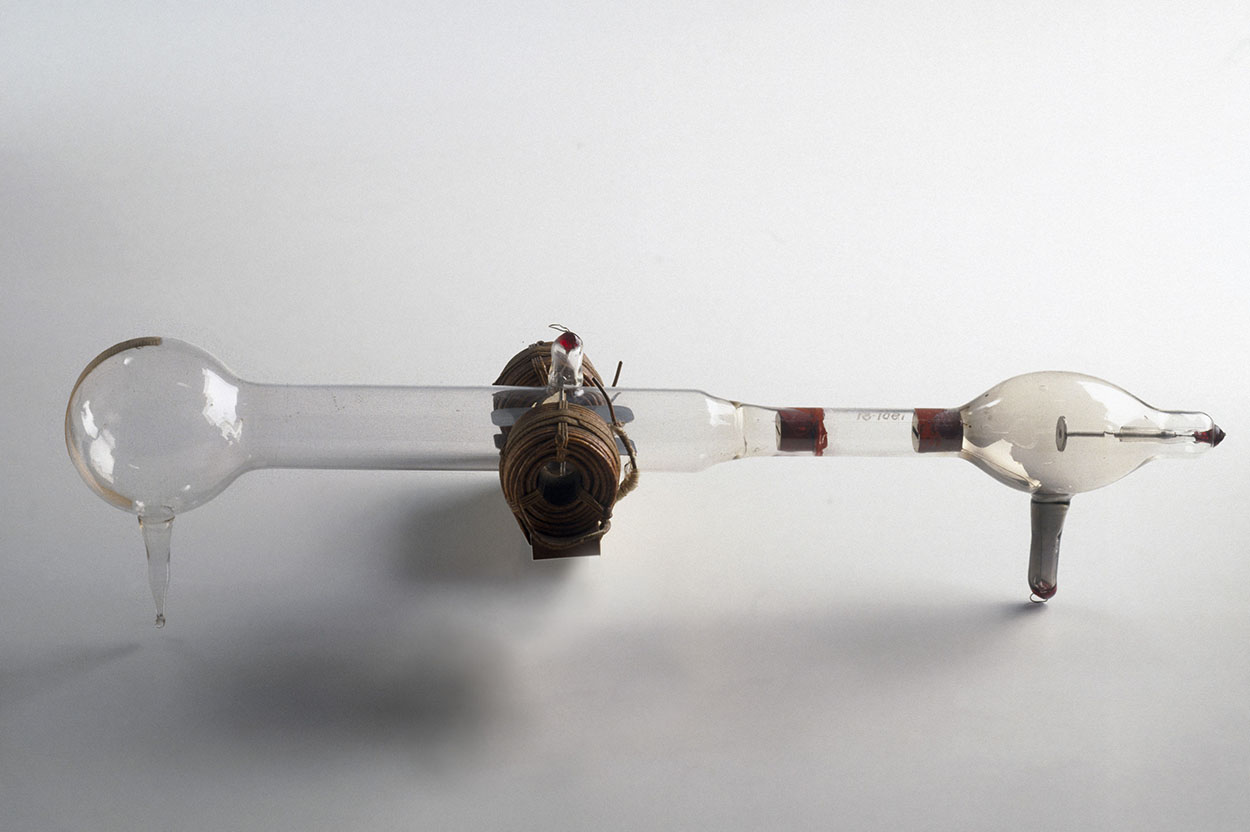
Cathode Ray Tube with Magnet Coils
1897
The actual glass apparatus Thomson used in 1897 to deflect cathode rays and identify the electron.
This is the original apparatus Thomson used to discover the electron, the central achievement of his career.
About this source
What it is
This is the glass cathode ray tube, fitted with wire coils, that J. J. Thomson used in his Cambridge laboratory in the 1890s. It is held by the Science Museum, London. Thomson used it to apply magnetic and electric fields to cathode rays and observe how they bent.
Why it matters
At the time, British and German physicists disagreed about whether cathode rays were particles or a form of radiation. Thomson's experiments with this very apparatus showed the rays were negatively charged particles far smaller than an atom, work he published in April 1897. These particles were later named electrons, and the discovery changed how scientists understood the structure of matter.
Look closer
- What do the coils and bulb shapes tell you about how the apparatus might have worked?
- Why might a museum keep the original equipment instead of just a description of the experiment?
- What does this object not tell us about the experiment that the written paper does?
This artifact is part of the curated material that grounds the AI version of J. J. Thomson on Humy.ai — when students ask about related events, the AI can quote it and cite it.
More J. J. Thomson sources
Browse all 54 →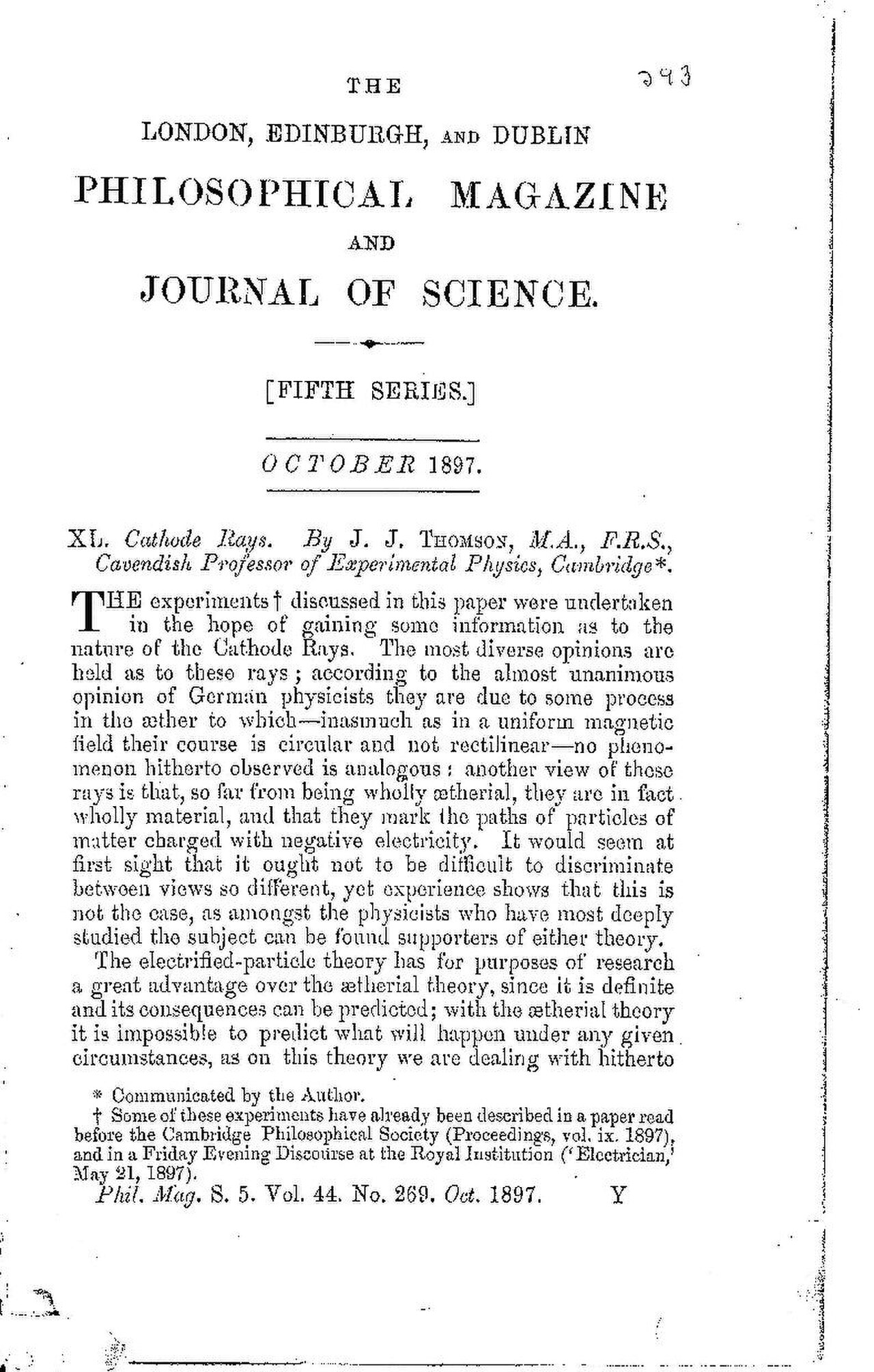 Document
Primary source
Cathode Rays
J. J. Thomson · October 1897
 Painting
Primary source
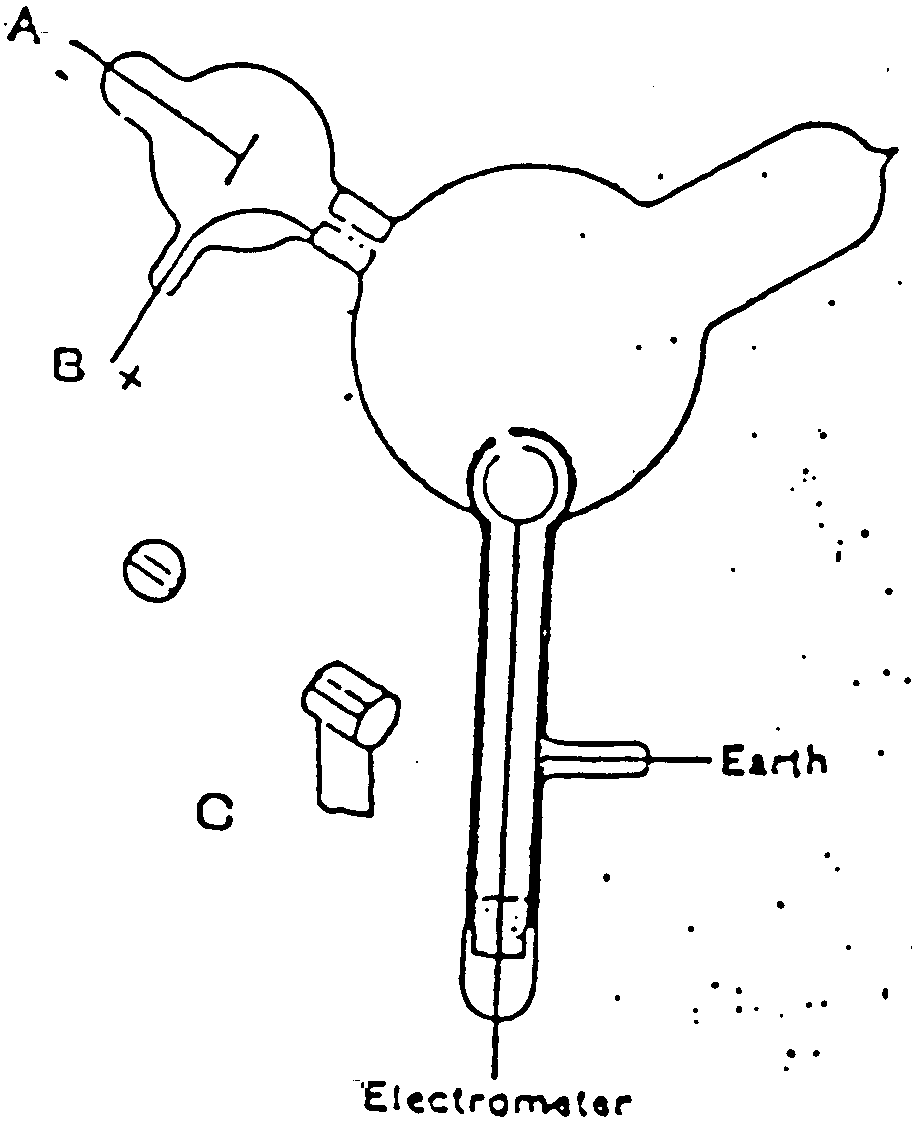
Cathode Ray Tube Diagram
J. J. Thomson · 1897
 Photograph
Primary source
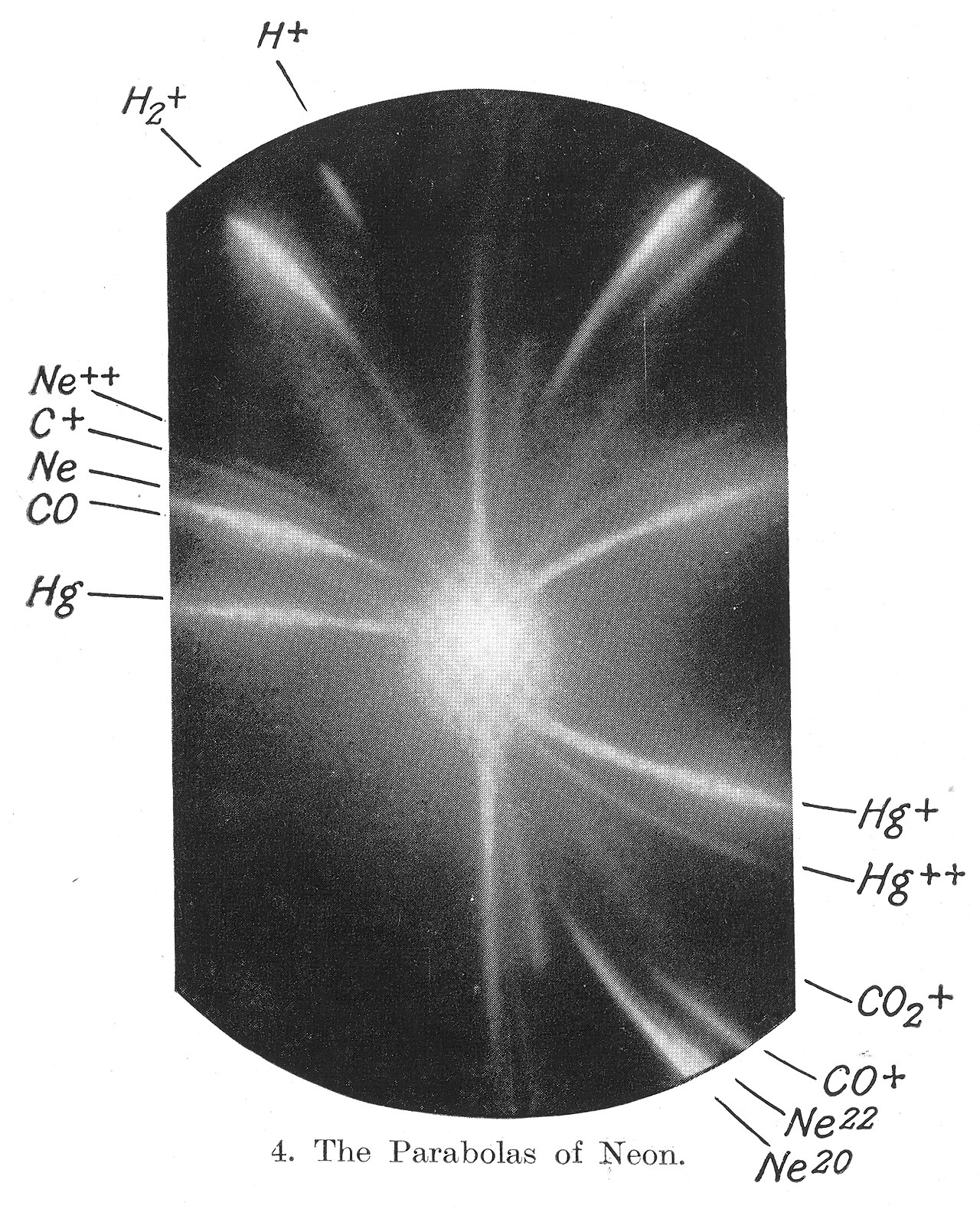
Discovery of Neon Isotopes
Francis William Aston · 1912-1913
 Photograph
Primary source
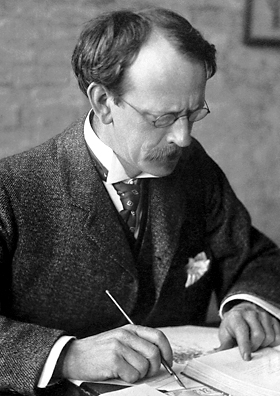
Portrait of J. J. Thomson
Nobel foundation · c. 1906
Free account
Browse every J. J. Thomson source
Sign up free →
Ready when you are
Start chatting with J. J. Thomson now.
20 messages free · No credit card · Available in 50+ languages.