


Secondary sourcePainting
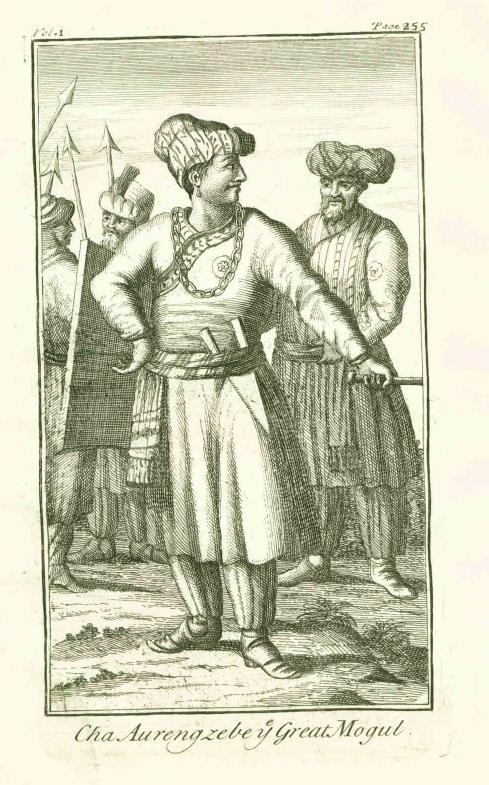
Cha Aurengzebe Ye Great Mogul
Unsigned
A European copper engraving portraying Aurangzeb as 'the Great Mogul', made for a printed travel account circulating in the West.
This European print presents an imagined image of Aurangzeb for Western readers, showing how his fame spread abroad.
About this source
What it is
This is an unsigned copper engraving titled "Cha Aurengzebe Ye Great Mogul", with markings for "Vol. 1" and "Page 255" showing it came from a printed book. It shows a standing man in a turban and long robe with a jeweled necklace, holding a staff, flanked by two attendants.
Why it matters
European printers and travel writers produced images like this to satisfy curiosity about distant rulers such as Aurangzeb. Because the engraver was unsigned and likely never saw the emperor in person, the image reflects European ideas about Mughal royalty as much as reality.
Prints like this shaped how ordinary Europeans pictured the Mughal Empire and its emperor.
Look closer
- What details in the clothing and pose seem meant to signal wealth and power?
- Since the artist is unknown and unlikely to have met Aurangzeb, how reliable is this as a record of his real appearance?
- Why might a book include an imagined portrait of a foreign ruler?
This painting is part of the curated material that grounds the AI version of Aurangzeb on Humy.ai — when students ask about related events, the AI can quote it and cite it.
More Aurangzeb sources
Meet the AI Aurangzeb →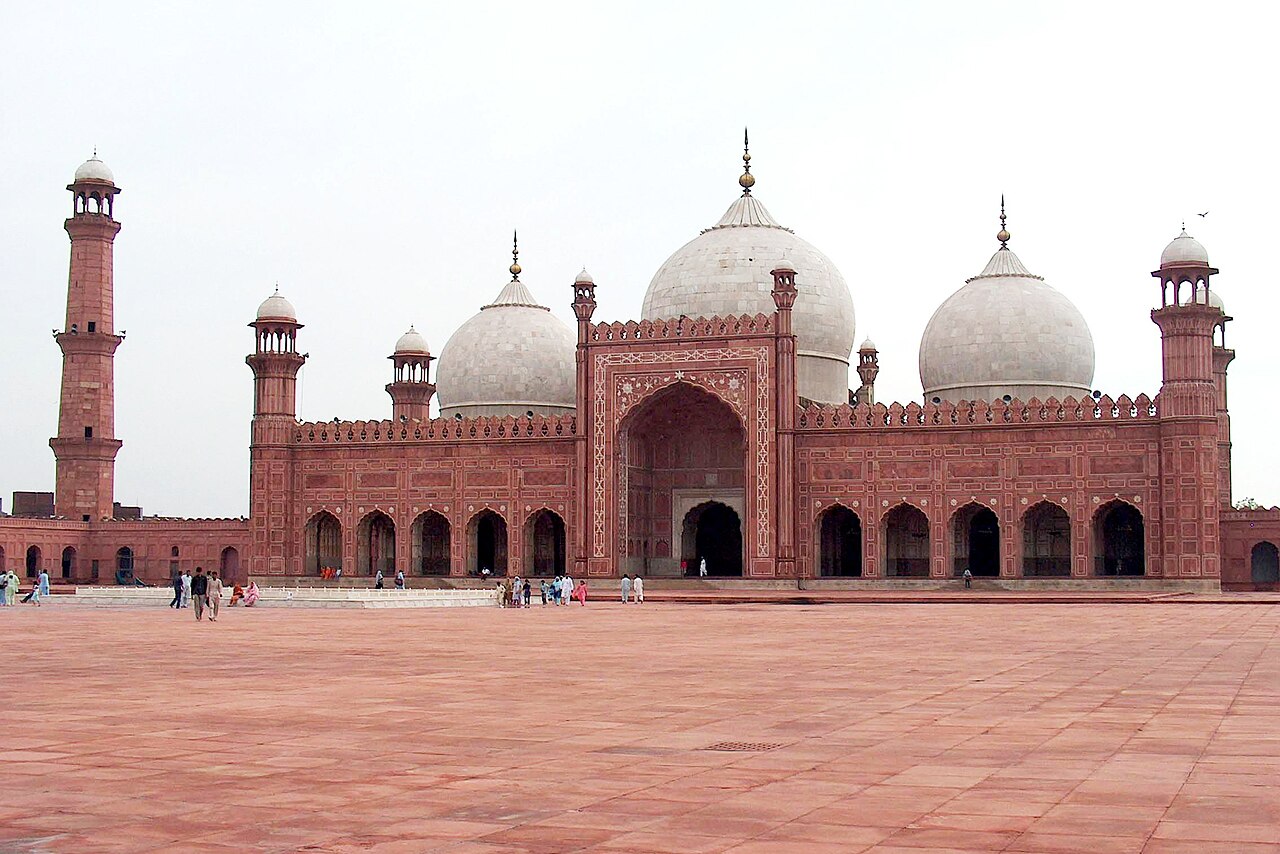 Artifact
Primary source
Badshahi Mosque
1671–1673
 Document
Primary source
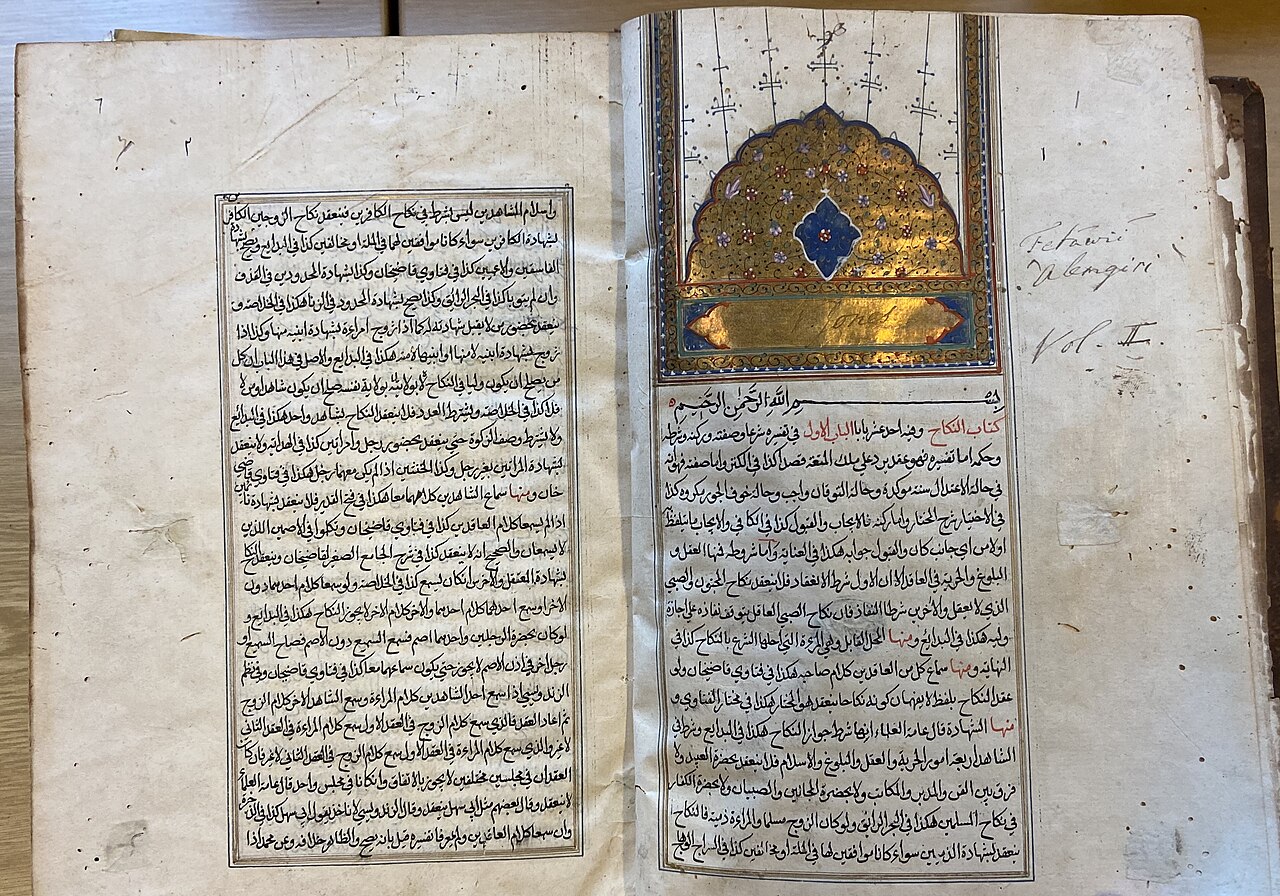
Fatawa-i Alamgiri Manuscript
17th century (this copy later recopied)
 Book
Secondary source
Maasir-i-Alamgiri
Saqi Musta'id Khan · c. 1710 (this copy 1763-1764)
Primary source
Ruka'at-i-Alamgiri
Aurangzeb · 17th century
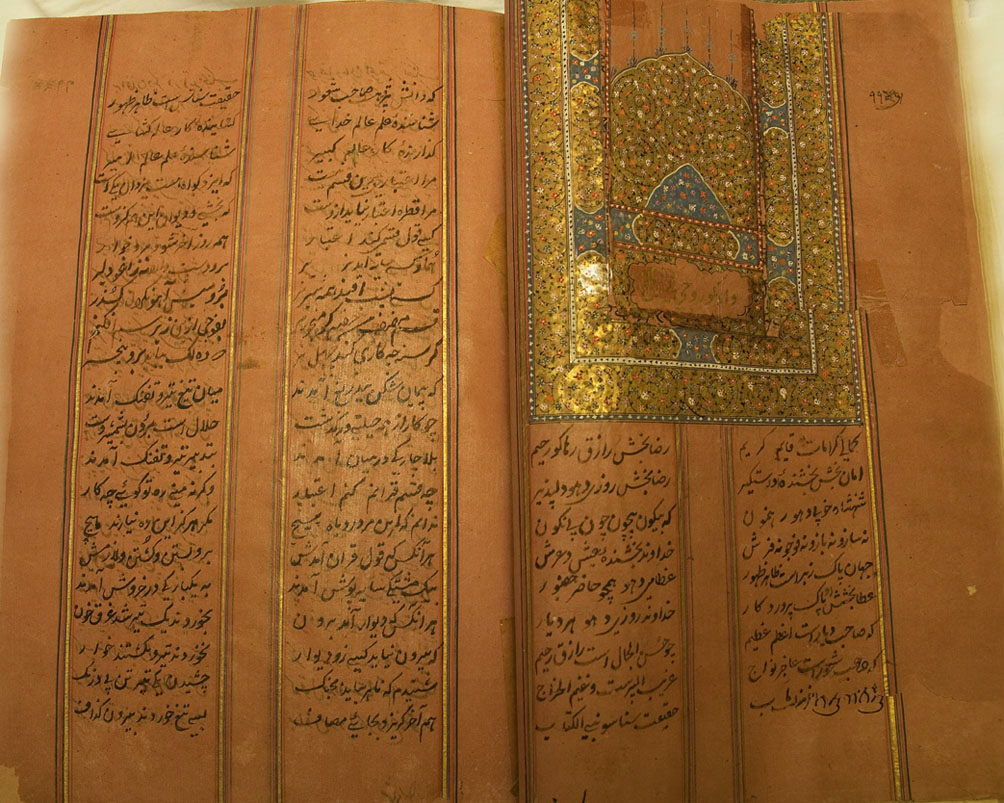 Letter
Primary source
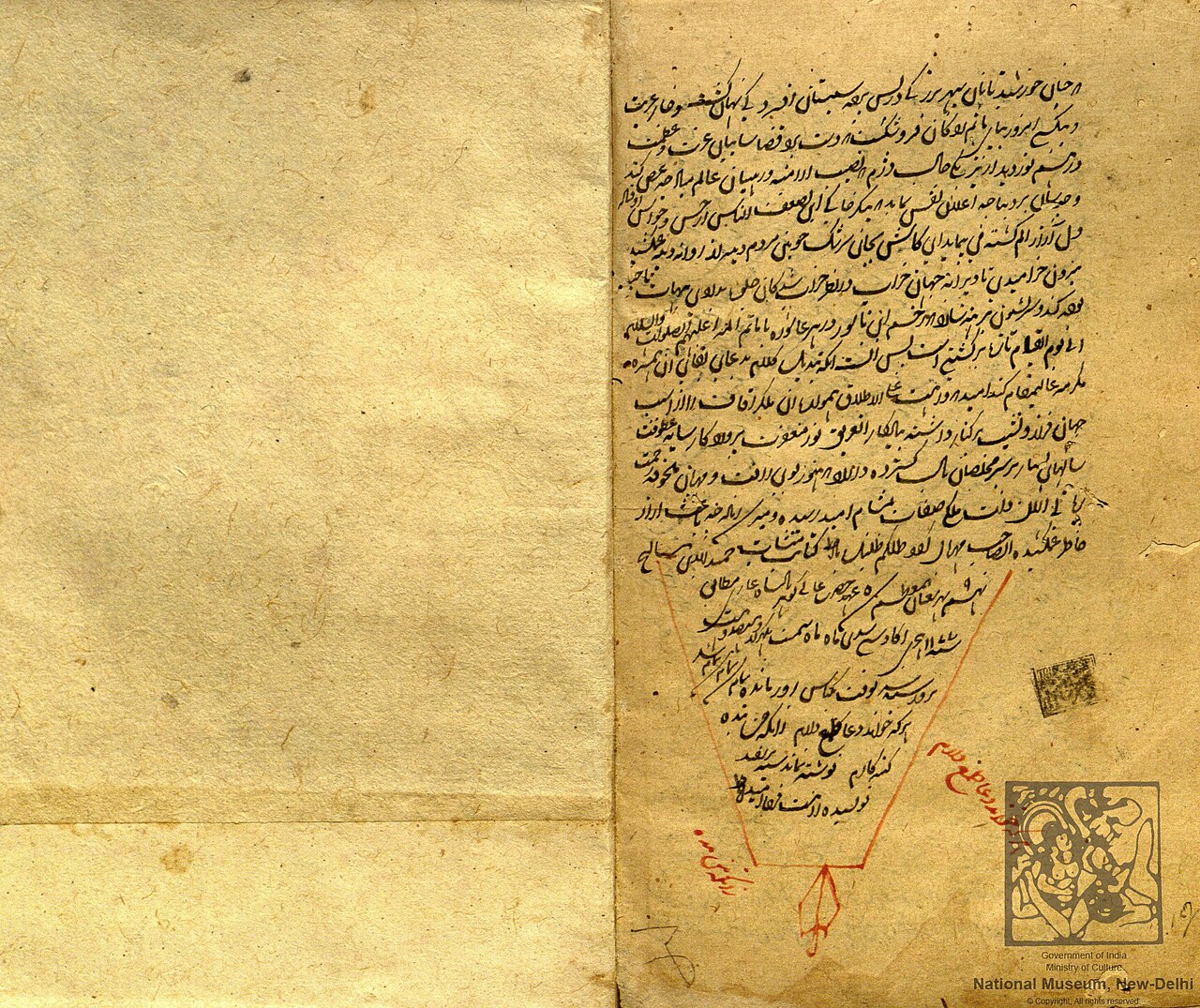
Zafarnamah
Guru Gobind Singh · 1705
Ready when you are
Start chatting with Aurangzeb now.
20 messages free · No credit card · Available in 50+ languages.