


Secondary sourcePainting
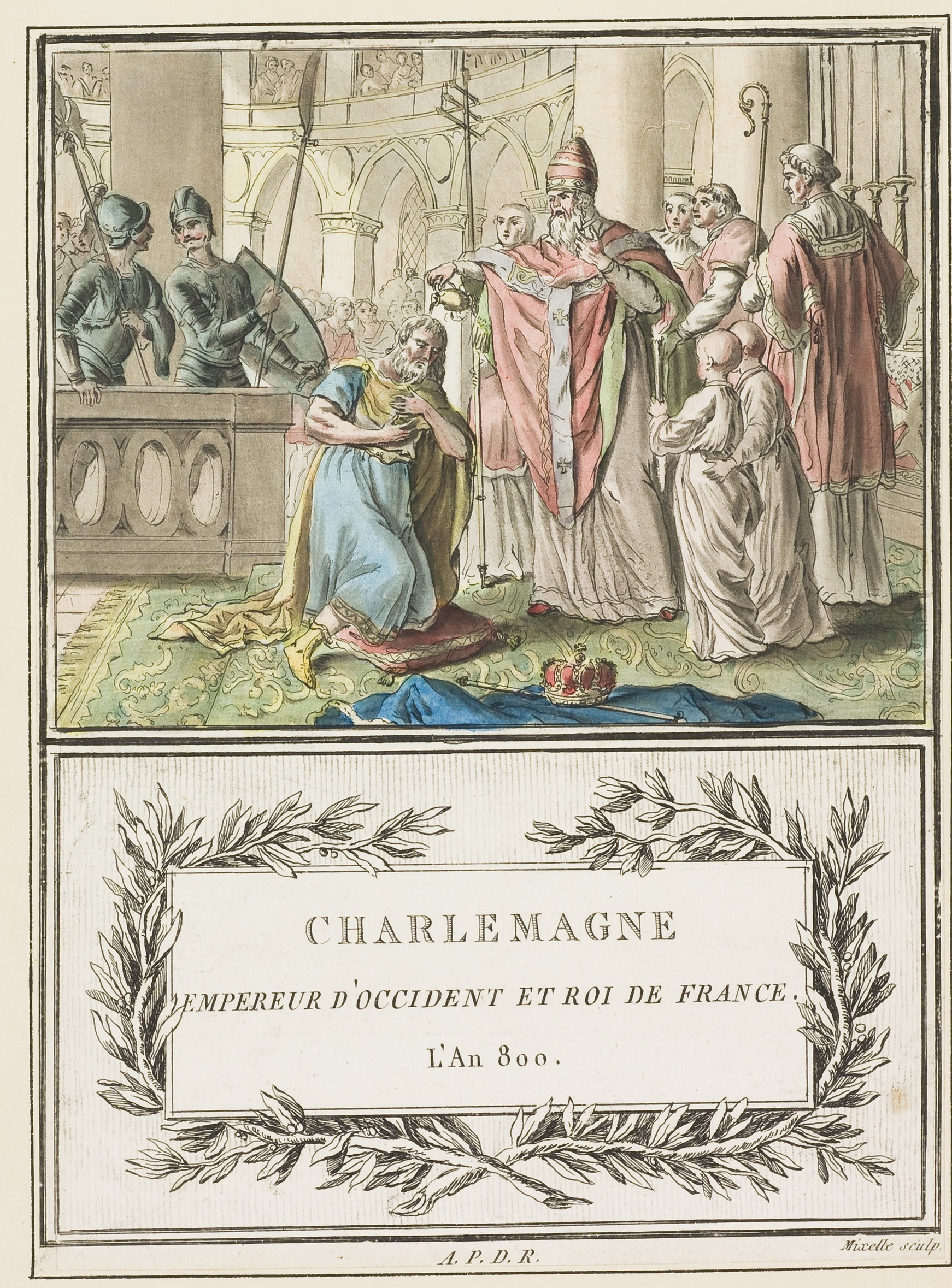
Charlemagne, Emperor of the West, engraving by Jean Marie Mixelle
Jean Marie Mixelle
A hand-colored engraving by Jean Marie Mixelle showing Charlemagne kneeling before a pope at his coronation in 800. It is held by the Catholic University of Leuven.
It shows Charlemagne kneeling at his 800 coronation in a later hand-colored engraving, reflecting how that event was remembered.
About this source
What it is
This is a hand-colored engraving titled Charlemagne, Empereur d'Occident et Roi de France, L'An 800. The upper panel shows a kneeling bearded man in blue robes and a gold-yellow mantle before a bearded pope in red and white vestments, who pours oil. A crown and sword lie on blue cloth, and armored soldiers and clergy stand in a Gothic church. The lower panel has a laurel wreath border with the title. The print is signed by Jean Marie Mixelle, and the text is in French. It is held by the Catholic University of Leuven, Belgium.
Why it matters
The scene refers to Charlemagne's coronation as emperor in 800. Showing the pope and the king together presents the event as a religious and political act. The print reflects how later artists and publishers remembered this moment. Hand coloring made prints like this more expensive and attractive, so the image shows the taste of its own buyers as well as the past it recalls.
Look closer
- Who is shown giving power to whom, and how do the positions of the two men show their roles?
- Why might the artist have included armored soldiers and a Gothic church?
- What does the scene leave out about the people and conflicts that surrounded the coronation?
This painting is part of the curated material that grounds the AI version of Charlemagne on Humy.ai — when students ask about related events, the AI can quote it and cite it.
More Charlemagne sources
Meet the AI Charlemagne →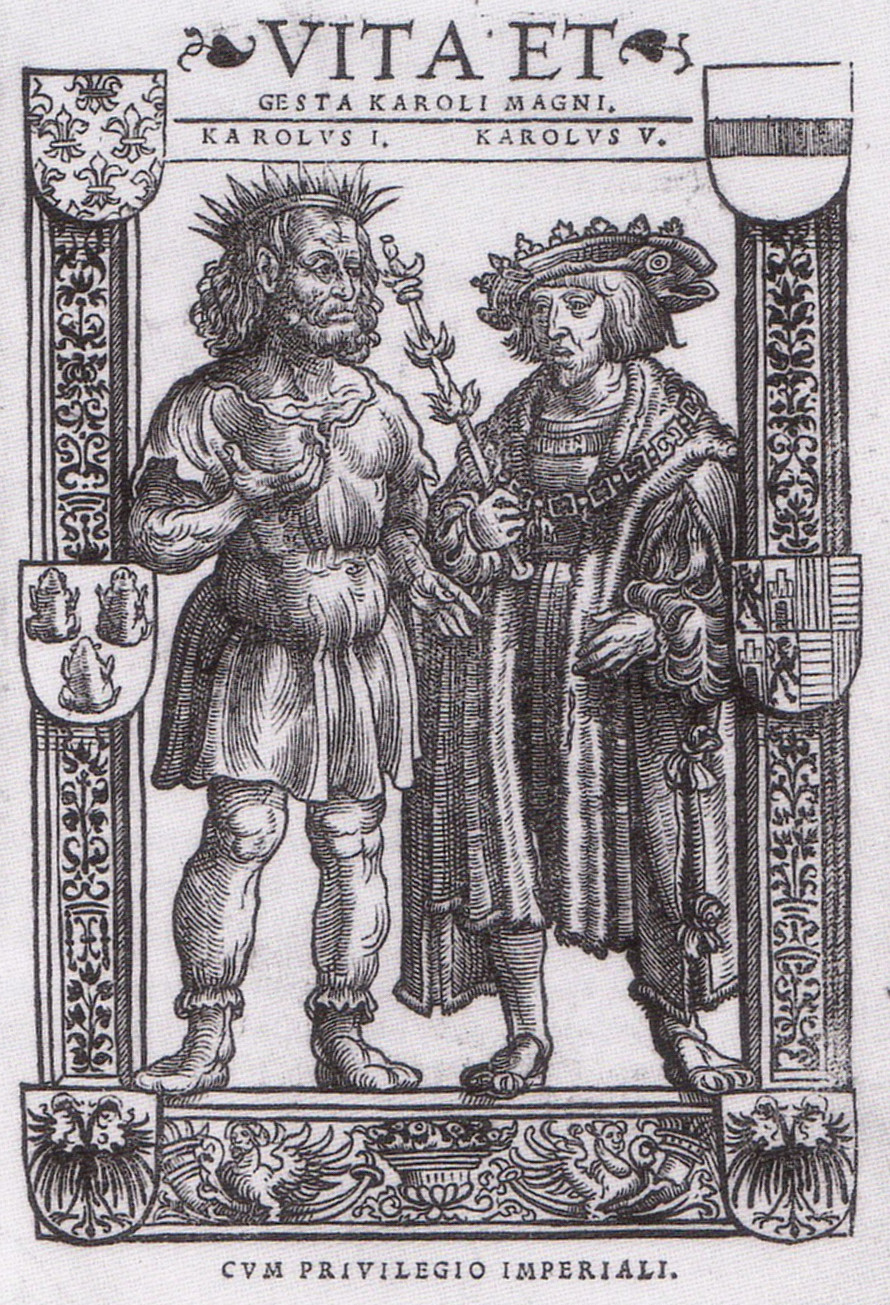 Book
Secondary source
Vita Karoli Magni
Einhard · c. 817-833
 Document
Primary source
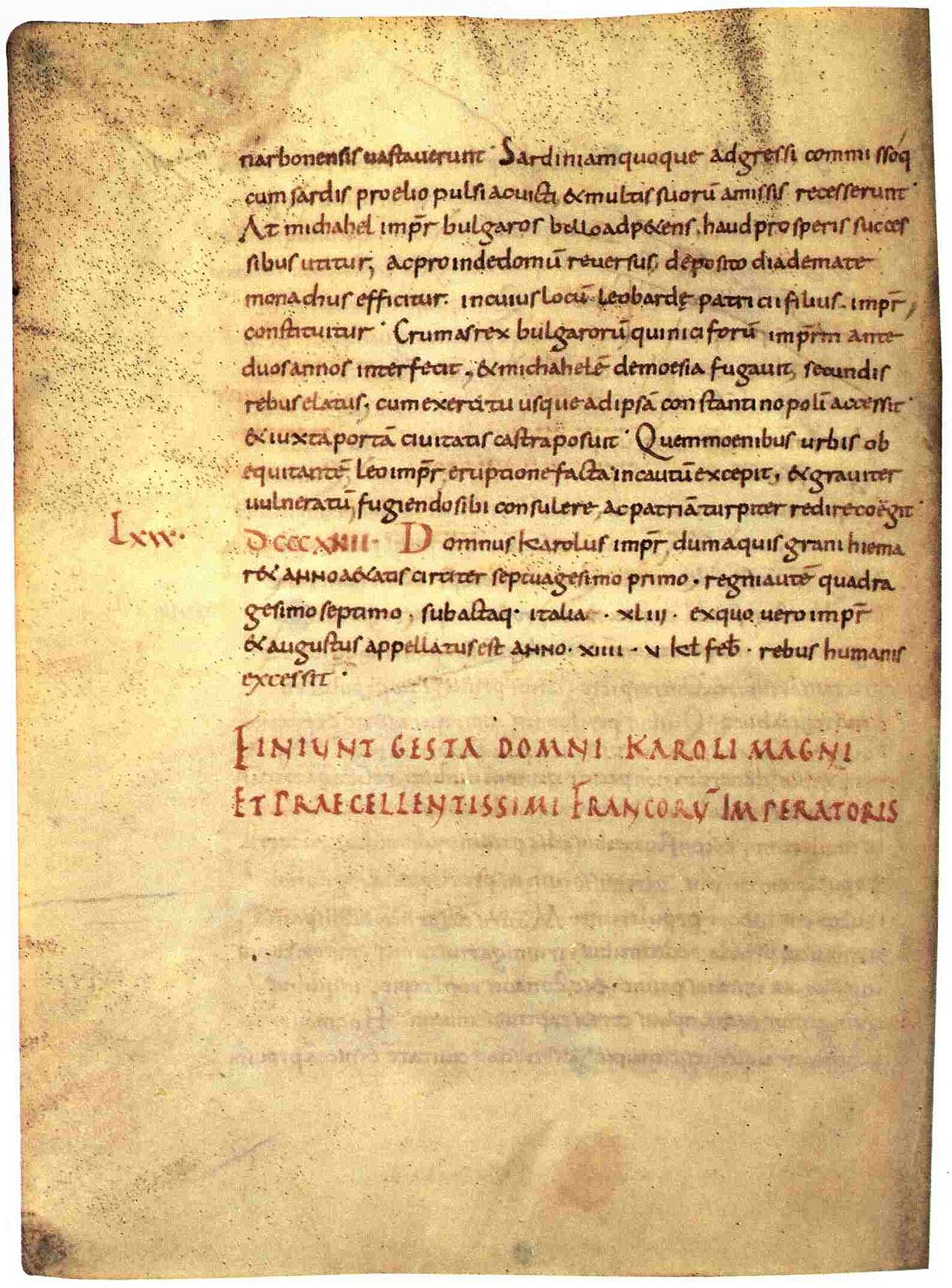
Royal Frankish Annals
741-829, this manuscript c. 900
Primary source
De litteris colendis
Charlemagne · late 780s-800s
 Document
Primary source
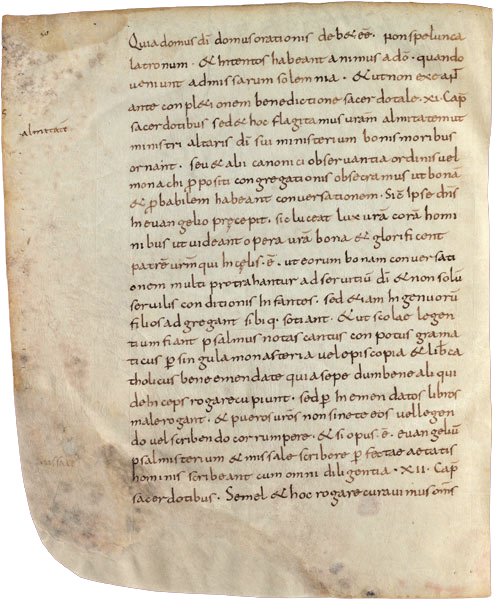
Admonitio generalis
Charlemagne · 23 March 789
 Document
Primary source
Capitulare de villis
c. 771-800
Ready when you are
Start chatting with Charlemagne now.
20 messages free · No credit card · Available in 50+ languages.