


Secondary sourcePainting1689
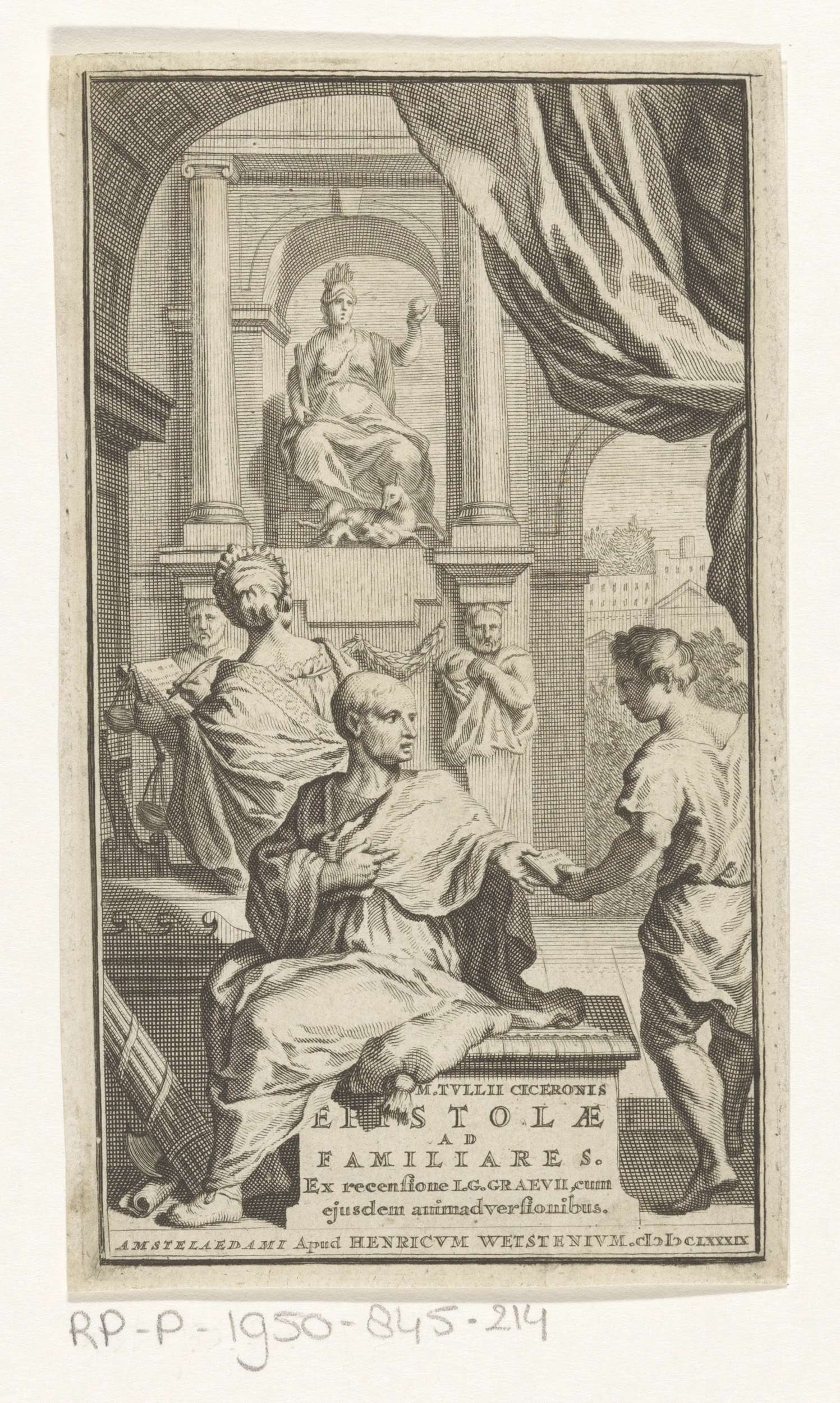
Cicero and a writing woman
1689
An allegorical 1689 engraved title page for Cicero's letters, showing him handing a document to a messenger beside a writing woman.
A title-page engraving for a 1689 printed edition of Cicero's letters, framing his written legacy with Roman symbolism.
About this source
What it is
This engraving is a title page for an edition of Cicero's 'Epistolae ad Familiares' (Letters to Friends), printed in Amsterdam in 1689. It shows a seated bald man, representing Cicero, handing a written document to a messenger, while a woman writes nearby and a statue of a seated goddess with a wolf and the twins Romulus and Remus stands in a niche above. It is held by the Rijksmuseum in the Netherlands.
Why it matters
This print was made to introduce a published collection of Cicero's letters, long after his lifetime. The allegorical imagery, including the Roman foundation myth of Romulus and Remus, connects Cicero to the identity and history of Rome itself, showing how publishers used symbolic art to frame his written legacy.
Look closer
- What is the purpose of a title page like this, and how does it try to introduce the book's contents?
- Why might the publisher include the statue of Romulus and Remus in the background?
- What does this print suggest about how Cicero's letters were valued and presented to readers in 1689?
This painting is part of the curated material that grounds the AI version of Cicero on Humy.ai — when students ask about related events, the AI can quote it and cite it.
More Cicero sources
Meet the AI Cicero →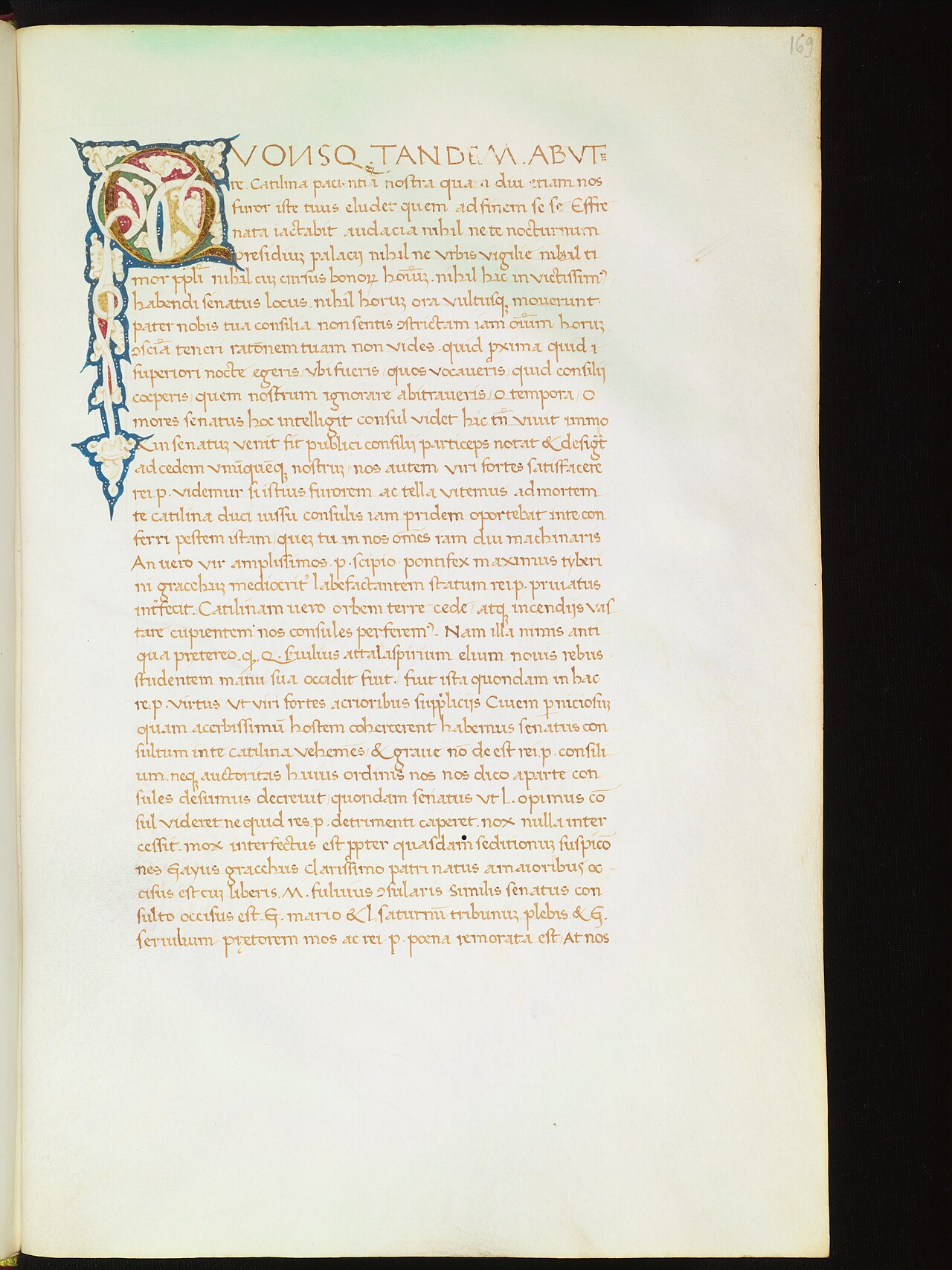 Speech
Primary source
Catiline Orations
Cicero · 63 BCE
 Painting
Secondary source
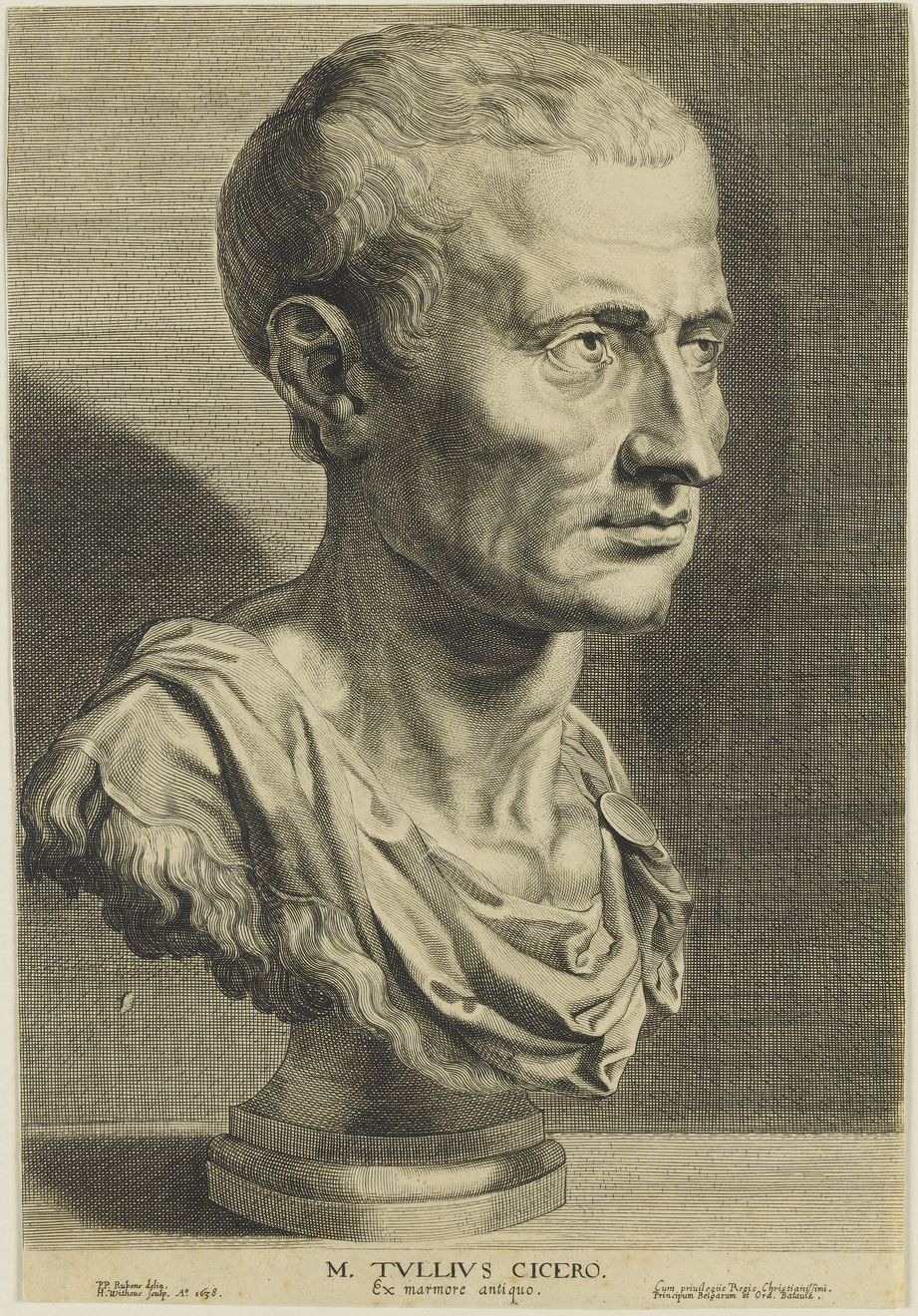
Marcus Tullius Cicero, engraved after antique marble busts
Jan Witdoeck
 Book
Primary source
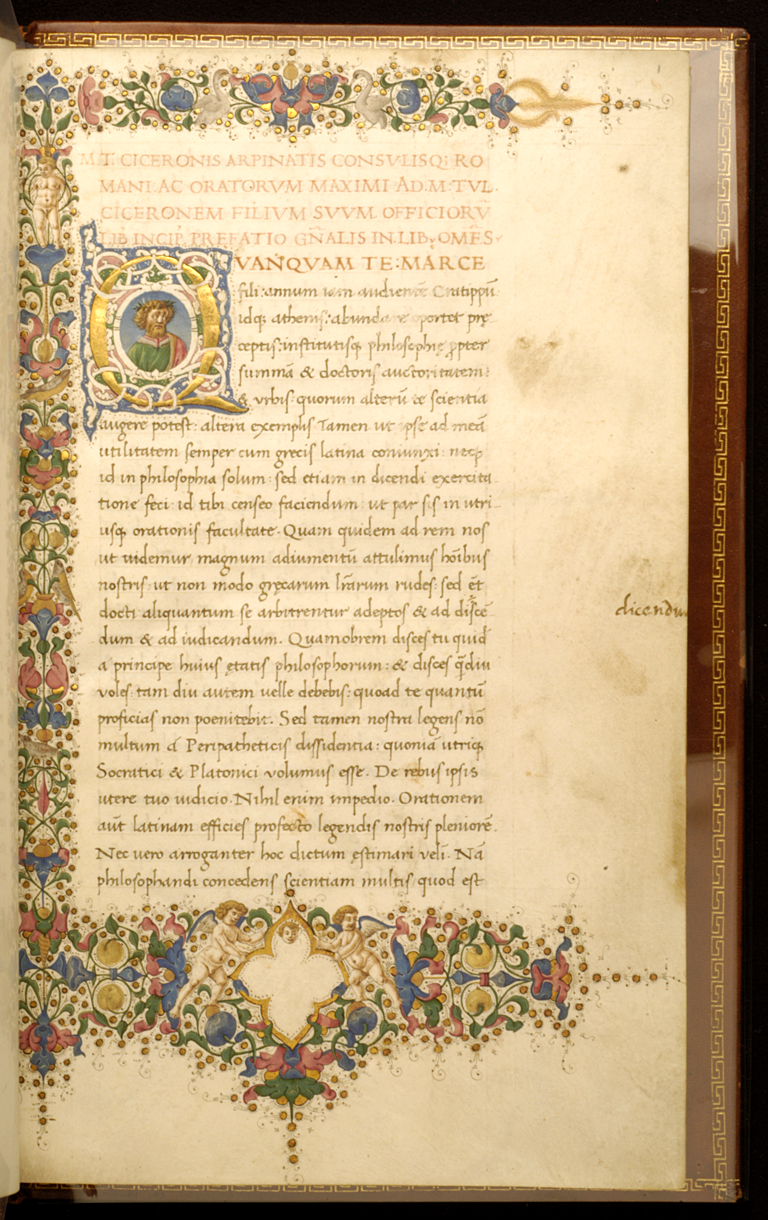
De Officiis
Cicero · 44 BC
 Painting
Secondary source
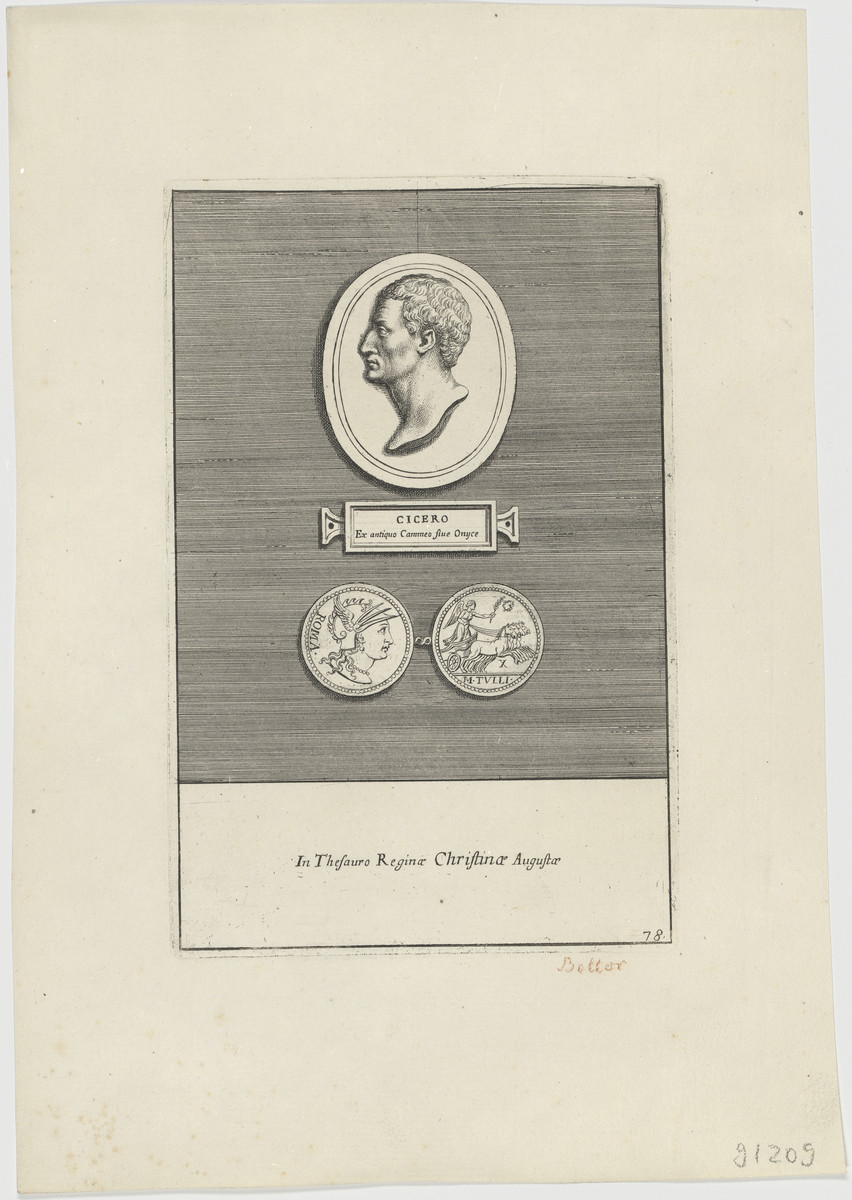
Portrait of Cicero (Bildnis des Cicero)
 Book
Primary source
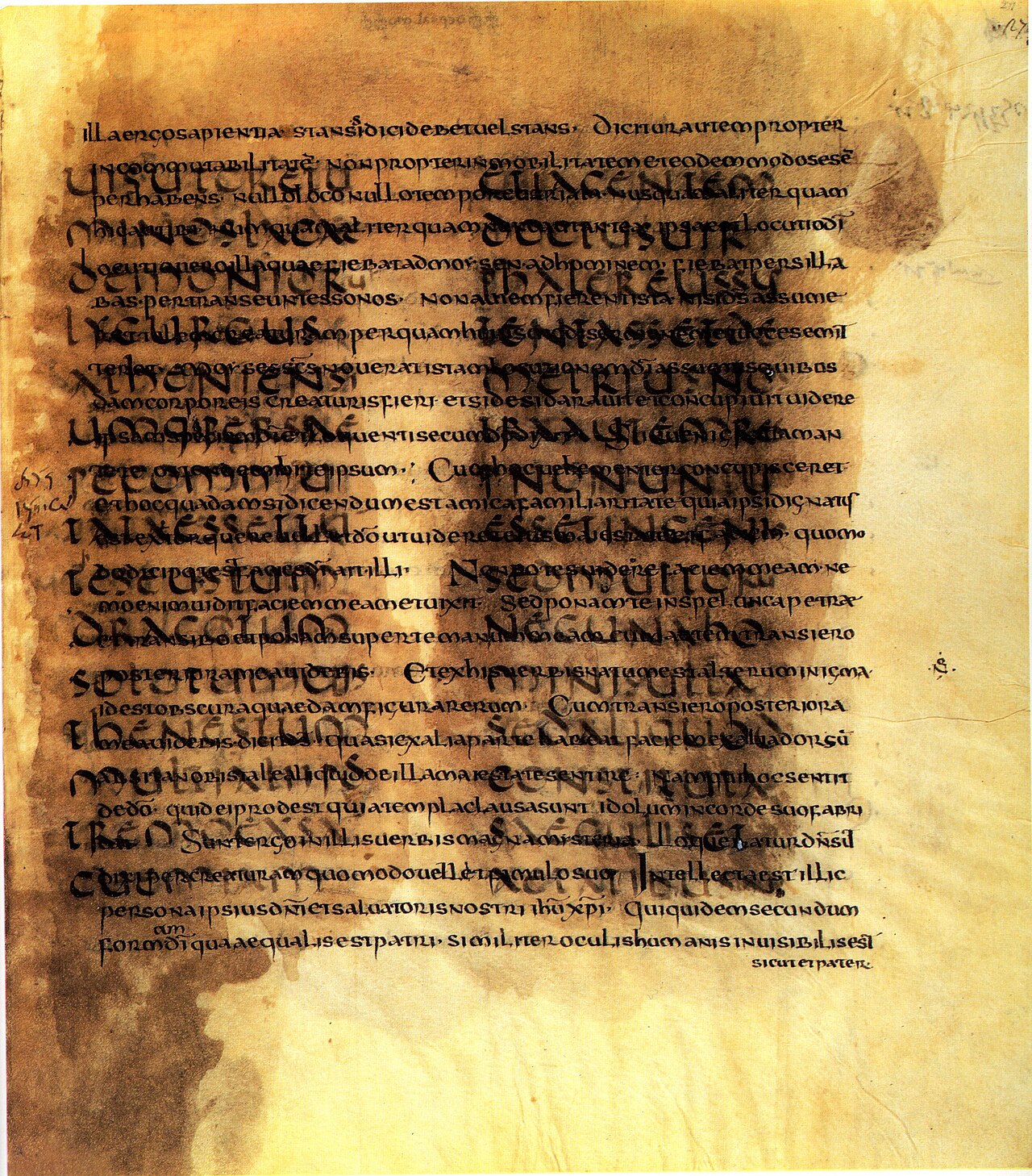
De re publica
Cicero · c. 54–51 BC
Ready when you are
Start chatting with Cicero now.
20 messages free · No credit card · Available in 50+ languages.