


Secondary sourcePainting1493
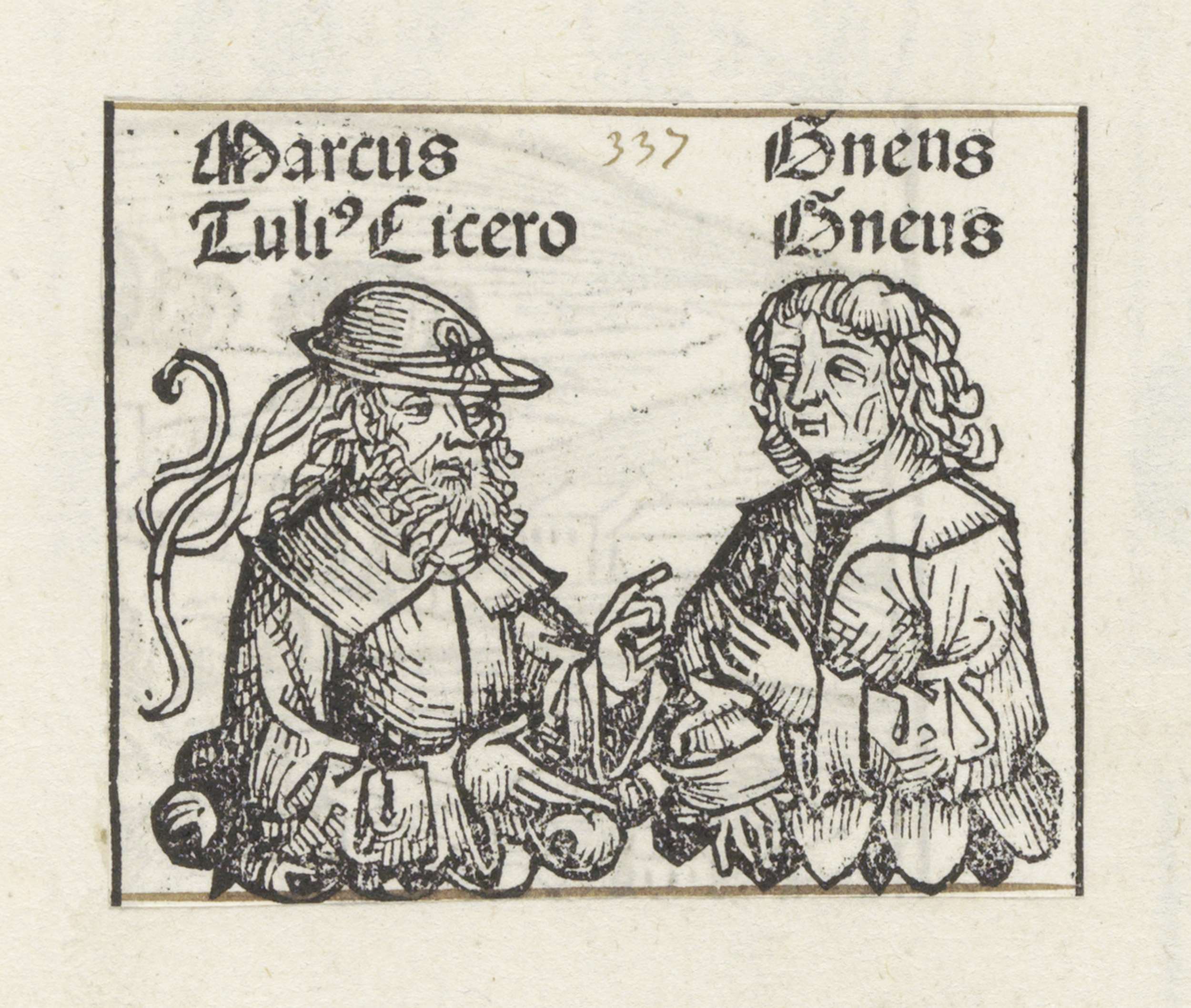
Cicero and Gaius Antonius Hybrida
Unknown · 1493
A 1493 woodcut from the Nuremberg Chronicle showing Cicero alongside his fellow consul Gaius Antonius Hybrida.
This early printed woodcut names Cicero as a Roman consul, showing how he was remembered in Renaissance history books.
About this source
What it is
This woodcut comes from the Nuremberg Chronicle, a printed history book from 1493, as part of a list of Roman consuls. The text identifies the two men shown as Marcus Tullius Cicero and Gaius Antonius Hybrida, who served together as consuls. The print is held by the Rijksmuseum.
Why it matters
The Nuremberg Chronicle was one of the first printed illustrated history books in Europe, and it shows how people in the late 1400s imagined and summarized figures from ancient Rome, including Cicero and his co-consul. The image is not a realistic portrait but a generic illustration applied to the names in the historical record.
Look closer
- Do the figures in this woodcut look like real portraits, or more like general illustrations repeated throughout the book?
- Why would a printed history book in 1493 include images of Roman consuls?
- What does this source tell us about how medieval and early modern readers learned about ancient history?
This painting is part of the curated material that grounds the AI version of Cicero on Humy.ai — when students ask about related events, the AI can quote it and cite it.
More Cicero sources
Meet the AI Cicero →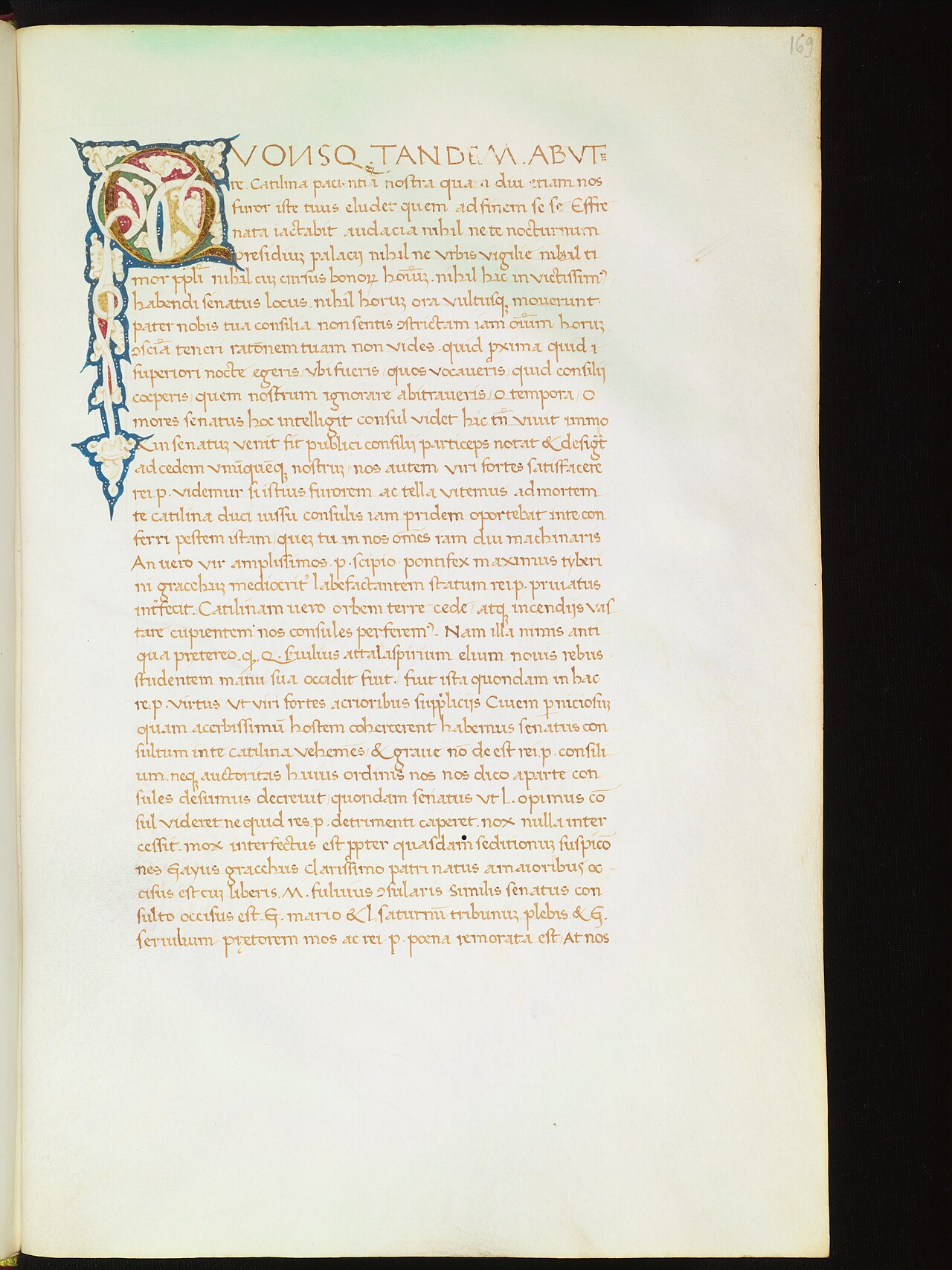 Speech
Primary source
Catiline Orations
Cicero · 63 BCE
 Painting
Secondary source
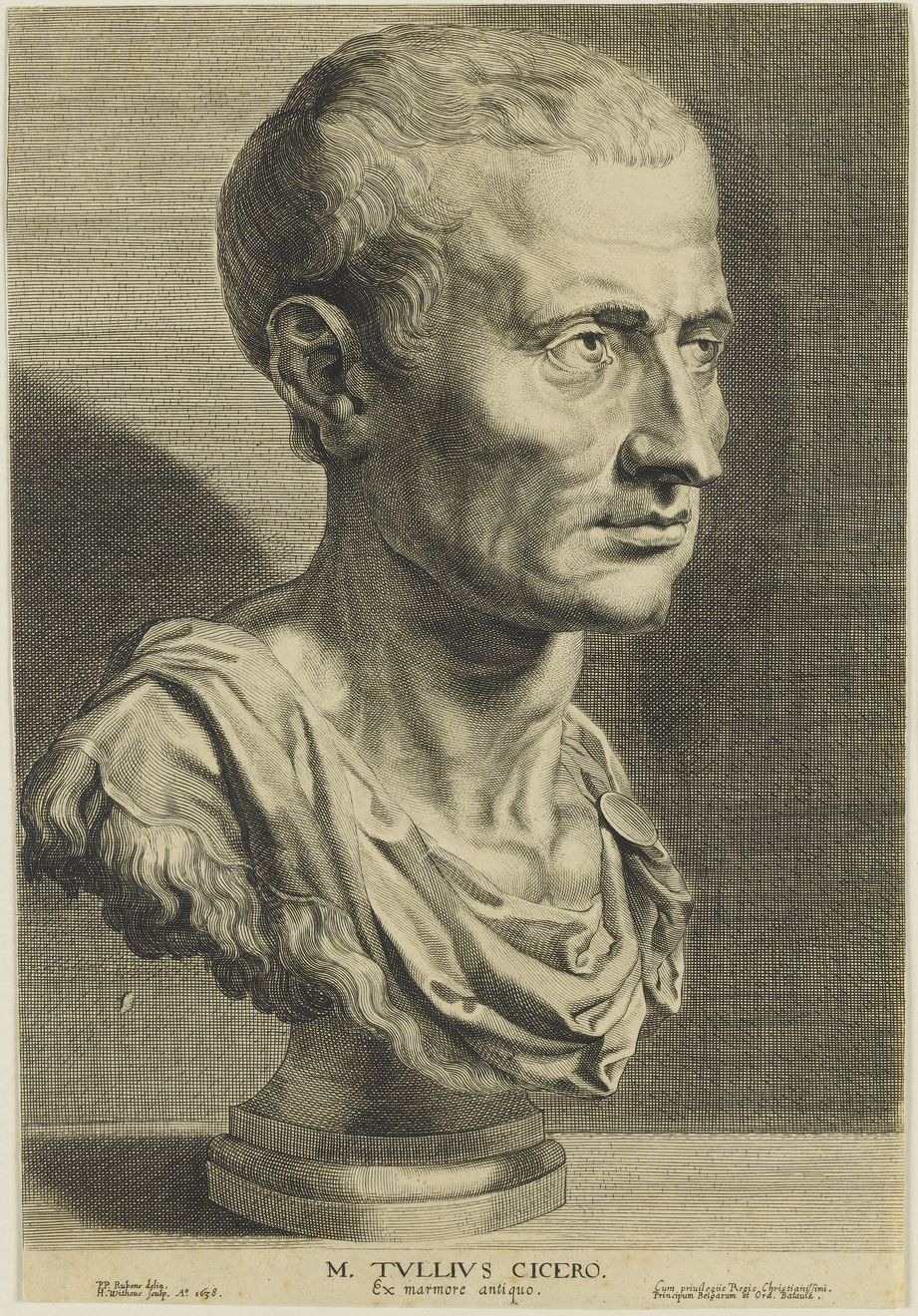
Marcus Tullius Cicero, engraved after antique marble busts
Jan Witdoeck
 Book
Primary source
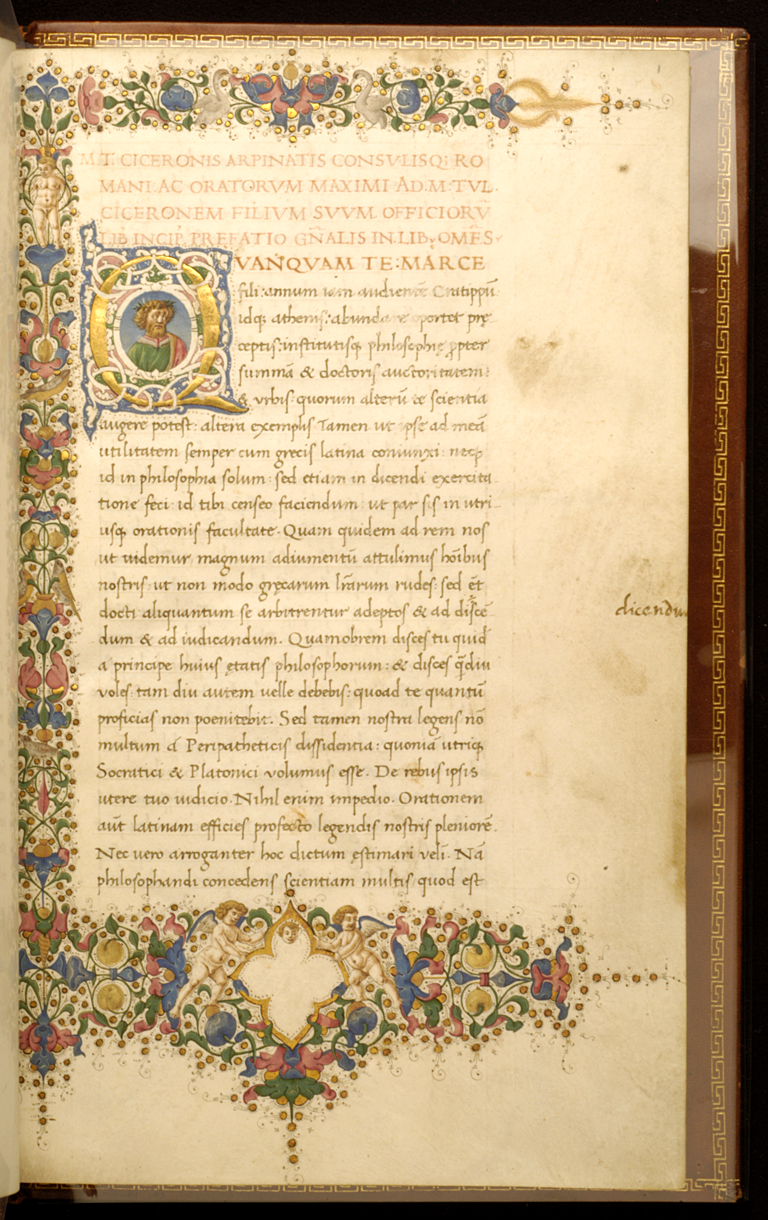
De Officiis
Cicero · 44 BC
 Painting
Secondary source
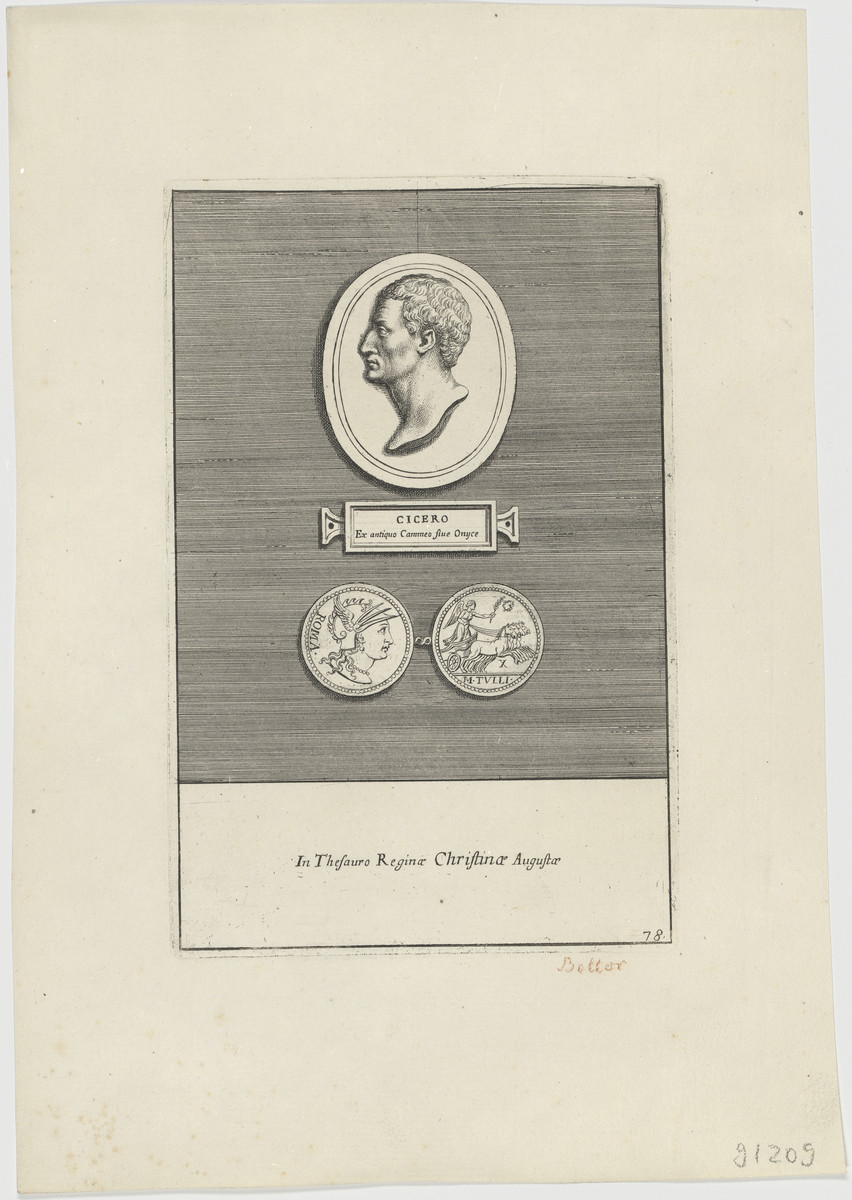
Portrait of Cicero (Bildnis des Cicero)
 Book
Primary source
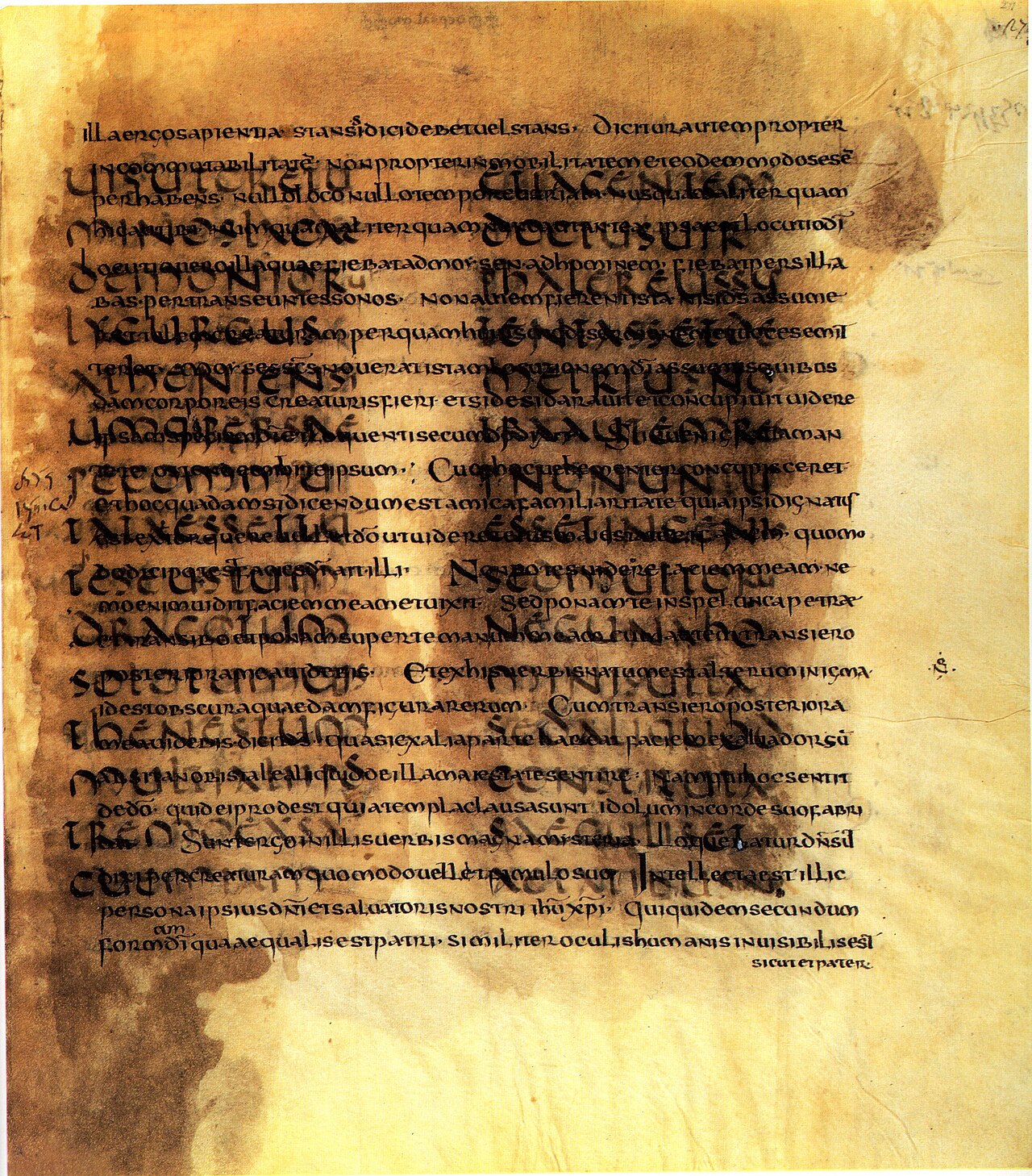
De re publica
Cicero · c. 54–51 BC
Ready when you are
Start chatting with Cicero now.
20 messages free · No credit card · Available in 50+ languages.