


Primary sourceArtifact51-50 BC
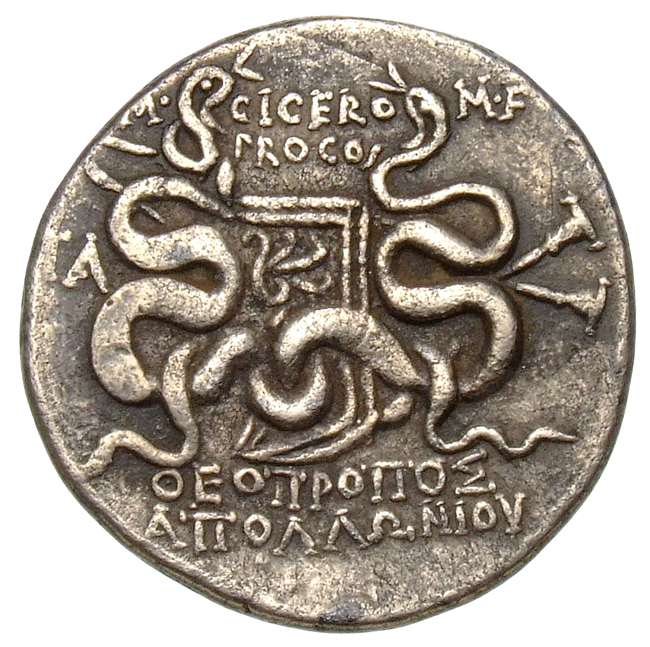
Cistophor of Marcus Tullius Cicero
51-50 BC
A silver coin struck during Cicero's term as proconsul of Cilicia, bearing his name and title.
This coin was struck under Cicero's authority while he served as proconsul of Cilicia, naming him directly.
About this source
What it is
This is a silver cistophor coin struck at Apamea during the proconsulship of Cicero in 51–50 BC. The reverse shows two intertwined serpents flanking a quiver, with the inscription naming Cicero as proconsul, along with a Greek legend. It is held in the Münzkabinett of the Staatliche Museen zu Berlin.
Why it matters
This coin is a rare physical trace of Cicero's actual administration, made while he governed the province of Cilicia, a role he took on later in his career away from Rome's courts and Senate. Coins like this were official currency struck under a governor's authority, so it shows Cicero's name used as a mark of real political power, not just as the author of speeches and books.
Look closer
- What do the images on the coin — the serpents and quiver — suggest about the local culture where it was made?
- Why might a Roman governor's name appear on provincial coinage?
- How does holding a coin like this change what we know about Cicero compared with reading his writings?
This artifact is part of the curated material that grounds the AI version of Cicero on Humy.ai — when students ask about related events, the AI can quote it and cite it.
More Cicero sources
Meet the AI Cicero →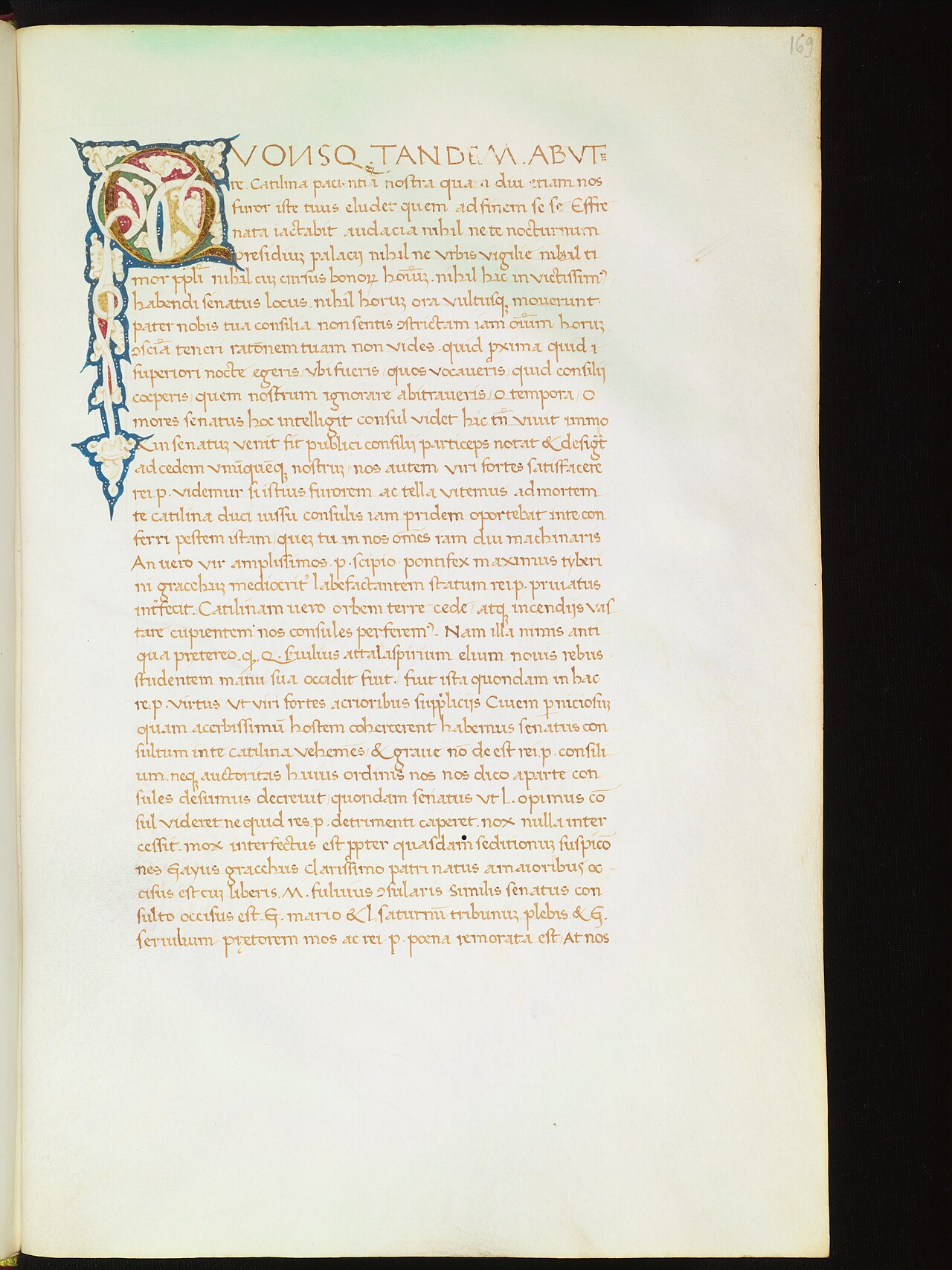 Speech
Primary source
Catiline Orations
Cicero · 63 BCE
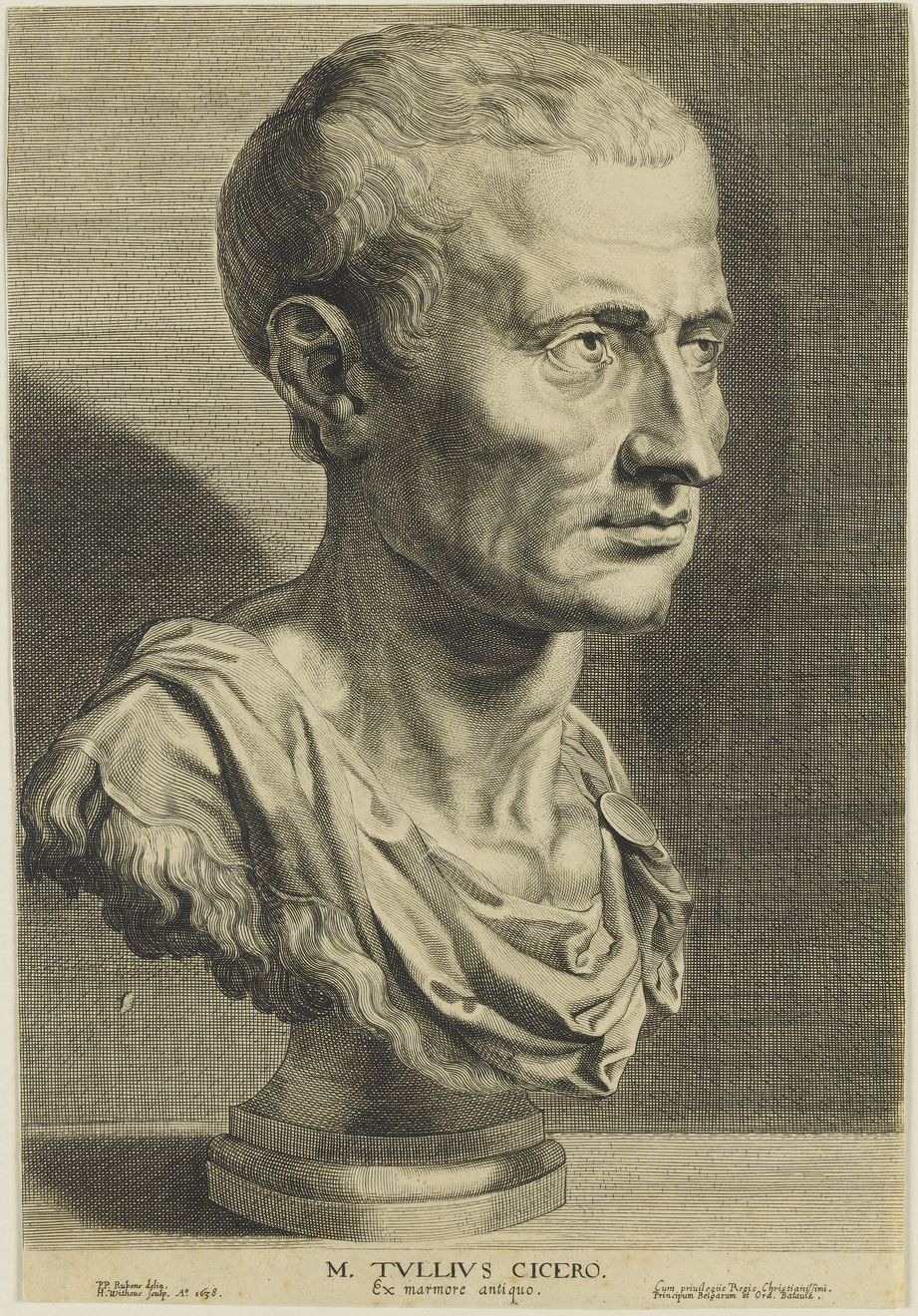 Painting
Secondary source
Marcus Tullius Cicero, engraved after antique marble busts
Jan Witdoeck
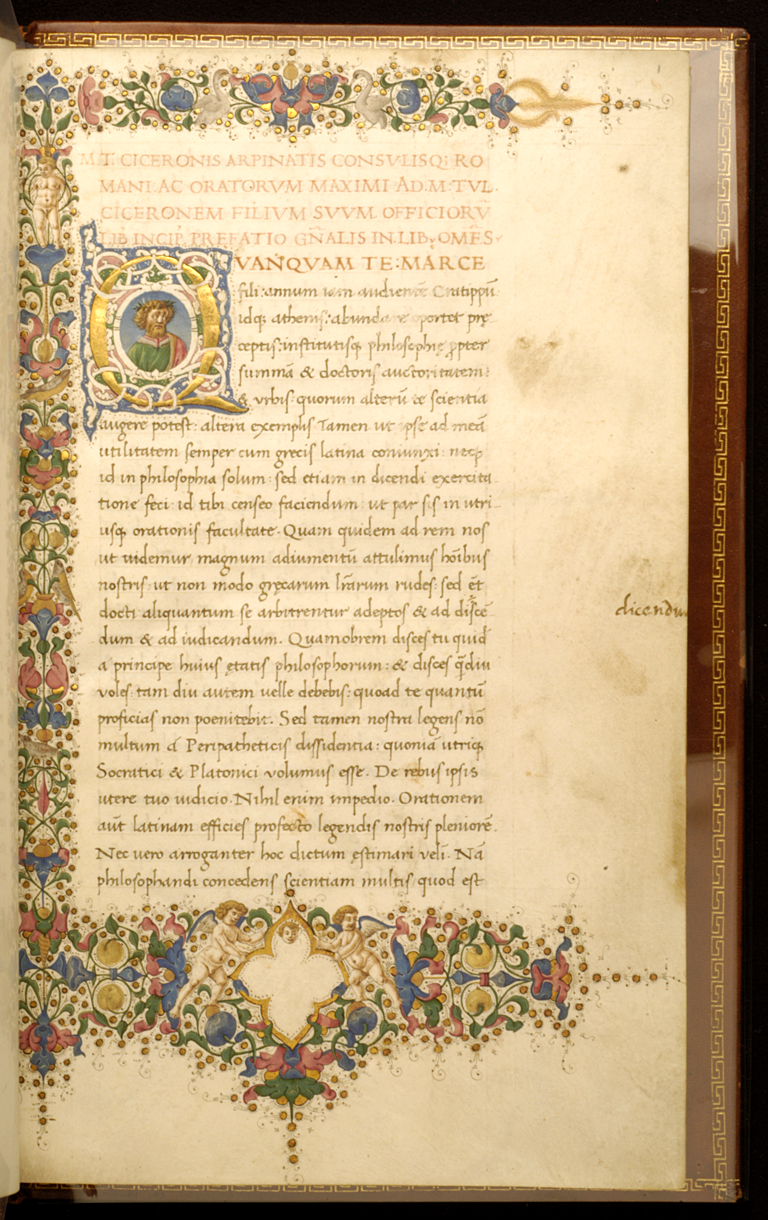 Book
Primary source
De Officiis
Cicero · 44 BC
 Painting
Secondary source
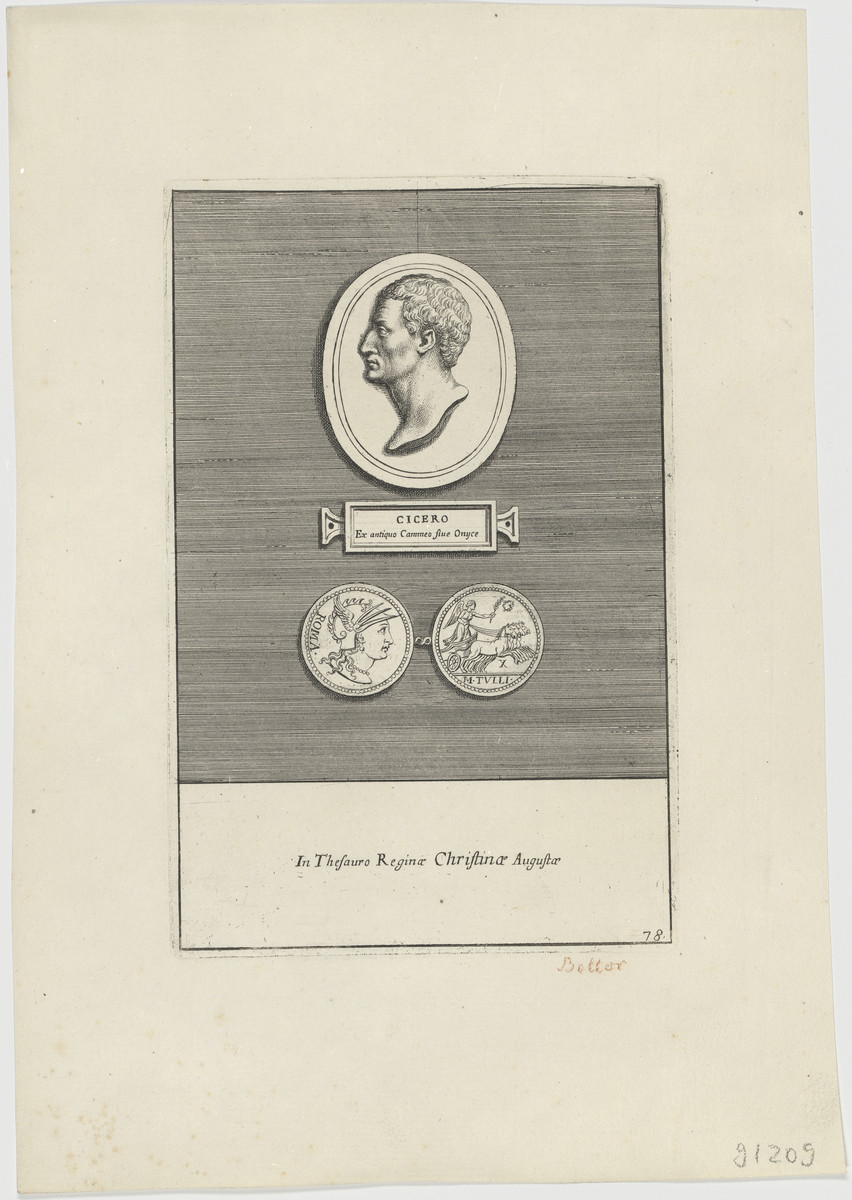
Portrait of Cicero (Bildnis des Cicero)
 Book
Primary source
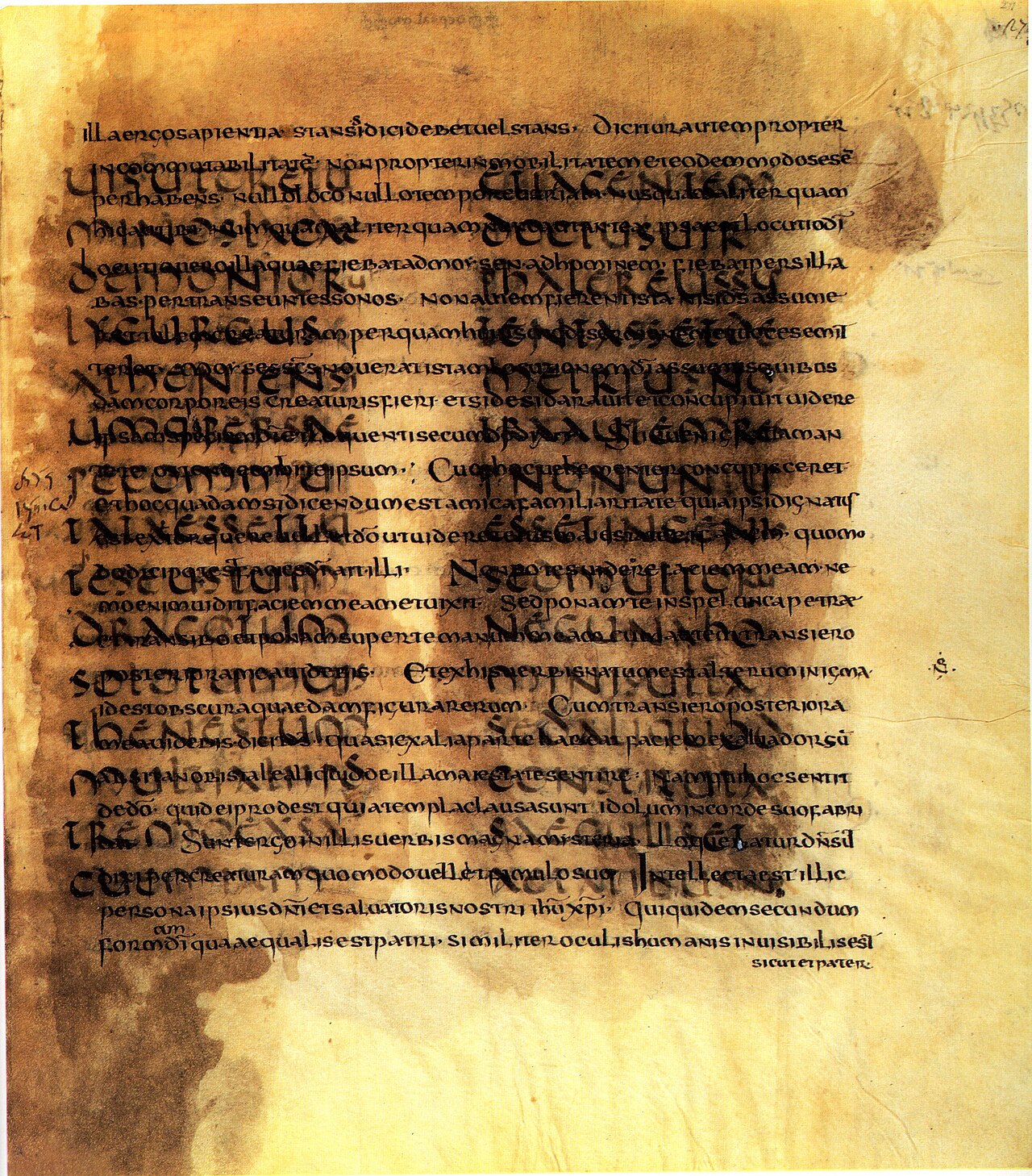
De re publica
Cicero · c. 54–51 BC
Ready when you are
Start chatting with Cicero now.
20 messages free · No credit card · Available in 50+ languages.