


Secondary sourcePhotograph2011
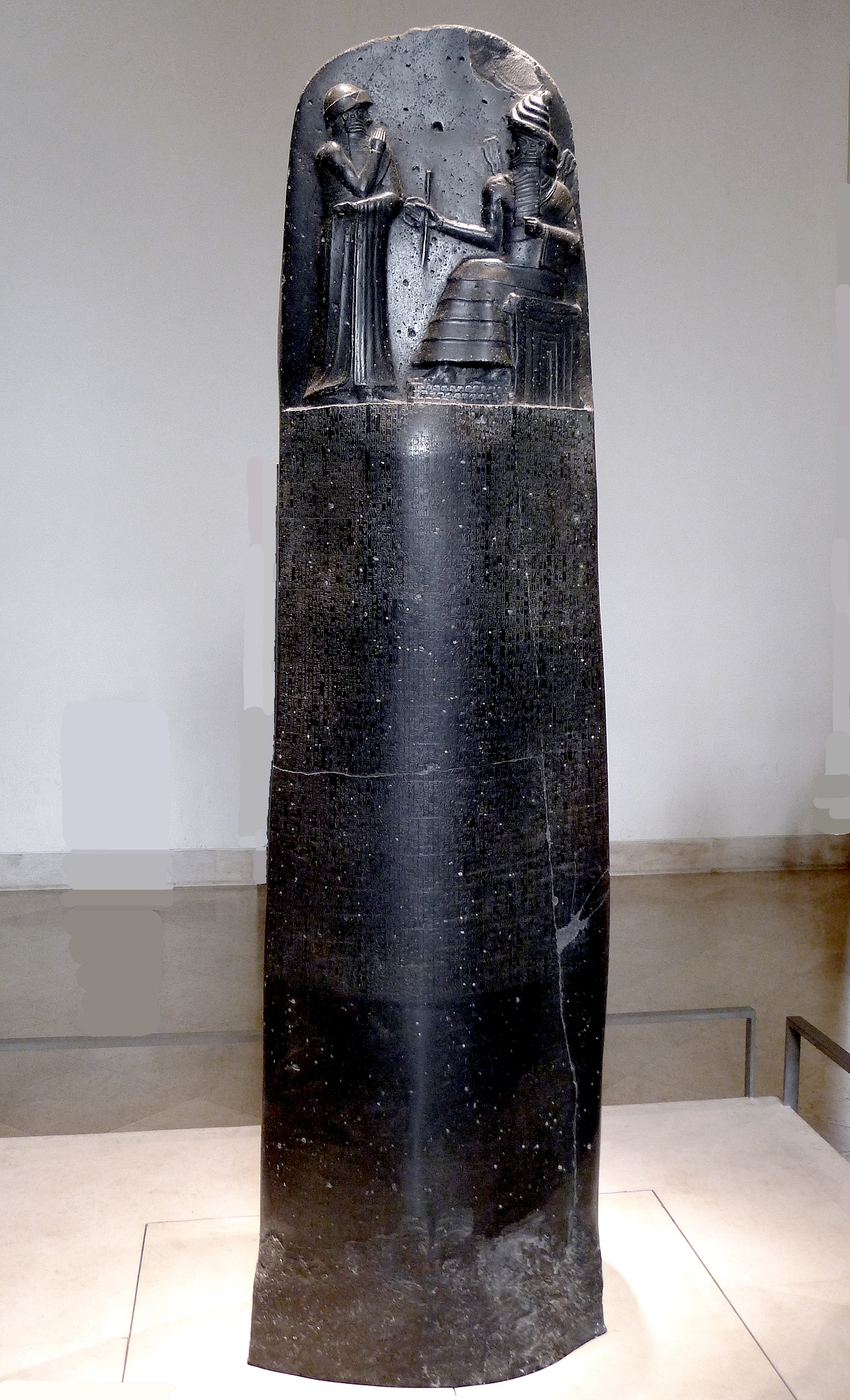
Code of Hammurabi Stele, Front Face
Mbzt · 2011
Photograph of the front face of the basalt stele in the Louvre bearing the Code of Hammurabi and its carved relief.
This photograph shows the stele inscribed with Hammurabi's law code and the relief depicting his authority as king.
About this source
What it is
This photograph, taken in 2011, shows the front face of the black basalt stele known as the Code of Hammurabi, now displayed in the Louvre museum. The top of the stele is carved with a relief of two figures, and the stone below is covered with rows of cuneiform script recording the laws.
Why it matters
The Code of Hammurabi is one of the most famous surviving sets of ancient laws, associated with King Hammurabi of Babylon. The relief at the top links the laws to divine authority, while the inscribed text below set out rules for Babylonian society. The stele remains a key source for understanding ancient law and kingship.
Look closer
- What does the placement of the relief above the text suggest about where the laws' authority was thought to come from?
- Why do you think this stele was kept intact and displayed in a museum rather than being lost?
- What questions can't a photograph of the stele answer about who could actually read or use these laws?
This photograph is part of the curated material that grounds the AI version of Hammurabi on Humy.ai — when students ask about related events, the AI can quote it and cite it.
More Hammurabi sources
Meet the AI Hammurabi →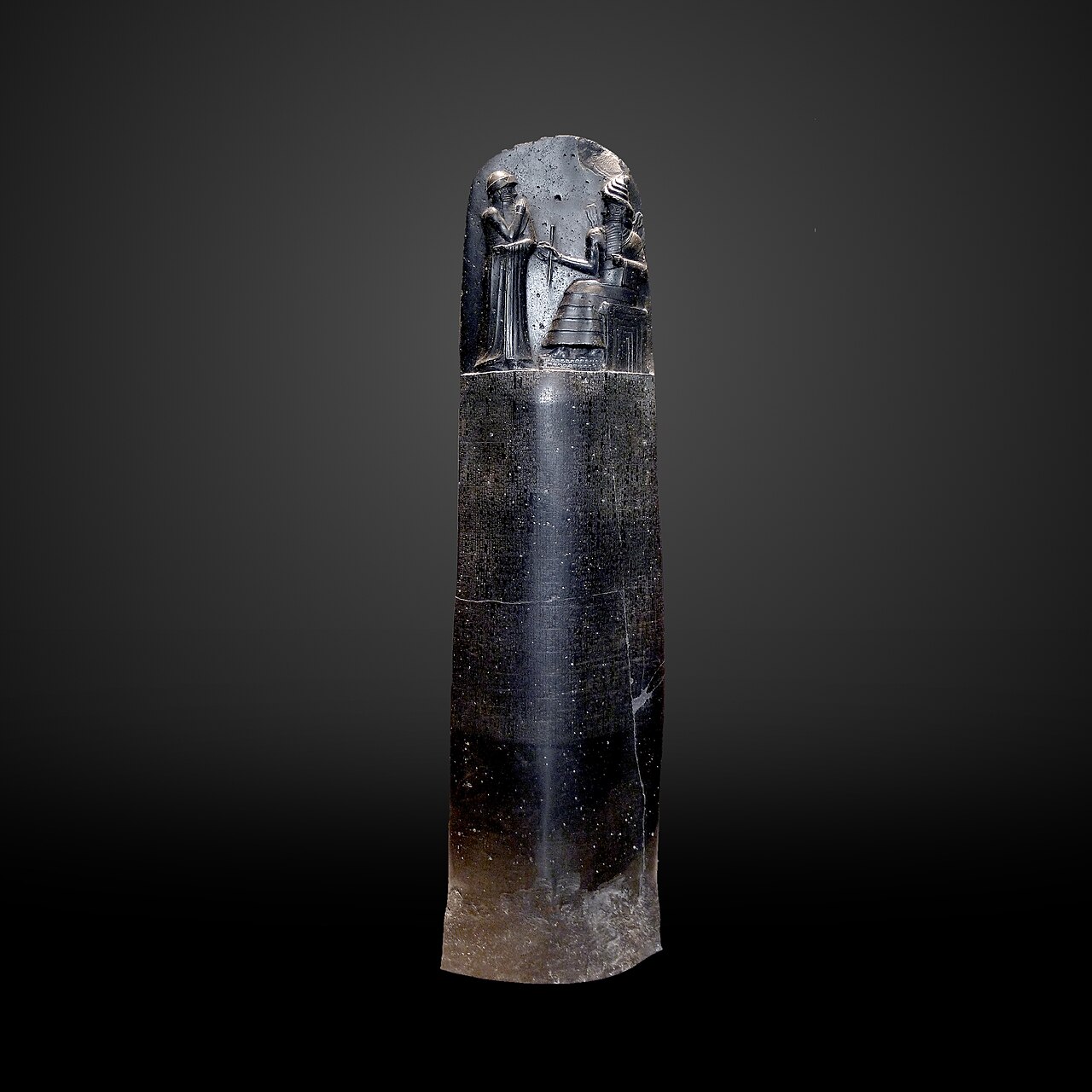 Document
Primary source
Code of Hammurabi
Hammurabi · c. 1753 BCE
 Sculpture
Primary source
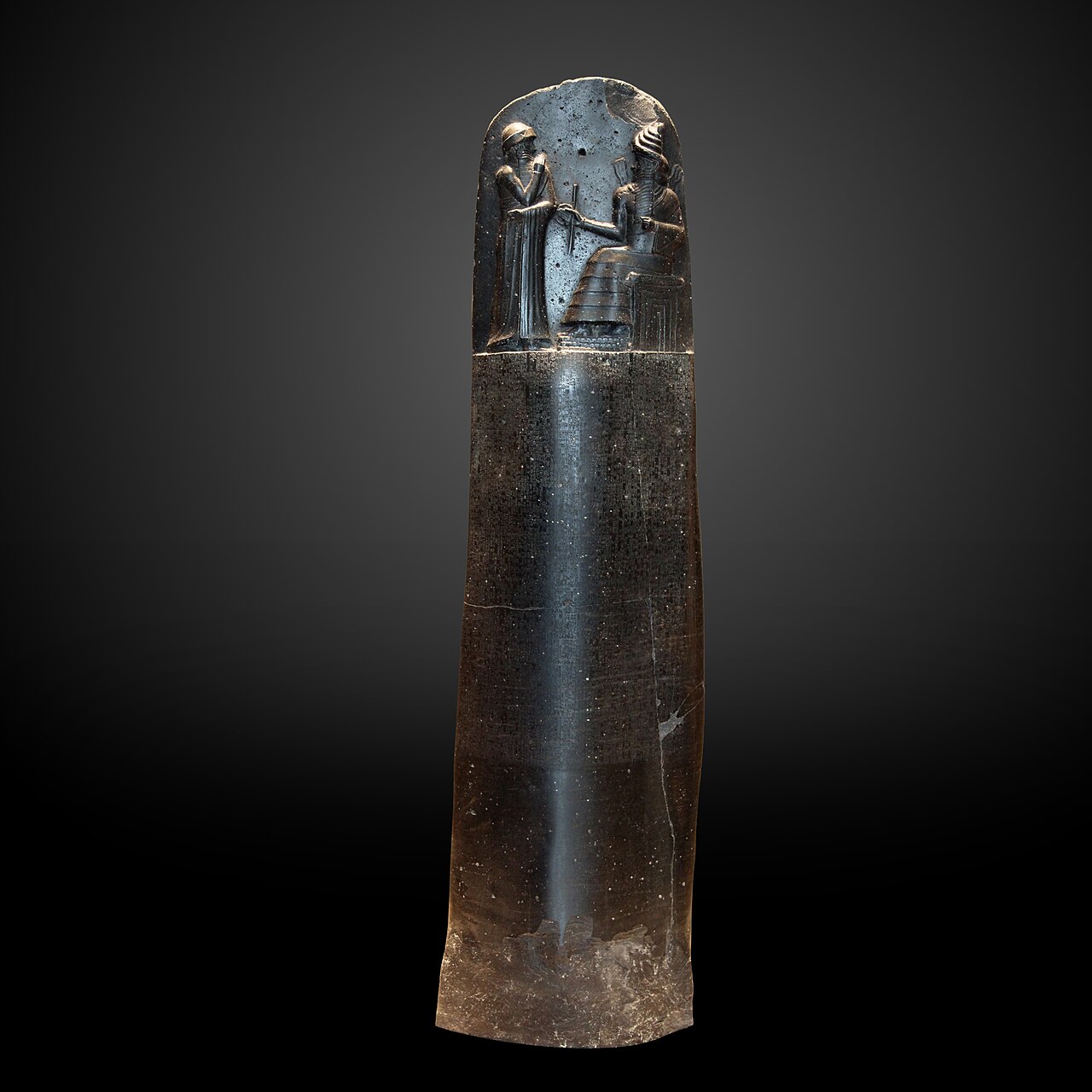
Stele with the Code of Hammurabi
Hammurabi · c. 1792 BCE
 Letter
Primary source
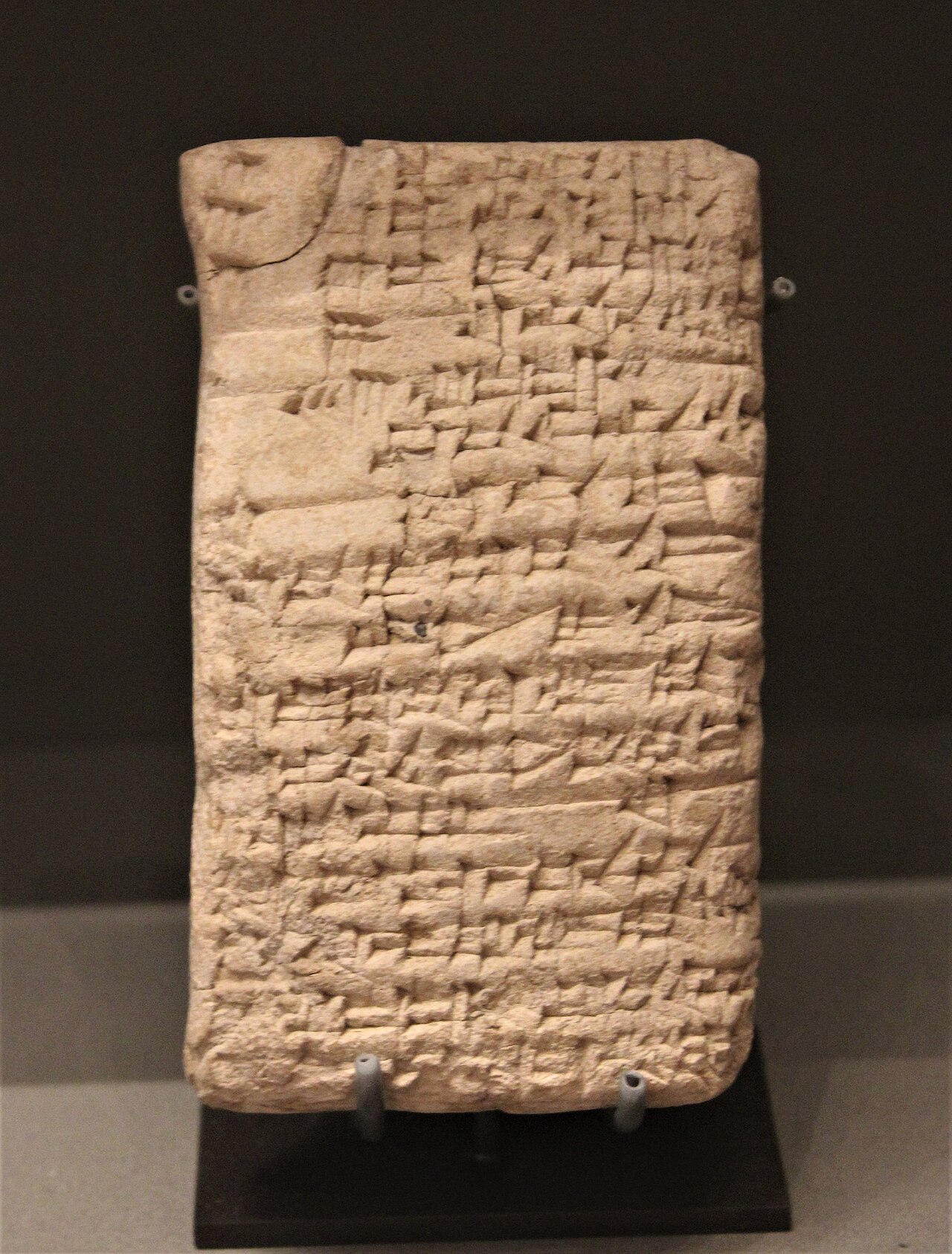
Letter from Hammurabi to Sîn-iddinam
Hammurabi · c. 1792-1750 BCE
 Document
Primary source
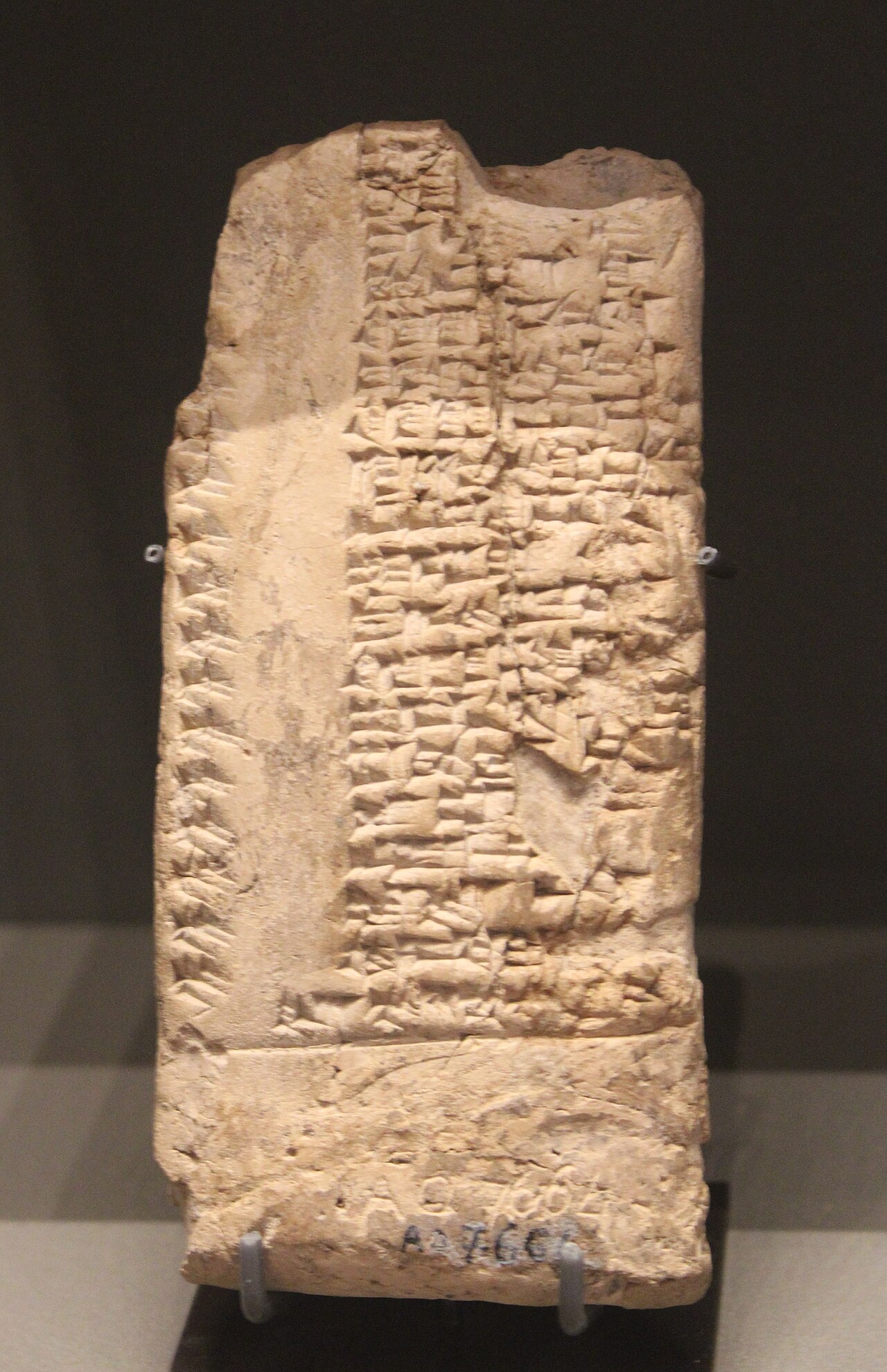
List of the year-names of Hammurabi's reign
Old Babylonian period, reign of Hammurabi (c. 1792-1750 BCE)
 Document
Secondary source
Chronicle of Early Kings
Babylonian scribes · c. 6th century BCE copy
Ready when you are
Start chatting with Hammurabi now.
20 messages free · No credit card · Available in 50+ languages.