


Primary sourceArtifact778-820
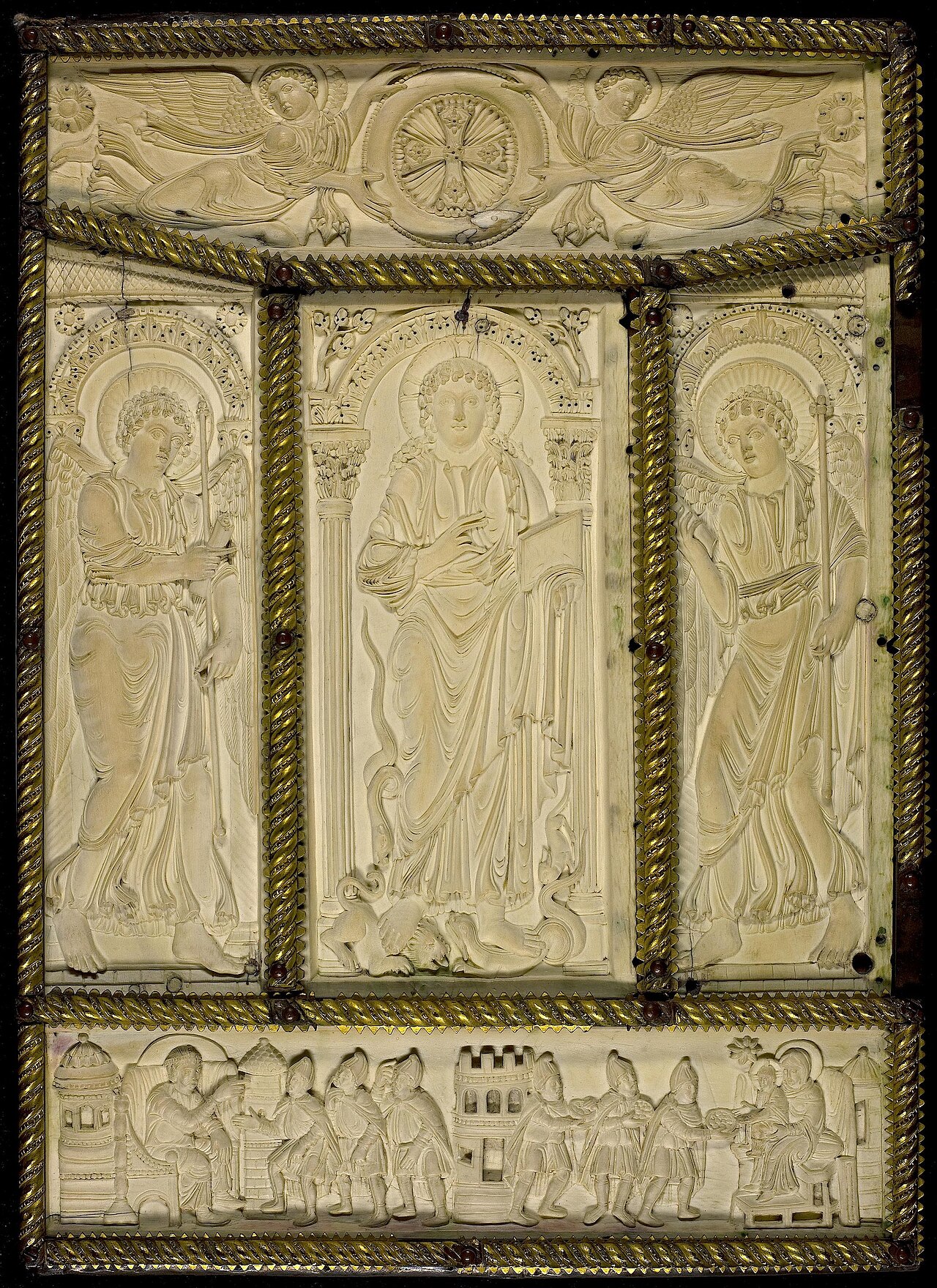
Codex Aureus of Lorsch
778-820
A richly illuminated gospel book made around 810 by Charlemagne's court school, showing the scale of his court-sponsored artistic revival.
This gospel book, produced by Charlemagne's court school, shows the artistic flourishing he sponsored.
About this source
What it is
The Codex Aureus of Lorsch is a lavishly illustrated Latin Gospel book, written between about 778 and 820, during the period of Charlemagne's rule. It includes carved ivory cover panels. Its parts are now divided between the Vatican Library, the Batthyaneum Library in Alba Iulia, and the Victoria and Albert Museum in London.
Why it matters
Made for Lorsch Abbey, the book shows the quality and expense that Charlemagne's court encouraged in religious art and learning, part of what historians call the Carolingian Renaissance. Its ivory covers, carved with classicising images of Christ and angels, show the skill of artists working under Carolingian patronage. The manuscript survived theft, division and centuries of travel before being recognised by UNESCO.
Look closer
- Why might a royal court invest in expensive books like this one?
- What do the ivory carvings tell you about the artistic styles the makers were drawing on?
- Why is the book now split between different countries and collections?
This artifact is part of the curated material that grounds the AI version of Charlemagne on Humy.ai — when students ask about related events, the AI can quote it and cite it.
More Charlemagne sources
Meet the AI Charlemagne →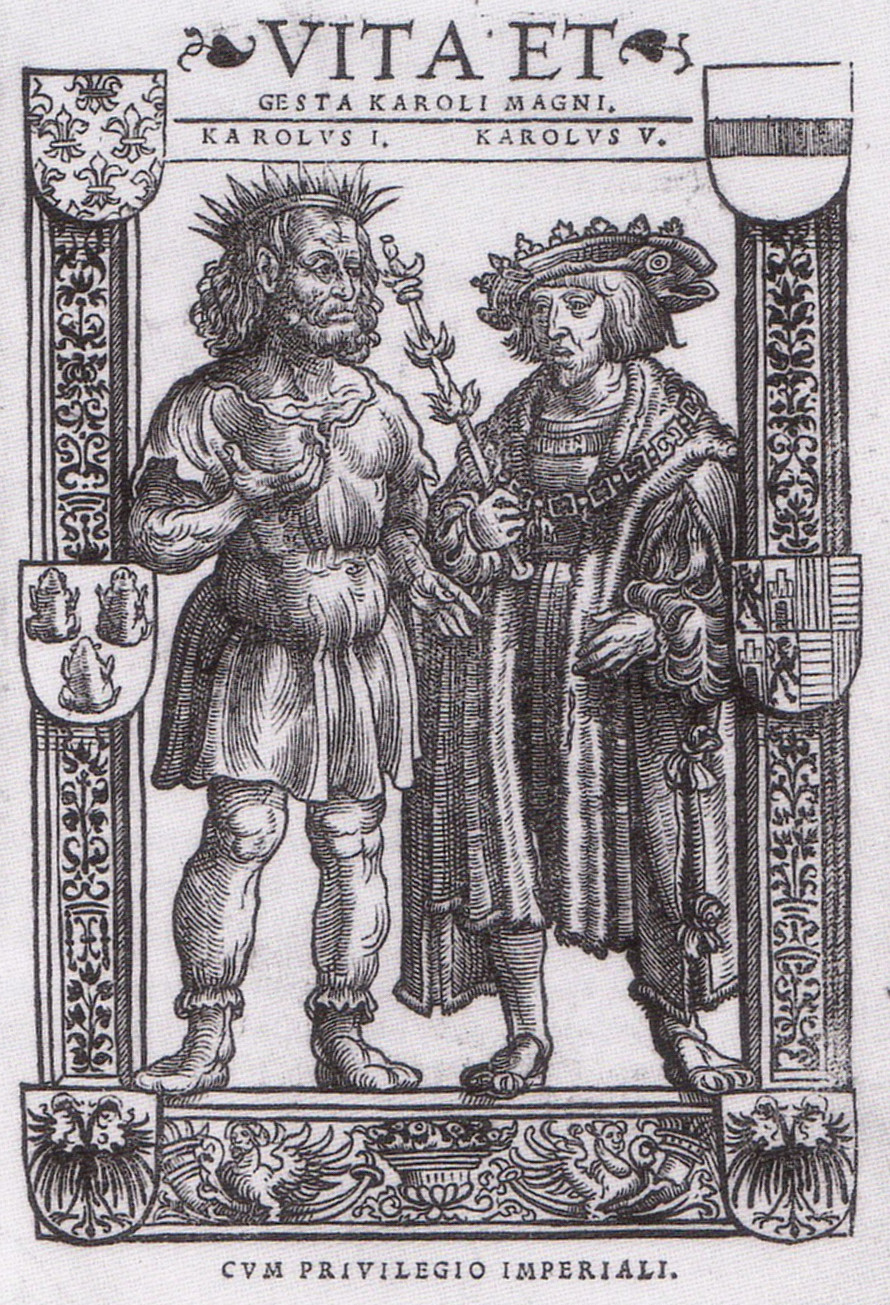 Book
Secondary source
Vita Karoli Magni
Einhard · c. 817-833
 Document
Primary source
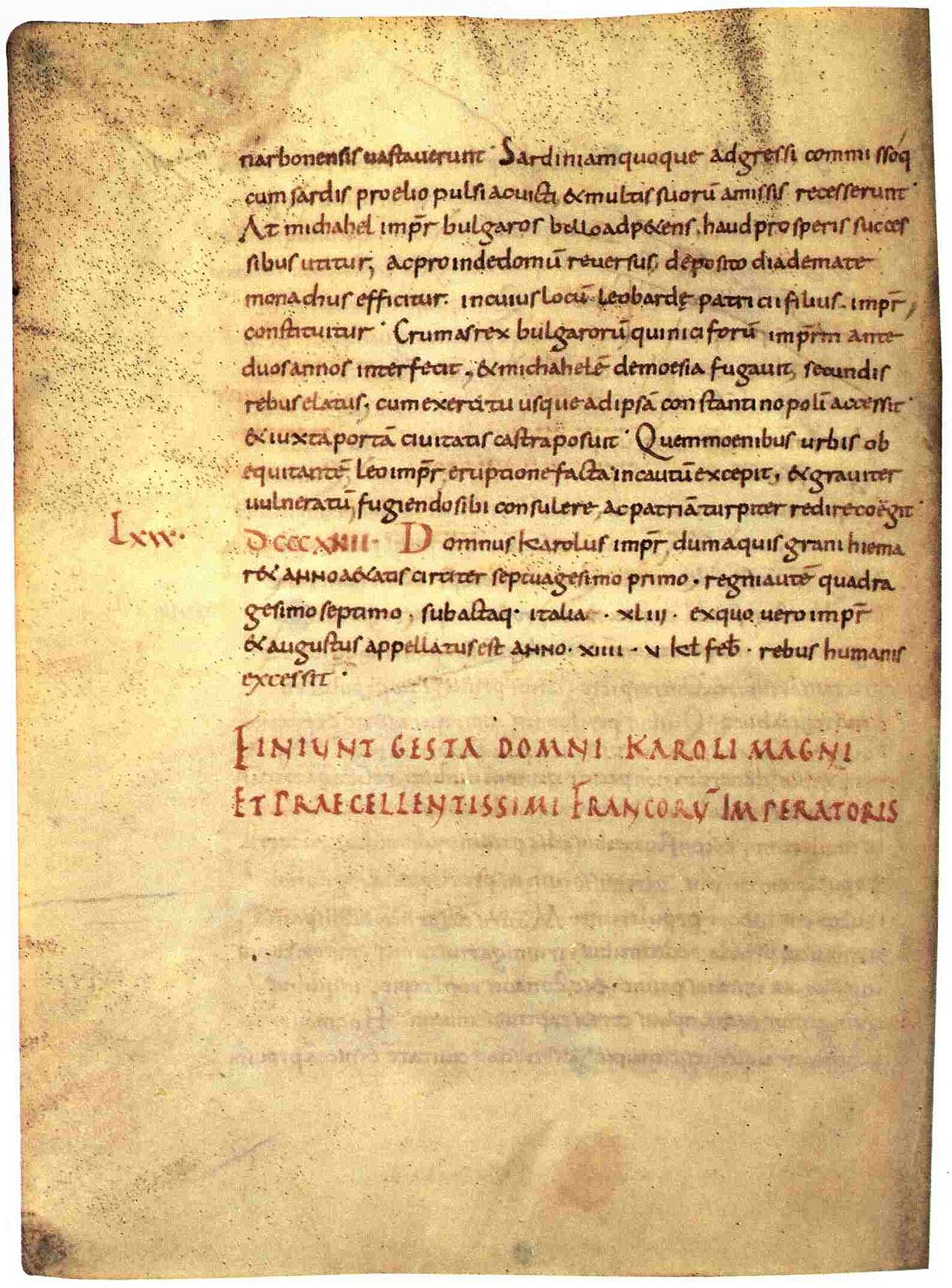
Royal Frankish Annals
741-829, this manuscript c. 900
Primary source
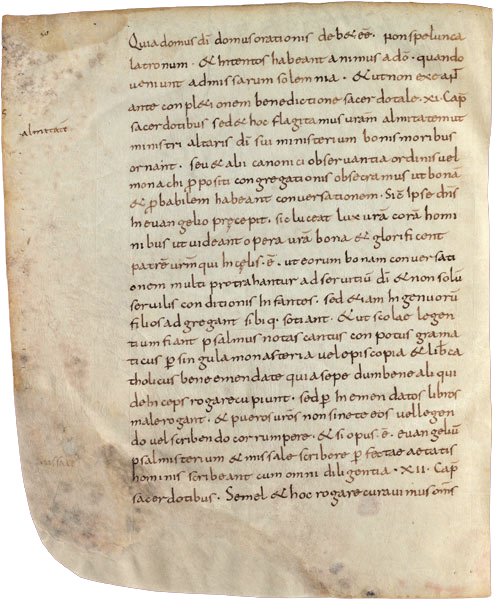
De litteris colendis
Charlemagne · late 780s-800s
 Document
Primary source
Admonitio generalis
Charlemagne · 23 March 789
 Document
Primary source
Capitulare de villis
c. 771-800
Ready when you are
Start chatting with Charlemagne now.
20 messages free · No credit card · Available in 50+ languages.