


Secondary sourcePainting1928
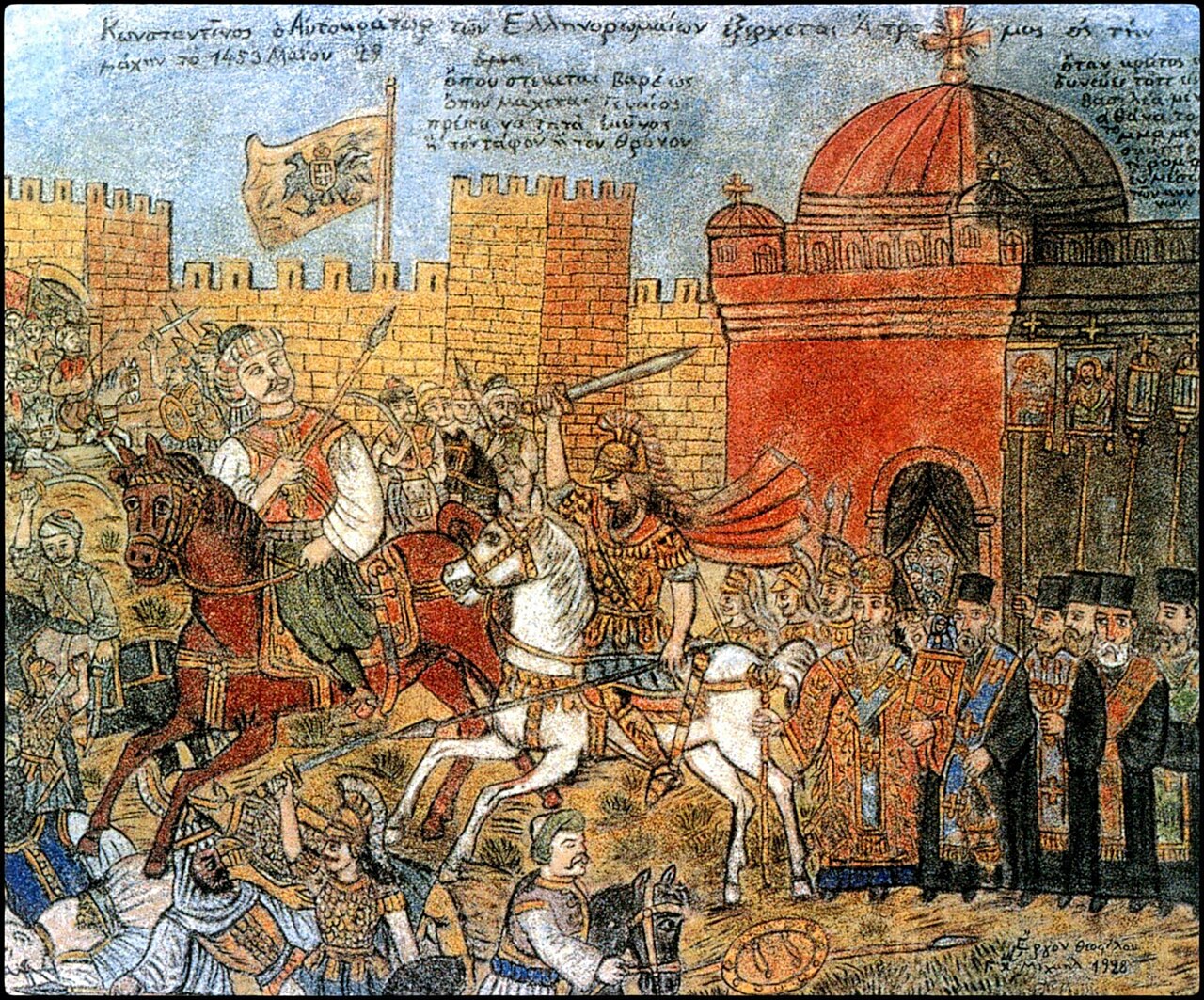
Constantine Palaeologus Enters Battle
Theophilos Chatzimichael · 1928
A 1928 naive-style mural by Theophilos Chatzimichael showing the last emperor riding into battle at the fall of Constantinople in 1453. It is a later, imagined portrayal rather than an eyewitness record.
It shows how Constantine XI was remembered and imagined in twentieth-century Greek art, long after his death at the fall of Constantinople.
About this source
What it is
This is a painted mural by the Greek artist Theophilos Chatzimichael, dated 1928. It shows the emperor on a white horse with a raised sword, in front of a red-domed church, while troops advance toward yellow city walls under a banner with a double-headed eagle. Fallen soldiers lie in the foreground, and Greek inscriptions appear at the top. The mural was recovered from a house-cafe in Skopelos, on the island of Lesbos (Mytilene), and measures 141 cm by 179 cm. Its subject is the emperor's final charge on 29 May 1453.
Why it matters
The painting was made more than four centuries after the events it depicts, so it shows how Greeks in the twentieth century remembered Constantine XI and the fall of Constantinople to the Ottoman army. Chatzimichael painted in a naive style, with bright colours and simple figures rather than careful historical detail. The picture is therefore a record of later memory and imagination, not of the battle itself.
Look closer
- What details in the painting show who is good and who is the enemy, and how does the artist make that clear?
- Why do you think the artist chose to show the emperor on a white horse at the front, rather than a realistic battle scene?
- What might this picture leave out about the siege, the civilians, or the Ottoman side of the story?
This painting is part of the curated material that grounds the AI version of Constantine XI Palaiologos on Humy.ai — when students ask about related events, the AI can quote it and cite it.
More Constantine XI Palaiologos sources
Meet the AI Constantine XI Palaiologos →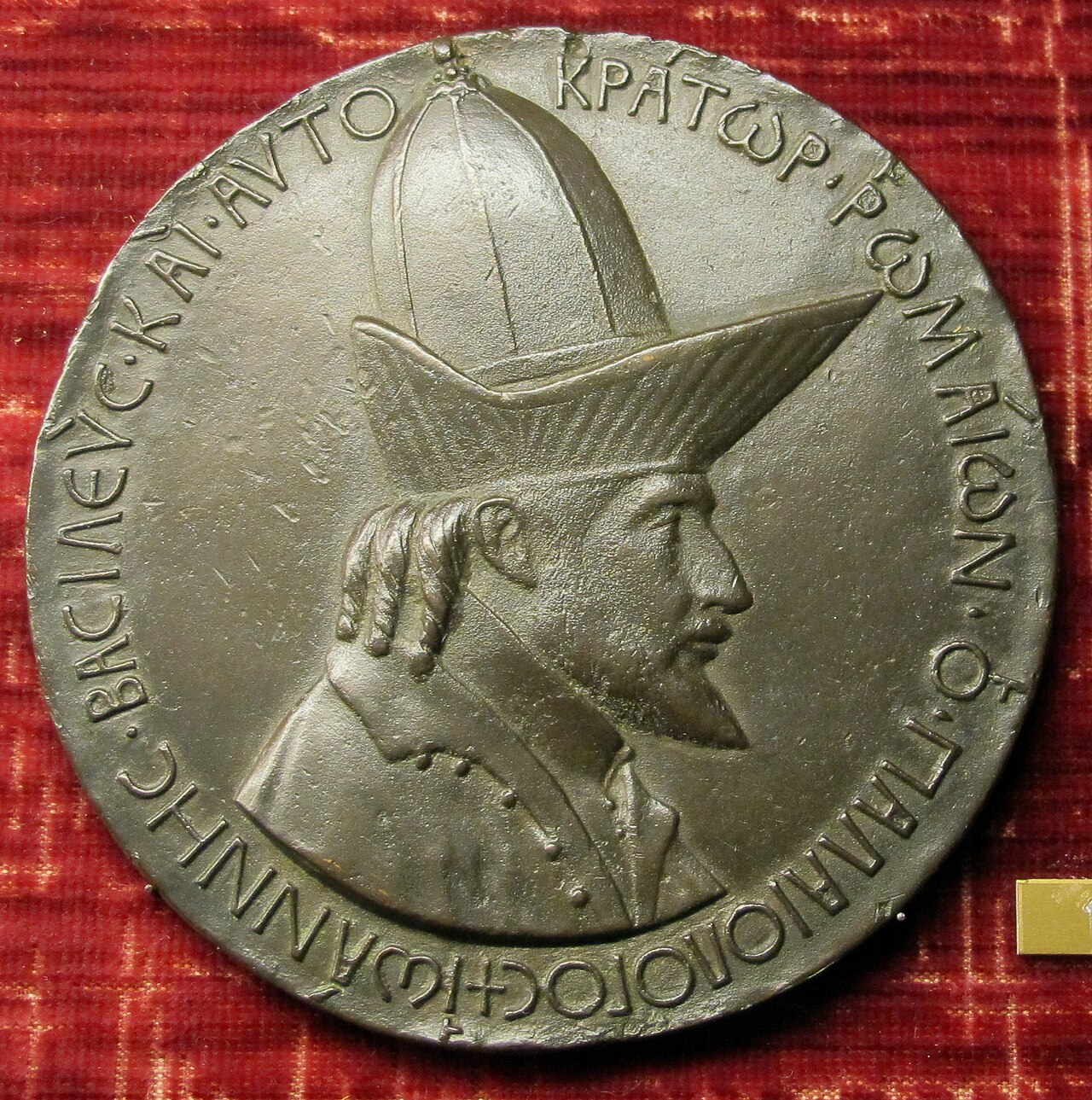 Sculpture
Primary source
Medal of John VIII Palaiologos
Pisanello · 1438-1439
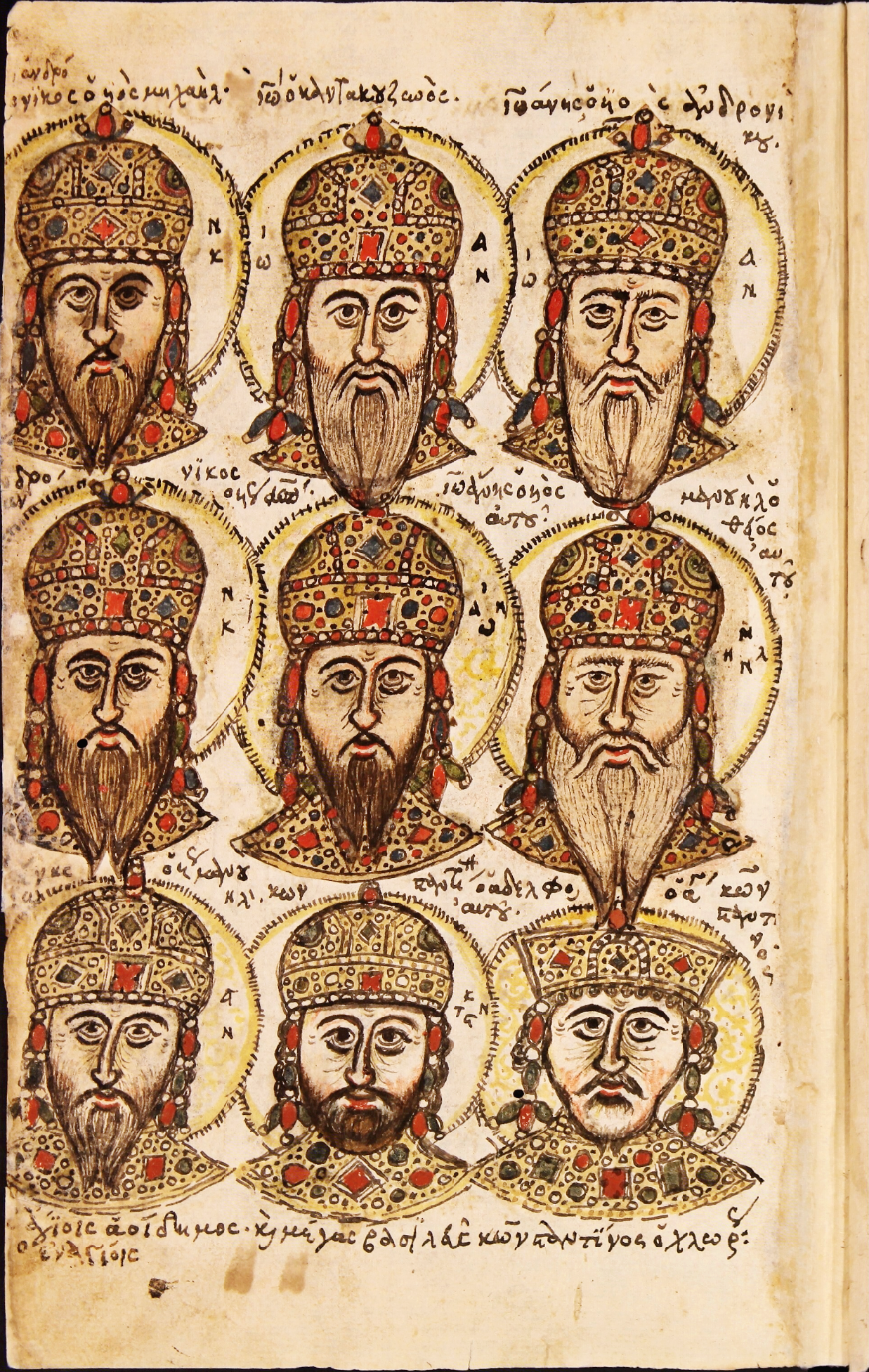 Painting
Secondary source
Zonaras Chronicle Portrait Folio
Unknown Byzantine scribes
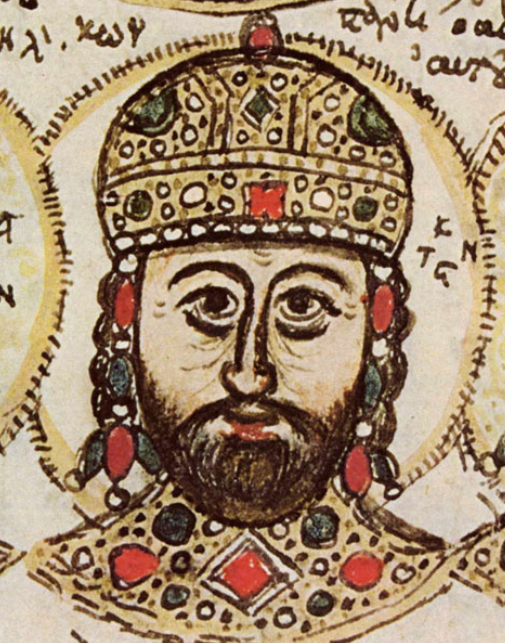 Painting
Secondary source
Portrait of Constantine XI Palaiologos in the Mutinensis gr. 122 Codex
Unknown Byzantine artist · 15th century
 Artifact
Primary source
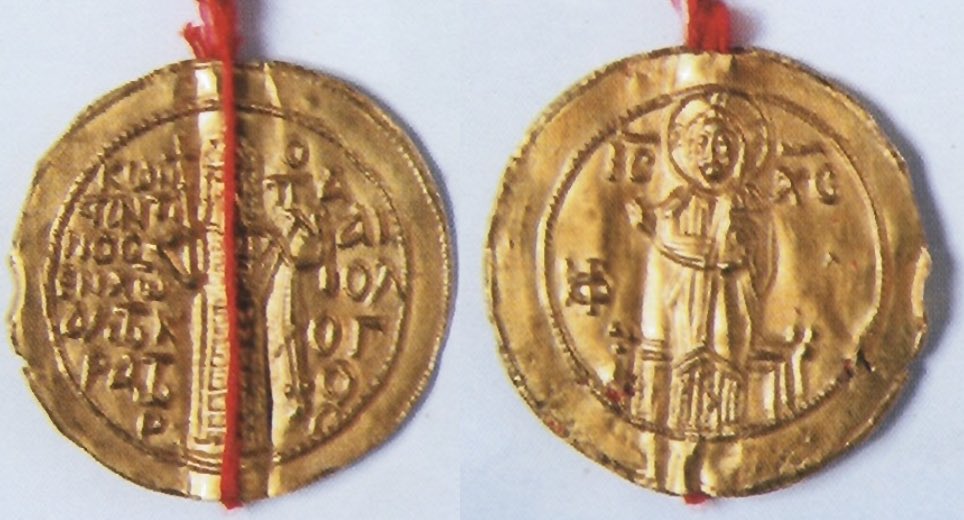
Gold Seal of Constantine XI for Ragusa
1451
 Photograph
Secondary source
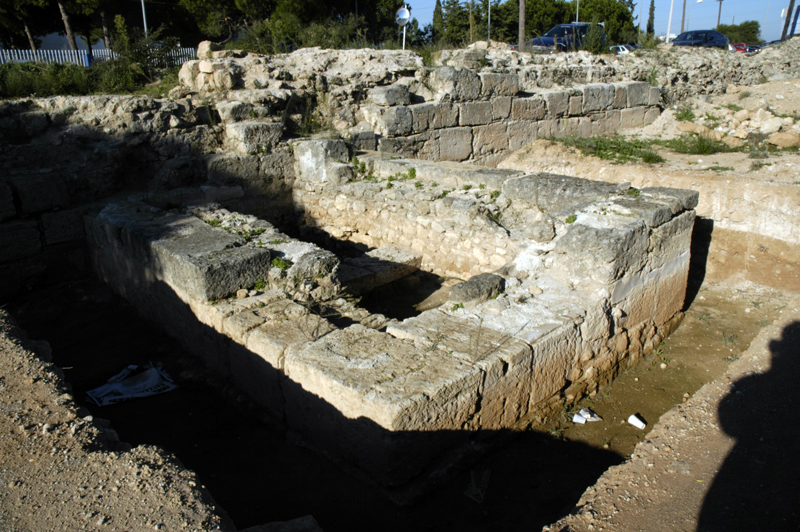
Hexamilion Wall Ruins Across the Corinth Isthmus
Nefasdicere
Ready when you are
Start chatting with Constantine XI Palaiologos now.
20 messages free · No credit card · Available in 50+ languages.