


Secondary sourceBook9th century
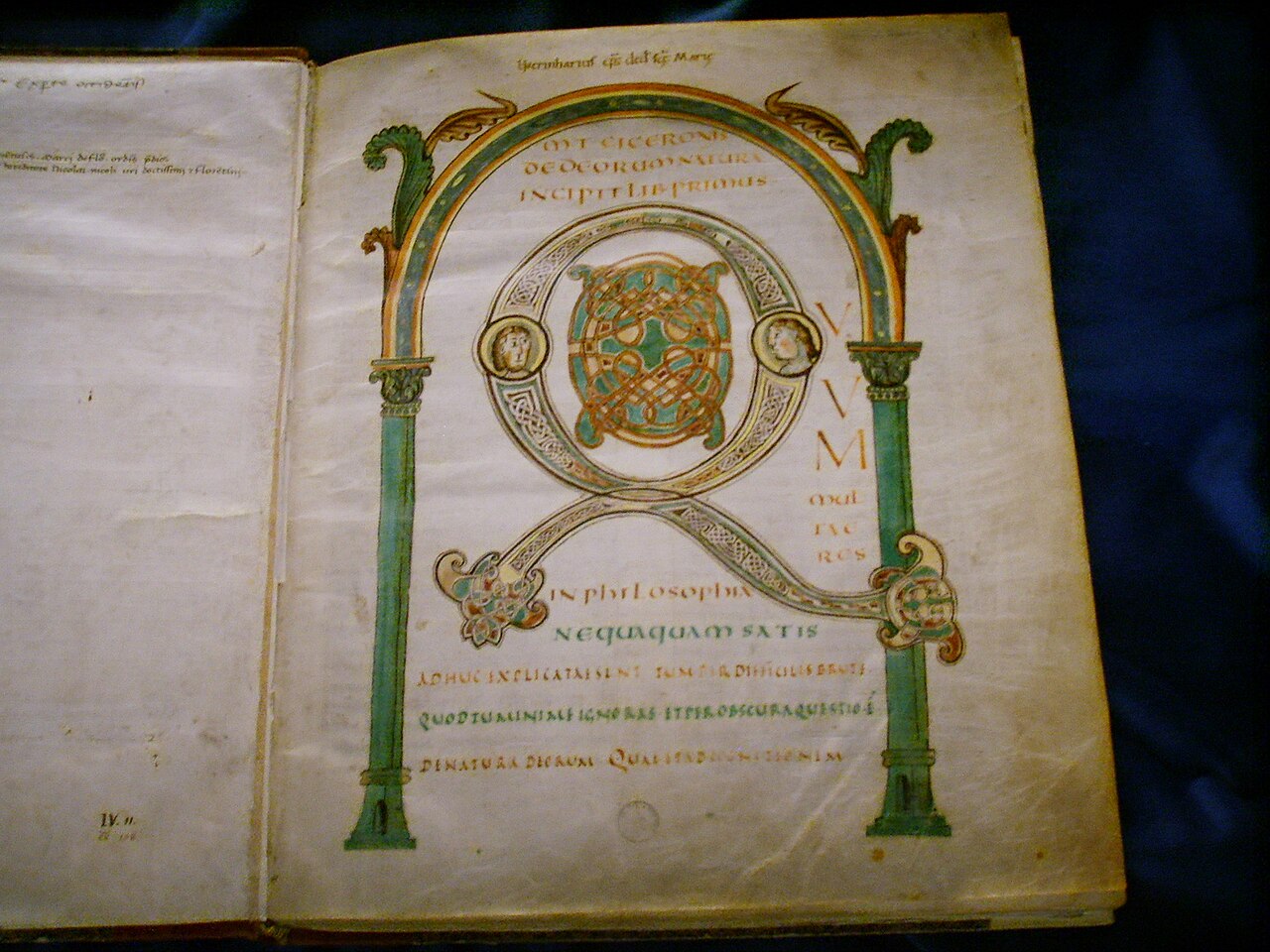
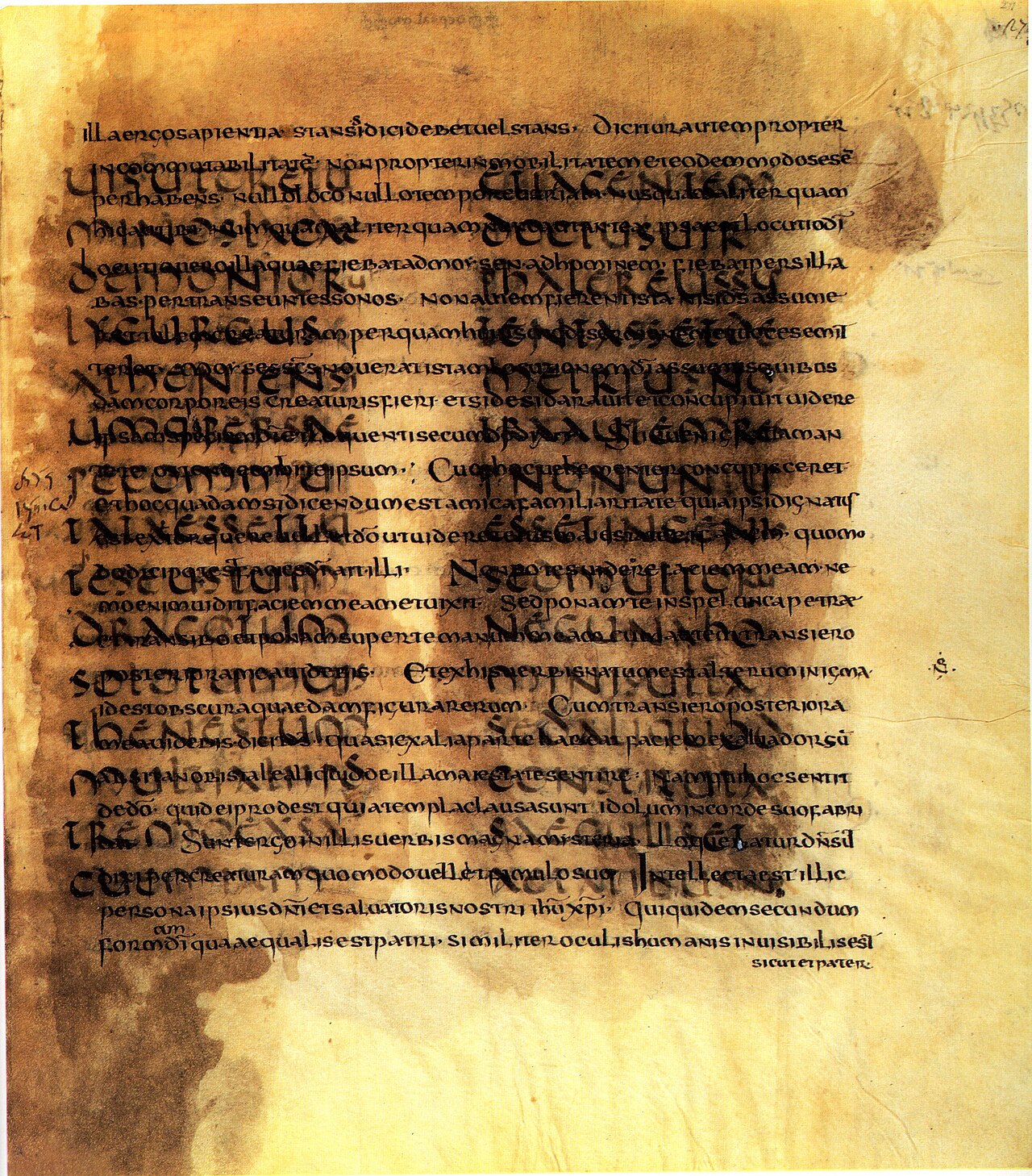
Corbie Manuscript of Cicero's Philosophical Miscellany
9th century
A 9th-century manuscript copy of Cicero's philosophical works, made at the monastery of Corbie, showing how his writings were preserved into the Middle Ages.
A medieval copy of Cicero's own philosophical writings, showing how his texts survived long after his death.
About this source
What it is
This is a page from a 9th-century manuscript made at Corbie, containing a collection of Cicero's philosophical writings. It was copied by medieval scribes, long after Cicero's own lifetime, and features decorative illumination typical of early medieval manuscript production.
Why it matters
Almost everything we know of Cicero's writing survives only because monks and scribes kept copying his texts for centuries after his death. This manuscript is physical proof of that chain of transmission: without such copies, Cicero's philosophical works might have been lost entirely. It shows how medieval Europe valued and preserved ancient Roman learning.
Look closer
- Why would monks spend time and resources copying a pagan Roman author's philosophy?
- What do the decorative elements tell you about how much this text was valued?
- How many hands and centuries separate this page from Cicero's own writing?
This book is part of the curated material that grounds the AI version of Cicero on Humy.ai — when students ask about related events, the AI can quote it and cite it.
More Cicero sources
Meet the AI Cicero →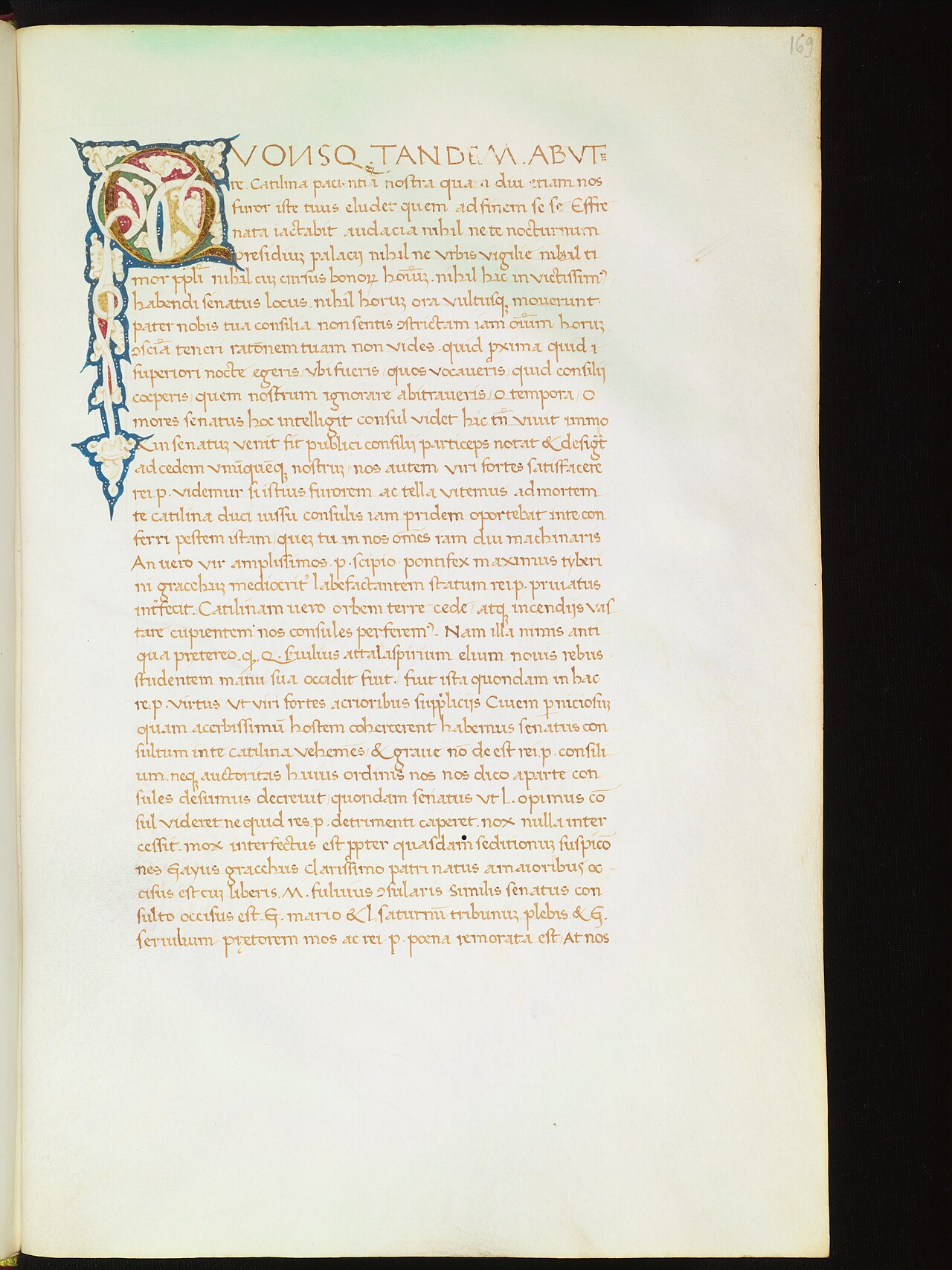 Speech
Primary source
Catiline Orations
Cicero · 63 BCE
 Painting
Secondary source
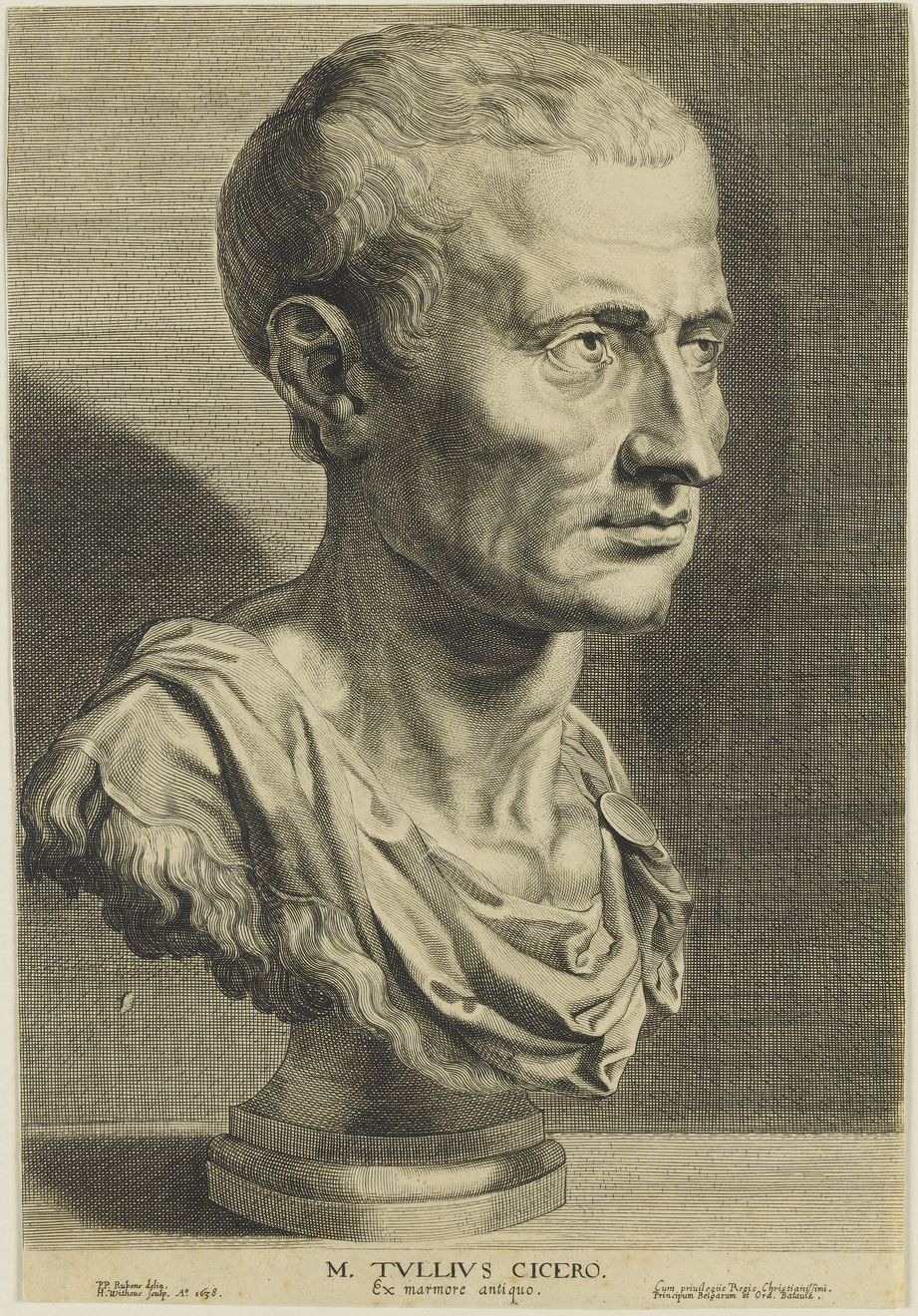
Marcus Tullius Cicero, engraved after antique marble busts
Jan Witdoeck
 Book
Primary source
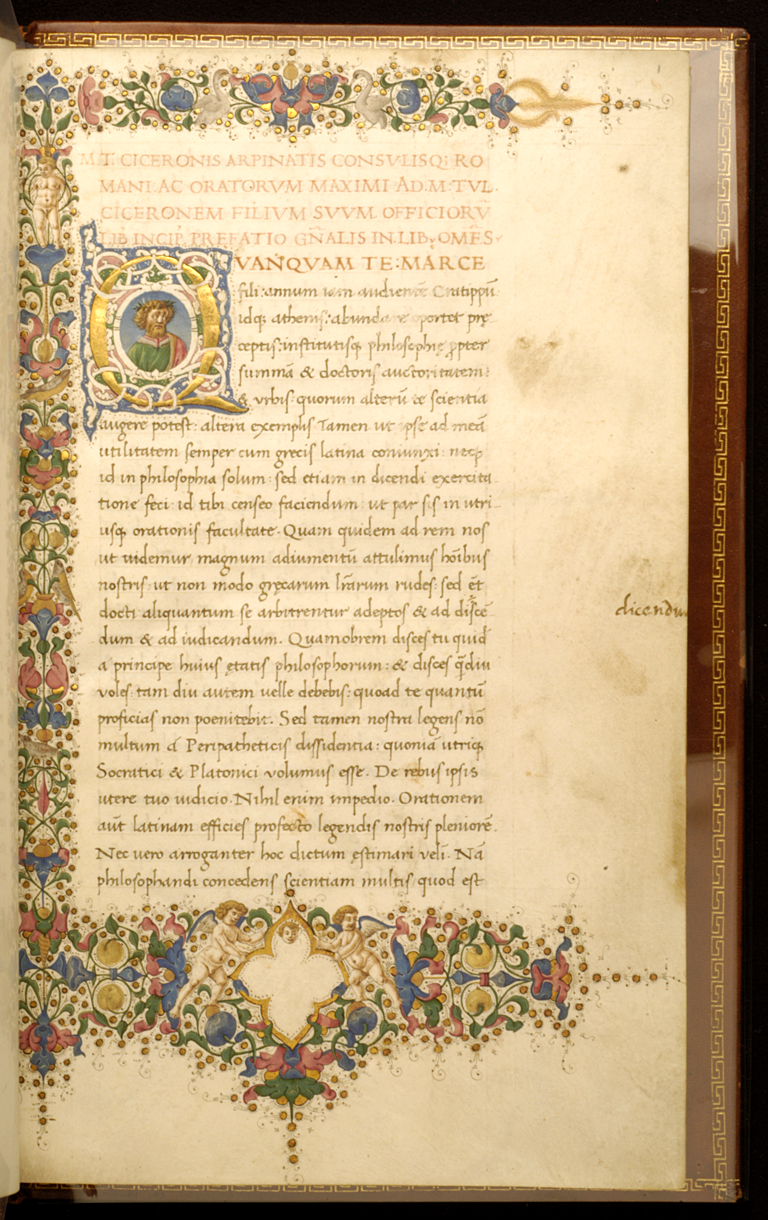
De Officiis
Cicero · 44 BC
 Painting
Secondary source
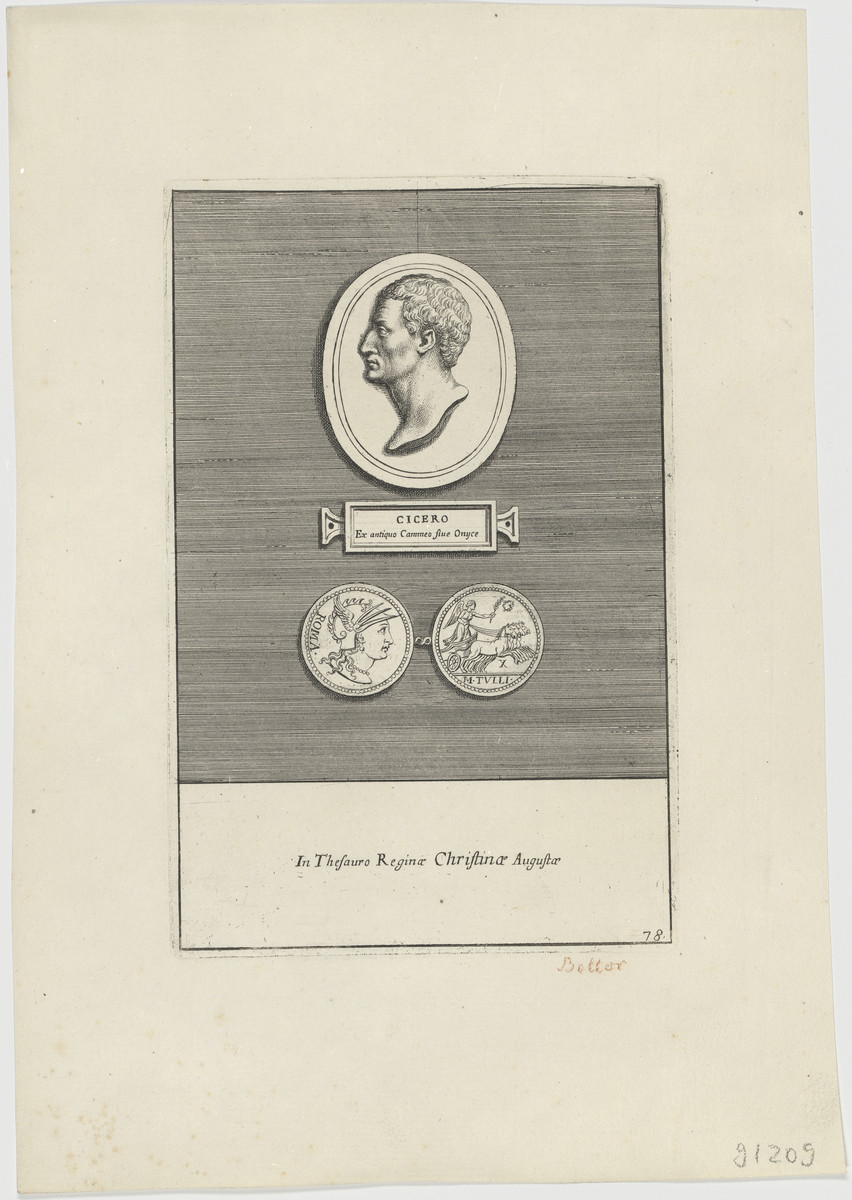
Portrait of Cicero (Bildnis des Cicero)
 Book
Primary source
De re publica
Cicero · c. 54–51 BC
Ready when you are
Start chatting with Cicero now.
20 messages free · No credit card · Available in 50+ languages.