


Primary sourceBook45 BCE
De Natura Deorum
Cicero · 45 BCE
Cicero's philosophical dialogue comparing Epicurean, Stoic and Academic Skeptic views on the gods, written near the end of his life.
Cicero composed this dialogue himself, using it to explore different Greek philosophies on the gods.
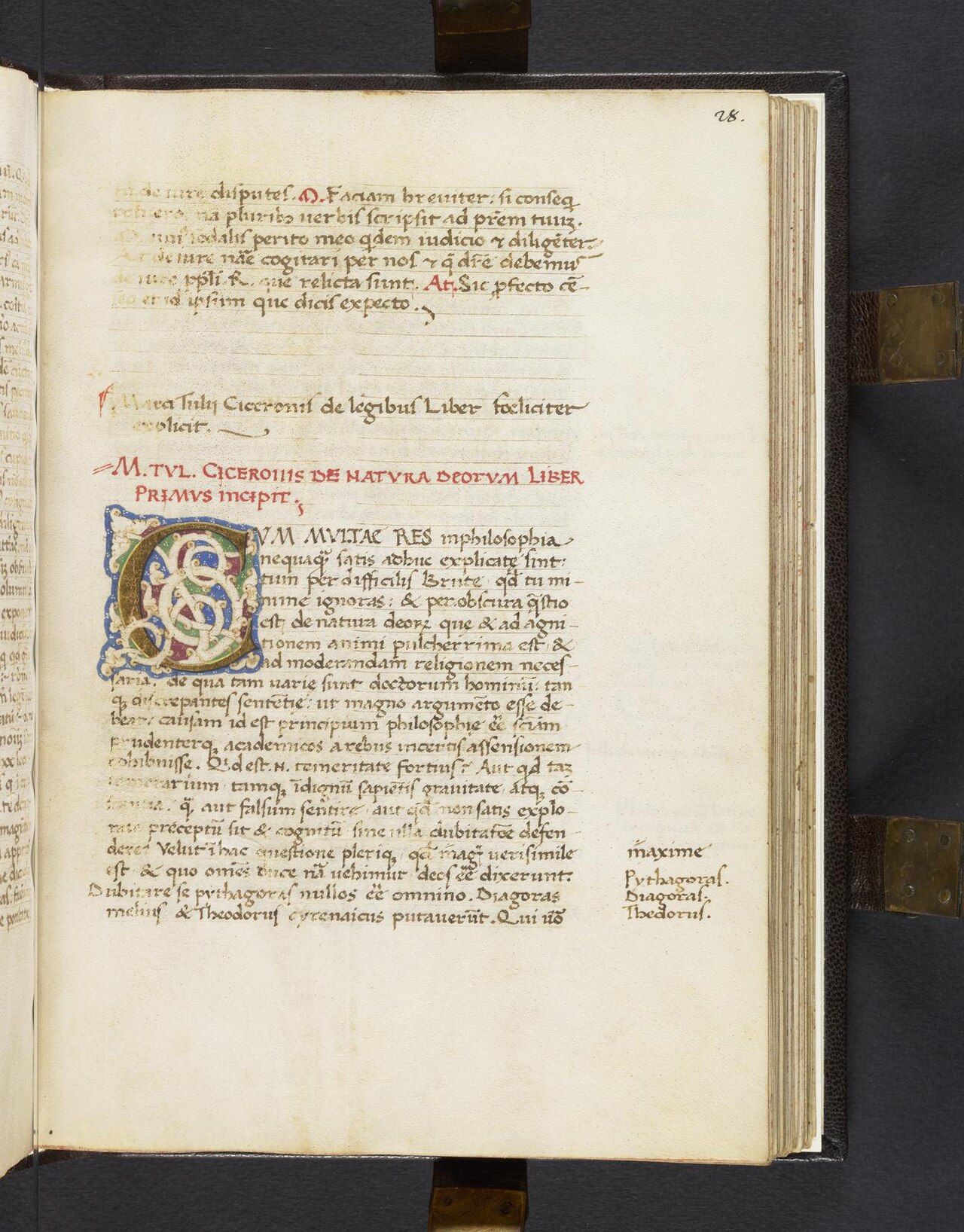
About this source
What it is
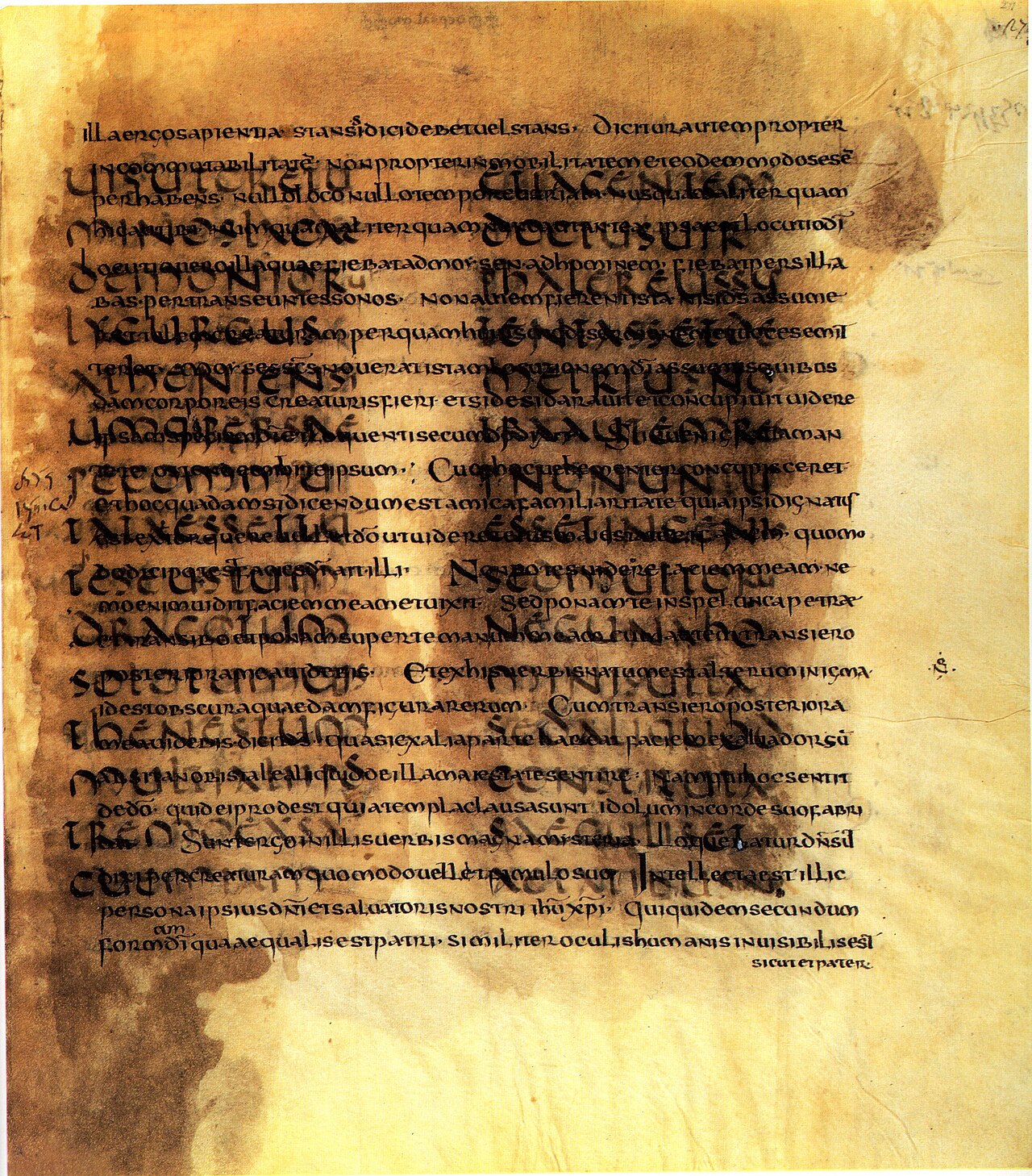
De Natura Deorum (On the Nature of the Gods) is a philosophical dialogue written by Cicero around 45 BC. In three books, characters representing the Epicurean, Stoic and Academic Skeptic schools debate whether gods exist and what they are like. The shown page is from a 15th-century Italian manuscript of Cicero's works held today at the Folger Shakespeare Library.
Why it matters
Cicero wrote this and other philosophical works while shut out of politics under Julius Caesar's dominance and while grieving his daughter Tullia's death. The work transmitted Greek philosophical debates into Latin, helping later readers access Hellenistic thought even without reading Greek.
Look closer
- Why might Cicero have chosen a dialogue, with multiple speakers, rather than stating his own views directly?
- What does the choice of topic tell you about Cicero's state of mind at this stage of his life?
- How does a philosophical debate differ from a political speech in its purpose?
This book is part of the curated material that grounds the AI version of Cicero on Humy.ai — when students ask about related events, the AI can quote it and cite it.
More Cicero sources
Meet the AI Cicero →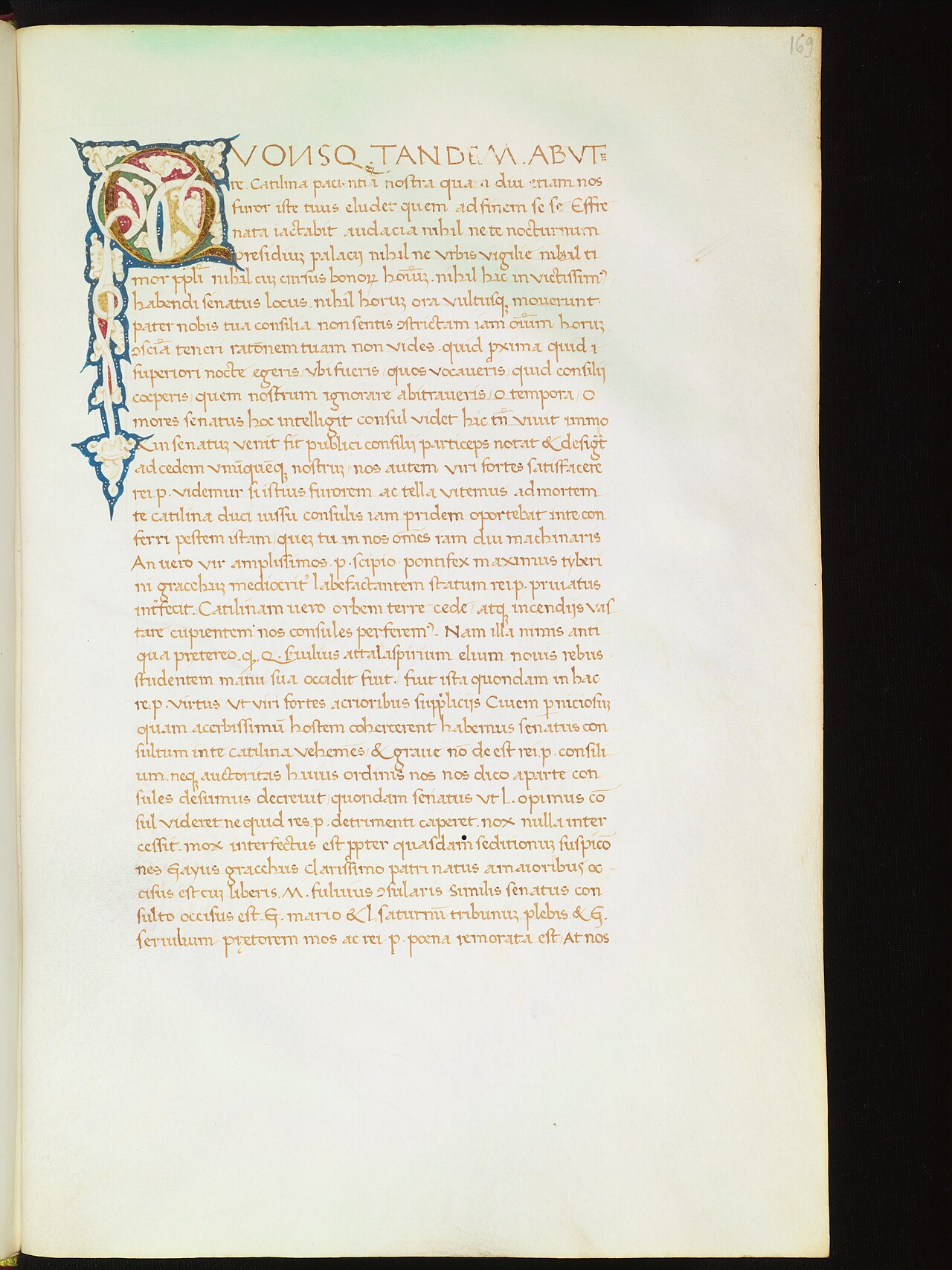 Speech
Primary source
Catiline Orations
Cicero · 63 BCE
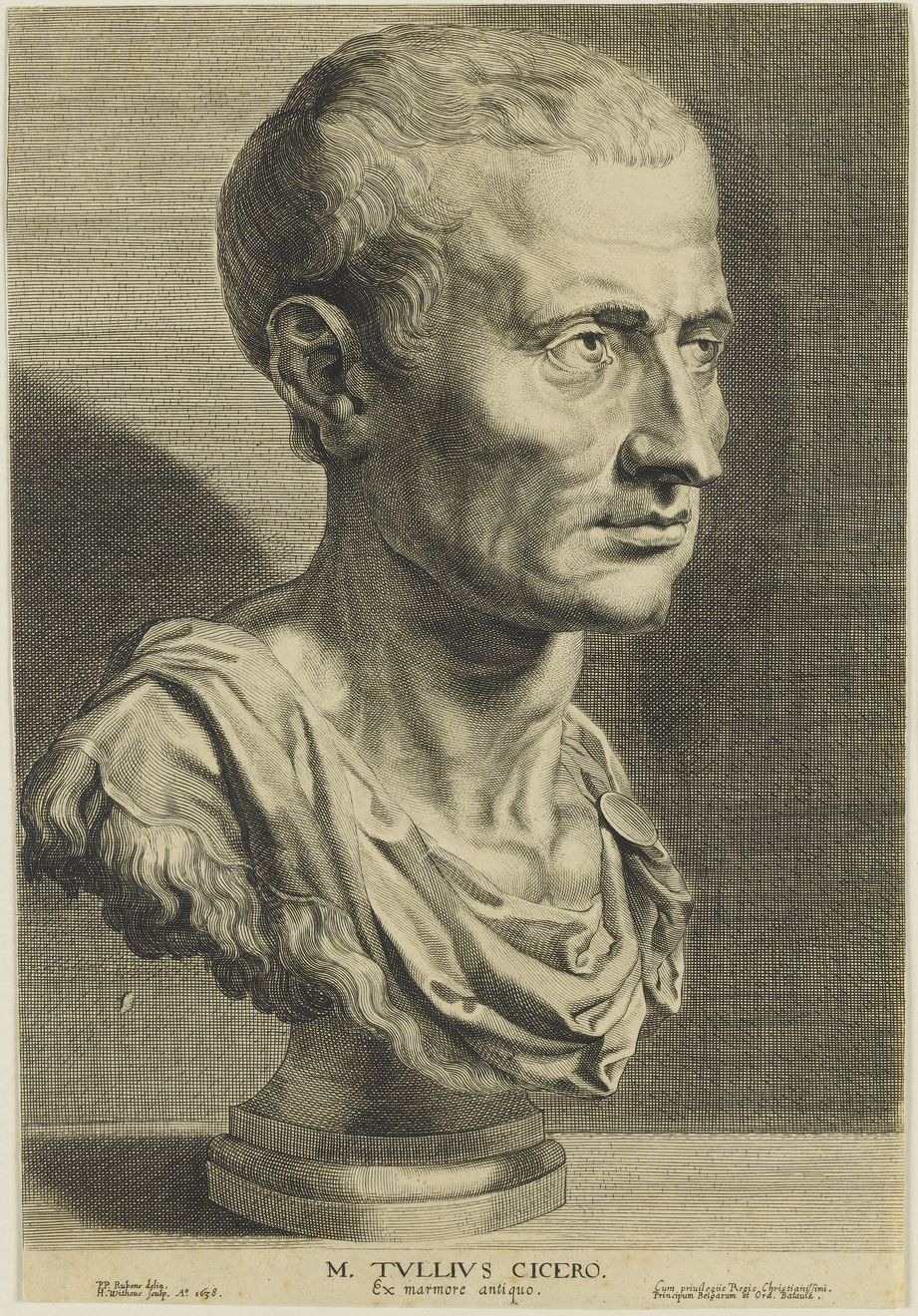 Painting
Secondary source
Marcus Tullius Cicero, engraved after antique marble busts
Jan Witdoeck
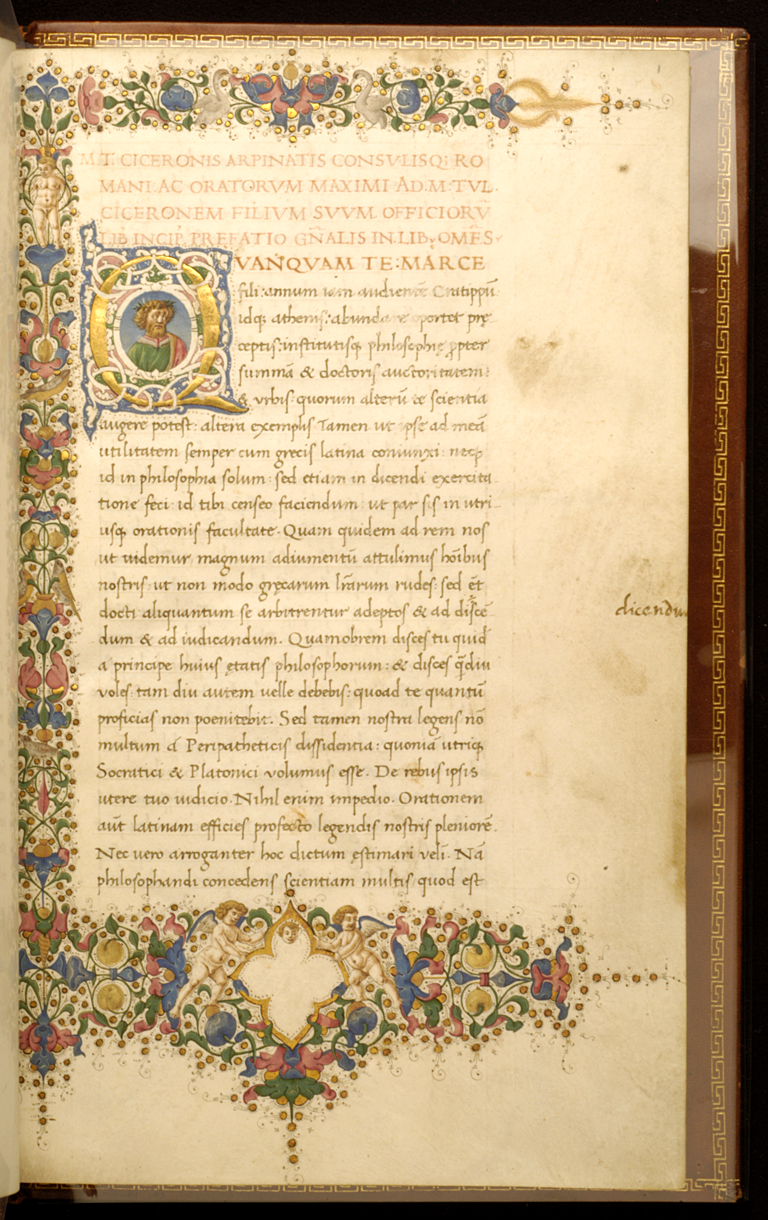 Book
Primary source
De Officiis
Cicero · 44 BC
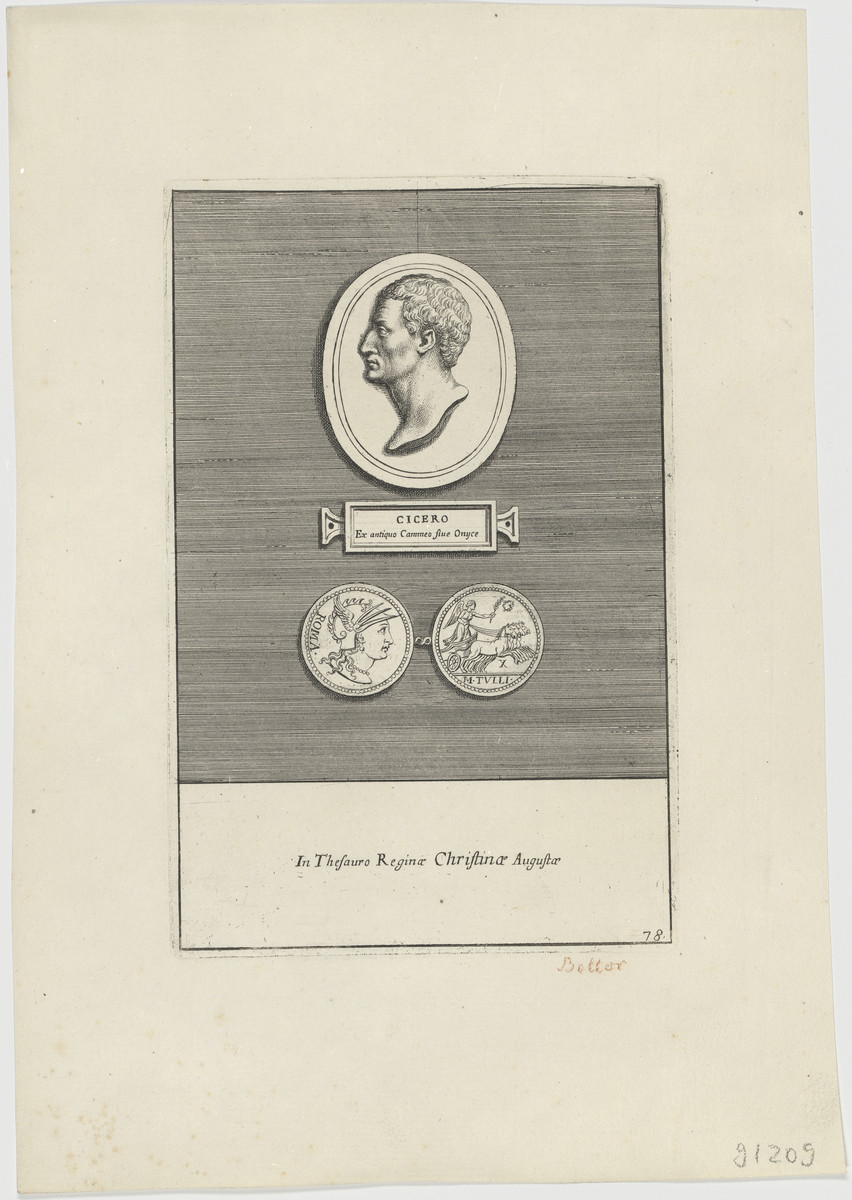 Painting
Secondary source
Portrait of Cicero (Bildnis des Cicero)
 Book
Primary source
De re publica
Cicero · c. 54–51 BC
Ready when you are
Start chatting with Cicero now.
20 messages free · No credit card · Available in 50+ languages.