


Primary sourceArtifactc. 1714-1727
Delftware Plate Commemorating George I
c. 1714-1727
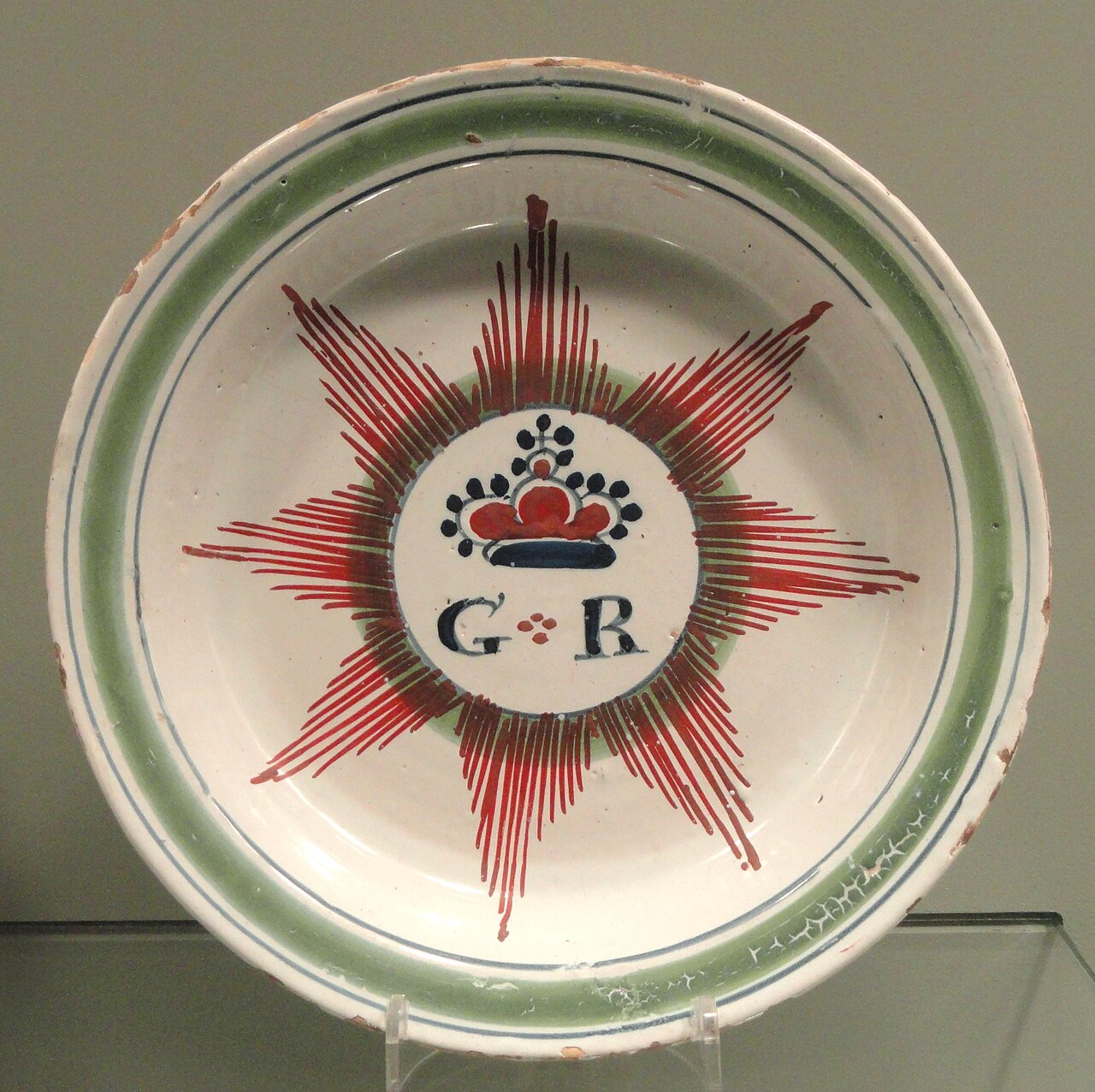
A tin-glazed earthenware loyalty plate decorated with a crown and the royal initials 'G R', showing how the king's image reached ordinary households.
This everyday delftware plate bears George I's royal cipher, showing how his image reached ordinary households.
About this source
What it is
This is a round tin-glazed earthenware plate, probably made in Bristol sometime during the reign of George I. It has a green-banded rim and a central design of a crown and the letters G R (Georgius Rex), painted in red and blue. It is now kept in the Gardiner Museum in Toronto.
Why it matters
Plates like this were a popular, cheap way for ordinary people to show loyalty to the new king. They tell us that royal image-making was not only about grand portraits and statues for the elite, but also about objects used in everyday homes, spreading the monarch's symbol widely.
Look closer
- Why might someone want a plate with the king's initials in their home?
- What does the choice of a crown and royal cipher, rather than a portrait, tell you about how kings were represented on everyday objects?
- What does this object suggest about public feeling toward the new Hanoverian dynasty?
This artifact is part of the curated material that grounds the AI version of George I on Humy.ai — when students ask about related events, the AI can quote it and cite it.
More George I sources
Meet the AI George I → Document
Primary source
Act of Settlement 1701
1701
 Painting
Primary source
Portrait of George I of Great Britain
Godfrey Kneller
Secondary source
Water Music
George Frideric Handel · 1717
Primary source
Septennial Act 1715
1716
 Document
Primary source
Royal Proclamation for the Arrest of Sir William Wyndham
23 September 1715
Ready when you are
Start chatting with George I now.
20 messages free · No credit card · Available in 50+ languages.