


Secondary sourcePainting
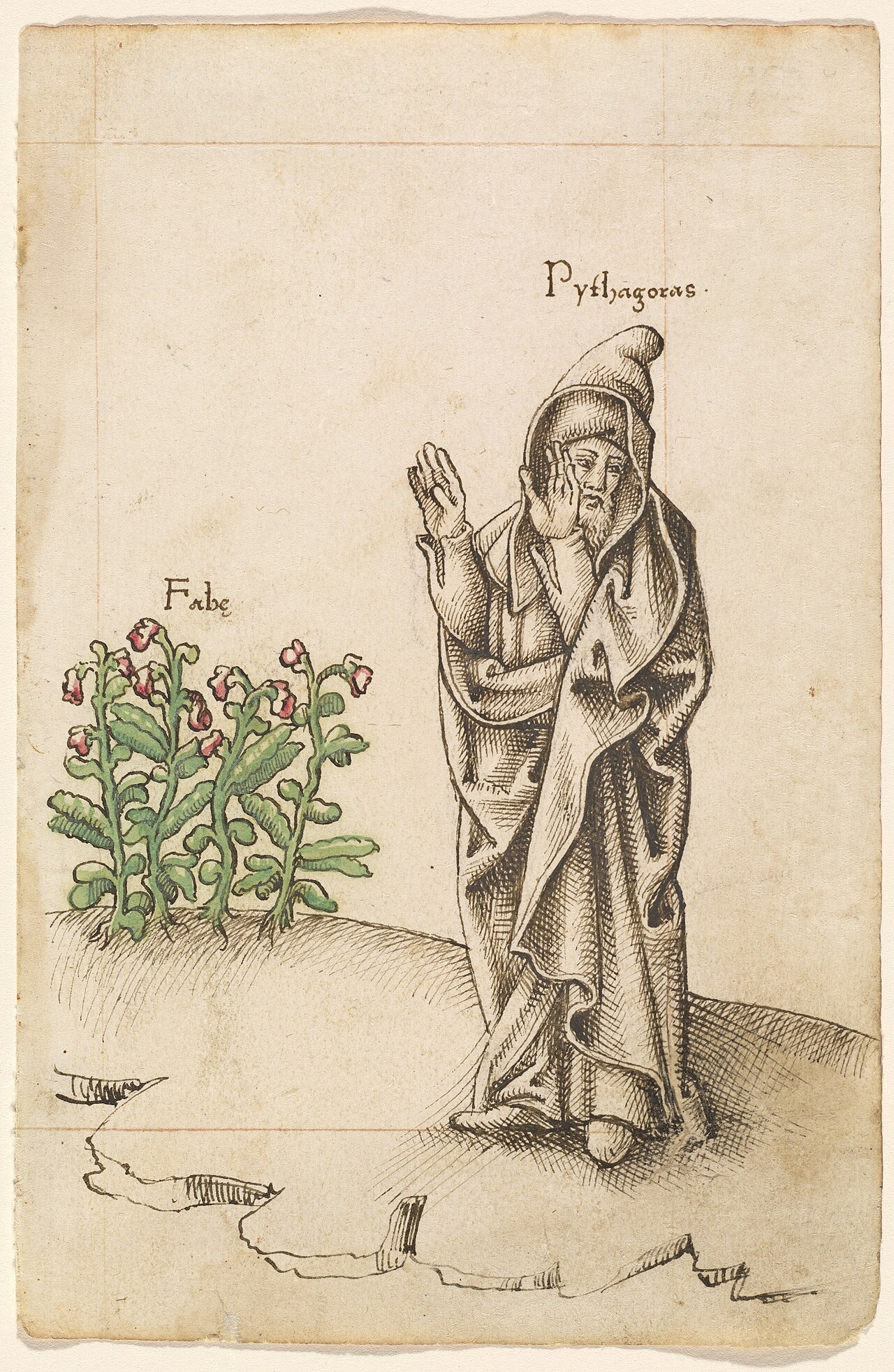
Do Not Eat Beans
A French Renaissance drawing illustrating the Pythagorean taboo against eating beans, one of the cryptic rules attributed to his followers.
Illustrates a famous taboo attributed to Pythagoras's followers, part of his mysterious later reputation.
About this source
What it is
This is a pen-and-ink drawing with watercolor from early sixteenth-century France, now held in the Woodner Collection at the National Gallery of Art. It shows a robed, hooded bearded man labelled 'Pythagoras' beside a bean plant, illustrating one of the strange symbolic rules, or symbola, attributed to his followers.
Why it matters
Ancient and later writers claimed Pythagoras and his school followed odd rules, such as never eating beans, as symbolic or secret teachings. This Renaissance manuscript drawing shows how such sayings were collected, illustrated, and puzzled over long after his death, reflecting fascination with the mysterious, almost cult-like image of Pythagoras and his community.
Look closer
- Why might a rule like 'do not eat beans' have been given a deeper, symbolic meaning?
- What does the gesture of the figure suggest about how the artist understood this teaching?
- How reliable can a drawing made centuries later be as evidence for Pythagoras's actual beliefs?
This painting is part of the curated material that grounds the AI version of Pythagoras on Humy.ai — when students ask about related events, the AI can quote it and cite it.
More Pythagoras sources
Meet the AI Pythagoras → Book
Secondary source
Lives and Opinions of Eminent Philosophers, Book V (Life of Aristotle)
Diogenes Laërtius · c. 3rd century CE
 Book
Secondary source
Histories
Herodotus · c. 440 BCE
 Painting
Secondary source
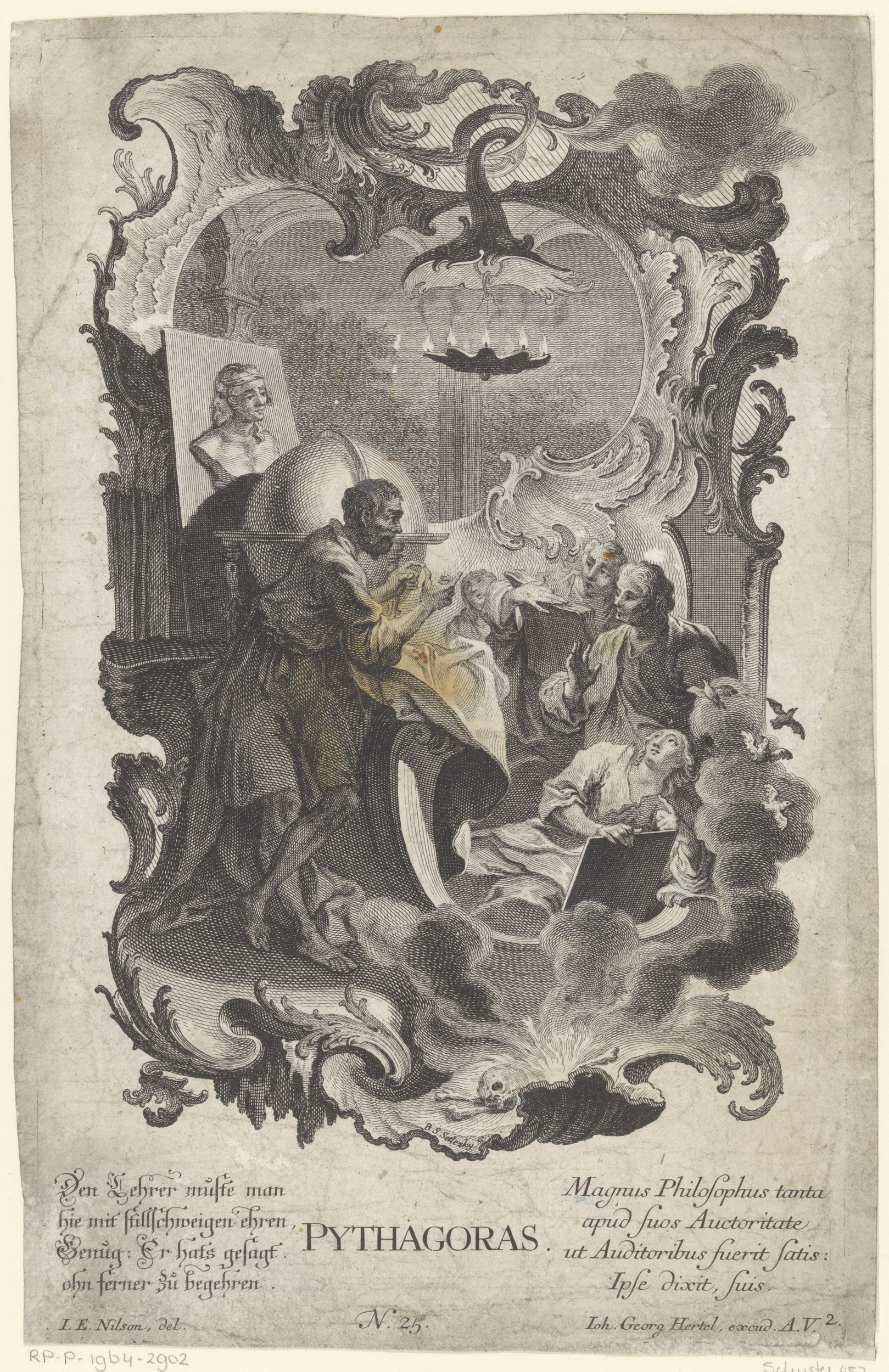
Pythagoras Leaning on a Globe with Four Listeners
 Book
Secondary source
Metaphysics
Aristotle · c. 400 BCE
 Painting
Secondary source
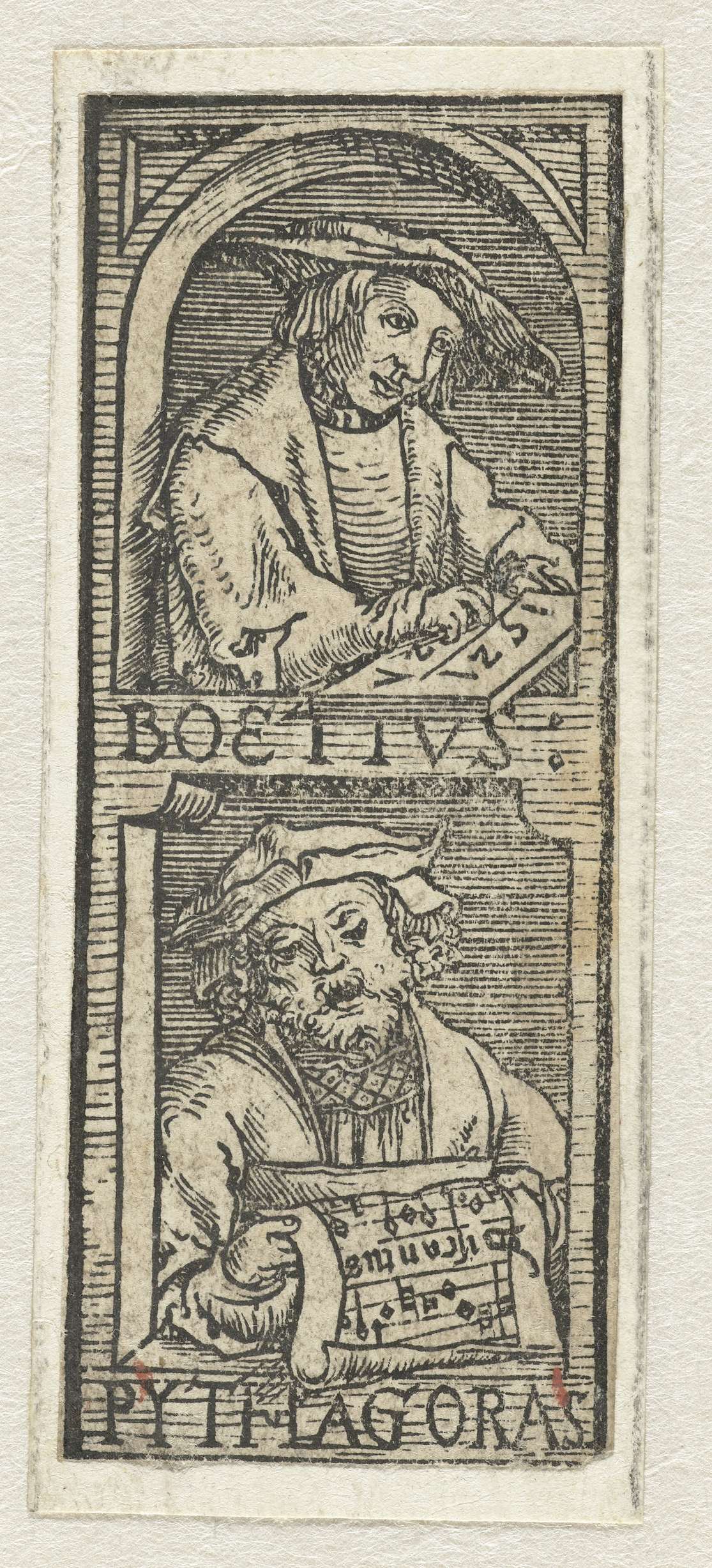
Boethius and Pythagoras
1521
Ready when you are
Start chatting with Pythagoras now.
20 messages free · No credit card · Available in 50+ languages.