


Secondary sourcePainting1656
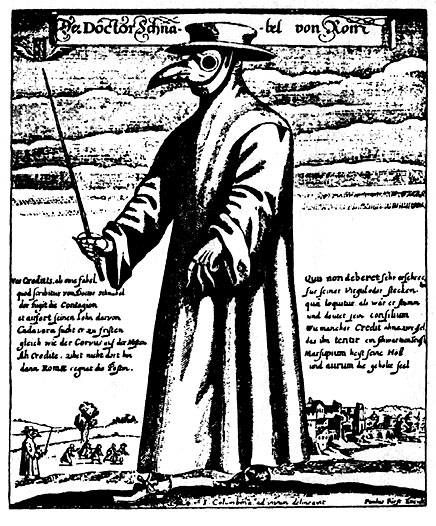
Doctor Schnabel von Rom
Paul Fürst · 1656
A 1656 satirical engraving of a beaked plague doctor, often mistakenly linked to the Black Death of 1348 though it shows a much later costume.
Commonly but mistakenly associated with the 1348 Black Death; useful for showing which plague-doctor imagery actually came later.
About this source
What it is
This is an engraving made by Paul Fürst in 1656, showing a figure dressed as a plague doctor: a long coat, wide-brimmed hat and bird-like beaked mask, holding a cane. Latin and German text surrounds the image, and a town with other figures appears in the background. Copies are held by museums including the British Museum.
Why it matters
Although this image is often shown alongside stories of the Black Death of 1348, it was actually made over three hundred years later, during a later outbreak of plague in Rome. Fürst's print was satirical, mocking the costume and the fear it caused. It is a good example of how a much later image can get wrongly attached to an earlier historical event.
Look closer
- What does the costume suggest the doctor believed about how disease spread?
- Why might this image be used today to illustrate the medieval Black Death, even though it is from a much later time?
- What does the surrounding text suggest about how Fürst wanted viewers to react?
This painting is part of the curated material that grounds the AI version of The Black Death on Humy.ai — when students ask about related events, the AI can quote it and cite it.
More The Black Death sources
Meet the AI The Black Death →Secondary source
The Decameron
Giovanni Boccaccio · 1351
Primary source
Statute of Labourers 1351
1351
 Painting
Primary source
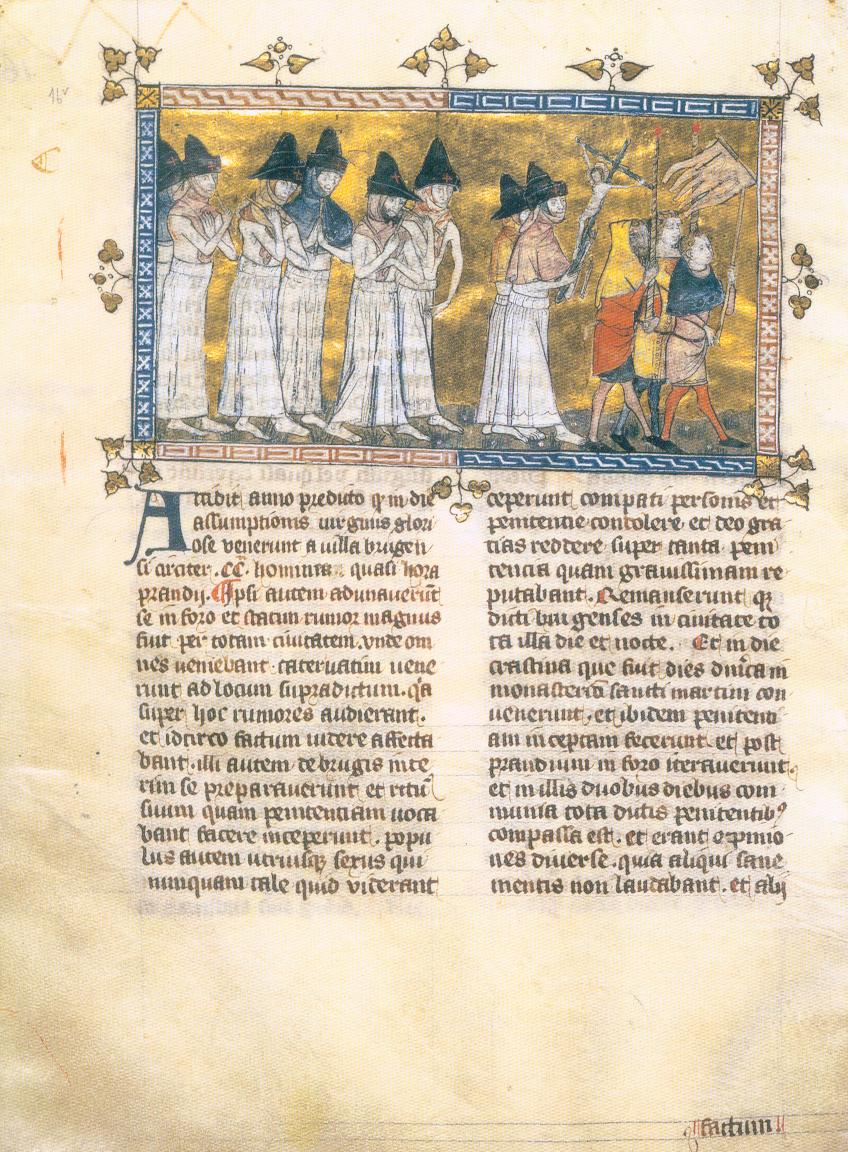
Depiction of the Flagellant Processions
Pierart dou Tielt · c. 1350
 Painting
Primary source
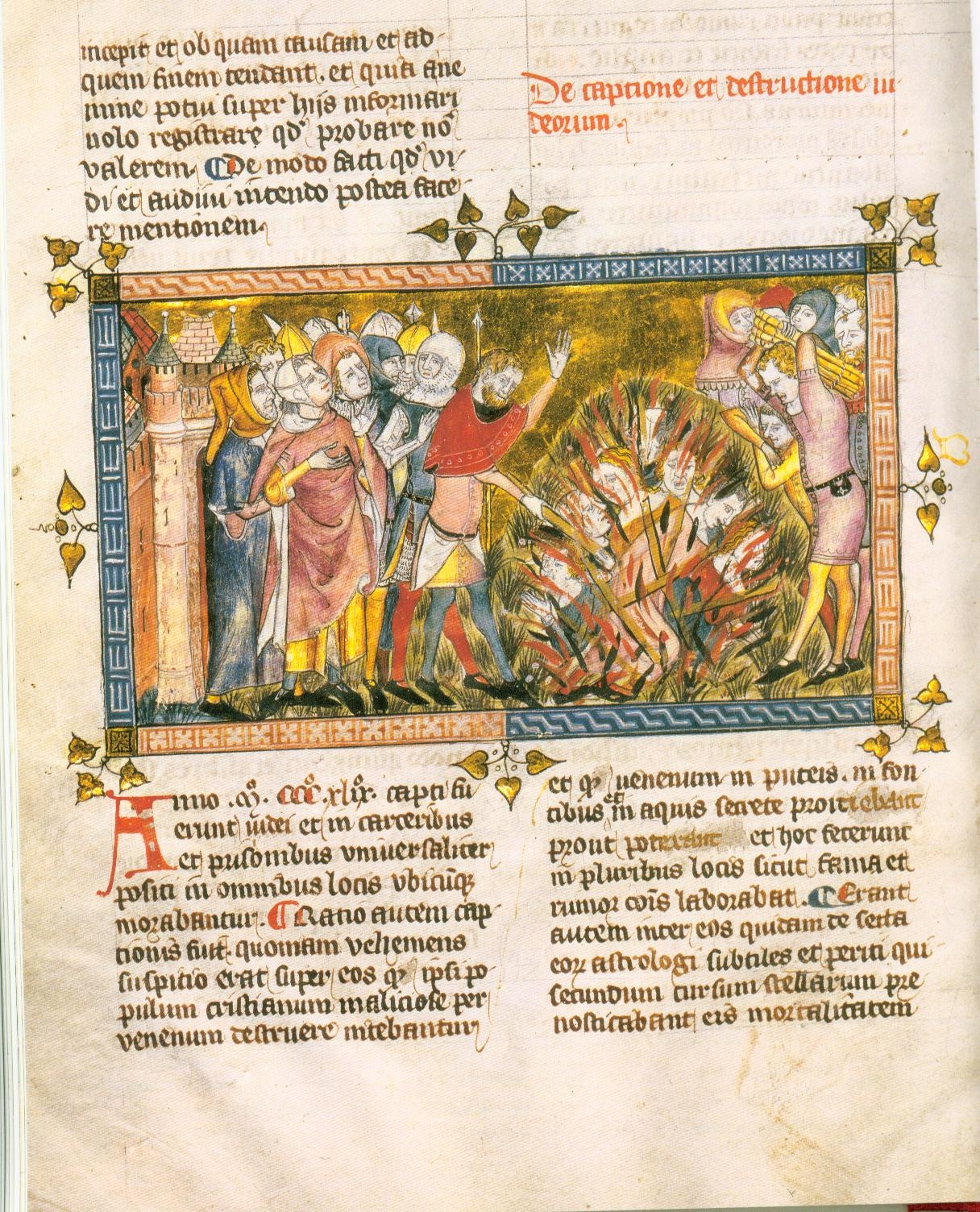
Execution of Jews
c. 1350
 Book
Primary source
The Annals of Ireland by Friar John Clyn
John Clyn · 1348-1349
Ready when you are
Start chatting with The Black Death now.
20 messages free · No credit card · Available in 50+ languages.