


Primary sourcePaintingc. 1650
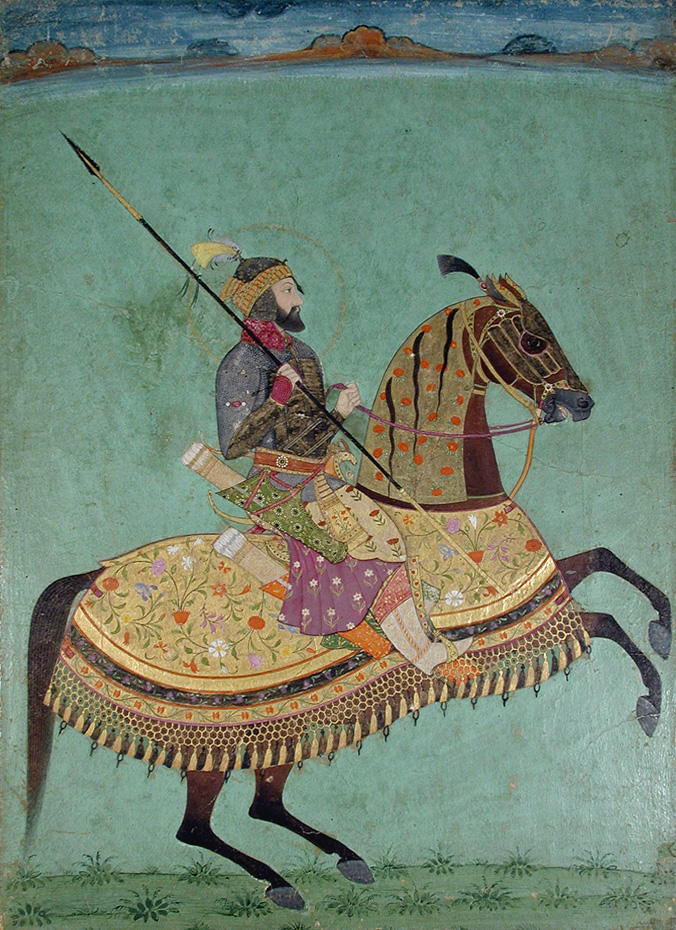
Equestrian portrait of Aurangzeb
c. 1650
A court-style painting of a mounted rider in feathered turban and armour, made around 1650. It is a contemporary image of the prince or emperor.
This court portrait shows Aurangzeb as a mounted prince or emperor, offering a contemporary picture of how he was presented to the court.
About this source
What it is
This is a painting of a mounted rider, dated to around 1650. The rider wears a feathered turban and armour and holds a long spear. He sits on a dark brown horse draped in an ornate gold and floral saddle cloth with tassels. The background is green, with grass and a hilly horizon. The artist is not known from the records available. The archive's record describes it as a court-style portrait of the prince or emperor on horseback.
Why it matters
Court portraits such as this one were used to present rulers and princes as warriors and leaders. Because it was made around the time Aurangzeb was rising to power, it helps students see the image that the court wanted to present of him during a period of succession conflict and rivalry.
Look closer
- What objects and clothing signal power and rank in this painting?
- Who would have commissioned or viewed a painting like this, and what message were they meant to receive?
- Does the painting show the rider's personality, or only his role and status?
This painting is part of the curated material that grounds the AI version of Aurangzeb on Humy.ai — when students ask about related events, the AI can quote it and cite it.
More Aurangzeb sources
Meet the AI Aurangzeb →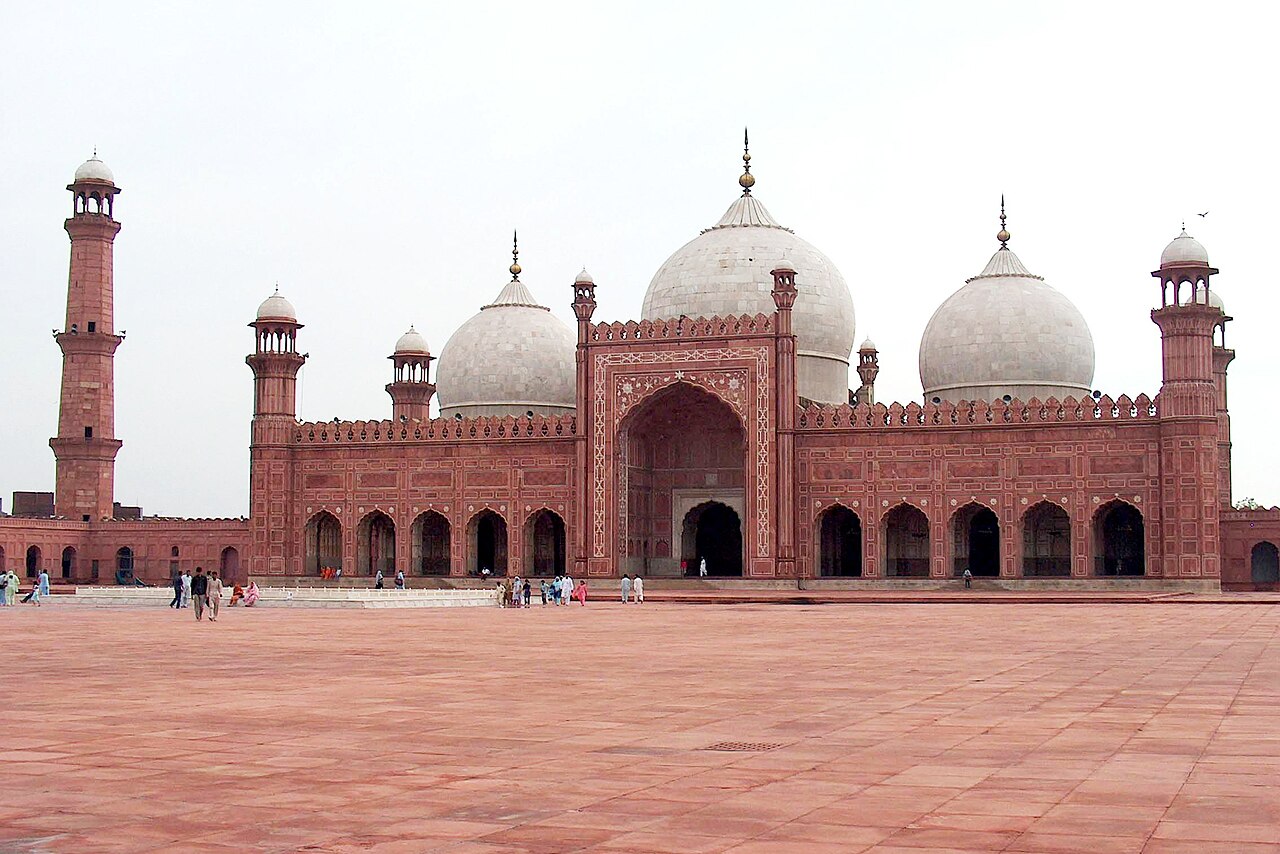 Artifact
Primary source
Badshahi Mosque
1671–1673
 Document
Primary source
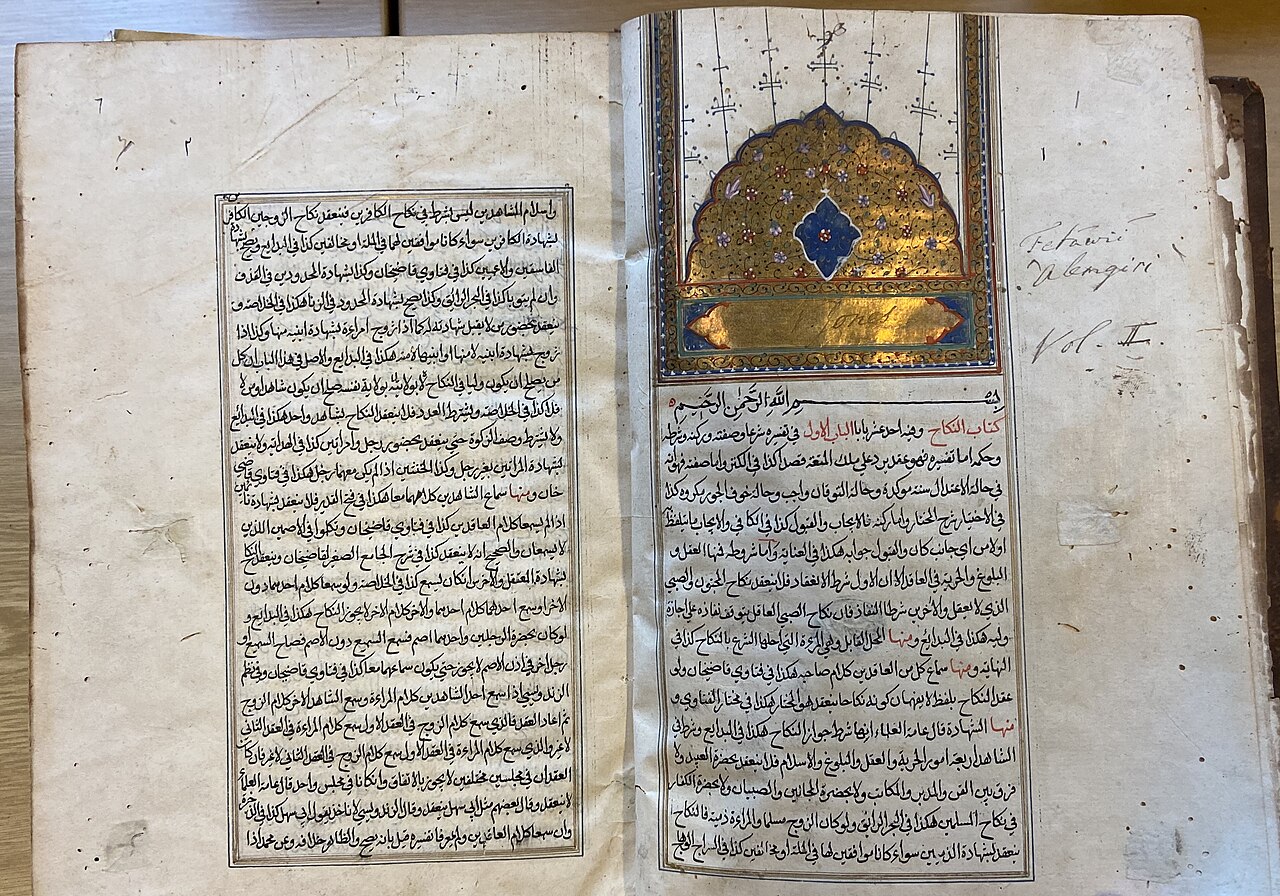
Fatawa-i Alamgiri Manuscript
17th century (this copy later recopied)
 Book
Secondary source
Maasir-i-Alamgiri
Saqi Musta'id Khan · c. 1710 (this copy 1763-1764)
Primary source
Ruka'at-i-Alamgiri
Aurangzeb · 17th century
 Letter
Primary source
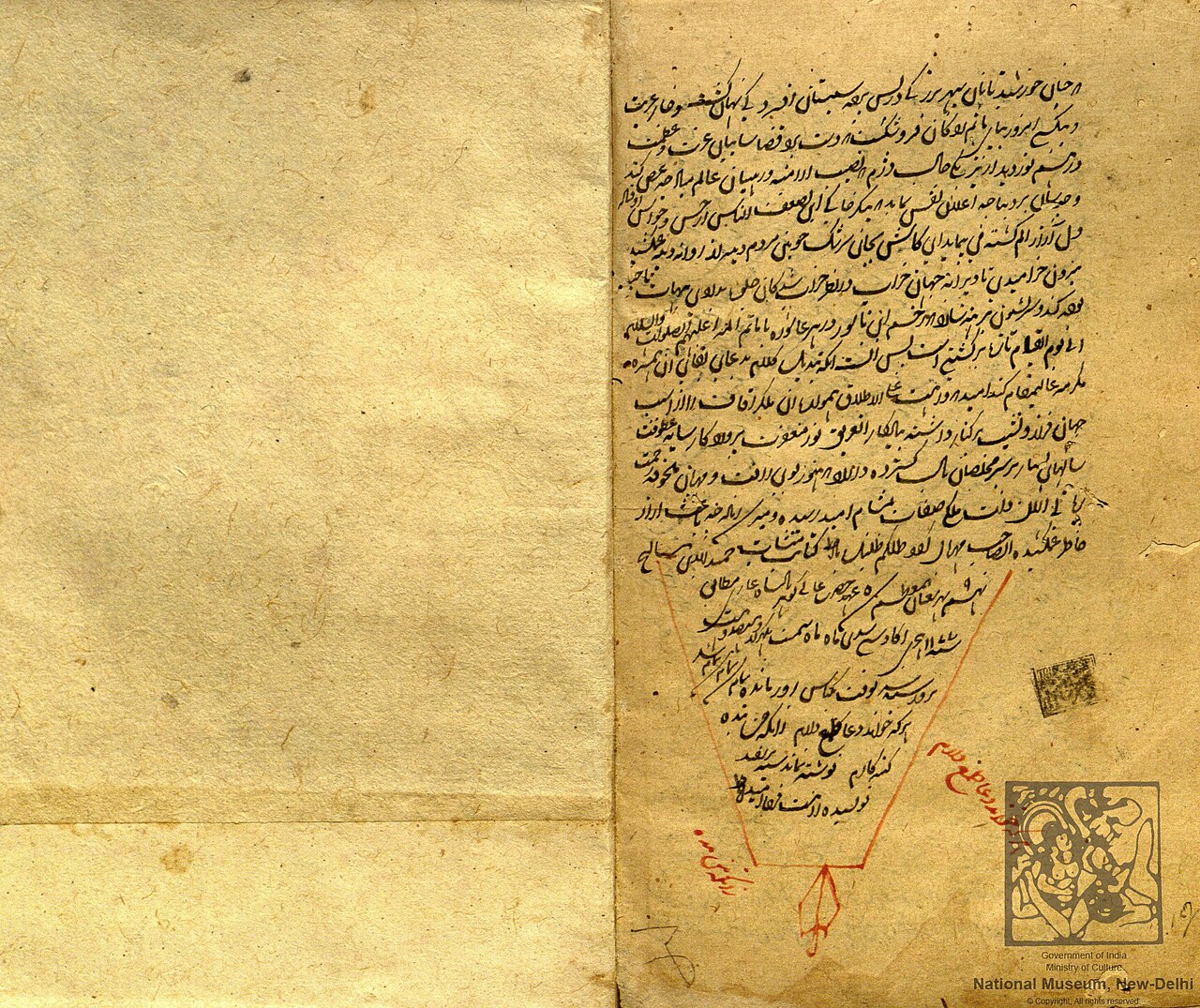
Zafarnamah
Guru Gobind Singh · 1705
Ready when you are
Start chatting with Aurangzeb now.
20 messages free · No credit card · Available in 50+ languages.