


Secondary sourceSculpturec. 900
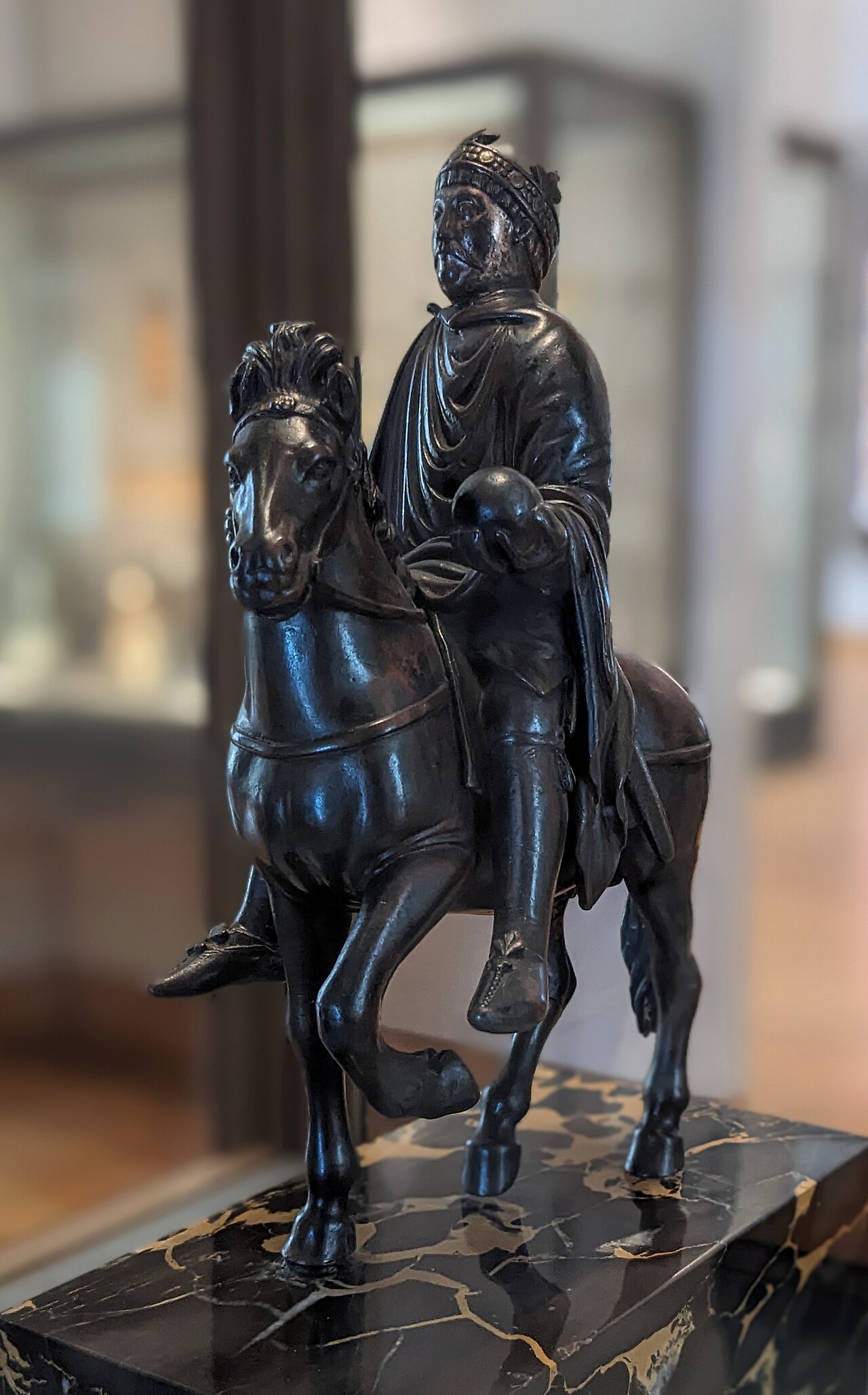
Equestrian Statuette of Charlemagne
c. 900
A small Carolingian bronze of a crowned rider, long identified as Charlemagne, now in the Louvre.
This statuette, long identified as Charlemagne, shows how later generations imagined and commemorated him.
About this source
What it is
This is a small bronze statuette of a crowned horseman holding an orb, made in the Carolingian era and now held by the Louvre's Department of Decorative Arts. It was kept for centuries in Metz Cathedral before passing through private collections and museums.
Why it matters
Long called a portrait of Charlemagne, it may actually depict his grandson Charles the Bald, shown deliberately in the likeness of his famous grandfather. Either way, it draws on Roman imperial equestrian statues to link the Carolingian rulers to Rome's emperors, and it is one of very few surviving Carolingian bronze sculptures.
Look closer
- Why might a grandson want to be shown looking like his grandfather?
- What does the orb and crown tell you about how rulers wanted to be seen?
- Why is it hard for historians to be certain who this statuette shows?
This sculpture is part of the curated material that grounds the AI version of Charlemagne on Humy.ai — when students ask about related events, the AI can quote it and cite it.
More Charlemagne sources
Meet the AI Charlemagne →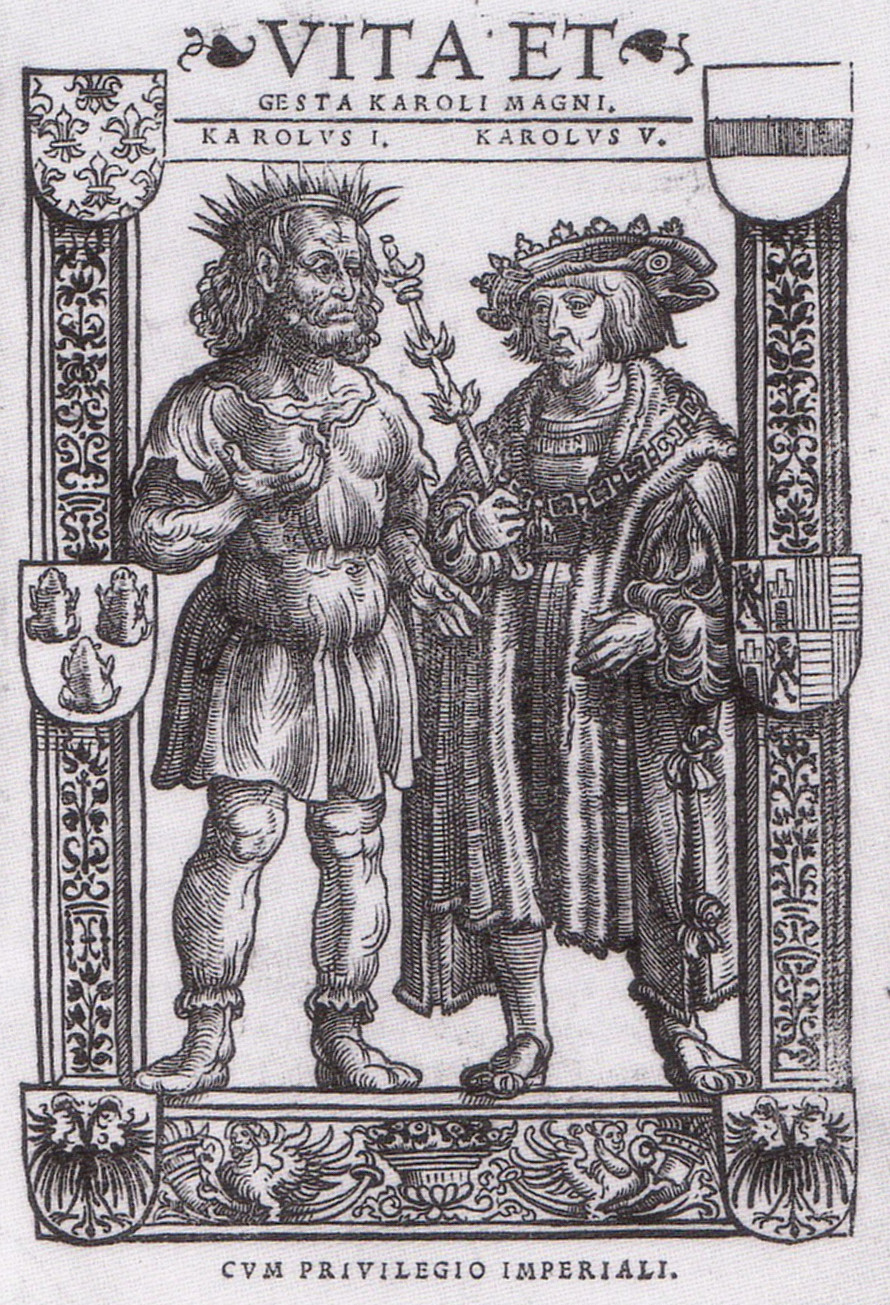 Book
Secondary source
Vita Karoli Magni
Einhard · c. 817-833
 Document
Primary source
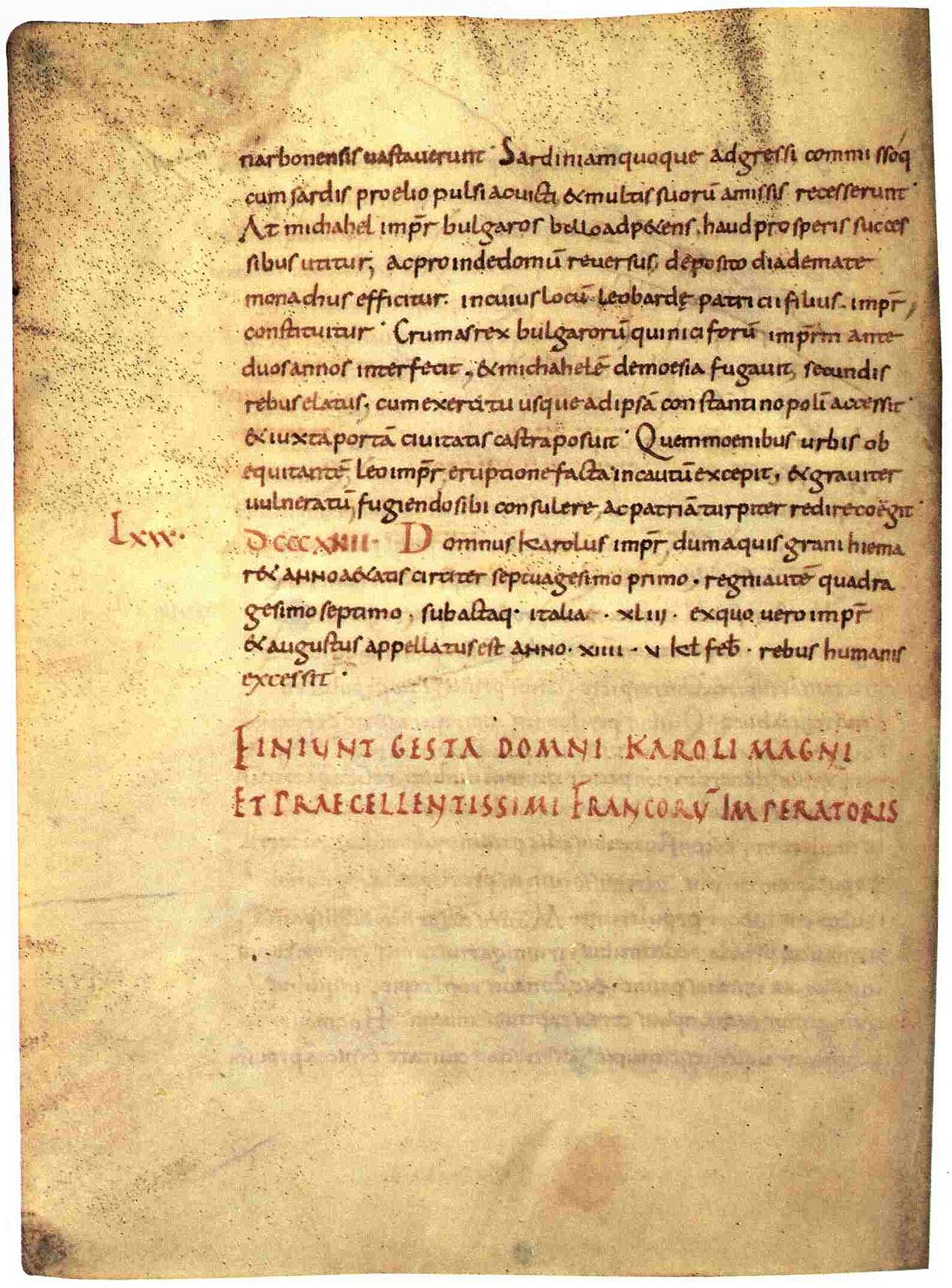
Royal Frankish Annals
741-829, this manuscript c. 900
Primary source
De litteris colendis
Charlemagne · late 780s-800s
 Document
Primary source
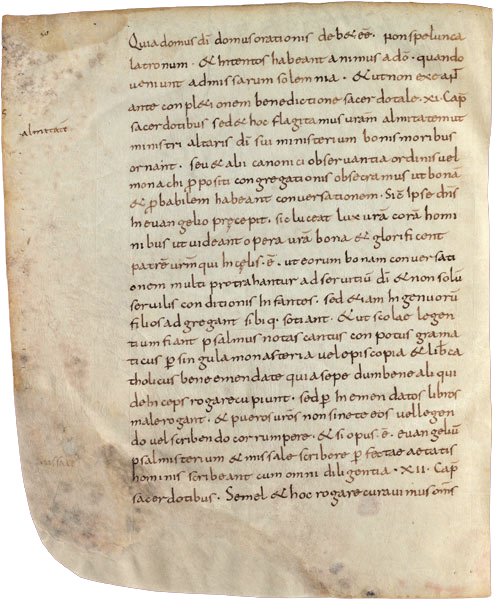
Admonitio generalis
Charlemagne · 23 March 789
 Document
Primary source
Capitulare de villis
c. 771-800
Ready when you are
Start chatting with Charlemagne now.
20 messages free · No credit card · Available in 50+ languages.