


Primary sourceDocument1202
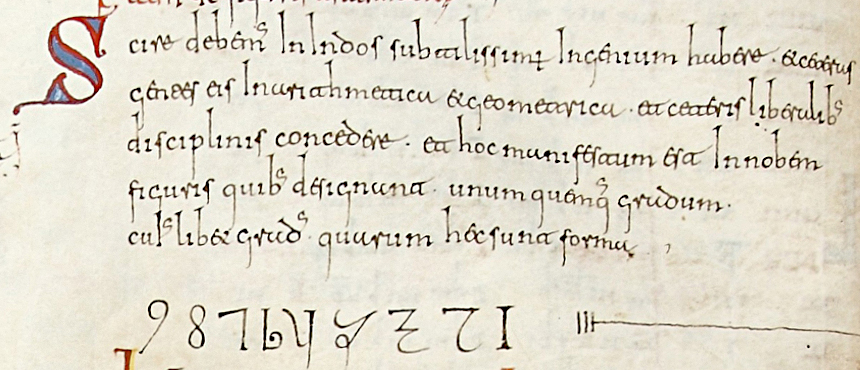
Fibonacci numerals
Fibonacci · 1202
A page from Liber Abaci comparing Roman numerals with Hindu–Arabic numerals, showing Fibonacci's argument for the new notation.
This page from Fibonacci's own book shows him directly comparing numeral systems to argue for his new notation.

About this source
What it is
This is a page from Fibonacci's Liber Abaci (1202) showing a table that compares numbers written in Roman-style numerals with the newer Hindu-Arabic forms he was promoting.
Why it matters
The comparison table lets readers see directly why Fibonacci argued the new numeral system was easier and more useful than Roman numerals. It is a visual record of the transition in European mathematics from Roman numerals toward the place-value system still used today.
Look closer
- What differences can you see between the two numeral systems in the table?
- Why might Fibonacci have thought a side-by-side comparison would persuade readers?
- What does this page not tell us about how quickly people actually adopted the new numerals?
This document is part of the curated material that grounds the AI version of Fibonacci on Humy.ai — when students ask about related events, the AI can quote it and cite it.
More Fibonacci sources
Browse all 24 →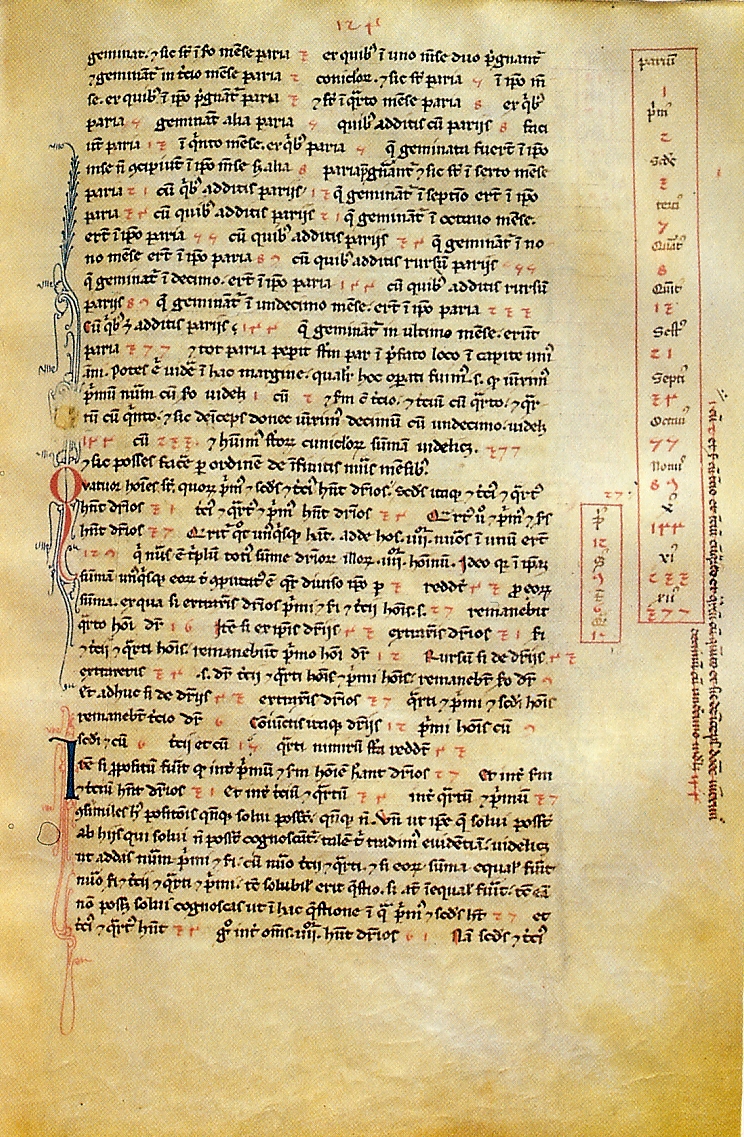 Book
Primary source
Liber Abaci
Fibonacci · 1202
BookSecondary source
Liber abbaci magliab f124r
13th century
 Sculpture
Secondary source
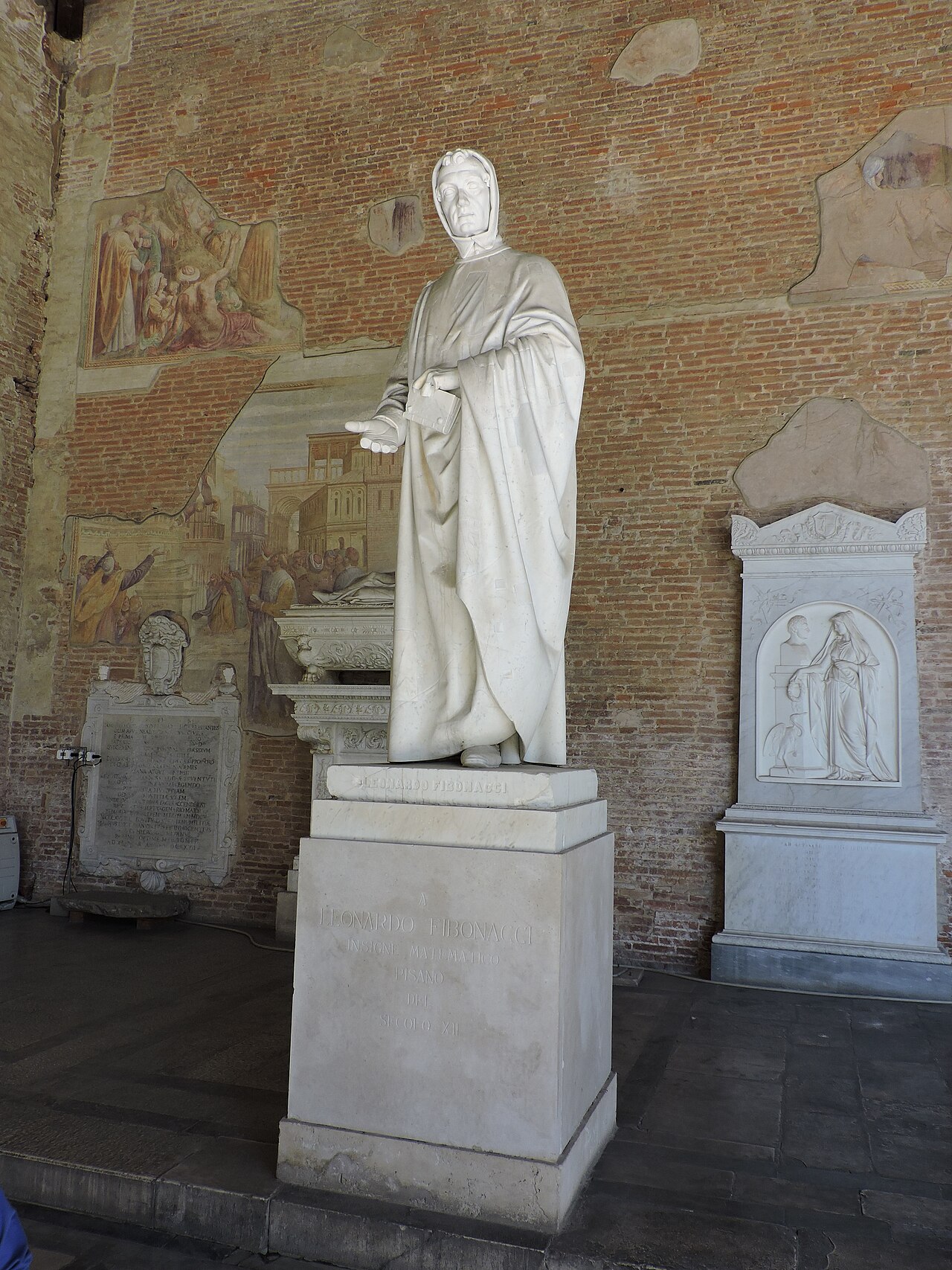
Monument of Leonardo Fibonacci
Giovanni Paganucci · 1863
 Painting
Secondary source
Fibonacci engraving from I benefattori dell'umanità
1850
Free account
Read every Fibonacci source
Sign up free →
Ready when you are
Start chatting with Fibonacci now.
20 messages free · No credit card · Available in 50+ languages.