


Primary sourceBook1202
Liber Abaci
Fibonacci · 1202
Fibonacci's 1202 book that introduced Hindu–Arabic numerals and place-value arithmetic to European merchants, including the famous rabbit problem.
Fibonacci wrote this book himself, making it the primary record of his mathematical teaching and the rabbit problem that bears his name.
Free Humy account · No credit card · 120,912 sources to read
About this source
What it is
Liber Abaci, or 'Book of Calculation', is a Latin work on arithmetic written by Leonardo of Pisa, known as Fibonacci, in 1202. It explains the Hindu–Arabic numeral system and place-value arithmetic, with worked examples drawn from trade, currency conversion and profit calculation.
Why it matters
This book was one of the first in Western Europe to promote Hindu–Arabic numerals over Roman numerals, changing how merchants and scholars calculated. Its rabbit-breeding problem produced the number sequence later named the Fibonacci sequence, even though Fibonacci did not invent it. It shows how practical commercial needs and inherited knowledge from Arab mathematicians shaped European mathematics.
Look closer
- What kinds of problems does the book use to teach the new numerals?
- Why might merchants have needed a simpler way to calculate than Roman numerals?
- What does the book not explain about where these ideas originally came from?
This book is part of the curated material that grounds the AI version of Fibonacci on Humy.ai — when students ask about related events, the AI can quote it and cite it.
More Fibonacci sources
Browse all 24 →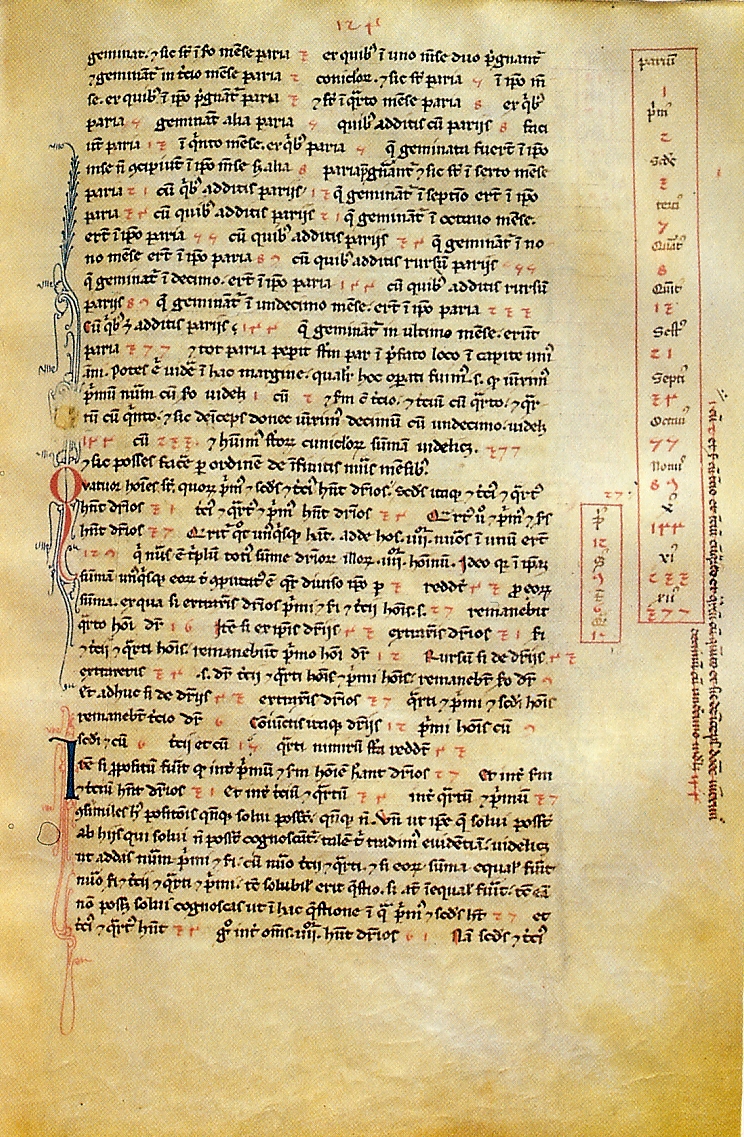 Book
Secondary source
Liber abbaci magliab f124r
13th century
 Document
Primary source
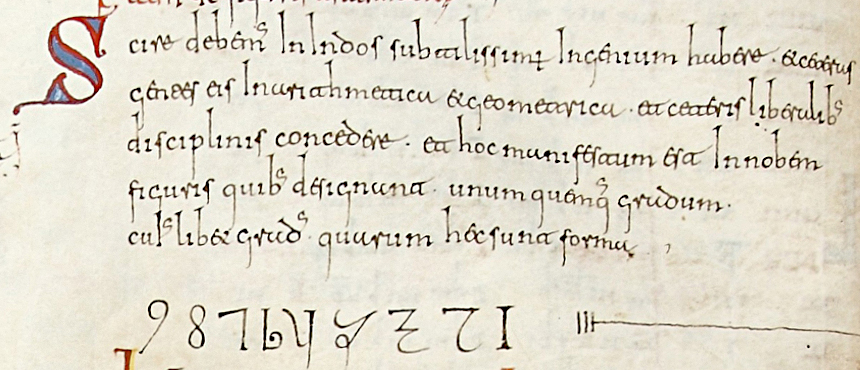
Fibonacci numerals
Fibonacci · 1202
 Sculpture
Secondary source
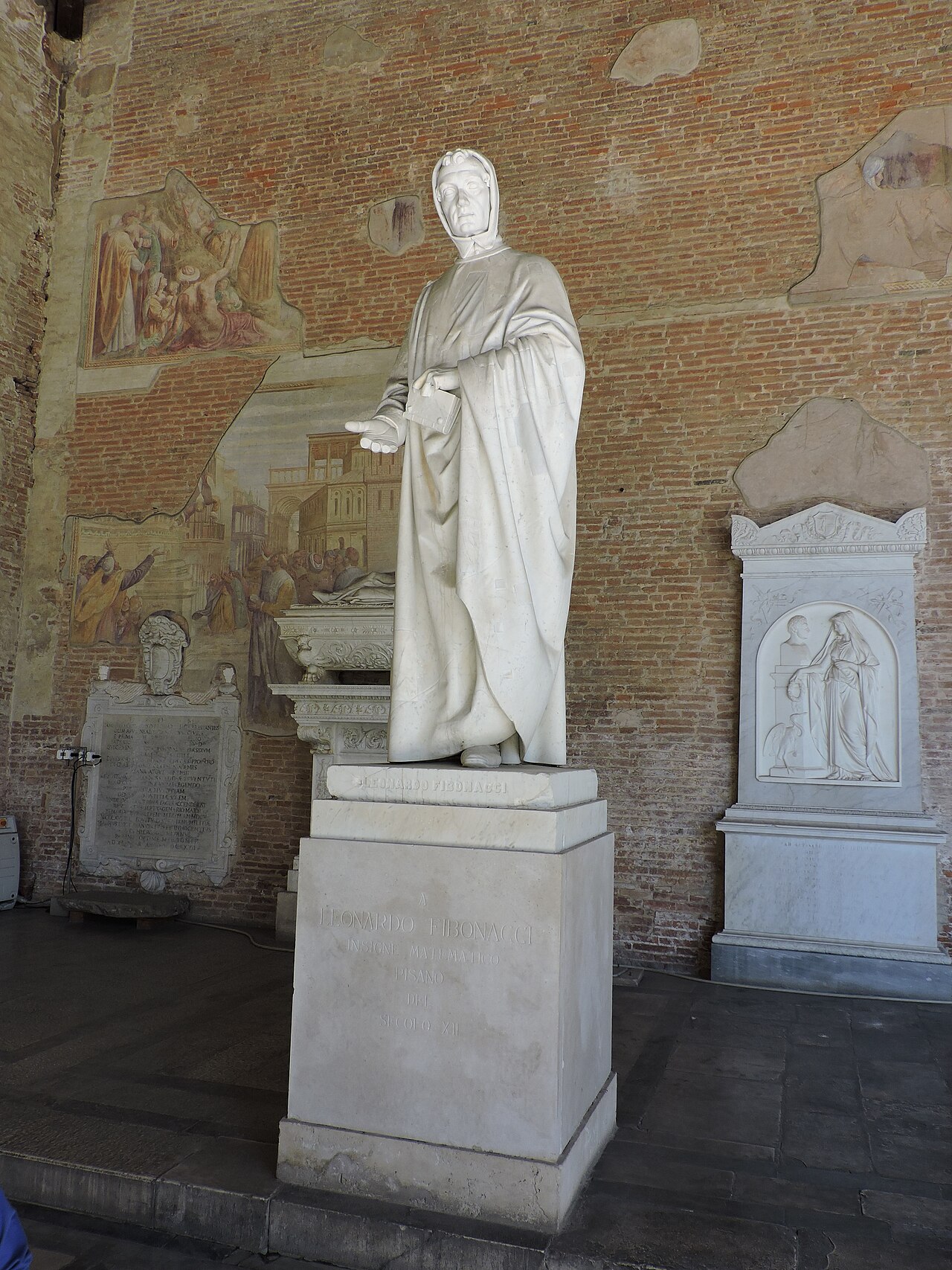
Monument of Leonardo Fibonacci
Giovanni Paganucci · 1863
 Painting
Secondary source
Fibonacci engraving from I benefattori dell'umanità
1850

Free account
Read every Fibonacci source
Sign up free →
Ready when you are
Start chatting with Fibonacci now.
20 messages free · No credit card · Available in 50+ languages.