


Primary sourcePainting14th century
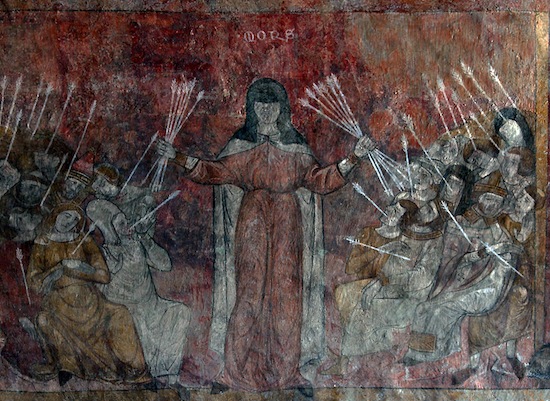
Fresco of Plague Personified, Lavaudieu Abbey
Unknown author · 14th century
A 14th-century mural imagining the plague as a woman shooting arrows into victims, showing how people pictured the pestilence.
A contemporary visual depiction of how people imagined and personified the Black Death.
About this source
What it is
This fresco, by an unknown artist, is located in the former Abbey of Saint-André-de-Lavaudieu in France and dates from the 14th century. It depicts the plague personified as a blindfolded woman who shoots arrows into the people around her.
Why it matters
The arrows strike figures in places such as the neck and armpits, where the swellings, or buboes, of the plague commonly appeared. This image reveals how medieval people, lacking modern medical knowledge, understood and visualized the disease as a supernatural force or punishment striking down the living.
Look closer
- Why do you think the artist chose to show the plague as a person with arrows rather than realistically?
- What does the placement of the arrows suggest about medieval observations of the disease's symptoms?
- What might this image tell us about how communities coped with fear and uncertainty during the pandemic?
This painting is part of the curated material that grounds the AI version of The Black Death on Humy.ai — when students ask about related events, the AI can quote it and cite it.
More The Black Death sources
Meet the AI The Black Death →Secondary source
The Decameron
Giovanni Boccaccio · 1351
Primary source
Statute of Labourers 1351
1351
 Painting
Primary source
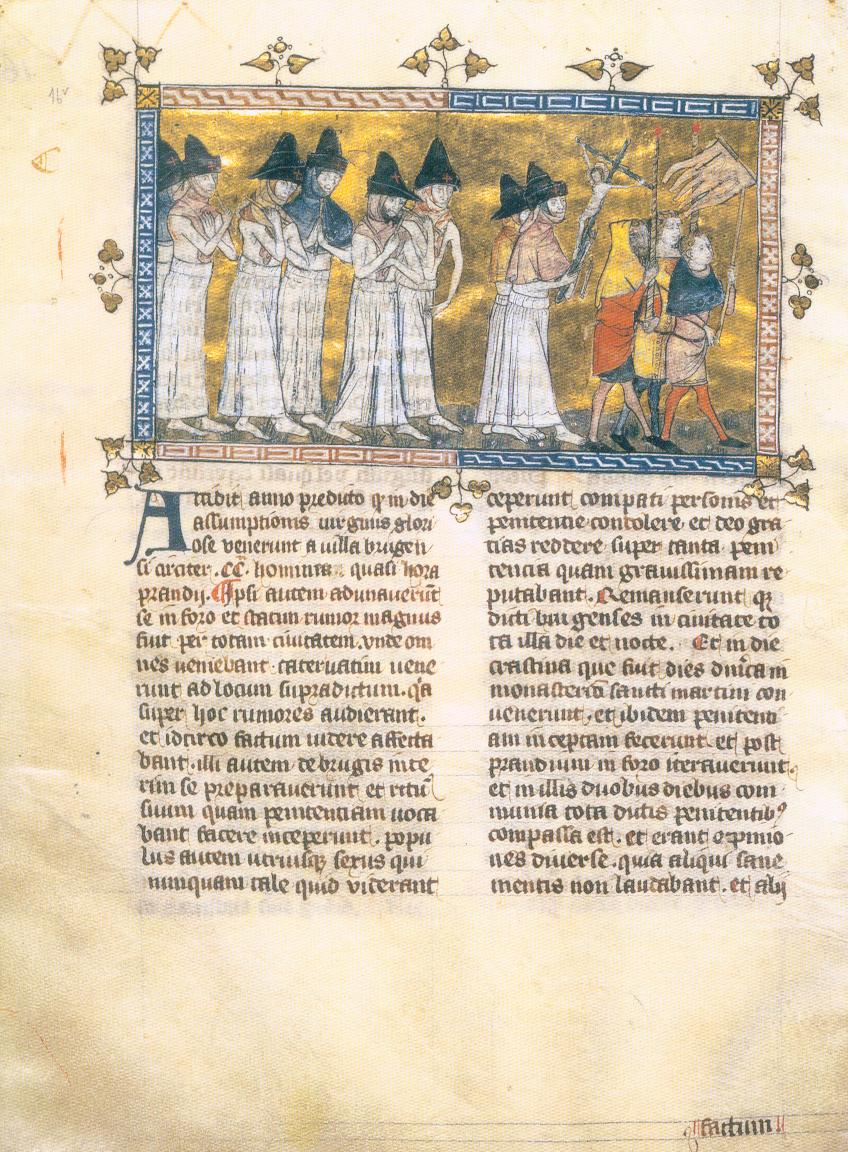
Depiction of the Flagellant Processions
Pierart dou Tielt · c. 1350
 Painting
Primary source
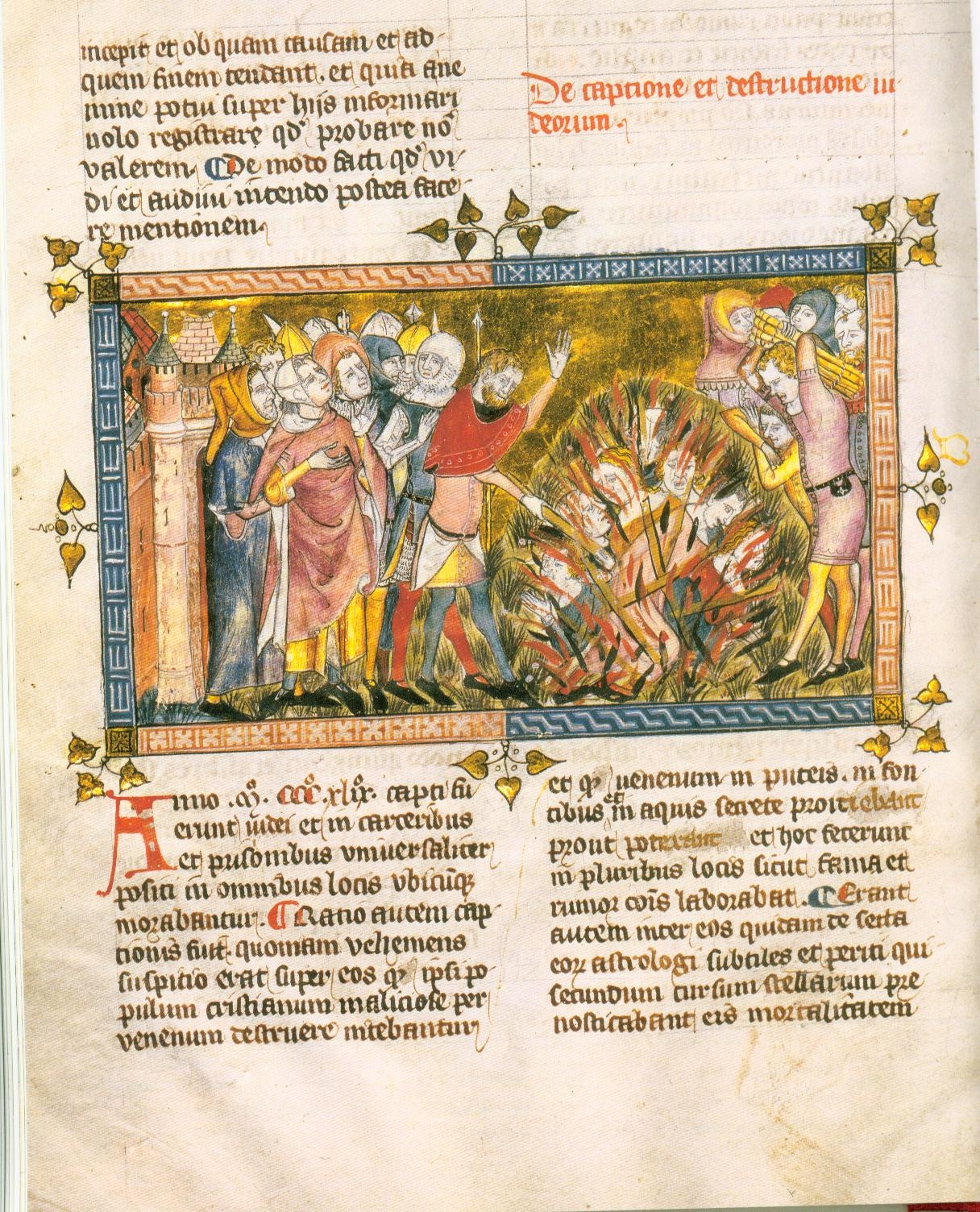
Execution of Jews
c. 1350
 Book
Primary source
The Annals of Ireland by Friar John Clyn
John Clyn · 1348-1349
Ready when you are
Start chatting with The Black Death now.
20 messages free · No credit card · Available in 50+ languages.