


Secondary sourcePainting1492
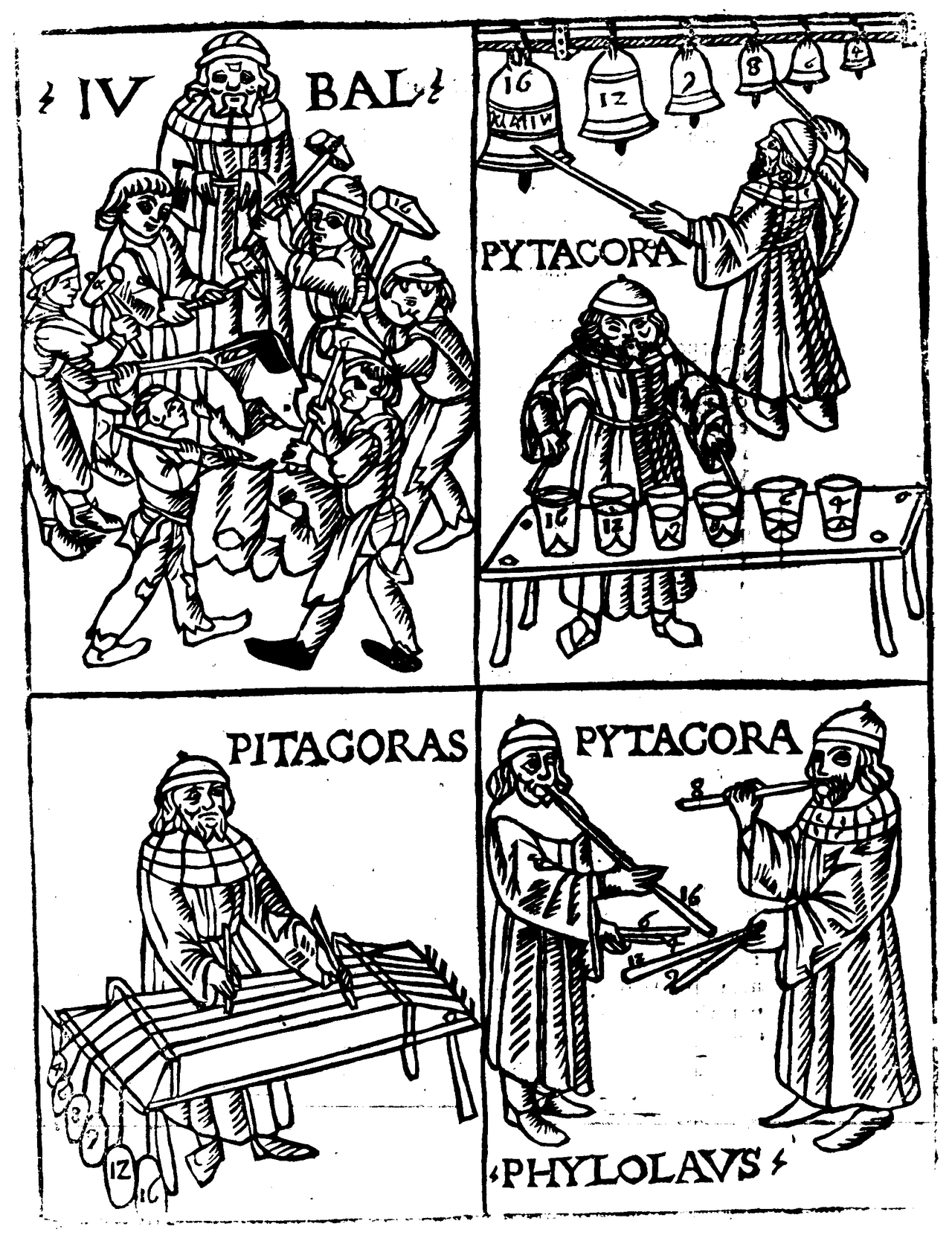
Gaffurio Pythagoras Woodcut
Unknown author · 1492
A Renaissance woodcut from a music treatise shows Pythagoras testing bells, glasses, a monochord and pipes to discover musical ratios.
Depicts Pythagoras performing his legendary experiments that linked mathematics to musical harmony.
About this source
What it is
This woodcut appears in Theorica musicae, a music treatise printed in 1492 by Franchino Gaffurio. It shows four scenes: men striking anvils, Pythagoras striking bells and pouring liquid into glasses, Pythagoras playing a monochord with hanging weights, and Pythagoras with Philolaus using pipes.
Why it matters
The image illustrates the legend that Pythagoras discovered the mathematical ratios behind musical harmony by experimenting with sound-making objects. This story became central to how later scholars, including Gaffurio, understood Pythagoras as the founder of music theory, linking mathematics and music together.
Look closer
- What different objects is Pythagoras shown using to test sound?
- Why might a Renaissance printer choose to illustrate an ancient legend rather than a real event?
- What does this image suggest about how later generations imagined Pythagoras?
This painting is part of the curated material that grounds the AI version of Pythagoras on Humy.ai — when students ask about related events, the AI can quote it and cite it.
More Pythagoras sources
Meet the AI Pythagoras → Book
Secondary source
Lives and Opinions of Eminent Philosophers, Book V (Life of Aristotle)
Diogenes Laërtius · c. 3rd century CE
 Book
Secondary source
Histories
Herodotus · c. 440 BCE
 Painting
Secondary source
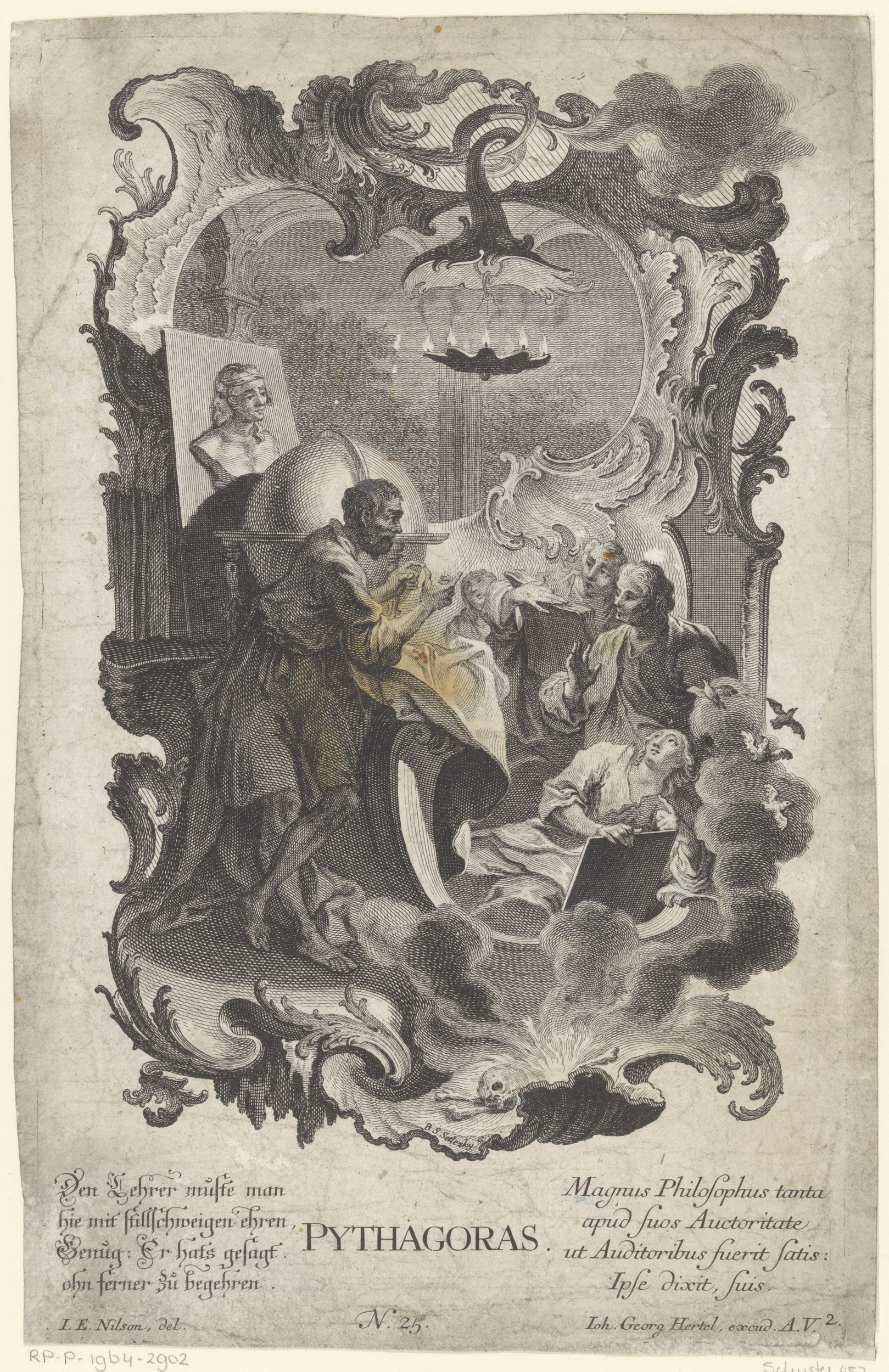
Pythagoras Leaning on a Globe with Four Listeners
 Book
Secondary source
Metaphysics
Aristotle · c. 400 BCE
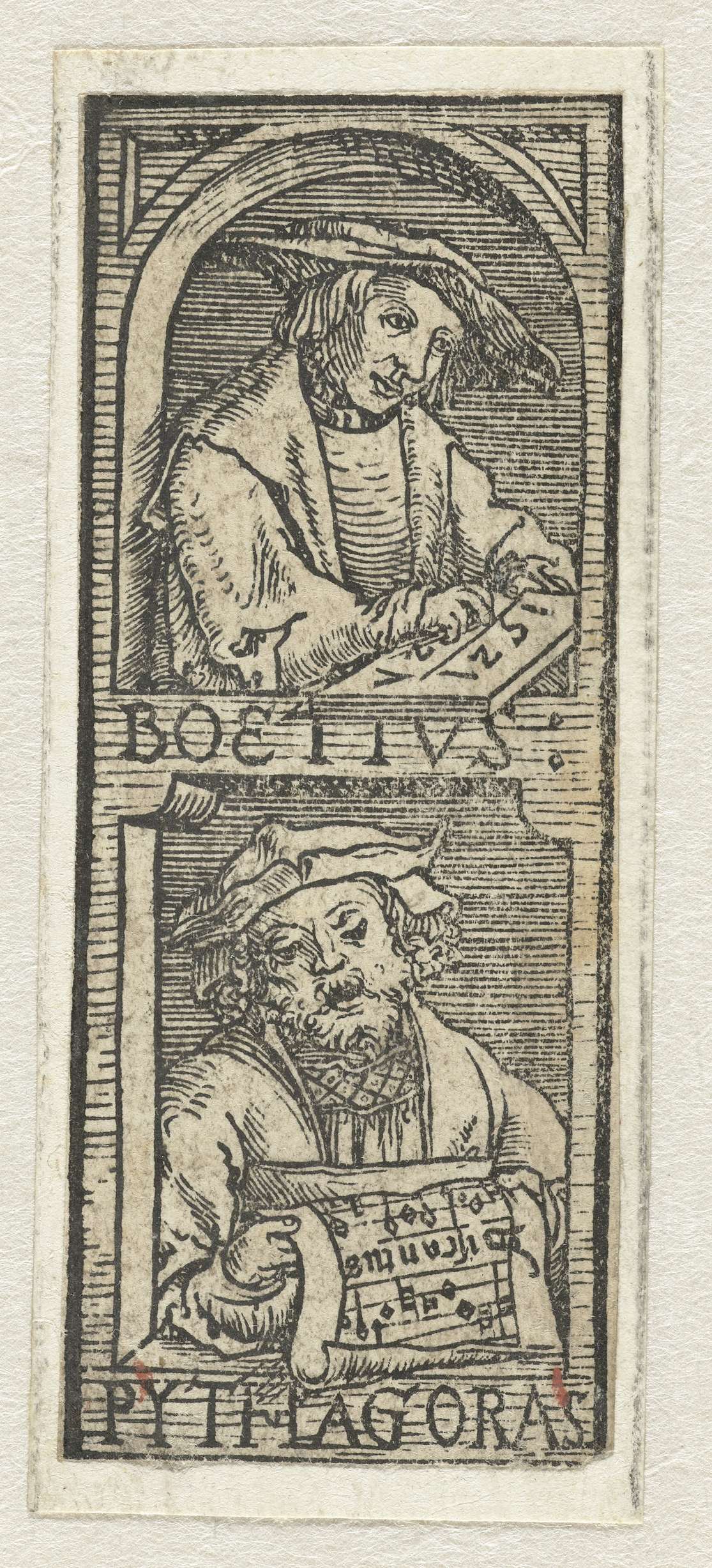 Painting
Secondary source
Boethius and Pythagoras
1521
Ready when you are
Start chatting with Pythagoras now.
20 messages free · No credit card · Available in 50+ languages.