


Primary sourceSculpture2nd-3rd century
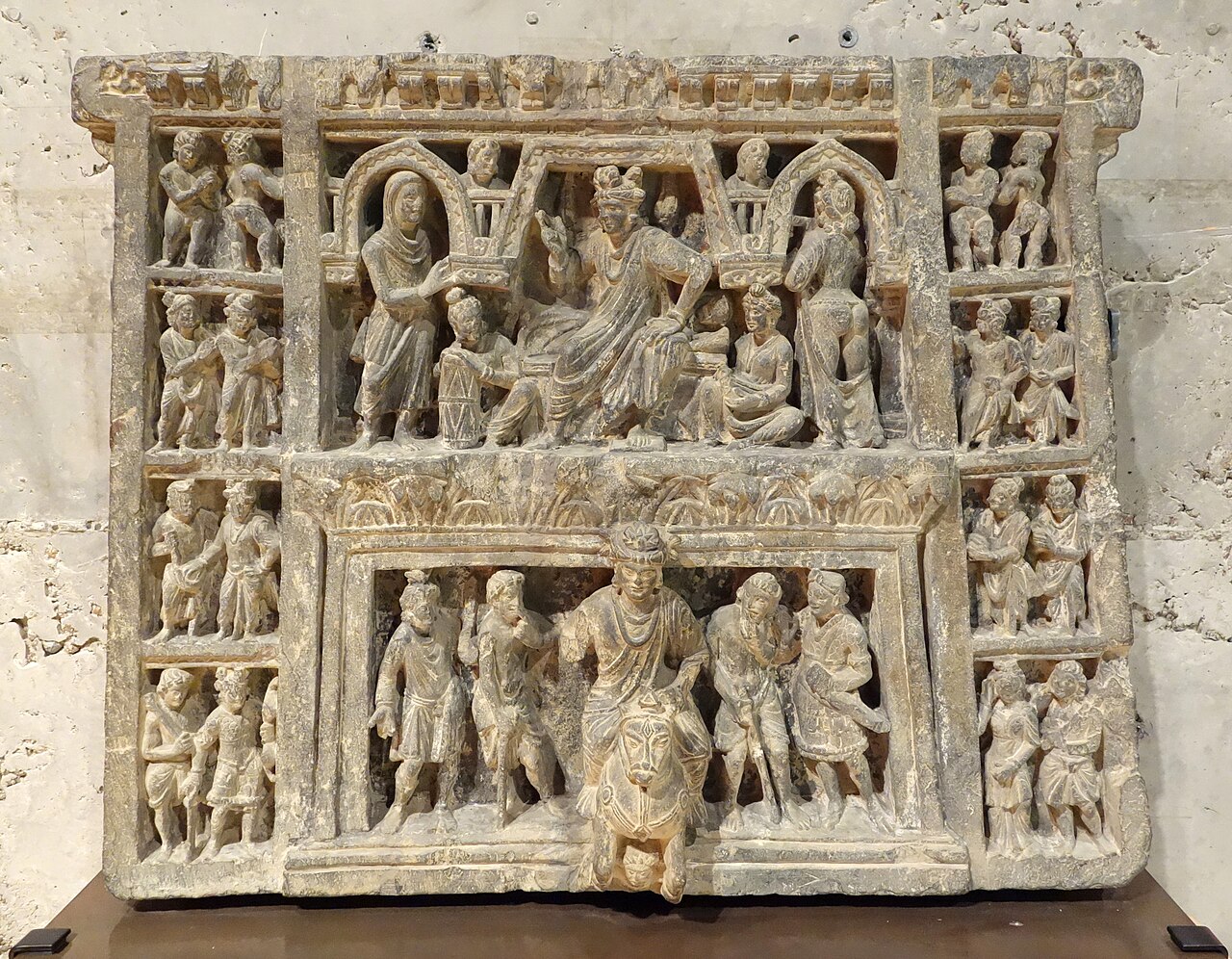
Gandhara Relief of Scenes from the Life of the Buddha
2nd-3rd century
A 2nd-3rd century schist relief carved with scenes from the Buddha's life, photographed at the Berkeley Art Museum.
An ancient stone relief carved with scenes from the Buddha's life, created centuries after his lifetime by Gandhara artists.
About this source
What it is
This is a carved stone relief from the Gandhara region, made of grey schist, dating to the 2nd-3rd century. It shows scenes from the life of the Buddha arranged in panels, with a seated figure in the center and standing figures and a horse below. The relief is held at the Berkeley Art Museum and Pacific Film Archive in California.
Why it matters
Gandhara art developed in a region where Greek, Persian, and Indian artistic styles mixed, and it produced some of the earliest known images of the Buddha in human form. This relief shows how artists told stories about the Buddha's life through sculpture for audiences who could not read texts.
Look closer
- How many different scenes can you identify in the relief, and how are they separated?
- Why do you think the seated figure is placed at the center?
- What might the horse and standing figures in the lower panel represent?
This sculpture is part of the curated material that grounds the AI version of Buddha on Humy.ai — when students ask about related events, the AI can quote it and cite it.
More Buddha sources
Browse all 90 →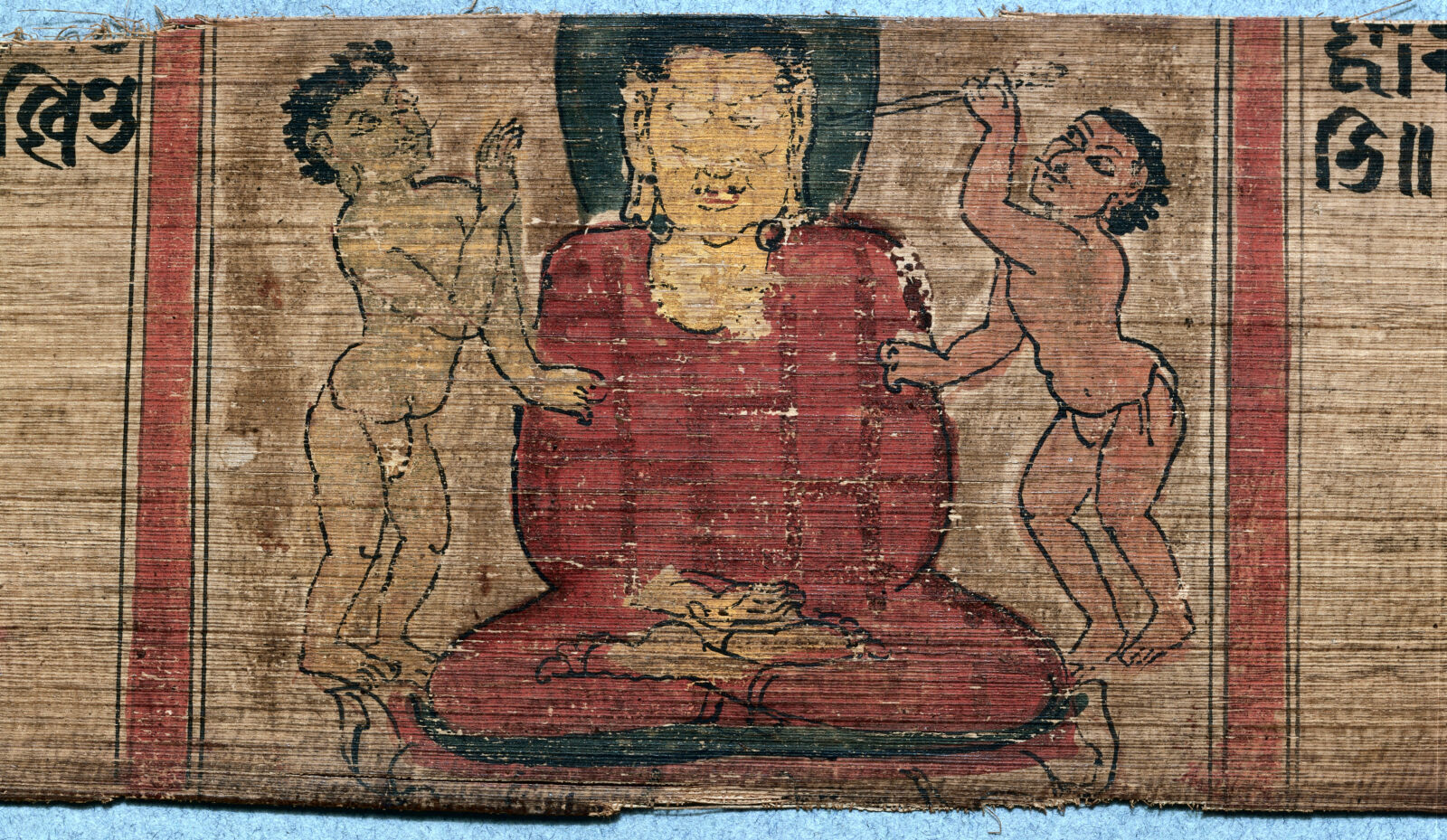 Painting
Secondary source
Buddha in Dhyana, Perfection of Wisdom Sutra Manuscript
1074
 Sculpture
Secondary source
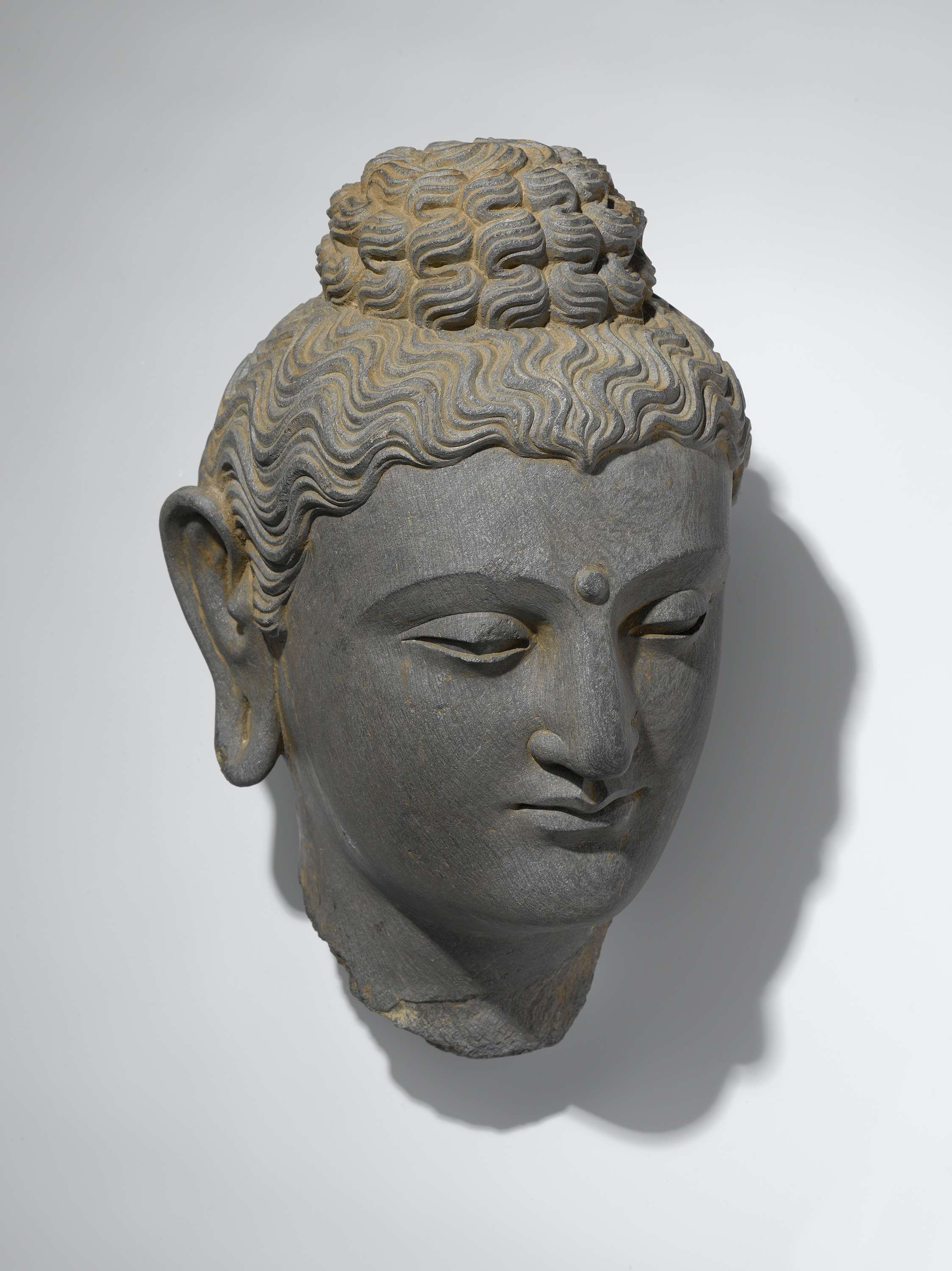
Head of the Buddha, Gandhara style
 Document
Secondary source
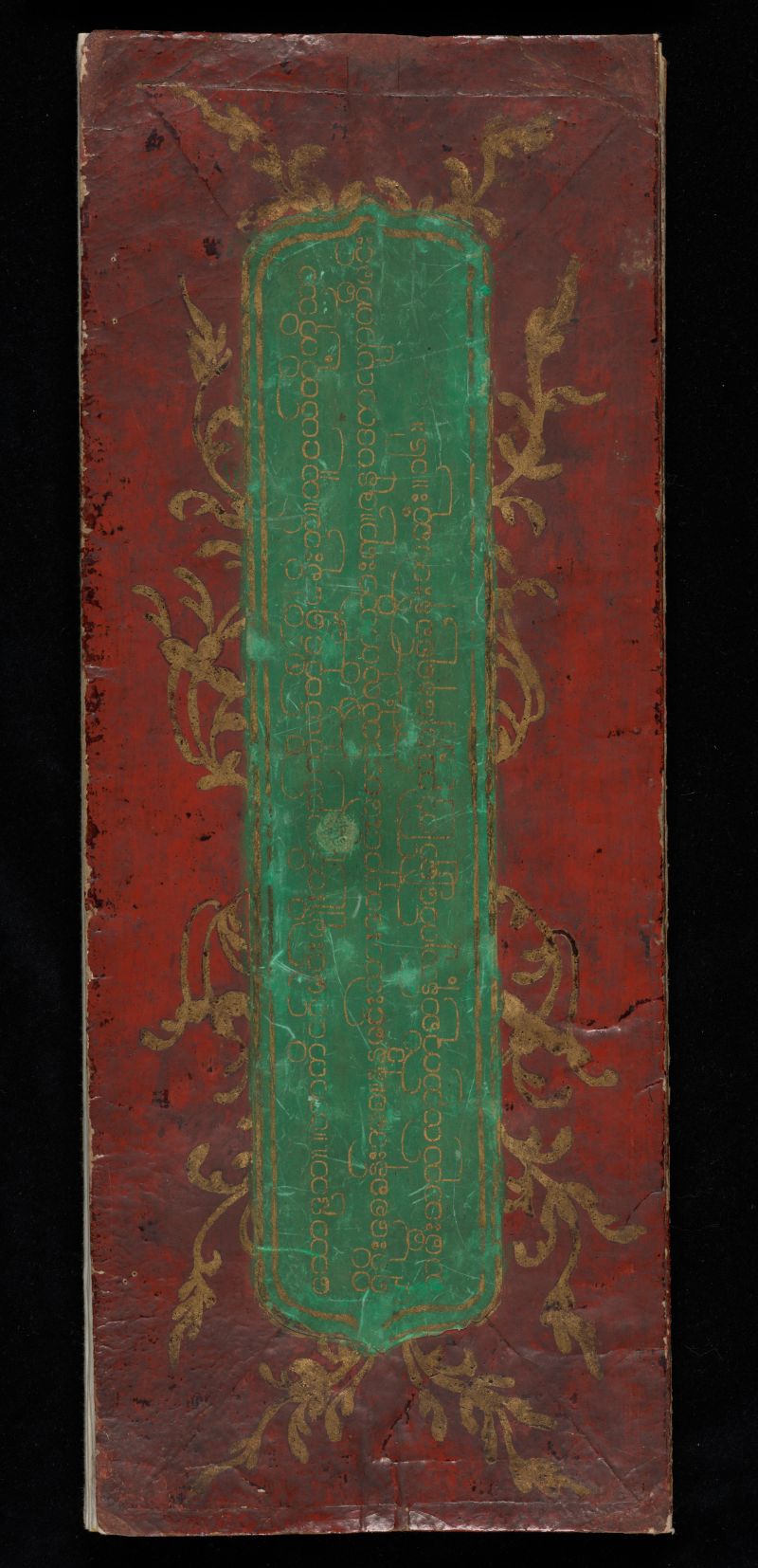
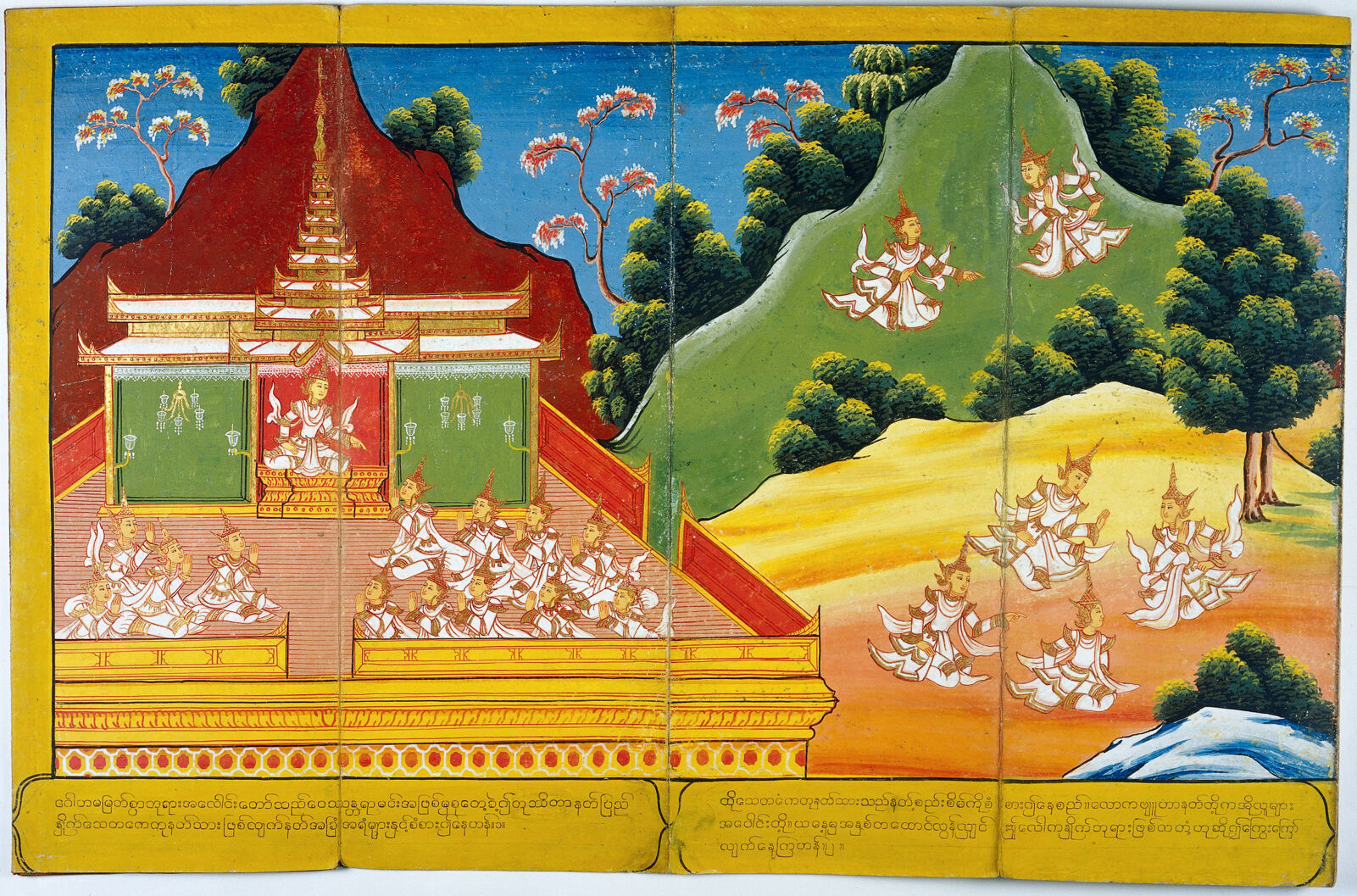
Life of the Buddha
19th century
 Painting
Secondary source
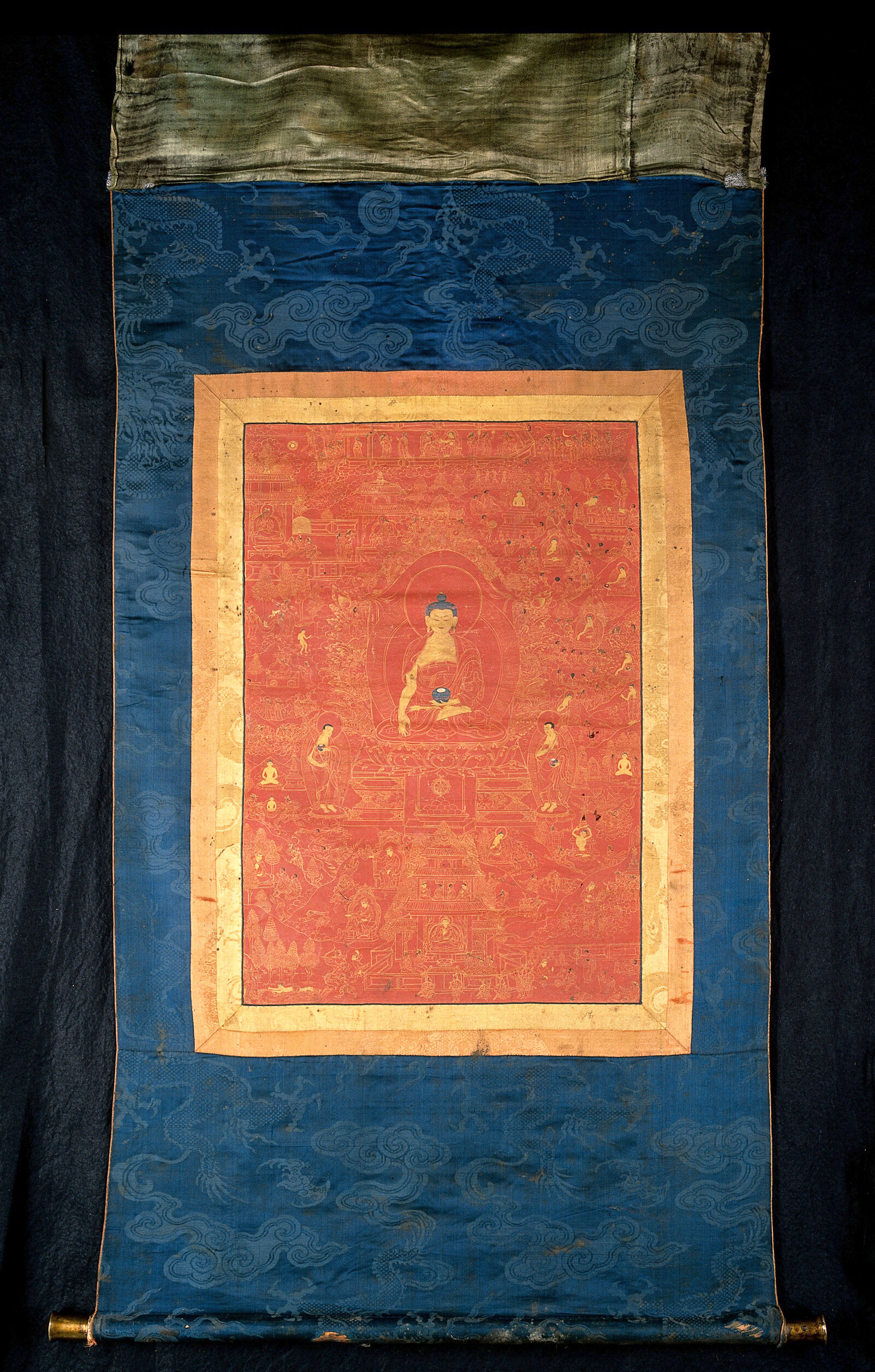
The Life of the Buddha Shakyamuni
Unknown Tibetan painter
Free account
Read every Buddha source
Sign up free →
Ready when you are
Start chatting with Buddha now.
20 messages free · No credit card · Available in 50+ languages.