


Primary sourceArtifactrebuilt 1444; destroyed 1446
Hexamilion Wall
rebuilt 1444; destroyed 1446
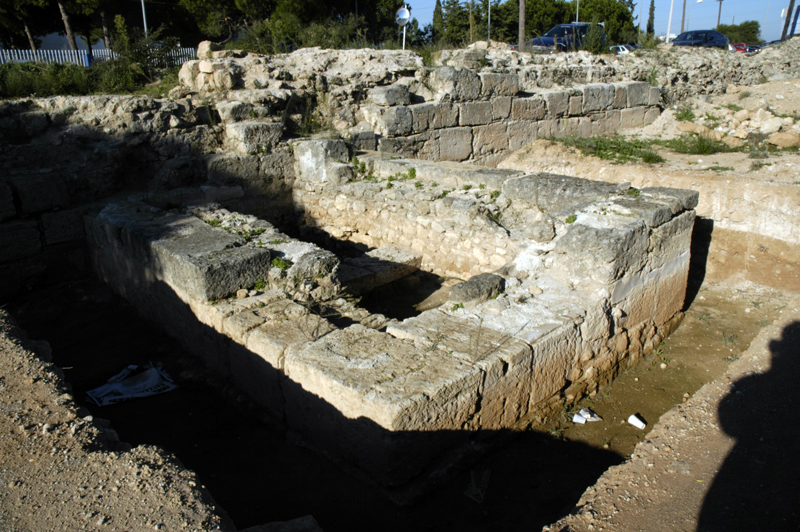
A massive defensive wall across the Isthmus of Corinth, rebuilt by Constantine in 1444 to protect the Morea, before its destruction by Murad II.
Constantine rebuilt this wall in 1444 to defend the Morea; its fall in 1446 ended his Greek campaign.
About this source
What it is
The Hexamilion is an ancient defensive wall stretching across the Isthmus of Corinth, originally built in the 5th century under Theodosius II to guard the only land route into the Peloponnese. It was repaired and strengthened many times over the centuries, including by Constantine XI, who rebuilt it in 1444 while he still governed the Morea.
Why it matters
Constantine's repairs show his efforts to defend Byzantine territory before becoming emperor. But in 1446 the Ottoman sultan Murad II attacked and destroyed the wall with gunpowder artillery, ending Constantine's campaign in Greece and showing how new weapons were overwhelming old fortifications.
Look closer
- What does the ruined state of the wall tell you about how it was destroyed?
- Why would controlling this narrow isthmus matter so much strategically?
- What does the reuse of ancient stones in the wall suggest about resources available at the time?
This artifact is part of the curated material that grounds the AI version of Constantine XI Palaiologos on Humy.ai — when students ask about related events, the AI can quote it and cite it.
More Constantine XI Palaiologos sources
Meet the AI Constantine XI Palaiologos →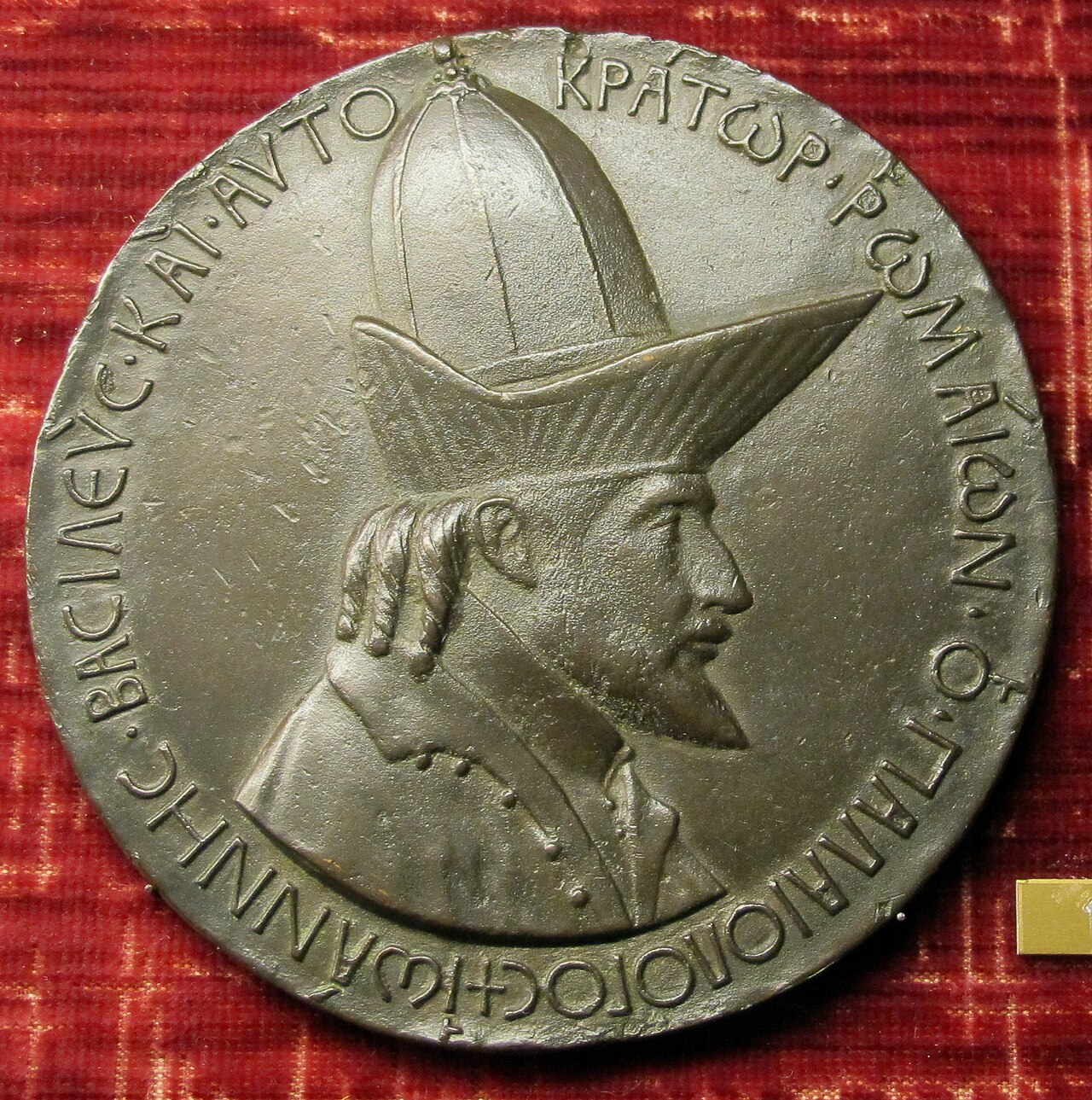 Sculpture
Primary source
Medal of John VIII Palaiologos
Pisanello · 1438-1439
 Painting
Secondary source
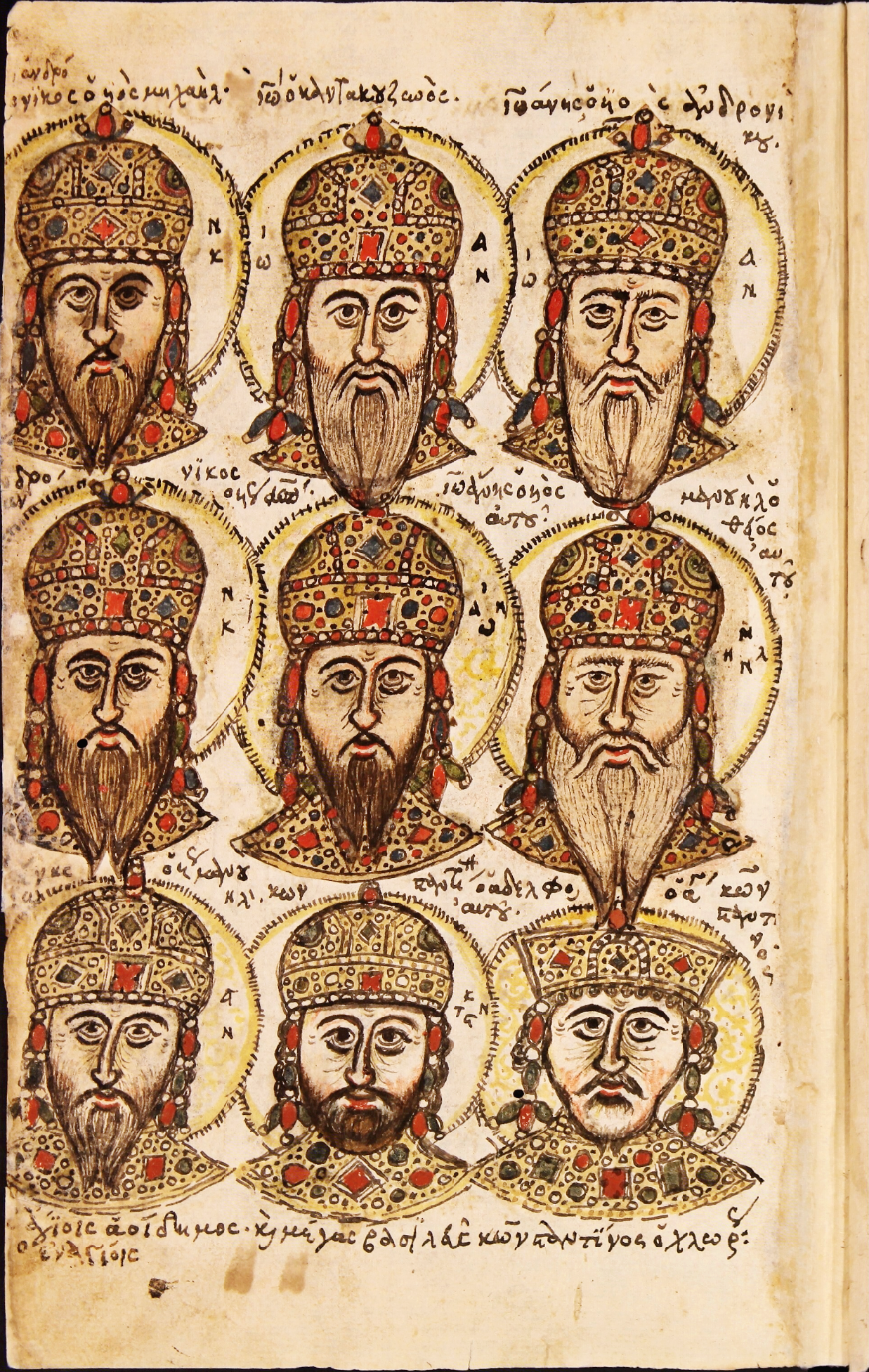
Zonaras Chronicle Portrait Folio
Unknown Byzantine scribes
 Painting
Secondary source
Portrait of Constantine XI Palaiologos in the Mutinensis gr. 122 Codex
Unknown Byzantine artist · 15th century
 Artifact
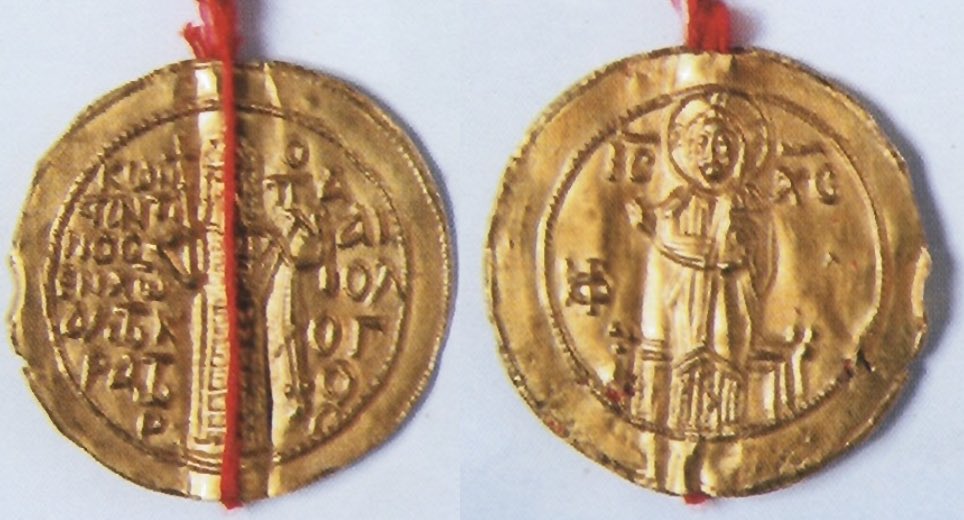
Primary source
Gold Seal of Constantine XI for Ragusa
1451
PhotographSecondary source
Hexamilion Wall Ruins Across the Corinth Isthmus
Nefasdicere
Ready when you are
Start chatting with Constantine XI Palaiologos now.
20 messages free · No credit card · Available in 50+ languages.