


Secondary sourcePainting1515/16
Il Morbetto
Marcantonio Raimondi · 1515/16
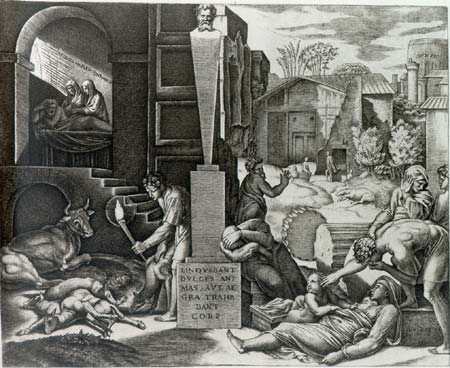
A black-and-white engraving by Marcantonio Raimondi, made in 1515 or 1516, showing plague scenes with corpses and dying people. It is a later image of the Black Death, not a record from the time.
Shows how a Renaissance printmaker pictured the plague that the Black Death left behind, made over 150 years after the pandemic of 1346 to 1353.
About this source
What it is
This is an engraving called Il Morbetto, made by Marcantonio Raimondi in 1515 or 1516. It shows plague scenes in black and white: a man tends a fire near dead cattle and bodies, a bust sits on a tall pillar with an inscription, and people lie sick or dying in the foreground beside a town.
Why it matters
The Black Death struck Eurasia and North Africa from 1346 to 1353. Raimondi made this print more than 150 years later, so it shows how Renaissance artists imagined the plague long after it had passed. It is not an eyewitness record. It tells us what the pandemic meant to people of the early 1500s, who remembered it through images like this one.
Look closer
- What do the dead cattle and bodies in the scene suggest about how the plague spread?
- Why might the artist place a bust with an inscription on a tall pillar?
- What does the print leave out, such as the faces of the dying or the people who cared for them?
This painting is part of the curated material that grounds the AI version of The Black Death on Humy.ai — when students ask about related events, the AI can quote it and cite it.
More The Black Death sources
Meet the AI The Black Death →Secondary source
The Decameron
Giovanni Boccaccio · 1351
Primary source
Statute of Labourers 1351
1351
 Painting
Primary source
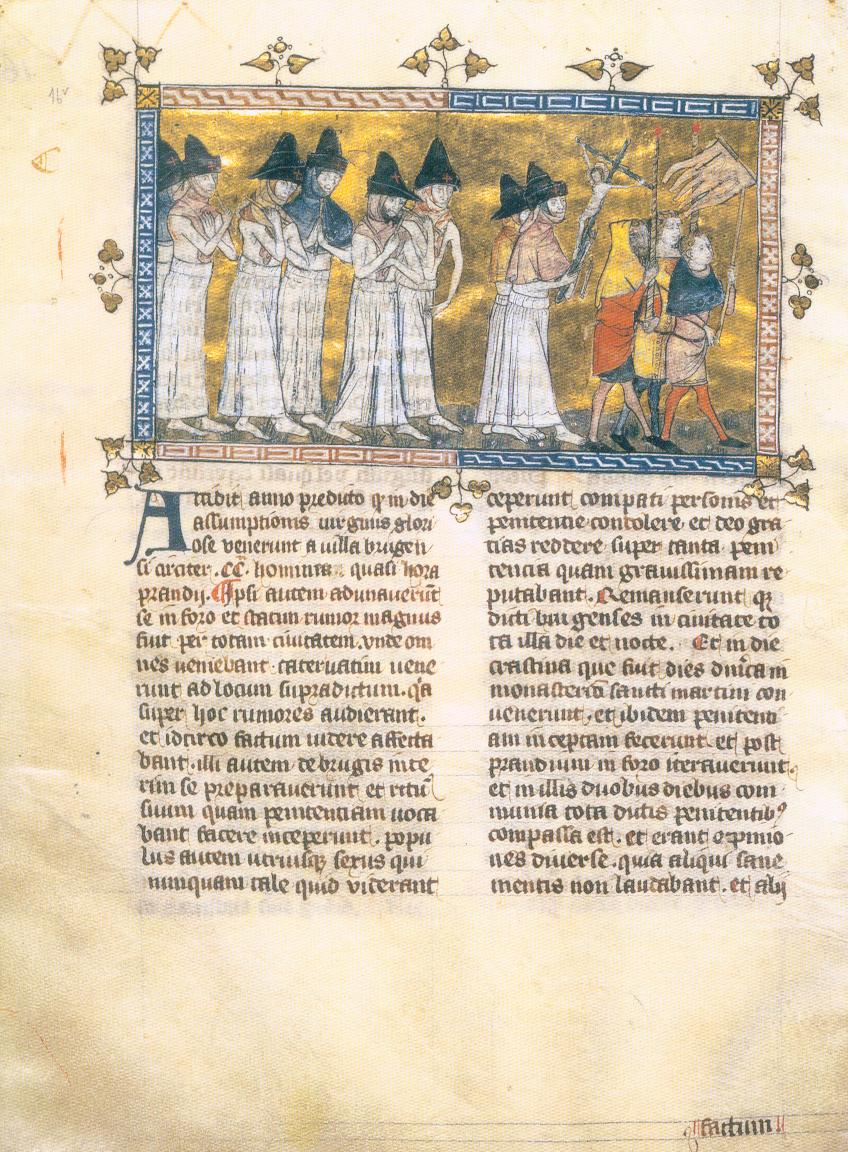
Depiction of the Flagellant Processions
Pierart dou Tielt · c. 1350
 Painting
Primary source
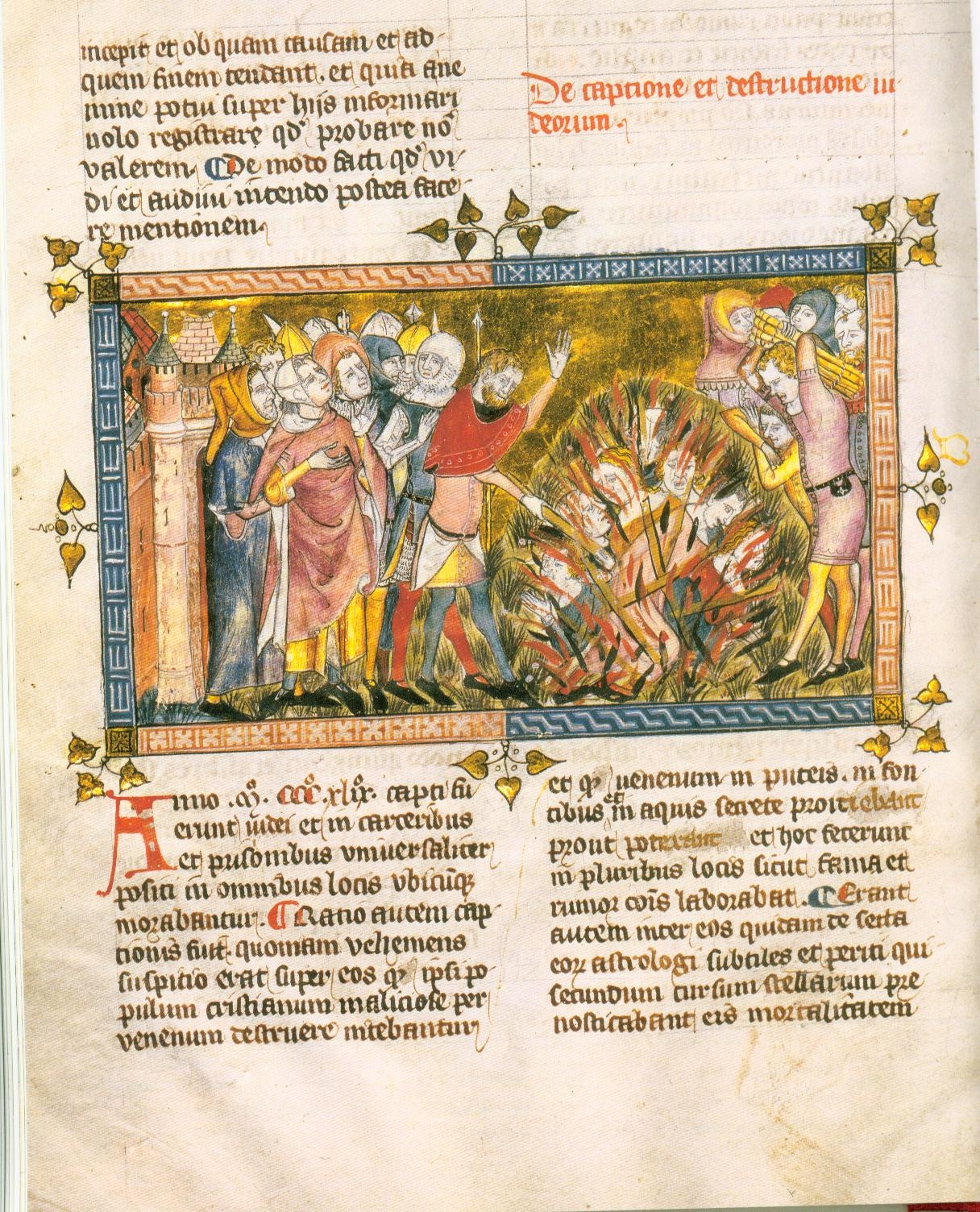
Execution of Jews
c. 1350
 Book
Primary source
The Annals of Ireland by Friar John Clyn
John Clyn · 1348-1349
Ready when you are
Start chatting with The Black Death now.
20 messages free · No credit card · Available in 50+ languages.