


Secondary sourceArtifact
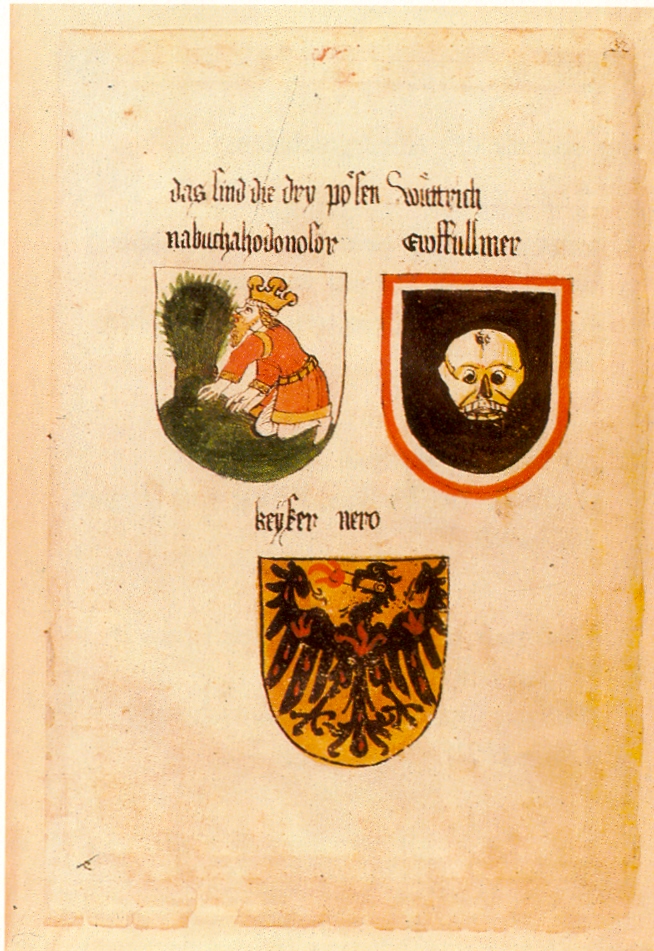
Ingeram Codex: Arms of Biblical Villains
Hans Ingeram and Exempla-master
A 15th-century German armorial page giving an invented coat of arms to Nebuchadnezzar II, shown as a stock tyrant figure.
This manuscript gives Nebuchadnezzar II an invented coat of arms, reflecting his later reputation as a tyrant.
About this source
What it is
This manuscript page comes from the Ingeram Codex, a 15th-century armorial attributed to Hans Ingeram and an artist known as the Exempla-master. It assigns invented coats of arms to figures regarded as villains, including a crowned, kneeling figure identified with Nebuchadnezzar II.
Why it matters
Medieval heraldry sometimes invented coats of arms for historical and biblical figures who lived long before heraldry existed, as a way of placing them within a moral framework familiar to a medieval audience. This page shows how Nebuchadnezzar's reputation as a tyrant persisted and was given visual form centuries after his death.
Look closer
- Why would an artist invent a coat of arms for a king who lived long before heraldry was used?
- What do the symbols chosen for each figure suggest about how they were remembered?
- What does grouping Nebuchadnezzar with other 'villains' tell us about medieval views of history?
This artifact is part of the curated material that grounds the AI version of Nebuchadnezzar II on Humy.ai — when students ask about related events, the AI can quote it and cite it.
More Nebuchadnezzar II sources
Meet the AI Nebuchadnezzar II →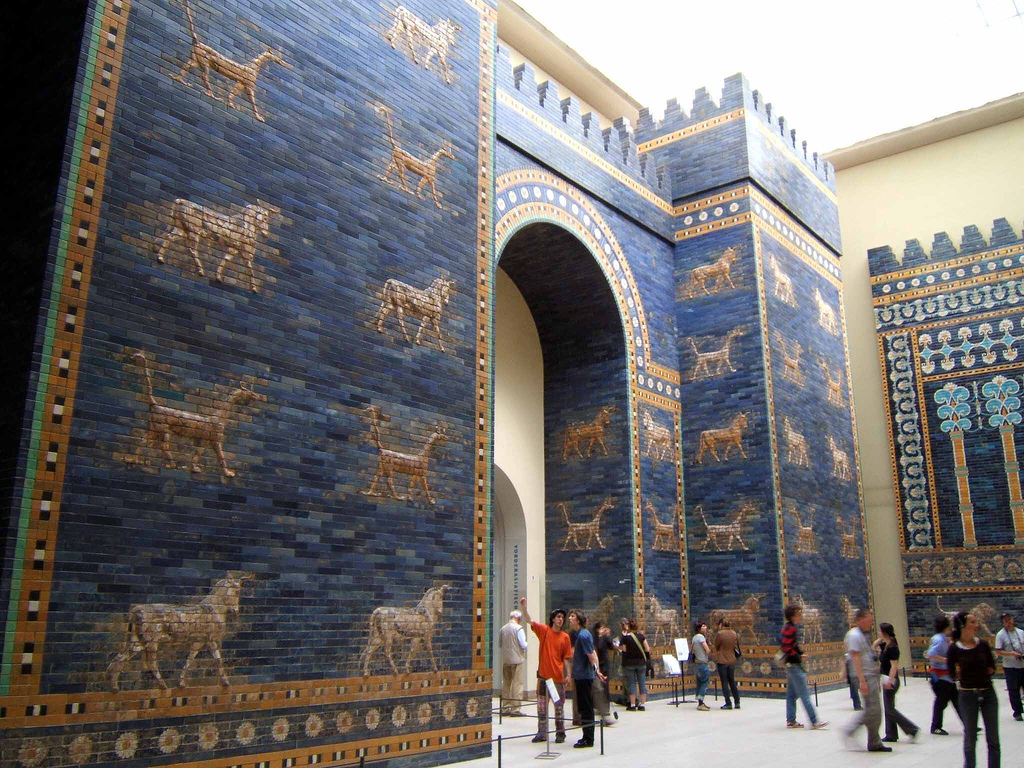 Artifact
Primary source
Ishtar Gate
c. 574 BC
 Document
Primary source
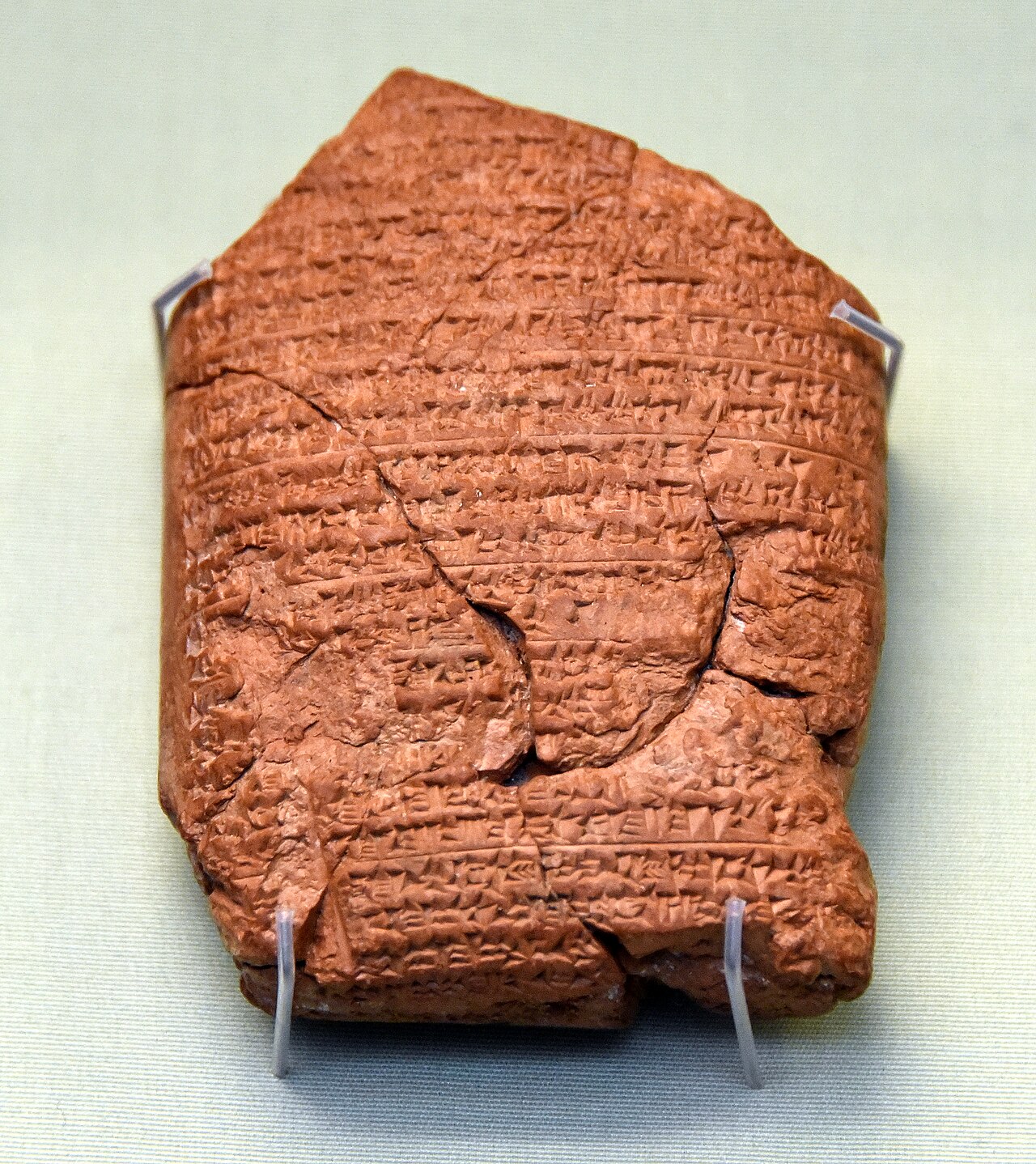
Nebuchadnezzar Chronicle
Babylonian scribes · c. 550-400 BC (recording events of 605-594 BC)
 Document
Primary source
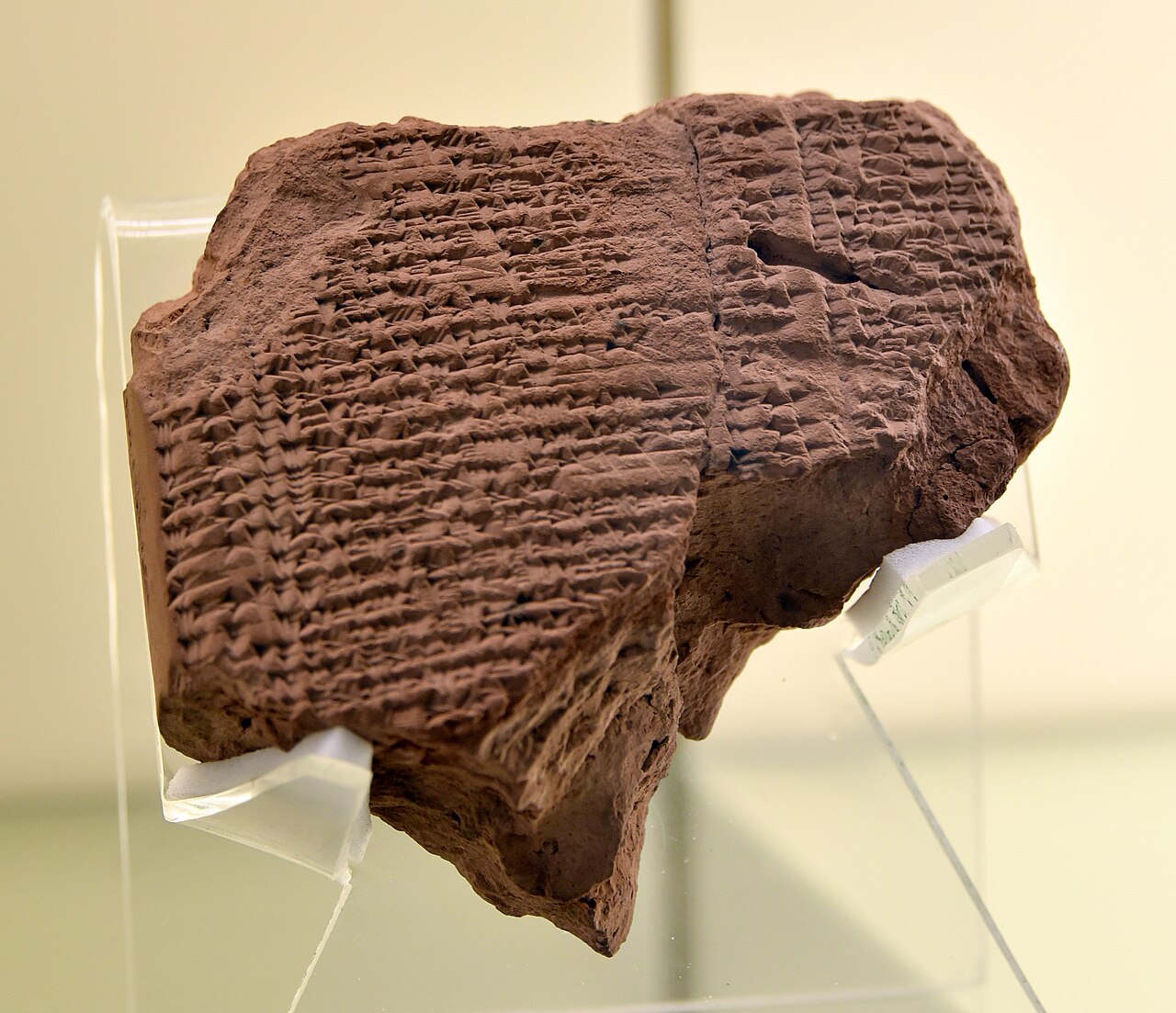
Jehoiachin's Rations Tablets
Babylonian palace scribes · c. 592 BC
 Document
Primary source
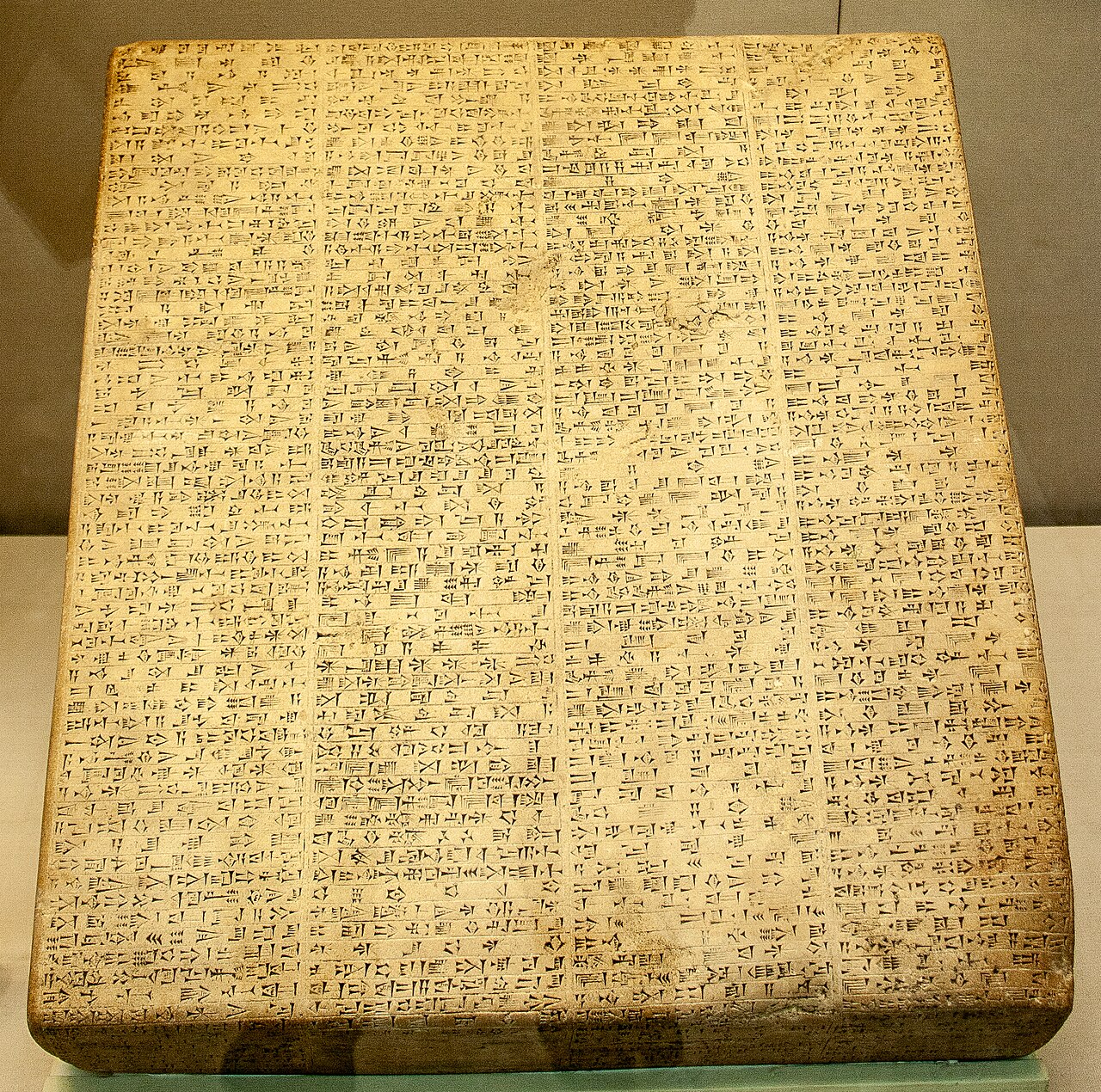
East India House Inscription
Nebuchadnezzar II (scribes writing for him) · 604-562 BC
 Book
Primary source
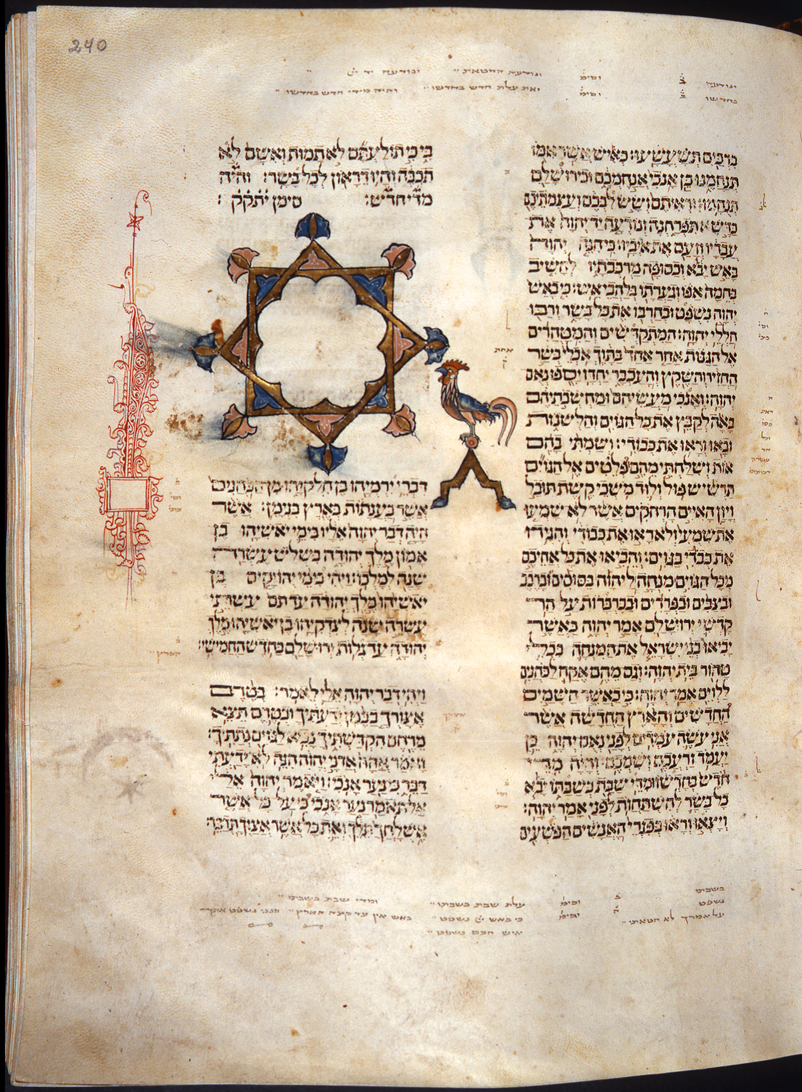
Book of Jeremiah
Jeremiah · c. 6th century BC (text); manuscript illuminated later
Ready when you are
Start chatting with Nebuchadnezzar II now.
20 messages free · No credit card · Available in 50+ languages.