


Secondary sourceArtifact2016
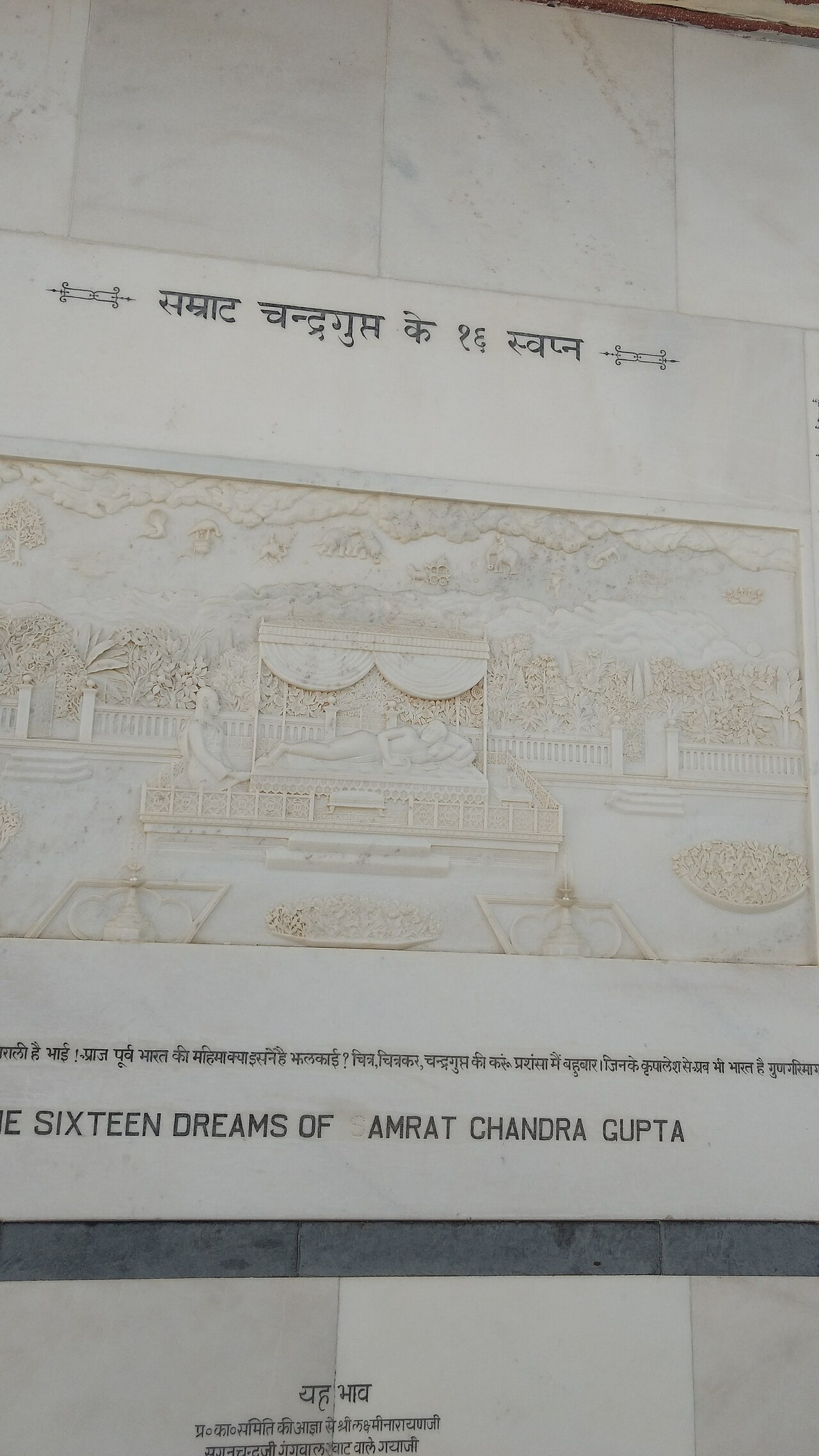
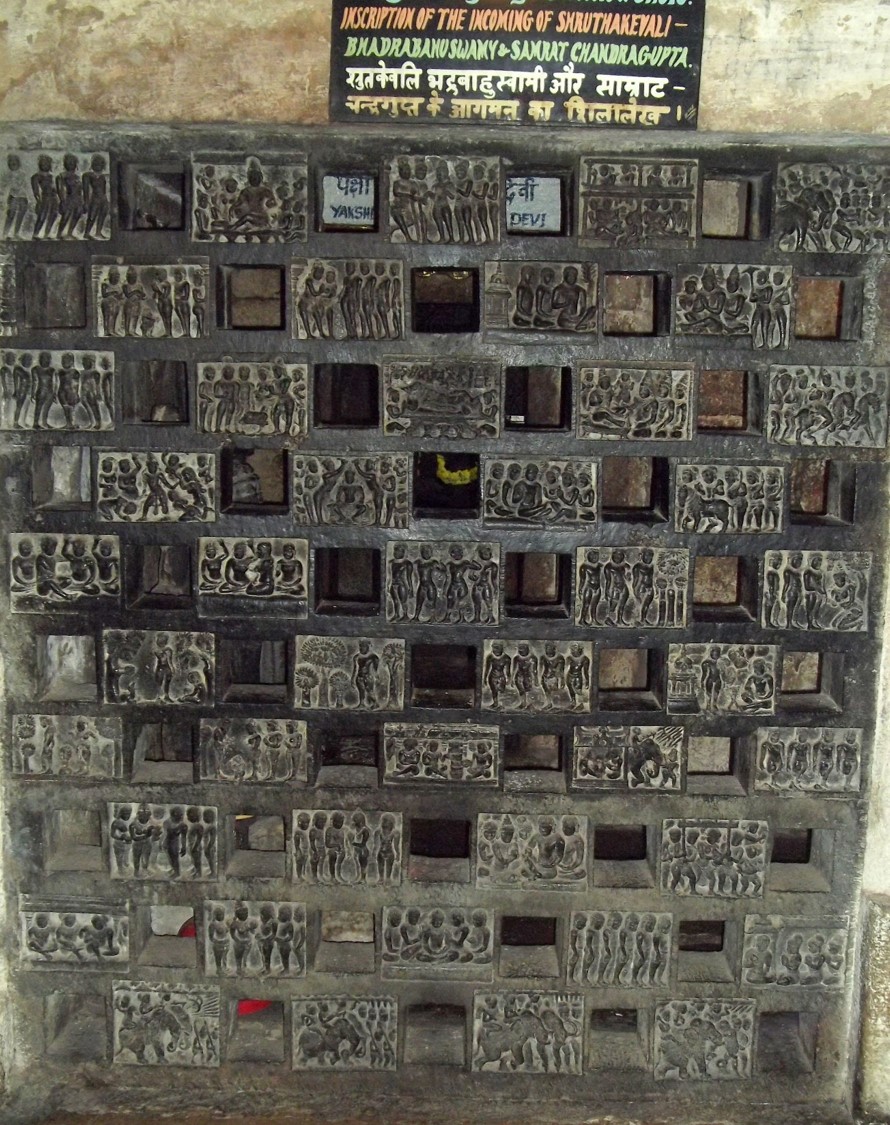
Inscription Depicting Chandragupta's Dreams, Mahavirji
2016
A marble inscription and relief illustrating the legendary sixteen dreams of Chandragupta Maurya from Jain tradition.
Illustrates a Jain legend about dreams attributed to Chandragupta Maurya, showing his later religious memory.
About this source
What it is
This is a photograph, taken in 2016, of a white marble wall panel at Mahavirji with inscriptions in Hindi and English titled 'The Sixteen Dreams of Samrat Chandra Gupta', beneath a carved relief of a reclining figure on a canopied bed.
Why it matters
The inscription illustrates a Jain legend about dreams said to have been experienced by Chandragupta Maurya. Such stories, recorded much later, show how religious tradition shaped the memory of Chandragupta long after his reign, blending history with legend.
Look closer
- What does the choice to carve this scene in marble suggest about its importance to the community that made it?
- How might a legend about dreams differ from a historical record of events?
- What can later religious depictions tell us, and what can't they tell us, about a historical ruler?
This artifact is part of the curated material that grounds the AI version of Chandragupta Maurya on Humy.ai — when students ask about related events, the AI can quote it and cite it.
More Chandragupta Maurya sources
Meet the AI Chandragupta Maurya →Secondary source
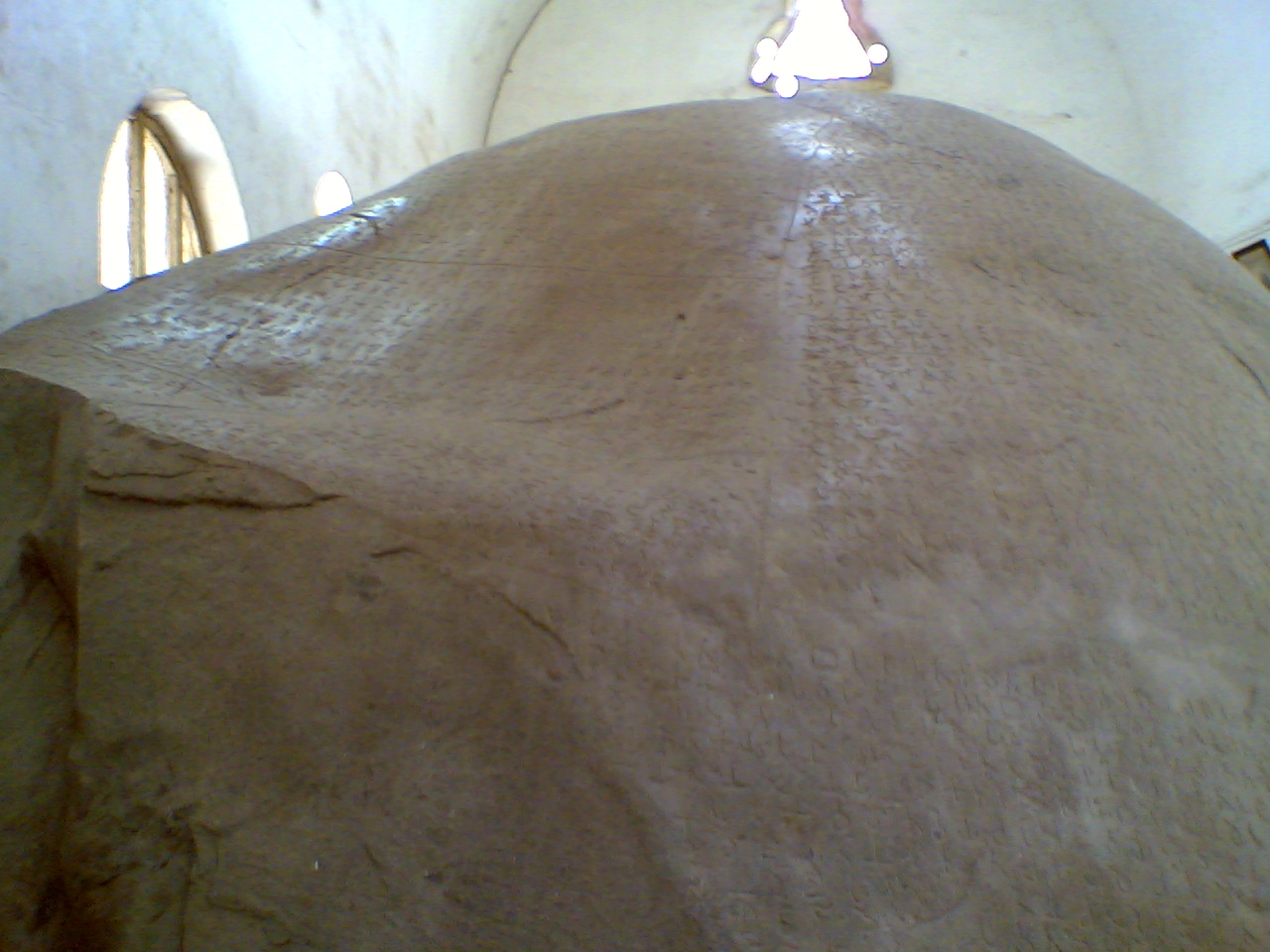
Arthashastra
Chanakya (traditional attribution) · c. 1st–3rd century CE (traditionally attributed to Chanakya, c. 300 BCE)
 Document
Secondary source
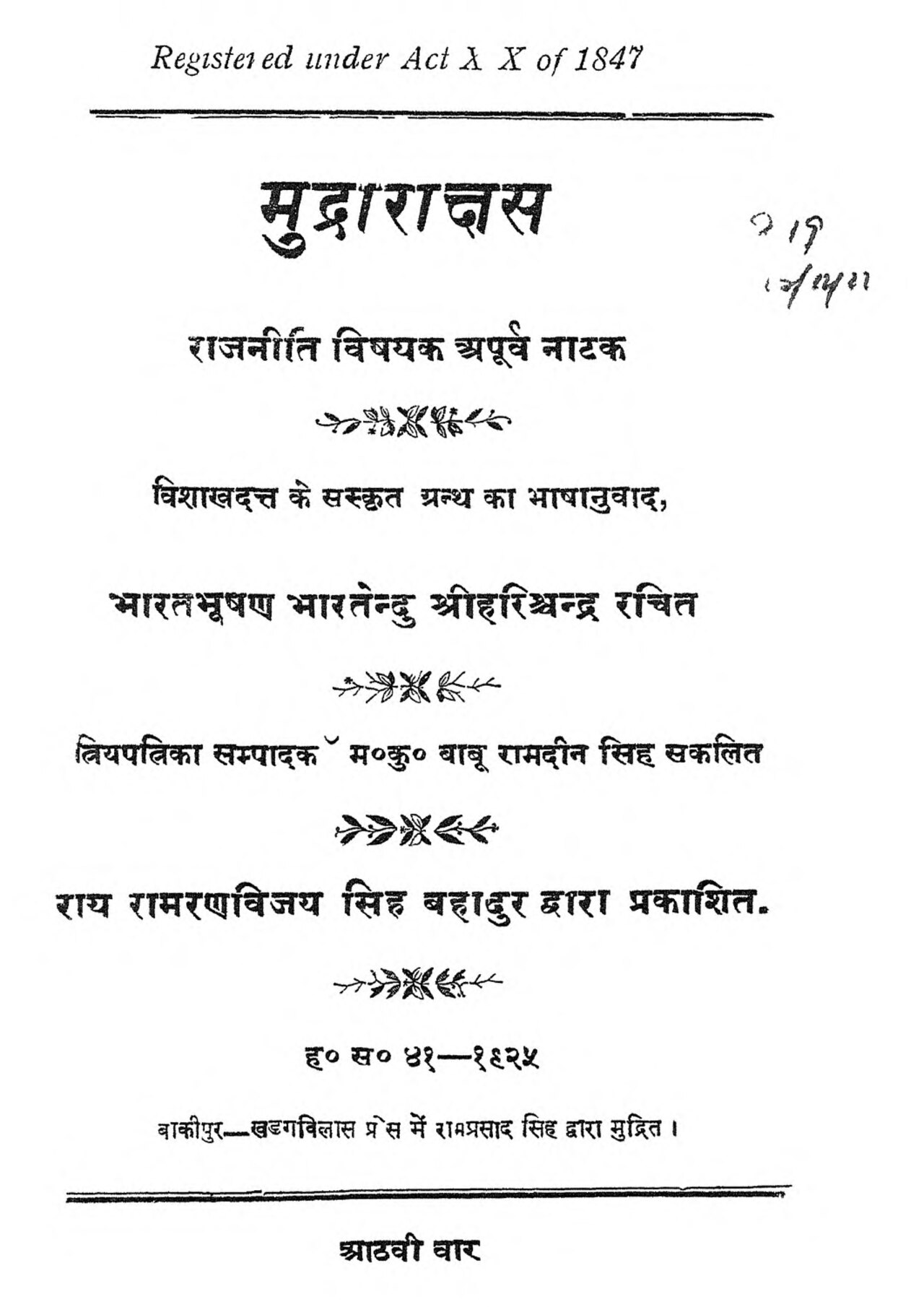
Junagadh Rock Inscription of Rudradaman
Rudradaman I (commissioner) · shortly after 150 CE
 Book
Secondary source
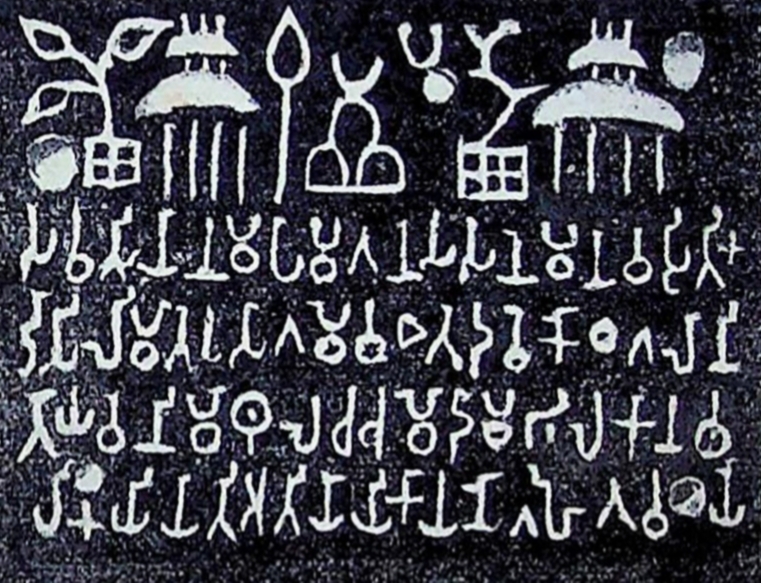
Mudrarakshasa
Vishakhadatta · between the 4th and 8th century CE
 Document
Primary source
Sohgaura Copper Plate Inscription
3rd century BCE
 Document
Secondary source
Shravanabelagola Inscription of Bhadrabahu and Chandragupta
Ready when you are
Start chatting with Chandragupta Maurya now.
20 messages free · No credit card · Available in 50+ languages.