


Primary sourcePainting1765
John Hancock
John Singleton Copley · 1765
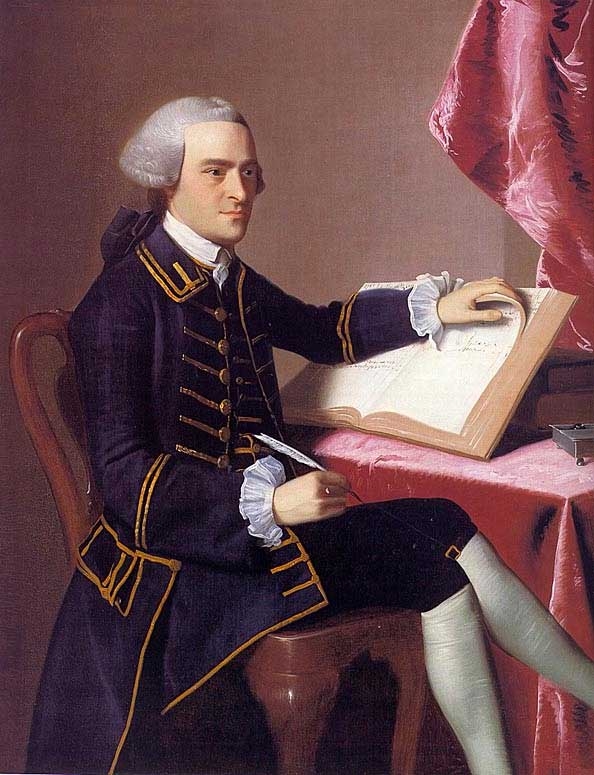
Copley's 1765 portrait shows the young John Hancock as a prosperous Boston merchant, before his political career began.
This portrait depicts Hancock as a young merchant, before his rise to political prominence.
About this source
What it is
This 1765 oil painting by John Singleton Copley shows John Hancock seated at a table with a ledger and quill, dressed in fine clothes. It is held by the Museum of Fine Arts, Boston.
Why it matters
Painted when Hancock was still primarily a merchant and heir to his uncle's trading business, the portrait presents him as wealthy and respectable, years before he became a leading figure of the American Revolution. It shows how Copley, one of colonial America's leading portraitists, depicted status and success through clothing, posture and setting.
Look closer
- What details in the painting suggest wealth and business success?
- Why might Hancock have wanted to be shown with a ledger rather than, say, a book or a sword?
- How does this image differ from how you might imagine Hancock the revolutionary leader?
This painting is part of the curated material that grounds the AI version of John Hancock on Humy.ai — when students ask about related events, the AI can quote it and cite it.
More John Hancock sources
Meet the AI John Hancock →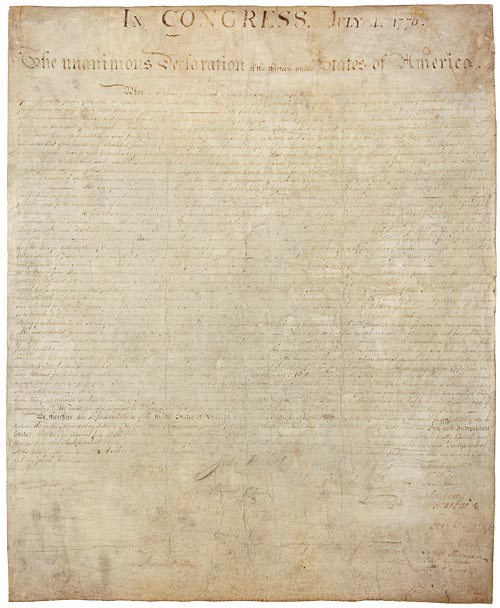 Document
Primary source
Declaration of Independence
Continental Congress (drafted by Thomas Jefferson) · 1776
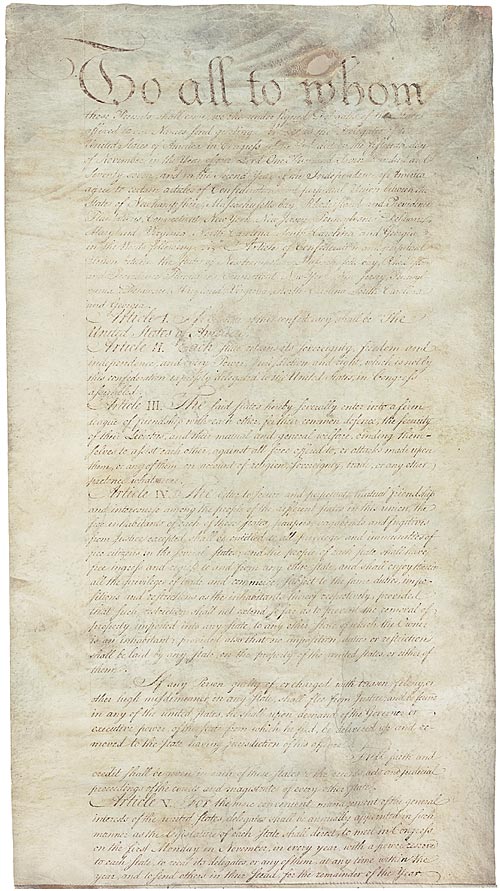 Document
Primary source
Articles of Confederation
Continental Congress · 1777
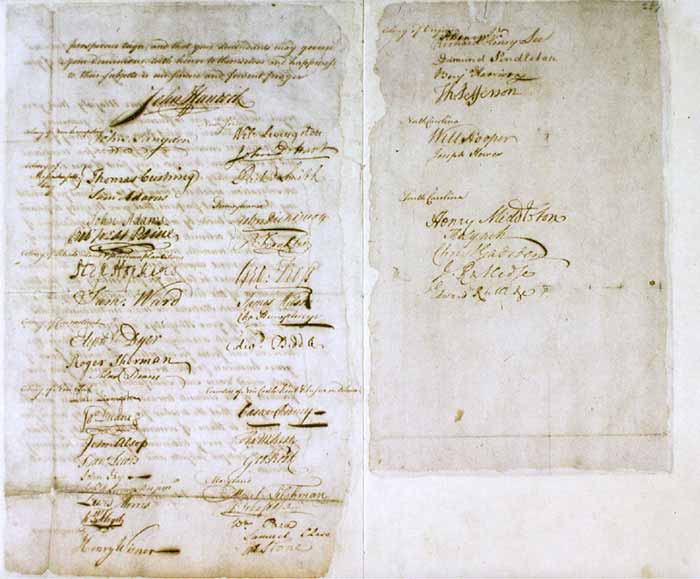 Document
Primary source
Olive Branch Petition
Second Continental Congress · 1775
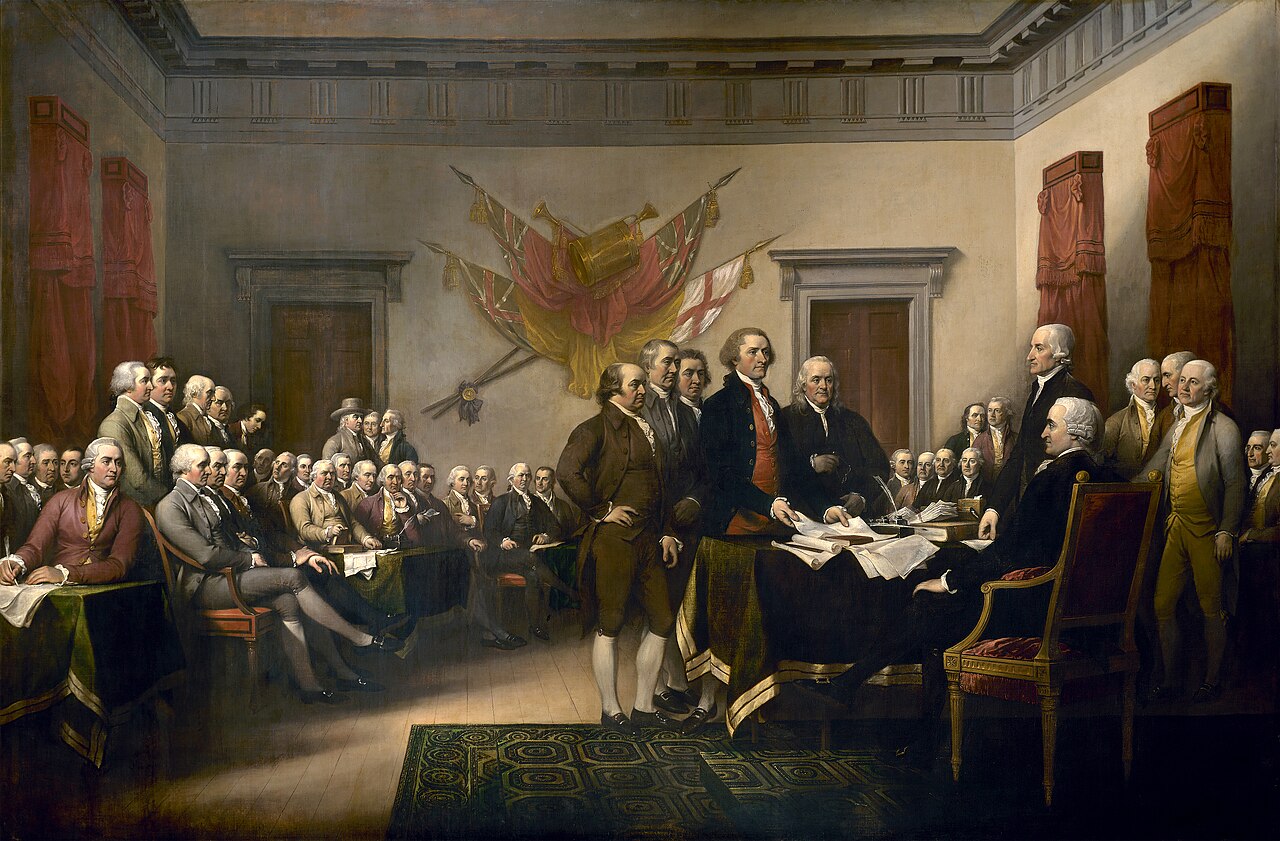 Painting
Secondary source
Declaration of Independence
John Trumbull · 1818
Primary source
Massachusetts ratification of the United States Constitution
Massachusetts Ratifying Convention · 6 February 1788
Ready when you are
Start chatting with John Hancock now.
20 messages free · No credit card · Available in 50+ languages.