


Primary sourceDocumentc. 260 BCE
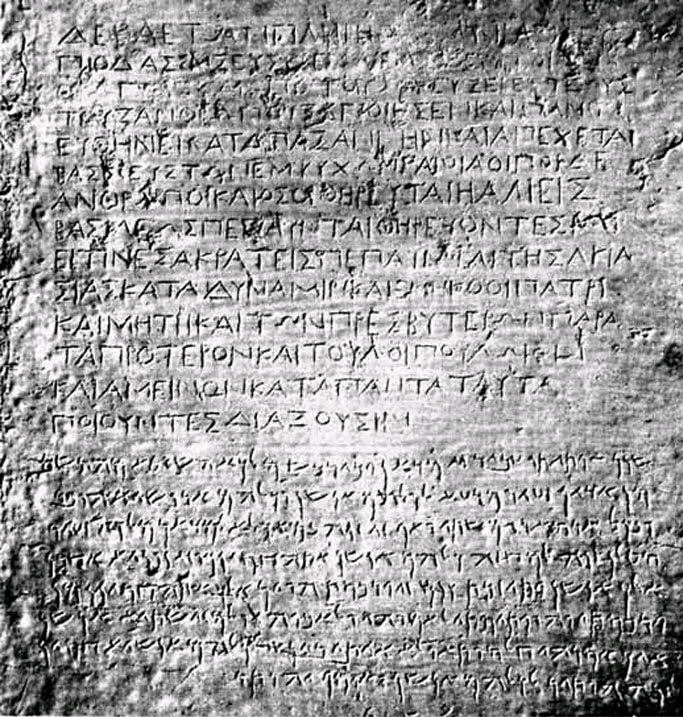
Kandahar Bilingual Rock Inscription
Ashoka · c. 260 BCE
A Greek-Aramaic edict of Ashoka carved near Kandahar, showing Mauryan control over lands Seleucus ceded to Chandragupta.
Shows Mauryan rule over territory Seleucus ceded to Chandragupta, the empire's founder, decades after his death.
About this source
What it is
This is a rock inscription carved in Greek and Aramaic near Kandahar, Afghanistan, by the Mauryan emperor Ashoka, Chandragupta's grandson. It dates to around 260 BCE. A cast of it is kept in the National Museum of Afghanistan; the original remained on the mountainside where it was found.
Why it matters
The inscription proves that Mauryan rule reached deep into Afghanistan, territory that the Greek king Seleucus had given up to Chandragupta Maurya in a peace agreement around 303 BCE. It shows that Greek-speaking communities still lived there under Ashoka, decades after Alexander the Great's conquests, and that the older Aramaic language of the former Persian empire was still used too.
Look closer
- Why would Ashoka write in Greek and Aramaic instead of an Indian language?
- What does the inscription's location tell us about the extent of the empire Chandragupta founded?
- Why might a ruler want to address different language communities separately?
This document is part of the curated material that grounds the AI version of Chandragupta Maurya on Humy.ai — when students ask about related events, the AI can quote it and cite it.
More Chandragupta Maurya sources
Meet the AI Chandragupta Maurya →Secondary source
Arthashastra
Chanakya (traditional attribution) · c. 1st–3rd century CE (traditionally attributed to Chanakya, c. 300 BCE)
 Document
Secondary source
Junagadh Rock Inscription of Rudradaman
Rudradaman I (commissioner) · shortly after 150 CE
 Book
Secondary source
Mudrarakshasa
Vishakhadatta · between the 4th and 8th century CE
 Document
Primary source
Sohgaura Copper Plate Inscription
3rd century BCE
 Document
Secondary source
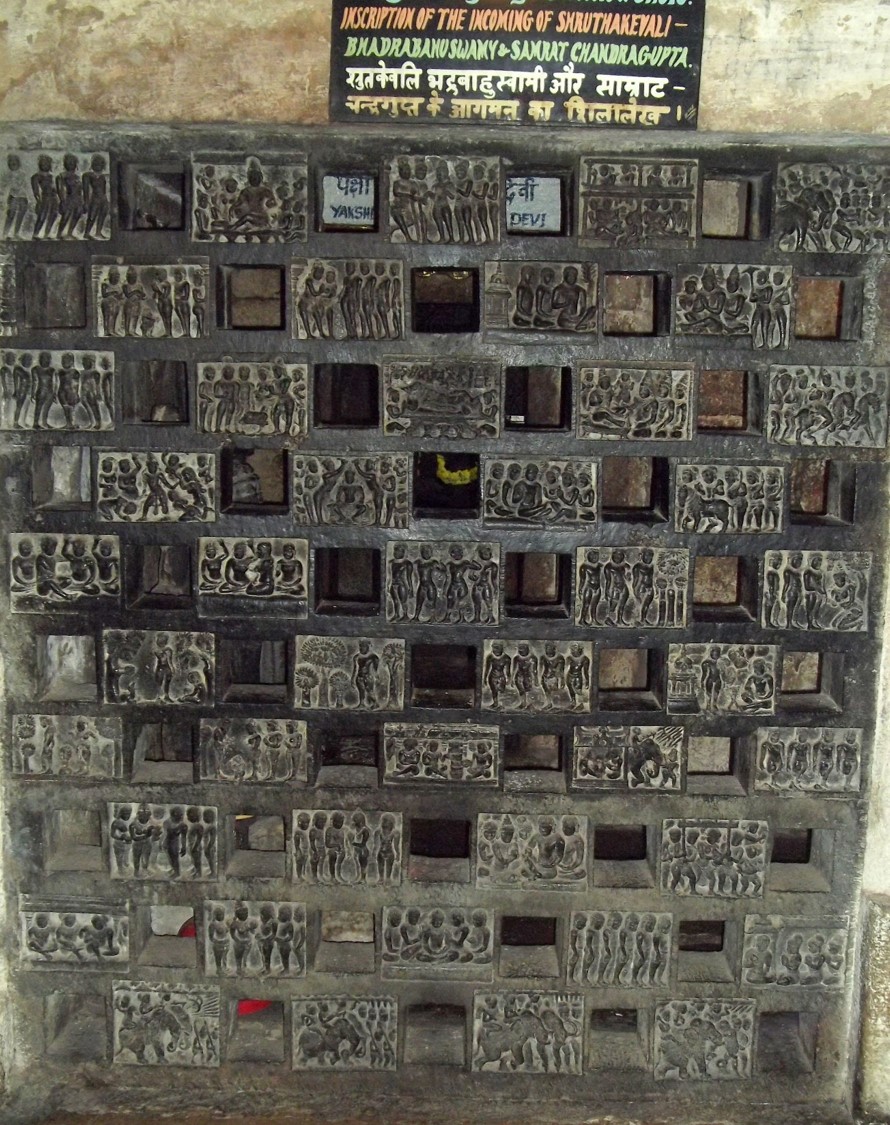
Shravanabelagola Inscription of Bhadrabahu and Chandragupta
Ready when you are
Start chatting with Chandragupta Maurya now.
20 messages free · No credit card · Available in 50+ languages.