


Secondary sourcePaintingcirca 1685-1688
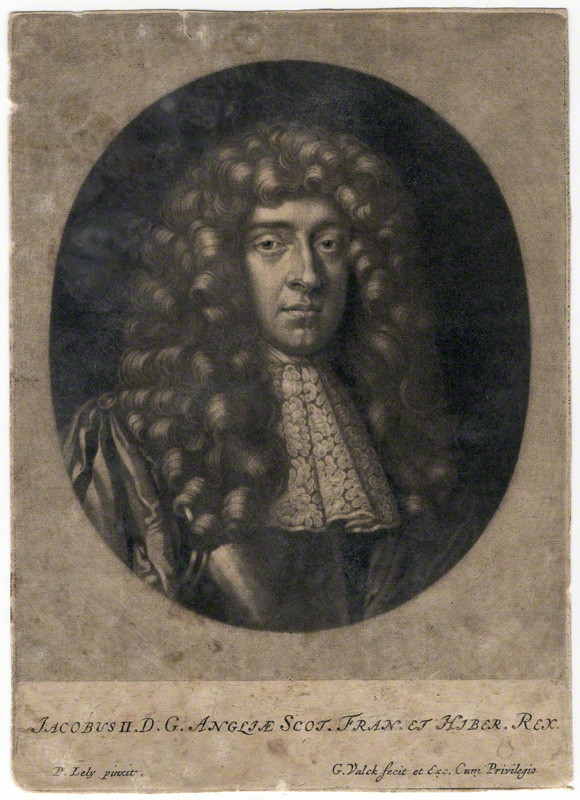
King James II, engraving by Gerard Valck after Sir Peter Lely
Gerard Valck · circa 1685-1688
A mezzotint portrait of James II made during his reign, based on a painting by Peter Lely. It shows how he was publicly presented as sovereign.
It shows James II as king, with his royal titles, during the years he reigned.
About this source
What it is
This is an oval mezzotint portrait of a man with a long curled wig and lace cravat, wearing a draped garment on a plain border. The inscription reads JACOBUS II D G ANGLIAE SCOT FRAN ET HIBER REX. The print is signed P. Lely pinxit, meaning Peter Lely painted the original, and G. Valck fecit, meaning Gerard Valck made the print. It is dated to about 1685 to 1688, during James's reign.
Why it matters
Prints made from court portraits were a way to spread the image of a monarch across the country and beyond. This one names James with his full royal titles, including king of England, Scotland, France and Ireland. Peter Lely was a leading court painter, and Gerard Valck was a Dutch printmaker, which shows how portraits moved between artists and countries.
Look closer
- Which words in the inscription present James as a ruler, and why would they matter?
- How does the painter's name affect what viewers think about the portrait?
- What does a print lose compared with an original painting?
This painting is part of the curated material that grounds the AI version of James II on Humy.ai — when students ask about related events, the AI can quote it and cite it.
More James II sources
Meet the AI James II →
Ready when you are
Start chatting with James II now.
20 messages free · No credit card · Available in 50+ languages.