


Secondary sourcePainting
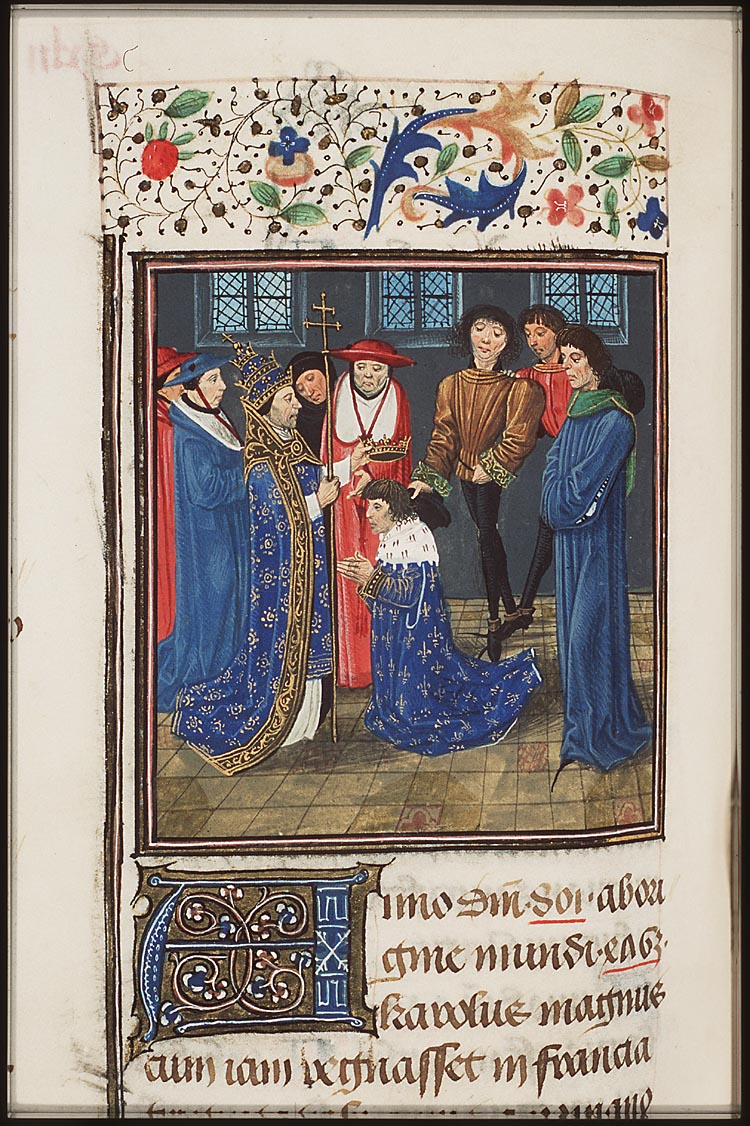
Leo III crowns Charlemagne
Jean Dreux
A medieval-style manuscript miniature by Jean Dreux showing Pope Leo III placing a crown on a kneeling Charlemagne, a later picture of the coronation in Rome in 800.
Shows how later artists pictured Charlemagne's coronation as emperor, the event that made him Holy Roman Emperor in the eyes of later writers.
About this source
What it is
This is a printed image held by the KB, National Library of the Netherlands. It is a miniature in blue, red and gold, showing a bishop in a blue and gold mitre-like crown holding a cross-topped staff. He places a crown on a kneeling man in blue with a fur collar. Onlookers stand in a tiled room. Illuminated initial letters and Latin text appear below. The creator is listed as Jean Dreux.
Why it matters
The scene refers to the coronation of Charlemagne in Rome in 800, when he was crowned emperor. This image is not from that time. It was made later, and it shows how artists later pictured that event, using the style of medieval manuscripts. It helps students compare the event with the way it was interpreted and remembered.
Look closer
- Who is shown as giving the crown, and who is shown as receiving it?
- Why might a later artist choose a manuscript style to show a medieval event?
- What might this picture leave out about how the coronation was arranged or understood at the time?
This painting is part of the curated material that grounds the AI version of Charlemagne on Humy.ai — when students ask about related events, the AI can quote it and cite it.
More Charlemagne sources
Meet the AI Charlemagne →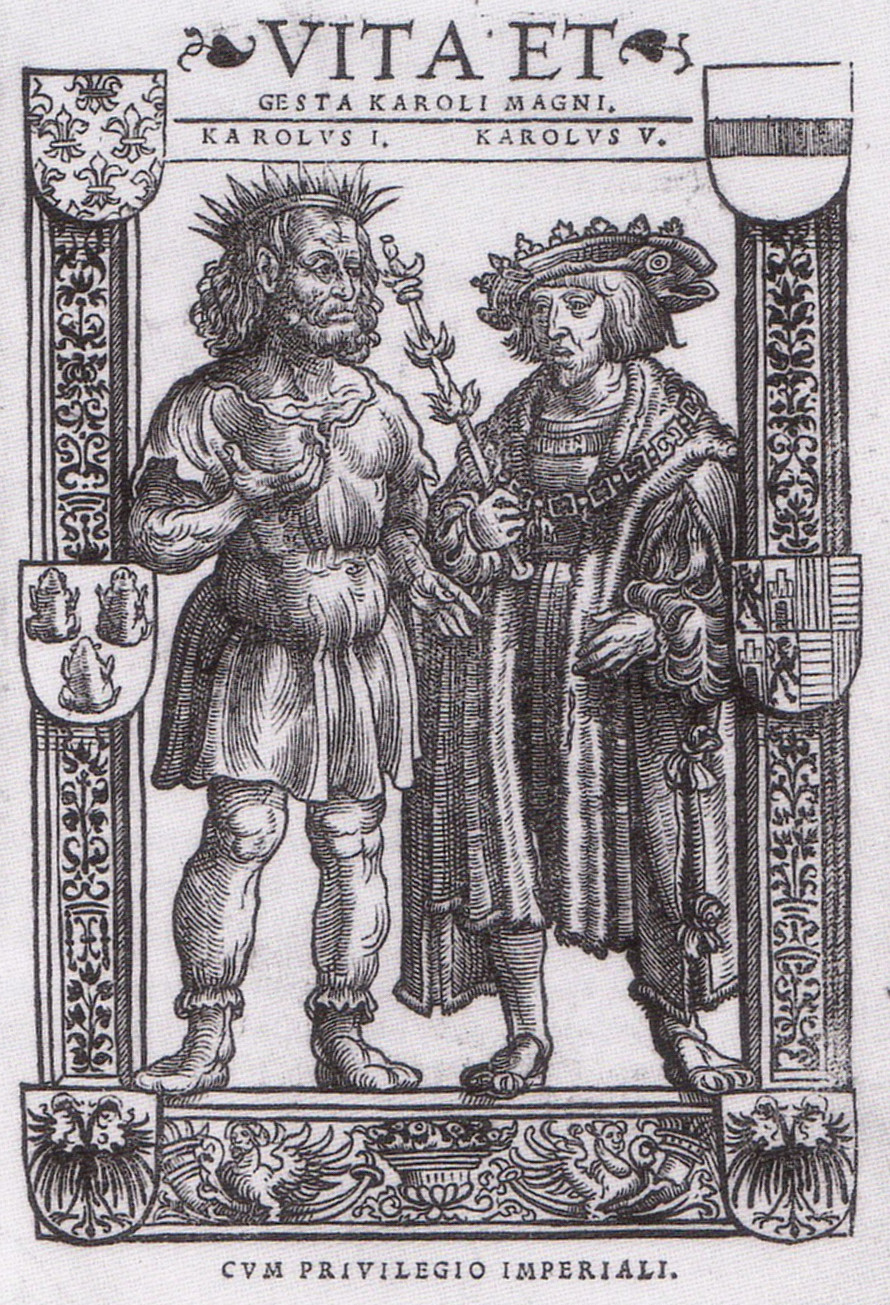 Book
Secondary source
Vita Karoli Magni
Einhard · c. 817-833
 Document
Primary source
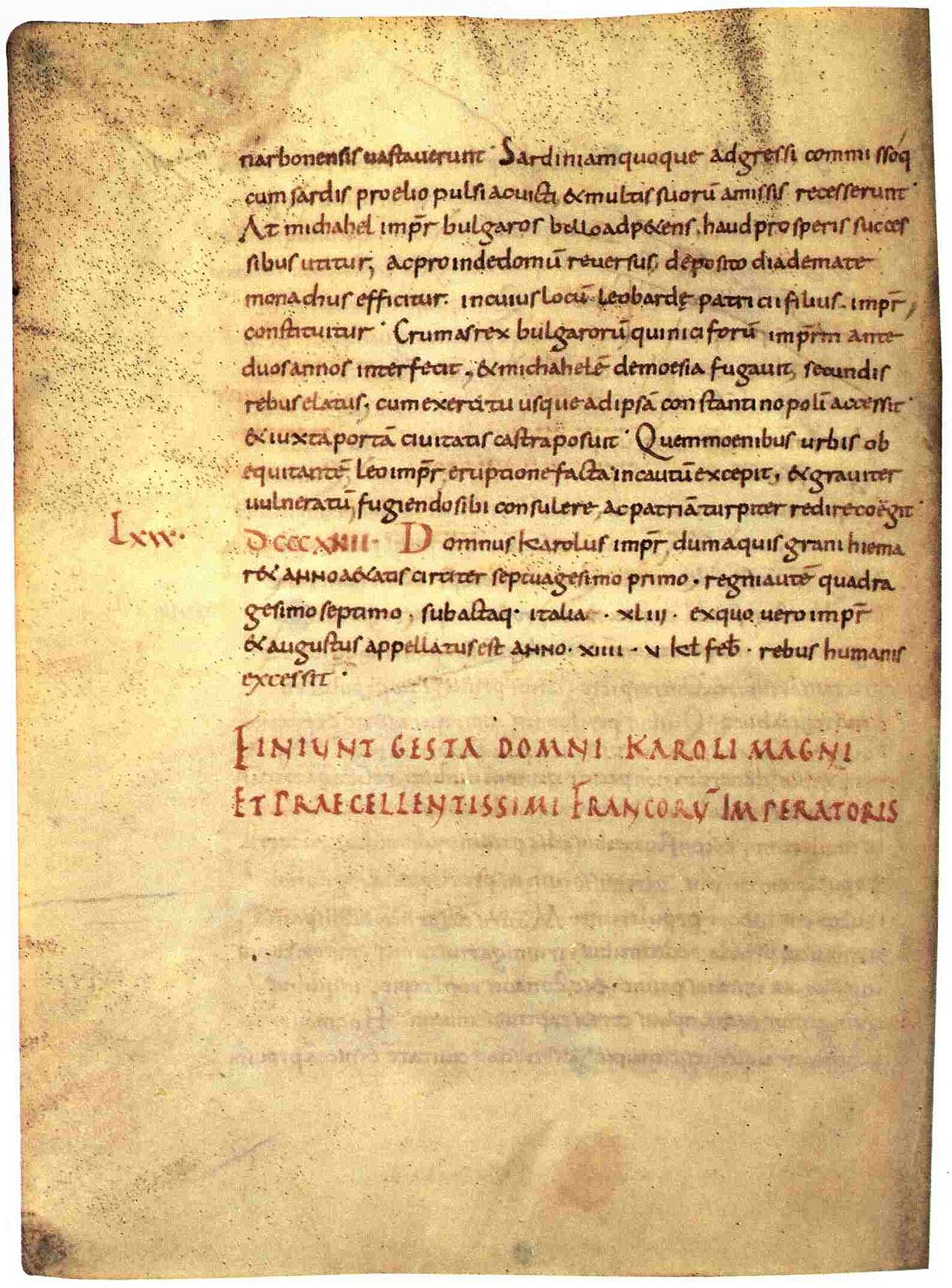
Royal Frankish Annals
741-829, this manuscript c. 900
Primary source
De litteris colendis
Charlemagne · late 780s-800s
 Document
Primary source
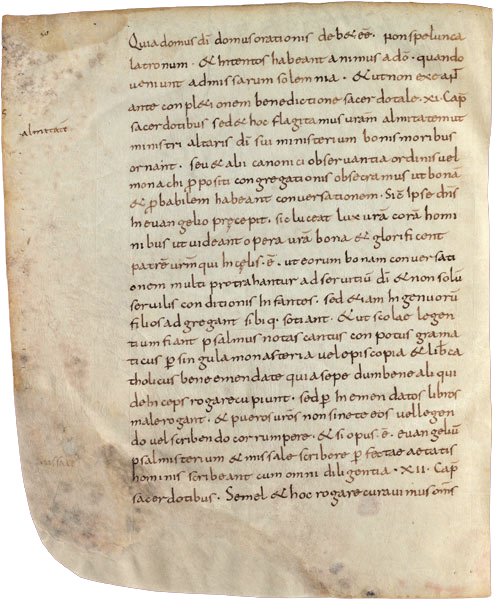
Admonitio generalis
Charlemagne · 23 March 789
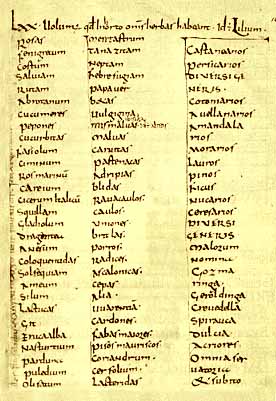 Document
Primary source
Capitulare de villis
c. 771-800
Ready when you are
Start chatting with Charlemagne now.
20 messages free · No credit card · Available in 50+ languages.