


Primary sourceLetter7 January 1702
Letter from Aurangzeb to William III
Aurangzeb · 7 January 1702
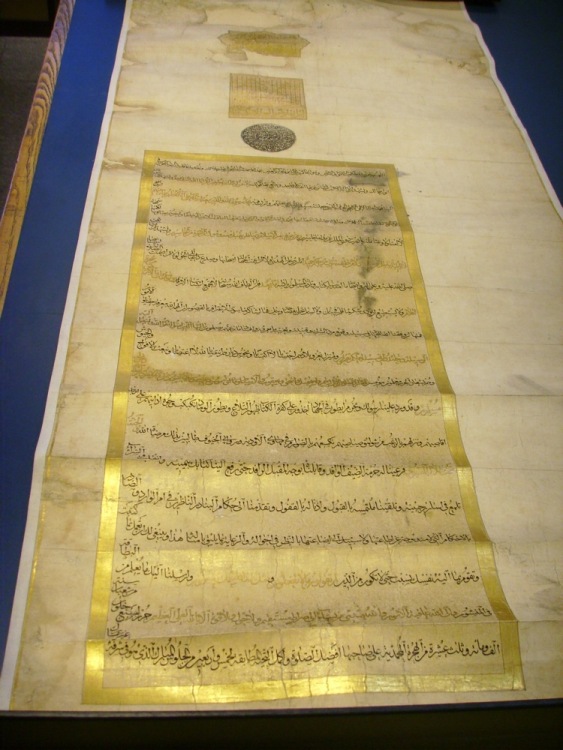
An imperial letter sent by Emperor Aurangzeb to England's King William III in 1702, now held by the British Library.
This is a letter personally sent by Aurangzeb, showing his direct diplomatic dealings with European powers.
About this source
What it is
This is a letter written by Emperor Aurangzeb to King William III of England, dated 7 January 1702. It is written in Persian, the language of the Mughal court, and is held by the British Library as Oriental MS 6286. The photograph shows it mounted for exhibition, with gold-bordered text and an imperial seal.
Why it matters
The letter documents direct diplomatic contact between Aurangzeb and European powers, showing how the Mughal Empire engaged with the English, who were expanding their trading presence in India through the East India Company. It is a rare surviving example of Aurangzeb's own correspondence with a foreign ruler.
Look closer
- What does the use of Persian script and formal seals tell you about Mughal diplomacy?
- Why might Aurangzeb have written directly to the English king?
- What is missing from this document that might help us understand its full context?
This letter is part of the curated material that grounds the AI version of Aurangzeb on Humy.ai — when students ask about related events, the AI can quote it and cite it.
More Aurangzeb sources
Meet the AI Aurangzeb → Artifact
Primary source
Badshahi Mosque
1671–1673
 Document
Primary source
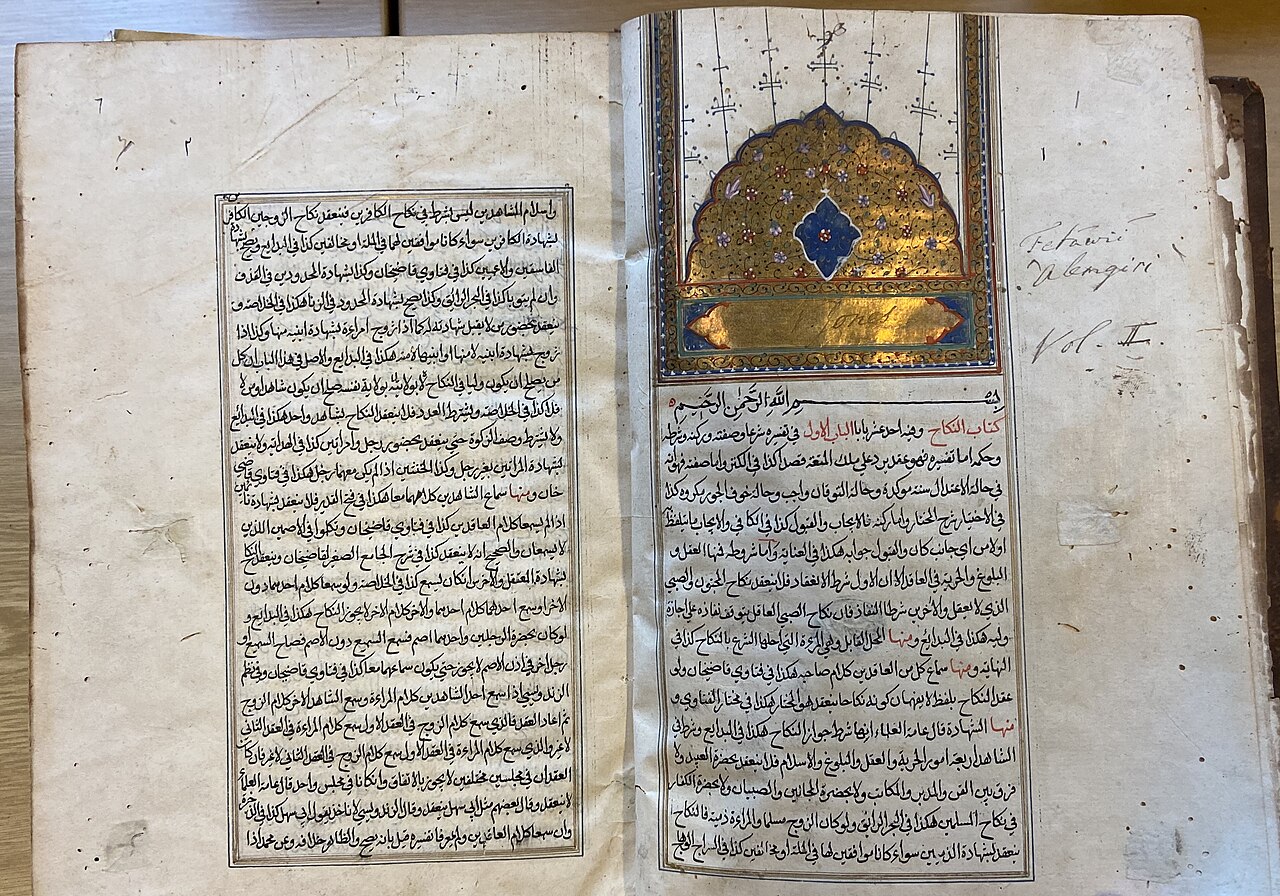
Fatawa-i Alamgiri Manuscript
17th century (this copy later recopied)
 Book
Secondary source
Maasir-i-Alamgiri
Saqi Musta'id Khan · c. 1710 (this copy 1763-1764)
Primary source
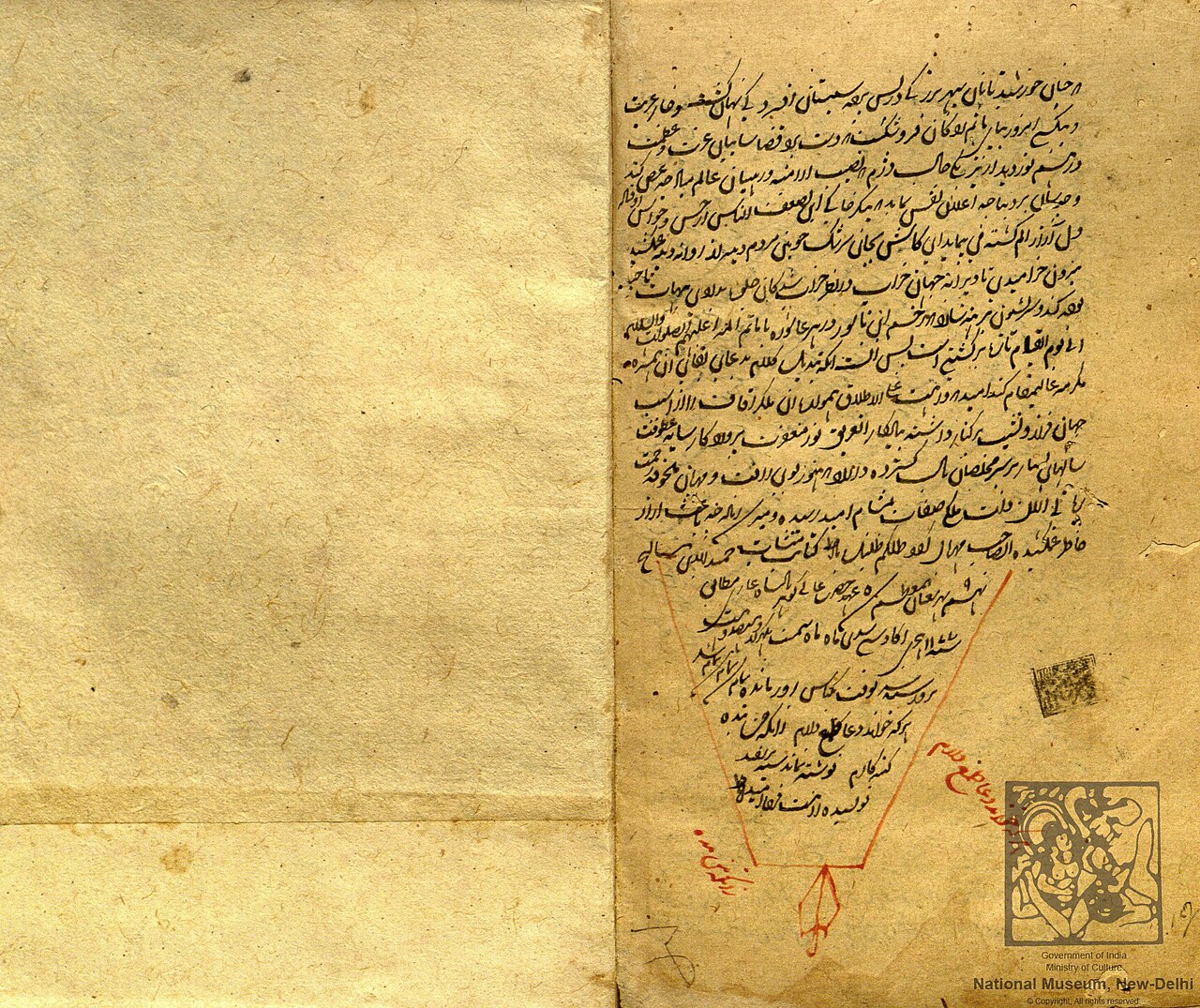
Ruka'at-i-Alamgiri
Aurangzeb · 17th century
 Letter
Primary source
Zafarnamah
Guru Gobind Singh · 1705
Ready when you are
Start chatting with Aurangzeb now.
20 messages free · No credit card · Available in 50+ languages.