


Primary sourceLetterApril 22, 1820
Letter to John Holmes
Thomas Jefferson · April 22, 1820
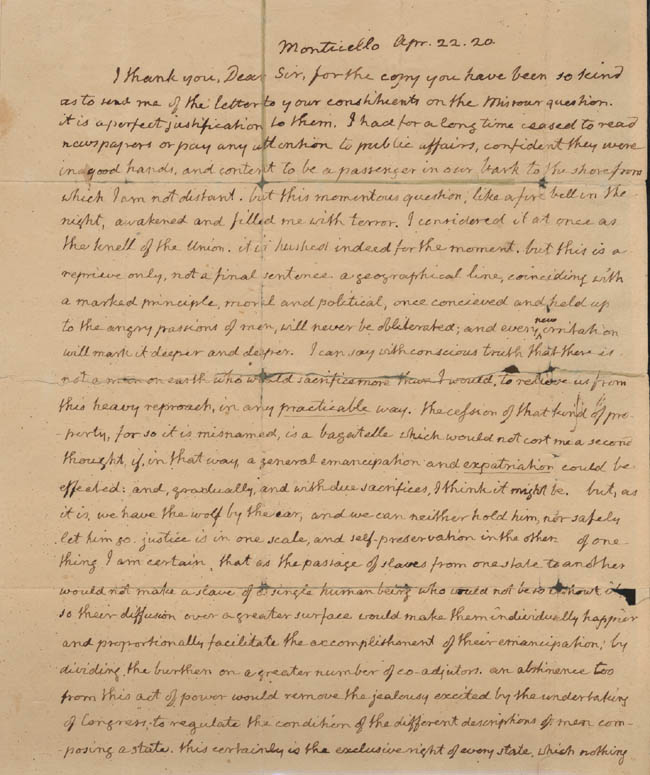
Jefferson's 1820 letter on the Missouri Compromise, containing his famous warning about holding 'the wolf by the ear.'
Jefferson wrote this letter himself, revealing his fear and indecision over the expansion of slavery into Missouri.
About this source
What it is
This is a letter Thomas Jefferson wrote from Monticello on April 22, 1820, to the politician John Holmes, responding to a letter about the Missouri question.
Why it matters
In the letter Jefferson discusses slavery and the crisis over whether Missouri would allow it, comparing the issue to a "fire bell in the night." He also used the phrase about holding "the wolf by the ear," meaning he saw no safe way to either keep slavery or end it. The letter reveals Jefferson's deep anxiety about slavery's future in the United States, even as he remained an enslaver himself and took no action to end the practice.
Look closer
- What do Jefferson's images of a "fire bell" and a "wolf by the ear" suggest about how he felt about slavery and the nation's future?
- Why might Jefferson have expressed these fears privately in a letter rather than in a public statement?
- What does the gap between Jefferson's words here and his own actions as an enslaver tell you about him?
This letter is part of the curated material that grounds the AI version of Thomas Jefferson on Humy.ai — when students ask about related events, the AI can quote it and cite it.
More Thomas Jefferson sources
Meet the AI Thomas Jefferson →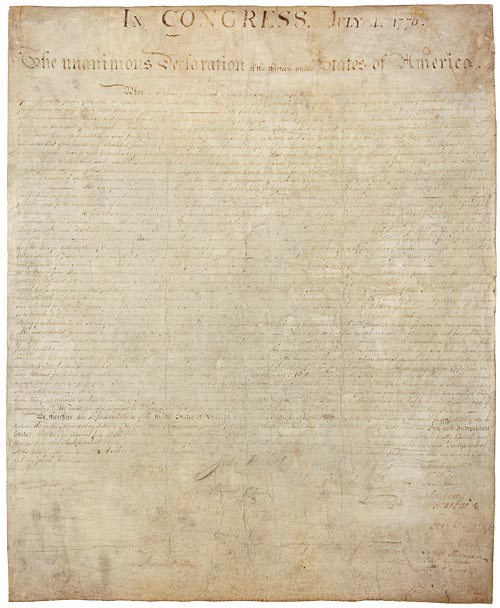 Document
Primary source
Declaration of Independence
Continental Congress (drafted by Thomas Jefferson) · 1776
 Painting
Primary source
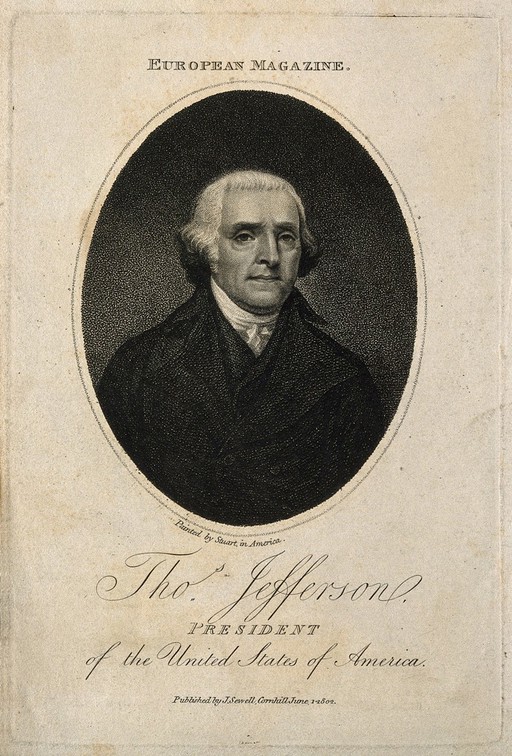
Thomas Jefferson Stipple Engraving after Gilbert Stuart
After Gilbert Stuart · 1802
Primary source
Virginia Statute for Religious Freedom
Thomas Jefferson · written 1777, enacted 16 January 1786
 Painting
Primary source
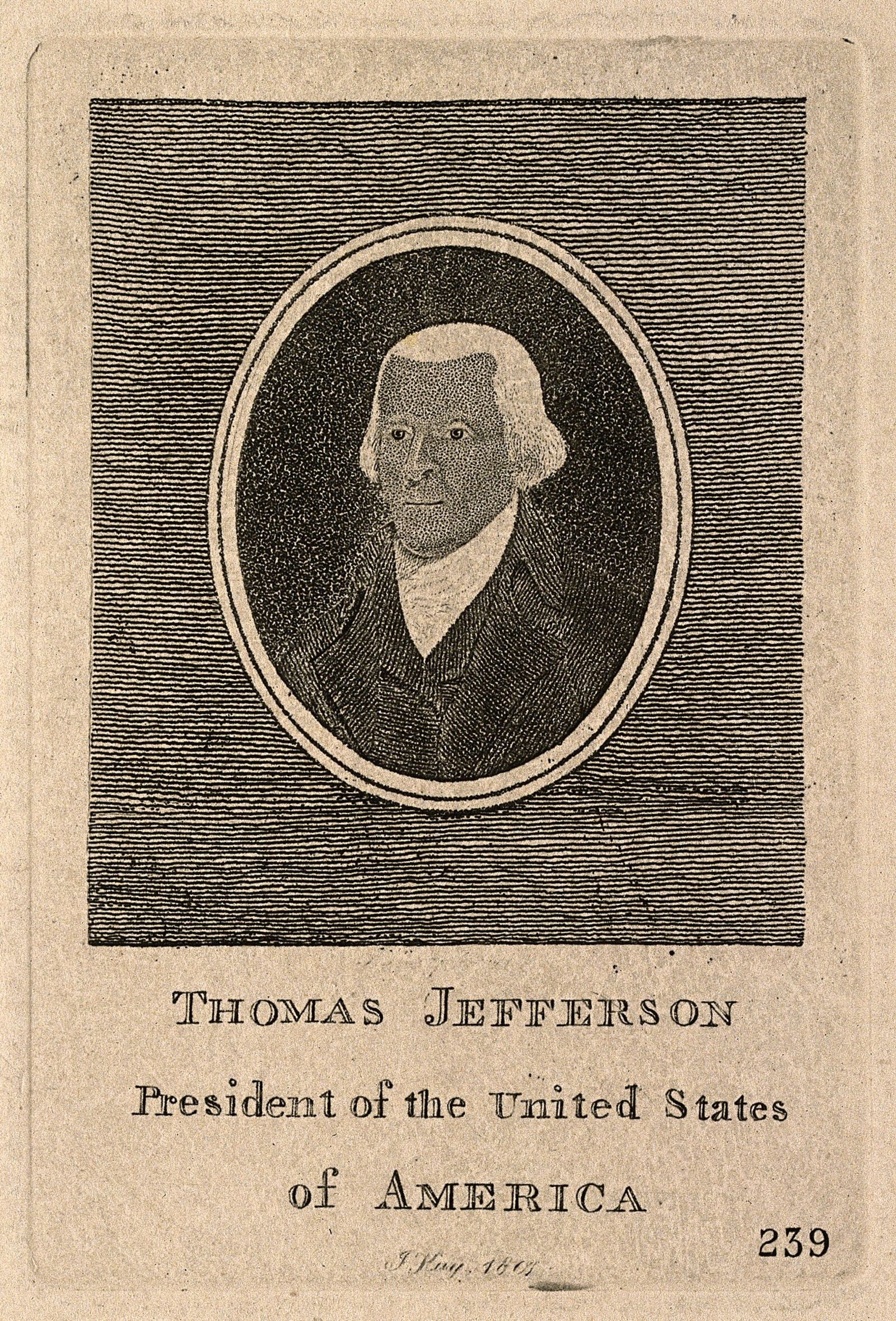
Thomas Jefferson Etching by John Kay, 1807
Gilbert Stuart · 1807
 Painting
Secondary source
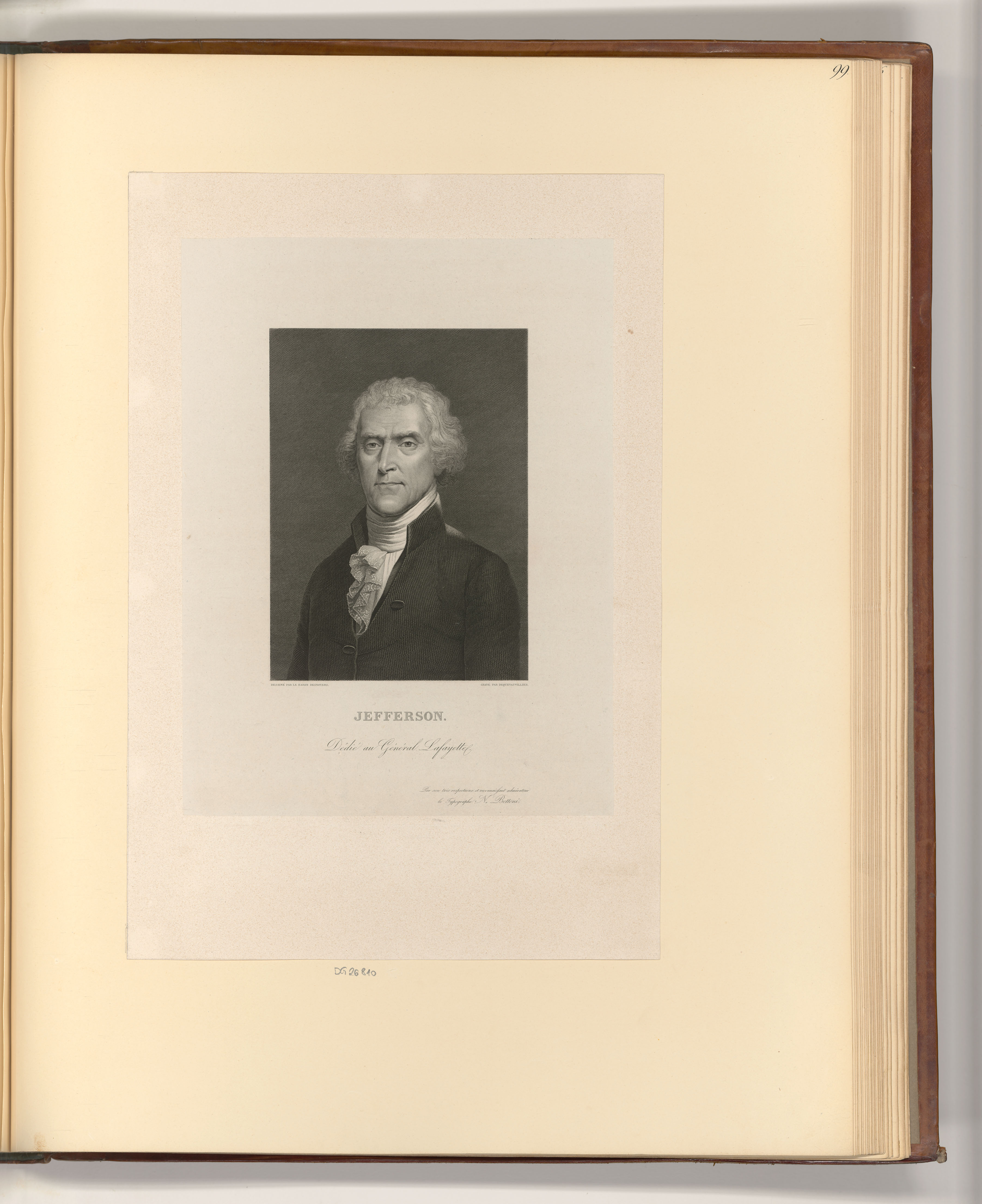
Porträt Thomas Jefferson
Auguste Gaspard Louis Boucher Desnoyers
Ready when you are
Start chatting with Thomas Jefferson now.
20 messages free · No credit card · Available in 50+ languages.