


Primary sourceLetterJune 24, 1826
Letter to Roger C. Weightman
Thomas Jefferson · June 24, 1826
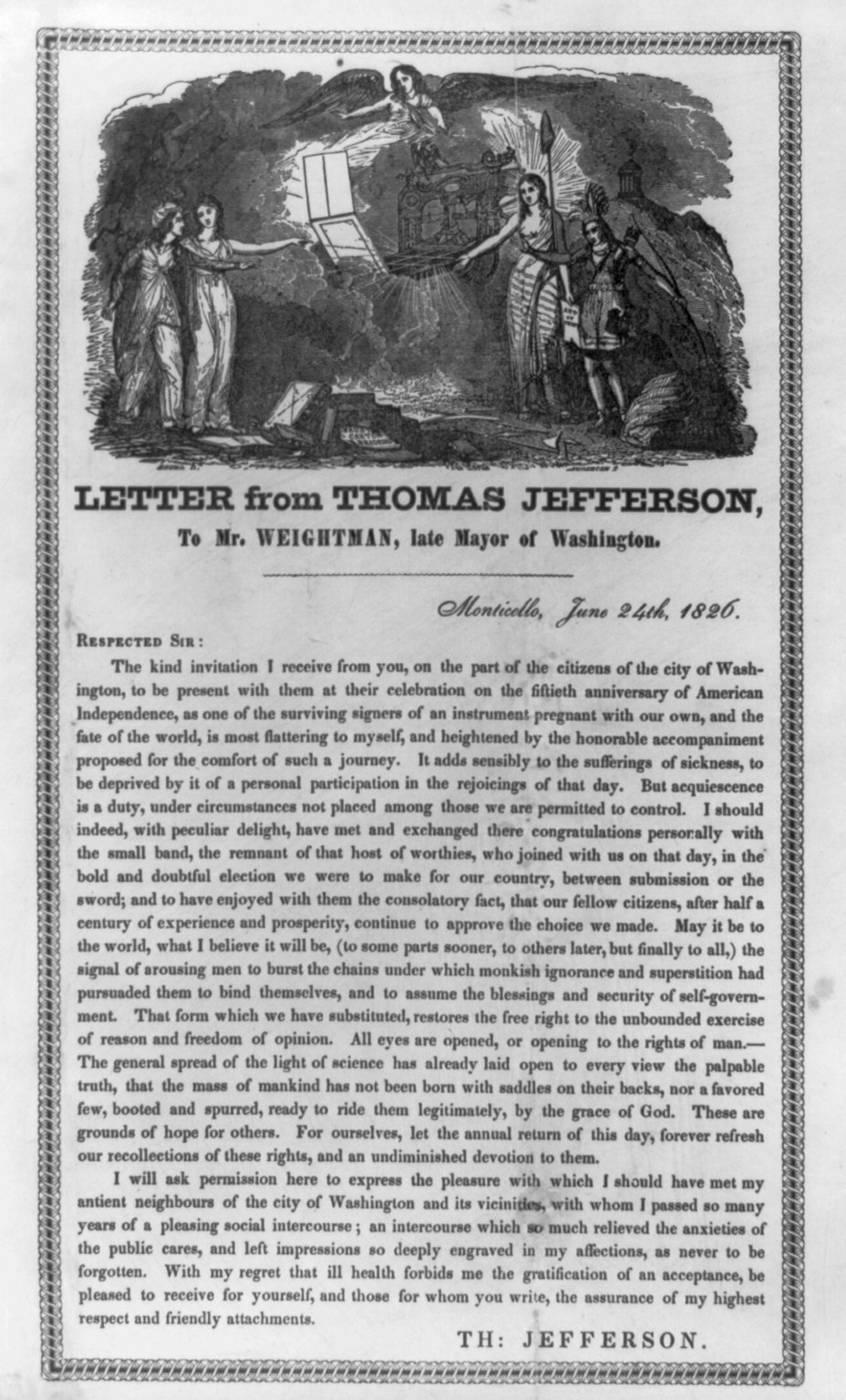
Jefferson's last letter, written weeks before his death, declining an invitation to celebrate the 50th anniversary of independence.
This is Jefferson's own final letter, written in his last weeks, reflecting on the Declaration he authored.
About this source
What it is
This printed letter was written by Thomas Jefferson on June 24, 1826, to Roger C. Weightman, declining an invitation to a Fourth of July celebration. It is held by the Library of Congress as a printed broadside with a wood engraving of allegorical figures above the text.
Why it matters
Written from Monticello just days before Jefferson died, the letter restates his understanding of what the Declaration of Independence meant for future generations. It is considered his final statement on the meaning of American independence.
Look closer
- Why might Jefferson have wanted to put his thoughts on independence in writing one last time?
- What do the engraved images at the top of the broadside suggest about how the letter was meant to be remembered?
- What does the timing of this letter, so close to his death, add to its meaning?
This letter is part of the curated material that grounds the AI version of Thomas Jefferson on Humy.ai — when students ask about related events, the AI can quote it and cite it.
More Thomas Jefferson sources
Meet the AI Thomas Jefferson →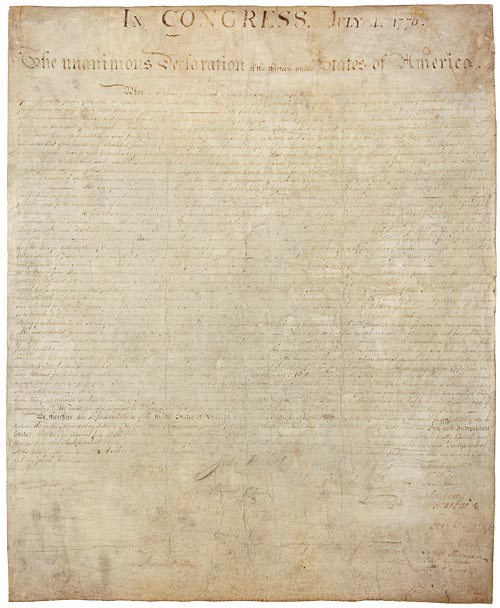 Document
Primary source
Declaration of Independence
Continental Congress (drafted by Thomas Jefferson) · 1776
 Painting
Primary source
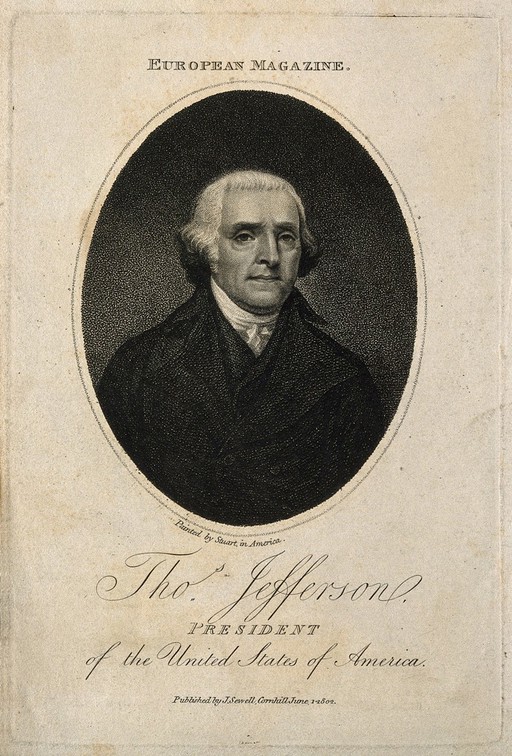
Thomas Jefferson Stipple Engraving after Gilbert Stuart
After Gilbert Stuart · 1802
Primary source
Virginia Statute for Religious Freedom
Thomas Jefferson · written 1777, enacted 16 January 1786
 Painting
Primary source
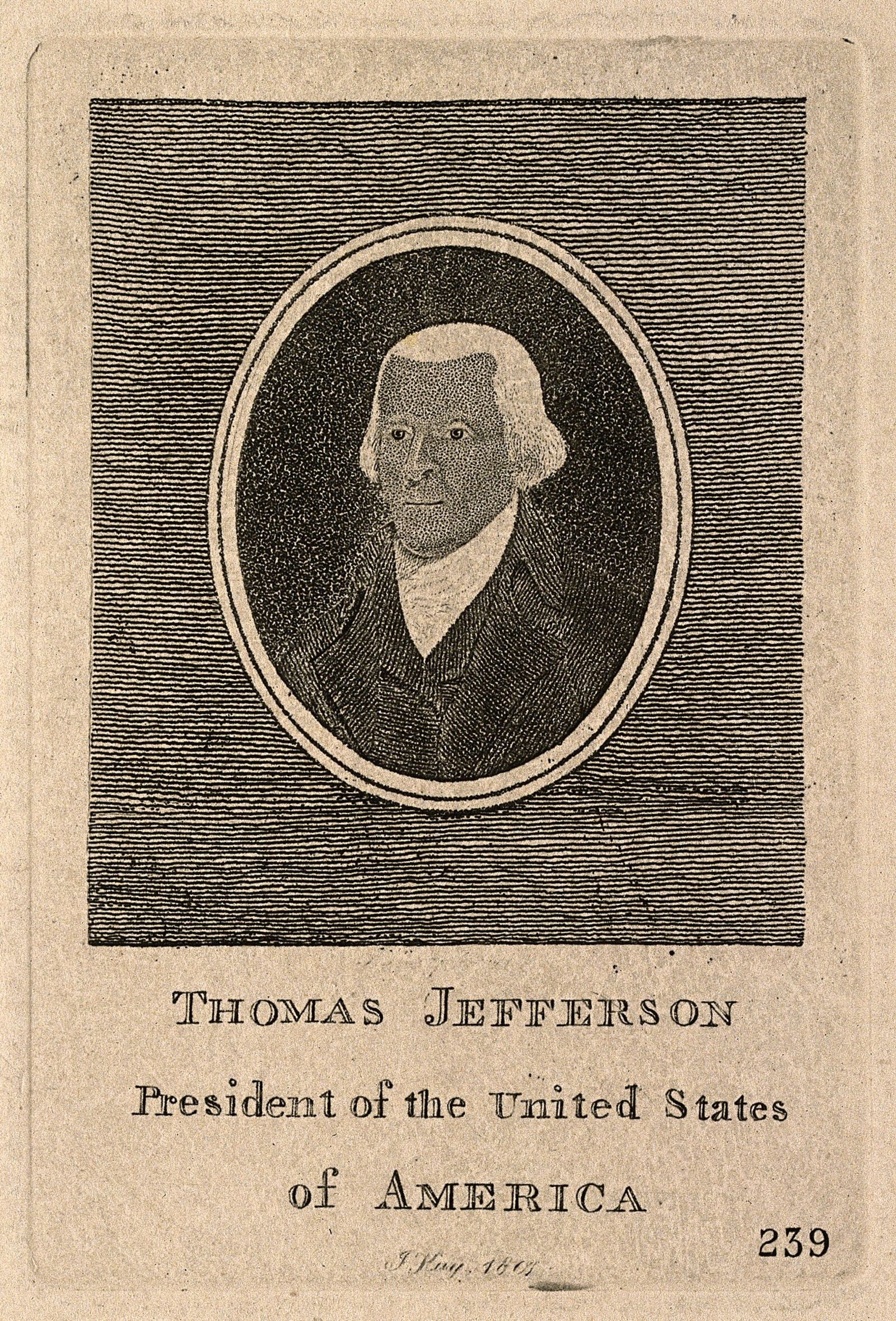
Thomas Jefferson Etching by John Kay, 1807
Gilbert Stuart · 1807
 Painting
Secondary source
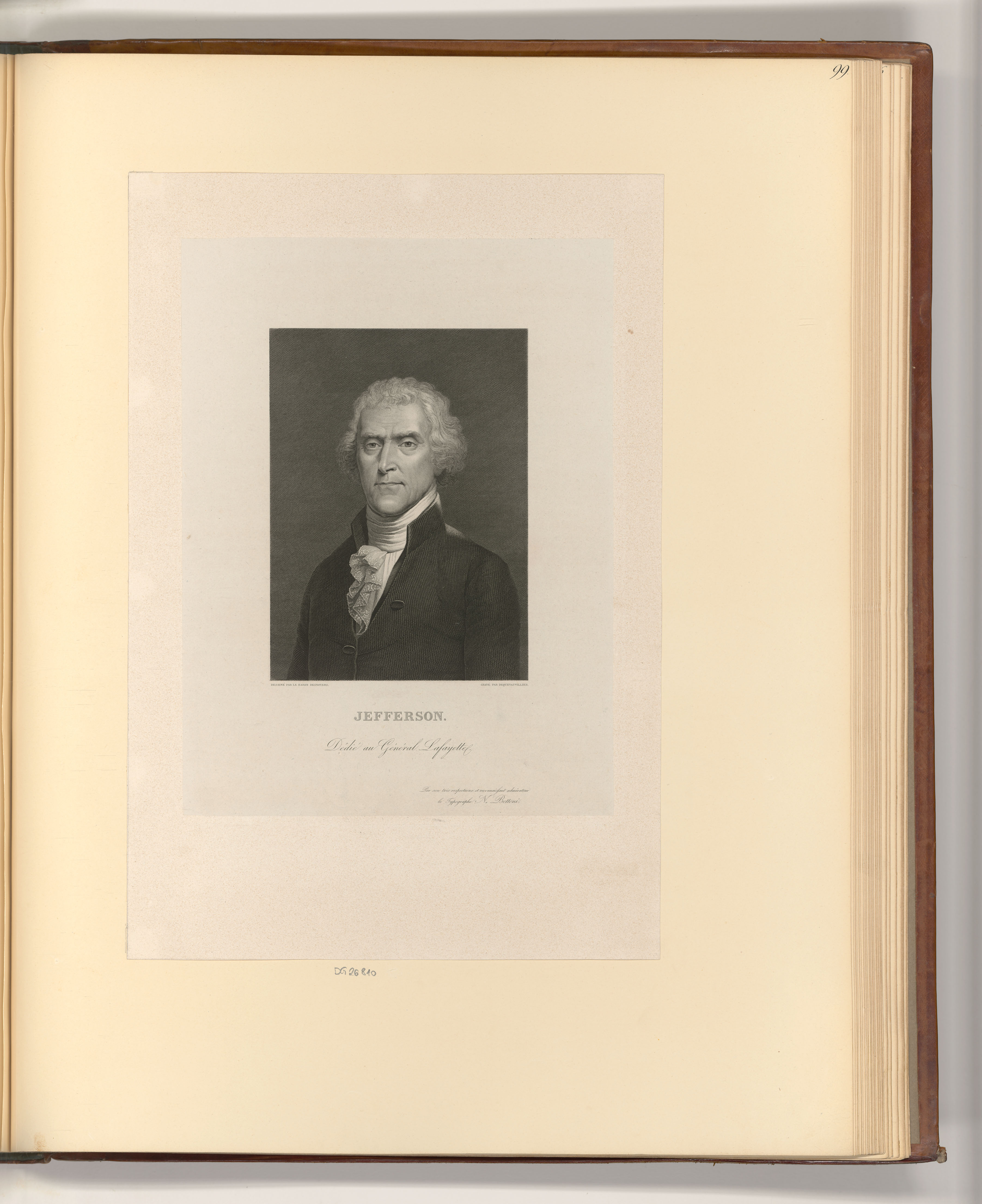
Porträt Thomas Jefferson
Auguste Gaspard Louis Boucher Desnoyers
Ready when you are
Start chatting with Thomas Jefferson now.
20 messages free · No credit card · Available in 50+ languages.